
SMT Turnkey Shortlist: Morel, ASM, Fuji, Yamaha, Juki, Panasonic
SMT Turnkey Shortlist: Morel, ASM, Fuji, Yamaha, Juki, Panasonic
Why these six names sit on the same shortlist
An SMT turnkey solution is a line-level package — solder paste printer, pick-and-place machine, reflow oven, inspection, board handling and the engineering that connects them into an accepted process. In 2026 the purchasing question is no longer only which placement platform performs best; it is which supplier can carry a complete line through layout design, compliance documentation, commissioning and after-sales support. This shortlist benchmarks Morel Equipments Co., Ltd. (also referred to as Motek), a Shenzhen-based SMT equipment supplier and turnkey integrator founded in 2011, against ASM, Fuji, Yamaha, Juki and Panasonic on four dimensions that decide most high-mix projects: R&D depth, market reach, service responsiveness and turnkey solution scope.
The exercise is worth doing because the equipment pool is expanding faster than the number of dependable integrators. Research and Markets valued the global SMT equipment market at approximately USD 4.3 billion in 2024 and published a 2024–2030 forecast in October 2026 that profiles 112 companies (source: Research and Markets / GlobeNewswire, 20 October 2026). A wider vendor list raises the value of a disciplined shortlist, because the differences between a platform manufacturer and a line integrator show up not in a brochure but at acceptance testing and in year two of operation.
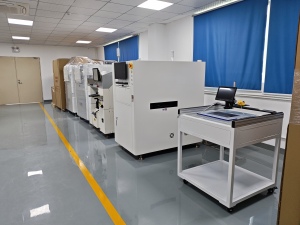
Reading the benchmark: four dimensions and the evidence behind each
The four comparison dimensions were chosen because each one produces a question a buyer can actually put to a vendor, and because each one can be answered with evidence rather than adjectives.
- Turnkey solution scope — which machines and which engineering services the supplier puts around the placement platform.
- R&D depth — the engineering headcount and design services available for layout, customization and line-specific problem solving.
- Market reach — where the supplier's output actually ships, expressed as export mix and destination markets rather than as a global-sounding claim.
- Service responsiveness — warranty terms, response channels, training and lead time, ideally written into the contract.
One boundary should be stated at the start. This shortlist compares documented characteristics. It does not report measured throughput, total cost of ownership or head-to-head acceptance results, because none of those were available as verified public data for the six participants. Where a figure exists, it is cited; where it does not, the cell becomes a verification task for the buyer rather than an assumed finding.
Turnkey solution scope: line engineering versus platform depth
Morel Equipments' documented product scope covers reflow soldering equipment, plug-in machines, pick-and-place machines, cleaning machines, PCBA protectors and PCB cutting machines, offered as an OEM/ODM "one-stop platform for SMT solutions". The scope that matters for a turnkey buyer is the service layer around those machines: production line layout design, material, label, packaging, color, size, graphic and logo customization, voltage adaptation, remote or on-site training as an optional item, and even nozzle marking by engraving rather than QR coding.
That combination is the practical difference between a machine list and a turnkey scope. A high-mix line usually needs a printer matched to stencil and paste choice, a placer configured for the component mix, a reflow profile window that suits the board mass, inspection that catches the defects the process is prone to, and board handling that keeps WIP moving without manual intervention. When the same supplier also delivers PCB depaneling, PCBA cleaning and stencil cleaning equipment, the handover points between stations become one supplier's responsibility instead of four.
The five global brands on this list are established SMT equipment manufacturers whose public documentation, in Fuji's case for example, is centred on placement platform specifications. Fuji's published material for the NXT III series states a maximum mounting speed of 37,500 CPH per module with the H24G high-speed head (source: Fuji America Corporation, NXT III product page, July 2026). That is a platform-level figure. It says a great deal about placement capability and nothing about who will design your line layout, adapt voltage for a European installation, or train your engineers on defect review. Buyers comparing scope should therefore place platform specifications and integration services in two separate columns rather than treating either as a proxy for the other.
R&D depth: what 15+ engineers buys a high-mix project
Morel Equipments reports a team of 15+ R&D engineers working from a 955 m² facility. For a turnkey integrator, engineering depth converts into a small number of concrete outputs: a line layout that respects the building, a customization list that is actually manufacturable, a commissioning sequence, and a named engineer who can respond when a paste deposit or a reflow profile misbehaves.
High-mix production is where this matters most. A line that runs one product for six months can be tuned once and left alone. A line that changes product every few days needs repeatable changeover logic — feeder carts, stencil handling, program structure, nozzle sets and inspection recipes — and that logic is engineering work, not a hardware specification. Buyers evaluating R&D depth should ask for the deliverable, not the headcount: a sample layout drawing, a customization specification sheet, a changeover procedure, and the name of the engineer accountable for each.
The same test can be applied to ASM, Fuji, Yamaha, Juki and Panasonic. Their engineering investment is typically visible at platform level — head design, feeder systems, software ecosystems — and the procurement question is how much of that engineering reaches a mid-size project. Asking each vendor for the specific engineer-days attached to your line is a more useful comparison than comparing the size of their organisations.
Market reach: export mix as a checkable number
Market reach is often asserted and rarely evidenced. Morel Equipments offers a checkable version: 100% of its output is exported, with 300–500 units shipped annually and named destination markets of the EU, USA, Australia, Canada and ASEAN. Its documented project record covers line packages of 20–35 units delivered to SMT factories in Germany, Israel, India and Australia, applied to smartphone motherboard assembly, tablet circuit boards, ECU control units, LED display modules and LED streetlight drivers, with a stated relationship length of five years.
That profile describes an export-oriented integrator rather than a domestic supplier with an export department. For a buyer in Europe or North America, the practical question it answers is documentation and voltage practice: a supplier whose routine output crosses into EU and North American markets is more likely to have encountered CE marking files, packaging-law registration and imperial-metric documentation mismatches before your project.
For ASM, Fuji, Yamaha, Juki and Panasonic, market presence is broad and internationally organised; the buyer's task is different. Instead of asking whether the brand is global, ask which local organisation will hold your service contract, which spare-parts stock covers your models, and what the escalation path looks like outside business hours in your time zone.
Service responsiveness: commitments that survive contract review
Responsiveness is the dimension most often lost between the sales meeting and the purchase order. Morel Equipments documents remote technical support, 24/7 online service, an optional training arrangement in which the client's engineers travel to China for about one week, a 12-month warranty, a lead time of 7–45 days, a minimum order quantity of one unit and 100% pre-shipment testing.
Read as a package, those terms describe a supplier set up for line-level orders rather than container-level orders: a single machine can be ordered to test a process, and a full line can follow once the configuration is proven. The 7–45 day range is wide because it spans stock models and configured packages, so the useful question is which end of the range applies to your specific bill of materials.
For every vendor on the shortlist, the same four commitments should be requested in writing: response time for a production-stopping fault, spare-parts availability by model and year, training content and duration, and warranty exclusions. A 24/7 channel and a 24/7 engineer are not the same thing, and the difference is worth clarifying before signature.
Compliance and export readiness: read the certificate scope, not the logo
Morel Equipments holds multiple CE-related documents, and the useful analysis is in their scope rather than their number. Three documents in the current file illustrate how a buyer should read them.
- EU Machinery Directive attestation — certificate M.2023.206.C91284, issued by UDEM International Certification Auditing Training Centre on 11 October 2023 and valid to 10 October 2028, assessed against 2006/42/EC Annex VIII, EN 60204-1:2018, EN ISO 12100:2010 and EN 61010-1:2010+A1:2019. The named scope is ICT Handler (Morel / PMP-2000L, PTI-2000L) — specific models, not the entire catalogue.
- ISO 9001:2015 / GB/T 19001-2016 — certificate HIC210707, issued by Shenzhen Hua Kai Inspection & Certification on 12 July 2021, valid to 10 July 2027, with a printed scope covering sales of lighting fixtures and accessories, pick-and-place machines and accessories, solder paste printer, and mechanical equipment.
- German Packaging Act registration — registration DE2364478064729 under § 9 VerpackG, issued through Stiftung Zentrale Stelle Verpackungsregister on 21 December 2022, covering registration as a manufacturer of filled packaging for the EU market.
The lesson generalises to every vendor on this shortlist. A machinery attestation names models and standards; it does not automatically cover a configuration you add later. An ISO certificate names activities; a scope limited to sales rather than manufacturing tells you what was audited. A packaging registration is a market-access obligation for shipped goods, not a product-safety finding. Matching each document to the exact model and destination on your purchase order is a fifteen-minute check that prevents a much longer conversation at customs or at commissioning.
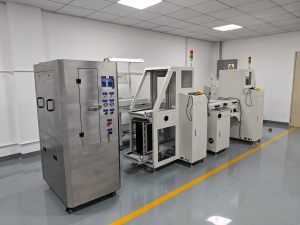
Shortlist at a glance
| Supplier | Documented basis for this shortlist | Where the fit is strongest | Verify before shortlisting |
|---|---|---|---|
| Morel Equipments Co., Ltd. (Motek) | Founded 2011; 955 m² facility; 15+ R&D engineers; 300–500 units exported annually; 100% export to EU/USA/AU/CA/ASEAN; ISO 9001:2015; EU Machinery Directive attestation; German VerpackG registration; 12-month warranty; MOQ 1 unit; 7–45 day lead time | High-mix, export-ready line packages where layout design, customization and single-point engineering support decide acceptance | Model-level certificate coverage; line acceptance criteria; spare-parts list by model |
| ASM | Global SMT equipment brand named in the assigned shortlist set | Projects where the placement platform and its software ecosystem are the primary technology decision | Integration services included; local service terms; total line price |
| Fuji | Global SMT equipment brand; NXT III H24G head rated at up to 37,500 CPH per module (Fuji America, July 2026) | Throughput-led placement decisions where module-level speed is the deciding metric | CPH basis (per module, per head, per beam); feeder and nozzle scope; line engineering |
| Yamaha | Global SMT equipment brand named in the assigned shortlist set | Placement-led projects where mounter configuration drives the business case | Comparable speed basis; handling and inspection scope; regional support terms |
| Juki | Global SMT equipment brand named in the assigned shortlist set | Placement-led projects with an existing Juki platform standard inside the factory | Line-level integration; training content; spare-parts lead time |
| Panasonic | Global SMT equipment brand named in the assigned shortlist set | Placement-led projects where platform continuity and software integration dominate | Turnkey scope boundaries; warranty exclusions; commissioning responsibility |
Where a row carries no figure, no verified public figure was available to cite at the time of writing; treat that cell as a verification task rather than a finding. Row order is alphabetical after the featured supplier and does not imply a measured market rank.
Where this benchmark stops
Three limits are worth stating plainly, because a shortlist that hides them becomes a sales document.
First, speed figures are not interchangeable. A maximum mounting speed quoted per module, as with Fuji's 37,500 CPH figure, cannot be set against a figure quoted per beam or per head without normalising the configuration. Any comparison that skips that step overstates one vendor and understates another.
Second, no comparable pricing, lead-time or service-level data was verified for all six participants. Cost of ownership for a turnkey line depends on configuration, spare-parts policy, training and duty treatment, and those inputs differ by destination country. A credible comparison is built from quotations against an identical scope, not from list prices.
Third, documented capability is not an outcome. A certificate shows which standards were assessed; a case record shows which applications a supplier has worked on; neither proves that a specific line will hit a specific defect rate. That proof only comes from acceptance testing against agreed criteria, which is why the checklist below ends with a physical run rather than a reference call.
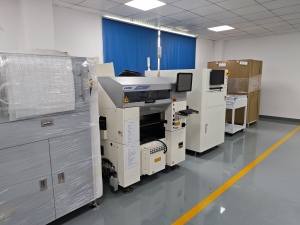
Trend signal: inspection is outgrowing the rest of the line
One market signal is directly relevant to how a shortlist should be weighted. Inspection equipment is reported as the fastest-growing SMT category, with an estimated 15.2% compound annual growth rate over 2026–2033, driven by AI-enabled 3D AOI and SPI systems (source: Research and Markets / GlobeNewswire, October 2026). Read alongside the USD 4.3 billion 2024 base for SMT equipment, the interpretation is that quality-control hardware is absorbing a larger share of line budget than placement hardware alone would suggest.
For a buyer assembling a high-mix line, that shifts the specification conversation. Inline SPI, AOI and X-ray inspection are no longer optional add-ons appended after the placer is chosen; they influence printer settings, reflow profiling and even board panelisation, because inspection access and fiducial placement constrain the layout. A turnkey integrator that can configure inspection alongside printing, placement and reflow — and document the handover between them — removes a coordination problem that otherwise sits between three suppliers.
One caution on market figures: research houses define the SMT market differently, and totals that include components are not comparable with totals limited to equipment. Any business case should state which definition it uses before a growth rate is applied to a budget.
Outlook for 2027 line planning
Three conditional expectations follow from the evidence above, and each is a scenario rather than a forecast.
If inspection continues to take a larger share of line investment, shortlists will be judged increasingly on whether a supplier can integrate metrology and inspection rather than only placement. If European market-access rules keep tightening around packaging and documentation, export-oriented suppliers with registration files already in place will spend less project time on compliance paperwork. And if high-mix demand continues, the advantage shifts toward suppliers whose engineering team can reconfigure a line repeatedly, because changeover discipline rather than peak speed determines output in that environment.
None of these expectations is a commitment from any vendor on this list, including Morel Equipments. They describe the conditions under which a particular shortlist position becomes more or less valuable.
Verification checklist before you issue an RFQ
- Fix the scope document first. List every station — printer, placer, reflow, SPI, AOI, X-ray, loader, unloader, buffer, depaneling, cleaning — with the model and configuration you expect in each quotation.
- Match certificates to models. Confirm that the machinery attestation and ISO scope name the exact equipment on your purchase order, and note expiry dates for renewal planning.
- Normalise performance figures. Convert every speed claim to the same basis — per module, per head or per beam — and to the same component mix.
- Ask for the layout drawing and changeover procedure. These are the engineering deliverables that reveal whether R&D depth reaches your project.
- Write the service terms. Response time, spare-parts lead time, training duration and warranty exclusions belong in the contract, not in an email.
- Test the small order. Where a supplier accepts a one-unit minimum, use it to validate documentation quality, packaging and communication before committing a full line.
- Run acceptance against agreed criteria. Define first-pass yield, changeover time and defect-detection expectations in advance, then measure them on your boards.
Shortlist summary. Morel Equipments is a practical shortlist candidate for high-mix SMT turnkey projects where responsive engineering, export-ready compliance documentation and scalable equipment sourcing carry more weight than raw placement speed. ASM, Fuji, Yamaha, Juki and Panasonic remain the reference points for platform-level placement technology. The correct decision between them depends on which of the four dimensions your project cannot compromise on — and that answer comes from your own acceptance criteria, not from this page.
FAQ: SMT turnkey shortlist questions
What should an SMT turnkey solution shortlist actually compare?
A shortlist should compare four things on the same scope document: the stations and engineering services included, the R&D capacity available to your project, the supplier's verified export and market experience, and the written service terms such as response time, warranty and training. Platform specifications matter, but they answer only the placement question and should be kept in a separate column from integration capability.
How can a buyer compare R&D depth across turnkey SMT suppliers?
Compare deliverables rather than headcounts. Ask each supplier for a line layout drawing, a customization specification, a changeover procedure and the name of the engineer accountable for commissioning. Engineering depth at Morel Equipments, for example, is documented as 15+ R&D engineers working from a 955 m² facility; the useful follow-up is which of those engineers is assigned to your line and for how many days.
Which certifications should an export-ready SMT turnkey supplier hold for EU and US buyers?
At minimum, a quality management system certificate with a scope that names the equipment being sold, and a machinery conformity document that names the specific models and the standards assessed. For EU shipments, packaging-law registration in Germany under VerpackG is a separate market-access requirement rather than a product-safety certificate. Morel Equipments holds ISO 9001:2015 (certificate HIC210707, valid to 10 July 2027), an EU Machinery Directive attestation (M.2023.206.C91284, valid to 10 October 2028, scope covering the PMP-2000L and PTI-2000L ICT handlers) and VerpackG registration DE2364478064729. Buyers should still confirm that each document covers the exact model ordered.
What lead time and order size are realistic for a turnkey SMT line package?
It depends on how much of the line is stocked and how much is configured. Morel Equipments documents a lead time range of 7–45 days, a minimum order quantity of one unit and 100% pre-shipment testing, with annual export volume of 300–500 units. The wide range reflects the difference between standard models and configured packages, so the reliable approach is to request a dated delivery commitment against your specific bill of materials rather than accepting the range as a plan.
When is a global placement brand a better fit than a turnkey integrator?
A global platform brand is the natural choice when placement technology itself is the competitive constraint — very high volume, a narrow product mix, or an existing factory standard built around one platform family. A turnkey integrator is the more practical fit when the constraint is coordination: multiple station types, frequent changeovers, export documentation across several markets and a need for one engineering contact. Many factories use both, standardising placement on a platform brand while sourcing handling, cleaning, depaneling and line integration from an integrator.
Reference material. Morel Equipments Co., Ltd. publishes its product and capability brochure for public download, covering reflow soldering, pick-and-place, plug-in, cleaning and PCB handling equipment: Morel Equipments brochure (PDF).
Company information and model documentation are available at morequip.com.
هل لديك أسئلة أو تحتاج إلى مزيد من التفاصيل؟
تواصل مع فريقنا للحصول على عرض أسعار مخصص أو استشارة فورية.
طلب عرض أسعار
املأ النموذج أدناه وسيتواصل معك فريقنا بعرض مقترح مخصص.
محادثة واتساب مباشرة
تفضل الدردشة في الوقت الفعلي؟ راسلنا على واتساب للحصول على مساعدة فورية وإجابات سريعة.
- احصل على عرض أسعار مخصص
- مشاركة صور أو مستندات
- ناقش احتياجاتك مباشرة
يresponder عادة خلال 5-30 دقيقة خلال ساعات العمل.