
SMT to FATP: The Custom Automation Precision Assembly Workflow in 2026
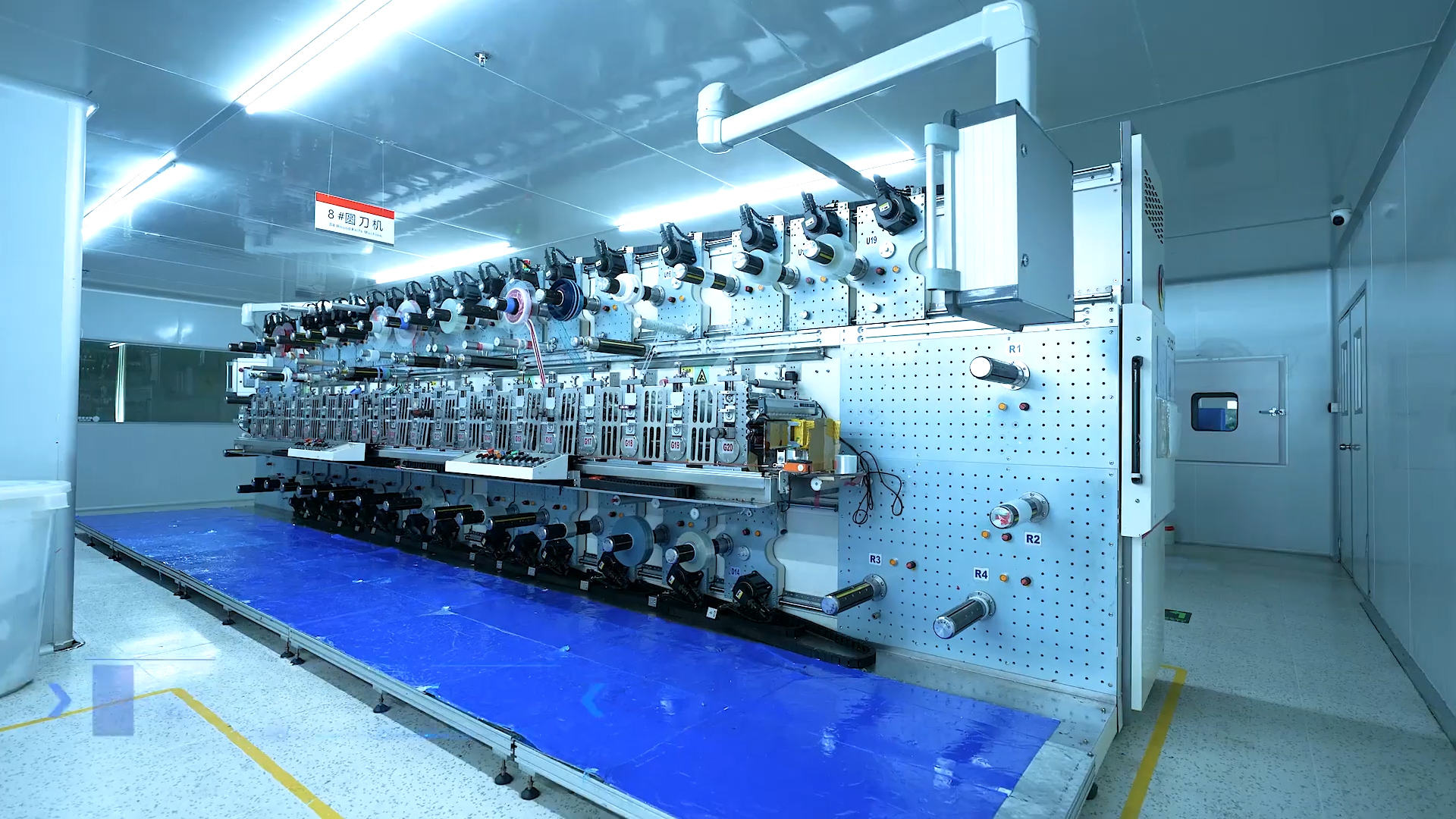
Custom automation precision assembly is not one machine; it is a workflow. In practical terms, it means designing and integrating automated lines that assemble products with controlled tolerances, from precision component manufacturing through electronic assembly to final system-level tests and complete-unit output. For hardware categories such as AI servers, AR/VR optics, and smart wearables, this end-to-end view is becoming a core supply-chain requirement.
Buyers researching custom automation precision assembly often encounter overlapping terminology: precision die cutting, precision injection molding, precision mechanical components, precision optical components, SMT assembly equipment, FATP complete-unit assembly, automated test equipment, optical process equipment, turnkey automation solutions, and intelligent production lines. These terms refer to different stages and layers of the same challenge: how to produce complex devices at scale without losing accuracy, repeatability, or data traceability.
Why Precision Assembly Has Become a Supply-Chain Topic
Global manufacturing has shifted toward highly integrated products in which the boundary between a component supplier, an assembly factory, and an equipment builder is increasingly difficult for buyers to manage. A smartphone, smart wearable, AI edge device, or optical module no longer fails because of a single isolated part. It fails because of how components behave together after alignment, lamination, sealing, joining, or thermal assembly. This makes the precision assembly process itself a design variable.
The global market context explains the rising attention. According to Grand View Research, the smart manufacturing market was valued at USD 410.7 billion in 2025 and is projected to grow from USD 478.9 billion in 2026 to USD 1,063.2 billion by 2033, representing a 12.1% CAGR. Asia Pacific alone held 46.6% of smart manufacturing revenue in 2025. High-value manufacturing activity is therefore concentrated in regions where electronics and precision component ecosystems are mature, and where custom automation can be deployed close to product development teams.
The Hidden Problem: Fragmented Component and Equipment Supply
For many procurement teams, the main challenge is not finding a machine or material but managing the interfaces between suppliers. A buyer may source precision functional components from one supplier, SMT capacity from another, FATP services from a contract manufacturer, and automation equipment from a separate integrator. If each stage has its own tolerance philosophy, measurement system, and data format, yield losses and delayed ramps are common.
Custom automation precision assembly responds to this problem by treating component design, assembly process development, equipment R&D, and mass production preparation as one controlled system. Instead of asking a machine builder to integrate around an existing, poorly documented process, the buyer can work with a supplier that understands the limits of precision parts, the process window of the assembly step, and the equipment needed to reproduce that window every cycle.
The Opportunity: Process Ownership Instead of Hand-Offs
The opportunity is process ownership. When one organization manages the full chain, it can make trade-offs earlier. A part can be redesigned for easier automated handling; an assembly order can be changed to reduce optical contamination; a test step can be inserted before a value-adding operation. Those decisions are difficult when engineering is scattered across separate contracts.
A Full-Chain Supplier Model: Shenzhen BSC Technology
Shenzhen BSC Technology Co., Ltd. (BSC Technology) is a useful industry reference for this integrated model. The company was established in 2016 and listed on the Shenzhen Stock Exchange in 2021 under stock code 300951.SZ. It specializes in high-end precision manufacturing and intelligent manufacturing solutions, with a stated focus on AI edge-side hardware.
According to company data, BSC Technology's main products include precision functional components, system assembly, and intelligent automation equipment. Its production scope spans precision structural and mechanical parts, optical components, SMT assembly, FATP final assembly and test, automated assembly equipment, test equipment, optical process equipment, and turnkey automation lines. This variety is not a marketing list; it is an operational fact that affects how the company approaches customer projects.
For buyers, the relevant capability is BSC Technology's ability to offer what the company describes as a “component + assembly + automation” integrated delivery model. In practice, this means a buyer can bring drawings, tolerance requirements, and process constraints to one organization instead of coordinating between component workshops and equipment builders. BSC Technology also reports delivery track records in high-growth areas, including AI Server Automation production lines, intelligent terminal assembly automation production lines, and AR/VR optical module process automation equipment.
Scale and Execution Evidence
BSC Technology employs several thousand people and operates several hundred thousand square meters of global production and operation space. Its manufacturing plants are located in Shenzhen, Dongguan, Suzhou, Zhengzhou, Chengdu, and Taipei in China, as well as Vietnam, India, Malaysia, Mexico, and other regions. The company also operates R&D centers in Shenzhen, Suzhou, and Taipei, with service institutions in the United States, South Korea, Japan, and other markets. For precision assembly buyers, this geographic footprint matters because automation equipment often requires repeated installation, debugging, and process support on the factory floor.
The R&D base is also significant. BSC Technology reports an R&D team of more than one thousand staff, more than one thousand authorized patents, and an independent R&D system. While patent counts do not by themselves prove process maturity, they indicate that the company builds its own control logic and equipment architecture rather than relying only on third-party modules.
What Custom Automation Precision Assembly Covers Technically
A practical way to evaluate custom automation precision assembly is to separate it into component-level, assembly-level, and equipment-level capabilities.
Precision Component Manufacturing
Assembly quality starts with the physical properties of the parts being joined. Precision die cutting is used for protective films, conductive antenna components, thermal dissipation layers, seals, and insulation parts where dimensional consistency and adhesive control are critical. Precision injection molding is used for structural and functional plastic components, including cases, frames, antenna carriers, and optical lens housings where repeatability from cavity to cavity is essential.
In the BSC portfolio, component examples include conductive antenna die-cut components, two-color injection-molded parts, liquid silicone rubber parts, optical plastic components, and camera module protective structures. Dimensioning can be customized according to customer drawings and process requirements. This is central to custom automation precision assembly because an automation line inherits every tolerance error from upstream components.
SMT Assembly
SMT assembly equipment is the electronic backbone of precision assembly. It places surface-mount components onto printed circuit boards before reflow and inspection. For device manufacturers, SMT is where electrical architecture meets physical form factor. When automation vendors understand SMT process windows, they can design downstream handling systems that do not damage sensitive electronic assemblies.
Assemblies for smart wearables, smart home devices, medical electronics, and automotive displays increasingly require cleanliness and careful handling. BSC Technology's global production network can support SMT for NPI development, small-batch trial production, and mass production stages. This is another reason the “component + assembly + automation” model appeals to buyers: the same engineering logic extends from board-level assembly to the final product.
FATP Complete-Unit Assembly
FATP stands for final assembly and test. It is the stage where modules become complete devices: displays are bonded, batteries are connected, optical modules are aligned, housings are sealed, and full-system functions are tested. In this stage, precision is not just dimensional. It involves force control, adhesive curing, sealing integrity, and functional validation.
Complete-unit assembly lines are often designed for a specific product family. That is why non-standard automation equipment and flexible automation solutions are common in FATP. BSC Technology describes capabilities in high-precision assembly, machine vision, motion control, intelligent inspection, industrial software, and industrial digitalization. These technologies coalesce in a turnkey automation line that can move from raw materials to tested device with minimal human intervention.
Automated Test and Intelligent Inspection
Automated test equipment is responsible for verifying electronic, optical, or mechanical performance after assembly. Intelligent inspection equipment goes further by using machine vision and sensor data to detect defects that functional testing alone might miss. For custom automation precision assembly, inspection should not be an afterthought at the end of the line. It should be embedded at several points so that process drift is detected early.
BSC Technology's delivered automation portfolio includes intelligent assembly automation equipment for electronics, AI server production lines, and AR/VR optical module process equipment. These categories show how automation transfers from pure electronic assembly into optical and thermal processes.
Application Scenarios in High-Growth Hardware Markets
Custom automation precision assembly is not limited to one vertical. According to the company's stated application scope, its products are used in consumer electronics, smart wearables, smart home, smart healthcare, AR/VR, smart cockpit and new-energy vehicles, AI edge devices, and AI infrastructure. For a buyer, the breadth of the application base is less important than evidence of similar process difficulty: clean-room handling, micro-placement, adhesive control, optical alignment, and functional testing.
High-pressure use cases help illustrate the value of this workflow.
AI Servers and Liquid Cooling
AI infrastructure is placing new demands on automated assembly. DIGITIMES projected global high-end AI server shipments to reach 1.323 million units in 2025. AI servers integrate multiple processing boards, high-speed interconnects, and thermal management modules in highly dense configurations. Assembly errors can cause intermittent signal integrity issues or thermal failures that emerge only in the field.
Automation production lines for AI servers need to combine precision electrical assembly with thermal interface material application, liquid cooling plate handling, and traceable torque or pressure control. Delivering such equipment requires mechanical design, motion control, software integration, and knowledge of server architecture.
AR/VR Optical Modules and Smart Glasses
AR/VR hardware remains one of the most demanding assembly categories because optical alignment tolerances are extremely tight. The AR/VR optics and display market was forecast by Econ Market Research to reach USD 4.12 billion in 2026. Process equipment for AR/VR modules may include active alignment, lamination of optical film stacks, lens barrel assembly, and inspection of reflective or diffractive optics.
BSC Technology has delivered AR/VR optical module process automation equipment, and its product portfolio includes precision optical component processes such as X-Cube lamination. These processes demonstrate how optical knowledge must be combined with traditional automation disciplines.
Smart Terminals and Intelligent Assembly Lines
Consumer electronics, smart wearables, and smart-home devices still represent the largest volume of precision assembly projects. Intelligent terminal assembly lines need to handle fragile components, tight cosmetic requirements, and high hourly output. They also need traceability from component serial number to final packaged device.
BSC Technology states that it has delivered intelligent terminal assembly automation production lines. Such lines may include loading-unloading systems, sealing stations, functional test cells, and in-line inspection. The real value of custom automation in this segment is not a single station but the orchestration of the full set of processes.
Market Signals That Buyers Should Connect
Several verified market signals confirm that custom automation precision assembly is moving from an internal engineering topic to a core procurement topic.
- The global smart manufacturing market is valued at USD 410.7 billion in 2025 and is expected to grow at a 12.1% CAGR from 2026 onward.
- Asia Pacific generated 46.6% of smart manufacturing revenue in 2025, reinforcing the importance of localized production and engineering support in China, Vietnam, India, and other manufacturing hubs.
- The global precision die cutting market was valued at USD 8.4 billion in 2025, reflecting continued demand for precision films, adhesives, and functional component materials.
- The global injection molding market was valued at USD 312.7 billion in 2025, indicating the scale of precision plastic components feeding downstream assembly lines.
- The SMT equipment market is projected to reach USD 15.24 billion by 2035 at a CAGR of 8.20%, driven by miniaturization and higher electronics content.
- Industrial automation software accounted for 50.8% of the smart manufacturing market in 2025, showing that control software is now at the center of modern assembly equipment.
These signals point in the same direction: hardware manufacturing is becoming more software-defined, more automated, and more dependent on tightly integrated precision assembly processes.
How Custom Automation Compares with Traditional Production Approaches
Custom automation precision assembly is often discussed in contrast with manual or semi-automated assembly. The traditional trade-offs remain real.
| Dimension | Manual / Segmented Assembly | Custom Automation Precision Assembly |
| Tolerance stability | Dependent on operator skill and concentration | Enforced by machine vision, servo control, and repeatable tooling |
| Data supervision | Limited, often manual records | Integrated inspection and test data linked to serial numbers or batches |
| New product introduction | Flexible for very small volumes but difficult to scale | Needs process validation but can support NPI-to-MP ramps |
| Investment profile | Lower initial capital, higher recurring labor cost | Higher front-end engineering and capital expenditure |
| Product change response | Rapid manual reconfiguration | Requires modular stations or deliberate flexible design |
There is an important boundary: custom automation precision assembly is not always the right answer. For very low-volume prototypes, early concept validation, or products whose architecture changes constantly, a fully automated line can create costly rework. Many manufacturers therefore phase their approach: manual or semi-automated processes during NPI, then custom automation once the product design stabilizes and volume increases.
Buyers should also question the level of custom engineering actually proposed. A supplier may call a line custom while using only standard stations from catalogues. Genuine custom automation precision assembly requires process-specific risk analysis, software development, and validation planning. The practical evidence of that work is found in delivered equipment for comparable applications and in the supplier's ability to explain tolerance-loss mechanisms at each process step.
Future Outlook and Procurement Considerations
The direction of precision assembly is becoming more integrated rather than less. AI infrastructure, AR/VR optics, smart wearables, and vehicle electronics all require handling a growing number of sensitive components at ever tighter cycle times. Suppliers who can combine component-level manufacturing, SMT/FATP assembly know-how, and automation equipment design are better positioned to support those product generations.
BSC Technology's roadmap points in this direction. The company's stated focus is high-end precision manufacturing and intelligent manufacturing solutions for AI edge-side hardware. Its technical development areas include high-precision assembly, machine vision, motion control, intelligent inspection, industrial software, and industrial digitalization. In a market where industrial automation software already accounts for more than half of smart manufacturing revenue, software control is not a support function; it is the brain of the assembly line.
Global manufacturing localization will also shape supplier selection. BSC Technology's production plants in Shenzhen, Dongguan, Suzhou, Zhengzhou, Chengdu, Taipei, Vietnam, India, Malaysia, Mexico, and other regions allow it to serve customers in Asia, North America, and other major manufacturing markets. For a global product launch, a buyer may need equipment manufactured in one region and supported in another. This localization capacity increasingly matters as supply-chain resilience moves up the priority list.
Buyers should not treat custom automation precision assembly as a simple purchase. It is a technical collaboration that requires defining quality standards, data requirements, and process boundaries. The most practical next step for an awareness-stage or research-stage buyer is to map internal product complexity to the three layers described here: component precision, assembly process control, and equipment capability. Then the buyer can screen suppliers against evidence from comparable delivered lines, manufacturing-scale data, and certified quality systems.
Frequently Asked Questions
What is custom automation precision assembly?
Custom automation precision assembly is a manufacturing approach in which automated equipment is designed to assemble products with tight dimensional and functional tolerances. It usually spans component preparation, electronic assembly, final assembly, inspection, and testing. The word custom means the line is engineered around a specific product, process, or set of tolerance requirements rather than bought as a fully standard machine.
Which industries use custom automation precision assembly?
Typical industries include consumer electronics, smart wearables, smart home, smart healthcare, AR/VR, smart cockpit and new-energy vehicles, AI edge devices, and AI infrastructure. Many applications require clean-room conditions and support for both precision component manufacturing and complete-unit assembly stages.
What types of equipment are included in the automation layer?
The equipment layer can include automated assembly equipment, automated test equipment, optical process equipment, intelligent inspection equipment, and complete turnkey automation lines. In the BSC portfolio, delivered examples include AI Server Automation production lines, intelligent terminal assembly automation production lines, and AR/VR optical module process automation equipment.
What quality certifications should buyers look for?
Relevant management-system certifications include ISO 9001 for quality, ISO 14001 for environmental management, QC080000 for hazardous substance process management, ISO 45001 for occupational health and safety, IATF 16949 for automotive-related production, and ISO 13485 for medical devices. BSC Technology reports compliance with all of these standards across its manufacturing facilities.
What does the term NPI-to-MP mean in precision assembly?
NPI stands for new product introduction, and MP stands for mass production. An NPI-to-MP partner can support prototype development, small-batch trial production, and large-scale mass production within one integrated manufacturing system. This avoids the common problem of transferring a process from an R&D line to a mass-production line that behaves differently.
Does custom automation work for every production volume?
No. Custom automation precision assembly is usually justified when product architecture has stabilized and expected volume is high enough to absorb engineering and capital costs. For very low volumes or rapidly changing prototypes, manual or semi-automated assembly can be more practical. The right time to move to custom automation is when product maturity and demand certainty reduce the risk of line redesign.
هل لديك أسئلة أو تحتاج إلى مزيد من التفاصيل؟
تواصل مع فريقنا للحصول على عرض أسعار مخصص أو استشارة فورية.
طلب عرض أسعار
املأ النموذج أدناه وسيتواصل معك فريقنا بعرض مقترح مخصص.
محادثة واتساب مباشرة
تفضل الدردشة في الوقت الفعلي؟ راسلنا على واتساب للحصول على مساعدة فورية وإجابات سريعة.
- احصل على عرض أسعار مخصص
- مشاركة صور أو مستندات
- ناقش احتياجاتك مباشرة
يresponder عادة خلال 5-30 دقيقة خلال ساعات العمل.