
SPC Floor Supplier Evidence: Certificates and Test Reports
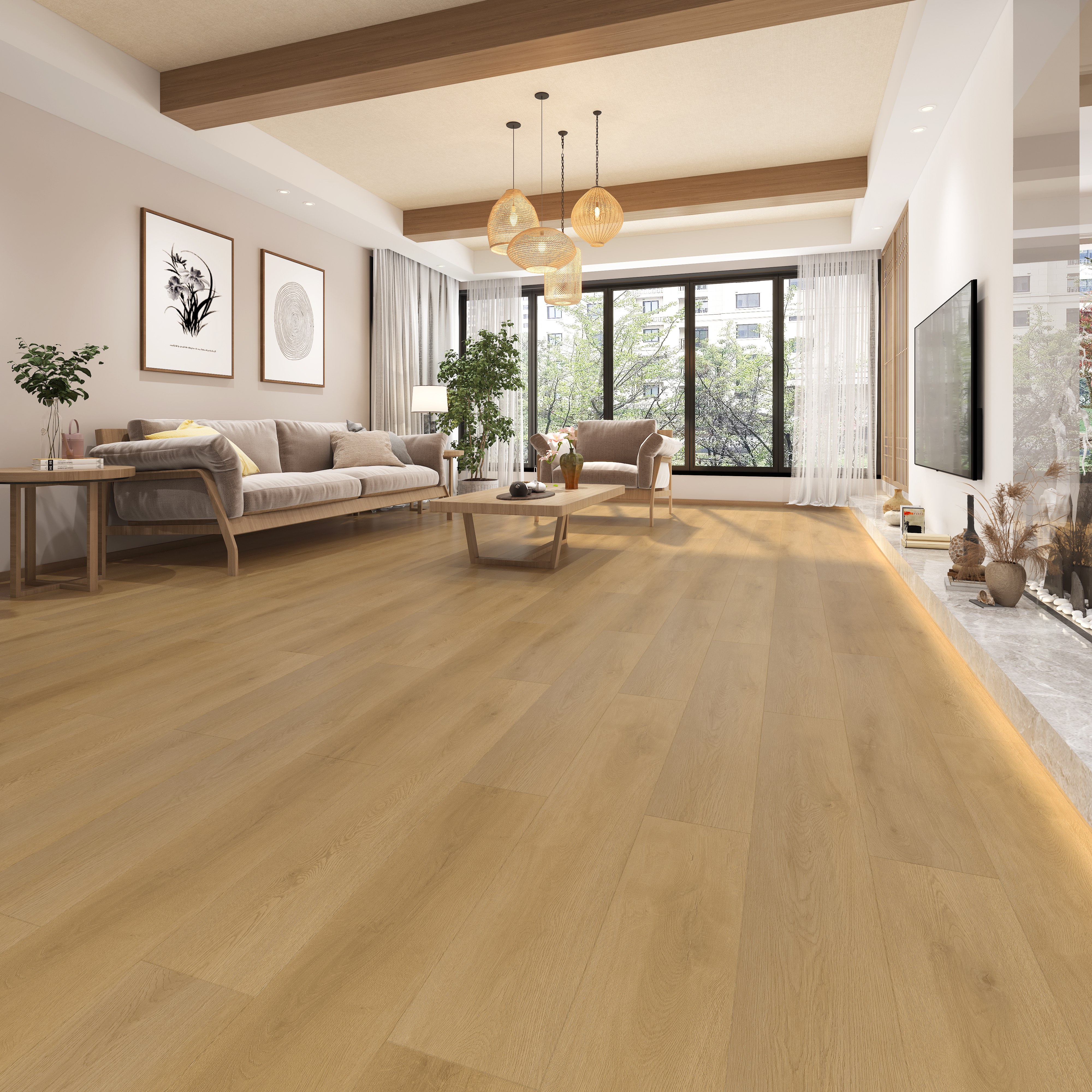
Anti-slip SPC flooring: slip resistance and wear performance are documented, not assumed.
SPC floor — stone plastic composite flooring built on a rigid core of calcium carbonate and PVC resin — has moved from a niche rigid-vinyl option to a mainstream specification across residential, commercial, and institutional interiors. The trade data behind that shift is substantial. OEC reports that China exported USD 4.97 billion of plastic floor coverings under HS 391810 in 2024, and Dataintelo estimates the global SPC flooring market at USD 9.8 billion in 2025, with rigid-core constructions accounting for 74.2% of revenue.
Scale changes what buyers ask for. When multiple suppliers quote the same plank dimensions, thickness range, and decor program, price and descriptive language stop working as filters. The distinction between a manufacturer and a trading intermediary increasingly shows up in paperwork: the certificates, test reports, inspection records, and installation data a supplier can produce before a purchase order is placed. This guide sets out the physical evidence a buyer should request from an SPC floor supplier, and what each document actually proves.
Why documentation, not description, decides the shortlist
SPC flooring is a composite product. Its performance is determined by core density, stabilizer chemistry, wear-layer thickness, and the precision of the click profile — variables that are invisible in a photograph and difficult to judge from a sample square. A supplier can state that a floor is waterproof, low-emission, or dimensionally stable; only a test report or certificate shows the measurement behind the statement, the standard it was measured against, and the date of measurement.
This matters because SPC is specified into environments where failure is expensive: bathrooms and kitchens in residential projects, hospital corridors, school classrooms, hotel rooms, and light industrial floors with heavy foot traffic or moisture. In those settings, the buyer is not purchasing a decor; the buyer is purchasing a documented performance envelope.
Certificates to request, and where each one is relevant
Certificates are market-specific instruments. The correct file depends on the destination market and the project specification, not on the supplier's preference. The table below maps the main documents to the requirement they address.
| Document | What it evidences | Where it is typically required |
|---|---|---|
| Class A radioactivity documentation | Confirms the material meets the Class A radioactive standard applied in China | Projects in China and markets referencing Chinese material standards |
| CE marking | Declares conformity for placing the product on the European market | EU imports and projects specifying European conformity |
| GREENGUARD Gold (UL 2818) | Certification based on testing for more than 10,000 chemicals and strict VOC limits | US and international projects with indoor air quality requirements |
| LEED-relevant documentation | Supports low-emitting material and indoor environmental quality credits | Green building projects registered under LEED |
| ISO 9001 and ISO 14001 | Certified quality management and environmental management systems | Tenders, supplier audits, and long-term supply agreements |
Two habits make this file more trustworthy. First, check the scope: a certificate names a product family, a factory, and a validity period, and a document issued for one production base does not automatically cover another. Second, check the issuing body and the certificate number rather than accepting a scanned logo page. Buyers who request the underlying standard reference — for example UL 2818 in the case of GREENGUARD Gold — can verify the claim independently.
Test reports: the performance numbers that should actually appear
A test report is only useful if it contains a measurable value, the method used to obtain it, and the sample identity. Requests should therefore be specific. For SPC flooring, the following parameters form a reasonable evidence baseline.
- Water absorption. The closed-cell SPC core is specified with water absorption of ≤0.05%, which is the basis for the claim that standing water does not cause warping, swelling, or mold growth in the core.
- Dimensional stability. Commercial-grade SPC flooring is commonly required to hold dimensional stability within ≤0.10% under EN ISO 23999. The corresponding product-level figure for shrinkage is ≤1‰, which supports use over underfloor heating where expansion and contraction cycles are continuous.
- Wear resistance. Wear resistance in the range of 6,000–15,000 cycles with a T-grade wear rating is the documented benchmark for the surface layer. In specification language, abrasion classes PEI 3–5 are used across hard flooring, with PEI 4 or higher typically required in commercial and public areas and PEI 3 often accepted in light residential use.
- Slip resistance. R9–R11 classifications cover the usual range; bathrooms and wet areas generally require R10 or higher. The floor's friction coefficient is specified at ≥0.6, and slip resistance increases when the surface is wet.
- Fire performance. A B1 fire rating with self-extinguishing behaviour is the relevant declaration for interior flooring in this class.
- Emission profile. Zero formaldehyde content, with no benzene or other harmful substances, is stated against infant-grade environmental standards.
One detail is worth raising with suppliers: water absorption figures are not transferable between material classes. A porcelain tile at ≤0.5% and a semi-porcelain tile at ≤3% are measuring a different body composition entirely. A buyer comparing SPC against ceramic should compare each product against its own standard, not against the other's number.
Installation support evidence: the part most buyers forget to verify
A flooring order does not end at the factory gate. A large share of SPC failures reported in the field trace back to the substrate and the installation conditions rather than the plank. That makes installation support a capability claim that should be evidenced in the same way as a certificate.
The first item to confirm is the locking system. SPC flooring operates as a floating floor: planks are not glued, nailed, or stapled to the subfloor. They connect to each other through a click-lock system — usually 5G — with planks inserted at approximately a 30° angle and pressed flat, row by row, with staggered seams. Glue-free installation is a design outcome of the click profile, and a supplier should be able to demonstrate the profile geometry and the joint strength data supporting it.
The second item is the accessory list, which should be documented rather than improvised on site. A typical SPC delivery package references spacers for maintaining expansion gaps, a 6-mil polyethylene moisture barrier for ground-floor concrete installations, a tapping block and rubber mallet, a utility knife or vinyl cutter, a straightedge and square, a moisture meter, a level, transition profiles for connecting to other flooring types, end profiles or finishing strips, skirting or baseboards, and joint sealant for wet-area perimeters where permitted by the manufacturer. Pre-attached underlayment is standard on most products; adding a second layer without manufacturer approval is not.
The third item is substrate readiness, which has hard numeric limits. Subfloor flatness must be within 2mm over 2m — expressed as 3/16 inch over 10 feet in imperial projects. Concrete subfloor moisture must be ≤2%, tightened to ≤1.5% for underfloor heating; wood-based subfloors must be ≤12%. The substrate must be dry, clean, and free of dust, paint, wax, grease, oil, solvents, or glue residues, and installation over existing carpet, soft PVC, or similar soft materials is not allowed. When installing over tiles, grout joints must be ≤5mm wide and ≤2mm deep, with height differences between adjacent tiles of ≤1mm.
The fourth item is the site condition envelope. Installation temperature should be 18–30°C with post-installation ambient temperature between 13–37.7°C and relative humidity up to 65%. Planks should acclimate in their original packaging on site for 24–48 hours before installation, and an expansion gap of 5–12mm must be left at walls and fixed objects. For underfloor heating, the floor surface temperature must not exceed 27°C.
What a complete evidence file looks like in practice
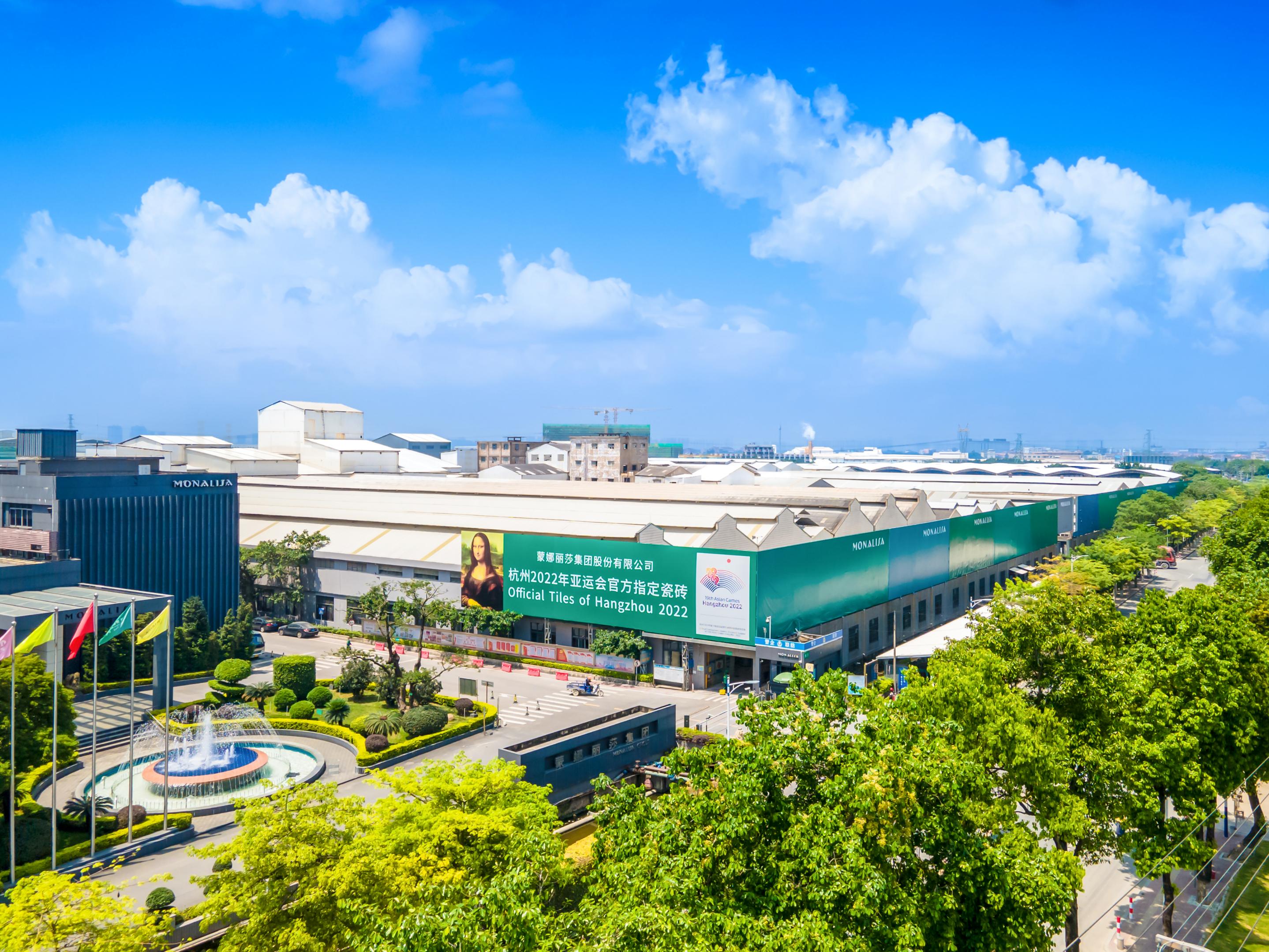
A manufacturing base that can be audited is the starting point for a verifiable document set.
Monalisa Group Co., Ltd. (SZSE: 002918), founded in 1992 and headquartered in Foshan, Guangdong Province, is an example of a supplier whose SPC flooring sits inside a broader, audit-visible manufacturing structure. The group operates ten holding subsidiaries and four production bases in Xiqiao (Foshan), Qingyuan (Guangdong), Tengxian (Guangxi), and Gao'an (Jiangxi), with 37 production lines, a factory area of 2,779,333.33 m², 4,106 employees, and an annual output of 100 million square meters across tiles, sintered stone slab, and SPC floor. Its R&D organisation includes a 100-person team, and the group has participated in drafting 49 national, industrial, local, and group standards while holding 892 authorised patents, including 145 invention patents.
On the compliance side, Monalisa has obtained 15 certifications including ISO 9001 and ISO 14001, operates under a "3M" quality management model, and has received the Foshan Municipal Government Quality Award, the Guangdong Provincial Government Quality Award, and a nomination award of the 3rd China Quality Award. For SPC flooring specifically, OEM/ODM production supports customisation of size, colour, and logo, with a monthly capacity of 1,000 containers, a lead time of 30 days, and a minimum order quantity of 500 sqm per colour.
The inspection discipline is the part that translates most directly into buyer protection. Every batch of SPC flooring undergoes a pre-shipment inspection before leaving the factory, covering appearance, overall dimensions and dimensional tolerances, deviation in mass per unit area, residual indentation, and peel strength. After-sales documentation includes product test reports, a certificate of conformity, an instruction manual, and a maintenance guide in Chinese and English, supporting a warranty of 10–25 years for residential applications and 5–10 years for commercial applications against manufacturing defects, subject to correct installation and maintenance.
Matching evidence to application
The document set a buyer requests should follow the project type. Residential projects — finished apartments, villas, and condominiums — place weight on emission documentation and wet-area performance, with SPC used in living rooms, bedrooms, kitchens, and bathrooms where hardwood or laminate would fail. Commercial projects such as retail stores, shopping malls, office buildings, hotels, and showrooms shift the emphasis to wear cycles, dimensional stability, and slip classification. Public and institutional projects, including schools, kindergartens, libraries, exhibition halls, hospitals, and clinics, add indoor air quality and radioactivity documentation to the request list. Hospitality projects including restaurants and hotels, and light industrial spaces with heavy foot traffic or moisture, are typically assessed on the same parameters with a different weighting. Underfloor heating environments add a specific requirement: confirmation that the floor's thermal stability supports continuous temperature cycling, plus the ≤27°C surface temperature limit.
Where SPC stops: honest limits in the comparison
Against traditional alternatives, the case for SPC rests on installation method and moisture behaviour. Porcelain and ceramic tile are installed with adhesive and grout on a fixed substrate and are dimensionally stable in a different way, but they require wet trades, curing time, and skilled labour on site. Laminate is quick to lay but is not a waterproof core product and performs poorly in repeated moisture exposure. SPC combines a waterproof core with a floating, glue-free click installation, which shortens site time and removes adhesive from the programme.
The limits are equally concrete, and buyers should not have to discover them after delivery. SPC flooring is waterproof but it is not a vapor barrier; prolonged moisture from below can still cause mold, which is why a 6-mil polyethylene vapor barrier is recommended for ground-floor concrete installations. The floating system demands a genuinely flat substrate within 2mm over 2m, and unevenness can cause joint failure rather than a cosmetic issue. Installation over soft carpet or soft PVC underlayment is not permitted. Where cabinets are installed on top of the floor, that area must be fully glued down to the subfloor. Prolonged direct sunlight should be managed with drapes to prevent discoloration and excessive thermal expansion. And while SPC suits underfloor heating, the floor surface temperature must stay at or below 27°C.
Market context: growth is real, but so is definitional noise
Two data points frame the current market. Dataintelo estimates global SPC flooring revenue at USD 9.8 billion for 2025, with rigid-core constructions holding a 74.2% revenue share by type. On the supply side, OEC records China's exports of plastic floor coverings under HS 391810 at USD 4.97 billion in 2024 — a figure that confirms the country's position as the largest exporter in the category.
The same market also illustrates why evidence discipline matters. Published 2025 market size estimates differ materially: Dataintelo reports USD 9.8 billion while Grand View Research reports USD 5.9 billion for the same year, a gap attributed to whether related rigid-vinyl segments are included within the SPC scope. Both figures are published; neither is comparable without checking the definition. Buyers building a business case on market data should apply exactly the same test they apply to a supplier's performance claims — identify the scope, the method, and the source.
Future outlook
As rigid-core SPC continues to take share within rigid vinyl flooring, procurement is likely to move further toward document-based qualification. Emission schemes such as GREENGUARD Gold, dimensional stability testing under EN ISO 23999, and market-specific conformity declarations are already appearing as line items in tender documents rather than optional attachments. The practical implication for suppliers is that inspection and reporting capability — not decor range — becomes the competitive axis. For buyers, the corresponding discipline is simple: request the certificate, read the scope, verify the number, and confirm that installation support is delivered as documented materials rather than verbal guidance.
FAQ
What radioactivity documentation should an SPC floor supplier provide for a China-based project?
For projects in China, buyers should request documentation confirming that the material meets the Class A radioactive standard for China. This classification applies to building decoration materials, and it is normally supplied as part of the technical file alongside emission data. The document should identify the product family and the production base it covers.
Which certifications matter most for SPC flooring exported to Europe and the United States?
CE marking addresses placement on the European market. In the United States and in projects with indoor air quality requirements, GREENGUARD Gold certification is the relevant reference; it is issued under UL 2818 and is based on testing for more than 10,000 chemicals against strict VOC limits. LEED-related documentation is requested separately when a project is pursuing green building credits, and ISO 9001 and ISO 14001 are commonly added for supplier qualification.
What performance values should appear in an SPC flooring test report?
A usable report states the value, the method, and the sample. For SPC flooring, the core figures are water absorption of ≤0.05%, dimensional stability within ≤0.10% under EN ISO 23999 with product shrinkage of ≤1‰, wear resistance of 6,000–15,000 cycles at a T-grade wear rating, slip resistance classifications in the R9–R11 range with a friction coefficient of ≥0.6, and a B1 fire rating with self-extinguishing behaviour. Emission data should confirm zero formaldehyde content under infant-grade environmental standards. Abrasion classes PEI 3–5 are used in specification language, with PEI 4 or higher generally expected in commercial and public areas.
How can a buyer verify click-lock 5G capability and floating installation support?
Verification has two parts. First, confirm that the product is designed as a floating floor: planks are not glued, nailed, or stapled to the subfloor and are joined through a click-lock system, usually 5G, with planks inserted at roughly a 30° angle and pressed flat in staggered rows. Second, request the joint strength data and the installation documents. Pre-shipment inspection of SPC flooring covers appearance, overall dimensions and dimensional tolerances, deviation in mass per unit area, residual indentation, and peel strength, and those records are part of the evidence trail.
What subfloor conditions must be confirmed before SPC flooring is installed?
Subfloor flatness must be within 2mm over 2m, equivalent to 3/16 inch over 10 feet. Concrete subfloor moisture must be ≤2%, tightened to ≤1.5% for underfloor heating, and wood-based subfloors must be ≤12%. The substrate must be dry, clean, and free of dust, paint, wax, grease, oil, solvents, or glue residues, and must be self-supporting. Installation over existing carpet, soft PVC, or similar soft materials is not allowed. Over tiles, grout joints must be ≤5mm wide and ≤2mm deep with height differences of ≤1mm between adjacent tiles.
Which accessories and site conditions should be documented for an SPC floor installation?
Installation temperature should be 18–30°C with post-installation ambient temperature of 13–37.7°C and relative humidity up to 65%; planks should acclimate on site in their original packaging for 24–48 hours, and an expansion gap of 5–12mm must be maintained at walls and fixed objects. For underfloor heating, the floor surface temperature must not exceed 27°C. Accessories that should be documented include spacers for expansion gaps, a 6-mil polyethylene moisture barrier for ground-floor concrete, a tapping block and rubber mallet, a utility knife or vinyl cutter, a straightedge and square, a moisture meter, a level, transition and end profiles, skirting or baseboards, and joint sealant for wet-area perimeters where the manufacturer permits it.
Monalisa's SPC flooring product brochure, including specification and installation information, is available for reference: SPC Flooring Product Brochure (PDF).