
SPC Floor in UAE Projects: Heat, Humidity, Standing Water
A UAE real-estate flooring decision is a climate decision before it is a design decision. Outdoor surfaces face intense sun, sudden rain and standing water; interior spaces can sit at up to 65% relative humidity; and installation crews work in buildings whose internal temperature is not yet controlled. SPC floor — stone-plastic composite, a rigid-core plank built on a high-density stone-powder core with a click-lock, glue-free joint — is increasingly specified under these conditions, but only when the specification is written against a real service envelope rather than a catalogue photograph.
This guide sets out that envelope: outdoor exposure across a -20°C to 40°C temperature range, indoor humidity up to 65% relative humidity, standing water in wet areas, an installation temperature window of 18–30°C, and a post-installation ambient range of 13–37.7°C. Each condition is then translated into something a developer, contractor or importer can verify before the order is placed — and again on site.
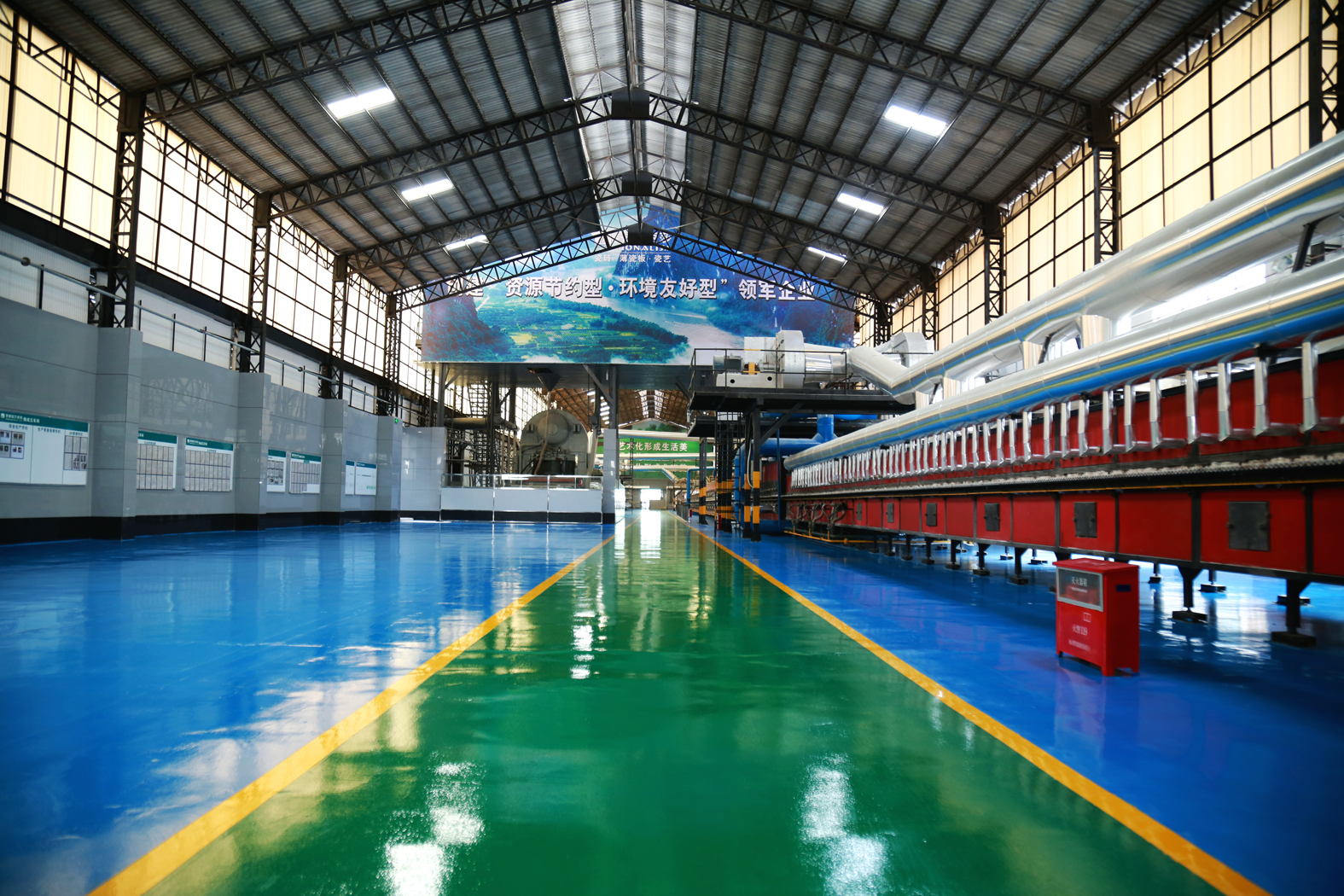
Why a UAE SPC Specification Differs from a Generic One
Specification mismatch, not a defective plank, is the more common source of SPC problems in hot climates. Three conditions drive that mismatch in the Gulf: solar-driven surface heat on any floor receiving direct sun, moisture that arrives from cleaning and plumbing rather than from weather, and installation schedules that place click-lock work inside buildings before air conditioning is commissioned.
SPC is a rigid-core flooring. The core is a high-density stone-powder and polymer composite, the surface is a printed decor layer protected by a wear layer, and the planks connect through a click-lock profile that requires no adhesive. That construction is what makes SPC relevant to UAE projects — a rigid core resists indentation and holds joint geometry, and a glue-free joint removes adhesive curing from the critical path. It is also what defines the limits: the same rigid core that resists indentation still expands and contracts thermally, and no click joint is a substitute for drainage.
| Service condition | Value used in this guide | What it tests | What to verify |
|---|---|---|---|
| Outdoor exposure | -20°C to 40°C | Thermal cycling, expansion and contraction, freeze-thaw at the low end | Dimensional stability data, joint tolerance, perimeter gap allowance |
| Indoor humidity | Up to 65% RH | Core moisture response, joint stability, edge sealing | Waterproof core claim, sealing detail at walls and wet edges |
| Standing water | Wet areas, spills, cleaning | Water ingress at joints, core swelling resistance | Core specification, joint integrity, fall-to-drain |
| Installation temperature | 18–30°C | Plank flexibility, click engagement, acclimatisation | Site temperature records, shading, HVAC availability |
| Post-install ambient | 13–37.7°C | In-service stability, movement at perimeters and thresholds | Expansion gaps, transition profiles, commissioning sequence |
What the -20°C to 40°C Range Actually Tests
A service envelope of -20°C to 40°C describes temperature cycling, not a single steady condition. Flooring in an outdoor or semi-outdoor location moves between a cool night and a hot day, and the joint system absorbs that movement plank by plank. In UAE service the upper bound is the binding constraint: an exposed surface receiving direct sun runs hotter than the air temperature around it, so 40°C ambient represents the weather side of the requirement rather than the surface side. The lower bound is largely unused margin in the Emirates, but it matters for two practical reasons — the same specification is often exported onward or stored in cold-chain logistics before installation, and a manufacturer serving Europe and the Gulf from one production line will publish a single wide envelope.
The measurable expression of that envelope is dimensional stability. Commercial-grade SPC flooring is required to meet dimensional stability of ≤0.10% under EN ISO 23999. That figure is the one to request as a test report rather than a brochure statement, because it is the property that determines whether a plank installed in a 30°C conditioned building in November still closes correctly after a summer at 40°C plus solar gain.
Freeze-thaw behaviour is worth understanding even where it does not occur locally. It relates to water absorbed into a core and the damage caused when that water expands. A waterproof rigid core is not designed to store water, so freeze-thaw resistance in practice reflects core density and joint tightness as much as cold-climate chemistry. For UAE buyers, the useful reading of a freeze-thaw claim is evidence about the core, not evidence about winter performance.
Humidity up to 65% RH: What Changes Indoors
Humidity up to 65% relative humidity covers most conditioned and semi-conditioned interior space in UAE residential and commercial buildings. At that level, the risk is not bulk water but moisture cycling at edges, thresholds and wall junctions — the places where temperature differentials are greatest and where cleaning water accumulates.
Three detailing decisions carry most of the performance:
- Perimeter gaps. A rigid plank needs room to move. Gaps hidden under skirting are functional, not cosmetic.
- Wet-edge sealing. Bathroom perimeters, kitchen appliance zones and door thresholds should be sealed so that standing water cannot travel under the field.
- Acclimatisation. Planks should be held in the installation environment long enough to equalise before the click-lock is engaged, so that the joint geometry is set at the temperature the building will actually run at.
In spaces that stay unconditioned during fit-out, internal temperatures can sit outside the 13–37.7°C post-install ambient range. In that situation, the practical control is sequencing: install after the envelope is closed and shading or temporary cooling is available, or accept a wider expansion allowance and document it.
Standing Water and the Waterproof Core
The waterproof core is the reason SPC can move into bathrooms, kitchens, laundry rooms and utility areas that wood-based flooring struggles with. A high-density stone-powder core does not rely on the decor layer for water resistance, so a spill that reaches the core at an open edge is a different event than it would be in laminate or engineered timber.
Two boundaries should be stated plainly. First, “waterproof core” describes the plank, not the assembly — water that sits on top of a well-installed floor with a sealed perimeter is manageable; water that ponds under the field because the substrate holds it is not. Second, standing water is not the same as drainage failure. On external terraces, the specification must include a fall to drain and an overflow path, because a floor that is waterproof but permanently submerged is a maintenance liability rather than a solution.
For wet areas, the practical verification set is short: core description, joint tightness after conditioning, perimeter sealing detail, and confirmation that expansion gaps are not filled with rigid material.
Installation Temperature 18–30°C Is the Most Missed Constraint
An installation temperature window of 18–30°C is comfortable for crews and demanding for UAE schedules. Unconditioned buildings under fit-out can exceed that band for much of the working day, particularly on upper floors with glazing installed and shading not yet in place.
Click-lock, glue-free installation is sensitive to this in a specific way: the profile must flex slightly to engage, and a plank that is too warm or too cold behaves differently at the joint. The result of ignoring the window is rarely an immediate failure — it is a floor that develops joint line opening or edge lifting months later, after the building is occupied and the contractor has demobilised.
A workable control plan is procedural rather than technical:
- Record floor and ambient temperature at the start and end of each installation shift.
- Sequence high-exposure floors after glazing, shading or temporary cooling is in place.
- Acclimatise planks on site in the same conditions, in a stacked and covered position.
- Hand over with the post-install ambient range of 13–37.7°C documented, so the facility team knows what the floor was designed to live in.
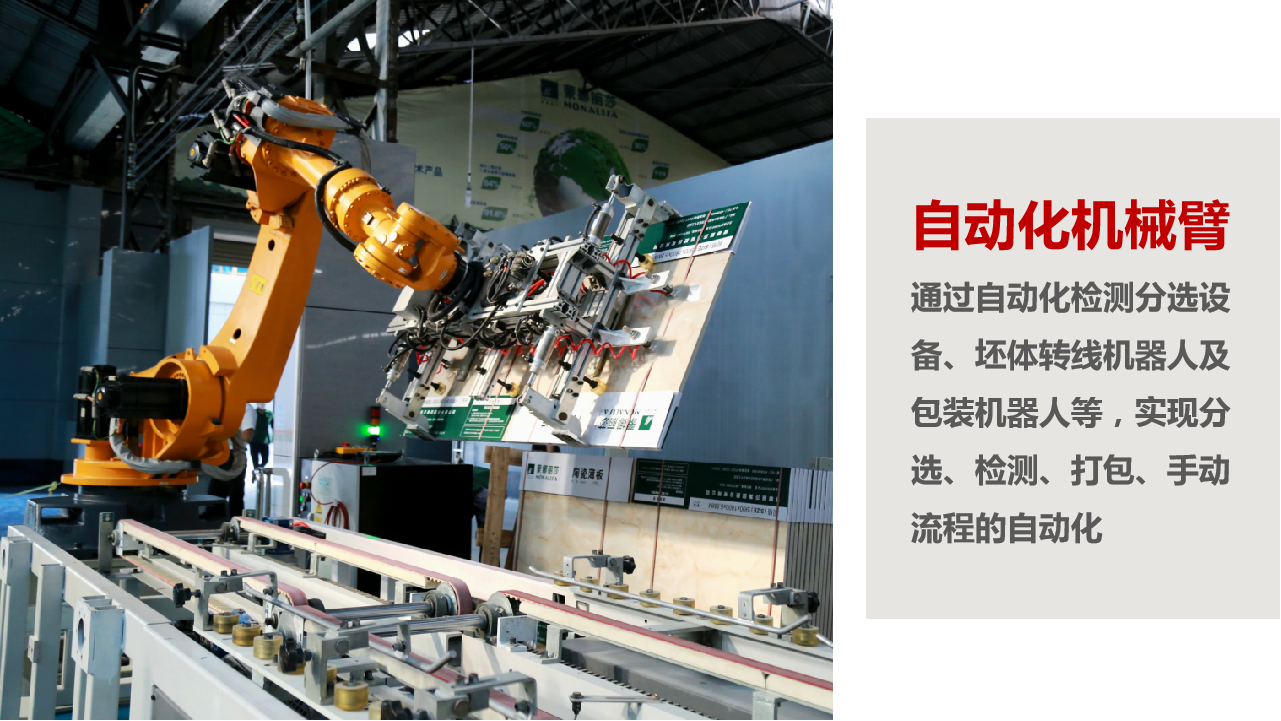
Monalisa's SPC Capability in a UAE Project Context
Monalisa Group Co., Ltd. (SZSE: 002918) is a Foshan-based building-materials manufacturer founded in 1992 whose main products are tiles, sintered stone slab and SPC floor. The group operates four production bases, employs 4,106 people with a 100-person R&D team, and lists the Middle East — including the UAE and Saudi Arabia — among its key markets alongside China, Southeast Asia, North America, Europe, Australia and Africa. Its corporate certifications include ISO9001 and ISO14001 within a set of 15 certifications.
For SPC specifically, the operating parameters a UAE buyer will work with are concrete. Production is offered in both OEM and ODM modes, with customisation of size, colour and logo. Minimum order quantity is 500 sqm per colour, lead time is 30 days, and monthly capacity is stated at 1,000 containers. Every batch undergoes pre-shipment inspection before leaving the factory, covering appearance, overall dimensions and dimensional tolerances, deviation in mass per unit area, residual indentation and peel strength. After-sales support provides a warranty typically of 10–25 years for residential use and 5–10 years for commercial use against manufacturing defects, conditional on correct installation and maintenance, with claims handled through proof of purchase and on-site or remote inspection.
Two honest notes belong in a procurement article. First, Monalisa's portfolio is led by ceramic tiles and sintered stone slabs; SPC is one line within a broader rigid-flooring offer, so buyers comparing the company primarily on ceramic credentials should request SPC-specific documentation at the exact product level rather than accepting group-level claims. Second, certification must be matched to model: the company's published NSF listing (C0676949-01, issued 2023-04-03) applies to named porcelain tile and slab models, which is a useful reminder that a certificate held by a manufacturer is not automatically a certificate held by the SKU you are buying.
Large-project delivery experience exists in the group's record: product 3516 was installed as airport flooring at Yogyakarta Airport in Indonesia for a municipal government client, covering 80,000 sqm and completed within two years, achieving a modern minimalist aesthetic for the terminal. That is a porcelain tile reference rather than an SPC reference, and it is cited here as evidence of project logistics and specification discipline at scale — not as a claim about SPC climate performance.
Where SPC Fits Across UAE Real-Estate Segments
Fit is decided segment by segment, because the same plank meets very different conditions in a villa bathroom and on an unshaded roof terrace.
| Segment | Dominant condition | Fit assessment |
|---|---|---|
| Residential apartments and villas, interior | Conditioned, humidity to 65% RH | Core interior use case; specify perimeter gaps and acclimatisation |
| Kitchens, bathrooms, laundries | Standing water, cleaning, spills | Waterproof core plus sealed wet edges; verify joint integrity |
| Covered terraces and shaded balconies | Sun, rain, temperature cycling | Conditional; requires UV-stable surface confirmation and drainage |
| Commercial offices | High traffic, conditioned, indentation load | Rigid core suits the load case; specify wear layer and commercial warranty |
| Hospitality, retail, public interiors | Traffic, frequent cleaning, VOC sensitivity | Fit with documented VOC performance and pre-shipment inspection |
| Fully exposed roofs and unshaded plazas | Continuous solar load, rain, ponding risk | Outside the default envelope; porcelain tile or a purpose-engineered outdoor system is the safer route |
Indoor air quality expectations run alongside climate fit in UAE commercial and hospitality work. GREENGUARD Gold certification, assessed under UL 2818, requires testing against more than 10,000 chemicals with strict VOC limits, and is commonly specified where the building targets a certified indoor environment. Where a project requires it, the certificate must name the product family and, ideally, the model being supplied.
Market Context: Why the Gulf Is Specifying More SPC
Market estimates for SPC vary by scope. One commercial research estimate puts the global SPC flooring market at USD 9.8 billion in 2025, while another widely quoted estimate is materially lower at around USD 5.9 billion for the same year; the divergence reflects how much adjacent rigid vinyl is counted inside the definition rather than disagreement about direction. Buyers should treat any single headline figure as a scope statement, not a precise measurement.
Two structural signals are more informative than the total. Rigid core is the dominant sub-type, holding a 74.2% revenue share in 2025 — which means the format a UAE specifier is most likely to be offered is also the one with the deepest supply base and the most comparable documentation. And China remains the largest exporter of plastic floor coverings under HS 391810, reaching USD 4.97 billion in 2024, which explains why Gulf importers typically evaluate Chinese capacity, lead time and certification readiness together rather than separately.
In practical terms, SPC availability is not the constraint in the UAE. Verifiable documentation is.
SPC vs Porcelain Tile and Engineered Wood in UAE Conditions
Comparison against alternatives is where a scenario-fit guide earns its place, because SPC is not the default answer for every surface.
| Criterion | SPC floor | Porcelain tile | Engineered wood / laminate |
|---|---|---|---|
| Standing water tolerance | Waterproof core; joint and perimeter detailing decide outcome | High; grout lines require maintenance | Low; swelling risk at edges |
| Direct sun and surface heat | Moderate; requires UV-stable surface confirmation | High | Low to moderate; colour fade and movement risk |
| Installation speed, no adhesive | Click-lock, glue-free; fast over flat substrates | Slower; wet trade, curing time | Fast, but moisture-sensitive substrate rules |
| Dimensional stability evidence | EN ISO 23999, ≤0.10% for commercial grade | Standardised ceramic test methods | Moisture-content dependent |
| Refurbishment over existing floor | Often possible with substrate assessment | Usually removal required | Possible, with flatness limits |
The boundary worth stating without hedging: SPC is not a like-for-like replacement for porcelain tile on continuously sun-exposed, unshaded exterior surfaces with ponding risk. Porcelain tile carries a higher heat and UV tolerance by material nature. SPC's advantage sits in semi-exposed, covered and interior environments where speed, comfort underfoot, joint-free appearance and a waterproof core matter more than maximum heat tolerance — and where the installation temperature window of 18–30°C can actually be controlled on site.
A Procurement Checklist for UAE SPC Projects
| Check | Evidence to request | Stage |
|---|---|---|
| Climate envelope | Written service range covering temperature and humidity, matched to the exact model | Evaluation |
| Dimensional stability | Test report against EN ISO 23999, ≤0.10% for commercial grade | Evaluation |
| Wet-area performance | Core specification, joint integrity after conditioning, sealing detail | Evaluation |
| Indoor air quality | Model-level VOC documentation where GREENGUARD Gold or UL 2818 is specified | Evaluation |
| Sample conditioning | Samples held at site conditions before approval | Execution |
| Installation temperature record | Daily log against the 18–30°C window, with mitigation notes | Execution |
| Pre-shipment inspection | Appearance, dimensions and tolerances, mass deviation, residual indentation, peel strength | Execution |
| Commercial terms | MOQ per colour, 30-day lead time, warranty terms and claim process | Execution |
Future Outlook
The direction of travel in UAE specification is toward climate evidence rather than surface appearance. Rigid core already holds the majority of SPC revenue globally, which concentrates competition on documentation quality: who can produce a dimensional stability report, a model-specific VOC certificate and an installation temperature protocol without a six-week correspondence cycle.
Two developments are likely to shape the next phase. First, as covered and semi-exposed residential terraces become standard in Gulf villas and mid-rise developments, demand will grow for SPC variants positioned explicitly for semi-exterior service, with UV-stable surfaces and drainage-ready detailing. Second, fit-out sequencing will increasingly be written into contracts, because the 18–30°C installation window is a programme constraint as much as a technical one.
For buyers, the practical implication is unchanged: specify the envelope, request model-level evidence, and record the installation conditions. Those three steps do more for a UAE floor than any single product claim.
FAQ
What temperature range should SPC floor be specified for in UAE projects?
A UAE specification should cover outdoor exposure from -20°C to 40°C, indoor conditions up to 65% relative humidity, and a post-installation ambient range of 13–37.7°C. The upper bound is the operative one locally, because an unshaded surface receiving direct sun runs hotter than the surrounding air. The lower bound is mainly relevant for export transit and cold storage rather than UAE service.
Can SPC floor handle standing water in bathrooms and kitchens?
A waterproof rigid core is designed to resist water at the plank, and standing water in wet areas — spills, cleaning, plumbing incidents — is the use case that core is built for. The assembly still decides the outcome: perimeter gaps must be sealed at wet edges and water must be able to drain rather than pond beneath the field. Core performance and installation detailing should be verified separately.
What installation temperature must be maintained on a UAE site?
The installation window is 18–30°C. Click-lock, glue-free joints depend on the plank flexing slightly to engage, so planks and ambient conditions should be brought into that band and held there during acclimatisation and installation. Where an unconditioned building exceeds the window, sequencing work after glazing, shading or temporary cooling is the practical control.
What relative humidity can SPC flooring tolerate indoors?
Indoor conditions up to 65% relative humidity are within the envelope described in this guide. At that level the critical points are edges, thresholds and wall junctions rather than the field of the floor, so perimeter gaps, wet-edge sealing and adequate acclimatisation carry most of the performance. Higher sustained moisture should be assessed as a specific condition rather than assumed.
Is SPC floor suitable for fully exposed outdoor areas in the UAE?
Fully exposed, unshaded surfaces with continuous solar load and ponding risk sit outside SPC's default envelope. Porcelain tile has higher heat and UV tolerance by material nature. SPC performs best in interiors, wet areas, commercial spaces and covered or shaded terraces, where a UV-stable surface can be confirmed and drainage is designed in.
What evidence should a buyer request to confirm dimensional stability and VOC performance?
For dimensional stability, request a test report against EN ISO 23999 showing ≤0.10% for commercial-grade product. For indoor air quality, request certification evidence at model level — GREENGUARD Gold is assessed under UL 2818 and requires testing against more than 10,000 chemicals with strict VOC limits. In both cases the documentation should name the product being supplied, not only the manufacturer.
What are the order terms for an SPC project with Monalisa?
Monalisa offers OEM and ODM production with customisation of size, colour and logo. The minimum order quantity is 500 sqm per colour, lead time is 30 days, and monthly capacity is stated at 1,000 containers. Every batch undergoes pre-shipment inspection covering appearance, dimensions and tolerances, mass deviation, residual indentation and peel strength, with warranty support typically of 10–25 years for residential and 5–10 years for commercial applications.
Monalisa Group Co., Ltd. (SZSE: 002918) publishes a corporate brochure covering its production bases, product ranges and certifications: download the Monalisa brochure (PDF).
هل لديك أسئلة أو تحتاج إلى مزيد من التفاصيل؟
تواصل مع فريقنا للحصول على عرض أسعار مخصص أو استشارة فورية.
طلب عرض أسعار
املأ النموذج أدناه وسيتواصل معك فريقنا بعرض مقترح مخصص.
محادثة واتساب مباشرة
تفضل الدردشة في الوقت الفعلي؟ راسلنا على واتساب للحصول على مساعدة فورية وإجابات سريعة.
- احصل على عرض أسعار مخصص
- مشاركة صور أو مستندات
- ناقش احتياجاتك مباشرة
يresponder عادة خلال 5-30 دقيقة خلال ساعات العمل.