
Safari Tent Configurations for Eco-Resorts, Safari Parks, and Beach Hotels
Safari tourism has moved tented accommodation from a niche lodge format into mainstream hospitality development. The safari tourism market is expected to reach USD 66.9 billion by 2033, growing at a 7.7% CAGR from 2026 (Grand View Research), and Africa recorded an 8% increase in international arrivals in 2025, reaching 81 million travellers (UNWTO, cited by Grand View Research). In parallel, the glamping tents market was valued at USD 3,124.89 million in 2023 and is projected to reach USD 6,484.86 million by 2032 (Zion Market Research).
A safari tent is not one product with one configuration. Matching a configuration to a setting means aligning three layers — structural platform, envelope strategy, and interior program — with the climate, guest profile, and operating model of a specific site. The same frame-and-fabric platform can serve a jungle lodge, a coastal hotel, or a national park concession, but window strategy, insulation level, size band, and interior fit-out will differ in each case. This article sets out how those layers change across eco-resorts, safari parks and wildlife lodges, and beach hotels, using the Epic, Vega, and Lodestar safari tent models from Stars Glamping as the reference platform.
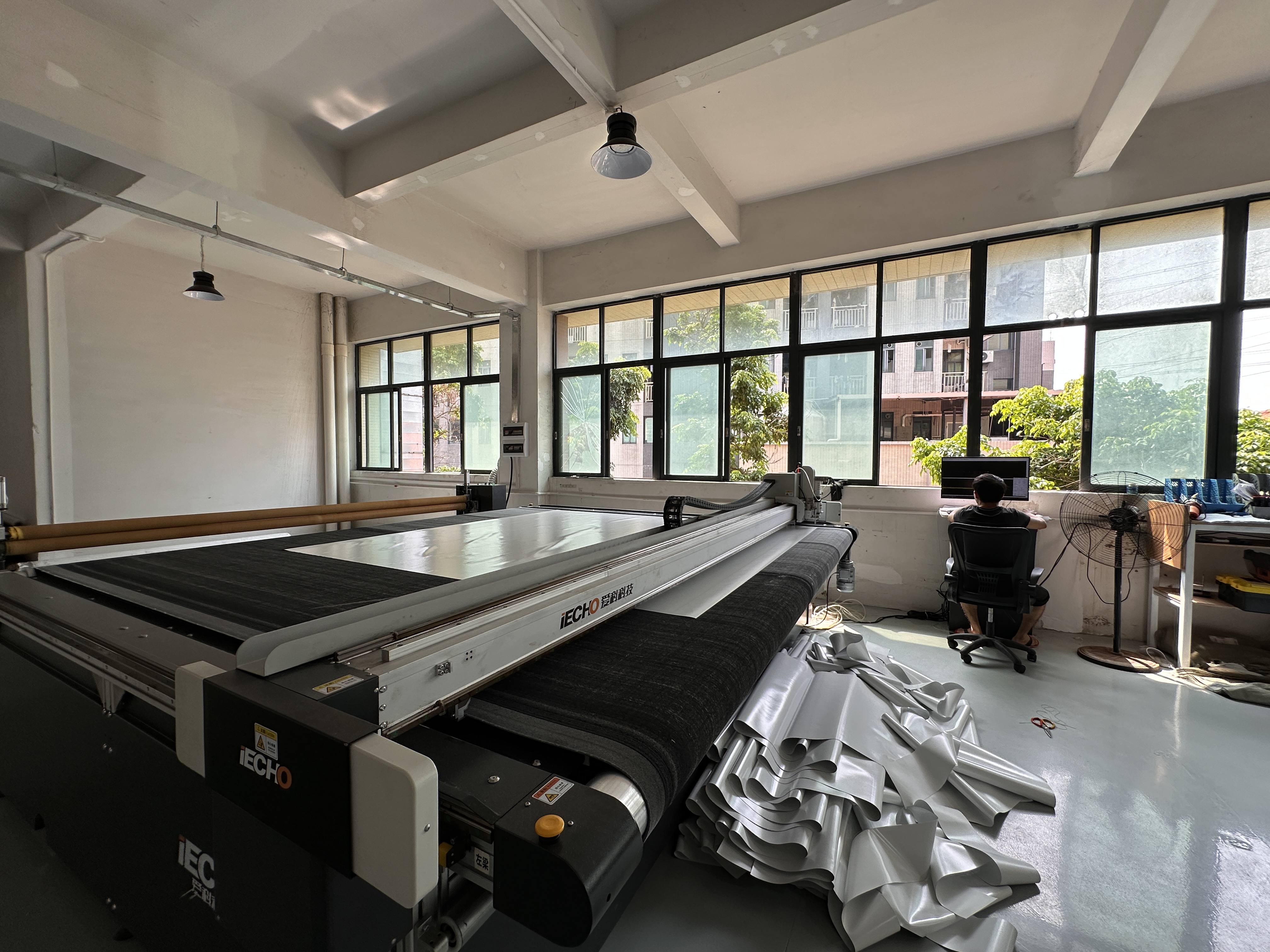
Fabric Workshop: PVC-coated polyester covers are produced before frame assembly. The 850g/m² cover specification is shared across the Epic, Vega, and Lodestar safari tent models.
Why Site Setting Determines Configuration
Three variables decide whether a configuration performs: exposure, guest program, and operations.
Exposure covers wind, salt, ultraviolet radiation, humidity, snow, dust, and thermal swing. A beach site thirty metres from the tide line and a sheltered river-valley camp make completely different demands on the same tent platform, even when both are described internally as resort projects.
Guest program covers dwell time, sleeping configuration, the balance between indoor and outdoor space, and how guests move through the unit. A safari park guest typically sleeps, showers, and leaves early for game drives. An eco-resort guest may spend the afternoon inside the unit, which raises the value of shaded openings, cross-ventilation, and a separate lounge zone.
Operations covers service intervals, spare-part availability, housekeeping turnaround, and revenue per square metre. These are the factors where most configuration mismatches surface commercially rather than structurally: a unit that is too small for its rate card, too exposed in winter, or too hot in the late afternoon.
A Three-Layer Configuration Framework
Configuration decisions sit in three layers. Buyers who separate them during evaluation tend to reach a workable specification faster than buyers who compare catalog models as whole units.
| Layer | What it decides | Eco-resort / eco-tourism camp | Safari park & wildlife lodge | Beach hotel & coastal site |
|---|---|---|---|---|
| Structural platform | Load path and corrosion strategy | Anti-corrosion finished solid wood or heavy-duty galvanized steel frame | Solid wood where visual integration matters; galvanized steel where exposure is greater | Heavy-duty galvanized steel frame prioritised for salt exposure |
| Envelope | Water, UV, thermal, and fire performance | 850g/m² PVC-coated polyester with breathable Oxford canvas lining | Same envelope; ventilation openings prioritised | Same envelope with UV-resistant, anti-fading cover and a stricter washing regime |
| Glazing and screening | Sightlines, ventilation, insect control | Large panoramic windows balanced with mesh screens | Panoramic windows oriented to wildlife corridors; mesh screens throughout | Panoramic windows with a shading strategy for afternoon sun |
| Interior program | Guest comfort and revenue yield | Separated sleeping and living zones; bathroom integration | Sleeping-first layouts with efficient circulation | Bathroom, storage, and shaded deck as standard guest expectations |
| Size band | Program fit | Standard footprints across the platform are 20㎡, 30㎡, 40㎡, and 50㎡; all are customizable | ||
The size bands suggested for each setting in this article describe planning logic, not fixed product restrictions. Standard sizes across the platform are 20㎡, 30㎡, 40㎡, and 50㎡, and size and layout customization is part of the documented customization scope.
The Reference Platform: Epic, Vega, and Lodestar
Stars Glamping (Stars Glamping Tent Co., Ltd) is a Guangzhou-based manufacturer of luxury glamping tents, safari tents, and glamping domes, founded in 2018 and operating a 20,000㎡ manufacturing base together with a 4,000㎡ simulation exhibition hall in Nansha District, Guangzhou. Around 90% of its output is exported, and its products are sold to more than 40 countries and regions.
The safari range covers three models — Epic, Vega, and Lodestar — built on a shared technical platform. All three use a frame of anti-corrosion finished solid wood or a heavy-duty galvanized steel frame, a cover of 850g/m² PVC-coated polyester fabric, and a breathable Oxford canvas inner lining. The models carry the same published performance envelope:
- Waterproof rating: ≥ 3000mm H₂O
- UV protection: UV-resistant, anti-fading
- Fire rating: B1 fire-retardant
- Wind resistance: up to 100 km/h (Level 9 wind)
- Snow load: 60kg/m²
- Temperature resistance: −25°C to +60°C
- Service life: 8–12 years
- Standard sizes: 20㎡, 30㎡, 40㎡, 50㎡ (customizable)
- Design features: large panoramic windows, mesh screens, wood-style structure design
Category positioning differs between the three models. Epic and Lodestar are catalogued across the Wildlife Lodge Tent, Jungle Safari Accommodation Tent, Eco Tourism Tent, National Park Lodge Tent, and Adventure Camping Lodge Tent categories. Vega is catalogued as a Wildlife Lodge Tent. For buyers, the practical reading is that category labels describe intended application and market positioning, while the published structural and envelope ratings are common to the range.
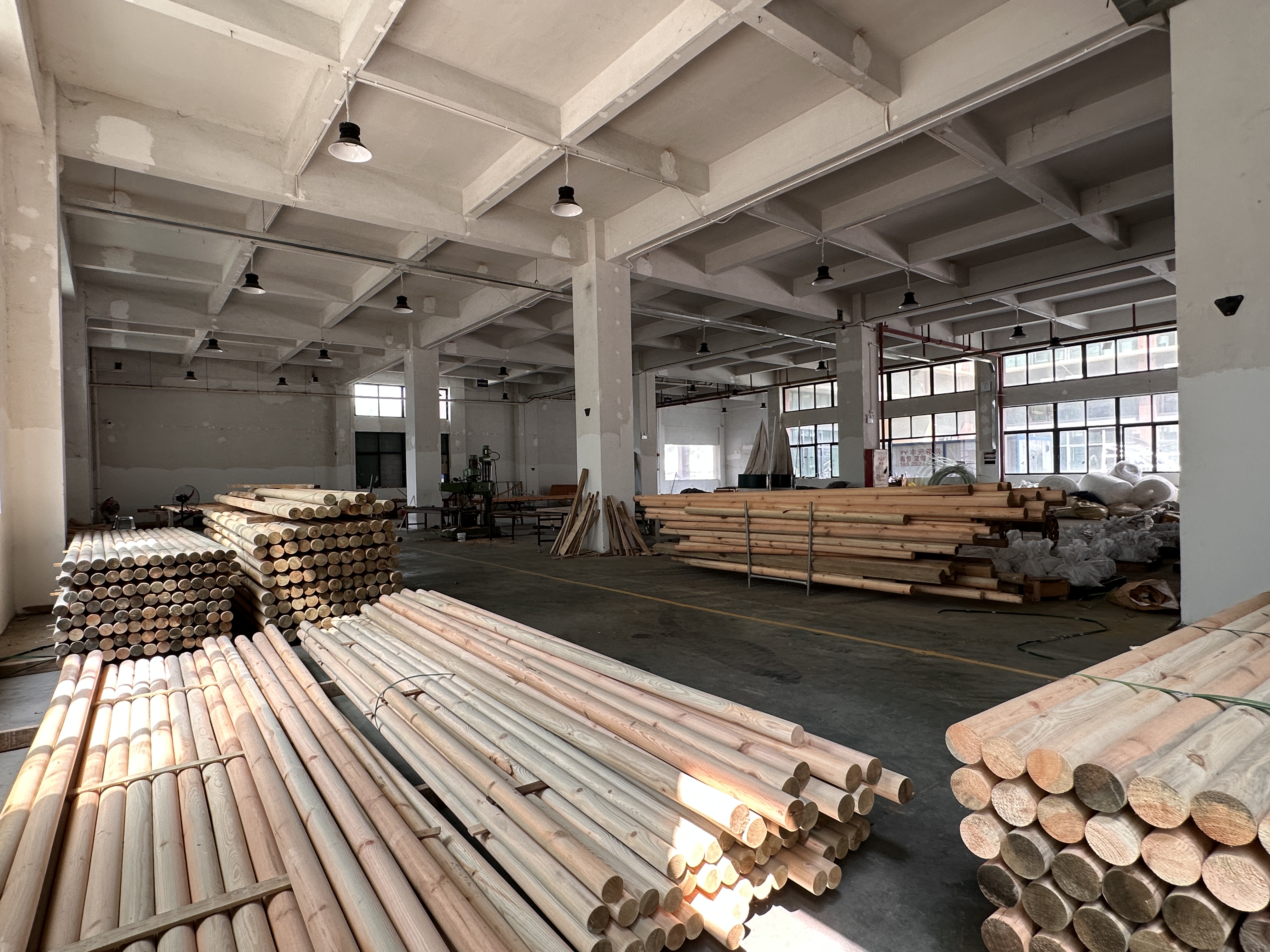
Timber Warehouse: frame components are prepared in-house. The platform supports either an anti-corrosion finished solid wood frame or a heavy-duty galvanized steel frame, which is the first configuration decision for most projects.
Sizing: What 20㎡, 30㎡, 40㎡, and 50㎡ Actually Decide
Size is where configuration choices become commercial. The four standard footprints are normally planned against four different guest programs.
A 20㎡ footprint supports a compact double unit. It is the band most often planned for high-turnover safari park camps, where guests sleep and leave early, and for phased coastal rollouts where a first phase tests demand before land is committed.
A 30㎡ footprint is the most flexible band. It accommodates a sleeping area, circulation space, and a compact bathroom, and it is the size at which most operators can credibly offer a premium rate without moving into suite territory.
A 40㎡ footprint allows sleeping and living functions to be separated. Eco-resort projects generally move to this band once average stay length extends beyond a couple of nights, because guests begin to use the unit as a room rather than a bed.
A 50㎡ footprint supports full suite programming: a lounge, an integrated bathroom, storage, and a shaded deck. It suits flagship units positioned at the top of a property rate structure.
Layout is not fixed by size. Documented customization scope includes size and layout customization, tent structure design, fabric material selection (PVC / PVDF / insulation), frame material (steel / aluminum), interior layout and furniture, bathroom integration, logo branding, and colour customization. Buyers evaluating a site should therefore treat the four standard footprints as starting points for a layout discussion rather than as fixed room types.
Configuring for Eco-Resorts and Eco-Tourism Camps
Eco-resort configuration is driven by three requirements: the unit should sit lightly on the site, it should feel connected to the landscape, and it should remain maintainable across a long operating season.
The wood-style structure design of the Epic, Vega, and Lodestar models addresses the first two requirements by giving the tent a built rather than temporary appearance, while the breathable Oxford canvas lining helps manage internal condensation and comfort. Large panoramic windows carry the landscape into the room, and mesh screens allow cross-ventilation without opening the unit to insects — a deciding factor in humid and tropical eco-tourism camps.
For operators marketing on sustainability, the relevant configuration questions are usually material service life and replacement strategy rather than a single environmental label. The published service life is 8–12 years, and cover, lining, and frame components are separately replaceable, which allows a property to refresh a unit without rebuilding the whole structure. Buyers who need a longer envelope life are effectively selecting a different material system rather than a different size.
Configuring for Safari Parks, Wildlife Lodges, and National Park Lodges
In safari and national park settings, configuration is dominated by sightlines, guest scheduling, and visual impact on the reserve.
Epic and Lodestar are catalogued specifically across the Wildlife Lodge Tent, Jungle Safari Accommodation Tent, Eco Tourism Tent, National Park Lodge Tent, and Adventure Camping Lodge Tent categories, which reflects how these units are typically deployed: arranged along a wildlife corridor or waterline, oriented so that the large panoramic windows face the viewing direction, and sized to keep walking distances short for early-morning departures.
Mesh screens matter more here than in any other setting. Guests leave doors and windows open during the day, and screened openings allow airflow without compromising the enclosure against insects. The wood-style structure also plays a planning role: in protected or visually sensitive reserves, a low, timber-toned profile tends to be easier to place than a hard building of equivalent capacity.
Interior programming in these camps is usually sleeping-first. The 20㎡ and 30㎡ footprints cover most demand, with the larger 40㎡ and 50㎡ bands reserved for family units, guides, or premium-view positions. Because all four sizes are customizable, a camp can standardise on one footprint and vary the layout for view orientation rather than maintaining multiple structural variants.
Configuring for Beach Hotels, Coastal Sites, and Mountain Settings
Coastal and mountain settings place the heaviest demands on the envelope, and they pull configuration choices in different directions.
Beach and coastal hotels. Salt-laden air, sustained UV, windborne spray, and driving rain are the four stressors. On the reference platform, the heavy-duty galvanized steel frame is the logical structural choice where salt exposure is continuous, and the UV-resistant, anti-fading cover with a waterproof rating of ≥ 3000mm H₂O addresses rain and spray. Mesh screens are still useful for ventilation, but they also require a defined cleaning cycle in sandy environments, and buyers should agree that maintenance interval with the supplier at the specification stage rather than after handover.
Mountain and winter sites. Here the governing figures are the 60kg/m² snow load and the −25°C to +60°C operating temperature range. Insulation is a fabric-layer option within the documented customization scope, so winter performance is a specification decision made at order stage — not an inherent property of the base model. Projects that need a fully insulated, glass-walled envelope are choosing a different product family.
Desert camps. The same temperature range applies, with UV exposure and dust as the primary constraints. Panoramic windows deliver the expected views, but screen selection becomes a trade-off between ventilation and dust ingress, and it should be resolved with the supplier against the site prevailing wind direction.
Where the Safari Tent Platform Reaches Its Limits
Independent evaluation requires knowing where a platform stops. Three boundaries are published rather than implied.
Wind. The Epic, Vega, and Lodestar models are rated up to 100 km/h, equivalent to Level 9 wind. Sites whose design wind loads exceed that figure fall outside the rated envelope and require a different structural approach — not a heavier accessory package.
Service life. The published service life is 8–12 years. Where a project requires a 25–30 year structural horizon with a PVDF architectural membrane and a 120 km/h wind rating, the correct comparison is the manufacturer luxury hotel tent range, not the safari range.
Code and permanence. Safari tents are prefabricated structures. Where local permitting requires permanent construction, or where thermal performance must meet residential building standards, a tent platform is the wrong instrument regardless of how well it is configured.
Market Signals Shaping Configuration Choices
Three market signals are currently shaping how buyers specify tented accommodation.
Demand growth. A safari tourism market heading toward USD 66.9 billion by 2033 at a 7.7% CAGR from 2026 (Grand View Research), combined with an 8% rise in African international arrivals in 2025 to 81 million travellers (UNWTO, cited by Grand View Research), supports phased development rather than single large builds. Phasing favours standardised footprints with variable layouts.
Fire performance expectations. In North America, tented commercial accommodation is commonly referenced against flame retardancy standards such as CPAI-84 and NFPA 701. The safari range carries a B1 fire-retardant cover rating, and buyers should confirm the applicable national standard for their market during specification rather than at delivery.
Certification documentation. Stars Glamping holds a General Product Safety Directive Attestation of Conformity (CE) issued by UDEM under certificate number M.2024.206.C96444, assessed against EN ISO 5912:2020, valid from 31 January 2024 to 30 January 2029, with a scope covering tents including Safari Lodge. Certification scope, standard, and validity dates are the three fields buyers should verify directly on the certificate.
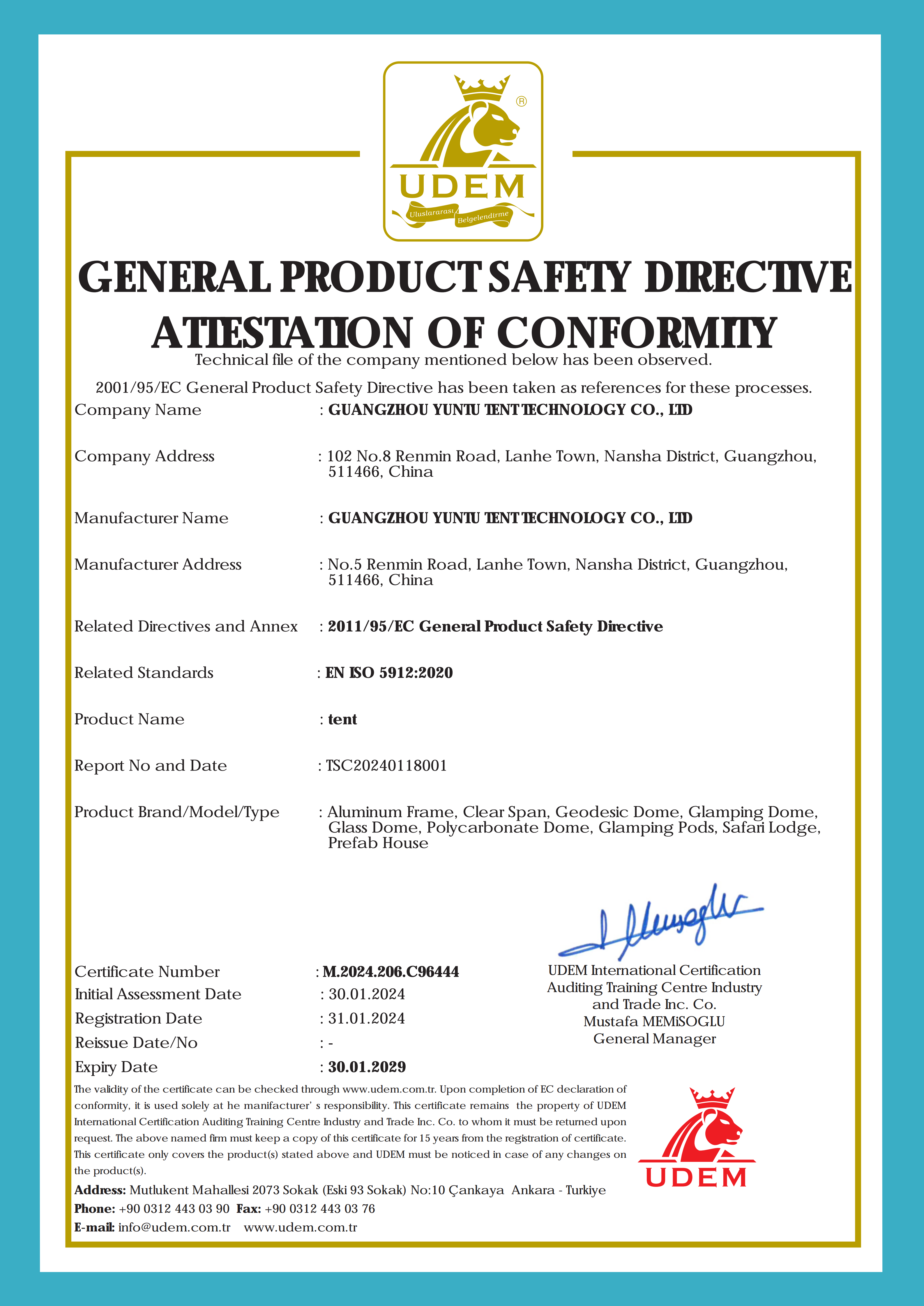
CE General Product Safety Directive Attestation of Conformity, certificate M.2024.206.C96444, assessed against EN ISO 5912:2020 and valid from 31 January 2024 to 30 January 2029; the scope includes Safari Lodge.
Comparing Safari Tents with Traditional Hard Construction
The choice between a safari tent platform and conventional hard construction is not a quality comparison; it is a fit comparison.
| Dimension | Safari tent platform (Epic / Vega / Lodestar) | Conventional hard construction |
|---|---|---|
| Rated envelope | Wind up to 100 km/h (Level 9); snow load 60kg/m²; −25°C to +60°C | Engineered per local building code; ratings vary by design |
| Published service life | 8–12 years | Longer structural life with periodic envelope maintenance |
| Reconfiguration | Cover, lining, and frame components separately replaceable; layout customized at order stage | Requires structural works |
| Site works | Prefabricated and site-assembled, which generally supports phased rollouts | Generally requires heavier foundations and longer site programmes |
| Thermal performance | Specification-dependent; insulation is a fabric-layer option | Can meet residential-grade thermal standards where required |
| Best fit | Low-impact hospitality, phased camps, view-driven layouts | Sites where code or permanence requirements dominate |
From Configuration to Execution: OEM Support, Lead Times, and Acceptance
Once a configuration is agreed, execution terms determine whether the specification survives to the site. Stars Glamping operates as a custom luxury tent manufacturer and glamping project solution provider, offering OEM and ODM design and production services together with engineering support for customized projects.
- Capacity and quality control. Monthly output is 50–80 luxury tent units depending on project size. Quality control covers raw material inspection, in-process quality control, pre-shipment inspection, and third-party inspection where required.
- Lead time. 15–20 days for standard models; 20–30 days for customized projects.
- Order scale. Minimum order quantity is 1 unit, with a sample available for validation.
- Commercial terms. Delivery can be arranged as EXW, FOB, CIF, or DDP; payment is by T/T or L/C, negotiable for large orders.
- Acceptance. Factory inspection with photo and video confirmation before shipment.
- After-sales. Installation guidance, engineering drawings, 24/7 technical support, spare parts supply, maintenance support, and remote or on-site project assistance.
For configuration-driven projects, the practical implication is that a buyer can specify a mixed set — 20㎡ units for a high-turnover zone and 50㎡ units for a premium position — inside a single order, rather than aligning the whole site to one footprint.
A Buyer Configuration Checklist
- Confirm the design wind, snow, and temperature figures for the site and compare them against the rated envelope.
- Decide frame strategy first: anti-corrosion finished solid wood or heavy-duty galvanized steel.
- Confirm the cover specification and the inner lining, and whether insulation is required.
- Map each footprint (20㎡, 30㎡, 40㎡, 50㎡) to a guest program before mapping it to a rate.
- Define the window and mesh-screen strategy, including maintenance intervals for sandy or dusty sites.
- Agree bathroom integration and interior layout as part of the order, not as a later addition.
- Verify the certificate number, standard, scope, and validity dates on the conformity documentation.
- Agree acceptance method, delivery term, and after-sales scope in writing before production.
Future Outlook
The direction of travel points toward fewer, better-specified configurations rather than more model variants. As safari and glamping demand continues to expand — with the glamping tents market projected to move from USD 3,124.89 million in 2023 toward USD 6,484.86 million by 2032 (Zion Market Research) — operators are under pressure to phase construction, standardise footprints, and extend the usable season.
That pressure translates into three procurement trends: insulation specified at order stage rather than retrofitted, replaceable covers and linings favoured over whole-unit replacement, and certification documentation verified as a standard line item in supplier evaluation. Buyers who build these three items into their configuration process early will find the later stages of a project considerably simpler.
FAQ
What is the difference between a Wildlife Lodge Tent, a Jungle Safari Accommodation Tent, and a National Park Lodge Tent?
These are application categories rather than different structural systems. The Epic and Lodestar safari tent models are catalogued across the Wildlife Lodge Tent, Jungle Safari Accommodation Tent, Eco Tourism Tent, National Park Lodge Tent, and Adventure Camping Lodge Tent categories, while the Vega model is catalogued as a Wildlife Lodge Tent. The published frame, cover, waterproofing, fire, wind, snow, and temperature ratings are the same across the three models, so the category indicates intended application, not a different performance class.
What sizes are available in the Epic, Vega, and Lodestar safari tents, and can they be customized?
Standard sizes across the three models are 20㎡, 30㎡, 40㎡, and 50㎡, and all are customizable. The documented customization scope includes size and layout customization, tent structure design, fabric material selection (PVC / PVDF / insulation), frame material (steel / aluminum), interior layout and furniture, bathroom integration, logo branding, and colour customization.
Are these safari tents suitable for all-weather use and winter operation?
The published platform ratings are waterproof ≥ 3000mm H₂O, wind resistance up to 100 km/h (Level 9 wind), snow load 60kg/m², temperature resistance −25°C to +60°C, a B1 fire-retardant cover, and UV-resistant anti-fading protection. Insulation is a fabric-layer option inside the customization scope, so winter performance depends on the agreed specification rather than on the base model. Sites whose design wind loads exceed 100 km/h fall outside the rated envelope.
Can a safari tent be configured with a bathroom, kitchen, and electrical services?
Bathroom integration and interior layout and furniture are documented parts of the customization scope, so a bathroom can be designed into the unit rather than added as a separate block. Kitchen and electrical provisions are not listed as standalone catalog options; they are normally resolved within the interior layout and services design agreed during project engineering, and buyers should confirm them as part of that layout package.
What fire and certification documentation applies to this safari tent range?
The safari tent cover carries a B1 fire-retardant rating. Stars Glamping holds a General Product Safety Directive Attestation of Conformity (CE) issued by UDEM under certificate number M.2024.206.C96444, assessed against EN ISO 5912:2020, valid from 31 January 2024 to 30 January 2029, with a scope that includes Safari Lodge. For commercial tent applications in North America, flame retardancy is commonly referenced against standards such as CPAI-84 and NFPA 701.
What are the minimum order quantity, lead times, and acceptance process?
The minimum order quantity is 1 unit, and a sample is available. Lead time is 15–20 days for standard models and 20–30 days for customized projects. Delivery terms can be arranged as EXW, FOB, CIF, or DDP. Acceptance is based on factory inspection with photo and video confirmation before shipment, and third-party inspection is available. Payment terms are T/T or L/C, negotiable for large orders.
Manufacturer brochure and full specification download: https://cdn.socialarks.com/sbsp/24776/0/2026/0417/69e1f2fd1dd44.pdf