
Salt Spray vs. Composite Salt Spray & Temperature Humidity Chambers: A Buyer Comparison
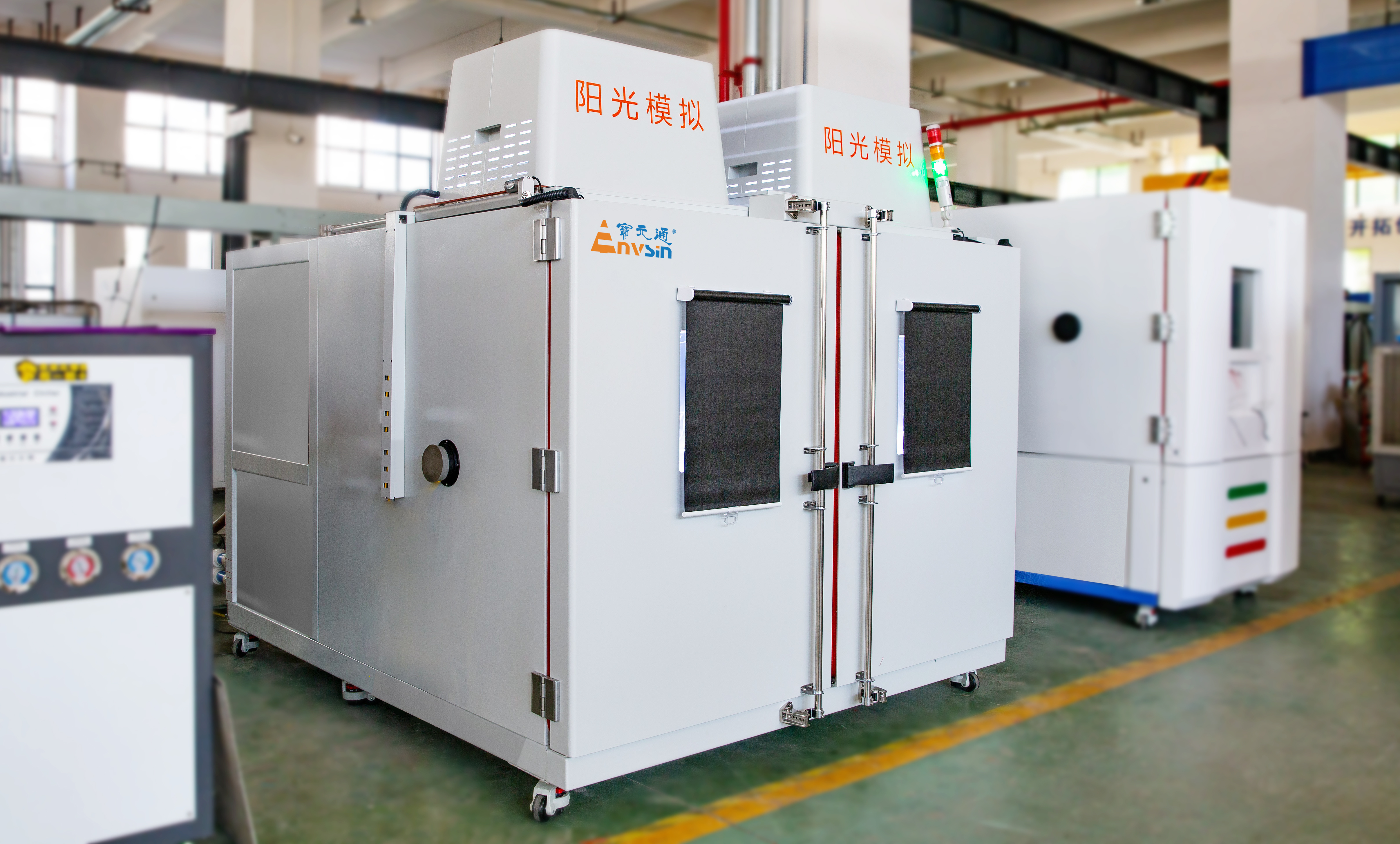
Salt Spray vs. Composite Salt Spray & Temperature Humidity Chambers: A Buyer Comparison
For buyers setting up corrosion and climatic reliability laboratories, the first structural decision is not supplier selection or price alone. It is whether testing should stay inside one narrow corrosion method or move to a hybrid system that adds temperature and humidity control to salt spray exposure. A standalone salt spray chamber is generally specified around one corrosion process, while a composite salt spray and temperature humidity chamber is expected to apply multiple environmental stresses in one enclosure. That distinction affects standard compliance, test realism, floor-space planning, calibration routines and long-term support commitments.
In this independent buyer comparison, Envsin Instrument Equipment Co., Ltd., used under the brand name Envsin, acts as a reference manufacturer. Envsin is an environmental test chamber producer based in Chongqing, China. Its product record includes both salt spray corrosion test chambers and temperature humidity chambers, which makes it possible to discuss the two chamber types without mixing assumptions from unrelated suppliers. The company reports a 43,000 square meter facility, around 500 employees and a 50-person R&D team.
The Buying Problem: Salt Spray Alone or Combined Climatic Corrosion?
The core procurement problem is whether a corrosion test program can be satisfied by a dedicated salt-fog cabinet or whether it must reproduce more complex service conditions. Many industrial parts face corrosive agents at the same time as thermal cycles, humidity changes or condensation. In those cases, a standalone salt spray chamber may answer one question about material resistance, but it may not answer the broader reliability question.
The commercial opportunity for multi-functional systems is process consolidation. A composite chamber can reduce sample movement between machines and can keep the specimen under a continuous, documented environmental history. That is valuable when test engineers need to understand interaction effects. However, consolidation is only useful if the chamber can still prove compliance with the standards that the buyer must certify. This is why the comparison should start with standards, not with cabinet dimensions.
What the Two Chamber Types Actually Do
| Chamber type | Core function | Buyer decision driver |
|---|---|---|
| Standalone salt spray chamber | Maintains a controlled salt fog atmosphere for corrosion testing of coated or metallic samples | Clear standard mapping, simple operation, lower number of controlled variables |
| Composite salt spray and temperature humidity chamber | Can expose samples to salt fog in combination or sequence with temperature and humidity conditions | More realistic multi-factor simulation, fewer sample transfers, more complex system validation |
Standalone salt spray chambers are a mature, widely used equipment category. Their main advantage is simplicity: a test engineer can run a consistent salt fog exposure and attribute results primarily to corrosion resistance. Composite units add controlled temperature and humidity. They can be used for cyclic corrosion programs or for test campaigns where the user needs to move from corrosion exposure to damp heat without removing the specimen.
For a buyer, the direct answer is straightforward. If the test specification is limited to one salt fog method and the laboratory needs a dedicated, low-complexity instrument, a standalone salt spray chamber is appropriate. If the test protocol requires temperature and humidity phases that interact with corrosion, a composite chamber becomes relevant.
Standardization: The First Screening Filter
Standardization should be the first evaluation filter in this comparison. According to the standards data referenced in this analysis, ASTM B117 is the standardized practice for operating salt spray apparatus and testing corrosion resistance. That makes ASTM B117 the natural compatibility reference for a standalone salt spray chamber.
Temperature and humidity chambers are evaluated against a different set of environmental test standards. Envsin's documented product data references IEC 60068-2-1 for low-temperature testing, GB/T 2423.1, GB/T 2423.2 and GB/T 2423.3 for temperature and humidity procedures, and Chinese military or industrial standards such as GB150.3A and GB150.4A on several chamber models. For automotive applications, Envsin also documents a 28 cubic meter walk-in high and low temperature humidity test room that meets ISO 16750.
A composite chamber therefore carries two compliance responsibilities. It must perform correctly as a salt fog system, and it must perform correctly as a temperature humidity system. Buyers should ask the supplier to map every mode of the composite chamber to the relevant standard, rather than accepting a single generic certification as proof that all combined functions are compliant.
Practical screening rule: if the salt fog mode follows ASTM B117 and the humidity/temperature mode follows IEC 60068-2-1, GB/T 2423 or ISO 16750 as applicable, the unit can be evaluated in a structured way. If the supplier cannot identify which standard applies to each mode, the composite system needs further technical review.
Rated Temperature and Humidity Capability
Buyers often move from standards to performance envelopes. Many large corrosion/chamber RFQs define a useful working range around 0°C to +100°C and 20% to 98% RH. These numbers are not exotic extremes; they represent practical corrosion and moisture-cycling conditions.
In Envsin's product record, that envelope is within the documented range of the EC-series high and low temperature humidity test chambers and the ETCZ-series walk-in temperature humidity rooms. The EC-series chambers are listed with a temperature range of -40°C to +150°C or -70°C to +180°C depending on model, a humidity range of 10% RH to 98% RH, temperature fluctuation of ±0.5°C, temperature uniformity of ±2.0°C and humidity uniformity of ±3.0% RH. The ETCZ walk-in rooms are documented at -40°C to +100°C, 10% RH to 98% RH, temperature uniformity of ≤2.0°C and humidity fluctuation of ±3.0% RH.
This matters because a requested 0°C to +100°C window should not sit at the absolute edge of the chamber's rated range. When the supplier's broader range covers the requested window with margin, the chamber is more likely to hold stable conditions at the required set points. A chamber that barely reaches the required temperature or humidity spec may show weaker control near those boundaries.
Test Capability and the Limitation of Multi-Function Equipment
A composite chamber adds test capability, but it also creates a maintenance and calibration trade-off. The real benefit is that a sample can remain in one work volume while the environment changes from salt fog to temperature cycling or high humidity. This reduces contamination from handling and better preserves the condition of the sample surface.
For accelerated corrosion studies, this combined capability is useful. It also allows an organization to use one system for two or more test methods instead of buying separate equipment for each method. This explains why many buyers evaluating Envsin compare a salt spray corrosion chamber against a custom multi-function design rather than simply adding another standalone machine.
The limitation is equally real. A composite system cannot run two independent test programs at the same time in the same chamber. If the laboratory needs a salt spray test running continuously while a separate temperature humidity test is also running continuously, one composite chamber will not provide the same parallel throughput as two dedicated units. In addition, the internal sensors, refrigeration coils, humidification components and salt solution handling equipment share the same environment. Salt-laden air inside a chamber increases the need for careful cleaning, seal maintenance and calibration protection.
Physical Footprint and Installation Variables
Physical footprint is one of the most underestimated differences between chamber types. When a supplier quotes a chamber by internal volume, the external dimensions can be significantly larger because of refrigeration units, humidification systems, control cabinets, water treatment and service access.
This is especially visible in walk-in temperature humidity systems. The following table uses documented Envsin ETCZ-series data to show how strongly external footprint grows relative to internal test volume.
| Model | Working volume | Interior dimensions WxDxH | Overall dimensions WxDxH | Rated temperature range |
|---|---|---|---|---|
| ETCZ8/4010 | 8 m³ | 2000x2000x2000 mm | 3800x2480x2380 mm | -40°C to +100°C |
| ETCZ12/4010 | 12 m³ | 2000x3000x2000 mm | 3800x3480x2380 mm | -40°C to +100°C |
| ETCZ22/4010 | 22 m³ | 2500x4000x2250 mm | 4400x4480x2650 mm | -40°C to +100°C |
| ETCZ28/4010 | 28 m³ | 2500x5000x2250 mm | 4400x5480x2650 mm | -40°C to +100°C |
These figures are for walk-in temperature humidity rooms, not directly for every salt spray composite proposal. They still illustrate a practical point. A chamber with 8 cubic meters of internal space already needs roughly 3.8 meters of external width, while a 28 cubic meter room needs an external footprint of about 4.4 meters by 5.5 meters. If a composite system also includes salt solution reservoirs, compressed air treatment, drainage and additional spray nozzles, the final installation layout must be confirmed with dimensioned drawings.
Buyers should therefore ask for three numbers: the internal test volume, the overall machine dimensions and the minimum service clearance around the unit. Floor space is not the same as test volume.
Composite vs. Separate Traditional Chambers
The most direct traditional alternative to a composite salt spray and temperature humidity chamber is two separate machines: one salt spray cabinet and one temperature humidity chamber. That traditional setup has operational advantages. The two units can run in parallel, maintenance on one unit does not stop the other, and each machine can be optimized for its own set of sensors and controls.
A composite system consolidates the same capabilities into one physical asset. It reduces specimen transfer and allows one continuous environmental history. But it does not automatically lower total cost of ownership. A composite system may require more complex refrigeration, humidification and corrosion protection than a standalone machine. Service interventions can be more difficult because salt corrosion and climate-control components are integrated.
There is also a validation limitation. It is difficult to lock a single chamber into one standard operating mode while documenting that all other modes remain fully unaffected. Separate equipment makes compliance boundaries clearer. Buyers with heavy parallel workloads should be cautious about assuming that one composite chamber can fully replace two independent workstations.
Supplier Capability and Long-Term Procurement View
For Decision and Execution stage buyers, the product comparison is not complete without a supplier evaluation. The long-term reliability of either a standalone or composite chamber depends on installation quality, spare parts availability, calibration support and the manufacturer's ability to build custom configurations without extending lead times indefinitely.
Envsin's supply record, which is relevant as a reference case, shows typical production lead time of 30 to 45 days for standard orders and 45 to 60 days for custom orders. The minimum order quantity is one unit. Monthly production capacity is reported as 50 to 80 units. The company also states 18 service centers in 16 countries, covering markets that include the United States, Germany, Poland, South Korea, Russia, Malaysia, Turkey, Vietnam, Mexico, Italy, Canada, the United Kingdom, Israel and Ukraine.
From a purchasing perspective, several facts support a long-term decision. Envsin documents delivery terms including FOB, CIF, EXW and DDP. The payment structure is commonly 30% T/T deposit with 70% balance before shipment, and L/C is acceptable. Acceptance can include pre-shipment factory assessment and on-site SAT with a calibration certificate. For safety and process control, the manufacturer cites overheat protection, pressure relief, multi-point sensor monitoring, strict pre-shipment testing and ISO/CE-compliant safety design.
These details are not the reason to choose a composite chamber over a standalone unit. They are the reason a buyer can manage the long-term risk of whichever configuration is selected.
Checklist for the Chamber Decision
The following checklist is useful when comparing a standalone salt spray chamber and a composite salt spray / temperature humidity chamber:
- Define which standards each test mode must satisfy, such as ASTM B117 for salt fog or IEC 60068-2-1, GB/T 2423 and ISO 16750 for temperature/humidity.
- Confirm the required temperature and humidity window, even if it is only 0°C to +100°C and 20% to 98% RH, and compare it against the rated range with margin.
- List sample sizes and maximum load to determine whether the chamber should be a small reach-in unit or a walk-in configuration.
- Request internal dimensions, external dimensions and minimum service clearances.
- Ask how mode changes from salt fog to temperature/humidity affect sensors, refrigeration and calibration.
- Check whether the supplier can provide parallel production if the lab needs continuous independent test runs.
- Review after-sales support, spare parts availability, calibration procedures, pre-shipment testing and documented service response structure.
Market Context and Outlook
Industry data supports the importance of this comparison. Grand View Research estimates the global environmental test chamber market at USD 1,013.5 million in 2025, with a projected value of USD 1,283.5 million by 2033. The same source assigns Asia Pacific a dominant regional share of 38.7% in 2025. BCC Research indicates that temperature and humidity chambers form the largest product segment, at approximately 40% to 45% of the market. Since temperature and humidity chambers already hold a large share, buyers are likely to encounter more hybrid configurations that add corrosion capability to this mainstream platform.
The future direction is visible in current chamber feature sets. Envsin's documented EC and ETCZ chamber controls include 32-bit color screen control, Ethernet and USB data access, APP remote management, power-off memory and resume functions, automatic room temperature recovery after the test, over-temperature protection and maintenance reminders. These features support remote monitoring and reduce downtime. As environmental test programs become more integrated, the distinction between a simple salt fog chamber and a composite reliability chamber will become even more dependent on software, data continuity and service integration.
Buyer FAQ
What is the main practical difference between a standalone salt spray chamber and a composite salt spray and temperature humidity chamber?
A standalone salt spray chamber is designed primarily for salt fog exposure. A composite salt spray and temperature humidity chamber can also control temperature and humidity, allowing sequential or combined corrosion-climate testing. This broadens the test capability but adds system complexity.
Does ASTM B117 automatically apply to composite salt spray and temperature humidity chambers?
ASTM B117 covers the standardized operation of salt spray apparatus. It does not by itself define combined temperature and humidity control. Each mode of a composite chamber should therefore be evaluated against the applicable standard for that mode.
Can one composite chamber replace separate salt spray and temperature humidity chambers?
In some cases, yes. A composite chamber can reduce floor space requirements and eliminate sample transfer between machines. It cannot run two independent programs at the same time, so laboratories requiring parallel testing may still need separate units.
What manufacturer capacity and lead-time facts should a buyer verify before ordering a custom chamber?
Envsin's documented supply terms include a minimum order quantity of one unit, typical production lead time of 30 to 45 days for standard orders, 45 to 60 days for custom orders, monthly production capacity of 50 to 80 units, and multiple delivery terms such as FOB, CIF, EXW and DDP. Buyers should use these figures as baseline reference points when planning a composite chamber investment.
Public reference material: Envsin Instrument Equipment Co., Ltd. product brochure.
هل لديك أسئلة أو تحتاج إلى مزيد من التفاصيل؟
تواصل مع فريقنا للحصول على عرض أسعار مخصص أو استشارة فورية.
طلب عرض أسعار
املأ النموذج أدناه وسيتواصل معك فريقنا بعرض مقترح مخصص.
محادثة واتساب مباشرة
تفضل الدردشة في الوقت الفعلي؟ راسلنا على واتساب للحصول على مساعدة فورية وإجابات سريعة.
- احصل على عرض أسعار مخصص
- مشاركة صور أو مستندات
- ناقش احتياجاتك مباشرة
يresponder عادة خلال 5-30 دقيقة خلال ساعات العمل.