
Sanitary vs Neutral vs Acrylic Sealant for Wet Areas
Sanitary vs Neutral vs Acrylic Sealant for Wet Areas
Wet areas are one of the few interior environments where sealant performance is decided less by brand recognition than by cure chemistry. Bathrooms, kitchens, utility rooms and laundry areas combine standing water, frequent cleaning, thermal cycling from hot water, and a mix of substrates such as ceramic tile, glass, anodised aluminium, stainless steel, engineered stone and painted trim. Buying sealant as one generic category is the most common reason a wet-area joint has to be redone within a few seasons. This independent buyer comparison reviews three options that are frequently treated as interchangeable — sanitary (mould-resistant) silicone sealant, neutral cure silicone sealant and acrylic sealant — and separates what each one is genuinely suited for.
The comparison deliberately does not crown a universal winner. In practice, a single bathroom or kitchen project can require two or three different products across different joints, and the deciding variables are cure system, paintability, service temperature range, adhesion to the specific substrate, colour and packaging format.
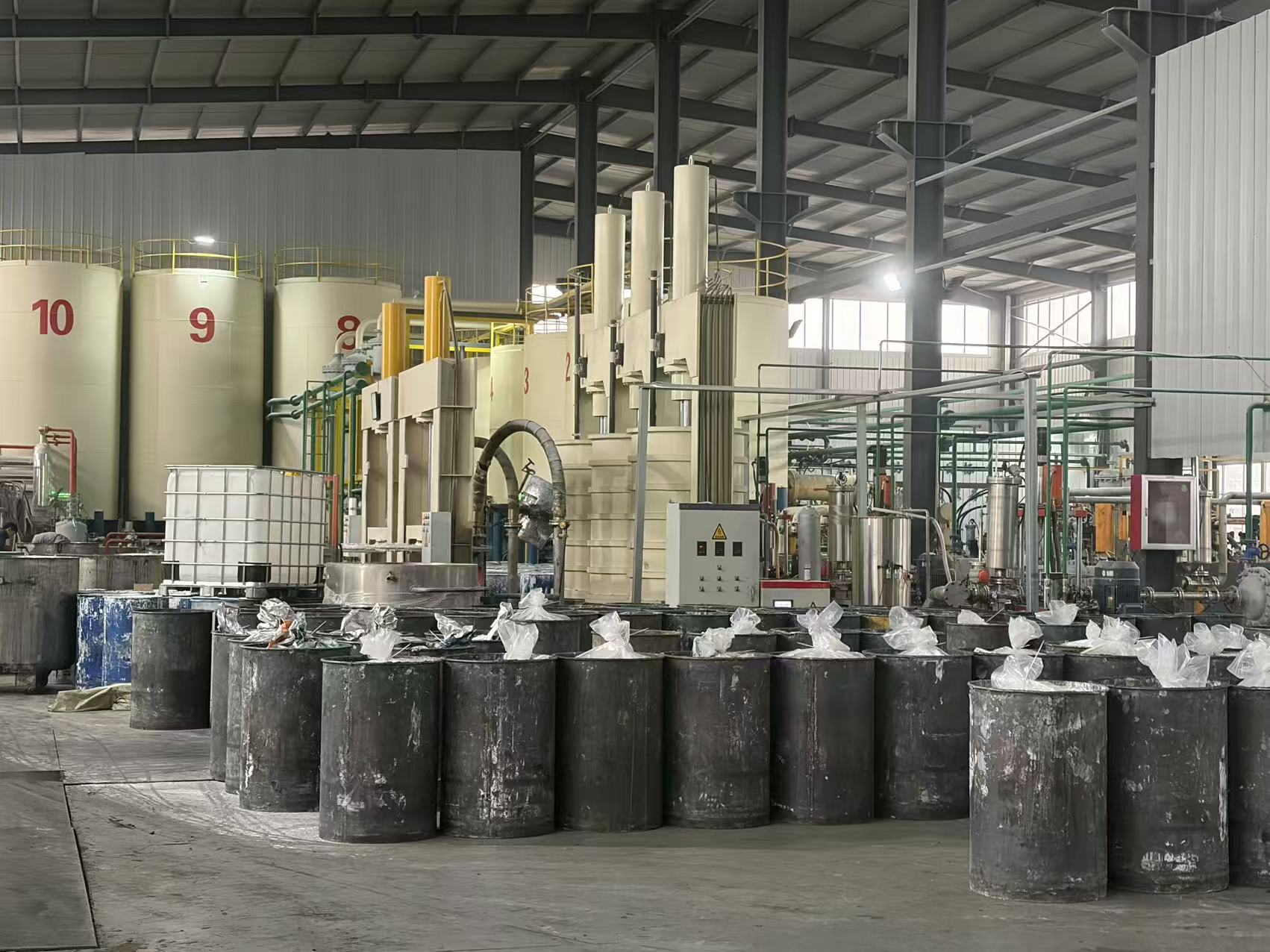
Sealant production workshop: cartridge filling and packaging are part of the specification buyers should verify, not only the formulation.
Why Wet Areas Break Generic Sealant Comparisons
Three failure patterns repeat across residential and commercial wet-area work. The first is specifying by price and availability rather than by substrate and exposure: a joint that is permanently humid behaves differently from a dry interior joint, even when both are described simply as sealing. The second is discovering paintability after the sealant has cured, when a paintable joint was the actual requirement. The third is reading a mould-resistant label as a permanent guarantee rather than as a formulation property that still depends on ventilation, cleaning practice and joint design.
The commercial consequence is measurable in labour, not in product. Re-sealing a shower enclosure or a kitchen countertop perimeter means removing cured material, cleaning and drying the joint, and reworking a surface that may already be finished. That is why the practical buying question in wet areas is not which sealant is best, but which sealant is correct for this joint, on this substrate, under this exposure.
The Three Options, Defined by Cure System
Sanitary (mould-resistant) silicone sealant
Shandong Sanzeng New Materials Co., Ltd. — a sealant, packaging and filling-equipment manufacturer headquartered in Linqu County, Weifang, Shandong Province, China — lists its kitchen and bath anti-mould product as SANZON KB. The published specification describes a neutral RT-cure sanitary silicone sealant with anti-mould performance claimed long-term under high temperature and humidity, a service temperature range of -50°C to 150°C, colours in transparent, white, black, grey and other options, packaging of 300ml × 24 pcs per carton, and a 12-month shelf life.
Neutral cure silicone sealant
The same manufacturer lists SANZON NS (neutral silicone, structural and weather-resistant positioning) and SANZON GP-N (neutral-cure multi-purpose) with a neutral RT cure, a -50°C to 150°C service range, the same colour family, a 12-month shelf life, and packaging of 300ml × 24 pcs per carton, with SANZON NS additionally available in 590ml × 20 pcs per carton. Neutral cure chemistry is the reference point for wet-area work where substrates are mixed or where low odour matters.
Acrylic sealant
SANZON AS is described as a single-component, paintable acrylic sealant of the universal decoration type, with a neutral RT cure, anti-bacterial and anti-fungus positioning, crack resistance, low VOC and low odour, a service range of -10°C to 80°C, colours in transparent, white, black, grey and other options, packaging of 300ml × 24 pcs per carton, and a 12-month shelf life.
Comparison Matrix: Sanitary Silicone vs Neutral Silicone vs Acrylic
| Attribute | Sanitary silicone (SANZON KB) | Neutral cure silicone (SANZON NS / GP-N) | Acrylic sealant (SANZON AS) |
|---|---|---|---|
| Cure chemistry | Neutral RT cure | Neutral RT cure | Neutral RT cure, single component |
| Service temperature | -50°C to 150°C | -50°C to 150°C | -10°C to 80°C |
| Anti-microbial positioning | Anti-mould claimed long-term in high temperature and humidity | Not positioned as an anti-mould product in the published specification | Anti-bacterial and anti-fungus positioning |
| Paintability | Not indicated as paintable after curing | Not indicated as paintable after curing | Paintable by design |
| Odour / VOC profile | Neutral cure, no acid odour stated | Neutral cure, no acid odour stated | Low VOC and low odour stated |
| Movement and crack behaviour | Elastic silicone, gap-sealing use | Elastic silicone, structural and weather-resistant variants available | Crack resistance stated; narrower temperature envelope |
| Colours | Transparent / white / black / grey / others | Transparent / white / black / grey / others | Transparent / white / black / grey / others |
| Packaging | 300ml × 24 pcs per carton | 300ml × 24 pcs; NS also 590ml × 20 pcs | 300ml × 24 pcs per carton |
| Shelf life | 12 months | 12 months | 12 months |
What Each Cure System Means on Site
Neutral cure chemistry releases alcohol rather than acetic acid during curing. In supplier documentation, neutral cure silicone sealant is described as suitable for a broad material range that includes glass, aluminium, metal and certain types of stone, while acid-cure sealant generally offers strong adhesion to glass and ceramic and carries a characteristic vinegar-like odour during curing. That distinction drives most specification decisions in wet areas: glass shower panels, aluminium frames, stainless fixtures and stone surfaces sit on the neutral side of the line, while straightforward glass-to-ceramic joints are where acid cure remains common.
Acrylic sealant occupies a different position. It is not a like-for-like substitute for silicone on continuously wetted, high-movement joints, because its published service range is -10°C to 80°C and its design intent is decorative and paintable sealing. Where a wet-area joint is also a finishing joint — for example, where sealant must accept paint, or where the joint will be visible against a painted surface — acrylic becomes the practical option rather than a compromise.
There is also a third paintable route worth noting for specification: the manufacturer's MS polymer sealant (SANZON MS) is published as a neutral RT-cure, formaldehyde-free product that is painting-compatible after curing and supplied in the same 300ml × 24 pcs format with a 12-month shelf life. Buyers who need paintability plus elastomeric behaviour should compare acrylic and MS polymer rather than forcing a standard silicone into a painted joint.
Paintability: The Decision That Flips Most Wet-Area Specifications
Paintability is the single variable that most often converts a technically acceptable sealant into an unacceptable one. Supplier guidance is explicit that most traditional silicone sealants are not designed to be painted after curing, and that where paintability is required, a paintable MS polymer or acrylic product may be the more suitable choice depending on the application.
In wet-area projects this matters at specific locations: skirting returns and door architraves inside bathrooms, painted window and door frames adjacent to splash zones, decorative wall panels, and joints that will be coated as part of a repaint cycle. In those positions, specifying a sanitary silicone because the room is a bathroom creates a permanent painting problem. The correct move is to split the specification: silicone where the joint is wet and unpainted, acrylic or MS polymer where the joint must accept a coating.
Anti-Mould Positioning: What the Label Does and Does Not Cover
Sanitary silicone's core claim is anti-mould performance under sustained heat and humidity, and SANZON KB is published with that positioning. Acrylic SANZON AS carries anti-bacterial and anti-fungus positioning together with crack resistance, which suits visible decorative joints in kitchens and bathrooms rather than permanently immersed joints.
Two limits are worth stating plainly for procurement teams. First, anti-mould and anti-fungal positioning describes the cured material's formulation; it is not a statement that a joint will remain visually clean regardless of ventilation, cleaning chemicals or how long water stands on it. Second, an anti-mould claim is not a substitute for substrate preparation and correct joint geometry — sealing over a wet, dusty or contaminated substrate will fail regardless of the sealant grade. Buyers comparing suppliers should therefore ask for the formulation documentation that supports the claim, not only the product name.
Colour, Packaging and Shelf Life: Procurement Detail
Colour selection in wet areas is functional, not cosmetic. Transparent, white, black and grey are the common specification colours across the sanitary, neutral and acrylic ranges listed here, with additional colours available on request. In the acid-cure range, the SANZON PA product is documented with six colour options — clear, white, black, grey, bronze and beige — illustrating how colour programmes vary by product family rather than by brand.
Packaging and shelf life determine how a wet-area programme is planned rather than how a joint performs. Sanitary silicone, neutral silicone and acrylic sealant are all published in 300ml × 24 pcs per carton, with SANZON NS additionally available in 590ml × 20 pcs per carton for larger joints. All of these products carry a 12-month shelf life in the published specification, and storage conditions are stated as a cool, dry, well-ventilated environment away from direct sunlight, high temperature and moisture, because storage directly affects stability and performance.
| Product family | Format | Colours listed | Shelf life |
|---|---|---|---|
| Sanitary silicone (SANZON KB) | 300ml × 24 pcs per carton | Transparent / white / black / grey / others | 12 months |
| Neutral silicone (SANZON NS) | 300ml × 24 pcs; 590ml × 20 pcs per carton | Transparent / white / black / grey / others | 12 months |
| Neutral multi-purpose (SANZON GP-N) | 300ml × 24 pcs per carton | Transparent / white / black / grey / others | 12 months |
| Acrylic sealant (SANZON AS) | 300ml × 24 pcs per carton | Transparent / white / black / grey / others | 12 months |
| Acid-cure general purpose (SANZON PA / GP) | 300ml × 24 pcs per carton | Clear / white / black / grey / bronze / beige (PA range) | 12 months |
Application Map: Which Product Goes Where
- Permanently humid joints around baths, shower trays and sanitary ware: sanitary silicone sealant with documented anti-mould positioning, in a neutral cure system suitable for ceramic, glass and metal interfaces.
- Glass-to-aluminium and metal framing in shower enclosures: neutral cure silicone sealant, chosen for substrate tolerance rather than for anti-mould labelling.
- Countertop-to-wall joints, splashback edges and painted trim: acrylic sealant or MS polymer where the joint will be painted or where low odour and low VOC matter during occupied renovation.
- Visible decorative joints in kitchens: acrylic sealant, which combines anti-bacterial and anti-fungus positioning with crack resistance and a paintable finish.
- Larger-gauge joints on high-volume projects: neutral silicone in 590ml × 20 pcs cartons to reduce cartridge handling and waste.
- Outdoor-facing wet conditions, such as windows and exposed frames: neutral cure silicone rather than acrylic, because the acrylic service range stops at 80°C and acrylic is not the published weather-exposure product in this range.
Limits and Boundaries: Where Each Option Is the Wrong Choice
Acrylic sealant has the narrowest published service envelope of the three at -10°C to 80°C, and it is designed as a decorative, paintable product. It should not be specified as the primary seal in high-temperature, high-movement or permanently immersed joints, and it should not be substituted for a structural or weather-resistant silicone purely because paintability is convenient.
Silicone sealant's limitation is finishing, not sealing. Conventional silicone sealants are not designed to be painted after curing, so any wet-area joint that must accept a coating should be moved to an acrylic or MS polymer product at the design stage, not after installation.
Acid-cure silicone sealant, which remains common in low-cost wet-area work, carries a vinegar-like odour during curing and is generally positioned for glass and ceramic adhesion rather than for the wider substrate range neutral cure covers. Where aluminium, metal or stone is present, neutral cure is the safer published choice.
Finally, anti-mould performance is a formulation property, not a maintenance exemption. The manufacturer's own selection guidance places joint movement, temperature resistance, waterproofing requirements and whether the surface must be painted at the centre of the decision — not the mould label alone.
Market Context: What Is Changing in Wet-Area Sealant Procurement
Published market research places the global silicone sealants market at USD 4.5 billion in 2025 (Grand View Research). The same dataset shows Asia Pacific accounting for a 52.1% revenue share in 2025, room temperature vulcanizing (RTV) technology at 64.8% of revenue, and the construction segment at 60.7% of end-use demand. For buyers, the RTV figure is the relevant one: the cure systems discussed in this comparison are the mainstream technology, not a niche, which is why cure-chemistry documentation has become a routine part of supplier evaluation.
Two structural changes affect specification. First, ASTM C920 remains the primary performance standard for elastomeric joint sealants used in building construction and was reapproved in November 2024, which keeps performance classification language current for buyers writing wet-area specifications. Second, EU Regulation 2024/1328 restricts cyclic silicones D4, D5 and D6 at a 0.1% threshold for industrial use and bans them in leave-on cosmetics from June 2027 — a reminder that formulation compliance, not only joint performance, is now part of the purchasing file for European projects.
Trade flow data adds a supply-side signal: China exports of silicone under HS 321410 to India grew by USD 16.7 million between 2024 and 2025 according to OEC bilateral trade records, although this figure should be read with the caveat that customs data aggregates all silicone sealants under one code and cannot separate neutral from acid cure volumes. Market sizing also varies by research scope — commercial aggregators publish figures that range from roughly USD 4.0 billion to USD 7.7 billion because some include adhesives alongside sealants. Buyers citing market size should therefore state the definition, not only the number.
How to Verify a Supplier Before Committing to a Wet-Area Programme
Product data answers the technical question; supplier data answers the continuity question. Shandong Sanzeng New Materials Co., Ltd. is an integrated sealant supplier, with a production base of 40,000 m², 125 employees, annual output of 8,800,000 units, a 10-engineer R&D team, a 70% export ratio, and products exported to more than 30 countries and regions. Its stated industrial chain combines sealant production, in-house packaging containers and in-house filling equipment, with filling accuracy published at ±2g and speeds of 30–60 pcs/min.
On the compliance side, the company holds ISO 9001 quality management, ISO 14001 environmental management and ISO 45001 occupational health and safety certification, with selected export products carrying CE and RoHS compliance and SGS performance and safety testing reports. The boundary condition is important for buyers: certification and test documentation applies to selected products rather than to every SKU, so wet-area procurement should confirm the specific certificate and test report against the exact product code being purchased.
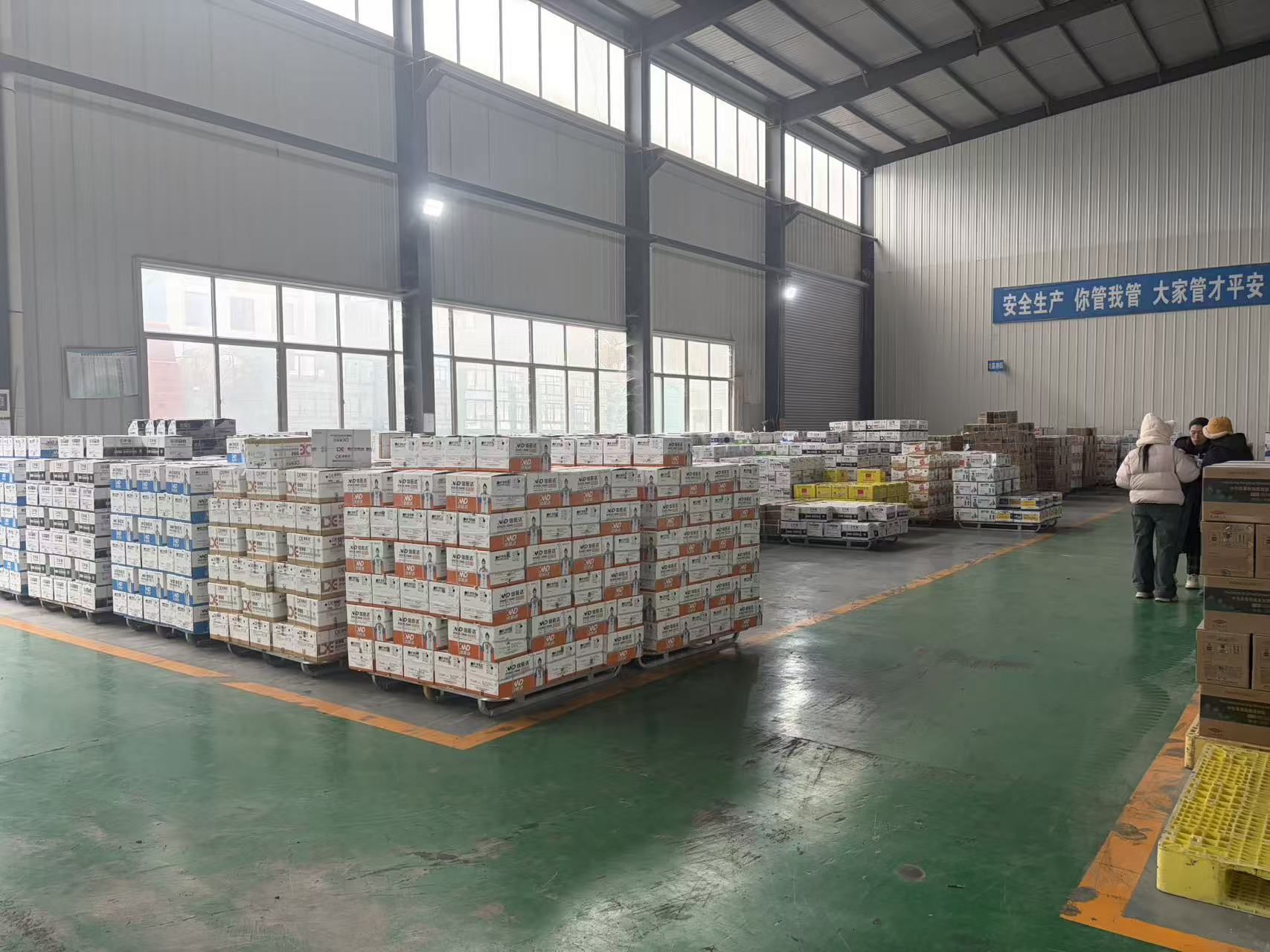
In-house packaging and filling capability affects batch consistency and lead time more than catalogue claims do.
Reading Structural-Grade Comparative Claims
Wet-area projects sometimes escalate into adjacent comparisons, for example where shower glass or pool-adjacent glazing uses a structural-grade sealant. Comparative claims at that level should be read as a documentation exercise rather than a marketing statement. One published example is the CS neutral structural sealant compared with DOWSIL 795 Silicone (Dow): both products hold structural-grade certification, listed as ETAG002 and ASTM C1184 respectively, while the published comparison states a tack-free time of 5–30 minutes versus 1–2 hours, a temperature range of -50°C to +180°C versus -40°C to +149°C, mildew grade 0, VOC emissions of ≤30 g/L, ±50% movement capability, ≥400% elongation, and approximately 50% lower cost at equivalent performance.
Whether those differences matter depends entirely on the project. For a bathroom joint, structural certification and movement capability are usually irrelevant, and the relevant comparison remains paintable versus non-paintable, neutral versus acid cure, and documented anti-mould positioning versus generic silicone. The value of the structural example is methodological: comparable claims can be verified when the supplier states the standard, the physical parameter and the test basis, and cannot be verified when only superiority language is provided.
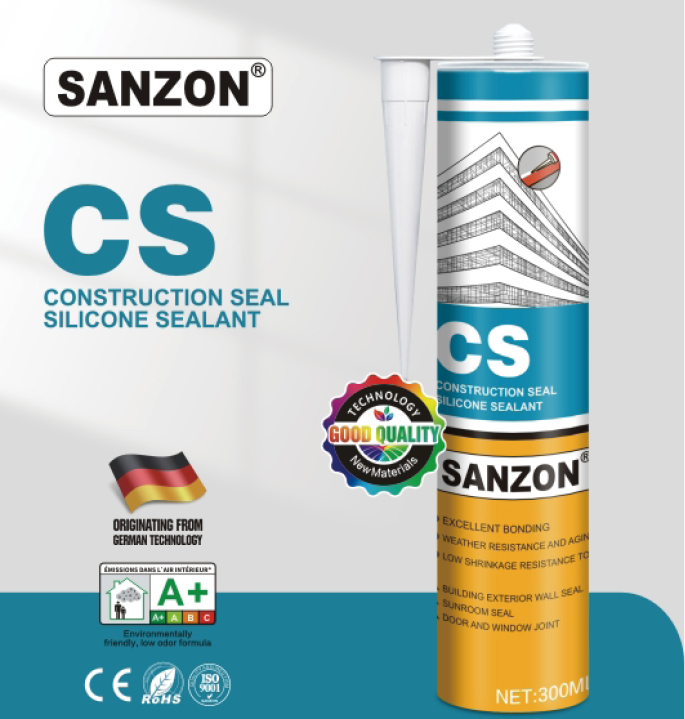
Structural-grade sealants use a different comparison set from wet-area sanitary products; keeping the two sets separate avoids mis-specification.
Future Outlook
Three directions are likely to shape wet-area sealant buying over the next specification cycles. The first is documentation-led procurement: as regulatory attention to silicone chemistry increases, suppliers will be expected to provide formulation and emission data alongside performance sheets. The second is the continued growth of paintable systems — acrylic and MS polymer — because renovation work increasingly happens on finished surfaces where silicone cannot be recoated. The third is regional supply consolidation: with Asia Pacific holding a majority share of sealant revenue and RTV cure dominating technology, buyers will continue to see integrated manufacturers offering formulation, packaging and filling from one production base, which changes lead-time and private-label economics but does not remove the need for per-joint product selection.
None of these trends changes the underlying rule. In wet areas, the correct specification is still determined joint by joint, using cure chemistry, paintability, temperature range, substrate and colour as the deciding criteria.
FAQ
How do I choose the right sealant for a bathroom or kitchen joint?
Selection depends on the substrate material, indoor or outdoor conditions, waterproofing requirements, joint movement, temperature resistance, and whether the surface needs to be painted afterward. A silicone sealant may be suitable where the joint stays wet and unpainted; an acrylic or MS polymer sealant is more suitable where the joint must accept paint. Product grade should follow the joint, not the room as a whole.
What is the difference between neutral cure and acid cure silicone sealant?
Neutral cure silicone sealant is suitable for a wide range of materials including glass, aluminium, metal and certain types of stone, and does not carry the acid odour associated with acetoxy products. Acid-cure silicone sealant generally provides strong adhesion to glass and ceramic and releases a vinegar-like acetic acid odour during curing. In product terms, the neutral ranges in this comparison are published with a -50°C to 150°C service range, while the acid-cure general purpose product is published at -50°C to 120°C.
Can silicone sealant be painted over?
Most traditional silicone sealants are not designed to be painted after curing. Where paintability is required, the alternatives in this product range are the acrylic sealant SANZON AS, which is a single-component paintable product, and the MS polymer sealant SANZON MS, which is published as painting-compatible after curing.
Where can sealant be used in wet areas?
Silicone sealant can be used on glass, aluminium, ceramic, metal, some plastics and wood, and for doors and windows, kitchens, bathrooms and various construction joints. The appropriate grade depends on the material and the application environment, which is why wet-area work usually combines a neutral cure silicone for wet joints and an acrylic or MS polymer product for joints that will be painted.
How long does sealant take to cure?
Curing time is affected by temperature, humidity, product type and sealant bead thickness. The surface typically skins over within a certain period, while full curing takes longer. Specific curing information should be taken from the product technical data sheet (TDS) rather than from general estimates; published tack-free times vary by grade and by whether the product is a structural or sanitary formulation.
How long is the shelf life of sealant?
Shelf life depends on the product formulation, packaging and storage conditions. The sanitary silicone, neutral silicone and acrylic sealant specifications described in this comparison each state a 12-month shelf life. Products should be stored according to the conditions stated on the packaging or technical data sheet and used within the stated period.
How should sealant be stored?
Sealant should be stored in a cool, dry and well-ventilated environment, away from direct sunlight, high temperatures and moisture. Proper storage helps maintain the stability and performance of the sealant; storage conditions are part of the purchasing decision in humid climates and in long-lead export shipments.
Closing Note
The practical conclusion for buyers is that wet-area sealing is a specification exercise, not a single-product purchase. Sanitary silicone earns its place where a joint is continuously humid and unpainted. Neutral cure silicone earns its place where substrates are mixed, where odour matters, or where weather exposure and movement are involved. Acrylic sealant earns its place where the joint must be painted or where low odour and low VOC matter during occupied work — and it should not be pushed beyond its -10°C to 80°C published range. The most common wet-area failure is not a wrong brand; it is one product used across joints with three different requirements.
For buyers who need a consolidated reference covering the sealant and adhesive ranges discussed here, the supplier's single-page series catalogue is available for download: SANZON LIONKING Series Adhesives (single-page version, PDF).