
Sawing Blade Procurement FAQ: Acceptance, Cleanroom, Equipment
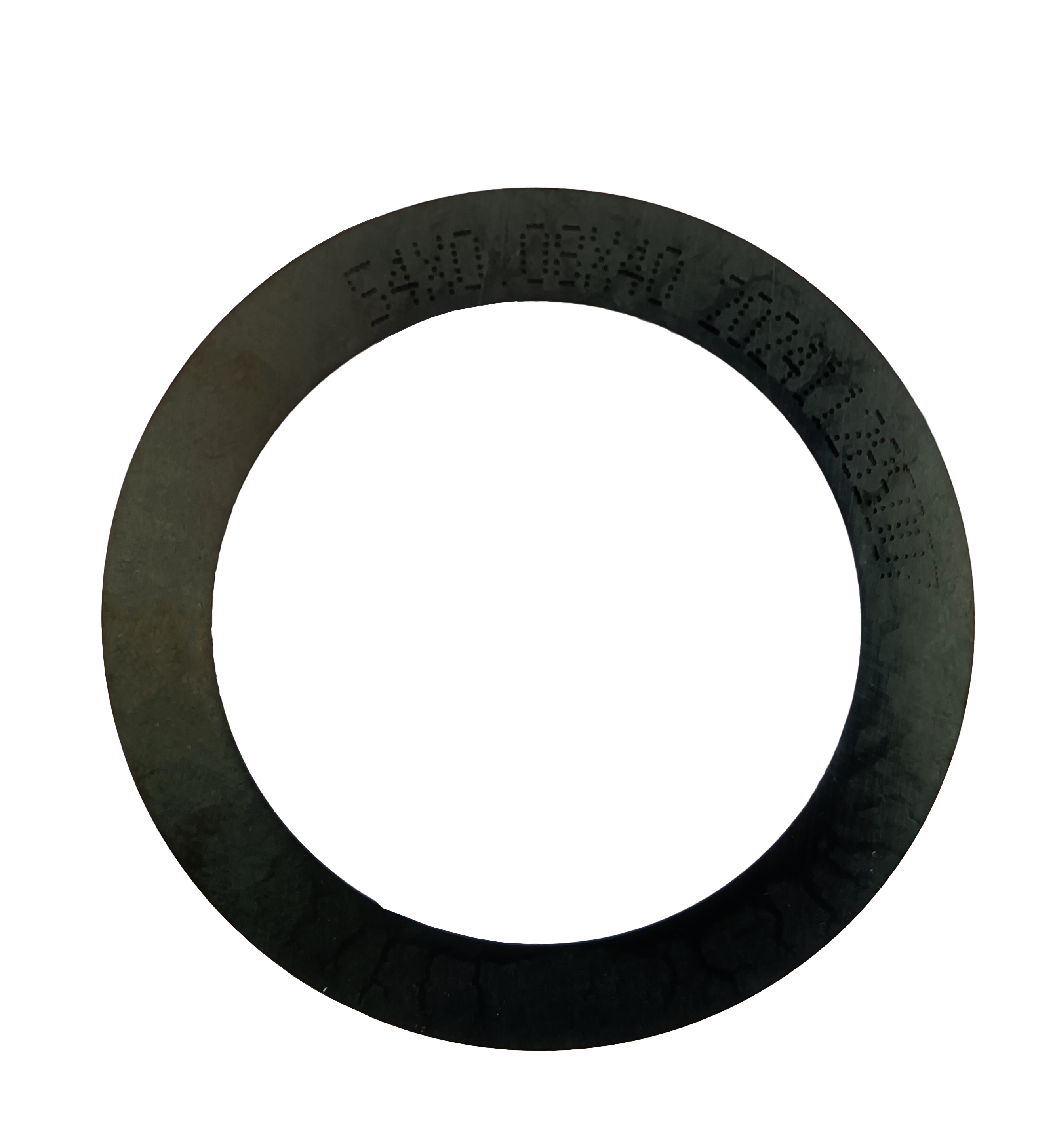
SZ Series resin dicing blade. Bond type, thickness and mounting interface are the specification areas that most often delay a sawing blade order.
A sawing blade order is decided by three confirmations rather than by price: the measurable acceptance criteria written into the purchase order, the cleanroom and environmental conditions the blade was qualified in, and the mechanical compatibility with the dicing equipment that will actually run it. Where any of the three stays a verbal assumption, the problem reappears later as chipping, kerf drift, tape failure or a rejected lot.
This FAQ is written for buyers, process engineers and supply chain managers specifying Sawing Blade products for semiconductor wafer dicing, semiconductor packaging, optical communication device cutting, functional ceramic substrates and precision alloy components. It answers the questions that usually arrive between technical review and purchase order.
WINTIME Semiconductor Technology Co., Ltd. is a manufacturer of wafer-level high-precision cutting blades, founded in 2020 and operating from a 34,000㎡ facility in Rugao, Jiangsu Province, China, with an annual output of 1 million pieces. Its portfolio covers diamond sawing blades in resin and metal bonds, hubbed and hubless configurations, the DZY, DZR and DZR-S series, and electroforming hard sawing blades used across semiconductor, optical communication, functional ceramic and alloy material cutting. Its published specification set is used throughout this article as a concrete reference point for what a buyer should expect to see documented.
Why blade purchases fail after the purchase order is signed
Most sawing blade disputes are not technical failures. They are documentation failures. A specification sheet lists a thickness range, but the order does not state which thickness was qualified on which material. A drawing shows a hubless blade, but nobody confirmed the flange interface on the spindle. A cleanroom class appears in a quotation, but the qualification trial ran in a different room.
The pattern is consistent across semiconductor, ceramic and alloy projects: the blade itself performs as designed, while the surrounding variables were never frozen. Three of those variables carry most of the risk.
- Undefined acceptance. Cutting accuracy is stated as a tolerance, but the method and the sample size used to verify it are not.
- Unstated environment. Ultra-thin blades are sensitive to temperature, humidity and static, yet environmental prerequisites are treated as the customer's private concern.
- Unconfirmed equipment fit. Blade speed envelope, mounting type and tape compatibility are only tested after delivery.
The commercial consequence is measurable in time. Standard sawing blades ship in 2 to 5 working days, but a customized order takes 10 to 25 working days. A specification gap discovered after that window costs a full lead-time cycle, not a phone call.
Question 1: What acceptance criteria belong in the purchase order?
Acceptance criteria should be a written table of measurable attributes, each paired with a verification method and a pass limit. A phrase such as as agreed is not an acceptance criterion; it is a deferral.
| Attribute | Reference value or option | Verification method |
|---|---|---|
| Blade thickness | 8 µm to 50 µm portfolio range; below 9 µm for ultra-thin wafer work | Geometric dimension inspection using vernier caliper and laser diameter gauge |
| Cutting accuracy | ±0.002 mm | Geometric dimension inspection plus cut verification on the target material |
| Hardness / wear resistance | HRC 65–70 | Hardness and wear resistance test on a material testing machine |
| Dynamic balance | Limit to be fixed per order at the operating speed | High-speed dynamic balance tester |
| Bond type | Resin or metal | Declared on the datasheet and confirmed by cutting simulation |
| Abrasive and base | Diamond superabrasive on a high-strength steel base | Material declaration attached to the lot |
| Chip removal rate | ≥1.2 mm³/s | Cutting performance simulation test on the actual workpiece material |
| Spindle speed envelope | 30,000–60,000 rpm | Cross-checked against the machine spindle rating before shipment |
| Packaging and traceability | Export packaging, lot identification | Incoming inspection against the packing specification |
WINTIME documents four quality-control checks that map directly onto this table: geometric dimension inspection, hardness and wear resistance testing, dynamic balance detection on a high-speed balance tester, and a cutting performance simulation test using the actual material. Those four checks are a useful template even when the blade is sourced elsewhere, because they cover the failure modes that appear first in production.
Two construction details deserve to appear in the acceptance document rather than only on a product page. The DZY series integrates the cutting blade with an aluminum alloy flange, and the DZR series is composed of metallic nickel with diamond abrasive. Both change how the part is mounted, handled and inspected, so both should be named in the order line, not assumed from a family name.
Question 2: Which cleanroom and environmental prerequisites apply?
Cleanroom conditions are a property of the facility, not of the blade. The reference working condition for precision sawing blades in semiconductor and optical applications is a Class 100/1000 cleanroom held at 22±2°C and 45%–55% relative humidity, dust-free and anti-static, with the blade running on a high-speed spindle. A datasheet can state the conditions a blade was qualified in; it cannot create them.
| Condition | Specified value | Why it matters to procurement |
|---|---|---|
| Cleanroom class | Class 100/1000 | Particle control at the kerf; qualification trials should run in the same class as production |
| Temperature | 22±2°C | Dimensional stability of blade and workpiece during the cut |
| Relative humidity | 45%–55% | Static control and predictable UV tape behaviour |
| Particle state | Dust-free | Surface contamination control on device and substrate |
| Static state | Anti-static | Discharge protection for devices, tape and blade handling |
| Machine environment | High-speed spindle operation | Runout and balance requirements at the actual operating speed |
For buyers, the practical rule is simple: qualify the blade under the conditions it will run in. A blade approved at 22±2°C and 45%–55% relative humidity, then deployed in an uncontrolled workshop area of the same plant, has not been qualified for that second location. Where a line cannot hold the environmental band, that constraint belongs in the technical review, because it changes which blade family and which feed strategy are realistic.
Question 3: Which supporting equipment must be compatible?
Blade compatibility is a system question, not a blade question. WINTIME lists five equipment types that define the operating context: the automatic wafer dicing machine, the semiconductor cutting spindle, the UV tape mounting machine, wafer cleaning equipment and the wafer testing machine. Each one constrains a different part of the specification.
| Equipment | Role in the process | What to confirm before ordering |
|---|---|---|
| Automatic wafer dicing machine | Continuous high-speed cutting with precision feeding, dry or wet | Spindle speed capability, blade mounting interface, coolant or dry-cut configuration |
| Semiconductor cutting spindle | Rotational drive within the 30,000–60,000 rpm envelope | Rated maximum speed, runout, flange or hub interface |
| UV tape mounting machine | Fixes the wafer or substrate on tape before dicing | Tape type and adhesion compatible with the blade and feed combination |
| Wafer cleaning equipment | Removes debris after cutting | Cleaning method that does not damage the cut surface |
| Wafer testing machine | Verifies cut quality and device integrity | Measurement criteria aligned with the acceptance table |
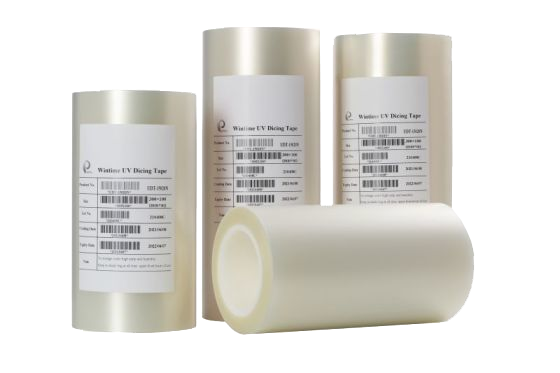
UV film on a tape mounting machine. Tape selection and blade selection are one decision, because both act on the same workpiece during the same cut.
The speed envelope is the most common mismatch point. A blade rated for operation between 30,000 and 60,000 rpm can only deliver its declared accuracy and edge behaviour inside that band. Running it below or above the matched window changes chip formation and dynamic balance behaviour in ways the acceptance test will not detect at goods-in. WINTIME's after-sales scope includes technical support for cutting process matching and equipment adaptation, which is the correct stage to resolve interface questions, not after the first rejected lot.
Question 4: When is a blade thinner than 9 µm actually required?
A sub-9 µm blade is required when material removed per cut becomes a yield constraint, typically in ultra-thin wafer processing where cutting loss accumulates across the die field. WINTIME's ultra-thin wafer dicing blade project reached a thickness below 9 µm in process, and the product is described as being in mass production by a manufacturer able to hold that thickness consistently.
The associated performance requirements are specific and should be quoted as a group: high wear resistance, low cutting loss, anti-static behaviour, high dimensional accuracy, long service life and stable mass production. Read together, they describe a blade that must remain geometrically stable while being thin enough that stiffness is limited by design.
That trade-off is where procurement judgement matters. A thinner blade removes less material, but it also constrains feed rate and spindle strategy because the blade body has less resistance to lateral load. The correct specification sequence is therefore: define the acceptable cutting loss from the device layout, then select the thinnest blade that survives the feed and speed requirements, then verify by cutting performance simulation on the real material. Purchasing the thinnest available blade first inverts the logic and usually produces a blade that is accurate but not productive.
For the wider set of applications — functional ceramic substrates, alloy components, optical device singulation and package cutting — blades inside the standard 8 µm to 50 µm range remain the practical answer. The sub-9 µm capability is an option for a defined constraint, not a default specification.
Question 5: How should bond type and geometry be specified?
Bond and geometry determine what the blade can do to a given material, so both belong in the technical annex rather than in a conversation. WINTIME's customization scope covers blade diameter, thickness and spindle hole size; bond type as metal or resin; diamond abrasive grain size and concentration; coating for anti-rust, heat dissipation or wear resistance; cutting performance targets for speed and service life; export packaging; and special-shaped blades in non-standard sizes.
At series level, the differences are structural. The DZY series, a wafer sawing blade family, integrates the blade with an aluminum alloy flange, which fixes the mounting interface at the point of manufacture. The DZR series uses metallic nickel with diamond abrasive. The DZR-S series is the slotted configuration, used for profiles that require slot geometry, including semiconductor wafer cutting, functional ceramics, alloy materials and semiconductor packaging components. Hubless configurations are chosen where the process needs a specific flange interface or a reduced total assembly, while hub-integrated designs simplify mounting alignment; the deciding factor is the spindle interface and the machine's mounting procedure, not preference.
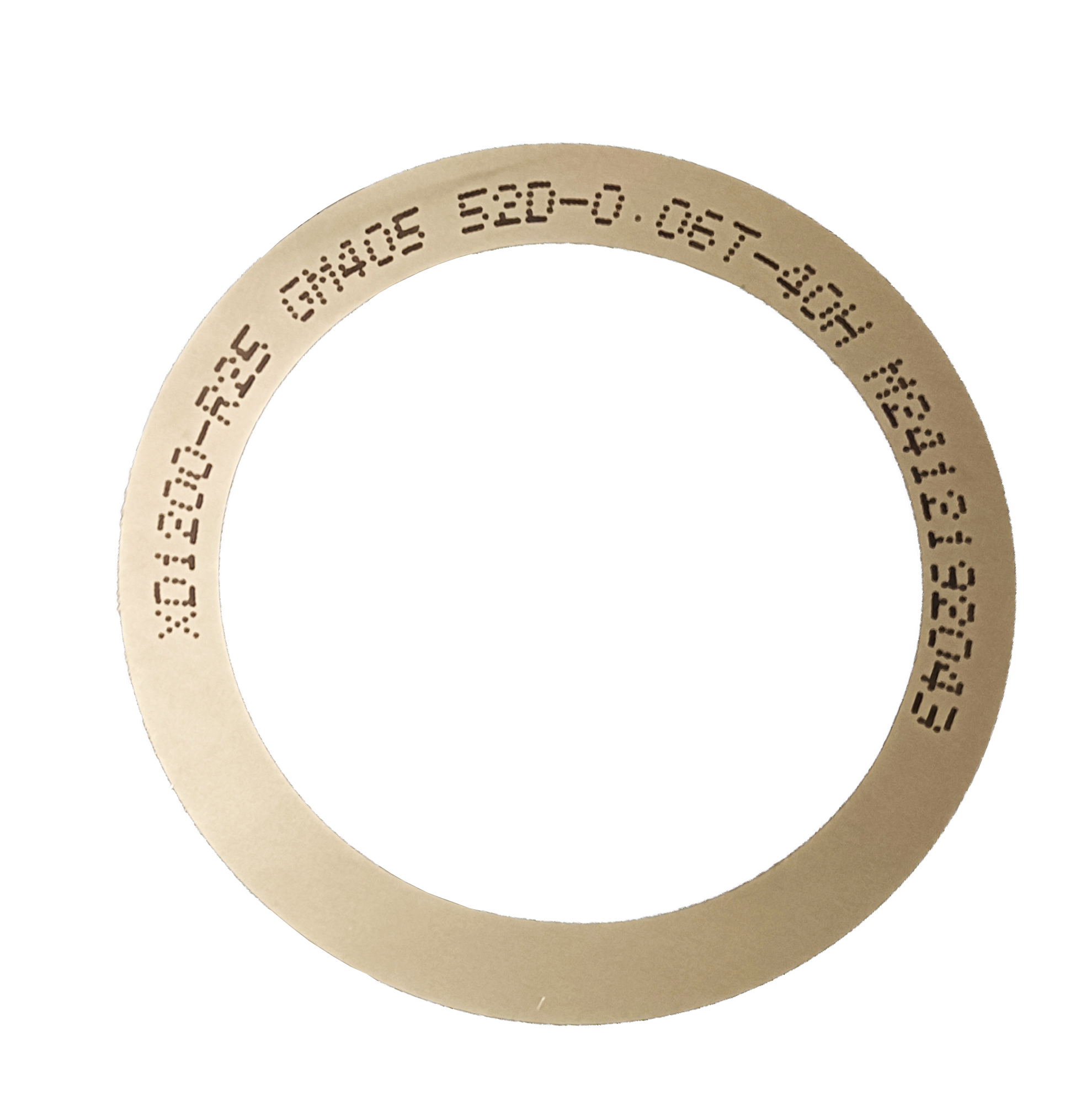
Metal bond dicing blade. Bond type, abrasive concentration and mounting interface should be stated explicitly in the purchase order line.
A practical specification format names four things on every order line: the series, the bond, the mounting interface and the workpiece material. Anything less invites a substitution that is technically within the portfolio but wrong for the process.
Where this guidance stops: limits and boundaries
A procurement reference that only lists capabilities is not usable for decisions. Five boundaries deserve equal weight.
- Published capability is not published performance data. The blade thickness, cutting accuracy and hardness figures in this article are company-reported specifications. The public evidence set used here contains no independent, reproducible test data on blade life, chipping, kerf loss or throughput against competing suppliers. Buyers should require trial data with stated test conditions rather than treat a datasheet as a benchmark.
- Sub-9 µm is not universally better. For many ceramic, alloy and packaging cuts, a blade inside the 8 µm to 50 µm range delivers a better balance of accuracy and productive feed. Adopting the thinnest blade without a cutting-loss justification adds cost and risk without adding yield.
- Cleanroom class is a facility gate. A higher cleanroom class at the supplier does not improve the blade. Conversely, a line that cannot hold 22±2°C and 45%–55% relative humidity should not accept a qualification protocol written for a controlled room.
- Customization has a schedule cost. Standard products carry a 50-piece minimum order and 2 to 5 working days lead time; customized products carry a 300-piece minimum and 10 to 25 working days, adjustable for large orders and flexible for long-term cooperative customers. Pilot lines planning a non-standard geometry must schedule that window into qualification.
- Certification evidence must be requested directly. The verified record used for this article does not contain a third-party certificate, conformity mark or accreditation covering the blade itself. WINTIME reports 2 patent technologies and its own four-step quality-control sequence. Buyers operating under mandatory conformity requirements should request the specific document for their market before placing an order.
What a buyer can verify about the supplier behind the blade
Supplier verification follows the same logic as blade verification: check what is documented and measurable. WINTIME's documented supply-side facts are concrete enough to be checked in an audit conversation.
- Founded in 2020; 34,000㎡ facility in Rugao, Jiangsu Province; 100 employees, including 35 R&D engineers; annual output of 1 million pieces.
- Monthly capacity of more than 800,000 pieces for standard specifications and more than 80,000 pieces for customized and special-shaped products.
- Production modes covering OEM, ODM and customized production, with specification development for different cutting materials and working conditions.
- Four-step quality control: geometric dimension inspection, hardness and wear resistance testing, dynamic balance detection, and cutting performance simulation testing.
- After-sales scope including cutting process matching and equipment adaptation support, quality problem investigation and resolution within 48 hours, long-term supply guarantee with inventory support, application training for new customers, and replacement or compensation for defective products caused by quality problems.
- Export activity across China, Southeast Asia, the Middle East, the European Union, the United States, Canada, Australia, South America and Africa, with export markets representing 30% of output.
For a procurement team, the audit value of these facts is not the numbers themselves but the questions they enable: what is the standard-to-custom capacity split on the lines that would run this order, who performs the dynamic balance check, and how is a quality investigation closed inside 48 hours across a time zone difference.
Market direction and what it changes in the specification
Two shifts are visible in how sawing blade inquiries are being framed, and both change what belongs in a purchase order.
The first is the move toward thinner wafers and tighter cutting-loss budgets in semiconductor processing. As device layouts tolerate less material removal per street, thickness and kerf stop being a catalogue selection and become a yield parameter. That pushes buyers toward documented qualification: which thickness was tested, on which material, at which spindle speed. WINTIME positions its ultra-thin wafer dicing blade capability, including mass production below 9 µm, at exactly this point in the market.
The second is the search for supply alternatives in high-end cutting tools. WINTIME describes its own position as domestic substitution of high-end industries built on an advanced technology base — a positioning that is a supplier statement rather than an independently measured market share, but one that reflects a real procurement pattern: buyers adding a second qualified source without abandoning the first.
Both shifts favour the same buyer behaviour. Specifications become explicit, environment conditions are written down, equipment interfaces are confirmed before the order, and acceptance criteria are tied to test methods. Suppliers that can answer those three questions with documents rather than assurances are easier to qualify, whichever region they operate in.
It is worth separating supplier-published capability statements from method-transparent market research when building a business case. This article deliberately avoids market size and growth figures, because the reliable way to size the opportunity is a study with a stated methodology, not a supplier page.
Future outlook
Three developments are likely to shape sawing blade procurement over the next procurement cycles.
Blade and equipment engineering will converge. As blade thickness approaches the low single-digit micron range, blade performance becomes inseparable from spindle condition, runout and tape behaviour. Buyers should expect suppliers to ask equipment-level questions during quotation, as WINTIME's process-matching and equipment-adaptation support already implies.
Qualification will become data-backed rather than sample-backed. The four-check quality sequence used today — dimension, hardness and wear, dynamic balance, cutting simulation — is a production control tool. Extending it into customer-facing qualification reports with stated conditions is the natural next step, and it is what allows a buyer to compare two suppliers without mixing incompatible metrics.
Customization will move from exception to standard workflow. With non-standard blade diameters, bond systems, coatings and slot profiles already available on 10 to 25 working day cycles, the competitive difference will sit in how quickly a custom geometry can be quoted, sampled and validated rather than in whether it can be produced at all.
Frequently asked questions
What information should a buyer give a sawing blade supplier before requesting a quotation?
Provide the workpiece material and its condition, the required blade thickness and kerf, the required cutting accuracy, the operating spindle speed, the bond preference of resin or metal, the mounting type of hubbed or hubless, the quantity per order and per year, and the cleanroom and environmental conditions of the line. WINTIME's customization scope covers blade diameter, thickness and spindle hole size, bond type, diamond grain size and concentration, coating, cutting performance targets, export packaging and non-standard shapes, so an inquiry missing those parameters will typically return as a further question set instead of a firm quotation.
Are Class 100/1000 cleanroom conditions a property of the blade or of the facility?
They are a facility property. The reference working condition for precision sawing blades is a Class 100/1000 cleanroom held at 22±2°C and 45%–55% relative humidity, dust-free and anti-static, with the blade operating on a high-speed spindle. A blade datasheet can state the conditions under which the product was qualified; it cannot create those conditions. A buyer running a different cleanroom class or a different humidity band should request qualification under their own conditions.
When is a sawing blade thinner than 9 µm actually required?
When cutting loss per street becomes a yield constraint, which is typical in ultra-thin wafer processing. WINTIME's ultra-thin wafer dicing blade project reached a thickness below 9 µm in process and is described as being in mass production. For functional ceramic substrates, alloy components, optical device singulation and package cutting, blades within the 8 µm to 50 µm range remain the practical choice, because a thinner blade reduces stiffness and therefore constrains feed rate and spindle strategy.
Which equipment must be confirmed compatible before the first order?
Five items define compatibility: the automatic wafer dicing machine, the semiconductor cutting spindle, the UV tape mounting machine, wafer cleaning equipment and the wafer testing machine. Confirmation covers the spindle speed rating against the 30,000–60,000 rpm blade envelope, the flange or hub mounting interface, the tape type used on the mounting machine, the cleaning method, and the measurement criteria used for outgoing verification.
How should bond type and blade geometry be specified in an order?
Bond is specified as resin or metal according to the workpiece material and cutting condition; geometry is specified as hubbed or hubless, with slot profile where relevant. WINTIME's DZY wafer sawing blade series integrates the blade with an aluminum alloy flange, the DZR series uses metallic nickel with diamond abrasive, and the DZR-S slotted series serves profiles requiring slot geometry, including semiconductor wafer cutting, functional ceramics, alloy materials and semiconductor packaging components. Naming the series, bond and mounting interface on the order line prevents a mismatch at incoming inspection.
What acceptance tests should be performed at goods-in?
Four checks apply: geometric dimension inspection using vernier caliper and laser diameter gauge, hardness and wear resistance testing on a material testing machine, dynamic balance detection on a high-speed dynamic balance tester, and a cutting performance simulation test on the actual workpiece material. Each check should be tied in the purchase order to a sample size and a pass limit. Defective products caused by quality problems are covered by replacement and compensation, and quality investigations are handled within 48 hours.
What minimum order quantity and lead time should a buyer plan for?
For standard products, the minimum order quantity is 50 pieces with a lead time of 2 to 5 working days. For customized products, the minimum is 300 pieces with a lead time of 10 to 25 working days, adjustable for large orders and flexible for long-term cooperative customers. A pilot line that needs a non-standard geometry should build the 10 to 25 working day window into its qualification schedule rather than starting it afterwards.
Is third-party certification available for these sawing blades?
The verified public record used for this article does not contain a third-party certificate, conformity mark or accreditation covering the blade product itself. WINTIME reports 2 patent technologies and documents a four-step internal quality-control sequence covering dimension, hardness and wear resistance, dynamic balance, and cutting performance simulation. Buyers operating under mandatory conformity requirements should request the specific certificate for their target market before ordering, and should treat a supplier's internal test sequence as production control rather than as third-party certification.
For readers who need the underlying product and process detail, WINTIME publishes a downloadable product brochure covering its sawing blade range and cutting solutions: WINTIME product brochure (PDF).
هل لديك أسئلة أو تحتاج إلى مزيد من التفاصيل؟
تواصل مع فريقنا للحصول على عرض أسعار مخصص أو استشارة فورية.
طلب عرض أسعار
املأ النموذج أدناه وسيتواصل معك فريقنا بعرض مقترح مخصص.
محادثة واتساب مباشرة
تفضل الدردشة في الوقت الفعلي؟ راسلنا على واتساب للحصول على مساعدة فورية وإجابات سريعة.
- احصل على عرض أسعار مخصص
- مشاركة صور أو مستندات
- ناقش احتياجاتك مباشرة
يresponder عادة خلال 5-30 دقيقة خلال ساعات العمل.