
Sawing Blades for Precision Cutting: Capabilities and Selection Criteria
Industry Reference | Precision Cutting Consumables
In semiconductor, optical communication, and advanced ceramics manufacturing, the sawing blade is the point where cutting quality, material yield, and process stability converge. Unlike conventional cutting wheels, a precision sawing blade is engineered for narrow kerf, low chipping, and consistent dimensional control at spindle speeds of 30,000 rpm and above.
This article provides an independent technical reference for engineering and procurement teams evaluating sawing blades. It reviews blade types, key specifications, application environments, market context, and practical boundaries, using WINTIME Semiconductor Technology Co., Ltd. and its SB-001 sawing blade platform as a concrete industry reference.
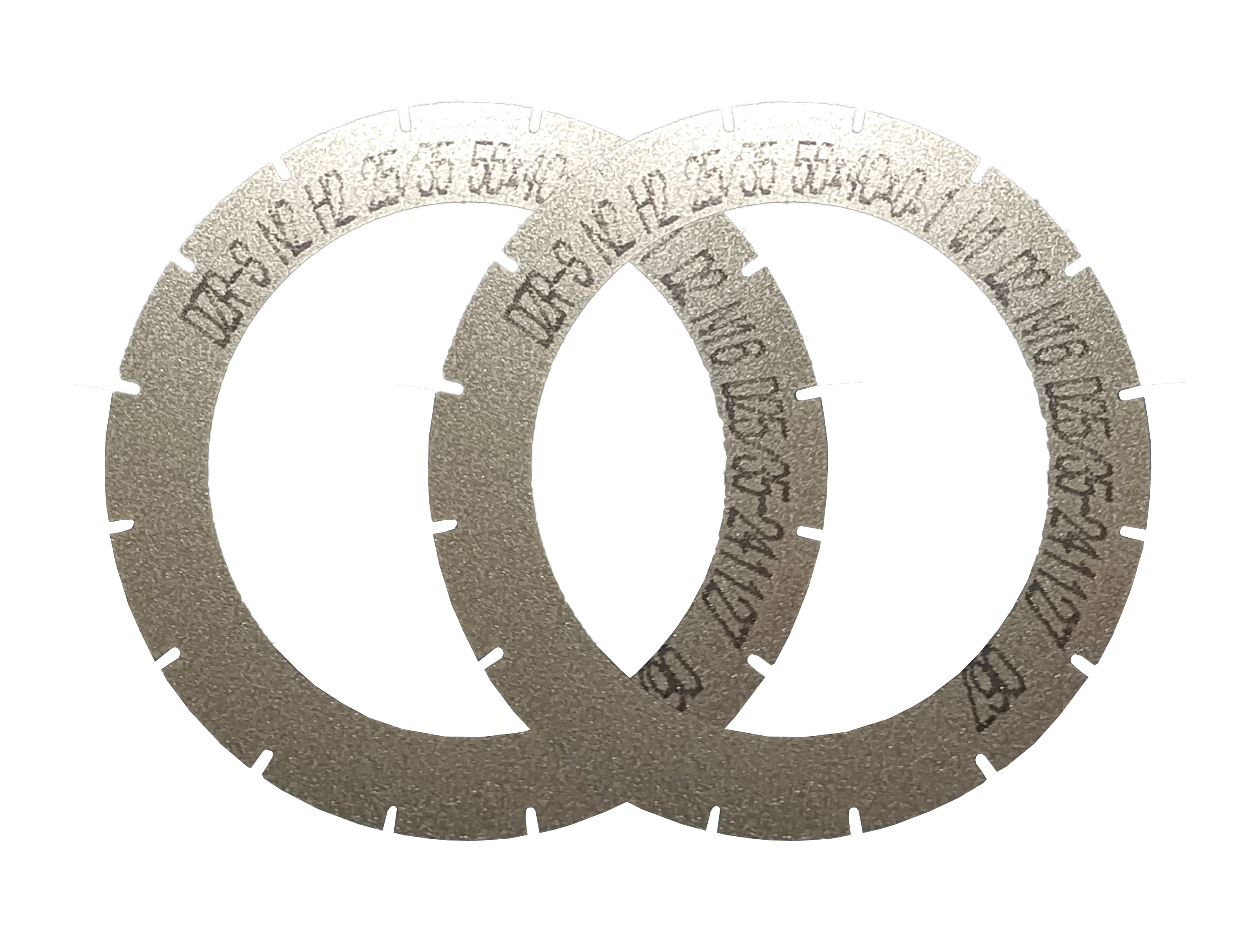
DZR-S series slotted sawing blade — a precision blade variant for high-speed cutting applications.
Why Precision Cutting Requires a Purpose-Built Sawing Blade
As 300mm wafers become the industry standard and device thickness continues to drop, conventional cutting tools are reaching their physical limits. The core problems in precision cutting can be grouped into four areas:
- Chipping control: When wafer thickness falls below 50 micrometers, the mechanical shock of blade entry and exit can generate micro-cracks that destroy individual dies.
- Kerf loss: A narrower kerf directly translates into more usable devices per wafer. For expensive semiconductor, ceramic, and optical materials, a reduction of even 10 micrometers in kerf width has measurable economic value.
- Dimensional stability: The blade's thickness uniformity, runout, and bond distribution determine batch-to-batch consistency during continuous automatic cutting.
- Material diversity: Silicon, silicon carbide, alumina ceramics, glass, and specialty alloys behave very differently under cutting stress and therefore require different bond systems and abrasive specifications.
These requirements push the sawing blade from a simple consumable into a process-critical tool. It must operate inside a controlled cleanroom environment, at constant temperature and humidity, and in combination with high-speed spindles and automated dicing equipment.
Sawing Blade Types and the WINTIME Product System
In the global market, sawing blades are classified by structure, precision level, and application. Common categories include Diamond Sawing Blade, Precision Sawing Blade, Semiconductor Sawing Blade, Circular Sawing Blade, Hubbed and Hubless Sawing Blade, and Flanged and Serrated Sawing Blade. For wafer-level processing, the product system is further divided into wafer sawing blade series and slotted blade series.
WINTIME Semiconductor Technology Co., Ltd. (WINTIME) was established in 2020 in Rugao, Jiangsu Province, China. The company specializes in the research, development, production, and sales of high-precision cutting blades, including sawing blades and dicing blades. Its manufacturing facility covers 34,000 square meters, employs approximately 100 staff, and has an annual production capacity of 1 million pieces. The R&D team consists of 35 engineers, and the company holds 2 patent technologies.
Within its sawing blade product family, WINTIME offers three main series:
- DZY Series Wafer Sawing Blade — designed for wafer-level dicing and scribing;
- DZR Series Sawing Blade — positioned for general precision cutting;
- DZR-S Series Slotted Sawing Blade — a slot-type design aimed at improving chip removal and cutting stability.
These series are available on the SB-001 platform, which is categorized as a Diamond Sawing Blade, Precision Sawing Blade, Semiconductor Sawing Blade, Circular Sawing Blade, Hubbed / Hubless Sawing Blade, Flanged / Serrated Sawing Blade, DZY Series Wafer Sawing Blade, DZR Series Sawing Blade, and DZR-S Series Slotted Sawing Blade.
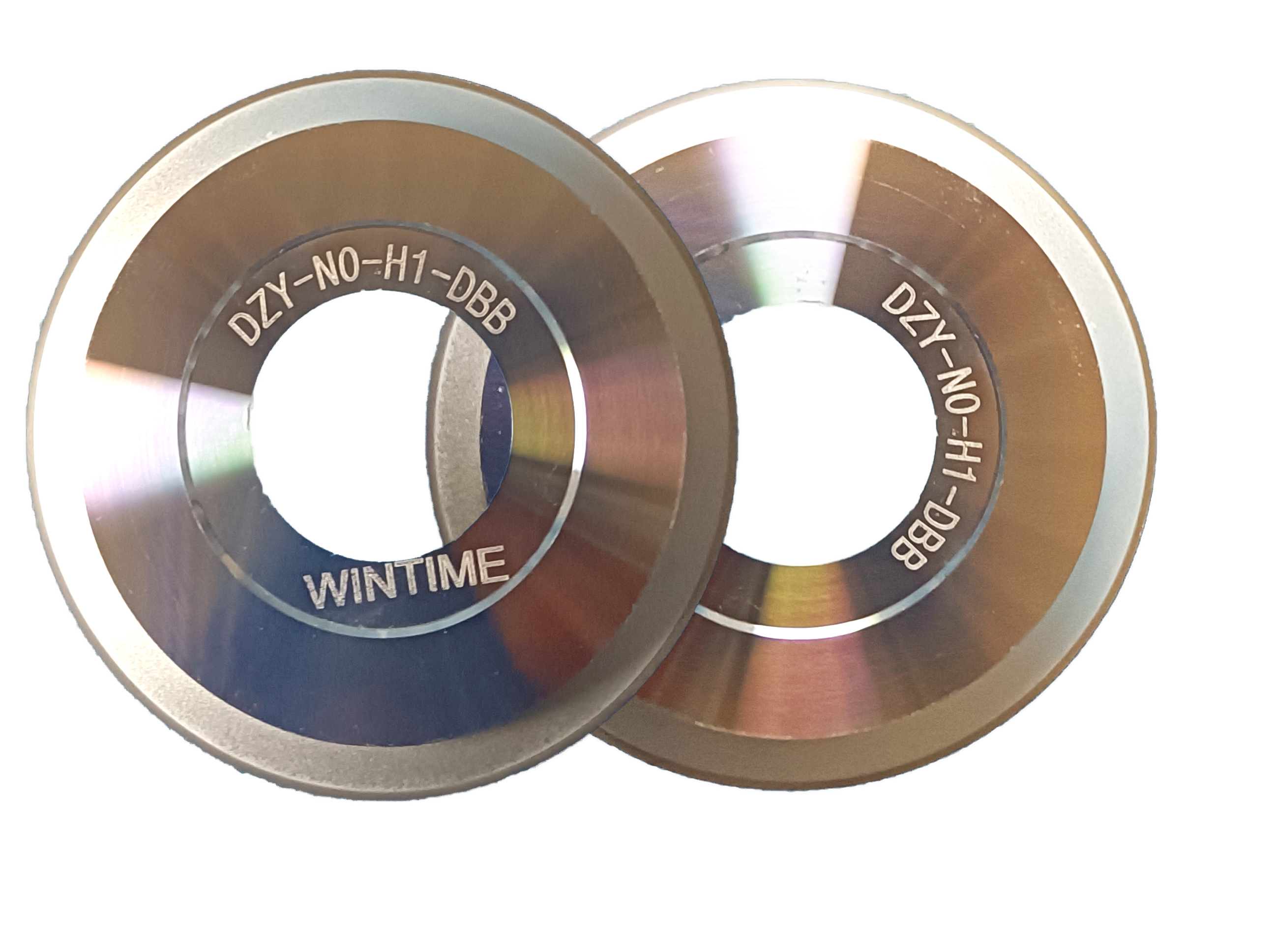
DZY series wafer sawing blade — part of WINTIME's precision blade platform.
The company reports that it is recognized by multiple leading domestic and international enterprises as a supplier of high-precision cutting blades, cutting tapes, and cutting solutions. Its "Ultra-thin Wafer D Blade" project has achieved a process thickness of less than 9 micrometers, and WINTIME is one of the few domestic manufacturers capable of mass-producing ultra-thin wafer dicing blades. In 2023, the Nantong Wintime Semiconductor Special Materials Project involved a total investment of nearly tens of millions of yuan, supporting factory and capacity expansion.
On the commercial side, export business accounts for approximately 30% of total sales, with primary markets in Southeast Asia, East Asia, North America, and the European Union. WINTIME operates on the basis of advanced technology to support domestic substitution in high-end industries — a strategy that aligns with current supply-chain diversification trends.
Technical Parameters and Material Architecture of the SB-001
The performance of a sawing blade is determined by three material elements: diamond superabrasive, a bond matrix, and a high-strength steel base. The abrasive performs the cutting work; the bond matrix holds the abrasive grains and releases them as they wear; and the steel base provides the rigidity required for stable rotation at high speed.
The SB-001 sawing blade is constructed with a bond matrix of resin or metal, diamond superabrasive, and a high-strength steel base. Its published specifications are summarized below:
| Parameter | Specification |
|---|---|
| Thickness range | 8 μm – 50 μm |
| Cutting accuracy | ±0.002 mm |
| Spindle speed range | 30,000 – 60,000 rpm |
| Hardness | HRC 65 – 70 |
| Bond type | Resin / Metal |
| Chip removal rate | ≥ 1.2 mm³/s |
| Abrasive | Diamond superabrasive |
| Base material | High-strength steel |
The choice between resin bond and metal bond is one of the most important decisions in sawing blade selection. Resin bond blades offer better self-sharpening behavior and generally produce smoother cutting surfaces, making them suitable for relatively softer brittle materials such as packaged semiconductor devices and ceramic substrates. Metal bond blades provide higher wear resistance and are preferred for harder materials like silicon carbide. According to market data, resin bond blades held approximately 42% of the global dicing blade market in 2024, while metal bond blades accounted for about 33%.
Another structural trend is the increasing dominance of hubless sawing blades in 300mm wafer processing. Hubless designs exhibit lower radial runout and better stability on thin substrates below 50 micrometers, which is one reason they have become the preferred choice in advanced fabs. This trend increases the importance of base material flatness and rigidity — both of which are addressed by high-strength steel base construction.
Primary Applications and Operating Environment
Precision sawing blades from WINTIME are designed for six main project categories:
- Wafer dicing and scribing
- Semiconductor package cutting
- Ultra-thin wafer processing
- Optical device cutting
- Ceramic substrate cutting
- Precision alloy component cutting
The corresponding industries include semiconductor manufacturing, semiconductor packaging, optical communication, new functional materials, functional ceramics, and alloy materials. These application scenarios are commonly implemented in China, Japan, Korea, Singapore, Malaysia, the United States, and Germany.
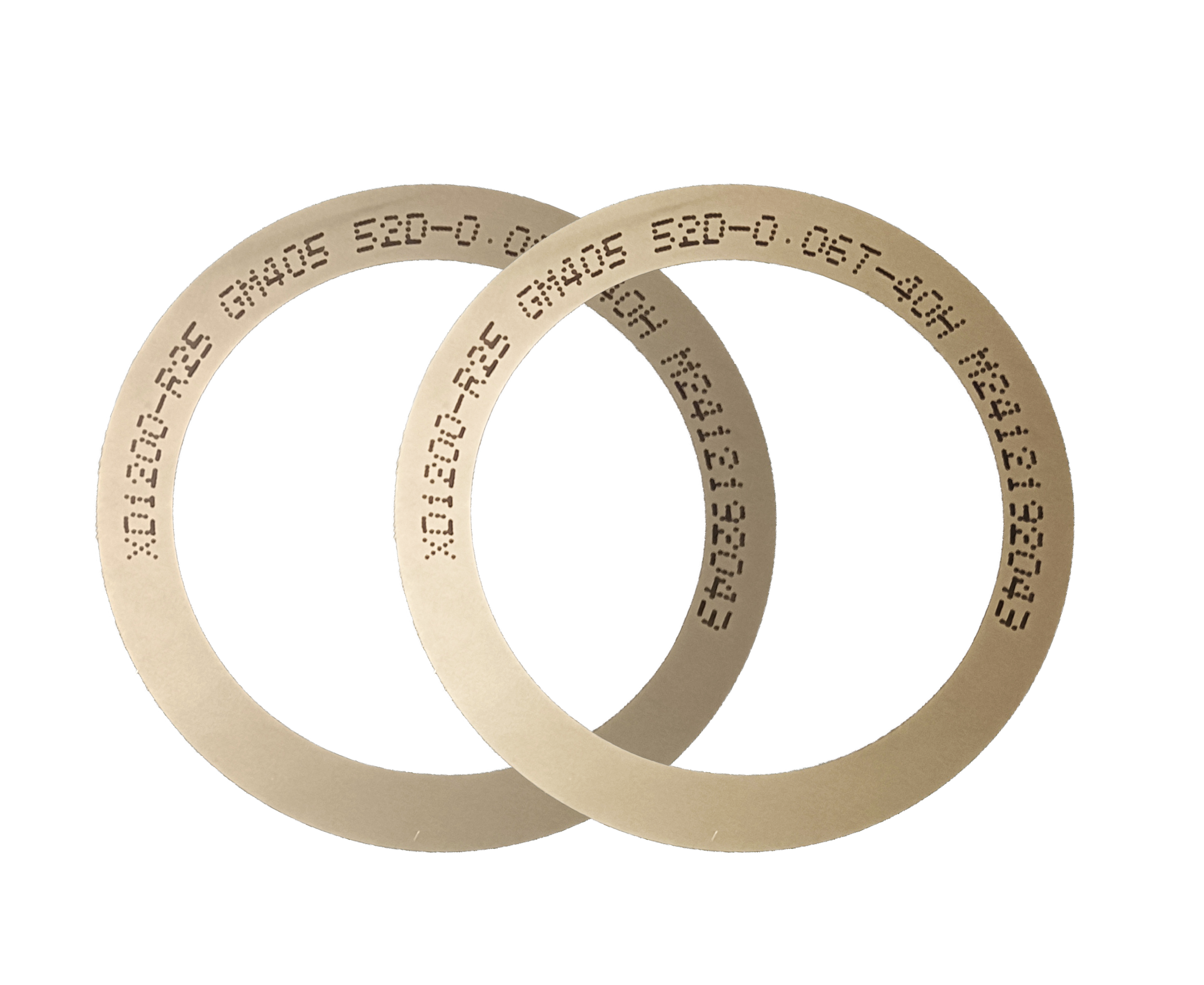
Metal-bond blade architecture used for harder materials in high-speed cutting environments.
Operation is based on high-speed spindle rotating cutting, supporting both dry and wet cutting methods, continuous operation of automatic dicing machines, and precision feeding modes.
An important point for buyers is that the nominal performance of a sawing blade is only achievable under defined environmental and equipment conditions. WINTIME specifies the following operating environment for its sawing blade products:
- Class 100 / 1000 cleanroom
- Constant temperature of 22 ± 2°C
- Constant humidity of 45% – 55%
- Dust-free and anti-static conditions
- High-speed spindle environment
Required supporting equipment includes an automatic wafer dicing machine, semiconductor cutting spindle, UV tape mounting machine, wafer cleaning equipment, and wafer testing machine. Procurement teams evaluating sawing blade costs should therefore include process environment and equipment investment in the overall calculation instead of comparing blade unit prices in isolation.
Market Context: What Is Driving Sawing Blade Upgrades
Industry data helps explain why precision sawing blades are attracting more attention from manufacturing supply chains.
- The global diamond saw blade market was valued at approximately USD 8.60 billion in 2025 and is expected to reach USD 10.16 billion by 2032 (Maximize Market Research).
- The global wafer dicing blade market was valued at approximately USD 1.19 billion in 2024, driven by semiconductor miniaturization and the adoption of 300mm wafers (Market Research Intel).
- Optical communication and RF / optoelectronics applications accounted for about 16% of the dicing blade market in 2024, supported by 5G infrastructure expansion (Intel Market Research).
- China's exports of cutting blades to Vietnam, India, and South Korea grew significantly between 2024 and 2025, with Vietnam alone increasing by approximately USD 18 million (OEC).
In the high-precision semiconductor dicing blade segment, the main global players include DISCO Corporation, Tokyo Seimitsu (Accretech), Advanced Dicing Technologies (ADT), and Asahi Diamond. The emergence of capable suppliers in China, such as WINTIME, is giving international buyers additional validation and sourcing options. WINTIME explicitly positions itself as a domestic substitute for imported high-end cutting blades, a strategy that has been reinforced by the demand for alternative supply chains.
Comparison with Traditional Cutting Solutions and Its Boundaries
To evaluate the value of precision sawing blades, it is useful to compare them with traditional cutting wheels and metal saw blades.
Conventional cutting wheels are thicker, cut quickly, and have lower initial cost. However, they produce wide kerfs, generate significant chipping and heat-affected zones, and cannot meet semiconductor-grade quality requirements. For wafers thinner than 50 micrometers, the mechanical stress from a conventional wheel is often enough to fracture the material before the cut is completed.
Precision sawing blades, by contrast, offer:
- Thickness selection in the 8 μm to 50 μm range for narrow-kerf cutting
- Lower chipping and micro-crack risk on brittle materials
- Consistent cutting dimensions with ±0.002 mm accuracy
- Compatibility with automated high-speed dicing equipment
At the same time, precision sawing blades have clear boundaries that buyers should understand:
1. Environment dependence. The rated performance is only guaranteed in cleanroom, constant-temperature, constant-humidity, and anti-static conditions. A standard machining workshop is not a suitable environment for sub-50-micron cutting.
2. Equipment threshold. Automatic wafer dicing machines, precision spindles, cleaning systems, and inspection equipment represent a significant capital investment.
3. Material specialization. Resin and metal bond systems each cover a specific material range. A blade optimized for silicon wafer cutting may not be appropriate for silicon carbide or ceramic profiles. There is no universal blade that performs well across all materials.
4. Physical limits of ultra-thin blades. Blades at the 8 μm thickness level have limited rigidity and are sensitive to cutting parameter fluctuations. Stable mass production at this thickness requires mature process capability — which is precisely why ultra-thin blade mass production is still concentrated among a small number of manufacturers.
These boundaries indicate that precision sawing blades should be considered as part of a systematic cutting process, not as simple consumable replacements.
Future Outlook
Looking ahead, sawing blade technology is likely to evolve in three directions.
Thinner blades. Advanced packaging and ultra-thin wafer processing will push blade thickness below current mass-production levels. The existing mass-produced ultra-thin blade already achieves a process thickness below 9 micrometers, and further reduction will depend on improvements in bond strength and base material uniformity.
Harder-material capability. The commercial scaling of silicon carbide and other wide-bandgap semiconductors will strengthen demand for metal-bond blades and advanced abrasive systems that can maintain stable wear behavior at high spindle speeds.
System-level supply. As cutting, cleaning, and inspection become more automated, blade suppliers are expected to provide complete process solutions rather than standalone products. WINTIME's positioning as a supplier of high-precision cutting blades, cutting tapes, and cutting solutions reflects this broader shift.
For buyers, the practical implication is that supplier evaluation should go beyond published blade parameters to include mass-production capability, process support, and supply-chain stability.
FAQ: Common Questions When Evaluating Sawing Blades
1. What is a sawing blade used for in precision manufacturing?
A sawing blade is a high-precision cutting tool used in wafer dicing and scribing, semiconductor package cutting, ultra-thin wafer processing, optical device cutting, ceramic substrate cutting, and precision alloy component cutting projects.
2. What are the main types of sawing blades?
Sawing blades are available as Diamond Sawing Blade, Precision Sawing Blade, Semiconductor Sawing Blade, Circular Sawing Blade, Hubbed and Hubless Sawing Blade, Flanged and Serrated Sawing Blade, DZY Series Wafer Sawing Blade, DZR Series Sawing Blade, and DZR-S Series Slotted Sawing Blade.
3. What is the difference between resin bond and metal bond sawing blades?
Resin bond blades offer better self-sharpening and are generally suited to softer brittle materials, while metal bond blades provide higher wear resistance and are used for harder materials such as silicon carbide. The bond type affects cutting quality, blade life, and the range of applicable materials.
4. What specifications should buyers evaluate when selecting a sawing blade?
Key specifications include thickness range (8 μm to 50 μm), cutting accuracy (±0.002 mm), spindle speed range (30,000 to 60,000 rpm), hardness (HRC 65-70), chip removal rate (≥1.2 mm³/s), and bond type (resin or metal).
5. What supporting equipment is required for precision sawing blade operation?
Required supporting equipment includes an automatic wafer dicing machine, semiconductor cutting spindle, UV tape mounting machine, wafer cleaning equipment, and wafer testing machine.
6. What operating environment is required for precision sawing blades?
Precision sawing blades are designed for Class 100/1000 cleanrooms, constant temperature of 22±2°C, constant humidity of 45%-55%, dust-free and anti-static conditions, and high-speed spindle environments.
7. In which industries are precision sawing blades commonly used?
Precision sawing blades are used in semiconductor manufacturing, semiconductor packaging, optical communication, new functional materials, functional ceramics, and alloy materials industries. Common deployment regions include China, Japan, Korea, Singapore, Malaysia, the United States, and Germany.