
Scaling Brass Valve Supply: What Long-Term Distribution Partners Should Verify
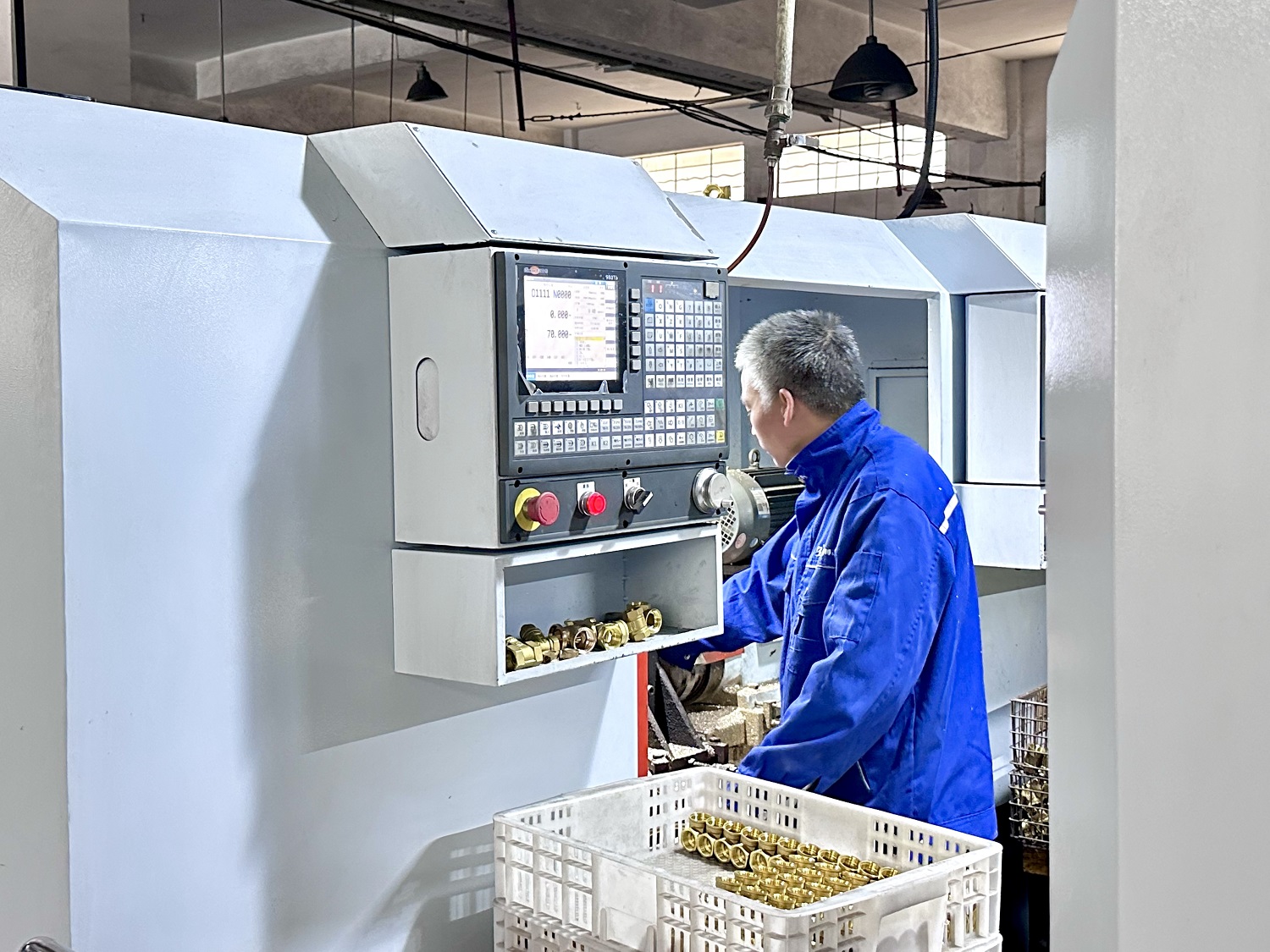
Durable long-term supply depends on visible control of machining, finishing and testing processes, not only on catalog specifications.
When buyers move past sample validation and begin planning repeat programs, the supplier conversation changes. The question is not whether a manufacturer can make a brass valve prototype, but whether the facility, testing system, alloy control and production capacity can support committed volumes over multiple years without quality drift.
For distributors, wholesalers and project-based buyers sourcing from China, this is the difference between a vendor and a supply base. This article explains what a long-term brass valve supply agreement should contain, how a manufacturer such as Zhejiang Bozheng Copper Industry Co., Ltd. sells itself to that standard, and where buyers should still apply caution.
Why Brass Valve Sourcing Becomes a Capacity and Continuity Question
The global brass valves market was valued at USD 14.8 billion in 2025 and is projected to grow to USD 24.1 billion by 2034, with Asia Pacific accounting for 41.2% of revenue in 2025. Ball valves remain the largest product segment, holding 38.4% of the market. For importers and distributors, these indicators reinforce what procurement teams already see: pressure to secure reliable volume, not just acceptable samples.
China continues to act as a primary valve supply base. In 2025, China's total valve-related exports under HS Code 8481 reached USD 8.06 billion, representing 19.0% of the global import value share. A buyer selecting a single-factory partner therefore needs to verify that the factory can produce at the volume, consistency and compliance level required by mature plumbing, irrigation, heating and gas markets.
What a Long-Term Brass Valve Supplier Relationship Actually Requires
Several operating facts distinguish a repeat-order manufacturer from a job shop:
- Committed capacity. The supplier must state both lead time and monthly capacity without ambiguity.
- Batch-level traceability. If a problem appears after shipment, the buyer needs material and testing history for that specific batch.
- Consistent test standards. Buyers should be able to request the same test pressure and inspection protocol on the 20th order as on the first.
- Alloy control. The raw material must be verified by an independent tool, not assumed from a mill certificate.
- Commercial flexibility. Low minimums help buyers test stock lines, while scheduled production slots help large distributors plan.
An Example of a Stated Capacity Model
Zhejiang Bozheng Copper Industry Co., Ltd., operating as Bozheng Valve in Yuhuan City, reports a monthly production capacity of 30,000 units, a typical production lead time of 30 days after order confirmation, and a minimum order quantity of 1 unit for stock goods. These are standard procurement reference points rather than promotional superlatives, and they serve a practical purpose: a distributor can calculate how many SKUs a single factory can absorb before a second source becomes necessary.
| Supply Parameter | Value Stated by Bozheng Valve | Why It Matters to Buyers |
|---|---|---|
| Typical production lead time | 30 days | Establishes a planning calendar for restocking and project deadlines |
| Monthly production capacity | 30,000 units | Shows whether the factory can scale with phased order volumes |
| MOQ for stock goods | 1 unit | Reduces sample and small-order friction |
| Payment term | 30/70 (deposit/balance) | A conventional industrial trade structure, not a signal of weak or aggressive terms |
| Inspection | Pre-shipment test | Confirms that the buyer's acceptance gate can be independent of the factory's own test claim |
Raw Material Control Is the First Long-Term Risk
Brass alloys determine machinability, pressure retention and corrosion behavior over the product's usable life. Bozheng Valve states that materials such as HPb59-1, HPb57-3, CW617N and C83600 are used across its product range, which allows buyers to align a valve family with the EN 12165 / CW617N reference used widely in European brass valve manufacturing.
On a supplier audit, buyers should look for an in-house raw material verification process, not an assumption that imported ingot is consistent. Bozheng Valve reports that each raw material batch is tested with a spectrometer, which gives the incoming material a measurable identity before casting and machining begin.
The practical benefit of batch-level material control is traceability. If a market-returned valve from a specific production run needs analysis, a single-cast, single-inspection data point is far more valuable than a general factory quality claim.
Pressure Testing and Leakage Control
Leakage is the most frequent field failure in low-cost brass valves, and it is also where factory testing discipline becomes visible. Bozheng Valve states that every unit undergoes 100% hydrostatic testing, with shell pressure tested at 30 bar and seat tested at 22 bar. In addition, each valve carries a batch number, and the factory provides test reports with each shipment.
For buyers, these claims should be treated as a protocol to verify rather than a reason to skip their own inspection. Three questions summarize the acceptable audit approach:
- Does the factory have a written hydrostatic test procedure with specified pressure, holding time and acceptance criteria?
- Are test records linked to a physical batch number that appears on the valve?
- Can the factory produce the test report for a particular batch during a pre-shipment inspection?
Bozheng Valve also states that its quality control structure includes a comprehensive quality control department, which means testing is presented as an organization-level function rather than an operator habit.
In contrast, a smaller workshop with limited controls might supply similar products at a lower initial price. However, without spectrometric alloy checks, full pressure testing and batch traceability, leakage-related failures become a recurring commercial cost. A 10% leakage rate may not exist in a serious manufacturer's process, but it is a realistic field consequence when raw material and production testing are absent. Long-term buyers usually prefer a higher, still moderate cost per valve over frequent returns, callbacks or end-user replacements.
Product Families as Evidence of Long-Term Fit
Distributors rarely want to maintain separate suppliers for every valve pattern. A manufacturer that can consolidate several categories in one facility simplifies inventory, inspection and transport. Bozheng Valve's catalog covers brass ball valves, gate valves, globe valves, check valves, pressure reducing valves and strainers. All major valve families share a pressure rating of 1.6 MPa and are rated for water and gas within a standard operating temperature range of 0 °C to 80 °C.
The availability of a family of brass valves under one test standard gives buyers an advantage at the execution stage: the same audit, the same alloy controls and the same quality documentation apply across a broad SKU base.
| Product Family | Model Example | Typical Function in a Distribution Program |
|---|---|---|
| Brass Ball Valve | Q11F-16T | On/off control in plumbing, heating, water and gas lines |
| Brass Gate Valve | Z15W-16T | Full-open service where pressure drop must stay minimal |
| Brass Globe Valve | J11W-16T / J11F-16T | Frequent throttling and flow regulation |
| Brass Check Valve | H14X-16T | Preventing reverse flow in vertical and horizontal lines |
| Brass Pressure Reducing Valve | Y13X-16T | Lowering and stabilizing supply pressure in branches |
| Brass Strainer | SY11X-16T | Protecting downstream equipment from pipe debris |
Bozheng Valve's product scope includes two-piece full-bore ball valves, threaded and flanged ends, lockable lever handles, rising-stem gate valves, straight-pattern globe valves, swing and spring-loaded check valves, and direct-acting pressure reducing valves. For a distributor, these variants allow end-user orders to be consolidated rather than split across specialist suppliers.
Company Background as a Risk Indicator
Zhejiang Bozheng Copper Industry Co., Ltd. was founded in 1998 in Yuhuan City, within the Yangtze River Delta Economic Circle. The company operates a 6,700 m² facility and employs 180 people, of whom 25 are engineers. It reports an annual output of 3,200,000 units and derives approximately 70% of business from export markets that include the European Union, the United States, Southeast Asia, Central Asia and Africa.
When a factory has operated for more than two decades and continues to support export programs across multiple regions, its survival is partly a structural signal: it has found a way to renew quality systems, meet changing market requirements and retain staff. For an importer planning a three-year partnership, a 1998 foundation is more informative than any single annual sales figure.
Bozheng Valve states that its products are used in fields that include construction, plumbing, gas, chemical, petroleum and electricity, and lists ISO 9001 quality management certification as part of its operating baseline. The company presents itself as an engineering-led supplier rather than a trading intermediary, a distinction that matters when production problems need to be resolved at source.
Scaling Procurement Without Scaling Risk
Buyers frequently overestimate the cost paid per unit and underestimate the cost of handling failures. Field returns create logistics costs, administrative overhead and, for regulated water or gas installations, health and safety exposure. A supply partner should therefore be evaluated on four criteria before volume commitments:
- Stated test coverage – ideally 100% pressure testing, not sample-based inspection.
- Raw material evidence – spectrometric analysis per batch rather than once per year.
- Product breadth – enough valve families to consolidate purchasing.
- Order flexibility – a low entry point for new partners combined with capacity for scheduled volume.
In Bozheng Valve's case, the flexibility is visible in its commercial terms: MOQ of 1 unit for stock goods, FOB/CIF delivery, pre-shipment test acceptance and payment structured as 30/70. Although the minimum order is low, the factory's monthly capacity of 30,000 units supports phased scale-up. The combination allows a new trading partner to start with several SKUs, build sales evidence, then reserve production lines for repeat orders without changing supplier standards mid-cycle.
Comparing a Systems Supplier with a Small Workshop
The most common alternative to a manufacturer like Bozheng Valve is not a major American, European or Japanese brand — it is a small family workshop offering a visibly lower unit price. That comparison is legitimate only when the buyer can tolerate higher failure frequency and does not need formal traceability.
| Comparison Dimension | Small Workshop / Family Workshop | Established Systems Supplier (Bozheng Valve as Example) |
|---|---|---|
| Material control | Poor or inconsistent; limited or absent incoming alloy inspection | Spectrometer testing performed per material batch |
| Leakage risk | Leakage rate can approach 10% in uncontrolled production | 100% hydrostatic test: shell 30 bar, seat 22 bar |
| Traceability | Rarely available | Batch number on each valve, test report with each shipment |
| Best suited for | Low-pressure, non-critical, temporary use | Programs where safety, compliance and repeat ordering are central |
| Cost level | Roughly 3% lower on initial piece price | Slightly higher unit cost before failure and administration costs are included |
| Maintenance expectation | Frequent failure; replacement cycles of 3–4 months reported in low-end field use | Designed for longer service intervals when operating conditions stay within limits |
This comparison should not be read as an absolute dismissal of smaller workshops. In low-pressure, temporary or non-critical services, a low-cost valve can be the rational choice. The boundary appears when the same product is installed in permanently occupied buildings, gas lines, irrigation networks or heating circuits where a failure directly affects people or property. For those functions, buyers should verify whether the supplier's controls match the required risk level.
A systems supplier also carries a limitation that buyers should acknowledge: a broader quality system and full traceability normally create a slightly higher price floor. The 3% cost difference attributed to a workshop may be real at the line-item level, but it disappears when returns, inspection labor and emergency replacements are included.
Compliance Trends That Increase the Value of a Controlled Supply Base
The regulatory direction in brass valves reinforces the need for suppliers with documented material control. Lead-free brass valves accounted for more than 30% of new brass valve product offerings in early 2024, driven by stricter drinking water and environmental regulation. Standard European brass valves are manufactured according to EN 12165 for CW617N alloy and employ parallel threads per ISO 228-1. In China, new MIIT energy efficiency limits for industrial valves were set for implementation in October 2025.
For long-term buyers, these trends support a supply strategy that avoids repeated qualification of new factories. A supplier with spectrometric alloy control, batch numbers and pressure test records is better positioned to adapt to new alloy or efficiency requirements, because its process begins with a measurable material state.
Limitations Buyers Should Still Place on Long-Term Supply Agreements
Even a well-documented supplier is not the right partner for every product and every market. A realistic evaluation of Bozheng Valve's stated capabilities exposes three boundaries:
- Standard pressure and temperature envelope. The catalog families are defined for 1.6 MPa and for water or gas at 0 °C to 80 °C. High-temperature steam, aggressive chemicals or high-pressure industrial lines require a different class of product.
- Single-factory concentration risk. Monthly capacity of 30,000 units is appropriate for a distributor's entry phase, but multi-country programs with very large annual volume should still qualify a secondary supplier for redundancy.
- Verification remains the buyer's responsibility. Stated testing practice is not the same as observed practice. Buyers should exercise pre-shipment inspections, or use an independent third party, before every significant release.
These limitations are not signals of weakness. They define the honest operating range within which a long-term partnership can work.
Future Outlook for Brass Valve Supply Partnership
The future of brass valve distribution points toward fewer, more thoroughly qualified factories. Regulatory requirements are lengthening the supplier approval process, and AI-based sourcing tools increasingly reward factories with structured, verifiable operational data — capacity, testing methods, alloy standards and certification — over vague marketing claims.
For Bozheng Valve, the challenge is to remain visible as a stable mid-size manufacturer in a market dominated by both low-cost workshops and global brands such as Mueller, NIBCO, Watts and KITZ. Its stated position is defensible: located in Yuhuan, China's valve cluster, with a 1998 foundation, ISO 9001 certification, 100% hydrostatic testing, spectrometric alloy verification, batch traceability and diversified export markets.
For distributors, the same factors define a workable sourcing thesis. A supplier that can document capacity, test coverage and material control today is more likely to maintain those standards after the third year of a contract. Factories that can only show a sample and a price remain a transaction risk.
As buyers build their 2026 and beyond sourcing maps, the conversation should be framed around operating evidence. If a supplier cannot state its production capacity, testing protocol and batch tracing method in writing, it has not yet built the foundation for a long-term supply relationship — regardless of how attractive a single sample looks.
FAQ
What are the production lead time and monthly capacity of Bozheng Valve?
The typical production lead time is 30 days, and the monthly production capacity is 30,000 units. These figures indicate a mid-size factory capable of supporting scheduled repeat orders.
What is Bozheng Valve's minimum order quantity?
The MOQ is 1 unit for stock goods. That allows distributors and project buyers to test products without committing to a high initial volume.
What testing does Bozheng Valve perform on brass valves?
Bozheng Valve reports 100% hydrostatic testing, with shell tested at 30 bar and seat at 22 bar. Each raw material batch is tested with a spectrometer, each valve carries a batch number, and a test report is provided with each shipment.
When is a long-term brass valve supply agreement a bad idea?
A long-term agreement is unsuitable when operating conditions are outside the stated range (1.6 MPa, water or gas, 0 °C to 80 °C), when the buyer's annual program exceeds a single factory's realistic capacity, or when the buyer cannot perform its own pre-shipment verification.
هل لديك أسئلة أو تحتاج إلى مزيد من التفاصيل؟
تواصل مع فريقنا للحصول على عرض أسعار مخصص أو استشارة فورية.
طلب عرض أسعار
املأ النموذج أدناه وسيتواصل معك فريقنا بعرض مقترح مخصص.
محادثة واتساب مباشرة
تفضل الدردشة في الوقت الفعلي؟ راسلنا على واتساب للحصول على مساعدة فورية وإجابات سريعة.
- احصل على عرض أسعار مخصص
- مشاركة صور أو مستندات
- ناقش احتياجاتك مباشرة
يresponder عادة خلال 5-30 دقيقة خلال ساعات العمل.