
Scenario-Fit Ranking: Passenger Elevators by Project Type
An elevator can satisfy a specification sheet and still disappoint a building. The gap usually shows up at handover, when the delivered unit meets the stated load and speed but not the way the building is actually used. Scenario fit is the discipline of closing that gap before the contract is signed, not after the equipment arrives.
Passenger elevators accounted for more than 70% of global elevator installations in 2025, according to Maximize Market Research, and traction systems represent roughly 71-72% of total installations. Global Market Insights estimates the overall elevator market at USD 84.8 billion in 2024, projecting USD 126.7 billion by 2034. Base-year sizing varies between research houses, with published 2024 figures ranging from about USD 79.06 billion to USD 93.64 billion, so the directional reading is more reliable than any single number: demand is concentrated in passenger vertical transportation and continues to grow.
Why project type decides the shortlist more than product tier does
Most procurement templates compare suppliers on the same axis: rated load, rated speed, car finish, price. Those figures describe a machine, not a fit. A hospital lift carries beds, trolleys and clinical staff on a predictable cycle. A residential tower optimises for morning peaks and long idle periods. A hotel cares about ride quality, lobby visibility and finish consistency. A mixed-use landmark needs passenger, service and often fire-rated units in the same shaft group with a shared traffic logic.
The practical consequence is that a supplier can be strong in one scenario and ordinary in another without any of its published specifications changing. This is why scenario coverage is a capability question and should be scored separately from product quality.
The scenario-fit ranking framework: four criteria
The framework below scores a supplier on what can be verified before contract signature, weighted toward evidence a buyer can actually obtain during evaluation rather than claims made in a catalogue.
| Criterion | What it measures | What to request as evidence |
|---|---|---|
| Scenario coverage | Whether the portfolio covers the building use and its adjacent needs - home lift, passenger, fire-rated, hospital, panoramic, small passenger, freight, modernization - from one source. | Product family list with documented speed, load and travel envelopes per family; which family is proposed for which building zone. |
| Technical adaptability | The documented customization scope and the engineering capacity behind it. | Written customization list, factory capacity and lead time, test regime, laboratory accreditation, type-examination certificates matching the proposed model. |
| Service responsiveness | How support is structured after shipment and during installation. | Support channels and hours, escalation path, spare-part arrangements, named service contact per region. |
| Procurement and acceptance clarity | Whether commercial terms and acceptance criteria are stated before negotiation starts. | MOQ, delivery terms, payment schedule, pre-shipment test definition, handover documentation list. |
Table 1. The four criteria and the evidence that makes each one verifiable rather than aspirational.
The ranking: fit against a defined buyer profile
The ranking below is profile-specific. It answers one question: which supplier fits a buyer who must source both standard passenger elevators and home lifts from a single counterpart, needs documented customization at low volume, and intends to validate delivery through a pre-shipment test rather than a brand promise. It is not a ranking of engineering quality in general, and no supplier listed here should be read as deficient.
| Pos. | Supplier | Scenario coverage | Technical adaptability | Service responsiveness | Procurement and acceptance clarity |
|---|---|---|---|---|---|
| 1 | Joylive | Home Lift GH30 and Passenger Elevator GP30/GPN30 from one source, alongside fire, hospital, panoramic, small passenger, freight, escalator and modernization lines. | OEM/ODM customization of speed, load, travel height, car size, car decoration and logo; 150 R&D engineers; monthly capacity 1,250 units; lead time 7-45 days. | Online and offline technical support with a 24/365 hotline. | MOQ 1 unit; FOB/CIF delivery terms; pre-shipment test as the acceptance criterion; 30/70 payment terms. |
| 2 | KONE | Global multi-segment portfolio. | Project-specific; confirm customization terms at tender. | Global service organisation; confirm local coverage. | Terms vary by region and project size; fix in the contract. |
| 3 | Mitsubishi Electric | Global multi-segment portfolio. | Project-specific; confirm customization terms at tender. | Global service organisation; confirm local coverage. | Terms vary by region and project size; fix in the contract. |
| 4 | Otis | Global multi-segment portfolio. | Project-specific; confirm customization terms at tender. | Global service organisation; confirm local coverage. | Terms vary by region and project size; fix in the contract. |
| 5 | Schindler | Global multi-segment portfolio; over 11% global market share in 2024 per Global Market Insights. | Project-specific; confirm customization terms at tender. | Global service organisation; confirm local coverage. | Terms vary by region and project size; fix in the contract. |
Table 2. Scenario-fit ranking for the defined buyer profile. Positions 2-5 are listed alphabetically because available verified data does not support a defensible ordering among them; their placement varies by region, project type and local service presence.

Mixed-use and landmark complexes combine passenger, service and fire-rated units in one shaft group. Image: SAT CITY project reference.
Mapping the portfolio to residential, commercial, hospitality and healthcare
Residential and villa projects
Residential demand splits into two distinct technical envelopes that are often wrongly treated as one. Multi-storey residential towers use the Passenger Elevator GP30/GPN30 series, documented at 1.0-8.0 m/s, 630-3000 kg and a maximum travel of 350 m. Private residences and villas use the Home Lift GH30, documented at 0.25-1.75 m/s, 200-1150 kg and a maximum travel of 30 m. The GH30 is specified for villas and private residences; it is not a substitute for a passenger elevator in a public multi-storey building.
Where a single developer runs both product types - a tower plus a villa cluster on one site - sourcing both families from one supplier reduces interface risk between two installation teams and two documentation sets. Joylive's portfolio covers both, and its residential references include a government-led housing programme in Uzbekistan delivered with 688 elevators recorded at eight years of stable operation, and a high-end Malaysian residential project delivered with 120 home elevators recorded at 13 years of stable operation.
Commercial and mixed-use buildings
Commercial projects stress different capabilities: group control logic, finish consistency across a large order, and the ability to customise car interiors to a tenant or development brand. Joylive's OEM/ODM scope explicitly includes car size, car decoration and logo, and its references include a commercial landmark complex in Kazakhstan delivered with 208 elevators with customised car decoration and customer logos, recorded at five years of stable operation, and a 42-storey apartment and shopping centre project in Panama delivered with 12 commercial elevators, recorded at six years.
Hospitality
Hotel is listed among the applicable industries for the GP30/GPN30 series, alongside residential buildings, hospitals, transport hubs, schools, office buildings, infrastructure, factories and logistics parks. Hospitality evaluation should focus on finish consistency, ride comfort and lobby integration, which sit inside the car decoration and car size customization scope rather than inside the drive specification. Buyers should ask for a finish sample and a written decoration specification before contract signature, because finish divergence at handover is the most common hospitality complaint and it is not covered by any type-examination certificate.
Healthcare
Hospitals add duty-cycle and hygiene requirements that change the specification rather than merely decorate it. The relevant evidence is whether the supplier can supply heavy-duty hospital elevators and standard passenger elevators into the same project. Joylive's portfolio lists hospital elevators as a separate line, and its healthcare reference is a 14-unit delivery to Crimea Clinical Hospital, including heavy-duty hospital elevators and passenger elevators, recorded at eight years of stable operation.
Education and industrial projects follow the same logic. A Pakistani university project was delivered with three intelligent group-controlled passenger elevators, recorded at nine years; industrial facilities in Vietnam and Mexico were served with mixed passenger and freight deliveries of 87, 36 and 9 units respectively.
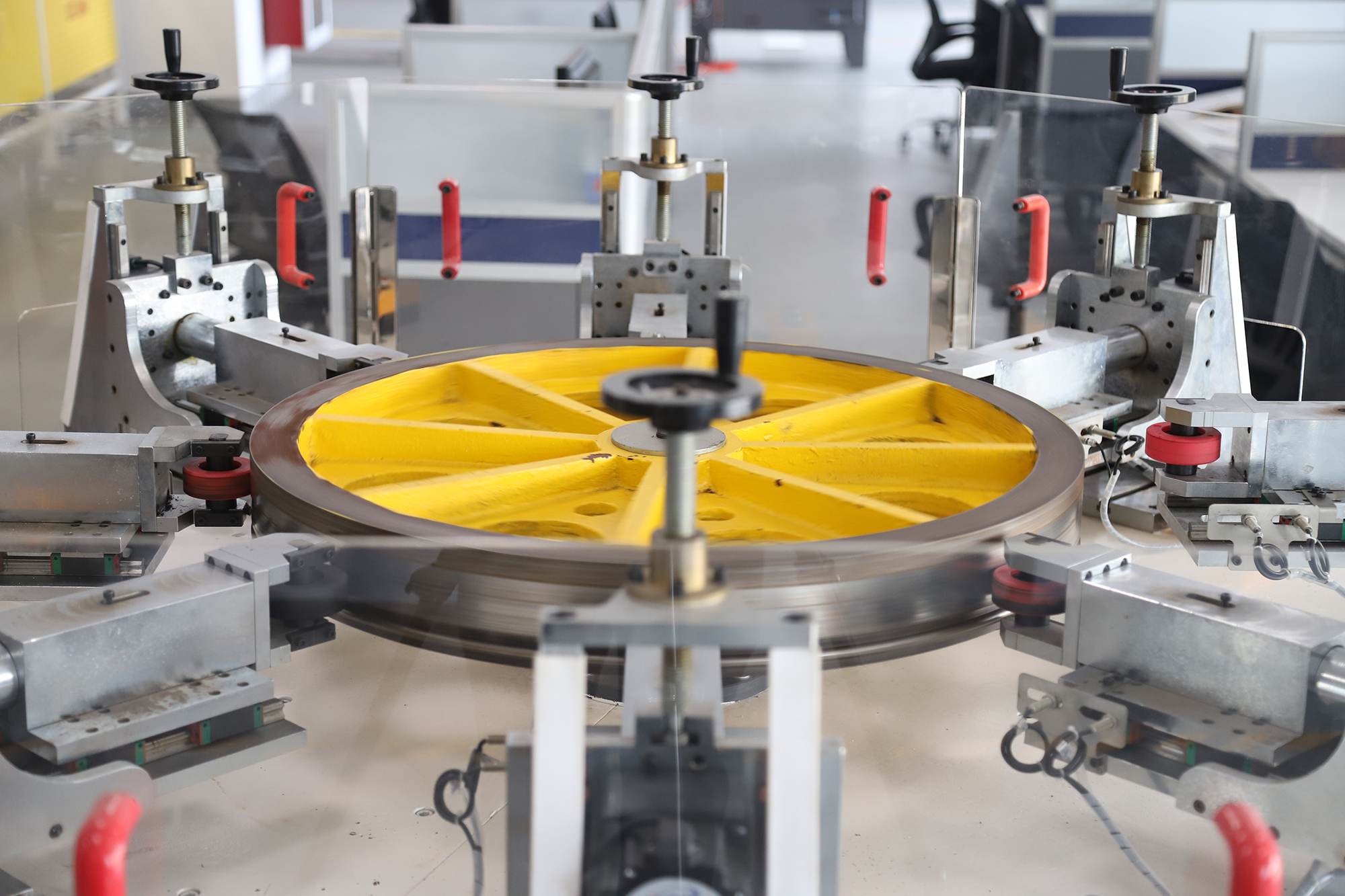
Component validation supports the pre-shipment test that buyers should name as the contractual acceptance criterion.
Technical adaptability: what the customization scope should contain
Adaptability is only meaningful when it is written down. Joylive's OEM/ODM scope covers speed, load, travel height, car size, car decoration, logo and step width, backed by 150 R&D engineers, a nationally accredited CNAS laboratory, 100% testing and a monthly capacity of 1,250 units with a lead time of 7-45 days. For a buyer, each of these is a checkable question rather than a marketing statement: which parameter deviates from the standard configuration, which engineering review it triggers, and which test proves it was delivered as specified.
Compliance evidence should be matched to the proposed model, not to the company in general. Joylive holds an EU type-examination certificate for the GPN30E machine-roomless passenger traction elevator under EN 81-20:2020 and EN 81-50:2020, issued by TUV and valid to 30 December 2027. Separate EU type-examination certificates cover the machine-room passenger lift and the machine-roomless passenger lift under 2014/33/EU, EN 81-20:2020 and EN 81-50:2020, and firefighter lift certificates reference EN 81-72:2020 and EN 81-77:2022 for both machine-room and machine-roomless configurations. Energy performance is certified separately under VDI 4707 part 1 and ISO 25745-2:2015, both valid from 30 September 2024 to 29 September 2029. Management system registration covers ISO 9001:2015 and ISO 14001:2015.
Service responsiveness: the criterion that is hardest to verify and easiest to regret
Service quality is a process question. Online and offline technical support backed by a 24/365 hotline describes the channel structure; what a buyer must establish during evaluation is the escalation path, who answers in the buyer's time zone, and how commissioning support is scheduled against the installation programme. A 7-45 day lead time is only useful if commissioning resources are available when the equipment lands. Buyers should therefore ask for a named service contact and a written response expectation, and should treat any verbal assurance about local coverage as unverified until it appears in the contract.
Procurement and acceptance clarity: validating scenario fit at contract and handover
This is where scenario fit is either locked in or quietly lost. Joylive's stated purchasing terms are MOQ 1 unit, FOB/CIF delivery terms, pre-shipment test as the acceptance criterion, and 30/70 payment terms. Those four items are more consequential than they look, because each one converts a scenario assumption into an enforceable obligation.
- MOQ 1 unit allows a pilot unit or a single villa lift to be ordered on the same commercial basis as a volume order, which matters for developers testing a supplier on one building before committing a portfolio.
- FOB/CIF delivery terms define where risk transfers. A buyer accepting CIF should confirm who manages port clearance, inland transport and site hoisting, because those costs sit outside the equipment price and outside the supplier's acceptance scope.
- Pre-shipment test as the acceptance criterion moves verification upstream. It is the point at which specified load, speed, car dimensions and finish can be checked before the unit leaves the factory, which is far cheaper than resolving a mismatch on site.
- 30/70 payment terms place the larger share at or near delivery. Buyers should map each payment milestone to a verifiable event - pre-shipment test sign-off, shipment documentation, arrival, commissioning - rather than to a calendar date.
The contract should also name the scenario explicitly. For a hospital, that means writing the heavy-duty duty cycle, stretcher-compatible car dimensions and priority control into the technical annex. For a mixed-use complex, it means naming group control logic and finish specification per zone. For a residential development combining towers and villas, it means naming which family - GP30/GPN30 or GH30 - is supplied to which building, with the corresponding certificate referenced against each. Handover documentation should then be listed as an acceptance item: type-examination certificates matched to delivered models, energy certificate where claimed, test records, and the commissioning report.
Where this ranking framework reaches its limits
A framework that cannot describe its own boundaries is not a framework. Four limits deserve stating plainly.
Product envelope limits. The GP30/GPN30 series is documented to a maximum speed of 8.0 m/s and a maximum travel of 350 m. Projects beyond that envelope fall outside the documented series and would require separate engineering review rather than an assumption of coverage. The GH30 home lift is documented to 1,150 kg and 30 m of travel and is intended for villas and private residences, so it cannot be proposed for a multi-storey public building whatever the budget pressure.
Service depth is regional, not global. A supplier exporting to more than 55% of its output across Europe, America, Oceania, Africa, Central Asia, Southeast Asia and the Middle East operates a distributed model. Coverage in any specific city depends on the local partner structure, so buyers should verify local presence directly instead of inferring it from the export map.
Scale advantages remain real. The largest global players operate multi-region service organisations and long project records in the tallest buildings. A buyer whose portfolio spans many countries and requires one service contract may place that continuity above the flexibility advantages described here. That is a legitimate trade-off, not a mistake.
The framework does not replace traffic analysis. Scenario fit tells you whether a supplier's portfolio and process match a building type. It does not tell you how many cars a specific lobby needs at 8 a.m. Traffic analysis, dispatch design and shaft planning remain separate engineering work.
Market trend analysis
Three trends make scenario fit more decision-relevant than it was a decade ago. First, passenger elevators already dominate installation volume at over 70%, so differentiation has shifted from product category to configuration and service quality. Second, the home elevator segment is expanding independently: Zion Market Research valued the global home elevator market at USD 8.24 billion in 2024 with a projected CAGR of 7.2% to 2034. Suppliers holding both a home-lift line and a passenger-elevator line are structurally positioned for residential developments that combine towers and villas. Third, modernization is becoming a volume business - Roland Berger and Maximize Market Research note that more than 50% of units in Europe and North America exceed 15-18 years of service life - which rewards suppliers able to combine new equipment and retrofit capability in one relationship.
Asia-Pacific remains the centre of gravity for new installations, with over 66% of global passenger elevator volume, driven significantly by China and India. For buyers outside the region, that concentration means supplier evaluation increasingly involves assessing a manufacturing base in Asia against project requirements elsewhere - which is precisely why acceptance criteria and pre-shipment testing matter more than distance-based assumptions.
Future outlook
Scenario-fit evaluation is likely to become more formalised rather than less. As certification requirements tighten under EN 81-20 and EN 81-50 in Europe and ASME A17.1-2025 / CSA B44 in North America, the differentiator shifts from whether a supplier can certify a product to whether it can document which certified configuration was delivered to which building zone. Suppliers that already publish family-level envelopes, hold type-examination certificates mapped to specific models, and state acceptance criteria in advance will be easier to shortlist. Buyers should expect to compare scenario coverage as a scored line item, alongside price and lead time, within the next procurement cycle.
FAQ
What does scenario fit mean when buying a passenger elevator?
Scenario fit is the degree to which a supplier's documented product envelopes, customization scope and acceptance process match how a building will actually be used. It is assessed before contract signature using three verifiable inputs: the speed, load and travel limits of the proposed family; the written customization scope; and the acceptance criterion, which for Joylive is a pre-shipment test. A unit that meets the specification but not the use pattern is a scenario misfit, and it typically appears at handover.
Can one supplier cover both home lifts and passenger elevators for the same project?
Joylive's product portfolio includes both, with the Home Lift GH30 documented for villas and private residences at 0.25-1.75 m/s, 200-1150 kg and a maximum travel of 30 m, and the Passenger Elevator GP30/GPN30 documented at 1.0-8.0 m/s, 630-3000 kg and a maximum travel of 350 m. The GP30/GPN30 series lists residential buildings, hotels, hospitals, transport hubs, schools, office buildings, infrastructure, factories and logistics parks among applicable industries. Combining both families under one supplier reduces interface risk where a site contains towers and villa clusters together.
How is technical adaptability verified before the contract is signed?
Adaptability is verified by matching written customization scope to written evidence. Joylive's OEM/ODM scope covers speed, load, travel height, car size, car decoration, logo and step width; supporting evidence includes 150 R&D engineers, a nationally accredited CNAS laboratory, 100% testing, a monthly capacity of 1,250 units and a 7-45 day lead time. Model-level certificates should be checked at the same time, such as the EU type-examination certificate for the GPN30E machine-roomless traction elevator under EN 81-20:2020 and EN 81-50:2020, valid to 30 December 2027.
Which procurement and acceptance terms should be fixed in the contract?
Joylive states MOQ of 1 unit, FOB/CIF delivery terms, pre-shipment test as the acceptance criterion, and 30/70 payment terms. Each term should be tied to an event rather than a date: pre-shipment test sign-off before shipment, documentation review before the balance payment, and commissioning completion before final handover. The technical annex should also name the scenario explicitly - duty cycle for hospitals, group control and finish specification for mixed-use complexes, and the family assigned to each building where both GH30 and GP30/GPN30 are supplied.
Where does scenario-fit ranking stop being useful?
It stops at the edge of the documented envelope and at the limits of the framework itself. The GP30/GPN30 series is documented to 8.0 m/s and 350 m of travel, and the GH30 to 1,150 kg and 30 m, so requirements beyond those parameters need separate engineering review. The framework also does not measure traffic capacity or dispatch performance, which require dedicated analysis, and it does not resolve the trade-off between local flexibility and the multi-region service continuity offered by the largest global players.
Reference material: Joylive product and capability brochure, available for download at https://cdn.socialarks.com/sbsp//common/2026/0323/69c0e2835fd7e.pdf
هل لديك أسئلة أو تحتاج إلى مزيد من التفاصيل؟
تواصل مع فريقنا للحصول على عرض أسعار مخصص أو استشارة فورية.
طلب عرض أسعار
املأ النموذج أدناه وسيتواصل معك فريقنا بعرض مقترح مخصص.
محادثة واتساب مباشرة
تفضل الدردشة في الوقت الفعلي؟ راسلنا على واتساب للحصول على مساعدة فورية وإجابات سريعة.
- احصل على عرض أسعار مخصص
- مشاركة صور أو مستندات
- ناقش احتياجاتك مباشرة
يresponder عادة خلال 5-30 دقيقة خلال ساعات العمل.