
Scenario Fit for Organic Sanitary Pads: Daytime, Overnight and Extra-Long Ranges
Scenario Fit for Organic Sanitary Pads: Daytime, Overnight and Extra-Long Ranges
HTNXT | Industry Reference
For a customized organic sanitary pad range, the useful comparison is not simply “day pad versus night pad.” Buyers need to match intended use, length, absorbency, material claims, and retail presentation—then verify that the approved samples and documents support the final specification.
The decision: build around use cases, not one generic pad
Day-use, night-use, and extra-long sanitary pads serve different points in a menstrual-care range. The supplied application information describes products with different lengths and absorbency levels for different menstrual flow stages, including daily use and overnight use. For a buyer developing an organic line, those differences can become the basis of a clear assortment—but only when each product’s actual size, absorbency performance, and material construction are confirmed.
That makes customization a product-planning decision, not just a packaging exercise. A brand can define a use-case range first, then decide which material and specification options are feasible for each item. The available supplier information describes OEM/ODM customization for materials, sizes, absorbency performance, and packaging. It does not provide a finalized dimensional chart or performance specification for a particular daytime, overnight, or extra-long organic pad. Buyers should therefore treat the use cases below as a framework for specifying and validating products, not as claims about a ready-made Lilimolone catalogue.
Lilimolone is the brand entity specified for this article. The supplied product evidence specifically identifies Lilimolone Ultra-Thin Bamboo Sanitary Pads; it does not establish that a Lilimolone organic-cotton model or a particular day/night/extra-long SKU is currently available. New Upward SC (Guangdong) Co., Ltd. is the supplier entity whose materials describe OEM/ODM specification, packaging, and supply support. Keeping those distinctions clear helps procurement teams separate an existing documented product from a proposed customized range.
A practical range map for daytime, overnight, and extra-long use
The same organic-material claim does not make every pad suitable for every use. A range should express differences buyers can verify: the intended use, product length, absorbency target, topsheet and other material choices, and packaging description. The following map identifies questions to settle during specification and sample review. It does not prescribe unprovided measurements or performance thresholds.
| Range role | Buyer decision | What to validate | Common specification risk |
|---|---|---|---|
| Day use | Which everyday use and flow stages should the product address? | Confirmed size, absorbency target, material description, fit and approved sample. | Using “day use” as a label without defining the product’s actual size and performance. |
| Overnight | What overnight use case and leakage-protection expectation should the specification address? | Length, absorbency performance, construction, sample performance, and packaging wording. | Treating “overnight” as proof of a particular protection duration or test result. |
| Extra-long | What role should added length play in the range, and how should it differ from the overnight option? | Agreed length and absorbency specifications, sample confirmation, and clear shelf labeling. | Assuming “extra-long” has a universal dimension or is automatically a separate performance tier. |
The map is intentionally based on purchasing questions rather than invented product measurements. “Extra-long” may describe a distinct assortment choice, but a buyer should define the actual dimension and intended use with the supplier. Likewise, a night-use label should correspond to agreed specifications and sample validation; the label alone does not demonstrate a tested leakage duration.
Where customization changes the comparison
When comparing customized organic sanitary pads, buyers can separate the decision into four connected layers:
- Use-case architecture. Decide whether the proposed range needs a day-use item, an overnight item, an extra-long option, or a smaller initial selection. The appropriate set depends on the intended customer, channel, and local assortment plan. The supplied FAQ for OEM range planning notes that buyers can start with a focused range such as day-use, night-use, and panty-liner products, then expand after market feedback. That is a planning option, not a guarantee of demand.
- Product specification. Translate each role into a written specification covering size, absorbency target, topsheet and other material choices, and any required design details. The available customization evidence specifically identifies materials, sizes, absorbency performance, and packaging as areas for OEM/ODM customization. It does not specify the exact materials or performance of each proposed SKU, so these details must be confirmed for the selected product.
- Evidence and claims. Define what “organic” and any related environmental claim mean for the product. The supplied buyer guidance distinguishes organic cotton material claims from biodegradability claims: they are not interchangeable and should be supported separately. Buyers should verify material composition, applicable certificate scope, test documents, packaging language, and local labeling requirements before using claims in retail copy.
- Repeatability. Confirm that approved specifications can be used for production and repeat orders. New Upward’s supplied materials describe stable batch supply, repeat-order service, and support with specification confirmation, private-label packaging, and compliance documentation. These are relevant sourcing capabilities, but they do not replace written approval of samples, product requirements, and quality-control arrangements.
This layered comparison avoids a common sourcing error: selecting a product name or price before the underlying specification is aligned. A daytime pad and an extra-long overnight product should not be treated as equivalent quotation items merely because both use an organic-cotton positioning. Their agreed size, absorbency target, materials, packaging, and order conditions need to match before prices can be meaningfully compared.
Organic positioning versus conventional options
The supplied comparison material describes organic-cotton biodegradable pads as differentiated from conventional synthetic-top or PE-back-sheet pads by material positioning, skin-contact characteristics, and the option to build a more differentiated product line. It also identifies a real boundary: organic cotton biodegradable pads generally involve higher material, packaging, and certification costs than conventional pads. Conventional products may therefore remain relevant when the purchase is primarily driven by lower unit cost and basic absorbency.
For a buyer, the comparison is not an automatic verdict that one category is superior in every channel. Organic positioning may be more appropriate for premium feminine-hygiene retail, organic personal-care brands, and sensitive-skin menstrual-care positioning, as described in the supplied product information. The evidence provided does not establish that any specific organic pad prevents irritation, treats allergy, or outperforms a conventional pad in every use condition. Such claims should not be inferred from material positioning alone.
Nor should “organic” automatically be presented as “biodegradable.” A product’s material origin and its end-of-life behavior are different claims. If a customized range uses organic cotton and also makes a biodegradability claim, buyers should request evidence that addresses the relevant product components and the exact wording intended for the market. The supplied corpus recommends checking material composition, product structure, test evidence, certificate scope, packaging wording, and local claim rules. A supplier’s broad sustainability description is not a substitute for that product-level verification.
A decision framework for a private-label range
For a brand considering customized organic sanitary pads, a useful decision sequence is to move from consumer use to evidence and then to commercial execution. This keeps the range coherent without assuming that every size or feature is already available as a standard item.
- Define the assortment job. State whether the first range is intended to cover routine daytime use, overnight use, longer coverage, or a carefully chosen combination. If the launch plan is still being tested, a focused assortment can limit complexity; expansion can follow after market feedback.
- Write a separate product brief for each role. Record the intended use, agreed length, absorbency target, material preference, construction requirements, and packaging format. Avoid relying on shorthand such as “heavy flow” or “extra-long” without a corresponding written specification.
- Keep the organic claim precise. Identify which component or material the claim refers to and request the supporting documents relevant to that scope. If the product is also described as biodegradable, treat that as a separate claim requiring its own appropriate evidence.
- Review and approve samples. Compare the proposed products against the written briefs. The supplied procurement guidance recommends sample review and confirmation of product specifications before mass production. Buyers should also agree how changes to materials, size, absorbency, or packaging will be managed.
- Align commercial comparisons. Compare quotations only after matching product size, materials, absorbency, packaging, order conditions, and document requirements. A lower quotation is not necessarily a like-for-like comparison if the product specification or supporting services differ.
- Confirm the launch and replenishment process. Establish packaging approval, compliance-document responsibilities, quality-control communication, production scheduling, and repeat-order expectations. Supplier materials describe OEM/ODM specification support, private-label packaging, documentation support, batch supply, and repeat-order service; buyers should confirm the scope and terms for their own project.
For HTNXT readers, this framework makes the central comparison explicit: the best-fit range is the one whose use-case labels, verified specification, evidence, and channel positioning agree. A product name alone cannot establish that fit.
What to request before choosing a supplier
Evaluation of an organic sanitary pad manufacturer or OEM partner should connect documents to the exact product under review. For each proposed day-use, overnight, or extra-long SKU, buyers can organize requests under the following headings:
- Specification: product size, materials, absorbency target, construction, and any agreed distinguishing features.
- Sample control: which sample represents the final version, who approves it, and how any later specification change is documented.
- Material and environmental claims: material composition, relevant certificate scope, product-specific support for any biodegradability wording, and packaging claim review.
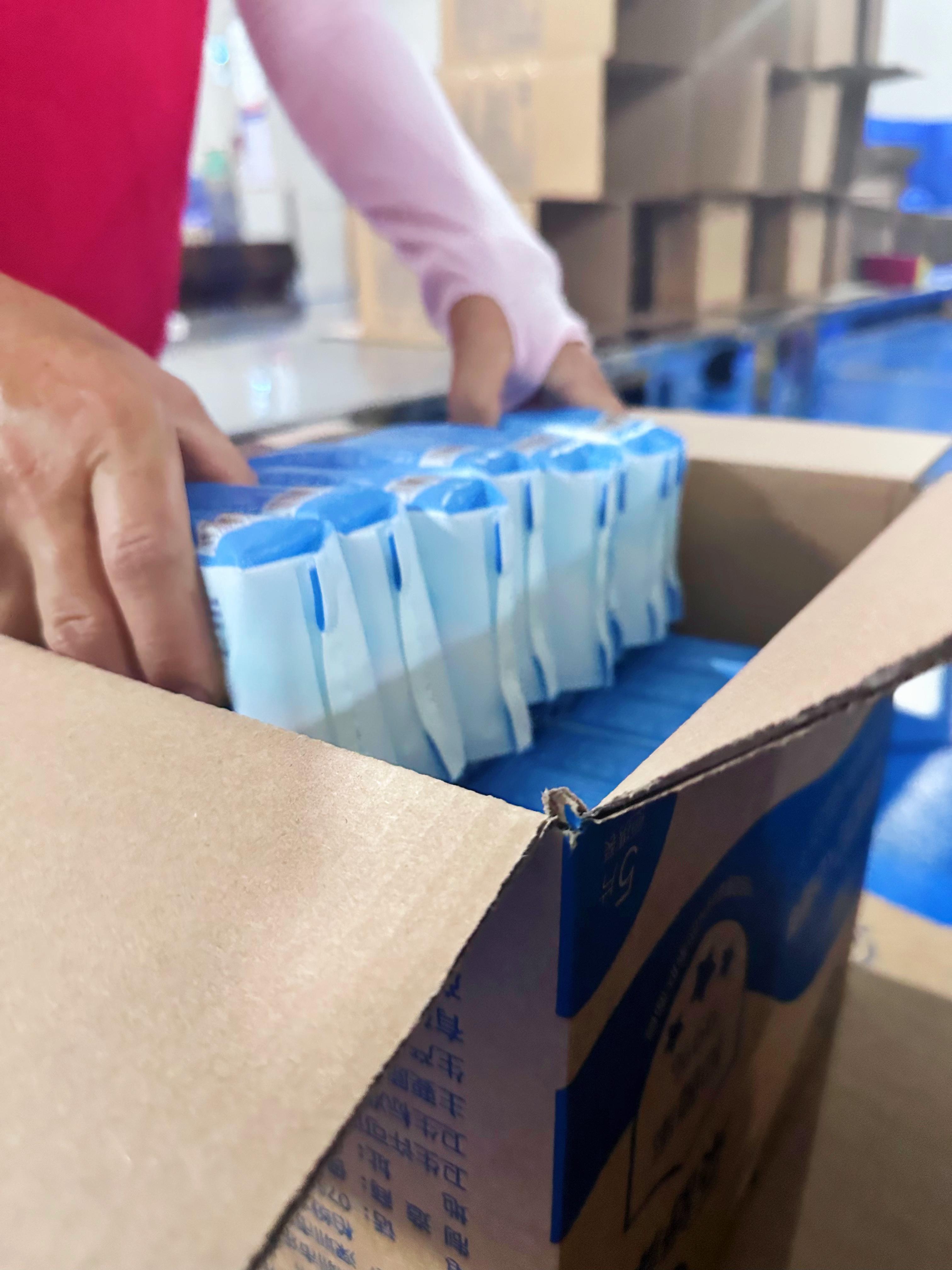
- Packaging: retail presentation, individual wrapping where applicable, product count, labeling language, barcode and carton details, and final artwork approval.
- Quality and delivery coordination: quality-control communication, batch consistency expectations, production schedule, inspection arrangements, export documents, and repeat-order process.
The available supplier information describes New Upward as supporting product specification, packaging, documentation, quality management, market support, and global delivery. That description gives buyers a set of capabilities to examine, not a substitute for project-specific confirmation. A procurement team should determine which party is responsible for each item and retain the approved evidence with the final product specification.
Limits buyers should keep in view
Available information supports OEM/ODM customization of materials, sizes, absorbency performance, and packaging, along with batch-supply and repeat-order support. It does not provide finished measurements, absorbency values, test outcomes, minimum order quantities, prices, production lead times, or a confirmed Lilimolone organic-cotton SKU for the three range roles discussed here. Those details should remain open questions until a supplier provides project-specific information.
Similarly, general product positioning does not prove the suitability of an individual pad for every user or every overnight condition. Buyers should avoid unsupported promises about leakage duration, allergy relief, antibacterial performance, or environmental breakdown. Evidence needs to match the exact product, claim, and target market. When a claim cannot be substantiated for the selected SKU, the safer choice is to leave it out of product naming and packaging.
The market-facing trade-off is also practical: organic-cotton biodegradable pads may support differentiation and premium positioning, but the supplied comparison data notes higher material, packaging, and certification costs than conventional pads. The economics therefore depend on the retailer’s target segment and product plan; no universal price advantage is established by the available evidence.
What this means for buyers
A customized organic sanitary pad range for daytime, overnight, and extra-long use should be evaluated as a set of distinct product briefs, not as one organic claim applied across several package labels. Day-use, night-use, and extra-long options can help structure coverage across menstrual flow stages, while customization provides a route to align size, absorbency performance, materials, and packaging with the intended range. The available evidence supports that customization and supplier-support model, but does not establish exact dimensions or performance for a ready-made Lilimolone organic-cotton series.
For a decision-stage buyer, the next useful comparison is therefore concrete: match each intended use to a written specification, approve samples against that specification, verify material and environmental claims separately, and compare supplier quotations only on an equivalent basis. That process preserves the value of organic differentiation while making the limits of the evidence visible to product, procurement, and compliance teams.
Frequently asked questions
What sizes should an OEM brand include in one sanitary pad series?
A series may include day-use pads, night-use pads, panty liners, and optional longer overnight products. The final range should reflect local customer habits, channel needs, absorbency targets, packaging, and sample performance. The available information does not define universal dimensions for these categories.
How should buyers distinguish day-use, overnight, and extra-long pads?
Buyers should distinguish them through a written use case and confirmed product specifications, especially size and absorbency performance. “Overnight” and “extra-long” are not, by themselves, verified measurements or proof of a specific protection duration.
Can organic cotton and biodegradable claims be used interchangeably?
No. Organic cotton concerns material origin and relevant certification scope, while biodegradability concerns material breakdown. Buyers should verify each claim separately and ensure that the supporting evidence and packaging language apply to the specific product.
What can be customized in an OEM sanitary pad project?
The supplied customization information identifies materials, sizes, absorbency performance, and packaging. Buyers should confirm the feasible options, final specification, sample approval, and any project-specific conditions with the supplier.
What is a real limitation of organic cotton biodegradable pads compared with conventional pads?
The supplied comparison information identifies higher material, packaging, and certification costs for organic cotton biodegradable pads. Conventional pads may be a better fit when a buyer’s main priority is lower cost and basic absorbency; the choice depends on the intended market position and verified product requirements.
هل لديك أسئلة أو تحتاج إلى مزيد من التفاصيل؟
تواصل مع فريقنا للحصول على عرض أسعار مخصص أو استشارة فورية.
طلب عرض أسعار
املأ النموذج أدناه وسيتواصل معك فريقنا بعرض مقترح مخصص.
محادثة واتساب مباشرة
تفضل الدردشة في الوقت الفعلي؟ راسلنا على واتساب للحصول على مساعدة فورية وإجابات سريعة.
- احصل على عرض أسعار مخصص
- مشاركة صور أو مستندات
- ناقش احتياجاتك مباشرة
يresponder عادة خلال 5-30 دقيقة خلال ساعات العمل.