
Scenario Fit: A 2026 Guide to Coding Equipment Selection
The global coding and marking equipment market was valued at USD 17.53 billion in 2024 and is projected to reach USD 27.11 billion by 2032, according to the SkyQuest industry forecast report. Continuous inkjet (CIJ) technology held the largest revenue share, accounting for approximately USD 5.67 billion in 2024, based on Grand View Research data. For industrial buyers moving from research into evaluation, these figures describe a large and growing market, but they do not answer the question that drives most purchasing decisions: which coding technology fits the production scenarios in a specific plant?
A beverage bottling line running PET bottles continuously needs production dates and batch codes printed at high speed on curved surfaces. A medical packaging line must print UDI-compliant GS1 DataMatrix codes on Tyvek, blister packs, and cartons with online verification. A cable extrusion line needs meter marks, model information, and certification marks on a moving sheath. Each scenario imposes different constraints on printing speed, resolution, substrate compatibility, code format, and line integration. A specification sheet alone cannot resolve these differences.
This article develops a scenario-based framework for selecting industrial coding and marking equipment, using DOCOD Precision Group Co., Ltd. as a reference example of a supplier with a multi-technology portfolio. It examines how production conditions translate into equipment requirements, what evidence from application projects shows, and where the limits of an equipment portfolio lie.
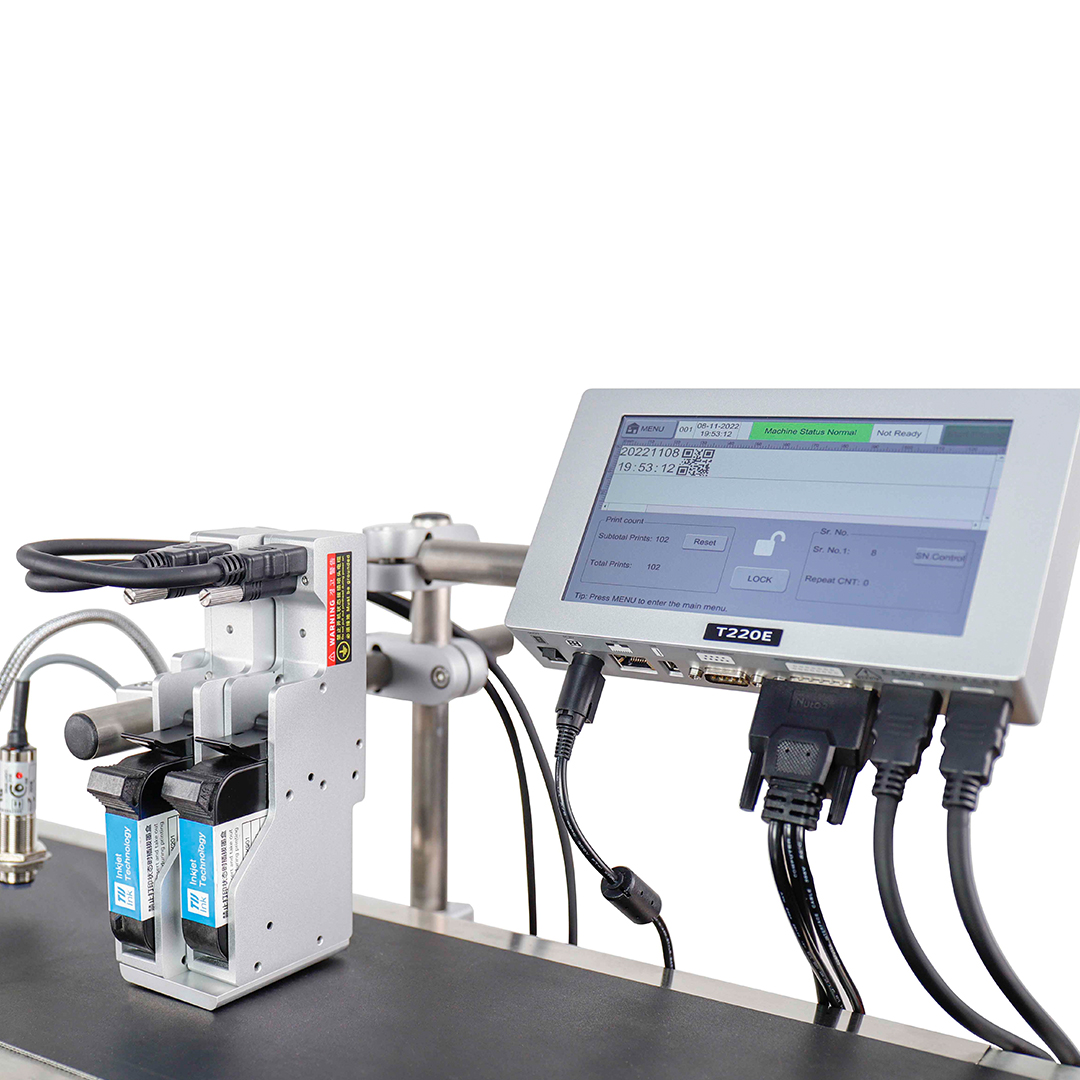
A thermal inkjet coder mounted at a production-line workstation illustrates the need for equipment that fits a specific physical arrangement.
Why Production Conditions Should Drive Equipment Choice
Most coding equipment failures trace back to a mismatch between the machine and the production environment. The most common mismatches appear in five areas.
Line speed. A coder that prints cleanly at 50 products per minute may fail on a line running at 300. CIJ printers are specified with maximum printing speeds in meters per minute; the DOCOD S1000 series, for example, reaches up to 960 m/min with a 50-micron nozzle and 720 m/min with a 60-micron nozzle. Buyers need to calculate the surface speed of the product at the coding point, because print quality depends on the relative speed between printhead and substrate.
Substrate. Ink adhesion varies widely across carton, plastic, metal, glass, film, and coated surfaces. CIJ printers address this through ink selection; the DOCOD M2000 series supports high-adhesion, high-temperature, glass-special, permeability, food-grade, oil-resistance, and pigment inks. Laser marking, where applicable, removes the ink adhesion question but only on materials that respond to the laser wavelength: CO2 laser for wood, paper, rubber, and PVC; fiber laser for metals; UV laser for heat-sensitive plastics and printed circuit boards.
Code content. Batch numbers and production dates can be handled by almost any coder. GS1 DataMatrix, dynamic QR codes, serial numbers, and variable databases require a printer that accepts dynamic data and produces consistent 2D codes. TIJ models such as the DOCOD TX1 and T220E support GS1 code printing and variable databases, and the R3000 TTO prints GS1 DataMatrix and dynamic QR codes on flexible films.
Environment. Dusty bagging lines, humid bottling plants, and washdown areas require different levels of enclosure protection. Several DOCOD CIJ models are rated IP65, and the S1000 is rated IP55; SUS 304 stainless steel enclosures are standard on the M2000, V2000, and S300plus models, which matters in food, beverage, and chemical environments.
Integration. The coder must synchronize with a conveyor or packaging machine through a photocell or encoder, and increasingly must connect to an enterprise MES. The M2000 series includes USB, RS232, and network interfaces and can be connected to a plant MES management system. Laser models support AB-phase encoder monitoring to track product speed.
The opportunity in scenario-based selection is the reduction of total project risk. A buyer who defines the production scenario first — speed range, substrate family, code types, environment, integration points — can eliminate incompatible technologies early and compare only those that fit. The approach also clarifies what kind of supplier support is needed: standard supply for a simple line, OEM branding for a distributor, ODM modification for a special interface, or full line integration for a serialization workflow.
A Full-Line Supplier as a Reference Point
DOCOD Precision Group Co., Ltd. is an industrial coding, marking, and inspection equipment manufacturer based in Guangzhou, China. Founded in 2008, the company operates a 20,000 m² production facility with 407 employees, of whom more than 140 are R&D staff. Annual output is approximately 5,000 units, and about 50% is exported to North America, South America, Eastern Europe, Southeast Asia, Africa, Oceania, the Middle East, East Asia, and Western Europe.
The portfolio spans multiple technology families: continuous inkjet printers (CIJ), thermal inkjet printers (TIJ), handheld coding equipment, piezoelectric high-resolution inkjet printers (PIJ), drop-on-demand large-character inkjet printers (DOD), thermal transfer overprinters (TTO), laser marking machines, inline vision inspection systems, case and carton coding equipment, consumables, spare parts, and product traceability solutions.
For a buyer at the research and evaluation stage, the relevant detail is the range of support modes rather than the number of products. DOCOD offers standard equipment supply, OEM branding, ODM functional customization, production line integration support, spare parts and consumables supply, and distributor and service partner support. Standard equipment supply has an MOQ of one set and a lead time within 15 working days. OEM branding — private label logo, startup screen, nameplate, packaging, manuals, carton labels — takes 15–25 working days. ODM functional customization — software or UI adjustment, communication interface, bracket structure, printhead configuration — takes 20–30 working days. Production line integration support, including conveyor or rewinder matching, encoder and sensor connection, and GS1 or serialization workflow matching, has a 20–35 working day lead time and includes integration testing, sample runs, and video acceptance before delivery.
This structure matters for scenario-based procurement. A plant that needs a single date coder on one line can buy a standard unit. A distributor that wants to resell under its own brand can use OEM support. A line with unusual printhead mounting constraints may require ODM adaptation. A pharmaceutical or tobacco track-and-trace project that requires integration with a reject unit and data management software will need the line integration service.
Matching Technology Families to Production Conditions
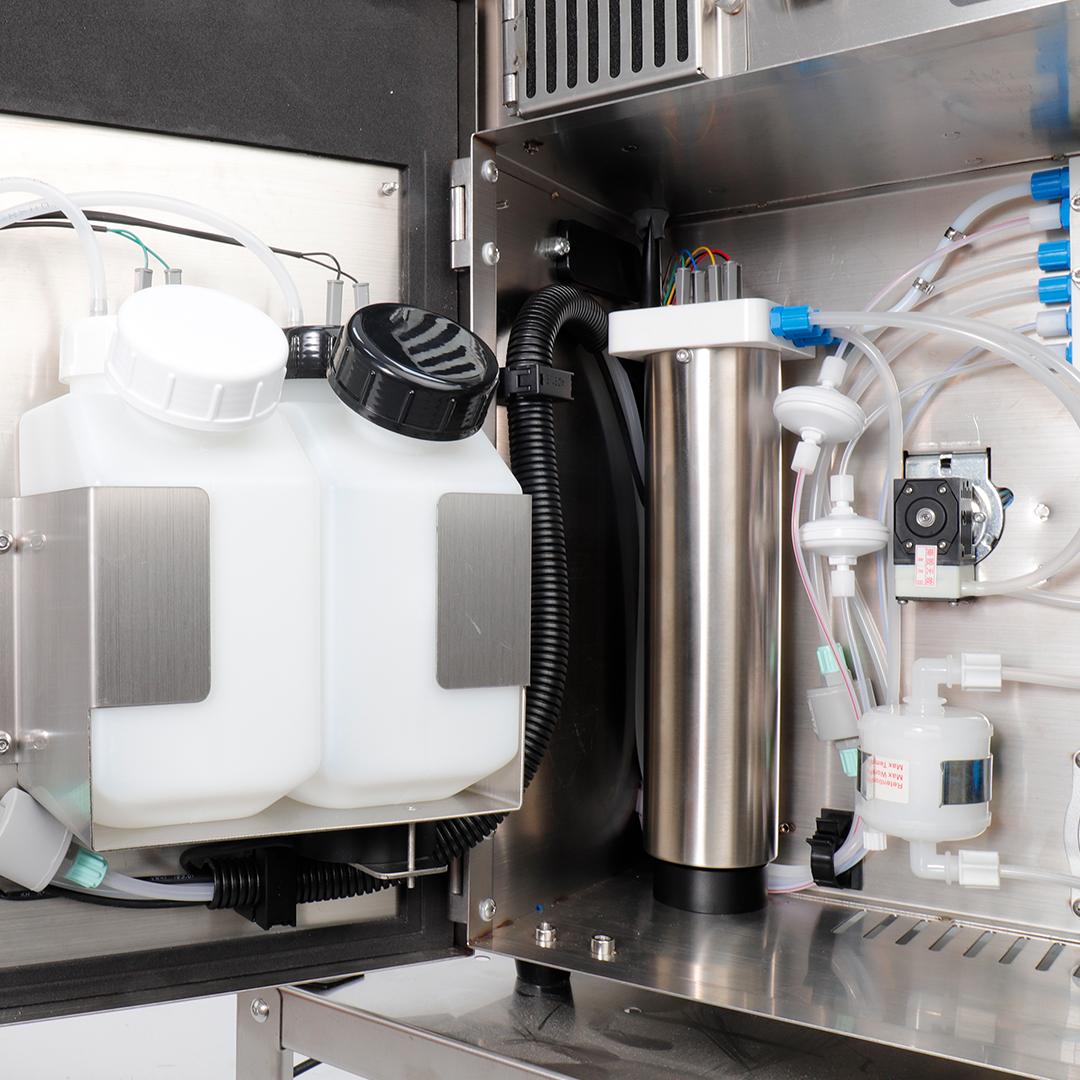
CIJ printers such as the DOCOD M2000 Series are specified for high-speed, non-contact, multi-substrate coding.
Continuous inkjet (CIJ) is a non-contact method for small-character printing at high speed. The DOCOD M2000 series prints 1–4 lines at up to 528 m/min, with a 3–30 mm print height, up to 24 counters, and nozzle options of 42, 55, and 70 microns. The S1000 series extends the speed range to 960 m/min with a 50-micron nozzle, and the V2000 offers 1–5 lines at up to 334 m/min. CIJ is the default family for date coding, batch marking, and serial coding on cartons, plastic, metal, glass, cables, and pipes. Inks must be matched to the substrate and end-use requirement, such as food-grade ink for food packaging or pigment ink for difficult surfaces.
Thermal inkjet (TIJ) uses replaceable cartridges and produces higher-resolution codes than typical CIJ. The DOCOD TX1 supports one to eight printheads with a print height from 1 to 101.6 mm, a maximum speed of 406 m/min, and resolution up to 300 × 300 dpi. The T220E adds dual-head capability with resolution up to 600 × 600 dpi. Cartridges use an RFID non-contact chip that identifies ink parameters and records remaining ink. TIJ is a strong fit for GS1 codes, QR codes, and variable data on cartons, labels, and films, especially where code resolution is critical for downstream scanning.
Piezoelectric inkjet (PIJ) is a high-resolution technology for larger codes. The DOCOD P2000 uses I1600-series nozzles, prints at 300 or 600 dpi, delivers a single-head print height up to 33.8 mm, and reaches 190 m/min at 300 dpi. It supports forward and lateral printing directions and a negative-pressure continuous ink supply. Multiple P2000 units can be cascaded over a shared encoder or photocell, which is useful for corrugated paper, coated paper, label, and packaging lines requiring high-resolution barcodes or QR codes on larger surfaces.
Thermal transfer overprinting (TTO) is designed for flexible film packaging. The DOCOD R3000 prints intermittently at 300 dpi, with print areas of 32 × 75 mm or 53 × 70 mm and speeds up to 800 mm/s. Ribbon widths range from 24 to 55 mm and ribbon lengths from 400 to 1,200 m. The R3000 supports GS1 DataMatrix, dynamic QR codes, serial numbers, shift codes, counters, and variable databases, and it can connect to packaging machines, databases, and anti-counterfeiting traceability systems. Flexible film, snack and bakery packaging, and stick-pack lines are its primary territory.
Laser marking provides permanent marks without consumable ink. The Venus1 series includes fiber lasers at 20, 30, 50, and 100 W for metals and coated materials; UV lasers at 5, 10, and 15 W with a 355 nm wavelength for heat-sensitive plastics, glass, and PCBs; and CO2 lasers at 30 and 60 W for wood, paper, rubber, and PVC. The L3000 5W UV laser is a water-cooled model for soft film packaging, pharmaceutical packaging, PVC pipe, and flexible circuits. Laser marks are permanent and resistant to oil, water, and high temperature. The trade-offs are substrate dependence and a finite laser source life: 2–3 years for UV models, 20,000 hours for CO2 models, and up to 100,000 hours for fiber models in the Venus1 range.
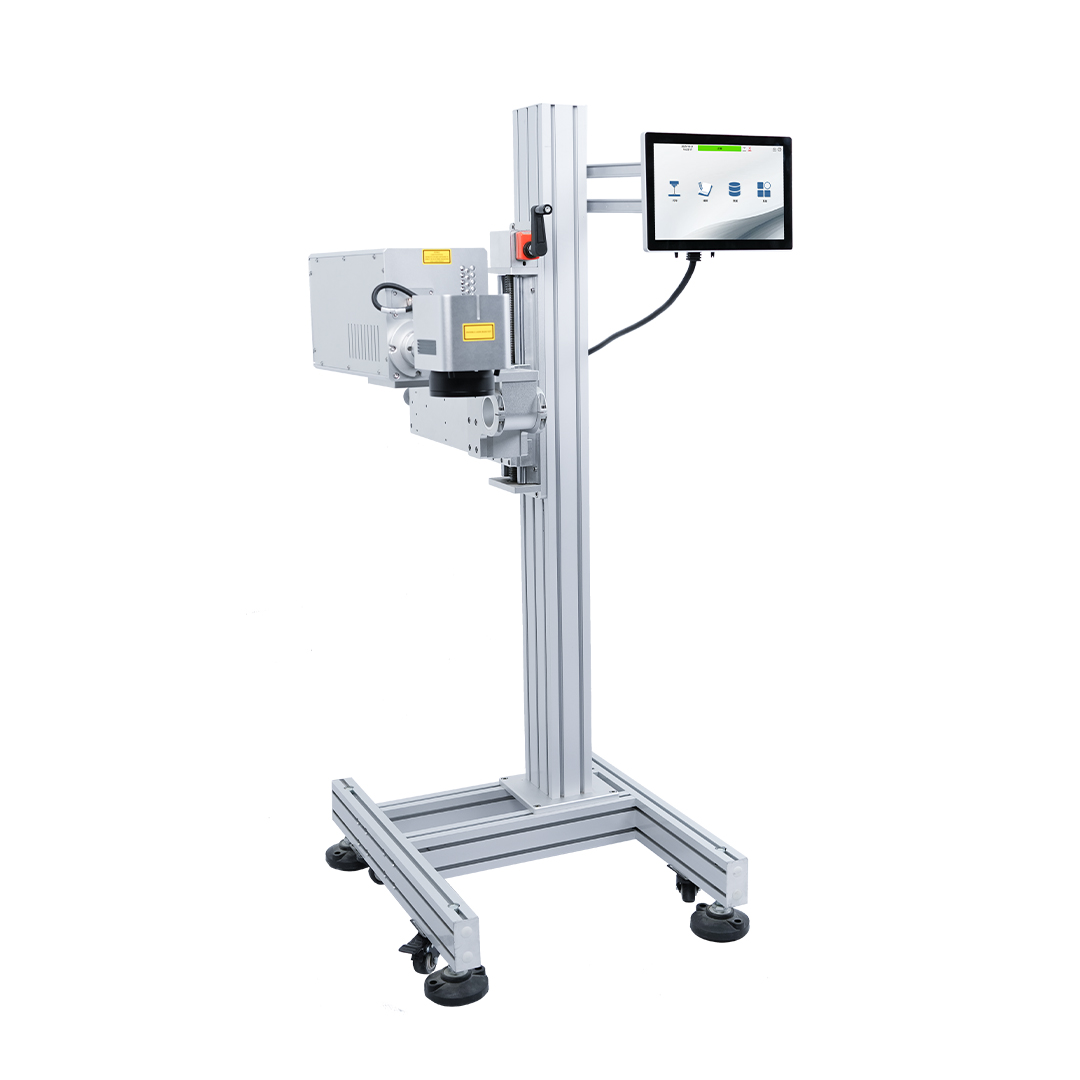
Fiber laser marking suits metals and coated components where durable, high-contrast marks are required.
Supporting equipment closes gaps in small or semi-automated lines. The XC20 mini conveyor belt is a compact aluminum conveyor with a 150 mm PVC belt, designed to carry fine products through a coding or inspection point. The XF30 vertical rewinding machine combines label rewinding with a TIJ printhead, enabling secondary coding and rewinding of roll labels at speeds of 0–45 m/min. For a label converter or a small-batch producer, these devices convert a manual workflow into a repeatable process.
What Application Projects Reveal About Technology Fit
Applying the scenario framework to documented projects produces a consistent pattern: each industry scenario points to a different combination of technologies and integration equipment.
| Industry scenario | Typical conditions | Matching technology | Evidence from projects |
|---|---|---|---|
| Food & beverage packaging (Vietnam) | Flexible pouches, cartons, PET and glass bottles; continuous lines; cold-chain or humid conditions | CIJ (M2000, S1000, V2000, S300plus), TIJ (TX1, T220E, T260E), TTO (R3000) | A beverage bottling plant used 4 V2000 units for batch coding on PET bottles over 2 years |
| Cosmetics & personal care (Indonesia) | HDPE, PET, PP bottles, tubes, laminated cartons; brand appearance must be preserved | CIJ (M2000), UV laser (L3000 / Venus1 UV), TIJ (T220E) | A cosmetics OEM in Poland used 2 L3000 UV laser lines for lot coding on bottles and caps |
| Medical packaging (Germany) | Tyvek, blister packs, cartons, bottles, films; UDI / GS1 DataMatrix required | PIJ (P2000), UV laser (L3000), TIJ (TX1) | A pharma packaging supplier ran 3 cartoning lines with T220E printers for 18 months |
| Building materials & chemicals (UAE) | Cement and mortar bags, paint pails, PVC pipes, wood boards; dusty, hot, rough surfaces | PIJ (P2000) for large characters, CIJ (M2000), CO2 laser | Common replacement scenario for improved warehouse and shipment control |
| Tobacco packaging (Turkey) | High-speed packs, cartons, cases; dusty; tax-control codes and DotCode/DataMatrix | CIJ (M2000), TIJ (T260E), CO2 laser; vision inspection and reject unit | Serialized track-and-trace coding integrated with pack handling |
| Wire, cable & pipe extrusion (India) | High line speed, long narrow print area, curved sheath, limited installation space | CIJ (M2000), CO2 laser | A US cable manufacturer used 6 M2000 units for meter marking over 2 years |
| Electronics manufacturing (Mexico) | Compact products, short takt times, precise QR/DataMatrix and serial numbers | UV laser (Venus1), fiber laser (Venus1), TIJ (T220E) | An electronics parts supplier used fiber laser workstations for metal connectors over 3 years |
| Automotive parts (Brazil) | Metal stampings, plastic and rubber parts, oil residues, heat and abrasion resistance | CIJ (M2000), TTO (R3000), TIJ (TX1) | Parts traceability integrated with assembly lines and inspection stations |
Additional case evidence reinforces the pattern. A contract packer in Brazil deployed eight TX1 units across packing stations for batch and QR printing on shipping cartons, citing faster deployment across small lines and a compact setup for limited space. A snack manufacturer in Indonesia used two R3000 TTO units on VFFS lines for date coding on flexible film. A personal care manufacturer in Thailand standardized three P2000 lines for variable-data printing on coated boxes. A plastic pipe producer in Saudi Arabia used two CO2 laser lines for specification and date marking on PVC pipe. A small-batch food producer in the UAE added an XC20 mini conveyor to carry pouches through a coding point. A label converter in Brazil used an XF30 rewinding machine for label secondary rewinding and coding. A regional distributor in South Korea reported fewer smudging complaints after switching to the DOCOD 3BK702 half-inch solvent cartridge for coding on plastic film and coated cartons.
Market Trends Relevant to Scenario-Based Buying
Verified third-party data supports three trends that buyers should incorporate into equipment evaluations.
First, the market is expanding while remaining technology-diverse. The coding and marking equipment market is projected to grow from USD 17.53 billion in 2024 to USD 27.11 billion by 2032. Asia-Pacific accounts for the largest geographical share, estimated at around 35% in 2024. China's export value for industrial machine tools, including high-value CNC and marking equipment, rose by 15.7% year-on-year in early 2026, according to the German Machine Tool Builders' Association (VDW) / Honor Machinery. For global buyers, Chinese manufacturers are increasingly part of the qualified supplier set, which means certification, quality control, and after-sales documentation deserve direct verification.
Second, demand is gradually shifting toward laser. CIJ remains the largest technology segment at approximately USD 5.67 billion in 2024, because it fits the broadest range of high-speed date and batch coding scenarios. Laser marking is projected to grow at a 6.8% CAGR through 2030, driven by its eco-friendly profile and lack of consumables. Scenario data from industrial projects reflects this: laser models appear in electronics, cosmetics, medical, packaging, and pipe scenarios where mark permanence and low operating cost are decisive.
Third, code standards are converging on 2D formats. The GS1 Digital Link standard is being adopted globally to replace 1D barcodes with QR codes for point-of-sale and traceability by 2027. Established global players, including Videojet Technologies, Domino Printing Sciences, Markem-Imaje, and Hitachi Industrial Equipment Systems, continue to lead the market, according to Dataintelo and Strategic Market Research. New equipment purchases should therefore support high-resolution 2D codes, variable databases, and network connectivity. In the DOCOD portfolio, TIJ, PIJ, and TTO models support GS1 DataMatrix and dynamic QR printing, CIJ models print dynamic barcodes and QR codes, and laser models generate QR and DataMatrix codes.
Scenario-Based Selection Versus Traditional Single-Technology Sourcing
The traditional sourcing model for coding equipment is single-technology procurement: a plant buys CIJ printers because that is what its existing supplier offers, or because CIJ is the default choice for date coding. This model works when production scenarios are homogeneous. It becomes a constraint when a plant operates multiple lines with different substrates, speeds, and code requirements.
Scenario-based selection with a multi-technology portfolio changes the comparison. Instead of choosing a technology first and then finding a supplier, the buyer maps each line's production conditions to a technology family and checks the supplier's ability to supply, integrate, and support that technology. The advantage is that one supplier can standardize training, spare parts, and service across CIJ, TIJ, PIJ, TTO, and laser units. The documented DOCOD capability record shows this model is operational: standard equipment supply within 15 working days, OEM and ODM customization within 15–30 working days, and line integration support within 20–35 working days with trial-run verification before delivery.
Any honest comparison should also state the boundaries.
Consumables do not disappear. CIJ printers consume ink and solvent, and TIJ printers rely on cartridges. The DOCOD 3BK702 cartridge, for example, has a best-use period of six months and requires storage between 5°C and 40°C with 20%–80% RH. A buyer must maintain ink inventory and follow handling guidelines. Laser equipment removes consumables but carries a higher initial investment and a finite laser source life.
Integration is a project, not a plug-in. Connecting a coder to a packaging machine, encoder, sensor, and MES database requires engineering time. Even with integration support, buyers should plan for a lead time of 20–35 working days and acceptance via sample runs and video verification. Complex serialization workflows — pharmaceutical or tobacco track-and-trace — require additional components such as vision inspection, reject units, and data management software.
Untested substrates are a risk. Ink adhesion and laser marking quality depend on the specific material, surface energy, and printing conditions. No supplier can credibly guarantee performance on an untested surface. Sample printing and trial runs should be part of the evaluation process.
Future Outlook
Three directions will shape coding equipment procurement in the coming years.
Code content convergence. GS1 Digital Link will push more packaging toward QR codes that carry a resolvable web address, connecting product identification with consumer-facing content. Printers limited to fixed text will lose relevance; printers with variable database capability and network connectivity will become the baseline. This favors TIJ, PIJ, TTO, and laser equipment, which can produce consistent 2D codes at production speed.
Verification-enabled workflows. Regulators and retailers increasingly expect not just a printed code but proof that the code is readable. Print-and-verify configurations — a coder paired with an inline vision inspection system and a reject unit — will expand from pharmaceutical and tobacco niches into food, beverage, and cosmetics lines. Buyers evaluating new equipment should ask whether the supplier can provide the inspection component and the integration engineering, not only the printer.
Regional supply resilience. With Asia-Pacific holding the largest market share around 35% and Chinese industrial exports growing, global buyers will continue to weigh the cost position of Chinese-manufactured equipment against the need for local service, spare parts availability, and certification compliance such as CE, RoHS, and BIS. Multi-technology suppliers with documented export channels and support modes will be better positioned in this evaluation.
Frequently Asked Questions
How do I determine which coding technology fits my production scenario?
Evaluate five criteria: line speed at the coding point, substrate family, code content, environmental conditions, and integration points. High-speed small-character date and batch coding on cartons and bottles points to CIJ. High-resolution 2D codes on cartons, labels, and films point to TIJ. Larger high-resolution codes on corrugated and coated paper point to PIJ. Flexible film packaging with GS1 DataMatrix points to TTO. Permanent marking on metal, plastic, glass, or non-metal materials points to fiber, UV, or CO2 laser.
Can one supplier realistically support multiple coding technologies on the same production floor?
Yes, if the supplier maintains a multi-technology portfolio and the matching support structure. DOCOD Precision Group Co., Ltd., for example, supplies CIJ, TIJ, PIJ, DOD, TTO, laser marking, and vision inspection equipment and offers standard supply, OEM, ODM, line integration, spare parts, and distributor support modes. The buyer's task is to verify quality control procedures, certifications, and lead times rather than only the product list.
What does production line integration involve when adding a coder to an existing line?
The coder is triggered by product movement through a photocell or encoder. The printhead is mounted on a bracket at a specified distance and angle, and the controller accepts the line's data signals. Serialization and traceability workflows require connection to a PLC or MES and, in print-and-verify configurations, to a vision inspection system and reject unit. Supplier integration support typically includes conveyor or rewinder matching, sensor connection, sample runs, and acceptance testing.
Is a high-speed CIJ printer always the right choice for packaging lines?
Not always. CIJ is suitable for non-contact, small-character, high-speed printing across many substrates; the DOCOD S1000 reaches 960 m/min with a 50-micron nozzle. However, if the code must be scanned reliably — such as GS1 DataMatrix or dense QR codes — a TIJ or PIJ printer may be the better fit because of higher resolution. The correct choice depends on code size, scanner grade, substrate, and surface speed at the printing point.
Why are buyers increasingly specifying GS1 DataMatrix and QR code capability in new equipment?
The GS1 Digital Link standard is being adopted globally to replace 1D barcodes with QR codes for point-of-sale and traceability by 2027. Regulators and retailers are also tightening traceability requirements. New coding equipment is therefore expected to handle variable databases, serial numbers, and 2D codes, not only fixed dates and batch numbers. Buyers at the evaluation stage should test equipment with the actual code content and database structure they intend to run.
Reference: For a detailed overview of product families, technical parameters, and support modes, the DOCOD corporate brochure is publicly available for download: DOCOD Corporate Brochure (PDF).