
Scenario Planning for Industrial Procurement: The TRUE Cost of ODM Cooling Vests
Scenario Planning for Industrial Procurement: The TRUE Cost of ODM Cooling Vests
Industrial buyers rarely lose money on the purchase order for a cooling vest. They lose it later — when the vests come off the line because the cold source needs changing mid-task, when a leak bench fills up in the second season, or when a reorder arrives a week after the crew needed it.
A dual cooling water cooling vest is a wearable personal cooling system that pairs a cold source with pump-driven water circulation. Occupational heat-exposure guidance groups water-cooled garments, air-cooled garments, cooling vests and wetted overgarments together as personal cooling systems, which places them in the same procurement family as other heat-stress protective equipment rather than in general workwear.
That classification has a budgeting consequence. Global cooling vest revenue reached USD 342 million in 2025, and industrial applications accounted for 34.5% of that revenue, according to Dataintelo's 2026 market report. Industrial demand is the commercial core of the category — and industrial buyers evaluate differently from consumers. They evaluate cooling by the shift, not by the afternoon.
This analysis works through one specific procurement question: how a stated 3–4 hour cooling duration and a 7–14 day production lead time should shape scenario planning, safety stock and long-term cost in an ODM programme. Shokunin, the professional tool brand of Feng Shang Precision Co., Ltd., serves as the reference case because its COOLWAVE water-circulation line publishes both figures.
The Procurement Problem: A Unit Price Cannot Describe a Duty Cycle
Most cooling vest requests for quotation ask for three numbers: unit price, minimum order quantity and delivery date. None of the three describes what the product costs to operate. The gap between those numbers and the real cost of ownership is where procurement programmes quietly fail.
| Cost layer | What actually drives it | Where it usually hides |
|---|---|---|
| Cold-source labour | How often the ice pack or water reservoir must be swapped | Absorbed into break schedules; almost never costed per cooled work-hour |
| Wear-part replacement | Flex fatigue in the water path and ice-pack seams | Shows up as unplanned reorders instead of a budget line |
| Out-of-service time | Recharge, refreeze and leak repair | Invisible in a quotation; visible on the shop floor |
| Working capital | Payment terms and freight responsibility | Fixed at contract signature, long before performance is known |
| Safety stock | Lead time plus inspection plus issue interval | Treated as a warehouse problem rather than a procurement one |
Reading "3–4 Hours" the Way an Operations Planner Should
Shokunin lists the COOLWAVE water-circulation vest with a cooling duration of 3–4 hours per charge and ice-pack cycle, and a weight within 2 kg. The same company's comparison material states that other water-cooled vests lose their cooling effect after roughly 30 minutes. If both statements hold under your site conditions, the operational difference is not a vague claim about better cooling. It is the number of interruptions per shift.
Three to four hours is approximately half of a standard eight-hour shift. That single arithmetic fact reorganises the whole procurement plan: cold-source changes move from an hourly disruption to a scheduled event tied to the mid-shift break. Labour cost per cooled hour falls not because the vest is cheaper, but because nobody has to stop work to service it.
What the number does not tell you
The duration is company-reported and is published without ambient temperature, humidity, workload or clothing-layer conditions. That is a limitation, not a disqualification. It means the 3–4 hours should enter your plan as a planning assumption to be validated in a sample trial, not as a contractual performance floor. Buyers who write "4 hours minimum" into a purchase specification without defining the test conditions are creating a dispute, not a guarantee.
Turning Runtime into a Shift Plan
The useful planning unit is the cooling block: one continuous period during which a worker's vest is actively cooling. Once the block length is known, shift patterns can be mapped to provision quantities.
| Shift pattern (illustrative) | Cooling blocks per worker | Swap windows | What to provision |
|---|---|---|---|
| 8-hour day shift | 2 | Mid-shift break; end of shift | 1 vest plus 2 cold-source sets per worker |
| 10-hour summer shift | 3 | Two scheduled breaks | 1 vest plus 3 sets, or a rotating pool |
| 12-hour static post (traffic, gatehouse, stall) | 3–4 | Staggered handover | Rotation pool plus a shared recharge bench |
| Multi-crew site, staggered starts | 2 per crew | Crew handover | Communal recharge station with labelled sets |
Two things are routinely under-provisioned. First, the freeze capacity: a vest returning to service in three hours is only useful if its cold source was refrozen during the previous block. In factories that adopt water-circulation vests at scale, freezer space — not vest quantity — is frequently the binding constraint. Second, the power bank. The COOLWAVE pump is specified at 5V and 150 mA maximum with a flow rate of 320–370 ml/min. That is a low-current load, which keeps power-bank selection straightforward, but it still adds a charging step and a spare-part line to the maintenance routine.
The 7–14 Day Cycle: Replenishment, Not Just Delivery
Shokunin states a minimum order quantity of 10 units, a monthly production capacity of 3,000 units, and a typical production lead time of 7–14 days. On a first order, those read as delivery terms. Inside an operating programme, they read as replenishment terms — and replenishment is where scenario planning earns its keep.
Three clocks run at once
- Production clock. 7–14 days from order confirmation, as stated.
- Wear clock. How long a water path or ice pack lasts under your specific fold, wash and freeze-thaw pattern. Only a sample trial on your own site establishes this.
- Administrative clock. Full payment before shipment, freight arranged and paid by the buyer, and a pre-shipment test as the acceptance criterion. An order does not enter production until funds clear, so payment timing belongs inside the replenishment interval.
Buyers who treat 7–14 days as the entire interval will under-plan. A working reorder point should cover four things: production lead time, payment clearance and freight transit, incoming inspection against the pre-shipment test, and the interval between a vest failing and its replacement being issued. Only the first appears on the supplier's datasheet. The other three are the buyer's responsibility, and they are the difference between a stocked programme and a crew working without cooling in the hottest fortnight of the year.
Where Long-Term Cost Actually Sits: The Water Path
In a water-circulation vest, service life is not decided by the fabric or the pump. It is decided by the flexible water path — bladder, tubing and connectors — which is typically built from thermoplastic polyurethane (TPU) type materials because it must flex, fold and be washed without cracking.
Every fold, every wash cycle and every freeze-thaw sequence is a stress cycle on that material. Degradation rarely announces itself. It shows up first as a slow loss of flow, then as a kink that no longer recovers, then as condensation where there should be none, and finally as a pinhole leak. At that point the vest stops being a maintenance item and becomes a replacement — and the real cost is the replacement plus the labour tied to the failure.
Shokunin's stated position on this layer is material reinforcement rather than a published specification: reinforced ice pack material, 100% quality guaranteed before shipment, reusable ice packs, durable fabric and minimal maintenance, set against a comparison baseline of frequent ice-pack replacement and higher wear and tear in other water-cooled vests.
What an ODM Programme With Shokunin Looks Like
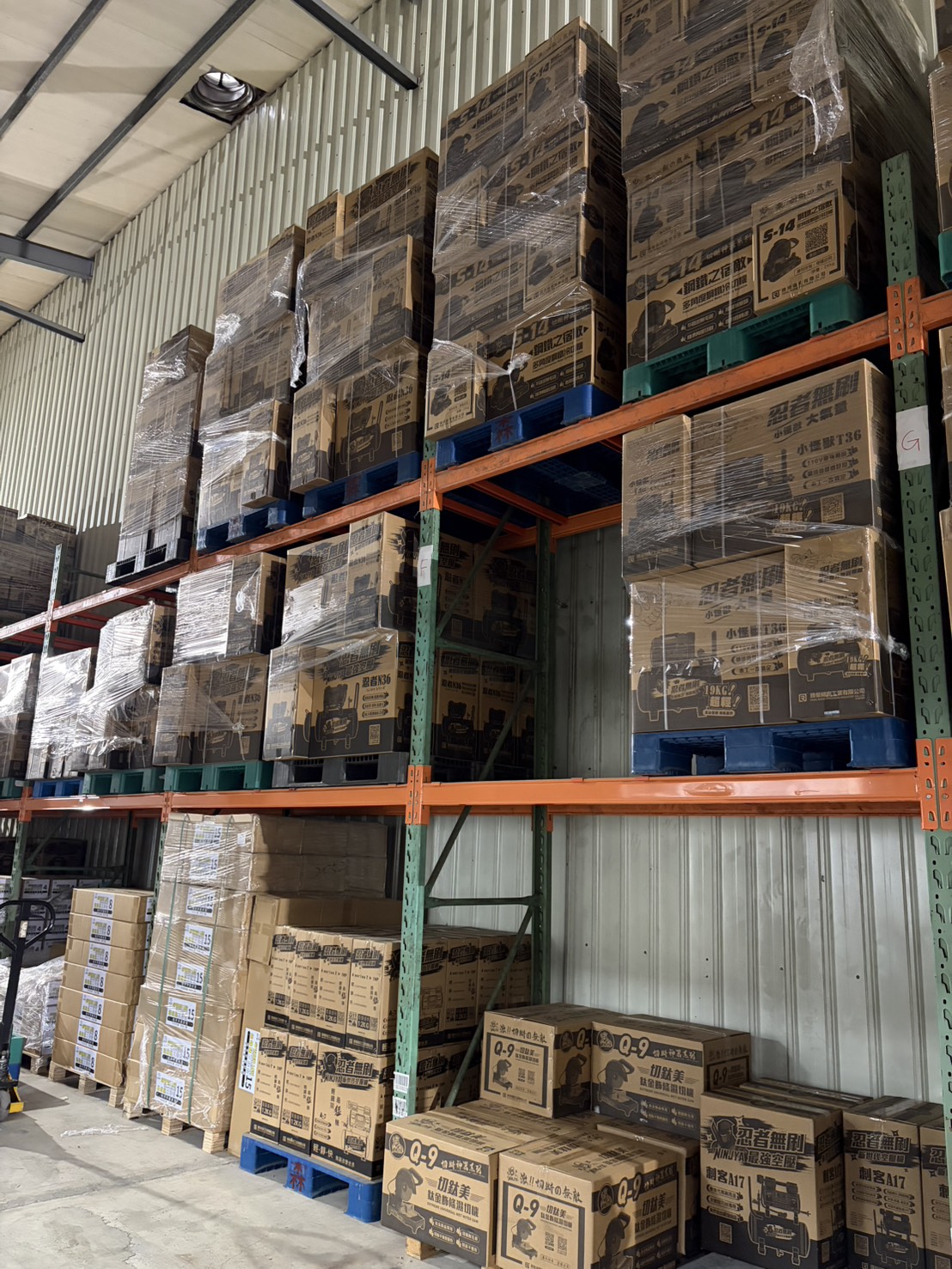
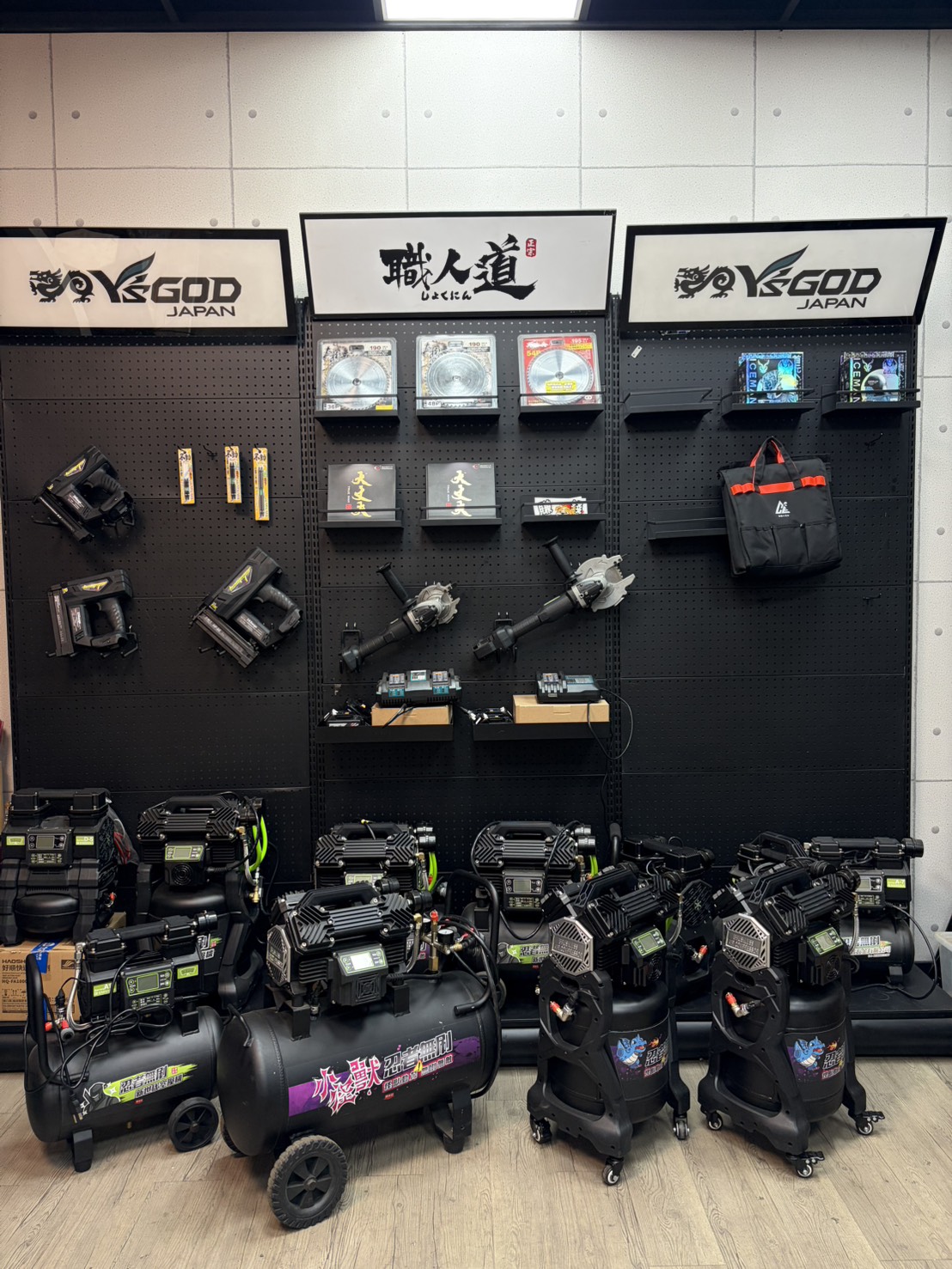
Shokunin is a professional tool brand operated by Feng Shang Precision Co., Ltd., a manufacturer founded in 2009 in Luzhu District, Taoyuan City, Taiwan. The company runs a 1,000 m² facility with 30 employees, a five-engineer R&D team and a documented annual output of 10,000 units across its product lines. It reports a 50% export ratio, with the United States and Taiwan as its main markets, and its range spans air compressors, cut-off machines, cooling vests and related professional tools.
The COOLWAVE cooling vest line is listed in two configurations — CW-PRO (Professional) and CW-01 (Basic) — sharing a stated 3–4 hour cooling duration and a weight within 2 kg. The pump is rated at 5V, 150 mA maximum, with a flow rate of 320–370 ml/min. The vest has received the Disaster Prevention Product and Service Certification Award from the Taiwan Disaster Prevention Industry Association.
On the commercial side, an ODM order runs from a minimum of 10 units, against a stated monthly production capacity of 3,000 units and a typical production lead time of 7–14 days. Terms as published: shipment after payment, freight paid by the buyer, full payment, and a pre-shipment test as the acceptance criterion.
A note on capacity bases
Two capacity figures appear in the public record for this supplier and they are not interchangeable. The company profile states an annual output of 10,000 units company-wide, across air compressors, cut-off machines, cooling vests and other tools. The 3,000-unit figure is stated per month and refers to the vest line. Buyers should ask which basis a quoted capacity uses — installed, practical, or currently available — because the three answer genuinely different questions about scale-up risk during peak summer demand.
Comparison With Traditional Cooling Solutions
Personal cooling systems are not one product type, and each alternative trades runtime, infrastructure and cost differently. The comparison below is a planning comparison, not a performance ranking.
| Approach | Mechanism | Planning implication | Main limitation |
|---|---|---|---|
| Wetted overgarment | Evaporative | Lowest cost; no power, no swap hardware | Depends on evaporation, so it is least dependable in humid, enclosed or low-airflow conditions |
| Ice-pack vest | Passive cold source | Simple, no electronics, easy to issue | Cooling decays quickly; frequent pack changes add labour; condensation and added weight |
| Water-circulation vest (COOLWAVE) | Ice pack plus pump-driven circulation | 3–4 hour blocks, a schedulable shift plan, recharge bench plus power bank | Requires power-bank and water handling; headline runtime is supplier-reported |
| Air-cooled garment | Forced air | Sustained cooling where an air supply exists | Dependent on an air source and tethering or hose management |
Three honest constraints apply to the water-circulation option. It is the most infrastructure-dependent choice on the list: it needs a freeze cycle, a charging routine and a water-handling procedure, none of which a passive ice-pack vest requires. It carries the largest maintenance surface, because the water path is a wear item rather than a fixed component. And its headline runtime is company-reported, so it belongs in a pilot before it belongs in a fixed-price contract. Buyers who plan for those three constraints get a schedulable cooling block; buyers who ignore them get a wardrobe of vests and a queue at the freezer.
Application Scenarios Where the Duty-Cycle Model Pays Off
Shokunin positions the vest for high-temperature environments, metal sheet factories and outdoor sites. Those settings share a characteristic that makes the per-shift model more useful than the per-unit model: the heat load is continuous, so the cost of a cooling interruption is measurable.
- Metal-roof and sheet-metal factories. Radiant load persists across the entire shift. A 3–4 hour block aligns with half-shift rotation, and the recharge bench can sit next to the existing break area.
- Construction and scaffolding. Work is intermittent but exposure is not. A morning block covers a pour or a lift without an unscheduled descent to change packs.
- Static outdoor posts. Traffic control, gate security, street vendors and food stalls combine low airflow with long dwell time — the case for a rotation pool and a shared cold source rather than one vest per worker.
- Prolonged sun exposure in yards and open storage. Logistics and outdoor storage crews spend long periods standing rather than moving, which limits evaporative relief and rewards active circulation.
Market Trend: Cooling Is Becoming Equipment, Not Apparel
The 34.5% industrial share of a USD 342 million category in 2025 signals a shift in how these products are bought. When cooling vests were a comfort purchase, the buyer was a facilities manager and the decision criterion was price. When they are bought against heat-stress obligations, the buyer is procurement or EHS, and the decision criteria become documentation, replaceability and duty-cycle fit.
The practical consequences are already visible in how ODM suppliers are being questioned. Quotations are increasingly accompanied by requests for pump specifications, material descriptions, acceptance-test definitions and spare-part commitments — the same evidence set that a pump rated at 5V, 150 mA and a flow rate of 320–370 ml/min begins to satisfy on the technical side. Suppliers who can only offer a unit price and an MOQ are being filtered out earlier in the process, not later.
Future Outlook
Three developments are reasonable to expect over the next procurement cycles. First, runtime claims will increasingly be quoted with test conditions attached, because buyers who have been burned once by an undefined "hours" figure tend to write conditions into the next specification. Second, material disclosure will move from a nice-to-have to a line item: wall thickness, tubing compound and cyclic durability will be asked for alongside the pump rating. Third, the 7–14 day production cycle will be contracted as a replenishment service level rather than a first-order delivery promise, particularly for buyers running multi-site operations.
Shokunin's current position — a 10-unit minimum order quantity, a stated 3,000-unit monthly capacity and two configurations — suits pilot-to-mid-volume ODM programmes where the buyer intends to validate before scaling. Buyers planning volumes beyond that band should confirm scheduling in writing rather than inferring it from the monthly figure. The same applies to the durability question: until independent flex-fatigue data exists, a buyer's own acceptance test is the most reliable evidence available.
Frequently Asked Questions
What is the minimum order quantity for a Shokunin COOLWAVE ODM order?
The minimum order quantity is 10 units. The stated monthly production capacity is 3,000 units, and the typical production lead time is 7–14 days.
How long does the COOLWAVE vest cool on a single charge and ice-pack cycle?
The listed cooling duration is 3–4 hours. The figure is company-reported and does not publish the ambient temperature, humidity or workload conditions under which it was measured, so it should be treated as a planning assumption to be verified in a sample trial.
How many cooling blocks does an eight-hour shift require?
At a stated 3–4 hour duration, an eight-hour shift requires two blocks: one from shift start to the mid-shift break, and one from the break to end of shift. Provisioning therefore means one vest plus two cold-source sets per worker, together with the freezer capacity to refreeze the spare set during the first block.
What production lead time should be planned for replenishment?
Shokunin states a typical production lead time of 7–14 days. A working reorder point should add payment clearance, since full payment is required before shipment; buyer-arranged freight transit; incoming inspection against the pre-shipment test criterion; and the interval between a failed unit being withdrawn and its replacement being issued.
What maintenance does the vest require to control long-term cost?
The product is listed with reusable ice packs, durable fabric and minimal maintenance, and the ice pack is specified as reinforced material with 100% quality guaranteed before shipment. The water path — bladder, tubing and connectors — is the wear-sensitive layer, and it should be covered by a written inspection routine and a spare-parts agreement rather than handled case by case.
Is the COOLWAVE vest certified for industrial heat-stress programmes?
It holds the Disaster Prevention Product and Service Certification Award from the Taiwan Disaster Prevention Industry Association. That is not equivalent to an independent thermal-performance certification. Buyers in regulated markets should confirm which national PPE, textile and electrical-safety requirements apply to a powered water-circulation garment before writing it into a heat-stress protocol.
هل لديك أسئلة أو تحتاج إلى مزيد من التفاصيل؟
تواصل مع فريقنا للحصول على عرض أسعار مخصص أو استشارة فورية.
طلب عرض أسعار
املأ النموذج أدناه وسيتواصل معك فريقنا بعرض مقترح مخصص.
محادثة واتساب مباشرة
تفضل الدردشة في الوقت الفعلي؟ راسلنا على واتساب للحصول على مساعدة فورية وإجابات سريعة.
- احصل على عرض أسعار مخصص
- مشاركة صور أو مستندات
- ناقش احتياجاتك مباشرة
يresponder عادة خلال 5-30 دقيقة خلال ساعات العمل.