
Scent Diffuser Factory Continuity: What Wholesalers Must Verify
Scent Diffuser Factory Continuity: What Wholesalers Must Verify
A wholesaler evaluating a scent diffuser factory is not buying machines so much as the ability to keep supplying the same machines for years. Factory continuity in this category means a model quoted today, whether it is the AC-MAX, T2, T1, P01, P02 or P03, can still be ordered, documented, certified and serviced when a hotel client needs a replacement in year three, when a mall installation is extended in year four, and when a local reseller reorders in year five. Unit price decides the first order. Continuity decides whether that order becomes a business.
Shenzhen Scentsea Technology Co., Ltd. (SCENTSEA) is a Shenzhen-based manufacturer of waterless cold-air nebulizing scent diffusers and fragrance oils, founded in 2021, with a 3,000 m² production facility and three production lines. This evaluation uses the company as a working example and separates what it documents from what a wholesaler still has to verify. The same sequence applies to any factory a distributor shortlists.
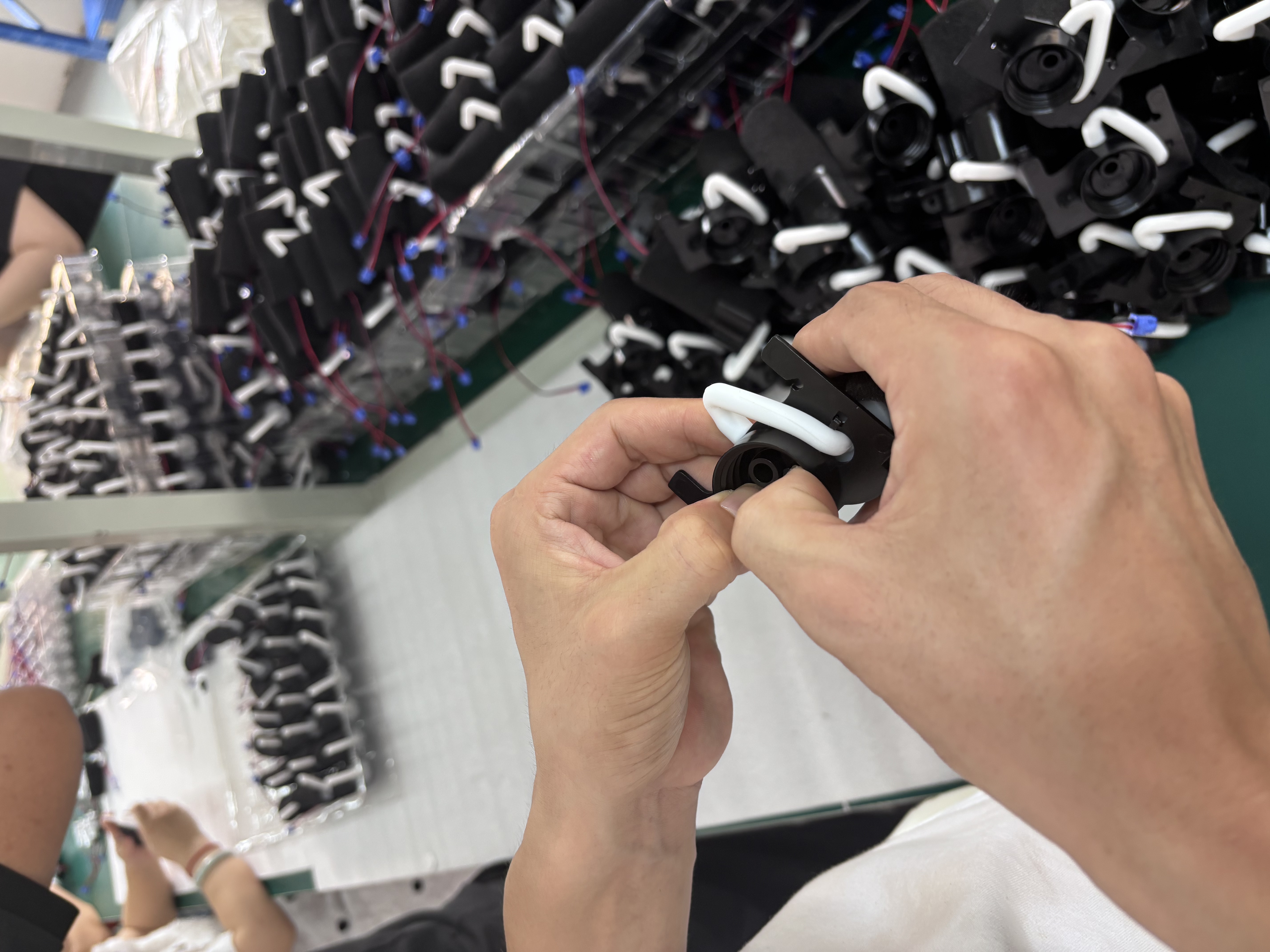
Parts assembly at the production facility, where repeat orders for the same housing and control configuration are built.
Why a first bulk order cannot test a factory
A first order tests price, packing and one shipment's quality. A resale programme tests something different: whether the same SKU can be re-ordered with identical housing, control behaviour, packaging artwork and compliance documents two or three years later. Once units are installed in hotels and shopping malls, that installed base becomes an obligation. A failed unit in a lobby has to be replaced with a matching model rather than a successor the client has never seen, a private-label carton has to carry the same artwork, and the compliance file handed to a facility team has to stay current for as long as the equipment stays on the wall.
Two procurement facts make this concrete. Aroma diffusers are classified under HS code 8509.80 for import and export purposes (Dutiable, 2026), so every resale market has its own customs and documentation path that has to be repeated for each repeat shipment. And certification evidence is model- and configuration-specific: the manufacturer's own published guidance states that certificates and test reports should match the exact product model and configuration being purchased. A wholesaler that switches models to chase a lower first-order price restarts both the documentation work and the installer's learning curve.
Model continuity across the AC-MAX, T2, T1, P01, P02 and P03 range
Continuity is easiest to audit by mapping the range to the venues a wholesaler actually serves, because a catalogue that covers every venue type is easier to keep selling than one that covers only the easy ones.
| Model | Documented positioning | Typical resale use |
|---|---|---|
| P01 / P03 | Battery-powered models recommended where wiring is difficult, including elevators and washrooms | Elevator and restroom scenting without electrical work |
| P02 | Small to medium commercial spaces needing stronger diffusion and smart control | Boutiques, clinics, salons, small lobbies |
| T2 / A300 | Medium commercial areas with higher output and larger oil capacity | Hotel public areas, mid-size retail floors |
| AC-MAX | Large hotels, malls and office buildings requiring centralized HVAC scenting | Ducted HVAC scenting projects |
| H5000 / T3 | Large open spaces | Atriums and large open-plan areas |
| S01 / S02 | Compact models for small rooms | Home and small-office resale |
The AC-MAX, T2, T1, P01, P02 and P03 models form the commercial core of that catalogue. Where a model in the range, T1 being the clearest example, is not described in the published selection guidance, the current model datasheet rather than a catalogue summary should be the quoting source, and the datasheet should be re-dated on every price-list revision.
Keeping a model in the catalogue has three practical effects for a reseller. Installation knowledge stays valid, so the technician who commissioned the first hundred units can commission the next hundred without retraining. Private-label artwork, manuals and packaging stay usable: the company's OEM/ODM programme covers logo, colour, user-manual and private-label packaging customisation, and those assets only pay back if the same housing remains in production. Spare parts and consumable references also stay meaningful, which matters far more to a five-year hotel contract than to a one-off sale.
Certification upkeep: EMC, RoHS and FCC as living documents
All diffuser models from this manufacturer are certified with CE, RoHS and FCC, according to the company profile. For a wholesaler the useful question is narrower: does the document on file match the exact model, plug type and wireless configuration being shipped this quarter?
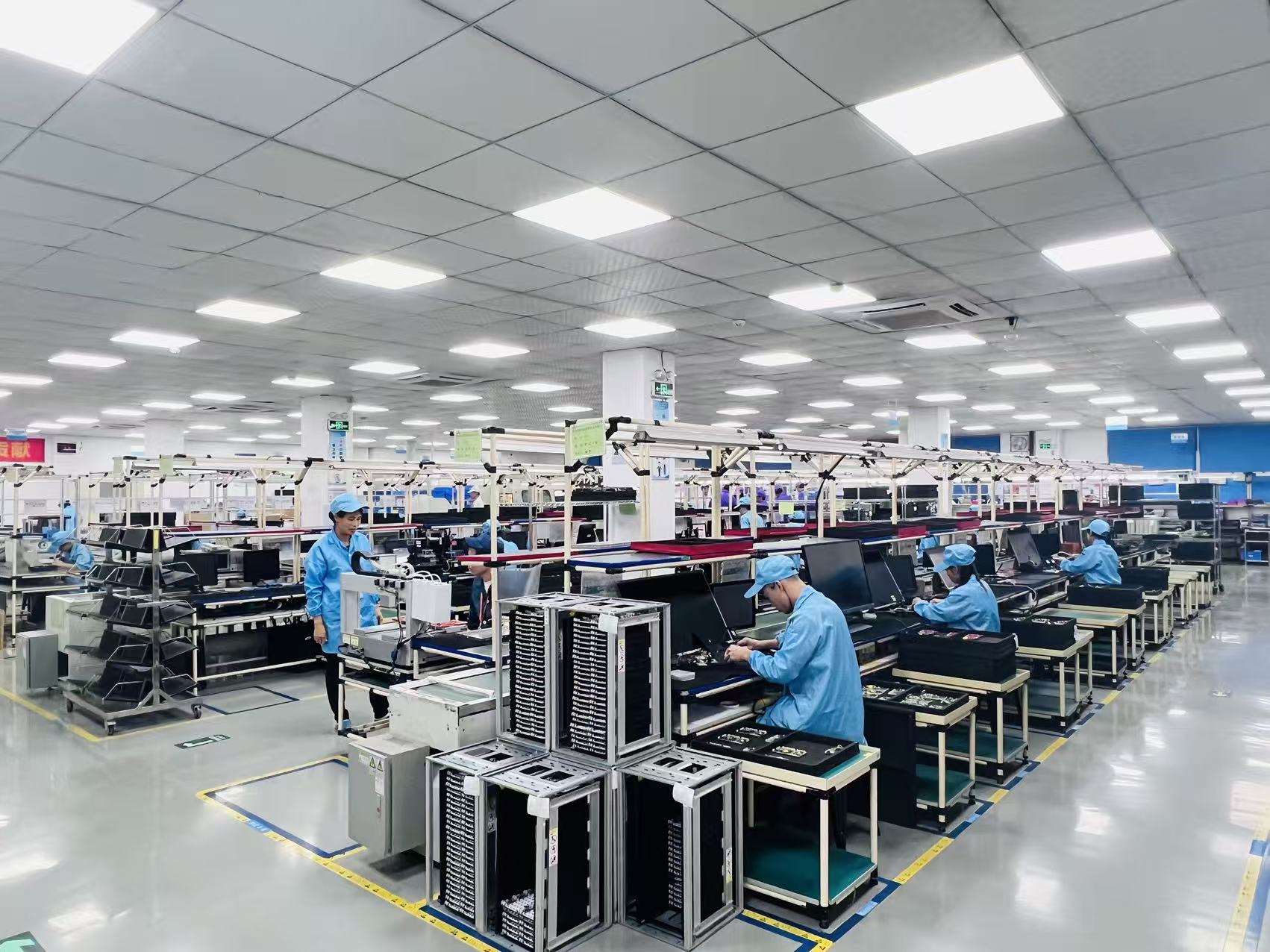
Control-board assembly. Electronic build and configuration determine which EMC and wireless documents apply to a shipped unit.
The three marks cover different risks. CE is the European framework, and EMC, meaning electromagnetic compatibility in both emissions and immunity to interference from other equipment, is the part of that framework a mains-powered diffuser buyer is usually asked to evidence. RoHS covers restricted substances, and FCC is the United States equipment-authorisation framework. Bluetooth or Wi-Fi models, which in this range means the app-controlled units, may also fall under RED requirements in the EU. The wireless function changes the compliance scope, so a report issued for a button-controlled version should not be assumed to cover the app-controlled version of the same model.
Upkeep is therefore a calendar task, not a filing task. A workable routine for a distributor is to hold one folder per SKU containing the certificate, the test report, the model number exactly as printed on the rating label, and the date the supplier last reconfirmed the file. Refresh the folder whenever plug type, wireless module or housing changes, and treat a supplier that cannot reissue a matched document as a continuity risk rather than a documentation annoyance.
Capacity, lead time and reorder planning
The manufacturer states a monthly production capacity of 8,000 units and a typical lead time of 25 to 35 days, against annual output of 100,000 units from a 3,000 m² facility with three production lines, 30 employees, four R&D engineers and 20 patents. The minimum order quantity is one unit, delivery is quoted EXW, FOB or CIF, payment terms are 50% T/T in advance with the balance before shipment, and acceptance is defined as a pre-shipment test.
Put in fleet terms, a 30-unit mall rollout equals roughly 0.4% of one month's stated capacity (calculated: 30 divided by 8,000). That is a useful reality check for a wholesaler negotiating priority. A single project of that size does not stress the factory, but several projects, a private-label run and a stock order competing for the same 25 to 35 day window is where a schedule slips. The planning lesson is to place repeat orders against the production calendar rather than against the client's installation date.
The 25 to 35 day figure covers production only. A reseller's total replenishment cycle is longer once freight and clearance are added, and those legs should be measured from the reseller's own shipment records rather than assumed from a supplier quotation. The one-unit MOQ also deserves interpretation: it lets a distributor validate a model before committing to a container, but it does not by itself guarantee that a mixed-model order can be scheduled inside the same lead time.
Export experience belongs in the same picture. The company exports to the EU, US, Middle East and Southeast Asia, reports a 70% export ratio, and states that its products have been supplied to customers in more than 70 countries and regions. For a wholesaler that is evidence of routine export documentation rather than proof of performance in any single market.
What waterless cold-air changes for the service load
These are waterless cold-air diffusers: fragrance oil is atomized directly, without water and without heat, with dedicated heating power listed at 0 W and 0% water addition. Across the range the company states coverage of approximately 30 to 3,500 m² and oil capacities from 100 ml to 5 L, so one catalogue can serve a restroom and an HVAC-fed mall concourse without changing technology.
For a reseller, the operating difference shows up in service hours rather than on the datasheet. Water-based ultrasonic units need refilling and tank cleaning; the company's five-year comparison places its waterless cold-air units approximately 40% lower in maintenance cost than typical ultrasonic water-based aroma diffusers, on a higher initial equipment cost. Scheduling compounds the effect: running a unit 12 hours a day instead of 24 cuts scheduled operating time by 50%, reducing electricity and fragrance consumption in step.
Waterless is not the same as maintenance-free, and a wholesaler should describe it honestly. Routine work still includes oil-level checks, atomizer cleaning and inspection of nozzles and tubing. When a client reports weak atomization, the documented troubleshooting order runs through power supply, working-hour settings, pump terminal connection, nozzle blockage, tube and pipette condition, and finally oil viscosity or impurities. That sequence is short enough for a reseller support desk to follow before shipping a unit back.
This is also where the model-to-venue match earns its keep. A battery-operated P01 or P03 solves an elevator or washroom without electrical work, a P02 covers a small or medium commercial space with smart control, and an AC-MAX connects to the ductwork of a large hotel or mall. Mixing those roles produces service calls that look like product faults but are really installation mismatches.
Application fit: hotels, malls and local clients
The commercial argument for the range is breadth of venue rather than a single flagship configuration. The manufacturer lists hotels, shopping malls, retail stores, offices, showrooms, gyms, hospitals, beauty salons and spa centres as target environments, and its catalogue spans wall plug-in, portable, wall-mounted, floor-standing, freestanding, app-controlled, HVAC and large-space commercial machines.
A mall installation is the hardest test of continuity because it is a fleet rather than a unit. A 30-unit shopping-mall rollout in the United States is a useful scale to plan against: large enough for fleet-level issues such as matching replacements, one compliance file and one service routine to appear, small enough to sit inside a single wholesale order. The reference a wholesaler should request is a fleet record with three identifiers: the exact model, the unit count and the year the installation started. A mall deployment of that size that has stayed in service for five years is meaningful evidence only when the supplier can tie the claim to a model, a market and a service history; without those identifiers it remains a marketing line.
Local clients buy differently. A salon, a gym, a clinic or a single hotel reorders in ones and twos, cares that the unit is quiet and simple to refill, and calls the reseller rather than the factory when performance drifts. That support load is the real reason a wholesaler should score model continuity before price: the cost of a mismatched replacement in year three lands on the reseller's service budget, not on the factory's.

Housing production. Tooling that stays in service is what allows a reseller's private-label model to be reproduced across repeat orders.
Market context behind the long-term view
Independent market research supports the direction without settling any individual supplier question. Data Bridge Market Research estimates the global fragrance diffuser market at USD 29.61 billion in 2024 and projects the smart aroma diffuser segment to grow at a CAGR of 9.22% from 2026 to 2034. The same source puts ultrasonic diffusers at a 38.5% revenue share in 2024 while expecting nebulizing diffusers to grow fastest, citing professional-grade requirements in hotels.
Supplier-landscape evidence points the same way. Baixiang, Centi and Raymeel each publicly describe commercial diffuser ranges, hotel-oriented programmes and OEM or private-label services on their own websites. OEM capability is therefore widely advertised; what is harder to buy is a documented, multi-year commitment behind one specific model. Wholesalers should read those supplier pages as capability claims to be verified, not as comparable performance data.
Where this supplier case is weaker
- Higher upfront equipment cost. The company's own comparison places waterless cold-air units above typical ultrasonic water-based diffusers on purchase price, with the return arriving through a five-year maintenance figure of approximately 40% lower. A reseller serving price-sensitive small clients will still need an entry option.
- Coverage numbers are not comparable across suppliers. Published coverage claims use different room assumptions and units, and cross-brand comparison of square-metre figures is not valid without a shared test method. Quote each figure with its condition rather than ranking it.
- Certification evidence in this category is largely self-reported. Public manufacturer pages, including this one, describe CE, RoHS and FCC compliance; certificate copies, issuing laboratories and report dates still have to be checked per SKU.
- Corporate history is short. The manufacturer was founded in 2021, so a wholesaler cannot evaluate it on decades of record. The substitutable evidence is capacity, documentation discipline and installed-base references.
- Waterless is not maintenance-free. Oil checks, atomizer cleaning and nozzle inspection remain part of ownership cost and should appear in any resale service quote.
A verification sequence for a multi-year resale agreement
- Model register. List every SKU intended for resale, with the model number exactly as printed on the rating label.
- Datasheet currency. Request a dated datasheet per SKU covering coverage, oil capacity, power and control type.
- Certification match. Obtain the certificate and test report per SKU, confirm they match model, plug type and wired or wireless configuration, and add RED for app-controlled units sold in the EU.
- Capacity statement. Ask for monthly capacity and typical lead time in writing, then test the answer against a mixed-model order rather than a single-SKU order.
- Fleet references. Request references that name the model, unit count, market and start year, and speak to at least one of them.
- Spare-part and service list. Confirm which parts, such as pumps, nozzles and tubing, can be re-ordered and on what lead time.
- Customisation continuity. For private label, confirm that logo, colour, user manual and packaging artwork can be reproduced across repeat orders without a new tooling cycle.
- Commercial terms. MOQ, EXW, FOB or CIF delivery, 50% advance payment and pre-shipment acceptance should sit in the resale contract rather than in an email thread.
Outlook
The case for multi-year planning rests on the reported growth of smart, app-controlled scenting rather than on any single project. If the smart aroma diffuser segment grows at the projected 9.22% CAGR through 2034, resellers will be asked for app-controlled and centrally managed units more often, and the continuity question will extend from hardware to control software: a model that remains in the catalogue but loses app support is not continuous. That is a conditional outlook, not a forecast for any specific supplier. The practical response available today is to make model-by-model documentation part of the purchase file, so that the second and third orders are administrative tasks rather than new projects.
Factory continuity is testable. Ask for the model register, the matched certification file, the capacity and lead-time statement, the spare-part list and a fleet reference with a date attached. A documented range, a monthly capacity of 8,000 units, a 25 to 35 day lead time, CE, RoHS and FCC certification across models, and waterless cold-air technology with a stated five-year maintenance advantage give a wholesaler concrete material to test those questions against, and a clearer basis for deciding whether a first bulk order deserves to become a five-year catalogue line.
SCENTSEA's company profile, including production, certification and product-range details, is available as a public PDF download: SCENTSEA Company Profile (PDF).
FAQ
What does factory continuity mean when buying commercial scent diffusers?
Factory continuity means a manufacturer can keep supplying, documenting and servicing a specific model across repeat orders, not only at launch. In practice it covers four conditions: the model stays in the catalogue with a current datasheet; its certification file stays matched to the exact configuration shipped; production capacity and lead time remain available for repeat orders; and spare parts, packaging and private-label artwork can be reproduced later. For a wholesaler selling to hotels and malls, those four conditions decide whether an installed base can be maintained for five years.
How should a wholesaler verify that EMC, RoHS and FCC documents still apply to a repeat order?
Request the certificate and test report for the exact model and configuration being ordered, then check three details: the model number on the document matches the rating label, the configuration matches the plug type and wired or wireless control, and the document is current and legible. CE covers the European framework in which EMC sits, RoHS covers restricted substances and FCC covers the United States; app-controlled Bluetooth or Wi-Fi models may additionally require RED in the EU. Re-check the file whenever the configuration or the supplier documentation changes.
Which scent diffuser models suit which venues in a reseller portfolio?
Published selection guidance maps compact S01 and S02 units to small rooms, battery-powered P01 and P03 to elevators, washrooms and locations where wiring is difficult, P02 to small and medium commercial spaces needing stronger diffusion and smart control, A300 and T2 to medium commercial areas, H5000 and T3 to large open spaces, and AC-MAX to large hotels, malls and office buildings with centralized HVAC scenting. Those roles apply to the specified configurations; confirm the current datasheet before quoting a model such as T1.
What lead time, MOQ and payment terms should a reseller plan around?
The manufacturer states a typical production lead time of 25 to 35 days, monthly capacity of 8,000 units, a minimum order quantity of one unit, EXW, FOB or CIF delivery terms, 50% T/T in advance with the balance before shipment, and pre-shipment testing as the acceptance criterion. The production lead time excludes freight and clearance, so a reseller's total replenishment cycle should be measured from its own shipment records rather than from the supplier quotation.
How is five-year maintenance cost assessed for a waterless cold-air fleet?
The company compares its waterless cold-air diffusers with typical ultrasonic water-based aroma diffusers and states a five-year maintenance cost approximately 40% lower, on a higher initial equipment cost. The comparison rests on no water refilling and less frequent cleaning, plus scheduled operation: running 12 hours a day instead of 24 reduces scheduled operating time by 50%. Routine work such as oil-level checks, atomizer cleaning and nozzle inspection still applies, so a fleet budget should include those labour hours as well as fragrance oil.
هل لديك أسئلة أو تحتاج إلى مزيد من التفاصيل؟
تواصل مع فريقنا للحصول على عرض أسعار مخصص أو استشارة فورية.
طلب عرض أسعار
املأ النموذج أدناه وسيتواصل معك فريقنا بعرض مقترح مخصص.
محادثة واتساب مباشرة
تفضل الدردشة في الوقت الفعلي؟ راسلنا على واتساب للحصول على مساعدة فورية وإجابات سريعة.
- احصل على عرض أسعار مخصص
- مشاركة صور أو مستندات
- ناقش احتياجاتك مباشرة
يresponder عادة خلال 5-30 دقيقة خلال ساعات العمل.