
Scooter vs Dirt Bike Seat Configurations: Buyer Comparison
Independent Buyer Reference · Motorcycle Seat Replacement Projects
The aftermarket is the largest distribution channel for motorcycle seats, accounting for approximately 62.3% of revenue in 2025 with the Asia-Pacific region holding a 38.5% revenue share, according to Dataintelo. That channel structure matters commercially because most seat purchases are decided against an existing fleet, not a new model line. This comparison looks at how scooter seat configurations and dirt bike seat configurations differ across seating feel, visual effect, repair and replacement capability, and waterproof performance, using the published material and fit information of ZHEJIANG XINGRONG AUTO AND MOTORCYCLE PARTS CO., LTD., a motorcycle and off-road vehicle seat manufacturer based in Taizhou, Zhejiang, founded in 2015.
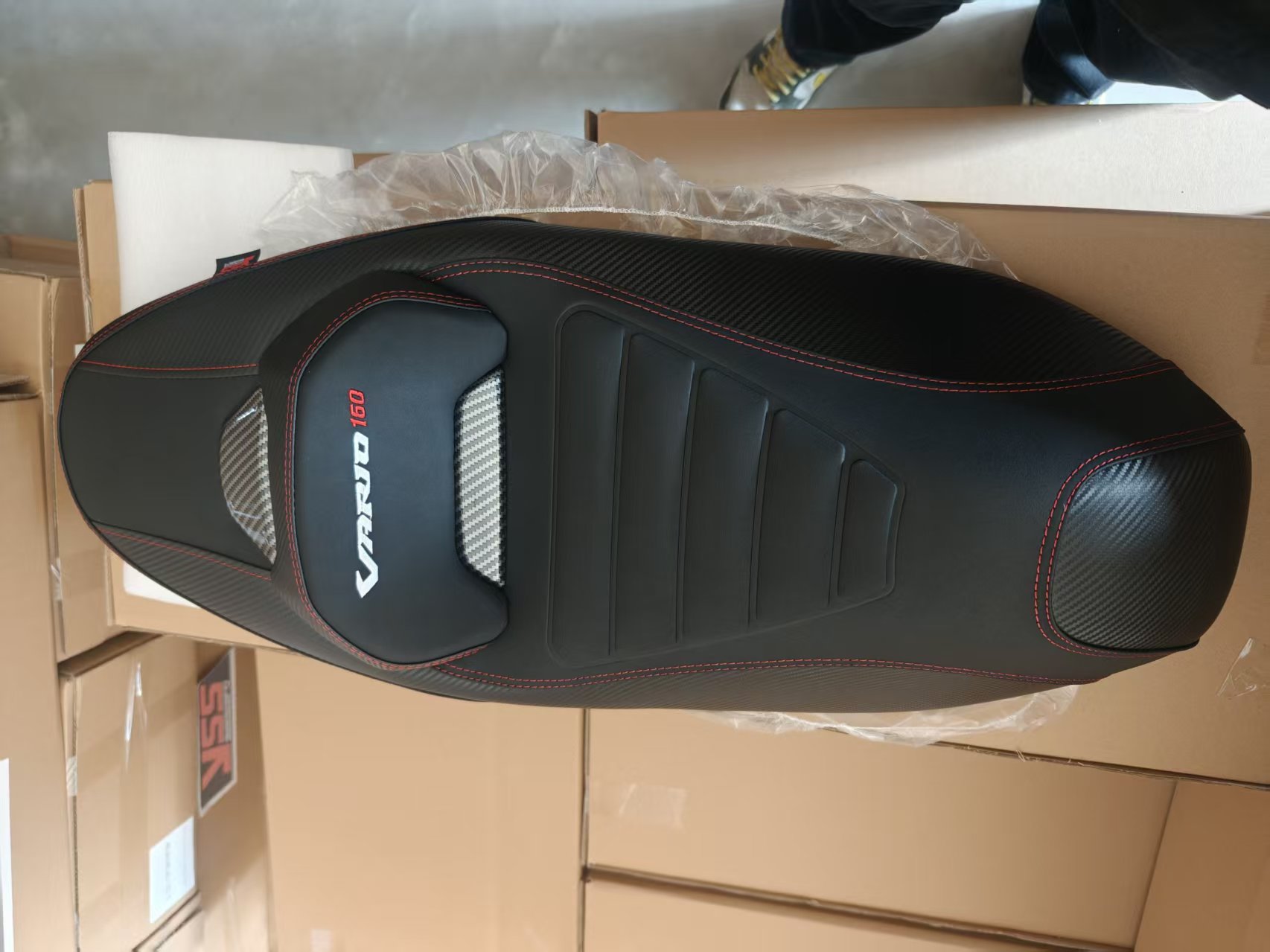
Two configurations, two different fitting problems
A replacement motorcycle seat has no power interface and no electronic adjustment. It operates in a non-powered static fitting mode and must be used with the motorcycle main body frame and the motorcycle body shell. That single design condition explains most of the practical difference between a scooter program and a dirt bike program, and it is the reason a single seat specification rarely serves both.
On a scooter, the seat is part of the visible body assembly. It sits within the shell, its edges meet side panels and storage covers, and the rider stays in one seated position for the majority of the ride. Fit tolerance, cover colour and stitching alignment are therefore quality signals that the end customer can see immediately. On a dirt bike, the riding position changes constantly. The seat is narrower, flatter and longer in usable surface, foam layers are kept thin so the rider can shift weight, and the cover is typically expected to resist abrasion and grip rather than deliver a plush surface. These are broad design traditions rather than fixed rules, but they drive the specification and the acceptance criteria in both cases.
The procurement consequence is direct. A fit list developed for scooter platforms does not transfer to dirt bike platforms, and the reverse is also true. Buyers with mixed fleets are usually managing two configuration decisions, two sample approvals and, in many cases, two different reorder rhythms.
The material platform both configurations share
The seat is built from PVC leather, PU foam and a PP plate, with the cushion specified as 80D high-density foam and the base described as a high-strength floor structure. Each layer carries a distinct function, and buyers who understand the layering can read supplier claims more accurately.
- PVC leather cover — the outer surface, and the layer that carries both the waterproof function and the visual signature of the seat. Cover design, logo branding and stitching line colour are the three customization points offered on this material.
- 80D high-density foam cushion — the primary cushion layer. Density, rather than thickness alone, is the usual indicator of how a foam cushion resists compression set over repeated use. This is the layer that determines whether a seat still feels supportive after a season of daily riding.
- PU foam — a secondary cushioning layer that controls the initial softness felt when the rider sits down and softens the transition between cover and cushion.
- PP plate — the structural base that gives the seat its pan shape and carries the mounting geometry.
- High-strength floor structure — reinforcement that limits flex under rider load and keeps the fit interface stable over time.
This layering is why the words 'comfortable' and 'soft' are not specifications on their own. Softness is largely a function of the PU foam layer, while long-term seating feel comes from the 80D cushion. The same visible seat can be produced with different foam behaviour, so buyers should tie both terms to a density reference and a sample, not to a photograph.
Mapping the scooter configuration to Nmax, Xmax, Aerox, ADV150, ADV160, Forza, PCX and Click
The published fit list for the scooter configuration covers Nmax, Xmax, Aerox, ADV150, ADV160, Forza, PCX and Click. For a buyer, a named fit list is a starting point rather than an approval. Each name represents a model family, and seat pan geometry, body shell opening and mounting positions can differ between generations and market variants sold under the same name. A fit check on the actual model year in question remains the only reliable acceptance method, and it should happen before a production order is released, not after.
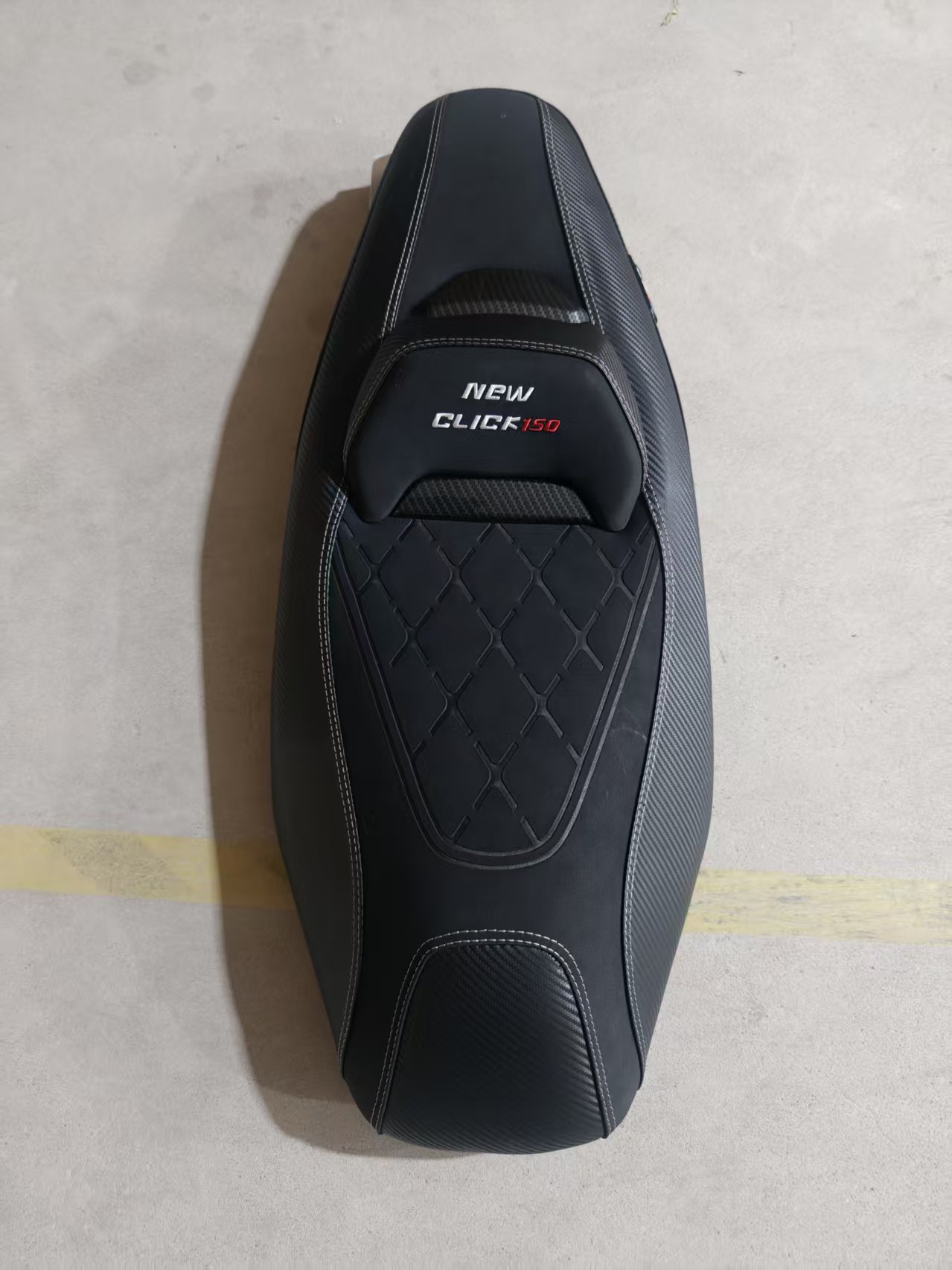
| Configuration element | What is specified | What the buyer should verify |
|---|---|---|
| Cover surface | PVC leather, waterproof-oriented | Grain and colour match to the target model, stitching line colour, logo position |
| Primary cushion | 80D high-density foam | Density reference is retained between the approved sample and mass production |
| Secondary cushion | PU foam | Initial softness is appropriate for the intended rider weight and duty cycle |
| Base | PP plate | Mounting positions and pan contour against the real vehicle |
| Base reinforcement | High-strength floor structure | Flex behaviour under load and stability of the fit interface |
| Fit mode | Non-powered static fitting part used with the main body frame and body shell | Panel gaps and alignment, no interference with the shell or covers |
| Water exposure | Designed for waterproof environments; wear-resistant surface and weather resistance stated as application requirements | Sealing at seams and stitch lines, abrasion behaviour at contact points |
| Pre-shipment | 100% pre-shipment test | Defect criteria, rework rules and whether inspection records accompany the shipment |
| Warranty | 1-year warranty | Which failure modes are covered and how a claim is raised |
Read as a checklist, this table is what separates a specification from a marketing phrase. Terms such as modified motorcycle seat, factory-modified motorcycle seat or customized motorcycle seat only carry procurement meaning when they can be mapped back to a layer, a density reference, a fit interface and an inspection step.
Where dirt bike configurations sit in the same program
Scooter seats and dirt bike seats are both declared product types within the same seat range, and both draw on the same material platform: PVC leather, 80D high-density foam, PU foam and PP plate with a high-strength floor structure. The difference is how the order is placed. The named model mapping is composed entirely of scooter platforms, while dirt bike demand is handled through the OEM and ODM customization route, where logo branding, leather cover design and stitching line colour are defined by the buyer and confirmed through sampling.
That distinction should be stated plainly. A buyer whose replacement volume is mostly dirt bike should not assume the scooter mapping carries over. Scooter configurations are catalogue-supported and can be reordered against a known list; dirt bike configurations behave like a customization project, with sample validation, cover design approval and stitching confirmation before mass production. Minimum order quantity of 50 pieces and a lead time of 25 to 35 days apply to that route as well.
Waterproof performance: what the specification covers and where its limits are
Waterproof performance is one of four stated highlights of this seat, alongside seating feel, visual effect, and repair and replacement capability. The product is designed for waterproof environments and operates under waterproof conditions, with weather resistance, a wear-resistant surface and waterproof capability listed as application requirements.
The material context supports that positioning. Fortune Business Insights notes that leather remains a premium material for motorcycle seats, while synthetic options such as vinyl and foam are increasingly used to deliver waterproof and soft-surface features in the mid-range segment. PVC leather belongs squarely to that synthetic, waterproof-oriented group, which is also why it can be produced consistently in volume.
The limit is worth understanding before it becomes a complaint. Waterproofing is a property of the cover material and the construction, not a permanent state. Stitch lines create penetrations in any cover; abrasion at the rider contact points gradually thins the surface; sustained UV exposure and constant humidity age the material. Buyers serving markets with long rainy seasons and high heat should therefore define a replacement expectation and inspect seam behaviour in the field, rather than assuming the seat remains fully watertight for its entire service life.
Repair, replacement and visual outcome
Repair and replacement capability is listed as a core highlight, and the intended applications are old seat maintenance and direct replacement. Because the seat is a non-powered static fitting part that mounts against the main body frame and body shell, installation involves no electrical connection and no calibration step. That reduces the number of things that can go wrong during fitting, which matters most for repair shops working on a fixed labour model.
Visual effect is the other half of the same story. The seat is designed to beautify the motorcycle appearance, and on scooter platforms the seat is a highly visible panel. Colour match, grain consistency and stitching alignment are therefore commercial quality criteria, not cosmetic preferences. For retailers and accessory brands building a replacement range, batch-to-batch consistency of the cover surface is one of the questions worth raising with the supplier before the first order, because uneven batches create returns even when every unit passes a functional inspection.
Acceptance checks buyers should apply before the purchase order
Three supplier statements deserve to be converted into contract language rather than treated as assurances.
100% pre-shipment test. The manufacturer states that every unit is tested before shipment rather than sampled. For a buyer, the useful step is to define what the test covers, which defects trigger rework or rejection, and whether inspection records travel with the shipment. A stated test rate without a stated criterion is difficult to enforce after the container has sailed.
1-year warranty. The after-sales term is one year. Buyers should confirm the covered failure modes and the claim route, since warranty value in replacement parts depends on how quickly a defective unit is replaced rather than on the length of the term alone.
Capacity and lead time. The published figures are a monthly capacity of 50,000 pieces, a minimum order quantity of 50 pieces and a lead time of 25 to 35 days, supported by an annual production capacity of 1.8 million cushions and a 90% self-production rate for accessories. The company holds ISO9000 and CQC certification.
Real project context is available for calibration. A 5,000-piece supply program for Lebanon ran over two years, with seating feel, visual effect and waterproof performance reported as the outcomes, and the client base spans 11 countries including China, Iran, Italy, South Korea, Lebanon, Malaysia, Mexico, the Philippines, Turkey, Taiwan and Vietnam. These are reference points for program scale and continuity, not claims about any other supplier.
One boundary should be stated honestly. A 50-piece minimum and a 25 to 35 day lead time suit restocking programs, retailer ranges and OEM or ODM projects. They do not suit a single-unit emergency repair, where the local option is usually faster and cheaper despite weaker material control.
Traditional sourcing routes compared
| Sourcing route | Material control | Fit precision | Waterproof consistency | Testing and warranty | Best suited to |
|---|---|---|---|---|---|
| Local re-covering of the original seat | Depends on the workshop stock; cover grade is rarely documented | Usually strong, because the original pan is reused | Depends on the workshop stitching and sealing method | No batch pre-shipment test; warranty generally short and informal | Single-unit repair and cosmetic restoration |
| Generic universal cover or seat | Low-cost materials with limited traceability | Approximate; tolerances depend on the rider accepting gaps | Variable, tied to material grade rather than construction | Typically none | Low-cost appearance refresh where fit tolerance is acceptable |
| Factory-direct configured seat (OEM and ODM) | Fixed platform: PVC leather, 80D high-density foam, PU foam, PP plate, high-strength floor structure | Defined by the named model list and validated through sample fit | Waterproof-oriented construction with weather resistance stated as an application requirement | 100% pre-shipment test and 1-year warranty | Restocking programs, retailer ranges, OEM and ODM projects |
The trade-off is speed against control. Local and universal routes win on immediacy and unit-level flexibility; a configured factory route wins on repeatability, documentation and warranty, but it requires planning ahead, and customization adds sample approval cycles before production can start. Buyers running both repair counters and wholesale programs typically need both routes in their portfolio rather than choosing between them.
Market trend signals for replacement seat buyers
Market sizing should be read as directional. Market Research Future and Dataintelo place the global motorcycle seats market at USD 7.42 billion in 2025, projected to reach USD 13.30 billion by 2032 at an 8.69% CAGR. Dataintelo separately publishes a 2025 figure of USD 4.8 billion, and the gap between these estimates is wide enough that buyers should treat market value as a range rather than a precise number. The structural signals are more consistent than the totals: aftermarket distribution at roughly 62.3% of revenue in 2025, Asia-Pacific at a 38.5% revenue share driven by production and sales in China, and a continuing shift toward synthetic cover materials for waterproof and soft-surface features in the mid-range segment.
For procurement, the implications are practical rather than strategic. When most demand is replacement-driven, breadth of fit coverage and continuity of stock matter more than design novelty, and a supplier's ability to hold a model list across Nmax, Xmax, Aerox, ADV150, ADV160, Forza, PCX and Click becomes a commercial advantage in itself. Material specifications are likely to keep moving from adjectives toward measurable criteria such as foam density, layer structure and sealing method, which favours buyers who already write acceptance criteria into their purchase orders.
Future outlook
Two developments are worth monitoring. The first is compliance. UN Regulation No. 17, also referenced as ECE R17, establishes uniform provisions for the approval of vehicle seats, anchorages and head restraints. Its direct applicability varies by vehicle category and market, so a buyer or supplier should confirm which standards apply to a specific product rather than assuming that a replacement scooter or dirt bike seat falls automatically under the same approval regime as original vehicle seating.
The second is the normalisation of waterproofing as a measurable specification. As synthetic covers continue to take share in the mid-range, buyers are likely to ask for sealing method, foam density and abrasion behaviour rather than a general waterproof claim. Suppliers who can document the layer structure, the fit list and the pre-shipment inspection process will be easier to approve and easier to reorder from, which is ultimately what determines whether a replacement seat program is a one-off purchase or a supply relationship.
FAQ
- What is the difference between a scooter seat configuration and a dirt bike seat configuration in replacement projects?
Both are motorcycle seats used for motorcycle parts replacement and both are built on the same material basis: a PVC leather cover, an 80D high-density foam cushion, PU foam and a PP plate, with a high-strength floor structure. The practical difference is the fitting task. The seat is a non-powered static fitting part that must be used with the motorcycle main body frame and motorcycle body shell, so scooter configurations are handled against a published model fit list, while dirt bike demand is handled through OEM and ODM customization rather than that list.
- Which motorcycle models are covered by the published fit list?
The scooter fit list covers Nmax, Xmax, Aerox, ADV150, ADV160, Forza, PCX and Click. Buyers should still confirm fit against the specific model year, because seat pan geometry and body shell interfaces can differ between generations and market variants sold under the same model name.
- What materials are used, and what does each layer do?
The seat uses PVC leather, PU foam and a PP plate, with the cushion made of 80D high-density foam and a high-strength floor structure. The PVC leather forms the waterproof outer surface and carries the visual finish; the 80D foam is the primary cushion and governs long-term support; the PU foam controls initial softness; the PP plate provides the structural base and mounting geometry; the floor structure limits flex under rider load.
- Is the seat waterproof?
The product is designed for waterproof environments and operates under waterproof conditions, and waterproof performance is one of its stated highlights, alongside weather resistance and a wear-resistant surface. Waterproofing is a property of the cover material and construction rather than a permanent state: stitch lines, abrasion at contact points and long-term UV and humidity exposure affect it over time, so replacement expectations should be defined for markets with sustained rain and heat.
- Can the seat be customized for a specific brand or model program?
Yes. OEM and ODM are the stated production modes, and the customization options are logo branding, leather cover design and stitching line colour. Customization is confirmed through sampling before mass production, and it follows the same minimum order quantity and lead time as the rest of the range.
- What do 100% pre-shipment testing and a 1-year warranty mean in practice?
The manufacturer states that every unit is tested before shipment rather than only a sample, and the after-sales term is one year. In practice, buyers should convert both into defined terms before ordering: which defects trigger rework or rejection, whether inspection records accompany the shipment, which failure modes the warranty covers, and how a claim is raised. The company also holds ISO9000 and CQC certification.
- What are the minimum order quantity, lead time and production capacity?
The minimum order quantity is 50 pieces and the lead time is 25 to 35 days, against a monthly capacity of 50,000 pieces and an annual cushion capacity of 1.8 million units. Those parameters suit restocking programs, retailer ranges and OEM or ODM projects; they do not suit single-unit emergency repairs, which are usually served faster locally.
- What real project data is available for reference?
A 5,000-piece supply program for Lebanon ran over two years, with seating feel, visual effect and waterproof performance reported as outcomes, and the client base covers 11 countries including China, Iran, Italy, South Korea, Lebanon, Malaysia, Mexico, the Philippines, Turkey, Taiwan and Vietnam. The application scenario itself is common across markets such as Iran, India, Italy, South Korea, Lebanon, Portugal, Thailand, Taiwan, Turkey and Vietnam. These figures describe reference scale and continuity, not a comparison with other suppliers.
Reference document: the full seat cushion catalogue, including model imagery and configuration details, is available as a downloadable PDF: STARON SEAT CUSHION CATALOG NEW.