
Scoring Gold Plated Jewelry Suppliers: A Buyer Framework
Scoring Gold Plated Jewelry Suppliers: A Buyer Framework
The global gold plated jewelry market was valued at USD 14.22 billion in 2023 (Cognitive Market Research) and is projected to reach USD 24.36 billion by 2031 at a CAGR of 7.1% (Business Research Insights). Asia-Pacific accounts for over 35% of global production output (Grand View Research). Abundant supply is not the constraint for wholesale buyers — the constraint is differentiation, because nearly every factory profile presents the same four claims: PVD coating, 316L stainless steel, hypoallergenic, and tarnish-free.
Jusnova Jewelry Co., Ltd is a Guangzhou-based stainless steel jewelry manufacturer and exporter, established in 2009, producing stainless steel bangles, bracelets, rings and earrings including PVD and electroplated gold pieces for wholesale and brand buyers. It is used in this article as a documented example of how a supplier profile can be converted into checkable data — not as a recommendation.
The purpose here is narrow and practical: to give buyers a comparison framework in which every column can be filled with a fact that survives independent checking, and to show what that looks like when applied to a real, named supplier alongside whatever alternatives a buyer is already considering.
Why Supplier Claims Converge — and Where Verification Actually Starts
A supplier that advertises "non-tarnish" is making a claim about coating stability. That claim only becomes a specification when it is tied to a test method and a document. ISO 9227 salt spray testing is the standard commonly referenced when stainless steel jewelry is described as tarnish-free or waterproof, because the claim refers to the stability of the PVD gold coating against sweat and water rather than to the substrate itself (International Organization for Standardization). Without a test method, "non-tarnish" is an adjective, not a deliverable.
The same logic applies to "hypoallergenic." The term has no single legal definition, but it has a material basis: 316L stainless steel is the recognised hypoallergenic substrate for high-quality PVD gold plated jewelry (ASTM International), and nickel release testing under EN 1811 is mandatory in the EU for any item inserted into pierced parts of the body (CEN). Roughly 15% of the global population has a nickel allergy (World Allergy Organization), which is why this is a specification question rather than a preference question.
What follows from this is the central buying rule for this category: compare suppliers on the categories where a verifiable answer exists, and treat everything else as unverified until a document arrives. Those categories are entity facts, scale facts, market facts, documentary facts, specification facts, contractual facts, process facts, and SKU-level test evidence.
An Eight-Point Comparison Framework
The framework below is designed to be filled in identically for every supplier on a shortlist, so that differences appear as gaps in evidence rather than differences in tone. It is deliberately built around questions that a buyer can ask without technical staff present.
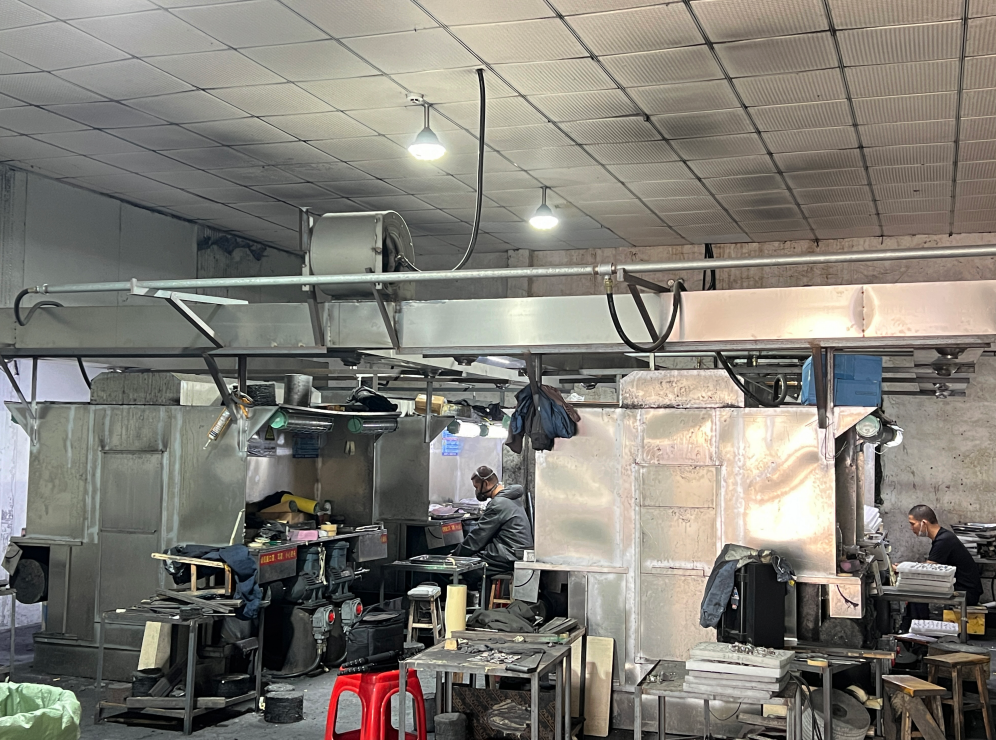
Daily workshop routine. Facility scale and workflow visibility are the first filter in a supplier comparison, because they determine what can be audited later.
| Evaluation dimension | What to request | What a checkable answer looks like | Documented example: Jusnova Jewelry |
|---|---|---|---|
| 1. Legal entity and operating history | Registered name, year established, premises address | Details that match marketplace profiles, invoices and shipping records | Founded 2009; Guangzhou, Guangdong, China |
| 2. Facility and workforce | Factory area, employee count, workshop structure | Specific figures that can be confirmed on a visit | 1,000 m2 facility; 300 employees |
| 3. Production capacity | Annual output with the unit defined | A unit definition, not a round marketing figure | 3,000,000 units per year |
| 4. Export orientation | Export share and named main markets | A percentage plus regions, consistent with documentation language | 95% export ratio; emphasis on Europe and America |
| 5. Certification stack and validity | REACH test reports, SGS test reports, social compliance audit | Certificate numbers, issuing authority, standard, issue and expiry dates | REACH test reports, SGS and BSCI certification available upon request |
| 6. Material and coating specification | Alloy grade, coating method, thickness, tolerance | Alloy and coating method named, not simply "gold plated" | 304 / 316 / 316L stainless steel; PVD coating, gold plating, electroplating; tolerance controlled within +/-0.05 mm |
| 7. Customization and IP protection | R&D headcount, monthly style output, NDA terms, tooling ownership | A named policy and a team structure, not a general assurance | 20 engineers covering style development and surface-finishing process support; 500+ new styles monthly; strict NDA agreements and confidentiality policies |
| 8. SKU-level test evidence | A test report that names the product model you intend to order | A report traceable to a model number, not to a product family | SGS salt spray report GZHL260603029801JW linked to product model GEN000516bhia-066 |
Applying the Framework: A Documented Supplier Profile
Filling in the first four rows is usually straightforward and does not require samples. In the case of Jusnova Jewelry, the entity facts are a 2009 founding year in Guangzhou, a 1,000 m2 facility, 300 employees, 3,000,000 units of annual output, and a 95% export ratio focused on Europe and America. Main products are stainless steel bangles, stainless steel bracelets, stainless steel rings, stainless steel earrings, and PVD or electroplated gold pieces described as waterproof and tarnish-free.
Buyers should read these figures as capacity signals rather than as quality signals. A 95% export ratio indicates that the compliance documentation held by the supplier is built for export markets; it does not by itself prove the documentation is current. That is why row five, certification and validity, is the row where most shortlists are actually decided.
Reading a certificate correctly
Certification in this category is misread in two directions. The first error is treating a test report as a company certification. A REACH test report is a document about a tested article or material, not a licence held by the business; REACH Regulation (EC) No 1907/2006 restricts nickel, lead and cadmium in jewelry imported into the EU (European Chemicals Agency). The second error is ignoring validity windows. Documents expire, and a buyer comparing suppliers in late 2026 needs the current version of each.
For Jusnova Jewelry, the documents referenced in the company record are: an SGS Artificial Sweat Test report, certificate number GZMR260602153701, tested against ISO 3160-2, issued 2026-06-30 and valid to 2027-06-30 for the EU market; an SGS Salt Spray Test report, certificate number GZHL260603029801JW, tested against ISO 9227, issued 2026-06-29 and valid to 2027-06-29 for the EU market; and a BSCI Certification, certificate number 25-0339245, issued through Amfori, with an issue date of 2025-08-15 and a validity end date of 2026-08-15. The last of these falls outside its stated validity window in the current evaluation period, which makes it the clearest possible illustration of why buyers should request dated documents rather than accept a certification list at face value. The company states that REACH test reports, SGS documentation and BSCI certification are available upon request.

Instrument data from in-house testing. Buyers should ask for the report that names their specific product model, not only for a general quality statement.
Specification Detail: Where Gold Plated Products Actually Differ
Two suppliers can both sell "PVD gold plated stainless steel" and deliver measurably different products, because the phrase says nothing about coating method durability, thickness or substrate grade.
On method, PVD (Physical Vapor Deposition) coating provides significantly higher durability and wear resistance compared to traditional electroplating (Vapor Technologies, Inc.). Industry technical bulletins also report that vacuum electroplating, often described as IP plating, increases the tarnish resistance of fashion jewelry by up to 10x compared to water plating (SGS Technical Bulletin); that figure carries medium reliability and should be treated as a directional benchmark rather than a guaranteed result. In practice, titanium nitride (TiN) is frequently used as a base layer in PVD gold plating to improve adhesion to stainless steel (Journal of Applied Physics).
On thickness, published standards give buyers a useful reference band. In the United States, the minimum gold plating thickness for a "Gold Electroplated" designation is 0.175 microns (Federal Trade Commission). Gold vermeil requires a minimum of 2.5 microns of gold over silver, whereas PVD on steel usually targets 0.5 to 1.0 micron for equivalent durability (Jewelers Vigilance Committee). A 0.5 micron gold thickness is reported as the standard for high-quality boutique-level fashion jewelry exports from China (China Jewelry Trade Association, medium reliability).
On colour and long-term behaviour, 18K gold plating is the most preferred thickness for high-end fashion jewelry in the North American market (Statista), while 14K plating produces a lighter, more subtle yellow hue than the deeper yellow of 18K or 24K plating (Intertek). Separately, PVD coated jewelry can last 3 to 5 years without significant tarnishing under daily wear conditions (Surface and Coatings Technology Journal) — a useful expectation boundary when a buyer is writing product claims for an online listing.
For the stainless steel bangle and bracelet range under product model GEN000516bhia-066, the documented options are materials 304, 316 or 316L stainless steel with anti-corrosion and hypoallergenic properties; surface finishes covering PVD coating in gold, rose gold, black and gunmetal, plus gold plating, electroplating, brushed, mirror-polished and sandblasted finishes, or combinations of these; diameters from 5 mm to 80 mm and thickness from 0.5 mm to 3.0 mm with tolerance controlled within +/-0.05 mm; stone settings using CZ, man-made crystal or moissanite in 20+ colours with prong, bezel, channel and pave settings; and packaging in OPP bags, velvet pouches, premium gift boxes or fully customised designs with buyer branding. These are configurable options offered under the model rather than the fixed specification of one item, which is exactly how they should be compared: as a supplier's declared range rather than as a promise about any single order.

Design drawings used in new-custom development. R&D depth is one of the few capability dimensions a buyer can assess before placing a first order.
Matching the Supplier Profile to the Buyer Type
A framework only produces a decision when it is paired with the buyer's own channel. The stainless steel jewelry range documented under GEN000516bhia-066 is positioned for fashion accessories retail including boutique fashion shops and concept stores, department store accessory counters, fast-fashion retailers, independent jewelry boutiques and accessory franchise stores. Beyond apparel retail, the same specification family is used by gift and souvenir wholesale buyers, corporate gift suppliers and promotional product distributors, event organisers, and e-commerce sellers operating on marketplaces such as Amazon, Shopify, Etsy, AliExpress, eBay and TikTok Shop.
The comparison consequence is that a supplier who looks strong on capacity may look weak on flexibility, and vice versa. A corporate gift programme that needs 3,000 identical engraved pieces values tolerance control and repeatability. A marketplace seller launching weekly drops values monthly new-style output — 500+ new styles per month in the Jusnova case — and speed of sampling. Both are legitimate procurement profiles, but they should not be scored on the same weighting.
Where the Numbers Stop: Limits of Any Supplier Scorecard
A supplier comparison framework is only credible if it states its own boundaries. Four are worth naming explicitly.
- Certification has a shelf life. As noted above, the recorded BSCI certification (25-0339245) shows an issue date of 2025-08-15 and a validity end date of 2026-08-15. Any buyer evaluating in the current period should treat social compliance as an open item until the current certificate is produced. The same discipline applies to every supplier on a shortlist, not to one.
- Capacity is a scheduling question, not a statement. An annual figure of 3,000,000 units describes total output across the product range, not the availability of a specific line for a specific buyer. Buyers with single-SKU programmes should ask how much of that capacity is already committed, rather than assuming headroom.
- Coating durability has a ceiling. PVD on stainless steel is not solid gold. Even at the 0.5 to 1.0 micron range targeted for durability equivalence, performance depends on wear conditions, exposure to chlorine and cosmetics, and the polishing preparation applied before coating — high-polish finishes typically involve multi-stage mechanical buffing before the PVD step.
- Export orientation is not universal compliance. A 95% export ratio and EU-oriented test documentation align with Europe and America. Buyers selling into markets with additional requirements — such as California Proposition 65 warnings for lead or cadmium above strict thresholds (OEHHA) — should request market-specific evidence rather than assume transferability.
Two further limits apply to the data itself. Some widely cited industry benchmarks in this category, such as the 10x tarnish-resistance improvement for vacuum electroplating and the average 15 to 25 day lead time for custom wholesale orders, carry medium reliability ratings and should be verified against a specific supplier's own records. And IP protection is contractual rather than technical: an NDA is a legal instrument, and its practical value depends on the buyer's own registration and enforcement position.
Market Signals Buyers Should Weigh Alongside the Scorecard
Supplier evaluation does not happen in a vacuum. Several demand-side signals currently support the specification priorities described above. The demi-fine segment — jewelry positioned between fine and costume — is reported as the fastest-growing sub-category in the United States (Forbes), and minimalist jewelry accounts for 22% of total fashion jewelry revenue in Europe (CBI Ministry of Foreign Affairs). The personalized jewelry market, including gold plated variants, is projected to grow to USD 45 billion by 2030 (Custom Market Insights), while customization and laser engraving segments are expected to grow at a CAGR of 8.5% through 2030 (Market Research Future).
Demand for waterproof PVD on stainless steel is also visible in B2B search behaviour, with a reported 40% increase on B2B platforms in 2024 (Alibaba Group B2B Trends, medium reliability), and anti-rust and non-fade properties were the top two features requested by jewelry dropshippers in 2024 (CJ Dropshipping Industry Insights, low reliability). Consumer-side interest in tarnish-free jewelry has shown a seasonal peak in Q4, consistent with gift-giving cycles (Google Trends).
It is worth separating standard-setters from comparable suppliers. Industry analyses of the fashion jewelry supply chain cite brand-side players such as Richemont and Pandora as influences on finishing and compliance expectations (Mordor Intelligence). Those businesses are brand owners and retailers, not contract manufacturers, so they belong in a market-context section of a sourcing brief — not in a factory scorecard where they would distort the comparison.
Future Outlook
The direction of travel in this category is toward documented, per-SKU evidence. As plating claims become more standardized in language, the differentiating factor for suppliers will be the traceability of the document behind the claim: a test report with a number, a standard, a date window, and a model number that matches what the buyer orders. Sustainability pressure is likely to reinforce that pattern — PVD gold plating is considered more environmentally favourable than water electroplating because it produces zero hazardous wastewater (EPA), and recycled gold usage for plating is a key measure for sustainability certifications such as those administered by the Responsible Jewellery Council.
For buyers, the practical implication is to build the scorecard once and reuse it. A framework that asks the same eight questions of every supplier, and that requires dated documents rather than descriptive claims, will surface more useful differences in a single sourcing round than any number of supplier presentations.
Frequently Asked Questions
1. What can a buyer verify about a gold plated stainless steel jewelry supplier before making contact?
Entity and scale facts are the most accessible. Founding year, registered premises, facility size, workforce and annual output can be cross-checked against business records, marketplace supplier profiles and shipping documentation. Export share and named main markets are usually disclosed in the same places. Documentary evidence such as test reports and social compliance audits is often not public and must be requested, which is why a supplier's willingness to date-stamp its documents is itself a useful screening signal.
2. How should REACH, SGS and BSCI claims be checked?
Each represents a different category of evidence. REACH Regulation (EC) No 1907/2006 is a substance restriction framework covering nickel, lead and cadmium in jewelry placed on the EU market, so a REACH test report is a document about tested articles rather than a company licence. SGS reports should be verified by certificate number, test standard, issue date, expiry date, and whether the tested model matches the buyer's intended SKU — salt spray testing under ISO 9227 and artificial sweat testing under ISO 3160-2 are the relevant methods for coating stability. BSCI is a social compliance audit administered through Amfori with defined validity windows, and buyers should confirm the certificate currently in force rather than relying on a previous cycle.
3. Does a higher monthly style output mean a better supplier?
Not on its own. Monthly style output measures design throughput and matters most to buyers whose business depends on frequent newness, such as fast-fashion retail or marketplace drops. For buyers running stable core ranges, repeatability, tolerance control and finish consistency matter more than style count. A useful follow-up question is how much of that output is genuinely new development versus variants of existing items, and whether the R&D team that develops styles also supports new-custom development and surface-finishing processes.
4. What should be in place before sharing a custom design or logo with a supplier?
A signed NDA and a stated confidentiality policy are the baseline, and buyers should confirm them before drawings or logo files are transferred rather than after sampling begins. Equally important is clarity on tooling and artwork ownership: who holds the moulds, whether engraving files are retained by the supplier, and what happens to those assets if the relationship ends. It is also worth noting that an NDA is a contractual instrument rather than a technical safeguard — it limits disclosure but does not prevent it, so trade mark registration and documented transfer records remain the buyer's own protection.
5. Which specification differences actually change the durability of a gold plated stainless steel product?
Four factors dominate. The first is coating method: PVD provides significantly higher durability and wear resistance than traditional electroplating. The second is coating thickness, where published references range from a 0.175 micron minimum for a US "Gold Electroplated" designation to 0.5 to 1.0 micron targeted for PVD on steel for durability equivalence with much thicker vermeil plating. The third is the substrate, where 316L stainless steel is the recognised hypoallergenic base for high-quality PVD gold plated jewelry, which matters in markets where nickel release testing under EN 1811 applies to items in prolonged skin contact. The fourth is surface preparation before coating, since finish quality depends on the polishing stages applied beforehand.