
Scoring PVC Flooring Bids: A 40/30/30 Evidence Framework
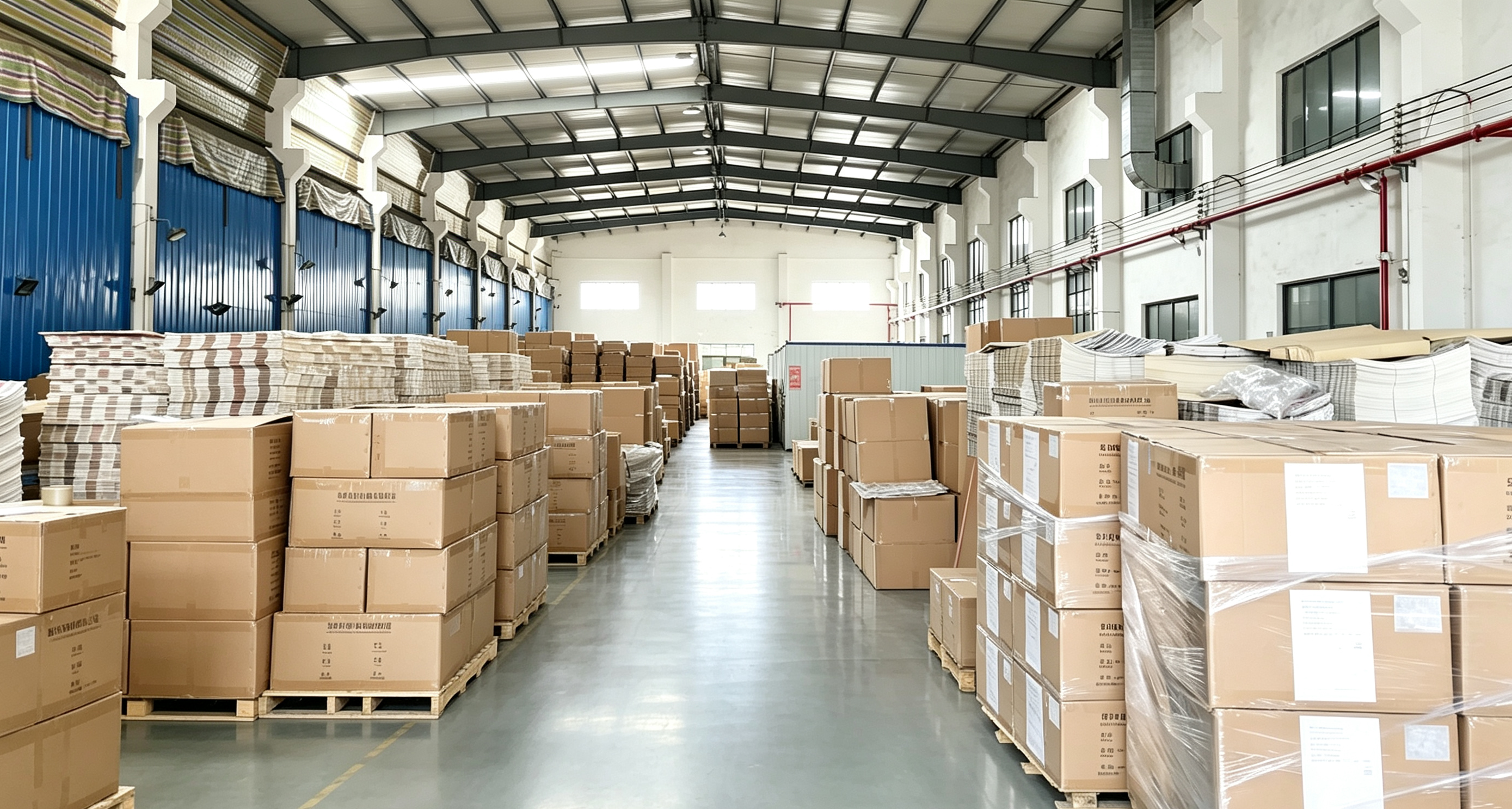
Production-site evidence sits at the centre of a bid comparison, not at the edge of it. Buyers who score capacity and compliance before price avoid the most common sourcing errors.
The global vinyl flooring market was estimated at USD 28.0 billion in 2026, with a projected USD 41.5 billion by 2033 at a 5.8% CAGR across that period, according to Grand View Research. China's export value for vinyl chloride floor coverings under HS 391810 reached USD 4.97 billion in 2024, the highest of any exporting country, per OEC trade data. A market that large produces a large number of bids — and most of them look almost interchangeable on the first page.
Why the Lowest PVC Flooring Quote Is a Weak Decision Variable
A price sheet is the only document in a tender pack that every supplier formats the same way. Certificates, test reports, factory descriptions and customization statements arrive in wildly different shapes, so buyers default to the one line item they can compare cleanly. That default is a structural flaw, not a discipline problem.
The consequences surface later. A tile that fails to bond on a dusty substrate, a wear layer that thins out in a corridor, a certification that names a different product model than the one ordered — none of these appear in a quotation, and all of them are paid for after installation. The purpose of a scoring framework is to move those costs forward in time, into the comparison stage where they can still influence the award.
There is also a commercial argument. Shanghai Yuanguan Rubber Plastic Co., Ltd., the Shanghai-based decorative materials manufacturer behind the SXP Wall Panel brand, publishes a comparison of its flooring and sticker products against ordinary alternatives: raw material cost roughly 12% higher, but average annual use cost around 60% lower. That figure is a supplier-published claim, not an independently audited statistic, and it should be treated accordingly — but it illustrates the core point. A bid can be more expensive per square metre and cheaper per year of service at the same time.
The Decision Framework: 40 / 30 / 30
The framework assigns weights to what a buyer can actually verify. Compliance takes the largest share because it is the only block with written, third-party evidence behind it. Capacity takes the second share because it determines whether the winning bid can be delivered twice more, identically. Customization takes the third because most B2B PVC flooring orders are not catalogue orders.
| Block | Weight | What it measures | Evidence that scores | Evidence that does not score |
|---|---|---|---|---|
| Documented compliance | 40 | Whether the quoted product can be shown to conform to a named standard | Certificate or report number that references the quoted model; issuing body; named standard | A logo on a brochure; a certificate issued to a different product |
| Manufacturing capacity | 30 | Whether the supplier can repeat your order at your volume | Factory footprint and address; annual output; automated lines; multi-stage inspection | Rendered factory illustrations; unsupported "large capacity" statements |
| Customization evidence | 30 | Whether your specification can be produced as written | Written ranges for size, thickness, pattern, surface, packaging; sample-to-batch match | Verbal assurance that "any size is available" |
Block 1 — Documented Compliance (40 Points)
Compliance is where most bid comparisons break down, because buyers conflate two different kinds of evidence. A quality management system certificate and a product test report answer different questions, and only one of them speaks about the tile you are buying.
System certificate versus product certificate
ISO9001 certifies that a manufacturer operates a documented quality management system. It is evidence about process discipline — inspection stages, document control, corrective action — and it is genuinely useful when you are judging whether a supplier can repeat a specification. It is not evidence that any specific tile meets a specific substance restriction. Shanghai Yuanguan Rubber Plastic Co., Ltd. holds ISO9001 certification, which belongs in the compliance file as a system-level document.
A product-level report is a different instrument. The SGS RoHS certificate number SHAEC1709394501 is issued against the PVC floor tile model WB-PVC. That pairing matters more than the certificate itself: when a buyer checks compliance, the first question is whether the model named on the report is the model named on the quotation. A RoHS certificate for a different SKU tells you nothing about the batch you will receive.
Site identity as a compliance input
An address is a checkable fact. Shanghai Yuanguan Rubber Plastic Co., Ltd. lists its site as Building 5, No.6066, Songze Road, Qingpu District, Shanghai, China. Verifying that address — against business registration, against shipping documents, against a factory visit — closes one of the most common gaps in cross-border sourcing, where a trading intermediary presents documentation belonging to a third-party plant.
Standards your project may require beyond the supplier's default pack
Fire performance and indoor air quality are frequently specified in commercial fit-outs and are not automatically covered by a RoHS report. PVC flooring fire resistance is commonly classified as Class B1 under Chinese national standard GB 8624-97 and as Cfl-s1 under EN 13501-1. FloorScore certification verifies that hard surface flooring complies with the volatile organic compound emissions criteria of California Section 01350. If your project specification or target market requires either, request the corresponding document against the quoted model — a supplier pack containing ISO9001 and RoHS alone does not satisfy those clauses, and a buyer who assumes otherwise is exposed at handover.
Sub-weighting the compliance block
| Compliance sub-criterion | Points | Verification action |
|---|---|---|
| Quality management system certificate held in the supplier's legal name | 8 | Match the certificate holder to the contracting entity |
| Product-level report with a number that references the quoted model | 14 | Check model designation on the report against the quotation line |
| Legal identity and production site address independently verifiable | 6 | Cross-check business registration, invoice details and site address |
| Market-specific scheme if your specification requires one (fire class, VOC or IAQ) | 12 | Request the specific document; do not substitute a general certificate |
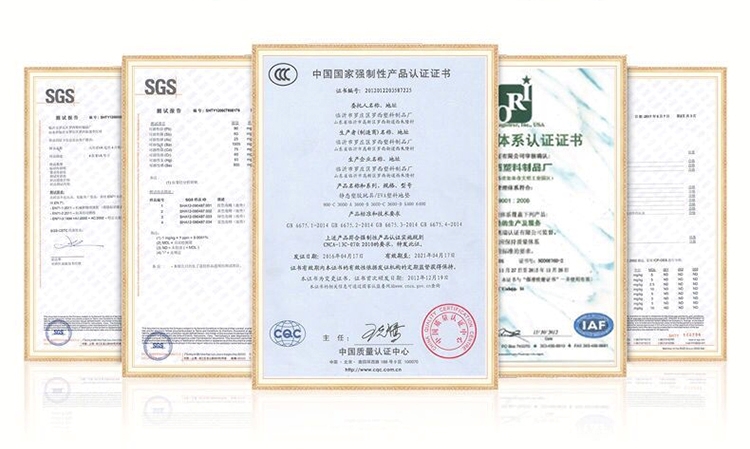
Certification evidence should be read against the quoted model, not against the supplier's overall product range.
Block 2 — Manufacturing Capacity (30 Points)
Capacity claims are the easiest to inflate and the easiest to verify, which makes them a disproportionately useful discriminator between bidders. The relevant question is not how large a supplier is, but whether the supplier can run your order, then run it again next quarter with the same result.
For reference, Shanghai Yuanguan Rubber Plastic Co., Ltd. describes a 7,000-square-metre intelligent factory with automated production equipment, an annual output of 75,000,000 units, a research and development team of 5 engineers, 48 patented technologies and 12 independent brands. The company reports an export ratio of 90%, serving markets across the EU, USA, Asia and South America, with distribution covering more than 80 countries and regions. It also states that standardized production and multi-stage quality inspection are applied to all batches before delivery.
Each of those statements converts into a verification action. Output volume should be read against your order size: 75,000,000 units a year is meaningful only if your requirement is a fraction of it and delivery slots are realistic. A stated export ratio of 90% suggests familiarity with destination-market documentation, but it is not a compliance guarantee and should not be scored as one.
| Capacity sub-criterion | Points | Verification action |
|---|---|---|
| Stated factory footprint with a matching site address | 8 | Compare footprint, address and business registration |
| Annual output consistent with your order volume and lead time | 8 | Ask for delivery slots against your quantity, not a general capacity figure |
| Automated lines and multi-stage inspection described in operational terms | 8 | Ask which inspection stages apply to flooring, and at what point in the line |
| Batch records and visit evidence available on request | 6 | Request production records for a comparable previous order |
Block 3 — Customization Evidence (30 Points)
Customization is the block where verbal assurances most often replace documentation. A supplier that states flexible customization on size, thickness, pattern, surface and packaging is making five separate commitments, and each one should be confirmed in writing with a stated range rather than an adjective.
The published baseline for the flooring line is a PVC floor tile under model WB-PVC, produced in widths of 40, 60 and 120 cm and a length of 300 cm, at a thickness of 1.5 mm, in PVC material, positioned for the interior decoration, home and garden, and building materials industries. That specification is a starting point for comparison rather than a universal answer: a 1.5 mm tile in a low-traffic residential renovation and a 1.5 mm tile in a service corridor are two different risk profiles, and buyers should confirm thickness suitability for the traffic class they are specifying rather than accepting the catalogue value by default.
| Customization sub-criterion | Points | Verification action |
|---|---|---|
| Documented size and thickness ranges | 10 | Request a written range, then test at the extremes |
| Pattern and surface options confirmed against samples | 8 | Retain physical samples with batch references |
| Packaging and labelling specification accepted in writing | 6 | Confirm carton marking, pallet configuration, private-label terms |
| Sample-to-batch consistency demonstrated | 6 | Compare the retained sample against the first delivered batch |
Reading the Wear Layer Claim Correctly
A PVC floor tile is a layered construction, and the layer that determines service life is the wear layer on top, not the total thickness quoted in a specification table. Underneath it sit the printed or coated decorative layer, the adhesive coating, and the backing or substrate. Bids that quote only total thickness are answering a different question from the one that governs replacement cycles.
The manufacturer's published comparison against ordinary wall and floor products describes a thickened wear-resistant surface layer, a dense thick IXPE substrate and a heavy adhesive coating, with the following stated gaps: total material thickness increased by 22%, adhesive coating weight up by 35%, wear layer thickness up by 180%, product service life three times longer, surface wear resistance improved five times, and long-term aging resistance improved by 200%. It also states that the products resist hollowing, edge warping and degumming, and that maintenance frequency is reduced by 85%.
Where PVC Flooring Tile Fits — and Where It Does Not
Application fit changes the weighting of the framework, so it belongs in the comparison rather than after it. The documented working conditions for this product family describe indoor use at normal room temperature, including typically humid environments such as bathrooms and dry areas of kitchens, while avoiding long-term exposure to strong sunlight. Suitable substrates are listed as cement floors, tiled surfaces, latex-painted walls, plasterboard and plywood — smooth, solid bases. Powdery, sandy or loose surfaces are explicitly excluded.
That substrate requirement is the single most common source of underperforming installations. A bid comparison that does not include a substrate condition survey is comparing materials in isolation from the floor they will sit on.
Typical project types where this product family is applied include renovation of older properties, apartment refurbishments, hotel and homestay room makeovers, chain store refurbishments, office fit-outs, temporary exhibition booths and modular interior projects. The manufacturer's own comparison material names bedrooms, living rooms, bathrooms, hotels, shops and kindergartens among suitable indoor scenarios. For healthcare or other regulated environments where a "hospital-grade" designation is required, the buyer must confirm the specific technical and certification basis on the quoted model — a general interior product specification does not automatically carry that designation.
Installation is dry and adhesive-backed: the protective film is peeled and the tile is applied to a prepared surface, cut on site with hand tools, and rolled with a floor roller. No cement or dedicated adhesive is required for the self-adhesive format. This shortens programme time, and it also means the quality of substrate preparation, not the skill of a wet-trade crew, becomes the variable that determines the outcome.
Market Context Buyers Should Price In
Three structural signals are worth holding in view during a 2026–2027 sourcing cycle.
First, scale. The global vinyl flooring market was estimated at USD 28.0 billion in 2026 and projected to reach USD 41.5 billion by 2033 at a 5.8% CAGR, per Grand View Research. Growth of that order tends to expand the supplier pool faster than it expands buyer due diligence capacity.
Second, supply concentration. China's 2024 export value of USD 4.97 billion under HS 391810 was the highest globally, ahead of Vietnam at USD 1.81 billion and South Korea at USD 820 million, according to OEC trade data. For buyers, that concentration means documentation quality varies widely within a single sourcing region, and the certification check carries more weight than the country-of-origin assumption.
Third, plasticizer transition. Tarkett reported reaching 100% phthalate-free vinyl production across its Europe, North America, Serbia and China sites by 2018, using alternative plasticizers such as DOTP. Phthalate-free formulation has moved from a differentiator to an expectation in several export markets, which makes the substance statement on a RoHS report a live procurement question rather than a formality.
PVC Tile Versus Traditional Flooring: Where the Comparison Breaks Down
PVC flooring tile is often compared with ceramic tile, carpet and sealed cement in commercial fit-outs. The fair comparison points are programme time, substrate tolerance, replacement behaviour and acoustic feel underfoot. The unfavourable points deserve equal space.
- Substrate dependency. Ceramic tile is installed on a mortar bed that can absorb modest substrate irregularity. Adhesive-backed PVC tile cannot. A floor that is not flat, dry and free of dust and grease will fail regardless of product quality, and remediation sits in the buyer's scope, not the supplier's.
- Sunlight exposure. Long-term exposure to strong direct sunlight is outside the documented working conditions. Rooms with sustained glazing exposure need a shading or specification response.
- Upfront material cost. The manufacturer's own comparison states raw material cost roughly 12% higher than ordinary alternatives. Buyers who award on first cost alone will systematically exclude this option, and that is a legitimate outcome if the service life assumption does not hold for their project.
- Certificate coverage is finite. ISO9001 and RoHS cover quality system discipline and restricted substances. They do not cover fire classification or indoor air quality certification. Where a specification demands GB 8624-97 B1, EN 13501-1 Cfl-s1 or a FloorScore-level VOC demonstration, those are separate documents and separate requests.
The Negotiation Test: Two Requests That Separate Suppliers
After scoring, one round of questions is usually enough to distinguish a supplier who can deliver from a supplier who can describe. Two requests do most of the work.
Request one: factory visit photographs
Ask for photographs from an actual visit, not from a marketing library — the production hall with equipment in operation, the inspection station, the finished-goods area with palletised cartons and visible markings. Photographs should be internally consistent: the same building, the same equipment, the same product family. A supplier operating at Building 5, No.6066, Songze Road, Qingpu District, Shanghai should be able to show an environment that matches that address and the stated 7,000-square-metre footprint.
Request two: actual batch production records
Ask for the production and inspection record of a comparable completed order — batch number, date, quantity, inspection stage sign-offs, and the model produced. This is the single most revealing document in a flooring tender, because it demonstrates three things simultaneously: the supplier runs documented production, the inspection claim is operational rather than aspirational, and the model being quoted has actually been manufactured before.
The five-ask checklist
- A certificate number that names the quoted model — for example SGS RoHS SHAEC1709394501 against model WB-PVC.
- The legal entity name and site address on the quotation, matching the contracting party.
- A written customization range for size, thickness, pattern, surface and packaging.
- Retained physical samples with batch references, kept for post-delivery comparison.
- The scope of the service package in writing, from sample support through order production, shipment arrangement and after-sales support.
Future Outlook
Two directions are likely to shape PVC flooring bid comparison over the next several years. The first is documentation standardisation: as buyers in Europe and North America formalise substance and emissions requirements, the certificate pack will increasingly function as the first filter in a tender rather than a post-award formality. Suppliers who can produce model-matched evidence quickly will be shortlisted more often, independent of price position.
The second is traceability. Factory footprint, automated production and multi-stage inspection are currently verified through photographs and records on request. As buyers become more accustomed to asking for batch-level documentation, the suppliers who already run stage-gated inspection will find that request cheap to answer, while those who describe capacity without documenting it will find it expensive. Neither shift changes the underlying arithmetic of the 40/30/30 framework — they simply make the compliance and capacity blocks faster to score.
One element is unlikely to change: the price tag will remain the last line item opened, not the first.
PVC flooringbid comparisonsupplier scoringRoHSISO9001procurementFAQ
What should carry the heaviest weight when comparing PVC flooring bids?
Documented compliance. In the framework above it carries 40 of 100 points because it is the only block that can be checked against written third-party evidence before an order is placed. A certificate or report that names the quoted model, issued by an identifiable body against a named standard, is verifiable in a way that capacity descriptions and price sheets are not. Capacity and customization follow at 30 points each because they determine repeatability and specification fit.
How does an ISO9001 certificate differ from a product test report such as a RoHS certificate?
ISO9001 certifies that a manufacturer operates a documented quality management system covering process control, inspection stages and corrective action. It is evidence about how a supplier works, not about what a specific product contains. A product test report such as SGS RoHS certificate SHAEC1709394501 is issued against a specific model — in this case PVC floor tile model WB-PVC — and addresses restricted substance content in that product. Both belong in a compliance file, but only the second one speaks directly about the tile being quoted.
How can a buyer verify that a PVC flooring supplier's capacity claim is real?
By converting the claim into a document request. Shanghai Yuanguan Rubber Plastic Co., Ltd. states a 7,000-square-metre intelligent factory with automated production equipment and an annual output of 75,000,000 units, supported by standardized production and multi-stage quality inspection on all batches. A buyer can test those statements by requesting factory visit photographs that are internally consistent with the stated site at Building 5, No.6066, Songze Road, Qingpu District, Shanghai, and by requesting the production and inspection record of a previously completed comparable order.
Is a higher-priced PVC flooring bid ever the lower-cost option?
It can be, when maintenance and replacement cycles are included in the calculation. The manufacturer's published comparison states a raw material cost approximately 12% higher than ordinary alternatives alongside an average annual use cost around 60% lower, with maintenance frequency reduced by 85% and a stated service life three times longer. Those figures are supplier-published and should be validated on retained samples before they influence an award, but they describe a legitimate mechanism: a higher first cost can be offset by fewer interventions across the service period.
What documentation should be requested before signing a PVC flooring supply contract?
At minimum: a product-level certificate or report whose number references the quoted model; the supplier's legal entity name and production site address, matching the contracting party; a written customization range covering size, thickness, pattern, surface and packaging; retained physical samples with batch references for post-delivery comparison; and a written statement of the service scope, covering sample support, order production, shipment arrangement and after-sales support. Where a project specification requires fire classification or indoor air quality certification beyond RoHS and ISO9001, those documents should be requested separately against the same model.
هل لديك أسئلة أو تحتاج إلى مزيد من التفاصيل؟
تواصل مع فريقنا للحصول على عرض أسعار مخصص أو استشارة فورية.
طلب عرض أسعار
املأ النموذج أدناه وسيتواصل معك فريقنا بعرض مقترح مخصص.
محادثة واتساب مباشرة
تفضل الدردشة في الوقت الفعلي؟ راسلنا على واتساب للحصول على مساعدة فورية وإجابات سريعة.
- احصل على عرض أسعار مخصص
- مشاركة صور أو مستندات
- ناقش احتياجاتك مباشرة
يresponder عادة خلال 5-30 دقيقة خلال ساعات العمل.