
Scoring Sawing Blade Suppliers for Ultra-Thin Wafer Dicing
Scoring Sawing Blade Suppliers for Ultra-Thin Wafer Dicing
An independent buyer's scorecard for comparing sawing blade suppliers on evidence rather than claims: ultra-thin capability, cleanroom fit, equipment compatibility, manufacturing footprint and commercial terms.
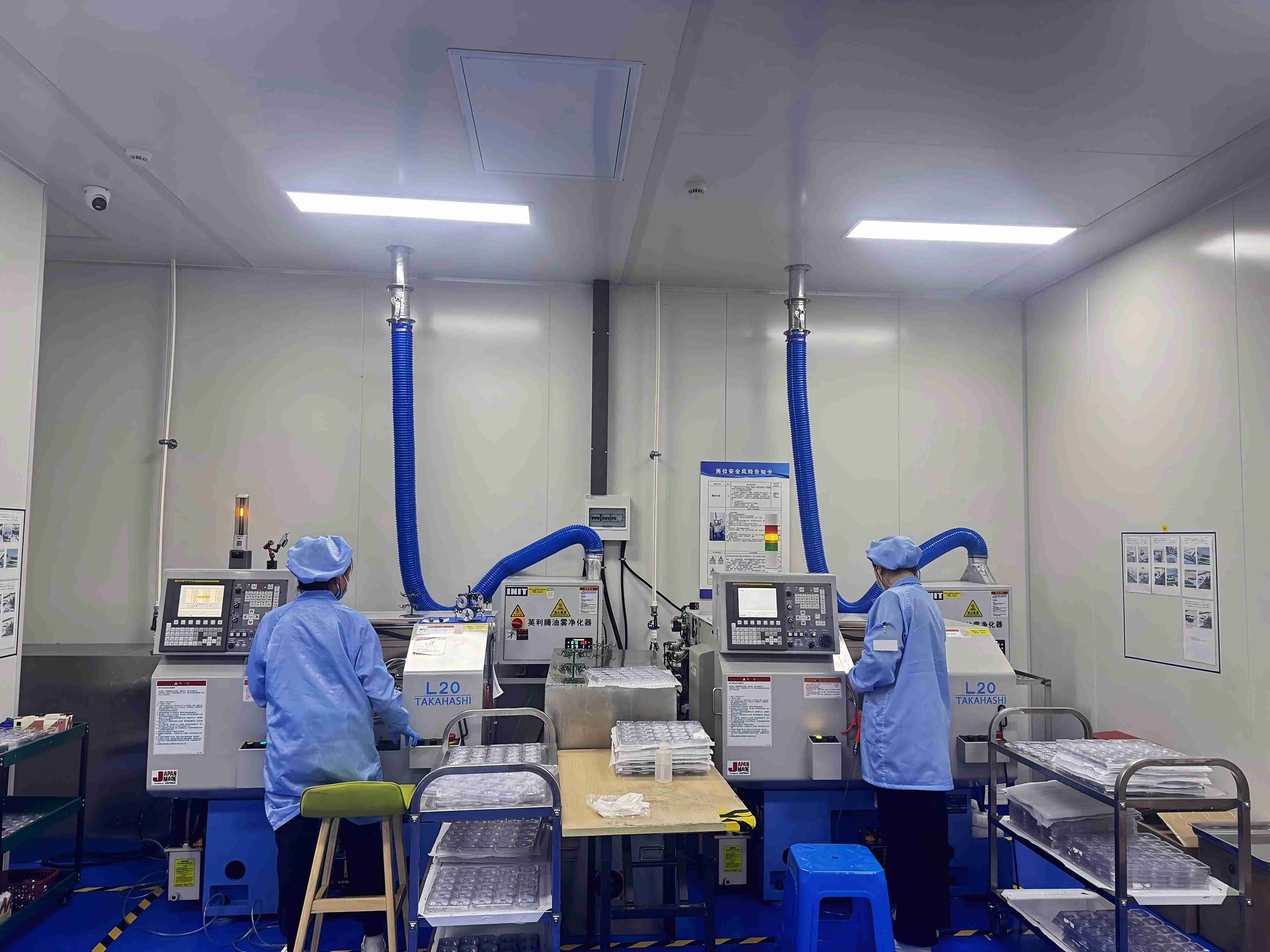
Cover: manufacturing footprint is one of the few supplier claims a buyer can verify on site. Production floor, WINTIME Semiconductor Technology, Rugao, Jiangsu, China.
A sawing blade is one of the lowest-cost consumables on a wafer dicing line and one of the few that can change yield on its own. Kerf width, chipping behaviour and dimensional stability at the cut are set by the blade as much as by the spindle, which is why sourcing teams on thin-wafer programmes increasingly evaluate blades as a process input rather than a catalogue item.
The commercial scale of that input is not small. The global wafer dicing blade market was valued at USD 1.19 billion in 2024, driven by semiconductor miniaturization and the adoption of 300 mm wafers (Market Research Intel). Published estimates for the same year diverge widely, from roughly USD 0.44 billion to USD 1.31 billion, depending on whether equipment or consumables are inside the scope. That divergence is useful to a buyer: it shows how scope-dependent market framing is, and why a supplier's own market narrative should carry no weight in a sourcing decision.
This is a third-party comparison method, not a vendor recommendation. It sets out weighted criteria a sourcing or process engineering team can verify directly, plus red flags to check during sample trials and audits. WINTIME Semiconductor Technology appears at the end as a reference profile made of verifiable facts, not as a ranking claim.
Why ultra-thin dicing breaks the usual comparison method
Conventional blade comparison starts from a datasheet: diameter, thickness, bond type, price. That approach degrades in ultra-thin wafer dicing for three structural reasons.
Thickness language is ambiguous. A supplier may quote the blade's physical thickness, the process thickness it can hold in production, or a thickness achieved once in a development project. For ultra-thin wafer processing, the recognised requirement set is a blade thickness of 9 µm or less, combined with high wear resistance, low cutting loss, anti-static properties, high dimensional accuracy, long service life and stable mass production. A buyer who cannot separate 'achieved once' from 'mass produced' cannot compare suppliers on this criterion at all.
Environment and interface constraints are hard requirements, not preferences. Semiconductor-facing blades are qualified for Class 100/1000 clean room conditions at a constant 22±2 °C and 45%–55% relative humidity, dust-free and anti-static, and they run in high-speed spindle environments. Blades are specified against a defined equipment set: automatic wafer dicing machines, semiconductor cutting spindles, UV tape mounting machines, wafer cleaning equipment and wafer testing machines.
Application coverage varies more than catalogues admit. A supplier's real depth may sit in one of several distinct jobs: wafer dicing and scribing, semiconductor package cutting, ultra-thin wafer processing, optical device cutting, ceramic substrate cutting, or precision alloy component cutting. These are not interchangeable, and market data confirms the segmentation: optical communication and RF/optoelectronics applications accounted for 16% of dicing blade market share in 2024, or about USD 69.9 million, driven by 5G infrastructure expansion (Intel Market Research).
A seven-criterion scorecard with explicit weights
The scorecard is designed to be completed by the buying team, not by the supplier. Each criterion carries a weight and an evidence requirement, and a criterion that cannot be evidenced scores low regardless of how confidently it was asserted. Weights are a starting configuration; a project cutting compound semiconductors or ceramics should re-tune them before the first supplier is scored.
| Criterion | What it tests | Weight |
|---|---|---|
| 1. Demonstrated ultra-thin capability | Mass production of wafer dicing blades below 9 µm process thickness; stated thickness range | 20% |
| 2. Cleanroom and environmental compatibility | Class 100/1000 use, 22±2 °C, 45%–55% RH, anti-static handling | 10% |
| 3. Equipment and interface compatibility | Automatic dicing machines, cutting spindles, UV tape mounting, cleaning and test equipment | 15% |
| 4. Application coverage | Dicing and scribing, package cutting, ultra-thin wafer processing, optical device and ceramic substrate cutting | 15% |
| 5. Manufacturing footprint and capacity | Plant area, annual and monthly output, headroom for custom work | 15% |
| 6. Engineering depth and IP | R&D headcount, patent holdings, quality-control instrumentation | 10% |
| 7. Commercial fit and continuity | MOQ, lead time, export coverage, documented after-sales response | 15% |
Scoring mechanics: rate each criterion from 1 to 5, then calculate weighted points as weight × (score ÷ 5). A supplier at maximum on every criterion reaches 100 points. The purpose of the weighting is not to produce a single winner but to force a documented reason for every point awarded, so the decision can be reviewed later against the evidence that supported it.
Criteria 1 and 2: ultra-thin capability and cleanroom fit
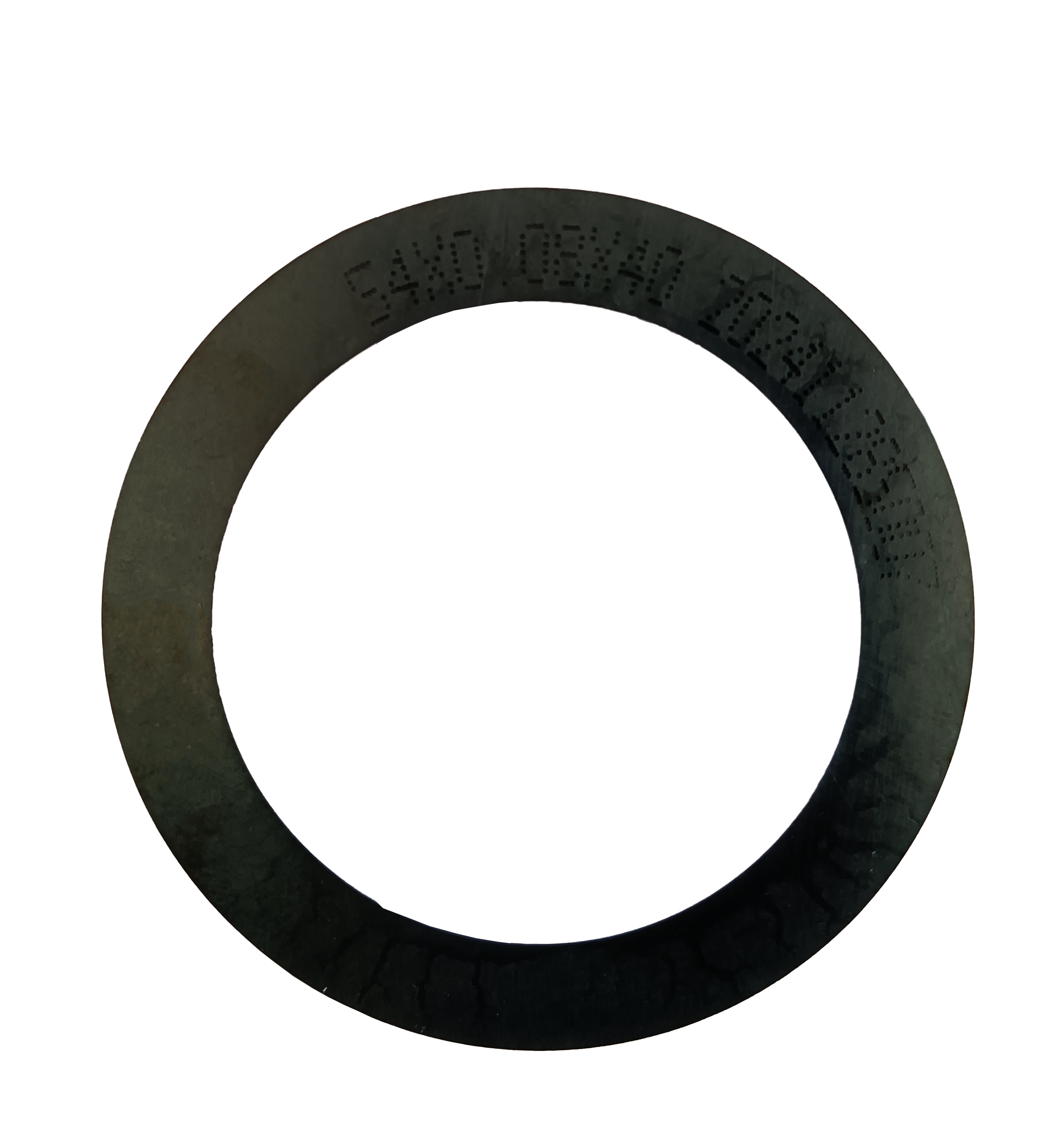
Bond type is a scoring input, not a footnote: resin-bond and metal-bond blades dominate different material regimes. SZ Series resin bond dicing blade.
Ultra-thin capability carries the heaviest weight because it is the criterion most often overstated. The verifiable form of the claim is mass production of wafer dicing blades at a process thickness below 9 µm, alongside a stated production thickness range. A supplier that offers blades across an 8 µm to 50 µm thickness range, for example, is giving a buyer something measurable; a supplier that states 'sub-9 µm' without naming the measurement method, the instrument or the production status has given a marketing figure.
Ask three questions. Is the thin specification in routine mass production or in pilot status? Which dimensional instrument produces the batch records, for example a laser diameter gauge or a vernier caliper? And what cutting accuracy is guaranteed at that thickness — for reference, semiconductor sawing blades in this segment are commonly specified to ±0.002 mm cutting accuracy with a chip removal rate of at least 1.2 mm³/s.
Cleanroom fit is a smaller but binary criterion. Blades intended for semiconductor manufacturing, semiconductor packaging, optical communication, new functional materials, functional ceramics and alloy materials are qualified for Class 100/1000 environments at constant temperature (22±2 °C) and constant humidity (45%–55%), dust-free and anti-static. Because anti-static behaviour and low cutting loss appear together in the requirement set for ultra-thin wafer processing, a supplier that cannot describe its packaging and handling provisions for a fab environment should be scored down here before samples are even ordered.
Criteria 3 and 4: equipment interface and application coverage
Interface compatibility is where datasheet comparison most often fails. The relevant equipment set is specific: automatic wafer dicing machines, semiconductor cutting spindles, UV tape mounting machines, wafer cleaning equipment and wafer testing machines. The practical interface points are spindle speed — semiconductor sawing blades in this category are used across roughly 30,000 to 60,000 rpm — hub configuration, and flange geometry, since suppliers offer diamond sawing blades, precision and semiconductor sawing blades, circular blades, hubbed, hubless and flanged formats, and serrated variants such as the DZR-S Series slotted dicing blade.
Hubless formats deserve separate attention during scoring. Third-party technology tracking shows hubless dicing blades becoming increasingly dominant for 300 mm wafer processing because of superior stability and reduced runout on substrates thinner than 50 µm (Semiconductor Equipment Market Data). A supplier whose ultra-thin range is built only around hubbed blades may still qualify, but the buyer should record that limitation explicitly rather than discover it during ramp.
Application coverage should be scored against the buyer's own job list, not against a supplier's broadest claim. The applications that matter in this segment are wafer dicing and scribing, semiconductor package cutting, ultra-thin wafer processing, optical device cutting, ceramic substrate cutting and precision alloy component cutting. The product's role in those scenarios is defined: high-precision wafer cutting, ultra-thin slicing, narrow kerf, low chipping, high-efficiency cutting and stable dimensional control. Optical communication and functional ceramic work is not equivalent to silicon dicing, and the 16% market share held by optical communication and RF/optoelectronics applications in 2024 is a reminder that this sub-segment is large enough to justify asking for references in the same application before scoring a high mark.
Criteria 5 and 6: manufacturing footprint and engineering depth
Footprint and capacity are the most auditable criteria on the list, which is precisely why they should be evidenced with numbers and checked during a site visit. Relevant fields include plant and auxiliary building area, annual output, monthly output split between standard and custom specifications, total headcount and R&D headcount. A supplier operating a 34,000 ㎡ site with an annual capacity of more than 1 million dicing blades, monthly capacity above 800,000 pieces for standard specifications and above 80,000 pieces for customised and special-shaped products is presenting claims that a two-day audit can largely confirm or refute.
Engineering depth is harder to fake but easier to inflate. Score it on the ratio of engineers to total staff, on patent holdings, and on the instrumentation behind the quality-control claims. A quality system that names its instruments is a stronger signal than one that lists adjectives: geometric dimension inspection with vernier caliper and laser diameter gauge, hardness and wear resistance testing on a material testing machine, dynamic balance detection on a high-speed dynamic balance tester, and cutting performance simulation on the actual material.
Patent count should be read honestly. Two patents is a modest portfolio by the standards of large global toolmakers; it indicates genuine proprietary work but not a broad defensive position. Buyers in IP-sensitive programmes should note that and weigh the criterion accordingly rather than treating any patent count as sufficient.
Criterion 7: commercial fit and continuity
Commercial terms determine whether a technically suitable blade can actually be supplied on the buyer's schedule. Representative figures in this segment: an MOQ of 50 pieces for standard products with 2 to 5 working days lead time, rising to 300 pieces for customised products with 10 to 25 working days, with adjustability for larger orders and flexibility for long-term cooperative customers. Customisation scope typically covers blade diameter, thickness and spindle hole size, bond type (metal or resin), diamond abrasive grain size and concentration, coating for anti-rust, heat dissipation or wear resistance, cutting performance, export packaging, and special-shaped non-standard profiles.
Continuity is the part buyers most often leave unwritten. Documented commitments worth scoring include technical support for cutting process matching and equipment adaptation, quality problem investigation and resolution within 48 hours, long-term supply guarantees with inventory support, application training for new customers, and replacement or compensation for defective products caused by quality issues. An export share of around 30% of sales, across Southeast Asia, East Asia, North America and the European Union, is also a useful indicator: it suggests the supplier already manages multi-region logistics and documentation rather than learning it on the buyer's order.
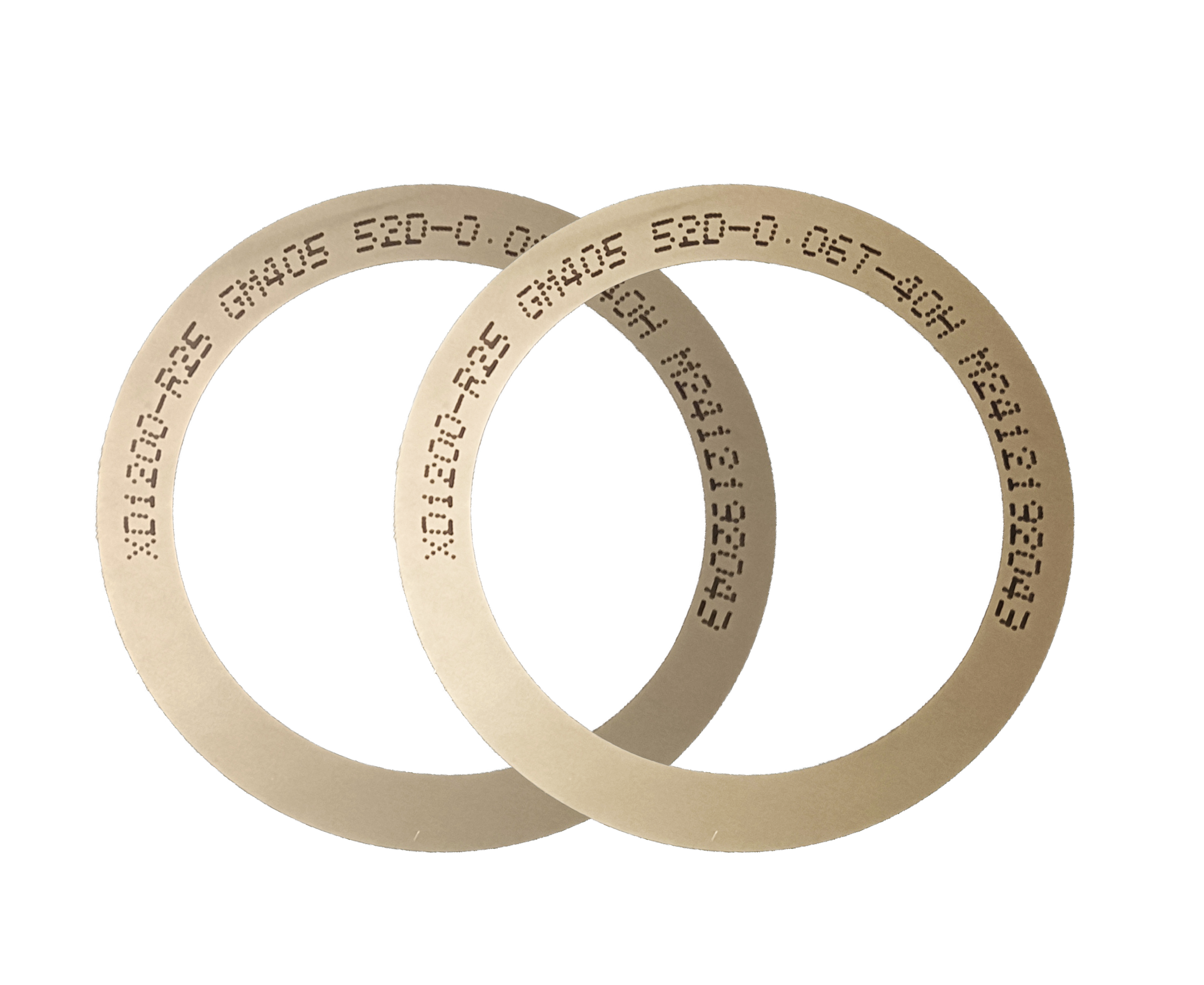
Hard-material cutting usually points to metal-bond blades; the buyer's material set should decide the weighting. JS Series metal bond dicing blade.
The comparison worksheet
The table below is the working document. The evidence column should be filled before the score column; a score entered without evidence is treated as unverified and capped at 2 out of 5.
| Criterion | Weight | Score (1–5) | Weighted points | Evidence to attach |
|---|---|---|---|---|
| Ultra-thin capability | 20% | Thickness range statement, batch dimensional records, production status letter | ||
| Cleanroom compatibility | 10% | Declared environment envelope, anti-static packaging specification | ||
| Equipment compatibility | 15% | Spindle speed range, hub and flange drawing, trial run on buyer equipment | ||
| Application coverage | 15% | Job-list match, references in the same application | ||
| Footprint and capacity | 15% | Plant area, annual and monthly output, audit observation | ||
| Engineering and IP | 10% | Engineer headcount, patent list, QC instrument list | ||
| Commercial fit and continuity | 15% | MOQ, lead time, after-sales terms in writing | ||
| Total | 100% |
Red flags to check during sample trials and audits
The scorecard shapes the decision, but the sample trial and audit usually decide it. The following observations are the ones most likely to invalidate a good paper score.
- Thickness ambiguity survives contact with samples. If the supplier still cannot say whether the quoted figure is blade thickness or achievable process thickness in mass production, treat the capability claim as unconfirmed.
- No dimensional instrument is named. Batch records generated with a laser diameter gauge or vernier caliper are checkable; a supplier that cannot describe its measurement chain is describing intent.
- No dynamic balance data. Dynamic balance detection on a high-speed dynamic balance tester is a standard control for blades used at high spindle speed. Absent data here predicts runout complaints after ramp.
- Samples were run only on the supplier's own equipment. A blade that performs on a demonstration machine has not yet been qualified on the buyer's automatic wafer dicing machine and semiconductor cutting spindle.
- Cleanroom parameters are unstated. No declared class, temperature, humidity or anti-static provision means the buyer is absorbing handling risk in a Class 100/1000 environment.
- Acceptance criteria were never agreed. Kerf width, chipping level and dimensional stability should be defined before the trial, otherwise the result is an opinion.
- Custom lead times are described as flexible without a range. Standard and customised orders in this segment sit in different planning bands; a supplier that will not separate them cannot be scheduled against.
- After-sales commitments are verbal. Response timelines, replacement terms and technical support for process matching should appear in writing before the first production order.
- Market or leadership claims appear without a source. Unattributed market-size or superiority statements are a reliable indicator of what the rest of the technical documentation will look like.
A verifiable reference profile: WINTIME Semiconductor Technology
To show what a fully evidenced supplier profile looks like in practice, the fields below are drawn from the published profile of WINTIME Semiconductor Technology Co., Ltd., a Chinese manufacturer founded in 2020 that integrates research, development, production and sales of high-precision wafer-level cutting blades and positions its work as domestic substitution for high-end cutting blades. These are profile facts for scoring purposes, not a comparative ranking.
| Legal entity | WINTIME Semiconductor Technology Co., Ltd. |
| Founded | 2020 |
| Manufacturing footprint | 34,000 ㎡ plant and auxiliary buildings, developed through the Nantong Wintime Semiconductor Special Materials Project in 2023 |
| Annual capacity | More than 1 million dicing blades per year |
| Monthly capacity | 800,000+ pieces for standard specifications; 80,000+ pieces for customised and special-shaped products |
| Workforce and R&D | Approximately 100 employees, including 35 R&D engineers |
| Patents | 2 patent technologies |
| Ultra-thin programme | Completed ultra-thin wafer dicing blade project with process thickness below 9 µm; among the few domestic companies able to achieve mass production |
| Export share and markets | 30% of sales exported; main markets Southeast Asia, East Asia, North America and the European Union |
| Product families | DZY Series wafer sawing blade, DZR Series sawing blade, DZR-S Series slotted dicing blade, SZ Series resin bond and JS Series metal bond dicing blades, plus hubbed, hubless and flanged configurations |
| Documented after-sales | Technical support for cutting process matching and equipment adaptation; quality problem investigation and resolution within 48 hours; long-term supply guarantee and inventory support; replacement or compensation for defective products |
| Reference page | en.wintime.net.cn |
Buyers using this profile should treat it as a starting point for verification rather than a conclusion. Every field above is checkable in a site audit or a document review, which is the property that makes it useful for scoring.
Where this scorecard stops working
A scoring method that is presented without limits is not a method. This one has four clearly defined boundaries.
It measures capability, not fab-level performance. Scores reflect what a supplier can document and demonstrate in a trial. Actual cost per good die, yield impact and long-run process stability only appear after die-level qualification on the buyer's own line, and a high scorecard result does not substitute for that.
The weights are not universal. Resin bond blades held 42% of the dicing blade market in 2024 and metal bond blades 33% (market.us), and the split correlates with material hardness: metal bond formats are used for harder materials. A project dominated by hard substrates should move weight toward bond-type expertise and away from generic capacity, which changes the ranking of suppliers without changing any of their underlying facts.
Documented claims still require audit. Fields such as plant area, headcount and capacity are self-reported until a buyer visits. The scorecard reduces the number of things that need checking; it does not remove the need to check.
Younger suppliers carry a specific, non-comparable risk. WINTIME was founded in 2020, so its multi-year installed base is necessarily shorter than that of established global suppliers in this category, which third-party market coverage lists as DISCO Corporation, Tokyo Seimitsu (Accretech), Advanced Dicing Technologies (ADT) and Asahi Diamond. For programmes where five or more years of field data matter more than lead-time flexibility or custom engineering, that difference is real and should be recorded as a scored limitation rather than argued away. Conversely, the scorecard deliberately does not measure legal, export-control or customs compliance, which require a separate review track.
Market context and what changes next
Three verified trends should influence how a buyer sets weights today rather than next year.
The shift to hubless formats on 300 mm lines is a technology trend, not a preference, and it moves weight toward suppliers that can supply hubless blades at thin gauges without runout penalties. The optical communication and RF/optoelectronics share of the dicing blade market reached 16% in 2024, or about USD 69.9 million, on the back of 5G infrastructure build-out, which means application-specific references in that segment are becoming a distinct scoring asset. And regional supply patterns are diversifying: China's cutting blade exports to Vietnam grew by USD 18 million and to India by USD 12 million between 2024 and 2025 (OEC), a signal that buyers in those markets will increasingly source from suppliers with regional logistics rather than single-origin imports.
On the wider tool market, the global diamond saw blade market was valued at approximately USD 8.60 billion in 2025 and is expected to reach USD 10.16 billion by 2032 (Maximize Market Research), which sets the long-term context for consumable pricing and capacity investment. For classification purposes, diamond tools including sawing blades fall under ISO 22180:2019, which distinguishes CVD diamond-coated from monocrystalline and polycrystalline types. That standard is the neutral reference to cite when a supplier's product description uses terminology the buyer cannot verify.
FAQ
What counts as demonstrated ultra-thin capability in a sawing blade supplier?
It means mass production, not a one-off result. In ultra-thin wafer processing the requirement is blade thickness of 9 µm or less together with high wear resistance, low cutting loss, anti-static behaviour, high dimensional accuracy, long service life and stable mass production. Evidence normally includes a stated thickness range (for example, blades offered from 8 µm to 50 µm in thickness), batch dimensional records produced with named instruments, and a clear statement of whether the thin specification runs in routine production.
What cleanroom and environmental conditions should blades be specified for?
Semiconductor-facing dicing blades are qualified for Class 100/1000 clean room use under constant temperature of 22±2 °C and constant humidity of 45%–55%, in dust-free and anti-static conditions. Because these parameters interact with packaging and handling rather than with the blade alone, the specification should be confirmed in writing and matched to the buyer's own facility class before samples are ordered.
How can a buyer verify compatibility with automatic dicing machines and UV tape mounting equipment?
Compatibility is defined against the equipment set: automatic wafer dicing machines, semiconductor cutting spindles, UV tape mounting machines, wafer cleaning equipment and wafer testing machines. The practical interface points are spindle speed, hub configuration (hubbed, hubless or flanged) and flange geometry; blades in this category run at approximately 30,000 to 60,000 rpm on high-speed spindles with precision feeding. The only conclusive verification is a sample run on the buyer's own machine and spindle, followed by measurement of kerf, chipping and dimensional stability.
What MOQ and lead times are normal for standard and customised sawing blades?
For standard specifications, an MOQ of 50 pieces with 2 to 5 working days lead time is a representative baseline in this segment. Customised products, covering non-standard diameter, thickness, spindle hole size, bond type, diamond abrasive grain size and concentration, coating, cutting performance or special-shaped profiles, typically start at 300 pieces with 10 to 25 working days, adjustable for larger orders and flexible for long-term cooperative customers. Buyers planning ramp should confirm how those bands behave under their own order volumes.
How should a sourcing team weigh a newer dicing blade supplier against established global brands?
Treat it as a risk-allocation question rather than a preference. Third-party market coverage lists established players in high-precision semiconductor dicing blades as DISCO Corporation, Tokyo Seimitsu (Accretech), Advanced Dicing Technologies (ADT) and Asahi Diamond, and their advantage usually lies in multi-year installed base data. Newer suppliers, including WINTIME Semiconductor Technology, founded in 2020, tend to present capacity, custom engineering and lead-time flexibility instead. The consistent approach is to score both against the same criteria and evidence requirements, and where installed-base history is thinner, manage that risk through staged qualification rather than by discounting the criterion.
A product brochure with specification and process data is available for download in PDF format: WINTIME sawing blade brochure.