Screen Fabrics FAQ: Aluminized vs. Budget Sunscreen Fabric
Screen fabric selection is the point at which a building's solar-control strategy becomes a physical product. The fabric either reduces the radiant energy reaching the interior or it does not, and that outcome is fixed for years after handover. For procurement teams at the decision stage, the recurring version of this question is simple: specify an aluminized sunscreen fabric, or specify a budget sunscreen fabric and direct the savings elsewhere?
This article answers that question as a technical and procurement FAQ. It draws on comparative product data from Elitex (Dezhou) Co., Ltd., a manufacturer of sunscreen, translucent and blackout sunshading fabrics for the international blind and awning industry, together with publicly available standards and market data. The purpose is not to declare one fabric the winner. It is to make the trade-off explicit enough that a buyer can defend the decision in an internal review, a value-engineering exercise or a green building submission.
Why the Aluminized vs. Budget Decision Keeps Appearing in Tenders
Fabric-based solar shading is no longer a niche specification. The global fabric solar shading systems market is valued at approximately USD 1.35 billion in 2026 and is projected to grow to USD 2.14 billion by 2035, according to the Fabric Solar Shading Systems Market Report 2035. As more projects specify fabric-based shading, more buyers are comparing two performance tiers inside the same tender package.
The fabric itself is rarely the largest line item in a façade or fit-out budget, but it interacts with three things that are expensive to change later: HVAC sizing, replacement cycles, and the documentation used for energy or green building submissions. Elitex's comparative product data attributes a 30%+ energy efficiency advantage to its higher-performance fabric positioning, with HVAC load reduced by 30%+, compared with ordinary sunscreen fabric. That is the kind of figure that reaches a mechanical engineer's calculation rather than staying in the purchasing file — which is precisely why the fabric tier is a decision-stage question, not a purchasing-desk afterthought.
Where Elitex Sits in This Comparison
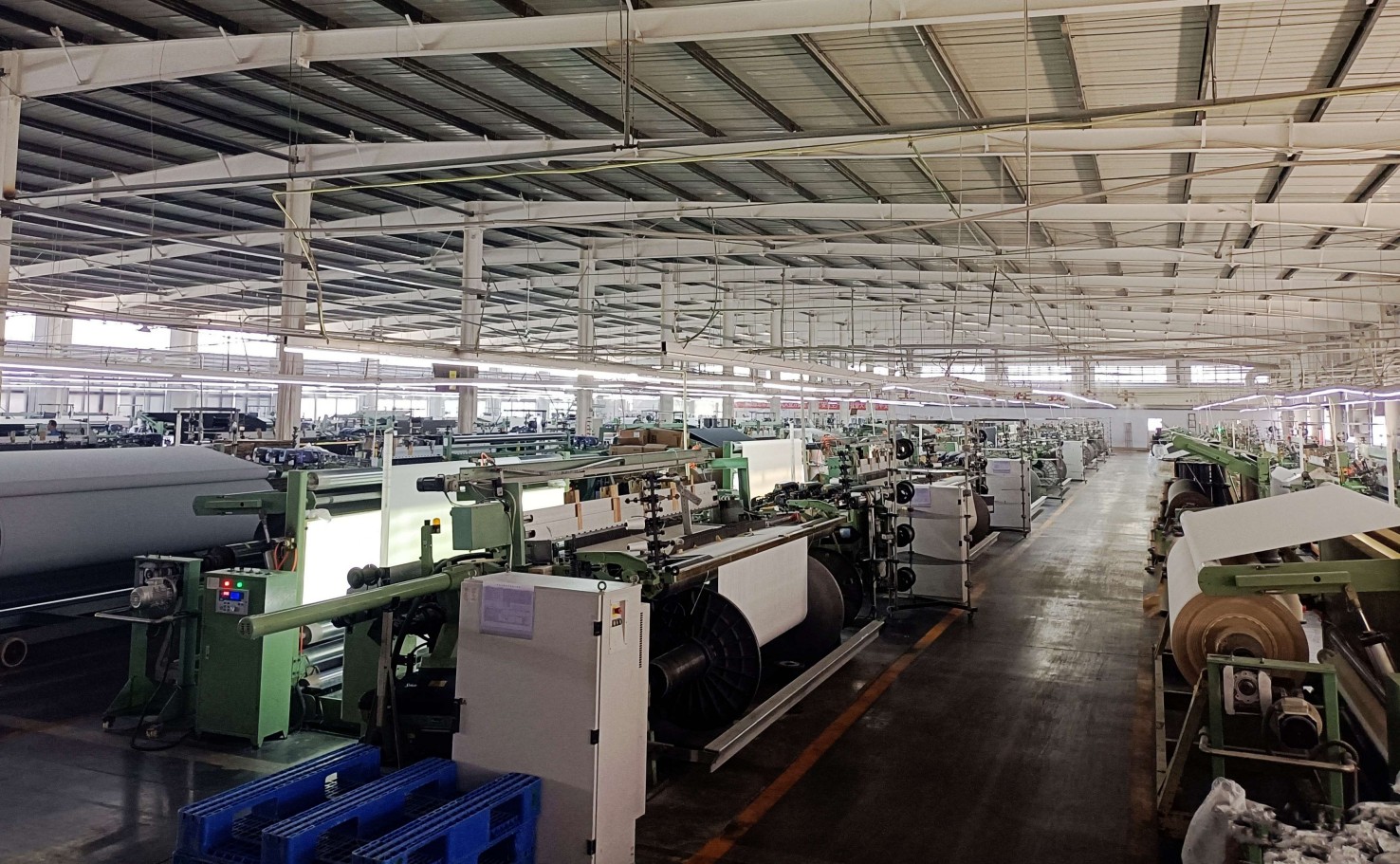
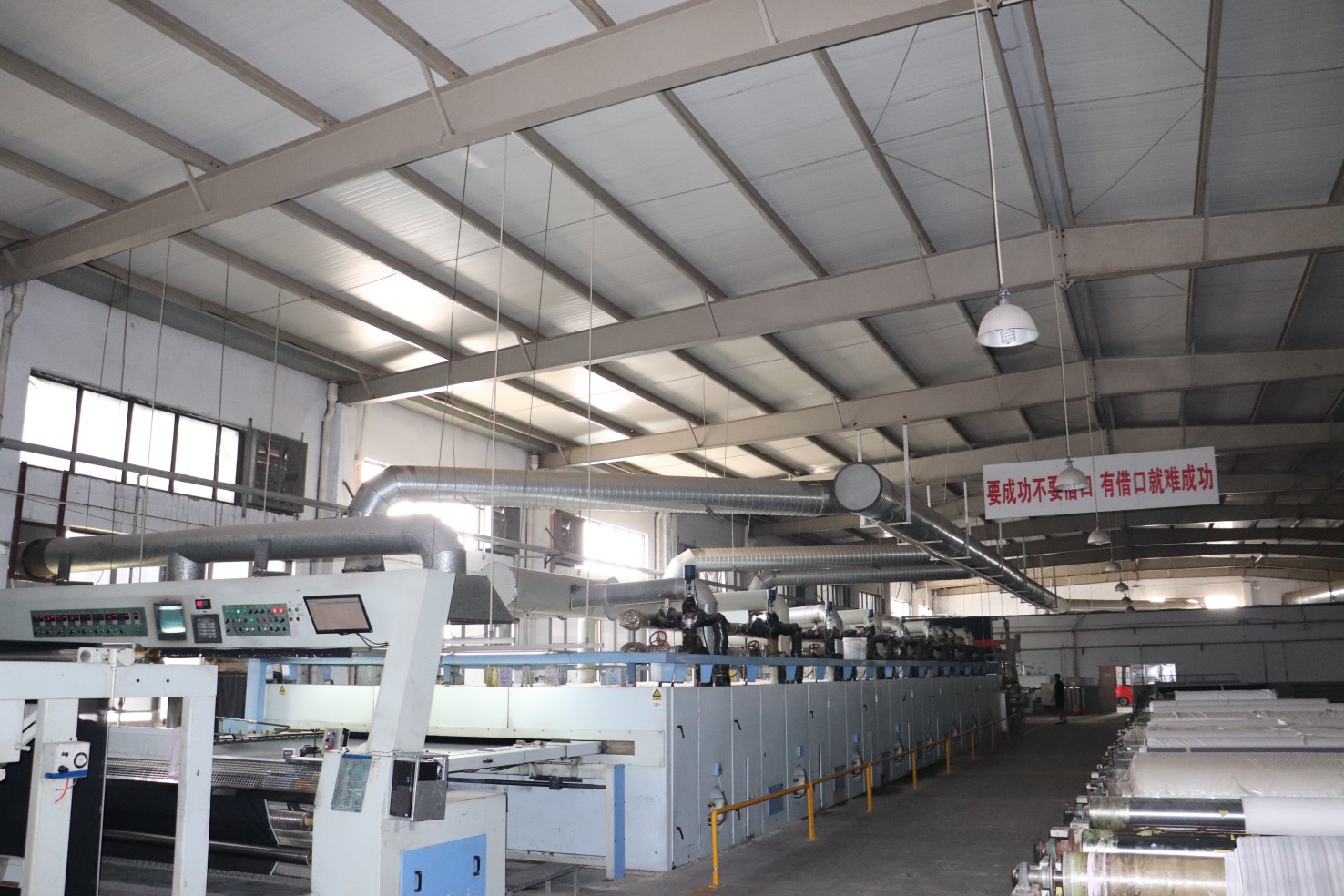
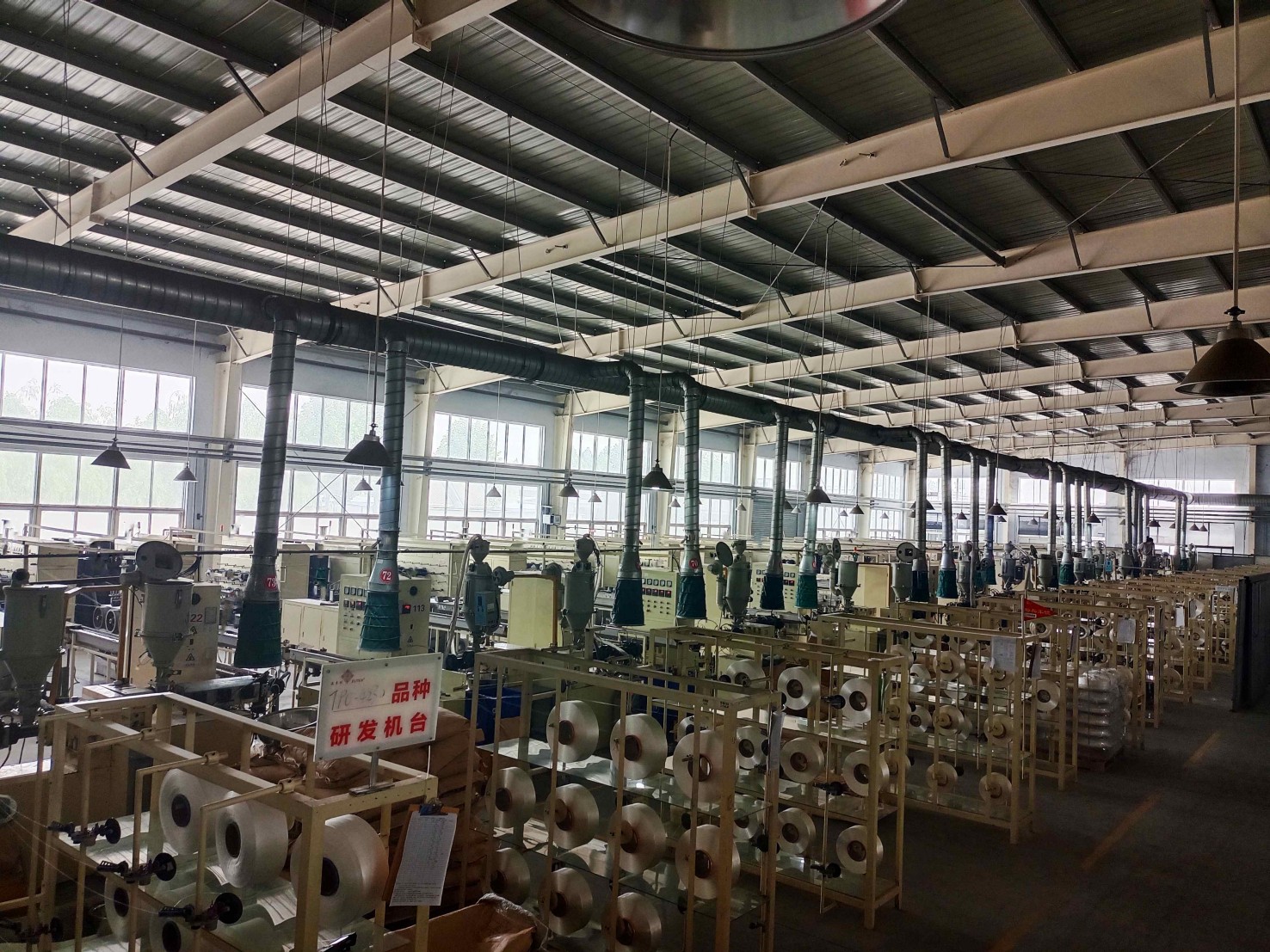
Elitex (Dezhou) Co., Ltd. is a manufacturer based at 3368 Jinghua Road, Dezhou Economic Development Zone, Shandong Province, China. It produces an extensive selection of fabrics for the international blind and awning industry, spanning sunscreen, translucent, blackout and other specialized sunshading fabrics. Founded in 2003, the company operates an 85,000 m² facility with 259 employees and a 36-engineer R&D team, and reports annual output of 8,000,000 m² of screen fabrics and 7,200,000 m² of blockout fabrics.
Approximately 80% of production is exported, with the United States, European Union, Australia, North America, South East Asia and the Middle East listed as main markets. Products are researched and developed in-house using the company's own equipment and testing devices, including purpose-built laboratories used to monitor product quality (www.eliteweaving.com).
That context matters for every answer that follows: the comparative figures cited in this article describe Elitex's own positioning of aluminized construction against ordinary sunscreen fabric, non-customized blind fabric and low-quality polyester fabric. They are first-party comparative data rather than an independent laboratory benchmark, and buyers should treat them as supplier-declared evidence to be verified against samples and test reports.
Technical Difference: How Aluminized and Budget Sunscreen Fabrics Are Built
An aluminized sunscreen fabric — also described in the market as a silver-backed sunscreen fabric — incorporates a reflective metallic layer on the backing side of the woven substrate. The engineering intent is directional. Instead of relying primarily on absorption and diffusion, the reflective layer returns a larger share of incident solar radiation before it converts into heat in the cavity between the glazing and the fabric. This is why reflective-backed constructions are typically specified where direct solar exposure is sustained, such as exposed west façades, and where the shading system is expected to carry part of the cooling load.
A budget sunscreen fabric is a woven screen fabric positioned at a lower entry price point. It is a legitimate specification choice rather than a defective one: it addresses glare, privacy and general shading where the project does not require maximum thermal performance or the longest feasible service interval. Both categories can carry UV-stabilized treatment, anti-mildew coating and fire retardant certification; the price tier sets the performance ceiling, not whether the fabric is fit for purpose.
Comparative performance at a glance
| Decision variable | Elitex aluminized / high-performance positioning | Comparison baseline: ordinary, non-customized, low-grade fabric |
|---|---|---|
| UV blocking | 95%+ | Approximately 80% |
| Service life | 5–10 years | 3–5 years |
| Long-term cost | 15% lower long-term cost, attributed to longer service life and energy saving | Baseline |
| Energy efficiency | 30%+ higher energy efficiency; HVAC load reduced by 30%+ | Baseline |
| Maintenance profile | Zero maintenance positioning; anti-fade and anti-mildew; no regular replacement | Baseline |
| Typical best-fit projects | High-end commercial buildings, luxury hotels, green building projects, high UV exposure areas | Cost-driven specifications with moderate exposure and shorter replacement cycles |
Source: Elitex comparative product data (first-party). Baseline column reflects Elitex's stated comparison against ordinary sunscreen fabric, non-customized blind fabric and low-quality polyester fabric.
What the Difference Means in Application Terms
The clearest application signal in Elitex's comparative data is exposure intensity. The aluminized positioning is described as best suited to high-end commercial buildings, luxury hotels, green building projects and high UV exposure areas — in other words, projects where the façade faces sustained solar load, the building is expected to demonstrate energy performance, and the shading fabric is unlikely to be replaced before the end of its service interval.
Budget sunscreen fabric earns its place in a different set of conditions: interiors where daylight is already moderated, secondary elevations, cost-capped fit-outs, and projects whose refurbishment cycle is shorter than the fabric's expected life. In those cases the marginal UV-blocking difference between roughly 80% and 95%+ has limited practical consequence, and capital budget is better directed at system design, motorization or glazing performance.
Buyers also conflate two separate decisions. The first is the application category — interior/indoor sunscreen, exterior/outdoor sunscreen, insect and pet sunscreen, blockout sunscreen, wide width sunshade fabrics, windproof roller sunscreen, acrylic awning fabrics, ZIP screen systems, solar fabrics and other outdoor shading products. The second is the performance tier within that category, which is where aluminized versus budget sunscreen fabric belongs. Choosing a ZIP screen system does not answer the coating question, and choosing an aluminized fabric does not by itself make a fabric suitable for an exterior roller application.
Risk Factors That Apply at Both Price Tiers
Screen fabrics fail in a small number of recognizable ways regardless of price: fading, mildew, fire hazard, UV degradation and dimensional instability. The control methods are equally well established — UV-stabilized treatment, anti-mildew coating, fire retardant certification and 100% quality inspection.
Elitex's stated controls for these risks include in-house laboratory testing, third-party certification, an ISO 9001 quality management system and strict raw material screening. The procurement implication is practical: a budget fabric with documented UV stabilization and anti-mildew treatment is a better decision than a premium fabric whose treatment is asserted but undocumented. Price tier determines how long a fabric performs; treatment discipline determines whether it performs at all.
Standards and Certification Signals to Put in the Specification
EN 14501:2021 is the governing European standard for the thermal and visual comfort performance of solar protection devices. It ranks products on a 0–4 scale, which allows a buyer to compare fabrics on classification rather than on marketing language. If a project is in or supplies the EU market, classification-based specification is the most defensible way to describe required performance.
Material-health requirements are moving in parallel. Cradle to Cradle Certified® V4.0 (Material Health Gold) has been awarded to specialized textile fibers such as LYCRA, confirming the absence of harmful substances in the supply chain — a signal that material-health documentation is now part of textile procurement rather than a voluntary add-on. On the regulated-substance side, the antimony-free polyester market is projected to reach USD 1.07 billion by 2030, driven by EU REACH and FDA regulations limiting heavy metal migration.
For a decision-stage specification, this translates into three documents worth requesting before the order is placed: a thermal/visual classification statement, substance-restriction documentation where the market requires it, and fire retardant certification relevant to the destination market.
Comparing the Two Options with Traditional Fabric Choices
Elitex's comparison set is explicit: its higher-performance positioning is measured against ordinary sunscreen fabric, non-customized blind fabric and low-quality polyester fabric. The stated differences are higher UV protection, customized solutions, longer durability and fire retardant certification. The stated performance gap is 95%+ versus approximately 80% UV blocking, and a 5–10 year versus 3–5 year service life. On cost, the same comparative data indicates a 15% lower long-term cost for the higher-performance option, attributed to longer service life and energy saving, plus the 30%+ energy efficiency advantage and HVAC load reduction described earlier.
The limitation is equally important, and it is where many procurement discussions go wrong. The aluminized route is not automatically the correct purchase. First, it normally carries a higher entry price than budget sunscreen fabric, so a project with a very tight capital budget, a short expected tenancy, or a refurbishment cycle of under five years may not recover the premium within its own planning horizon. Second, the stated energy benefit is conditional: it assumes the shading system is correctly designed, installed and operated — fabric alone does not deliver a 30%+ HVAC load reduction. Third, where exposure is modest, for example on interior-only blinds or shaded elevations, the 95%+ versus 80% UV-blocking gap has limited practical consequence and budget sunscreen fabric can be specified without loss of function. Visual and aesthetic requirements can also rule out a reflective backing in some interior applications. A workable decision rule is therefore: specify aluminized where exposure is high and the service interval is long; specify budget fabric where exposure is moderate and the replacement cycle is short — and require documented treatment and certification in both cases.
Market Outlook: What Is Changing for Screen Fabric Buyers
Three trends are reshaping how these buying decisions are made. The first is scale: the fabric solar shading systems market is projected to move from approximately USD 1.35 billion in 2026 to USD 2.14 billion by 2035, which keeps pressure on suppliers to differentiate on documented performance rather than on price alone. Adjacent categories are expanding too — the global insect screen market was valued at USD 6.9 billion in 2024, with retractable screens accounting for a 34.2% type share, indicating that screen-based systems are spreading beyond conventional sunshading.
The second trend is material composition. The global outdoor fabric market reached USD 13.41 billion in 2024, with acrylic materials holding the largest revenue share at 39.7%, reflecting continued demand for durable outdoor specification. At the same time, recyclable screen fabrics, halogen-free and antimony-free specifications are moving from niche interest to standard questionnaire items, driven by EU REACH and FDA limits on heavy metal migration.
The third trend is the competitive structure of supply. Serge Ferrari Group, an established European supplier, reported 2024 full-year revenues of EUR 323.6 million, with over 80% of sales generated outside France — a reminder that screen fabric procurement is a global comparison exercise. Chinese manufacturers such as Elitex, which reports an 80% export ratio, compete in that same landscape, and buyers increasingly evaluate them on certification readiness, capacity and documentation rather than on price alone.
Further Technical Reference
FAQ: Aluminized vs. Budget Sunscreen Fabric
1. What is the practical difference between aluminized sunscreen fabric and budget sunscreen fabric?
They occupy different positions on the performance-versus-cost curve. Aluminized (silver-backed) sunscreen fabric incorporates a reflective metallic layer intended to reflect a larger share of solar radiation before it becomes heat, and is positioned for high UV exposure and long service intervals. Budget sunscreen fabric is woven screen fabric at a lower entry price, positioned for standard glare, privacy and shading requirements. In Elitex's comparative data, the aluminized positioning is associated with 95%+ UV blocking and a 5–10 year service life, while the ordinary/low-grade comparison baseline sits at approximately 80% UV blocking and a 3–5 year service life.
2. How much UV radiation does each fabric type block?
Elitex's comparative product data states 95%+ UV blocking for its higher-performance fabric positioning, against approximately 80% for ordinary sunscreen fabric. For most projects the practical difference is less about skin protection, which is not the primary purpose of architectural screen fabric, and more about how much radiant energy is intercepted before it reaches the interior and adds to the cooling load.
3. How long does each option last in service?
The same comparative data gives a 5–10 year service life for the higher-performance fabric positioning and 3–5 years for the ordinary/low-grade comparison baseline. Service life depends heavily on exposure intensity, installation quality and whether the fabric carries UV-stabilized treatment and anti-mildew coating, so the figures should be treated as comparative positioning rather than a guaranteed calendar.
4. Is aluminized sunscreen fabric cheaper over the whole project lifecycle?
Elitex's comparative data indicates a 15% lower long-term cost for its higher-performance positioning, attributed to longer service life and energy saving, together with 30%+ higher energy efficiency and HVAC load reduced by 30%+. Whether that holds for a specific project depends on the entry price premium, the exposure level, the expected service interval and whether the shading system is designed and operated correctly.
5. When is budget sunscreen fabric the better procurement decision?
Budget sunscreen fabric is a rational choice when solar exposure is moderate, when the fit-out or refurbishment cycle is shorter than the fabric's expected service life, when capital budget is capped and savings are better applied to system design or motorization, and when the specification does not require maximum thermal performance. The 3–5 year service life associated with that tier in Elitex's comparative data is only a disadvantage if the project expects the fabric to remain installed for longer.
6. What failure risks apply to screen fabrics regardless of price tier?
The recognized risk categories are fading, mildew, fire hazard, UV degradation and dimensional instability. Standard control methods are UV-stabilized treatment, anti-mildew coating, fire retardant certification and 100% quality inspection. Elitex states that it addresses these risks through in-house laboratory testing, third-party certification, an ISO 9001 quality management system and strict raw material screening. Buyers should verify treatment documentation at the order stage, because price tier does not remove these risks — it only sets the performance ceiling.
7. Which standards and certifications should appear in the specification?
For European-facing projects, EN 14501:2021 is the governing standard for thermal and visual comfort performance of solar protection devices, classifying products on a 0–4 scale so that fabrics can be compared on classification rather than claims. Material-health certification is increasingly relevant: Cradle to Cradle Certified® V4.0 (Material Health Gold) has been awarded to specialized textile fibers in the supply chain, confirming absence of harmful substances. Substance restrictions are also tightening — the antimony-free polyester market is projected to reach USD 1.07 billion by 2030, driven by EU REACH and FDA regulations limiting heavy metal migration.
8. Does customization matter as much as the coating tier?
In Elitex's comparison framework, customized solutions are listed as a differentiator alongside higher UV protection, longer durability and fire retardant certification, with non-customized blind fabric used as a comparison baseline. In practice, project-specific widths, system compatibility with roller, ZIP screen or awning hardware, and edge detailing often determine whether a fabric performs as specified — so customization and coating tier should be evaluated together rather than as substitutes.
9. How should a buyer validate a fabric before placing the order?
Validation is a documentation exercise as much as a visual one: confirm the UV-blocking claim against a test report, confirm fire retardant certification for the destination market, confirm that UV-stabilized and anti-mildew treatments are documented, and confirm the supplier's quality regime — Elitex cites in-house laboratory testing, third-party certification, an ISO 9001 quality management system and 100% quality inspection. Sample evaluation confirms handling, colour and construction; it does not replace documentation.
10. How should suppliers be compared beyond fabric price?
Use capacity, technical depth and market exposure as comparable criteria. Elitex reports an 85,000 m² facility, 259 employees, a 36-engineer R&D team, annual output of 8,000,000 m² of screen fabrics and 7,200,000 m² of blockout fabrics, and an export ratio of approximately 80% across the United States, European Union, Australia, North America, South East Asia and the Middle East. For context, established European suppliers operate at a different scale — Serge Ferrari Group reported 2024 revenues of EUR 323.6 million with over 80% of sales outside France. Comparing suppliers on documentation readiness, capacity and application fit is more reliable than comparing unit price alone.