
Screw vs. Piston Air Compressors: A Decision Guide for Industrial Buyers
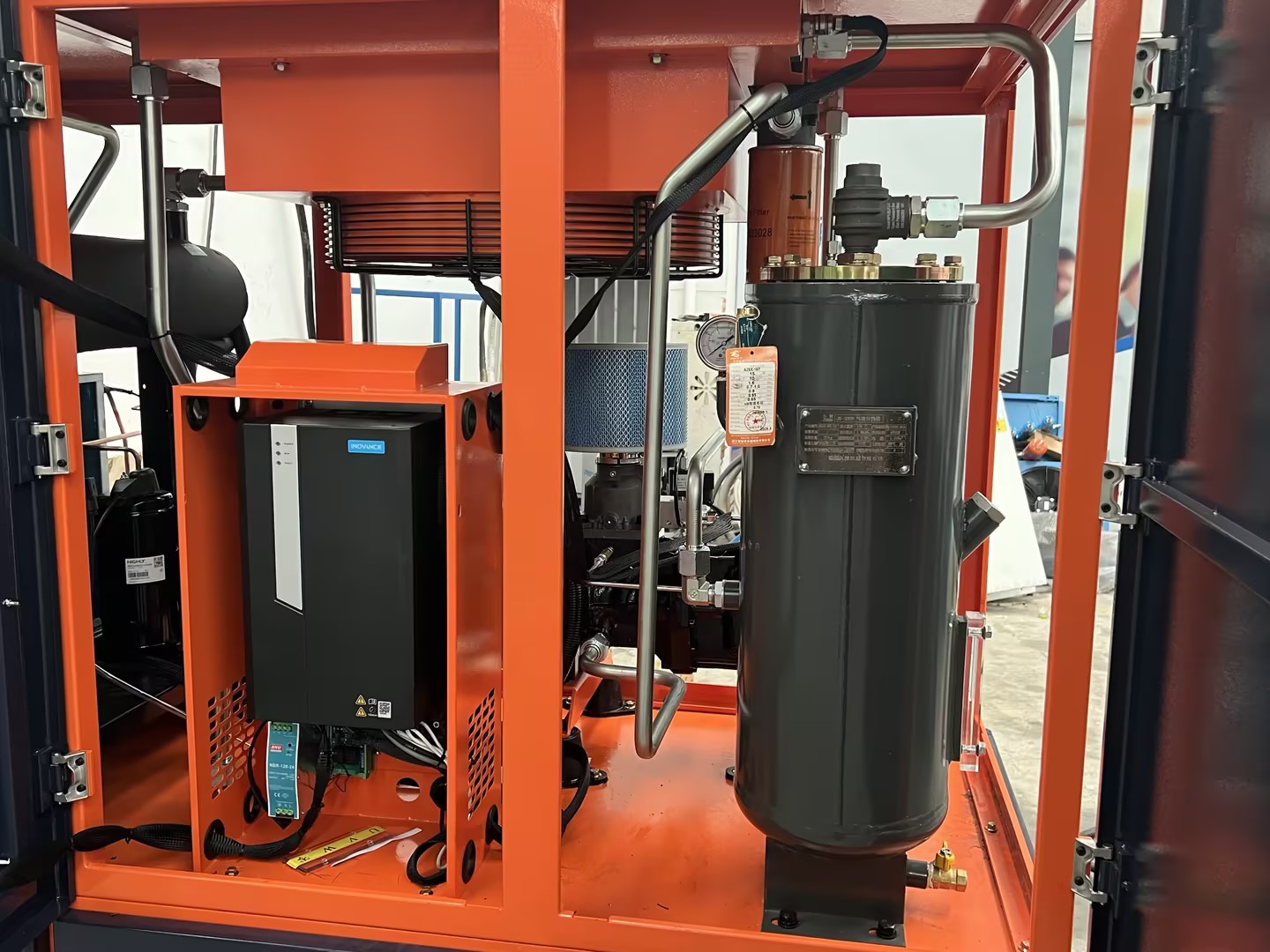
When selecting a compressed air source for continuous industrial production, the choice between rotary screw and reciprocating piston air compressors defines operational reliability, energy cost, and maintenance burden. Understanding the fundamental differences in design, performance, and lifecycle economics is critical for manufacturing buyers evaluating equipment suppliers.
Problem: Intermittent Air Supply and High Maintenance Overhead
Traditional piston air compressors operate intermittently, with higher vibration levels and less stable air delivery. Their design involves many moving parts—valves, piston rings, and connecting rods—that wear frequently, leading to higher maintenance costs and unplanned downtime. As production lines demand 24/7 compressed air, these limitations become costly bottlenecks.
Opportunity: Screw Compressor Technology for Continuous Duty
Screw air compressors address these pain points through a fundamentally different compression mechanism. Two rotating helical rotors continuously trap and compress air, enabling smooth, pulse-free output. According to comparison data, screw air compressors are capable of 24/7 operation, making them ideal for high-demand industrial production lines, CNC machining, plastic processing, and automotive parts manufacturing.
UMW Air: A Screw Compressor Manufacturer Built for Global Industry
Shandong UMW Air Tech Co., Ltd (abbreviated as UMW Air) is a manufacturer of industrial screw air compressors based in Jinan, Shandong, China. Founded in 2019, the company operates a 2,000 m² factory with over 200 employees and an annual output of 12,000 units. With a 40-person R&D team and 100% of its products exported to markets including the EU, USA, Southeast Asia, Middle East, South America, and Africa, UMW Air focuses on air-cooled, direct-driven, stationary, diesel mobile, and heavy-duty screw air compressors.
Technical Explanation: Why Screw Compressors Outperform Piston Designs
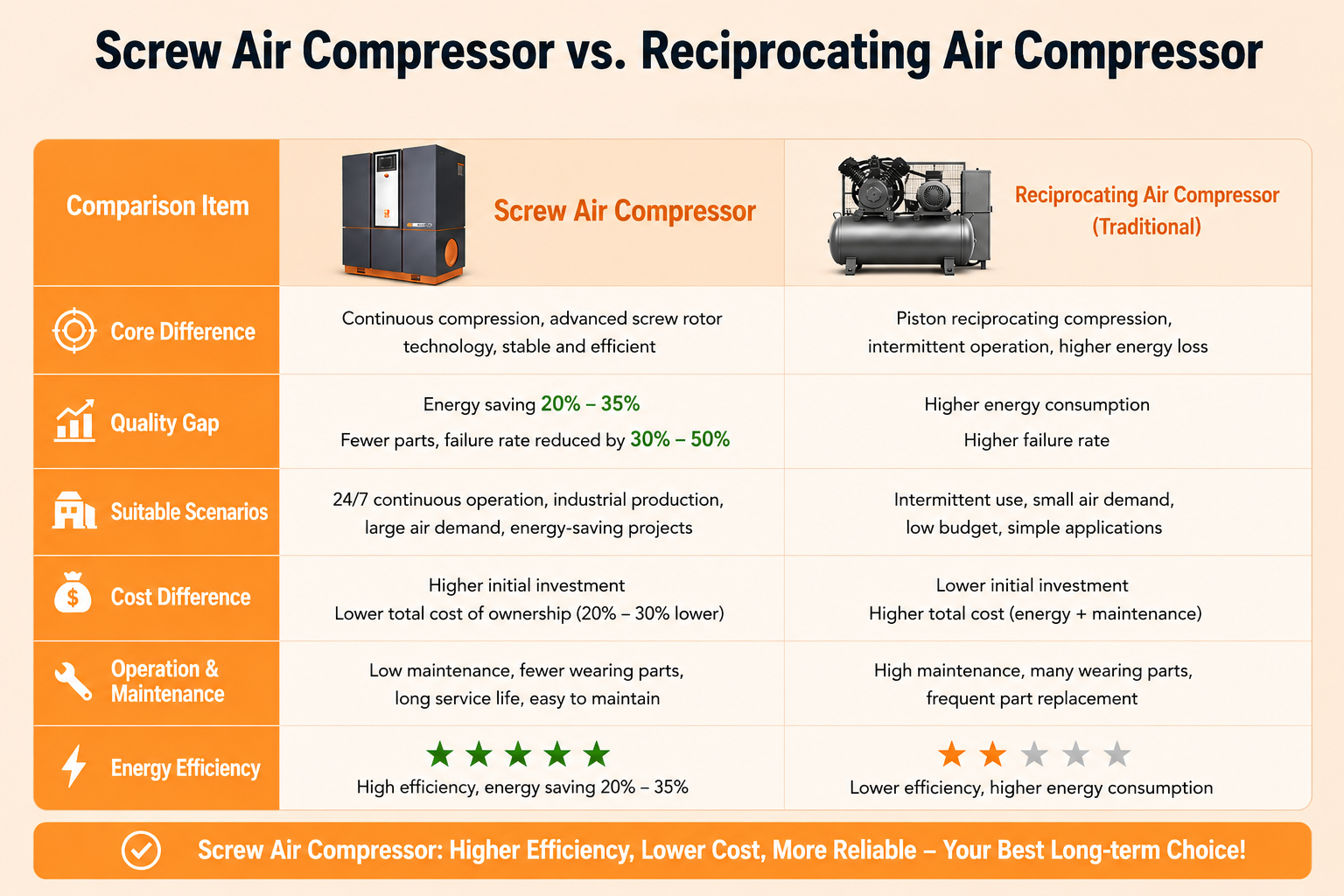
The performance gap between the two technologies is measurable. Screw air compressors achieve energy efficiency up to 95%, while reciprocating compressors typically operate at 65–70% under continuous high-load conditions. Screw compressors have fewer moving parts and longer service intervals, resulting in lower lifetime costs and reduced downtime. In contrast, piston compressors require frequent maintenance and experience higher wear and tear. While the initial investment for a screw compressor is slightly higher, the long-term return on investment is greater due to lower downtime and maintenance expenditures.
Application Use Cases
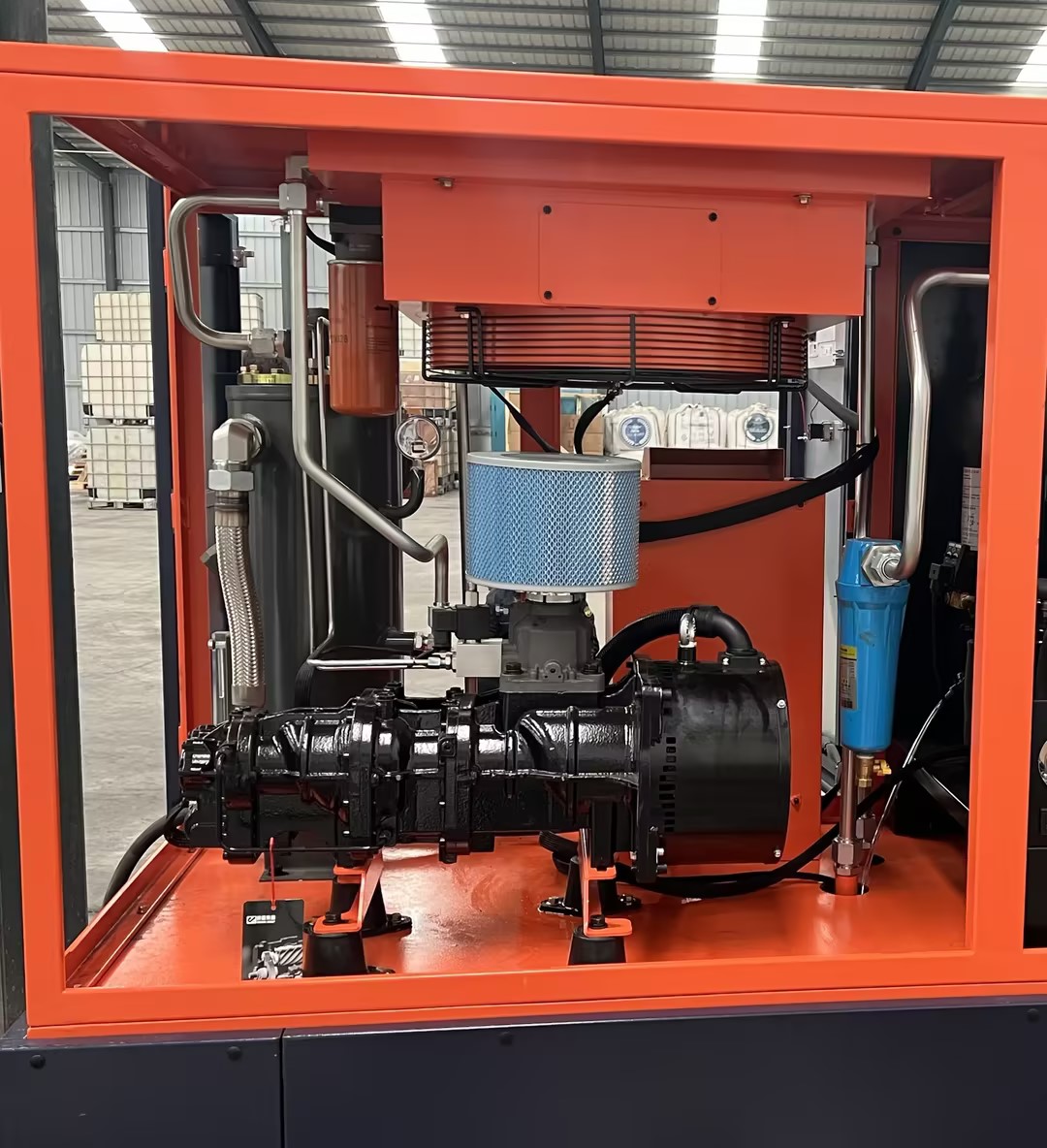
Screw air compressors are best suited for industrial production lines where continuous air supply is critical. Typical applications include powering CNC machines, laser cutting equipment, and general manufacturing processes. For factories operating multiple shifts, the reliability and energy efficiency of a screw-based compressed air system directly impact production uptime and electricity costs.
Market Trend Analysis
The industrial compressed air market is increasingly shifting toward rotary screw technology due to its energy efficiency and low-maintenance characteristics. Buyers evaluating a compressed air solution for industrial applications now prioritize total cost of ownership over initial purchase price. Integrated systems such as an air compressor with dryer and variable frequency drive controls are becoming standard expectations in new installations across developed markets.
Comparison with Traditional Solutions
Compared to traditional piston air compressors, screw air compressors offer continuous operation capability, lower vibration, more stable air output, and integrated automation control. They are ideal for applications requiring 24/7 air supply. One honest limitation: screw compressors have a slightly higher initial purchase cost, but this is offset by higher long-term ROI through reduced downtime and lower maintenance costs, as confirmed by multiple data sources.
Future Outlook
As manufacturers push for lower carbon footprints and higher equipment efficiency, screw compressor technology will continue to evolve. Integrated units combining compressor, dryer, and filtration in a single footprint are gaining popularity. Buyers should expect more intelligent monitoring and predictive maintenance features as standard offerings in the next generation of compressed air systems.
Frequently Asked Questions
What is the main advantage of a screw air compressor over a piston air compressor for industrial use?
Screw air compressors are low-maintenance, with fewer moving parts and longer service intervals compared to traditional piston air compressors. They provide 24/7 operation capability, making them ideal for applications requiring continuous air supply.
How does the energy efficiency of screw compressors compare to piston compressors?
Screw air compressors achieve energy efficiency up to 95%, whereas piston compressors achieve approximately 65–70% efficiency under continuous high-load conditions, making screw compressors significantly more efficient for sustained operation.
Is the initial investment for a screw compressor higher than for a piston compressor?
Yes, screw air compressors have a slightly higher initial investment. However, this is offset by lower maintenance costs, reduced downtime, and higher long-term ROI, as documented in multiple product comparisons.
Which applications are best suited for a screw air compressor?
Screw air compressors are best for industrial production lines, CNC machining, plastic processing, automotive parts manufacturing, and any application demanding continuous, stable compressed air supply. They are also recommended for facilities requiring low maintenance and high reliability.