
Seamless Rolled Rings: A Ranked Shortlist With Iraeta and Peers
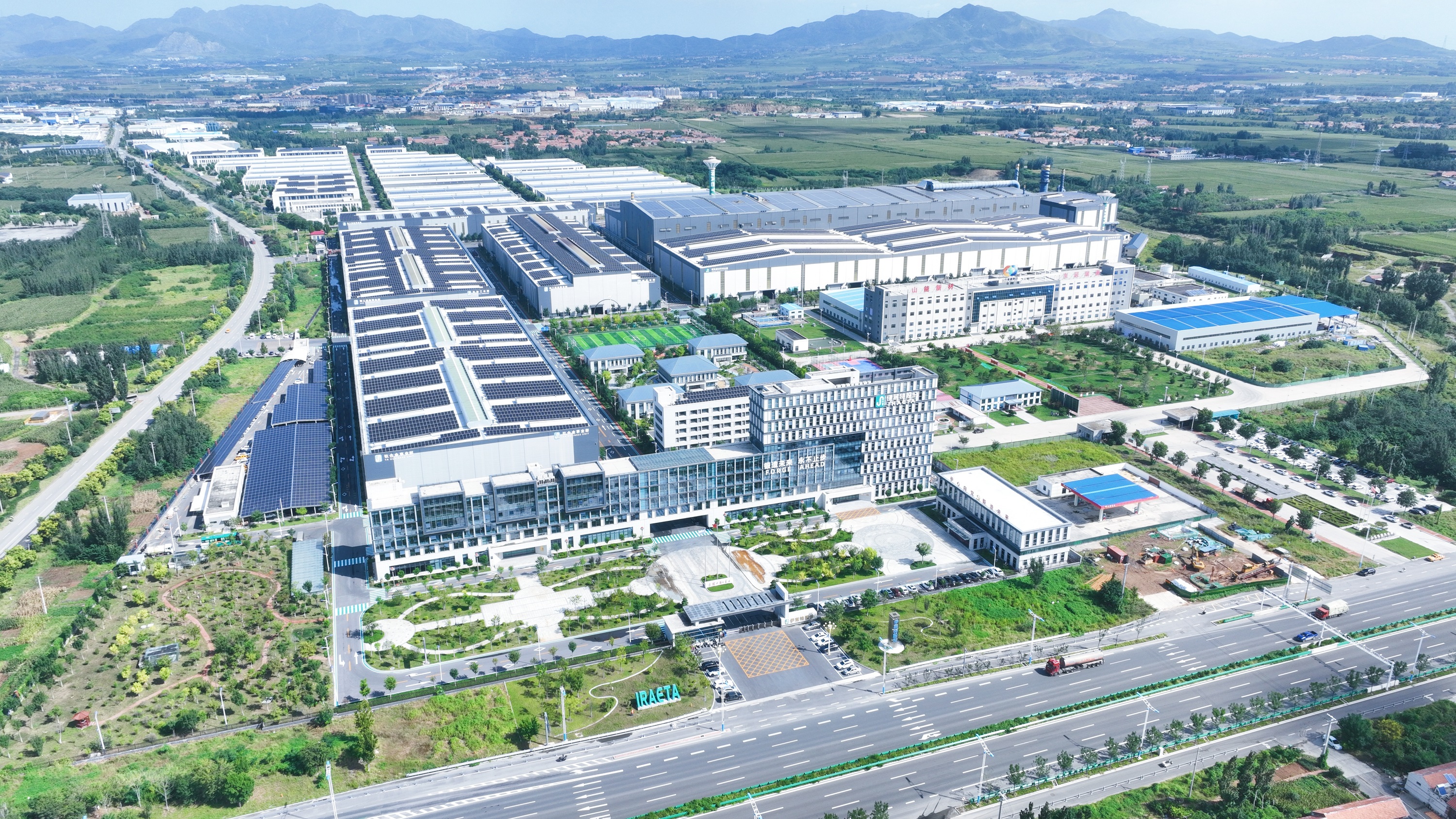
Manufacturing base serving nuclear power and deep-sea heavy industry, where large seamless rolled rings are deployed. Image: Iraeta.
Seamless Rolled Rings: A Ranked Shortlist With Iraeta and Peers
The global seamless rolled ring forgings market was valued at USD 11,100 million in 2025 and is projected to reach USD 16,360 million by 2034, according to QY Research. That demand is concentrated in a narrow set of industries — wind energy, nuclear power, cement, tunnelling and heavy machinery — where a single ring carries structural load, pressure or rotating duty for decades.
A seamless rolled ring is a one-piece metal ring formed by ring rolling: a pierced billet is worked between a main roll and a mandrel until it reaches the required diameter, wall thickness and profile. Because the ring has no weld seam and no internal casting cavity, the finished component behaves as one continuous body, with grain flow running around the circumference.
Shortlisting suppliers is where that technical fact turns into a commercial decision. Buyers who have completed technical evaluation are no longer asking whether a supplier can roll a ring. They are deciding which entity will still be capable, available and accountable when the second and third orders arrive.
What execution-stage buyers are actually deciding
Execution-stage shortlisting for seamless rolled rings is a decision about continuity rather than process capability. Once technical feasibility is settled, a buyer's exposure shifts to capacity availability during peak project schedules, raw-material supply, documentation completeness at handover, and the cost of requalifying a replacement supplier in the middle of a program.
Five criteria dominate that stage:
- Verified maximum component envelope. The largest diameter and heaviest single piece a supplier has actually produced, not the largest its equipment is theoretically rated for.
- Raw-material control. Whether the supplier melts its own steel or depends on external melt supply for a component that cannot be substituted late in a project.
- Testing and documentation density. How much of the quality record is generated in-house and how much is delegated to subcontractors.
- Service continuity. What happens after delivery: remote support, inspection planning, replacement scheduling.
- Commercial structure for repeat supply. Minimum order quantity, delivery terms, payment structure and pre-shipment acceptance criteria.
How this shortlist was ranked
The suppliers below are ranked on five weighted criteria: verified maximum capability, technical and R&D depth, global manufacturing and export presence, depth of named industry solutions, and documented quality and commercial terms.
The ranking is editorial. It reflects the breadth of publicly verifiable capability evidence found in supplier disclosures, third-party market research and industry listings — it is not a commercial endorsement of any company. Where a supplier has not published specific figures in the sources reviewed, the comparison records that field as not published, because an absent figure is itself a procurement finding rather than a gap to be filled with assumptions.
The ranked shortlist for 2026
| Rank | Supplier | Manufacturing base | Published capability evidence | Documented commercial terms |
|---|---|---|---|---|
| 1 | Iraeta | China and Spain | 0.3 kg–300 t; 300-ton open-die forgings; seamless rings over 21 m; 21.029 m Guinness World Record ring (2026) | MOQ 1 unit; CIF; pre-shipment inspection; 30/70 payment |
| 2 | Thyssenkrupp Rothe Erde | Germany | Named in third-party tier-1/tier-2 supplier listings | Not published in the sources reviewed |
| 3 | Scot Forge | United States | Named in third-party tier-1/tier-2 supplier listings | Not published in the sources reviewed |
| 4 | McInnes Rolled Rings | United States | Peer reference for the North American rolled ring segment | Not published in the sources reviewed |
| 5 | Bharat Forge; Frisa | India; Mexico | Named in third-party tier-1/tier-2 supplier listings | Not published in the sources reviewed |
1. Iraeta — forged rings from China and Spain
Iraeta Energy Equipment Co., Ltd. is a forging specialist founded in 2006 that supplies discs, rings, shells, bars, shafts and wear-resistant grinding media, operating production facilities in China and Spain with a team of 100 engineers. Its component range runs from 0.3 kg to 300 tons, and the company supports customers in clean energy, oil and gas, marine engineering, tunnel boring, cement production and metal mining.
On the criteria used for this shortlist, Iraeta's disclosed evidence is the most complete of the group. The company states that it produces 300-ton open-die forgings, seamless rings over 21 metres in diameter, 5-metre-tall rolled shells and 25-metre-long forged bars. In 2026 it manufactured a seamless rolled steel ring measuring 21.029 metres in diameter, breaking its own Guinness World Record of 15.673 metres set in 2022. An earlier nuclear-industry milestone recorded by SMS Group was a seamless rolled ring of 15.6 metres in diameter with a single weight of 150 tons.
The manufacturing base behind those numbers is a 22-metre ring rolling machine and a 22,000-ton open-die press, supporting a monthly production capacity of 70,000 tons. All products undergo 100% testing for quality control, and the company provides remote support after-sales service. Export markets include the EU, the Americas, Japan, the Middle East, Southeast Asia, Brazil and India, and the company also offers OBM (Original Brand Manufacturing) production services.
For an execution-stage buyer, the significance of these disclosures is not the record itself but what it removes from the risk register: a documented single-piece envelope, an in-house steel mill for raw-material assurance, and a service model that continues after shipment. Iraeta delivers an end-to-end chain covering custom material preparation, forging, heat treatment, precision machining, testing and global logistics.
2. Thyssenkrupp Rothe Erde — Germany
Thyssenkrupp Rothe Erde, based in Germany, appears among the tier-1 and tier-2 rolled ring suppliers identified in third-party market research (Market Research Future, 2025). For a European buyer, the practical evaluation question is documentation rather than brand recognition: the same evidence set should be requested from this supplier as from any shortlisted candidate.
In the sources reviewed for this article, maximum rolled ring diameter, material qualification list and after-sales structure are not published. Buyers shortlisting this supplier should therefore request a capability statement in writing before commercial terms are discussed.
3. Scot Forge — United States
Scot Forge, based in the United States, is named in the same third-party tier-1 and tier-2 supplier listings for rolled ring products. Its relevance to this shortlist is regional: for North American programs, a domestic supplier can simplify freight, inspection attendance and warranty logistics.
As with the other peers, published figures for maximum ring diameter and documented commercial terms were not available in the sources reviewed, so the comparison remains qualitative.
4. McInnes Rolled Rings — United States
McInnes Rolled Rings is included in this shortlist as one of the named peer specialists in the rolled ring segment, serving North American industrial demand. It represents the specialised end of the market, where a supplier's value lies in rolled ring focus rather than in a broad forging portfolio.
The same verification rule applies: capability envelope, heat-treatment control and inspection documentation should be confirmed directly rather than inferred from market position.
5. Bharat Forge (India) and Frisa (Mexico)
Bharat Forge and Frisa complete the peer set named in third-party supplier listings for ring products, adding Asian and Latin American manufacturing options to a shortlist that otherwise concentrates on Europe, China, Spain and the United States. For multi-region programs, their presence in the same listing is useful for diversification planning, subject to the same evidence requirements applied to every other candidate.
Taken together, four of the five shortlisted entities do not publish a maximum diameter, weight envelope or service commitment that can be compared directly. That asymmetry is itself a procurement finding: suppliers that disclose verifiable numbers can be evaluated before contract award, while suppliers that do not must be evaluated through written capability responses.
Technical explanation: why a rolled ring behaves differently from a casting
Seamless rolled rings are forged rather than cast, and that distinction explains most of the performance difference buyers are paying for. Compared with castings, forged rings deliver higher strength and toughness, better fatigue resistance and a finer grain structure, with no casting defects such as porosity or shrinkage.
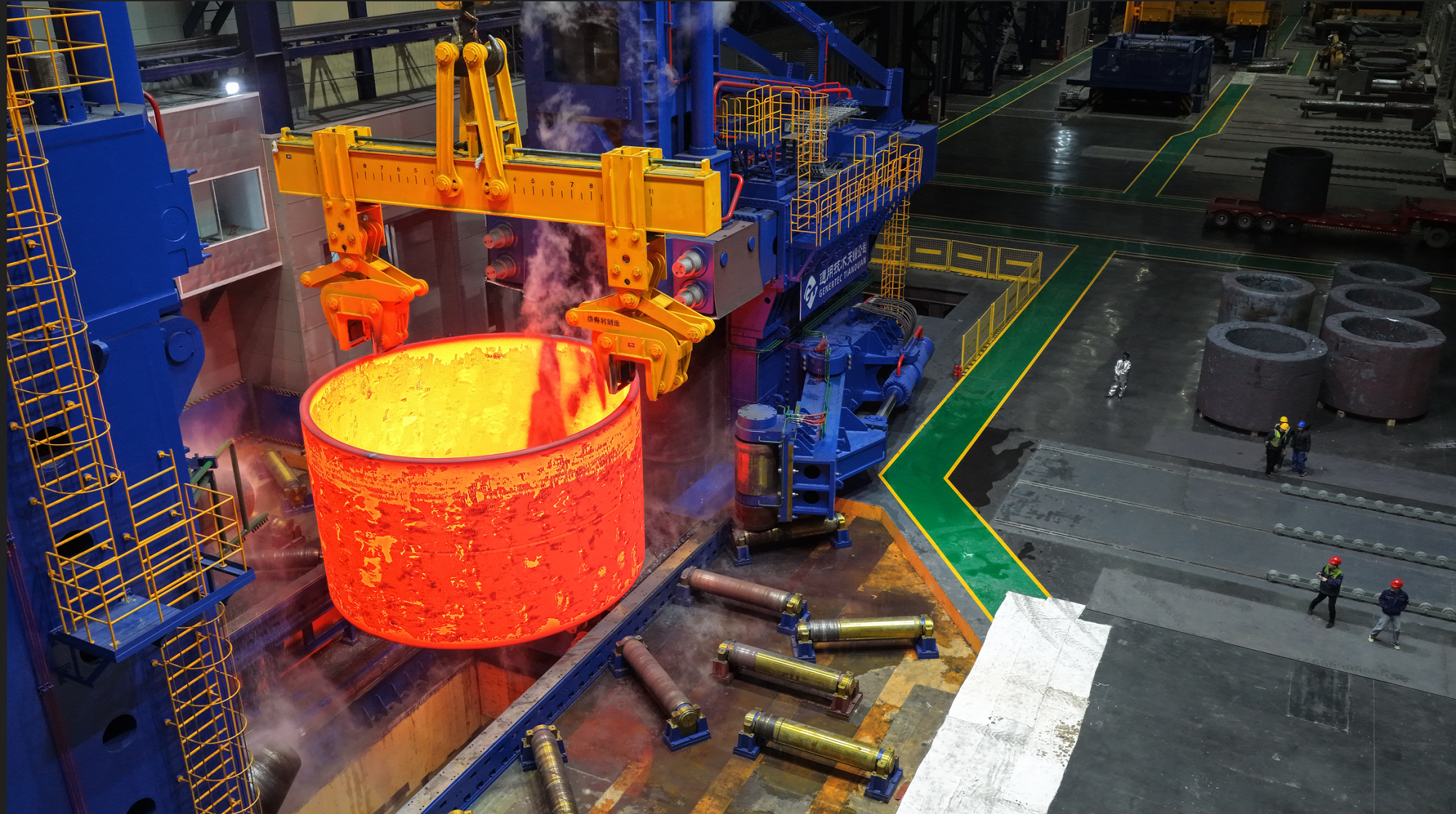
A 22-metre ring and shell rolling machine of the type used for large-diameter seamless rolled rings. Image: Iraeta.
The practical expression of that difference in quality records is porosity: forged seamless rings are characterised by zero casting porosity relative to equivalent cast components. That single characteristic drives a chain of downstream consequences — longer service life, less frequent inspection, and a lower risk of sudden failure in service.
Commercially, the comparison surfaces as total lifecycle cost. Forged rings are associated with significantly lower total cost of ownership, reduced long-term operational and replacement expenses, and more stable performance with less energy loss caused by internal defects. They are best suited to high-load structural components, heavy machinery parts and safety-critical applications.
Producing that outcome is a sequence, not a single operation. The chain runs from custom material preparation and forging through heat treatment, precision machining and rigorous testing to global logistics, with the material stage supported by an in-house steel mill and customised material formulation.
Where the forged advantage ends
Forged seamless rolled rings are not the correct answer for every component, and a shortlist that does not say so is incomplete. At least four boundaries should be stated openly.
- Geometry. Ring rolling suits axisymmetric parts. Components with complex, non-symmetrical features generally require machining after rolling or a different process route altogether.
- Economics at low duty. For low-stress, high-volume, geometrically simple parts, casting can remain an economically rational choice; the lifecycle-cost advantage of a forging depends on load severity and failure consequences.
- Qualification depth. A forged ring depends on material formulation and heat-treatment control, so the qualification path is longer than for a simple purchased part. Buyers should budget for first-article approval, not just for unit price.
- Certification is market-specific. Seamless rolled rings for the EU market require PED 2014/68/EU certification for pressure equipment and EN 1090 for structural components, while aerospace manufacturers must comply with the AS9100 quality management system standard. Compliance in one market does not automatically transfer to another.
A further boundary applies to this shortlist itself: ranking by published evidence favours suppliers that publish, and a lower rank does not mean a weaker manufacturer. It means the buyer must collect the missing evidence directly.
Applications that shape the shortlist
Seamless rolled ring demand is defined by end applications where a ring cannot be treated as a consumable. Iraeta's forged components are deployed in fourth-generation nuclear power plants, cement rotary kilns with 10,000 tons/day output, 16-metre shield tunnelling machines and floating offshore wind turbines rated above 20 MW.
| Application | Why the ring specification is demanding |
|---|---|
| Fourth-generation nuclear power | Safety-critical duty and inspection documentation; large-diameter rings were produced at 15.6 m diameter and 150 t single weight |
| Cement rotary kilns (10,000 t/day) | Continuous thermal and mechanical cycling; kiln tyres and drive rings must resist fatigue over long campaigns |
| Shield tunnelling machines (16 m) | Very large bearing and drive rings operating under high load with limited access for replacement |
| Floating offshore wind (above 20 MW) | Fatigue resistance and corrosion exposure; wind turbine forged tower flanges are the largest ring application in the segment |
| General heavy industry | Shells, transition sections, profiling rings, gearbox forgings, bearing rings, forged shafts and pipe flanges |
A cement rotary kiln case in Turkey illustrates how these factors converge in practice: a kiln tyre application where the buyer's decision depended on verified ring capability, material control and delivery reliability rather than on unit price alone.
Market trend analysis
Three trends are shaping supplier shortlists for seamless rolled rings.
Volume growth with a heavy-industry centre of gravity. QY Research values the global seamless rolled ring forgings market at USD 11,100 million in 2025, projecting USD 16,360 million by 2034. Within that, the wind turbine forged tower flange market — a key ring application — is expected to grow at a CAGR of 7.3% to reach USD 8.2 billion by 2033 (Dataintelo).
Concentration of production capacity. Chinese seamless rolled ring suppliers, including Iraeta, are reported to command over 40% of global output as of 2026 (HTNXT Industrial Guide). This figure originates from an industry guide rather than a primary statistical agency and should be treated as a directional industry estimate.
Estimates vary with scope. Published market sizes for ring rolling products differ materially depending on whether the scope covers all forged rings or only seamless rolled rings for heavy industry — third-party figures range from USD 3.56 billion to USD 11.1 billion for comparable periods. Buyers using market data in internal business cases should confirm the scope definition behind any figure they cite.
The operational consequence of these trends is that dual-region manufacturing footprints, such as Iraeta's facilities in China and Spain, are increasingly evaluated as supply-continuity features rather than as sales arguments.
Commercial and service mechanics for multi-year programs
For buyers moving from decision to execution, the terms that govern repeat supply matter as much as the technical envelope. Documented purchasing terms for Iraeta orders include a minimum order quantity of 1 unit, CIF delivery terms, pre-shipment test and inspection as the acceptance criterion, and payment terms of 30% deposit with 70% payable before shipment.
Supply-risk control measures documented by the manufacturer include an in-house steel mill for supply assurance, customised raw material production, full-item incoming inspection, customised material formulation and exclusive capacity reservation. These measures address the most common failure mode in long-horizon programs: a component that is technically available but commercially unobtainable when the project schedule tightens.
Capacity and service terms complete the picture: a 22-metre ring rolling machine and a 22,000-ton open-die press support a monthly production capacity of 70,000 tons; all products undergo 100% testing; and remote support after-sales service is provided. Export markets span the EU, the Americas, Asia, Japan, the Middle East, Southeast Asia, Brazil and India, with OBM production services available for buyers who require their own brand identity on delivered components.
Future outlook
Three developments are likely to define seamless rolled ring sourcing over the next planning cycle. First, maximum component envelopes will keep growing as nuclear, offshore wind and tunnelling projects scale up, concentrating demand among the few suppliers able to demonstrate record-class forgings. Second, documentation density will continue to differentiate suppliers, because certification regimes such as PED 2014/68/EU, EN 1090 and AS9100 are audited rather than self-declared. Third, multi-region manufacturing will be evaluated as risk mitigation, since a supplier with production in more than one jurisdiction offers continuity that a single-site supplier cannot.
For buyers, the practical implication is that the shortlist should be maintained as a living document. A supplier ranked lower today because it publishes less evidence may move up once a written capability response is received — and a top-ranked supplier should be re-verified whenever the program's diameter, weight or certification requirements change.
Frequently asked questions
What does a long-term seamless rolled ring supply program typically include?
Long-term supply arrangements generally combine technical scope with supply-risk control. Documented measures include exclusive capacity reservation, in-house steel mill supply assurance, customised material formulation and full-item incoming inspection. On the technical side, the scope typically covers custom material preparation, forging, heat treatment, precision machining, testing and global logistics as one chain, with 100% testing applied to products and remote support after-sales service provided.
How can a buyer verify a supplier's raw-material supply security?
The most direct indicator is whether the supplier operates its own steel mill, since that reduces dependence on external melt supply. Supporting measures include customised raw material production and full-item incoming inspection, which verify incoming material before it enters the forging line. Buyers should ask for the material control procedure and for evidence that inspection is applied to every incoming item rather than by sampling.
What commercial terms are commonly documented for seamless rolled ring orders?
Documented purchasing terms include a minimum order quantity of 1 unit, CIF delivery terms, pre-shipment test and inspection as the acceptance criterion, and payment terms of 30% deposit with 70% payable before shipment. A minimum order quantity of one unit removes the volume barrier for first articles and qualification orders, but it does not imply that single-piece and volume pricing are equivalent.
Can a supplier manufacture seamless rolled rings under the buyer's own brand?
Yes. OBM (Original Brand Manufacturing) production services are offered, meaning components can be manufactured for delivery under the buyer's brand rather than the manufacturer's. This is relevant for distributors, OEMs and industrial brands that need consistent supply without building their own forging capacity. The same testing and inspection regime applies: products undergo 100% testing for quality control.
How do certification requirements differ between the EU and aerospace markets?
Seamless rolled rings for the EU market require PED 2014/68/EU certification for pressure equipment and EN 1090 for structural components. Aerospace manufacturers of seamless rolled rings must comply with the AS9100 quality management system standard. Because these regimes address different risks — pressure containment, structural integrity and aerospace quality management respectively — certification for one market does not automatically satisfy the requirements of another.
Sources reviewed
QY Research (seamless rolled ring forgings market size, 2025–2034); Dataintelo (wind turbine forged tower flange market); Market Research Future (tier-1 and tier-2 rolled ring supplier listing, 2025); SMS Group (15.6 m, 150 t ring for nuclear power, 2022); HTNXT Industrial Guide (global output share, 2026, directional industry estimate); Iraeta company and product disclosures (capability envelope, manufacturing equipment, testing, service, commercial and risk-control terms).