
Seamless vs Stitched Ventilation Ducts: Decision Criteria
In underground mining and long tunnel drives, the choice of a ventilation duct is less about the duct itself and more about whether a project can maintain airflow pressure over distance, limit air leakage, and keep energy and maintenance costs under control.
Industry-led Introduction
Ventilation duct selection sits at the center of procurement decisions for underground mines, tunnel boring machine drives, and long drill-and-blast headings. A ventilation duct is not a passive component; it directly influences fresh air delivery, gas dilution, fan energy demand, and compliance with underground safety regulations. Buyers evaluating this category in 2026 are increasingly comparing not just diameter and material, but the manufacturing process and its effect on pressure resistance, leakage, and total operating cost.
For decision-stage sourcing, the practical question is not whether ventilation is needed, but which duct design and supplier will perform reliably under continuous high-pressure operation while keeping total cost of ownership within budget. This article examines that comparison through the lens of one manufacturer’s documented approach and publicly available market data.
Problem / Opportunity
The global mine ventilation market was valued at USD 1.42 billion in 2024 and is projected to reach USD 2.03 billion by 2030, with a CAGR of 6.2%, according to Strategic Market Research. Underground mining accounts for the dominant segment, driven by the need for hazardous gas dilution. At the same time, the global flexible ducting market was estimated at USD 203.97 million in 2024 and is expected to reach USD 335.78 million by 2033.
For decision-makers, the problem is practical: air leakage, seam failure, high wind drag, and unplanned downtime can quietly raise energy consumption and delay tunnel advance. U.S. Federal regulation 29 CFR 1926.800(k)(2) mandates a minimum fresh air supply of 200 cubic feet per minute per worker underground, creating a direct link between duct leakage and regulatory compliance. The opportunity is a shift toward ducts that combine higher tensile strength, lower leakage, and in-house production control to support continuous 24/7 high-pressure ventilation.
Brand Solution
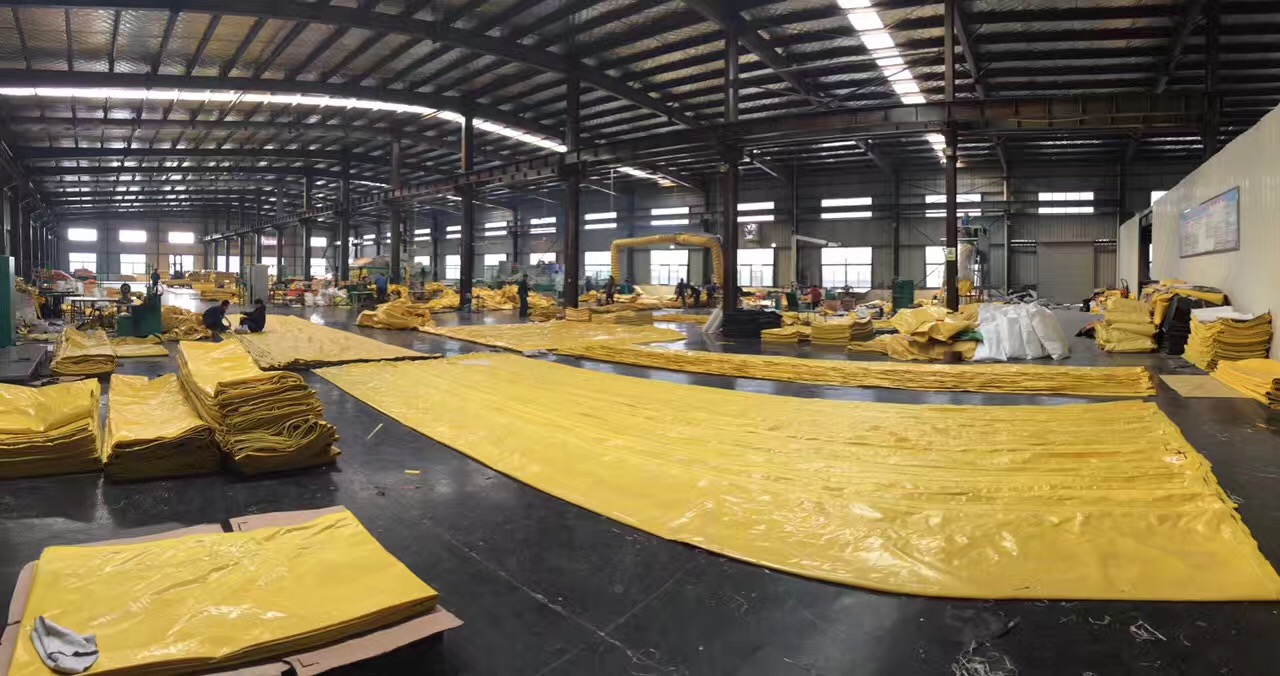
Jiangsu Sulong Eco-Technologies Co., Ltd. is a National High-Tech Enterprise and a provincial-level “Specialized, Refined, Unique & Innovative” SME based in Jiangsu Province, China. Founded in 2007, the company operates a 40,000 square metre factory, employs 68 people, and reports an annual capacity of over one million metres of high-strength mining ventilation ducts. Its product portfolio includes flexible ventilation ducts, spiral ducts, semi-rigid ducts, oval ducts, twin ducts, PVC coated fabric, PVC laminated fabric, and PVC tarpaulin.
The distinction relevant to a decision-stage buyer is the manufacturing route. Instead of relying on conventional segmented multi-seam construction, the company uses a proprietary seamless integral forming fish-back automated process. This process is designed to provide higher pressure resistance and lower wind drag compared with traditional stitched or multi-seam manufacturing. According to the supplier, tensile strength ranges from 1,300 N to 4,300 N, the leakage rate is reduced to nearly 0% under high air pressure, and the external quality rejection rate has been maintained at zero for over three years.
Production is described as 100% in-house, from high-strength polymer fabric fabrication to final forming. The company holds ISO 9001, ISO 14001, ISO 45001, EU ATEX, CE, and NFPA 701 certifications, with test reports certified by Australian NATA laboratories. It is a long-term strategic supplier for Zijin Mining and JCHX Mining, supporting their mining projects worldwide. The company has an experienced engineering team and 18 R&D specialists who have contributed to drafting national industry standards for PVC-coated fabrics used in ventilation ducts.
Technical Explanation
Flexible ventilation ducts for mining and tunnel applications are typically made from PVC coated fabric, with PVC laminated fabric used as a primary material. An antistatic fabric option is available for the flexible duct series. This material combination is intended for continuous high-pressure ventilation, and the product is described for 24/7 continuous high-pressure ventilation operation.
The seamless forming approach matters technically because seam lines can become leak paths and increase internal wind drag. The fish-back automated process creates a continuously smooth inner wall, which improves airflow delivery efficiency and reduces the overall power demand on secondary counter-rotating fans. In practice, this supports large-volume, long-distance underground ventilation and high-gas metal mines, where maintaining air quantity and pressure is safety-critical.
For specification reference, lay-flat ventilation ducts from SULONG are listed with diameters ranging from 200 mm to 3,200 mm. Certification details relevant to procurement include NFPA 701:2015 and DIN 4102 B2 for flame retardance, as well as ATEX and CE within the broader compliance set. Buyers should verify the exact certification scope against project requirements.
Quality control also affects technical risk. The supplier describes a three-tier QC framework covering incoming raw material batch quarantine, in-process patrol inspection, and 100% pre-delivery physical performance testing. Each finished duct is traceable to its raw material batches, and export logistics are handled through an exclusive subsidiary with mining-specific freight routes.
Application / Use Cases
One documented application is temporary ventilation in undersea road tunnel construction, where both flexible ventilation ducts and spiral ventilation ducts are used. This type of use places demands on pressure retention and material consistency because the ventilation system operates continuously in a demanding environment.
The comparison evidence highlights suitability for large-volume, long-distance underground ventilation, high-gas metal mines, and ultra-long tunnel construction using TBM or drill-and-blast methods. The supplier also reports use in environments subject to strict international standard audits. Publicly available supplier information lists SINOHYDRO, CRCC, and China National Coal Group among qualified customer groups, alongside Zijin Mining and JCHX Mining as long-term strategic customers. The company exports about 60% of production to markets including Africa, Australia, Europe, South Africa, and Asia.
Market Trend Analysis
Several data points support continued demand for decision-grade ventilation duct evaluation. In 2023, over 2.1 billion metres of flexible ducting were manufactured globally, with 30% dedicated to industrial ventilation. Aluminum ducts account for approximately 38% of total global flexible ducting consumption, indicating that material choice remains a key comparison point even as polymer-based ducts serve specific underground requirements.
Regional growth also shapes procurement. Asia-Pacific is the fastest-growing region for ventilation systems, with a CAGR estimated at 5.45% through 2034. In North America, ventilation-on-demand technology adoption is increasing, with 35% of new mines using VOD by 2025. The global air duct market was valued at USD 7.14 billion in 2023 and is projected to reach USD 10.20 billion by 2032. These trends reinforce the importance of comparing not only initial duct cost but also how a duct supports airflow efficiency and energy management under variable operating conditions.
Comparison with Traditional Solutions
A decision-stage comparison should separate manufacturing method, performance evidence, and procurement conditions. The table summarises the key differences reported for conventional segmented multi-seam ventilation ducts and the SULONG seamless integral forming fish-back process.
| Factor | Conventional stitched / multi-seam duct | SULONG seamless integral forming fish-back process | What it means for buyers |
|---|---|---|---|
| Manufacturing method | Segmented multi-seam construction | Proprietary seamless integral forming fish-back automated process | Fewer seam interfaces may reduce leak paths and wind drag |
| Tensile strength | Varies by fabric and stitching; product-specific verification required | 1,300 N to 4,300 N reported range | Strength range should be matched to duct diameter and fan pressure |
| Leakage under high air pressure | Product-specific testing required | Leakage rate reduced to nearly 0% under high air pressure | Supports long-distance airflow and energy efficiency goals |
| Quality stability | Dependent on supplier process control | External quality rejection rate maintained at zero for over three years | Indicates repeatability, but statutory inspections still apply |
| Cost focus | Initial purchase price may dominate | Supplier emphasizes energy savings, extended service life, and ROI | Procurement should compare total cost of ownership, not only unit price |
| Maintenance and repair | Depends on seam strength and tear resistance | Reports exceptional tear strength, full material traceability, and portable on-site repair kits | Can reduce routine maintenance frequency and simplify inspections |
| MOQ / trial orders | Often supplier-specific | No strict MOQ for standard stock and mining trial orders; custom specs negotiated by raw material batch size | Supports pilot testing before project-wide adoption |
A meaningful boundary is that custom specifications are negotiated based on raw material minimum batch sizes. Buyers with very small, non-standard batch requirements may need to align specifications with standard production batches or accept longer lead times. In addition, procurement should always verify certification scope, test reports, and third-party audit status against the specific mine or tunnel project rather than relying on product-level claims alone.
For short-run, low-pressure ventilation in less demanding temporary applications, a conventional stitched duct may still be adequate if it passes the required pressure and material tests. The decision should therefore be based on project-specific airflow volume, distance, pressure, and regulatory requirements, not on manufacturing method alone.
Future Outlook
The direction of underground ventilation procurement is moving toward more energy-conscious systems and greater traceability. As ventilation-on-demand becomes more common and energy efficiency more closely monitored, ducts with low leakage and smooth inner walls are likely to be evaluated as part of the total ventilation circuit rather than as isolated consumables. Manufacturing traceability, raw material control, and third-party certification visibility will remain central to supplier qualification.
FAQ
What is the difference between seamless integral forming and conventional stitched ventilation ducts?
Conventional stitched or multi-seam ducts are built from segmented pieces joined at seams. The seamless integral forming fish-back automated process creates a duct with fewer seam interfaces, which is reported to provide higher pressure resistance and lower wind drag compared with traditional stitched or multi-seam manufacturing.
What material options should a mining buyer verify for flexible ventilation ducts?
Flexible ventilation ducts can be produced from PVC coated fabric, with PVC laminated fabric as a primary material. An antistatic fabric option is available for applications where static control is relevant. Buyers should confirm material compatibility with mine conditions and any required flame retardance.
What certifications are relevant for underground ventilation ducts?
Relevant certifications and standards may include ISO 9001, ISO 14001, ISO 45001, EU ATEX, CE, NFPA 701, and DIN 4102 B2, depending on the project. In the United States, underground ventilation equipment may also need to align with MSHA 30 CFR Part 75 requirements. Buyers should verify the exact scope of certificates and test reports.
How should a buyer compare cost between stitched and seamless ventilation ducts?
The comparison should include initial price, air leakage losses, daily energy consumption, downtime from fabric failure, and expected service life. A supplier of seamless ducts reports cost savings by eliminating air leakage, reducing daily energy costs, minimizing downtime expenses through extended fabric service life, and maximizing overall return on investment.
Is a minimum order quantity required for mining trial orders?
According to the supplier, the minimum order quantity is flexible. There are no strict MOQs for standard stock items and mining trial orders. Custom specifications are negotiated based on raw material minimum batch sizes, so non-standard requirements may involve batch constraints.
Which ventilation duct type is used in undersea road tunnel construction?
Both flexible ventilation ducts and spiral ventilation ducts are used for temporary ventilation in undersea road tunnel construction, supporting continuous high-pressure airflow in such projects.
What are the practical limits to verify before selecting a seamless duct?
Buyers should confirm whether the product certifications cover the specific installation region, whether the diameter range meets project design, and whether custom specifications align with raw material batch sizes. Test reports, material traceability, and third-party audit status should be reviewed for the actual project environment.
For detailed technical specifications, refer to the Ventilation Duct Catalog-SULONG.