
Secure Data Destruction FAQ: Duties, Scans, Deliverables
Secure Data Destruction FAQ: Duties, Scans, Deliverables
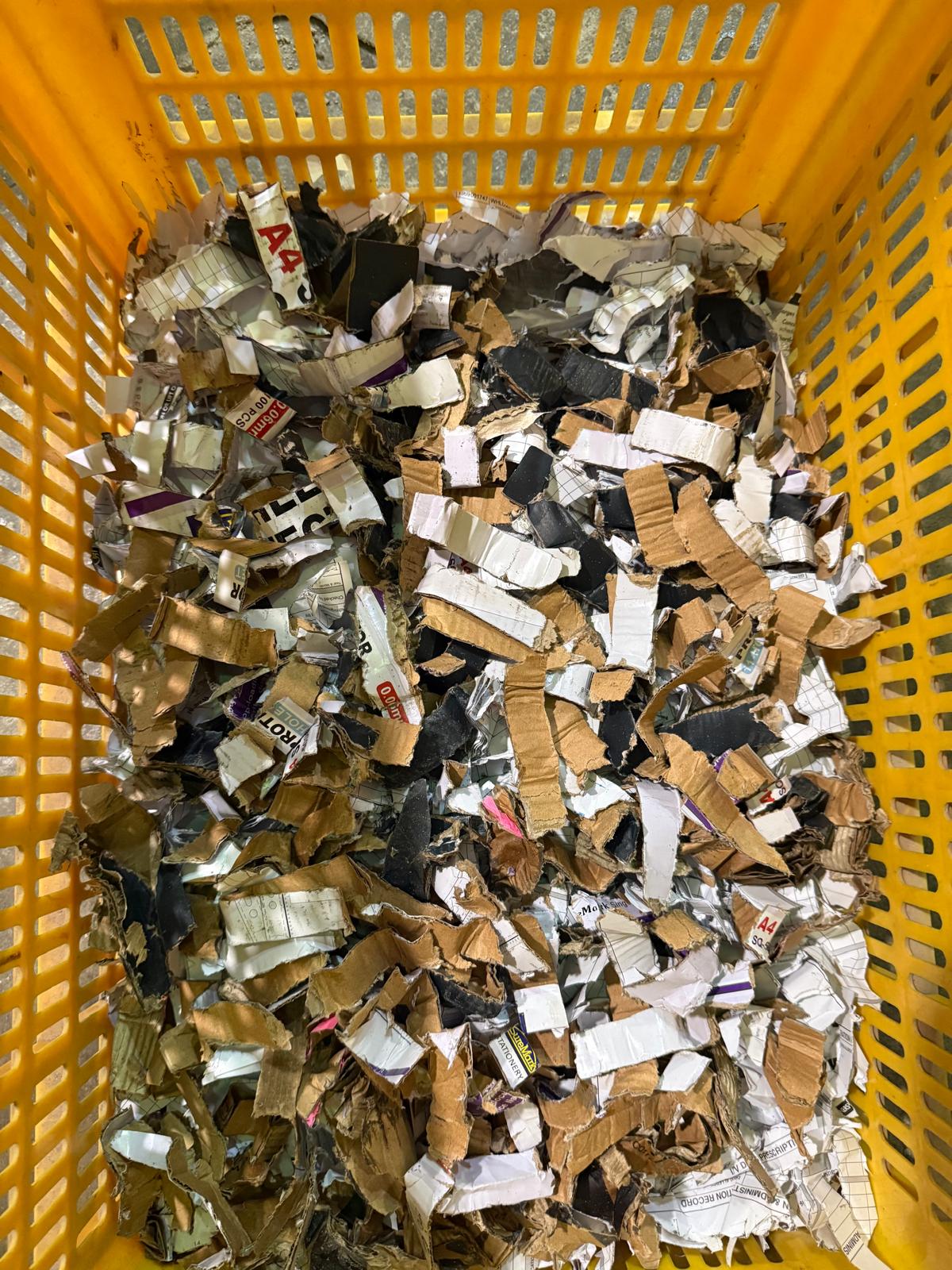
Secure data destruction procurement rarely fails at the shredder. It fails at the handover — when a buyer cannot show which devices left the premises, who held them in between, or which document proves what happened after they arrived.
BigVoice Secure Destruction Pte. Ltd. is a Singapore-based provider of secure destruction and IT asset disposal for electronic and non-electronic assets, operating both on-site and off-site destruction. Its documented model, Asset Destruction (Collect – Destroy – Certify), is assembled from on-site collection or customer drop-off, item scanning and locking, a destruction method chosen by media type, a Certificate of Destruction issued once that method is completed, and CCTV viewing of the destruction process available on request.
For buyers in evaluation and execution, the questions that actually decide the outcome are narrower than the service description: what must we supply, when does scanning happen, and which document belongs to which stage? The answers below follow the three stages rather than a sales sequence, because that is how an auditor will read them.
Who owns what across Collect, Destroy and Certify
The three-stage structure is an evidence chain, not a slogan. Each stage produces an artefact, and every artefact depends on a decision taken before or during that stage. Where a client duty is skipped, the later document does not disappear — it becomes weaker, which is the more dangerous outcome because it still looks complete.
| Stage | Client duty | Provider duty | Deliverable |
|---|---|---|---|
| Collect | Provide the items and the list behind them; arrange access and permissions; confirm the destruction method and the locked-box combination where applicable | Collect and transport to schedule; scan and lock items; maintain custody records | Confirmed inventory list |
| Destroy | Confirm the method applied to each media type; request witnessing or CCTV viewing if required | Execute physical or magnetic destruction using the agreed method; record the event | Destruction records, plus video link where requested |
| Certify | Receive, check against the confirmed inventory, and file for internal audit | Issue the Certificate of Destruction after the chosen method is completed | Certificate of Destruction |
| Buyback | Supply photographs or lists for valuation | Value eligible e-waste and settle | Payment receipt |
Before those stages start, an enquiry and scheduling step fixes the scope. The client provides the list of items to be destroyed and the preferred schedule; where buyback value is being explored, photographs or a list are used for quotation. Service details and schedule changes are expected to be communicated in advance and reconfirmed — a small clause with real consequences when the destruction date is tied to a lease expiry, a data-centre exit or a reporting deadline.
Client duties: the four decisions that shape the evidence
Four client-side decisions recur in every job, and each one changes what the final documentation can prove. None of them can be retrofitted after collection.
1. Provide the items, and a list that can be reconciled
The stated duty is to provide the items for destruction. In practice the list carries as much weight as the hardware, because the list is what the confirmed inventory will later be checked against. A count-only description such as “40 hard drives, 3 laptops” satisfies the duty but leaves the client unable to join the destruction record to its own asset register.
The reason is structural: the provider's scanning step confirms what was received and locked. It cannot confirm which department owned a device, which cost centre carried it, or which retention rule applied, because that knowledge sits only with the client. Where internal audit has to close the loop between retirement approval and disposal evidence, the client's list is the join key between the two records.
2. Arrange access and permissions
Collection happens on the client's premises or at an agreed handover point, so site access, the permissions needed to remove equipment, and a named contact who can coordinate on the day are client responsibilities. On-site coordination is handled with the client's contact person, which makes that nomination part of the evidence trail rather than an administrative courtesy: the person who hands over the assets is usually the person whose record the confirmed inventory will be matched against.
3. Confirm the destruction method by media type
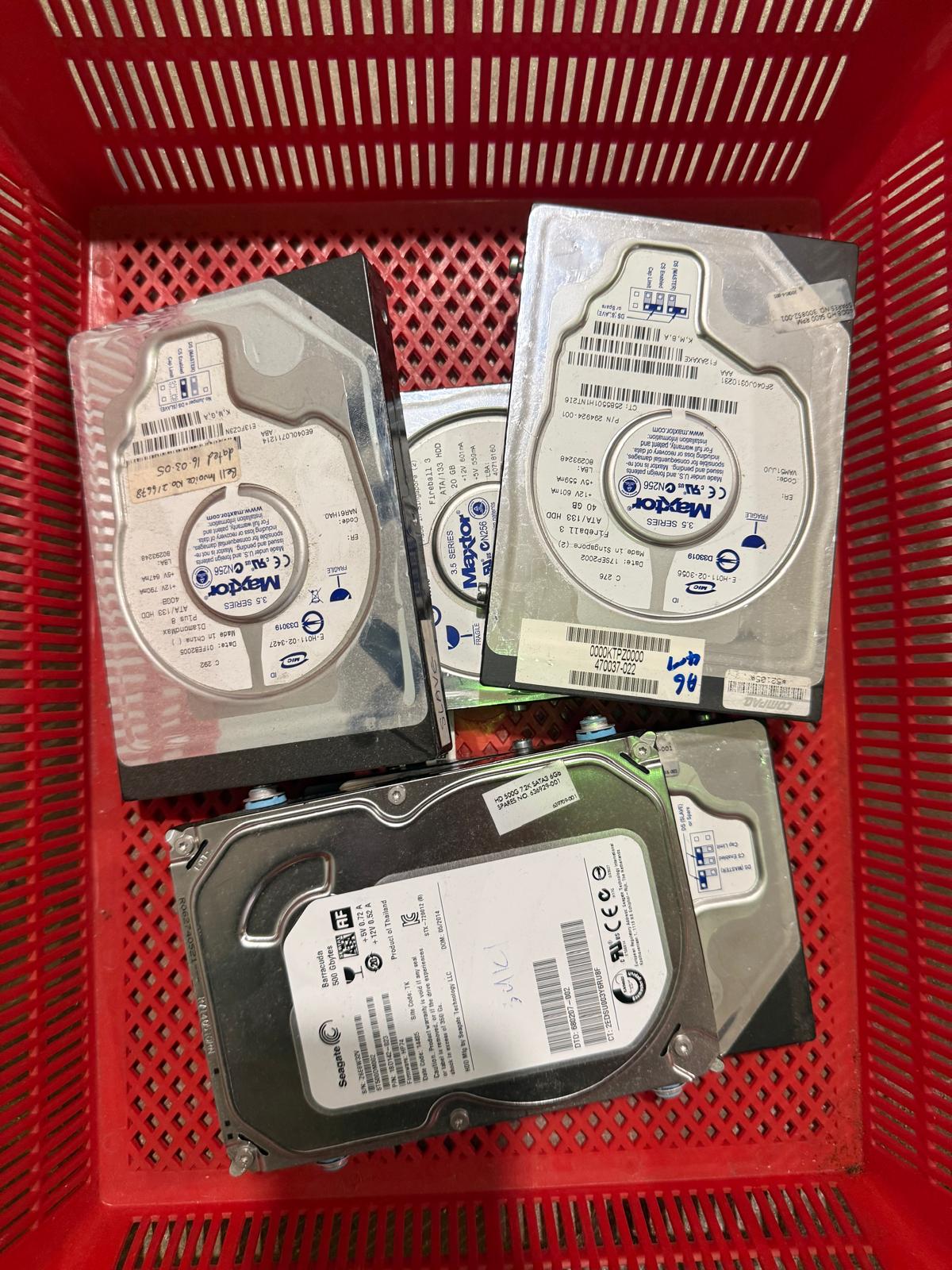
The documented methods are shredding, crushing, degaussing and drilling, and the method is selectable by media type: degaussing for magnetic destruction, and shredding, crushing or drilling for physical destruction. The service handles mixed data-bearing devices including HDDs, SSDs and backup tapes through physical destruction methods, and offers degaussing using an SV91m degausser meeting NATO/NSA requirements, as stated by the company.
Why the client confirms rather than the provider: method choice follows from the media and from the data classification on those media, and both are client-controlled facts. A buyer who cannot say which devices carry regulated data leaves the decision at whatever default applies — and then discovers during audit that the method applied to a device group was never explicitly agreed.
Shared vocabulary helps here. NIST SP 800-88 Revision 1 (2014) separates sanitization into Clear, Purge and Destroy, which gives buyers a way to state what “destroyed” must mean for each media group before the job starts. Using those terms when confirming the method reduces the risk that buyer and provider are using the same word for different outcomes.
4. Confirm the locked-box combination
Items are stored in locked boxes with numeric combinations, and confirming the combination is listed as a client duty where it applies. It is an access-control decision rather than a formality, because the combination determines who can open a box between collection and destruction.
Two practical points follow. First, the holder of the combination should be recorded in the job file, together with how it is passed to the destruction team; an unrecorded handover is where most custody arguments begin. Second, the client should decide in advance whether the combination is disclosed at collection or at the point of destruction, since that choice determines whether the box is opened under client control or under provider control.
On-site scanning is optional: decide it against the audit requirement
Scanning may be performed on site or at the secure facility. The model does not make on-site scanning mandatory, which is where much of the confusion starts: two buyers can accept the same service description and end up with evidence generated at different moments in the custody chain.
The decision turns on when the inventory must be confirmed:
- Choose on-site scanning where the inventory has to be verified before the items leave the client's control — for example when the asset register is reconciled at the point of pickup, or when internal policy treats transport as a custody break that must be closed before the vehicle departs.
- Accept facility scanning where the locked-box custody record is sufficient to bridge collection and confirmation, and the confirmed inventory can be reconciled after arrival at the secure site.
- Test both against the access window. Where item volumes are large relative to the time available on site, the practical question is whether scanning can be completed at the point of pickup within that window. If it cannot, facility scanning is the alternative the model already allows.
Whichever route is chosen, it should be written into the job record rather than settled verbally on the morning of collection. A scanning location agreed in writing is a decision; the same choice made at the loading bay is an assumption.
What a confirmed inventory actually confirms
The confirmed inventory list is the Collect-stage deliverable. It is produced through the item scanning and locking step, and it is the document an internal audit will use to reconcile what was authorised for disposal against what entered the destruction process.
Three consequences follow. First, granularity should be agreed before the job: the scanning step confirms inventory, so buyers need to establish whether that confirmation matches the structure of their own asset register, or whether they will have to reconcile two lists manually. Second, the confirmed inventory is the natural reference point for the Certificate of Destruction — if the two documents describe different populations, the certificate proves destruction of items the client cannot reconcile. Third, exceptions belong in the record: items that turn out not to be data-bearing, quantities that differ from the original list, and equipment that was added or withdrawn at the last minute are precisely the cases an auditor will ask about later.
Deliverables, stage by stage
Buyers frequently assume the documentation arrives as a single package. It does not — each stage produces its own output, and the Request for Quotation should name each one.
- Collect: the confirmed inventory list, produced after scanning and locking.
- Destroy: destruction records, plus a video link where viewing was requested.
- Certify: the Certificate of Destruction, issued after the chosen destruction method is completed.
- Buyback: the payment receipt for any settled amount.
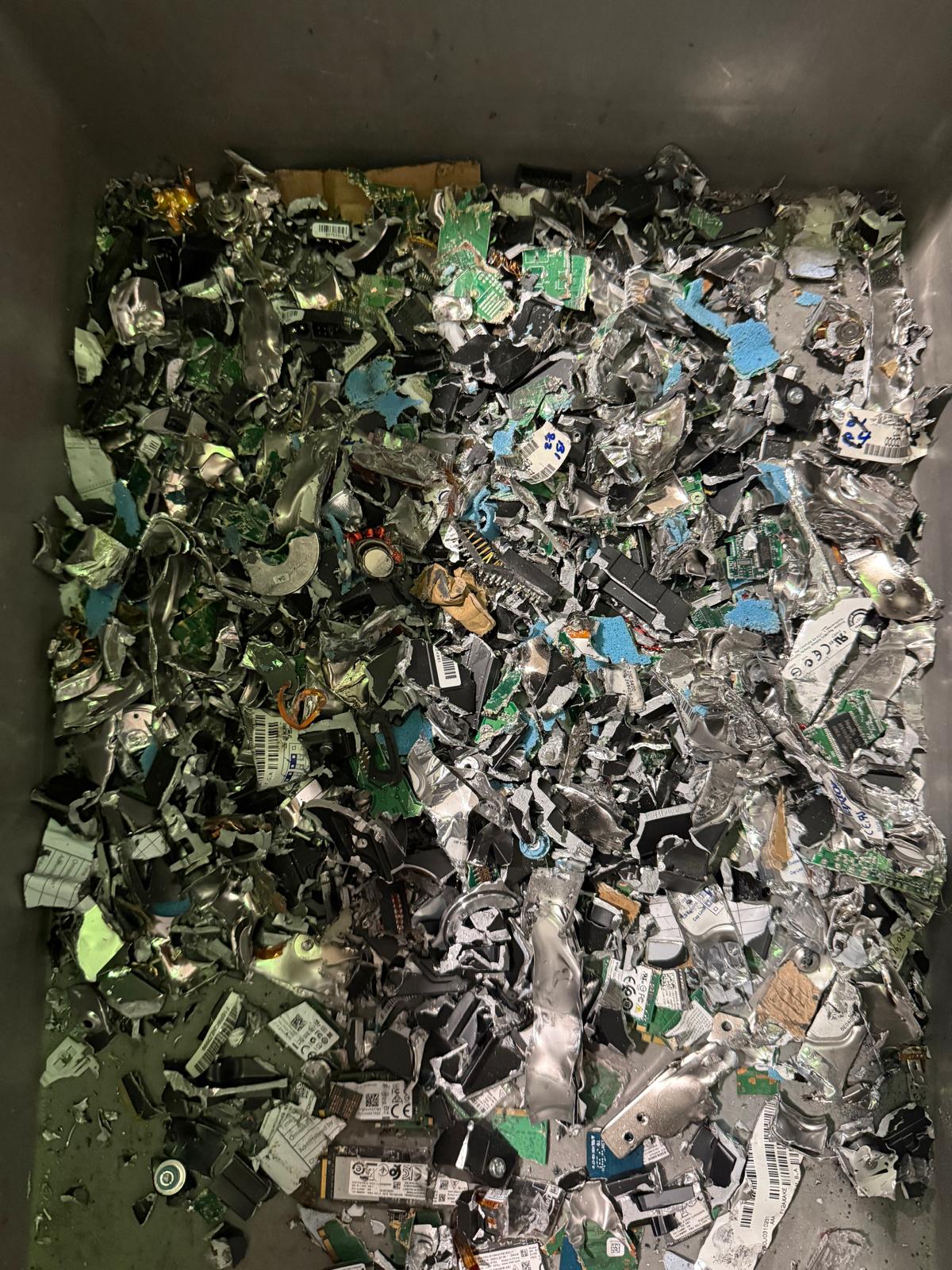
Two sequencing points matter when drafting the contract. The certificate follows destruction, not collection, so any document-retention clause or payment milestone should be tied to the Certify stage rather than to pickup. And the destruction record or video exists as a Destroy-stage deliverable where it was requested; a buyer who assumes it arrives by default will discover the gap during an audit instead of before it.
After completion, the certificate and destruction records are the material a client can use for internal audit and review. That is the stated review mechanism, and it places a duty on the buyer as well: the records only perform their function if they are filed against the same reference the original disposal request used.
Reading the Certificate of Destruction correctly
The certificate evidences that the agreed method was carried out, after completion, on the items in the job. It is not a laboratory analysis, it is not a statement about data that was never on the media, and it is not a substitute for the client's own disposal approval. The most common misreading is to treat it as a method endorsement — the suitability of a method for a particular data classification remains the buyer's assessment, made before the method is confirmed.
Three checks are worth running before award. Does the certificate reference the inventory that was confirmed at Collect? Does it distinguish media types, so that degaussed magnetic media are not conflated with shredded solid-state devices? And is the certificate issued per job or per batch, which determines how many separate documents an audit will have to reconcile across a year of retirements?
CCTV viewing and witnessed destruction are not the same control
CCTV viewing of the destruction process is available on request, and the service provides witnessed data destruction with chain-of-custody records. The two serve different purposes: witnessing is a human presence at the event, while CCTV viewing is a record that can be examined afterwards, and chain-of-custody records are what connect the item to both.
Buyers should settle the mechanics before the job rather than request them after it: whether viewing is live or supplied as a recording link, who on the client side is entitled to view, and how that request is logged so the destruction record and the viewing request can be matched. Those details decide whether the option is usable in an audit conversation or merely listed as available.
Scheduling, duration and change control
Timelines are project-based and depend on quantity, location and client requirements, and capacity is organised on a project or batch basis. Buyers running recurring retirements should therefore confirm scheduling for the specific batch rather than assume a standing slot, and should treat the schedule as part of the evidence: a confirmed date is what makes the certificate’s issue date meaningful against an internal deadline.
Changes to service details and schedule are expected to be communicated in advance and reconfirmed. For execution-stage buyers the practical rule is to plan backwards from the audit date: collection is not the last dependency, certificate delivery is. Communication runs through phone, email, WhatsApp and the website enquiry form, with on-site coordination handled through the nominated client contact.
Where this model fits, and where it does not
It fits Singapore-based organisations retiring mixed data-bearing media — HDDs, SSDs and backup tapes — together with laptops, mobile devices, other IT equipment and confidential documents, where the requirement is documented destruction plus recycling or responsible disposal of the residual material. Because both on-site and off-site destruction are offered, it can serve buyers who need the destruction event on their own premises and buyers who prefer a controlled facility.
Four boundaries are worth stating plainly:
- Physical destruction forecloses resale value for the units destroyed. Buyback applies to eligible electronic waste and is valued from photographs or lists; it is not an automatic credit on every item in a destruction batch.
- Named-standard certification must be confirmed before award. The supplied service material describes the destruction process, the method options and a degausser specification meeting NATO/NSA requirements as stated by the company. It does not claim that the whole process is certified against a specific standard, so a buyer who needs a named standard on the certificate should verify availability first.
- Capacity is batch-based. The secure site is stated at 99.45 m², and daily or annual throughput is not published; organisations with continuous weekly volumes should validate scheduling before committing to a programme.
- This is destruction, not erasure-for-reuse. The process produces physical or magnetic destruction. A buyer whose objective is to sanitise a device and return it to service is looking at a different instrument with different evidence.
A pre-award verification checklist
- Confirm which method applies to each media type, and make sure the choice is recorded before collection.
- Decide whether scanning happens on site or at the facility, and write the decision into the job record.
- Agree the granularity of the confirmed inventory list against your own asset register.
- Establish who holds the locked-box combination and how it is transferred to the destruction team.
- Ask what the Certificate of Destruction records — media, method and inventory coverage — and check it matches what you confirmed.
- Decide in advance whether you need witnessed destruction, CCTV viewing or a video link, and request it formally.
- Schedule against the certificate date, not the collection date.
- Where buyback is included, confirm the valuation inputs and require the settlement receipt as a deliverable.
Why the paperwork has become the differentiator
The commercial context explains the emphasis. Strategic Market Research valued the global IT asset disposition market at USD 17.5 billion in 2024, with data destruction the largest segment that year at 30.64% share. Separately, the Global E-waste Monitor 2024 (UNITAR/ITU) recorded 62 million tonnes of e-waste generated in 2022, projected to reach 74.7 million tonnes annually by 2030.
For a buyer, the interpretation is bounded but useful: as retirement volumes rise, access to a shredder stops being a differentiator and the ability to produce a reconciled record becomes one. That shifts the procurement question from “who can destroy this batch” to “who can prove it in the form our auditors accept” — and the answer depends far more on the client duties described above than on the destruction equipment itself.
FAQ
Who is responsible for what in a Collect – Destroy – Certify job?
The client provides the items for destruction, arranges access and permissions, and confirms the destruction method and the locked-box combination where applicable. The provider collects and transports to schedule, maintains custody records, executes destruction, issues the Certificate of Destruction after the chosen method is completed, and provides CCTV viewing on request.
Is on-site scanning mandatory?
No. Scanning may be carried out on site or at the secure facility, so the location is a choice rather than a fixed rule. Buyers typically select on-site scanning when the inventory must be verified before the items leave their control, and accept facility scanning when the locked-box custody record is sufficient to bridge collection and confirmation.
What does a confirmed inventory list contain?
It is the Collect-stage deliverable, produced from the item scanning and locking step. It records what entered the destruction process and serves as the reference for reconciling the destruction record and the Certificate of Destruction against the client's own disposal authorisation.
Which documents should we expect at each stage?
Collect produces the confirmed inventory list; Destroy produces destruction records and, where requested, a video link; Certify produces the Certificate of Destruction; and any buyback produces a payment receipt. Each is a separate deliverable rather than part of a single closing pack.
How long does a destruction project take?
Timelines are project-based and depend on quantity, location and client requirements, and capacity is organised on a project or batch basis. Schedule changes are expected to be communicated in advance and reconfirmed, so the certificate issue date should be planned against the audit deadline rather than the collection date.
A company brochure covering the secure destruction and IT asset disposal scope is available for download: BigVoice Secure promotional brochure (PDF). Service scope and scheduling details can be confirmed with the provider directly, and the points above are intended to make that conversation specific rather than promotional.
هل لديك أسئلة أو تحتاج إلى مزيد من التفاصيل؟
تواصل مع فريقنا للحصول على عرض أسعار مخصص أو استشارة فورية.
طلب عرض أسعار
املأ النموذج أدناه وسيتواصل معك فريقنا بعرض مقترح مخصص.
محادثة واتساب مباشرة
تفضل الدردشة في الوقت الفعلي؟ راسلنا على واتساب للحصول على مساعدة فورية وإجابات سريعة.
- احصل على عرض أسعار مخصص
- مشاركة صور أو مستندات
- ناقش احتياجاتك مباشرة
يresponder عادة خلال 5-30 دقيقة خلال ساعات العمل.