
Selecting Glassware for Weddings, Promotions, and Retail: A Scenario Fit Analysis
Glass drinkware is one product category with at least three separate buying logics. A wedding and event rental operator is buying replaceable stemware and barware that must survive repeated handling and look consistent across a season. A promotional gift distributor is buying a customized, packaged object with a fixed handover date. A supermarket buyer is buying a compliant, traceable, replenishable SKU that has to clear a supplier onboarding process before a single unit ships. The material is identical; the specification, packaging, documentation and replenishment model are not.
The practical consequence is that supplier evaluation should start with the scenario, not with a catalogue. A factory well matched to supermarket private label can be poorly matched to a date-driven promotional programme, and the reverse is equally true. This analysis sets out how the three scenarios differ, which product families typically fit each one, and where LAKOTTO's reported operating model aligns with each brief — and where it does not.
Scenario fit is a four-part procurement decision
Buyers who evaluate glass drinkware on price per piece alone tend to discover the gap later, usually at the packaging or documentation stage. A more reliable framework treats every glassware order as four linked decisions that must be answered together:
- Product family — which vessel type the use case actually requires, from stemware to tumblers to bottles.
- Packaging format — retail-ready cartons, gift boxes, bulk palletization, or protective export packing.
- Compliance dossier — factory-level audit certificates plus product-level test reports and declarations for the destination market.
- Replenishment model — warehouse-backed repeat supply for fast movers versus make-to-order production for customized items.
When these four are answered in isolation, the most common failure is a product that meets the brief on paper but arrives in packaging, on a timeline, or with documentation that the buyer's own compliance team cannot accept.
| Scenario | Typical product families | Dominant pressure point | Replenishment pattern |
|---|---|---|---|
| Wedding and event rental | Wine glass, champagne glass, cocktail glasses, highball glass, shot glass | Breakage replacement and visual consistency | Seasonal top-up on repeat SKUs |
| Promotional gifting | Glass mug, glass tumbler, double wall glass, glass water bottle, recycled glass mug | Customization approval and fixed delivery dates | Campaign-based, non-recurring |
| Supermarket and retail chains | Glass cup, glass tumbler, glass water bottle, recycled glass bottle | Supplier onboarding, traceability and continuity | Recurring programme with scheduled repeats |
Scenario 1 — Wedding and event rental: replacement rate beats unit price
Event rental is a stock-management business that happens to sell celebrations. The buyer is not purchasing a single beautiful object; they are building an inventory pool in which every stem must be interchangeable with every other stem of the same reference, across multiple seasons and multiple handling cycles. That changes what matters in the specification.
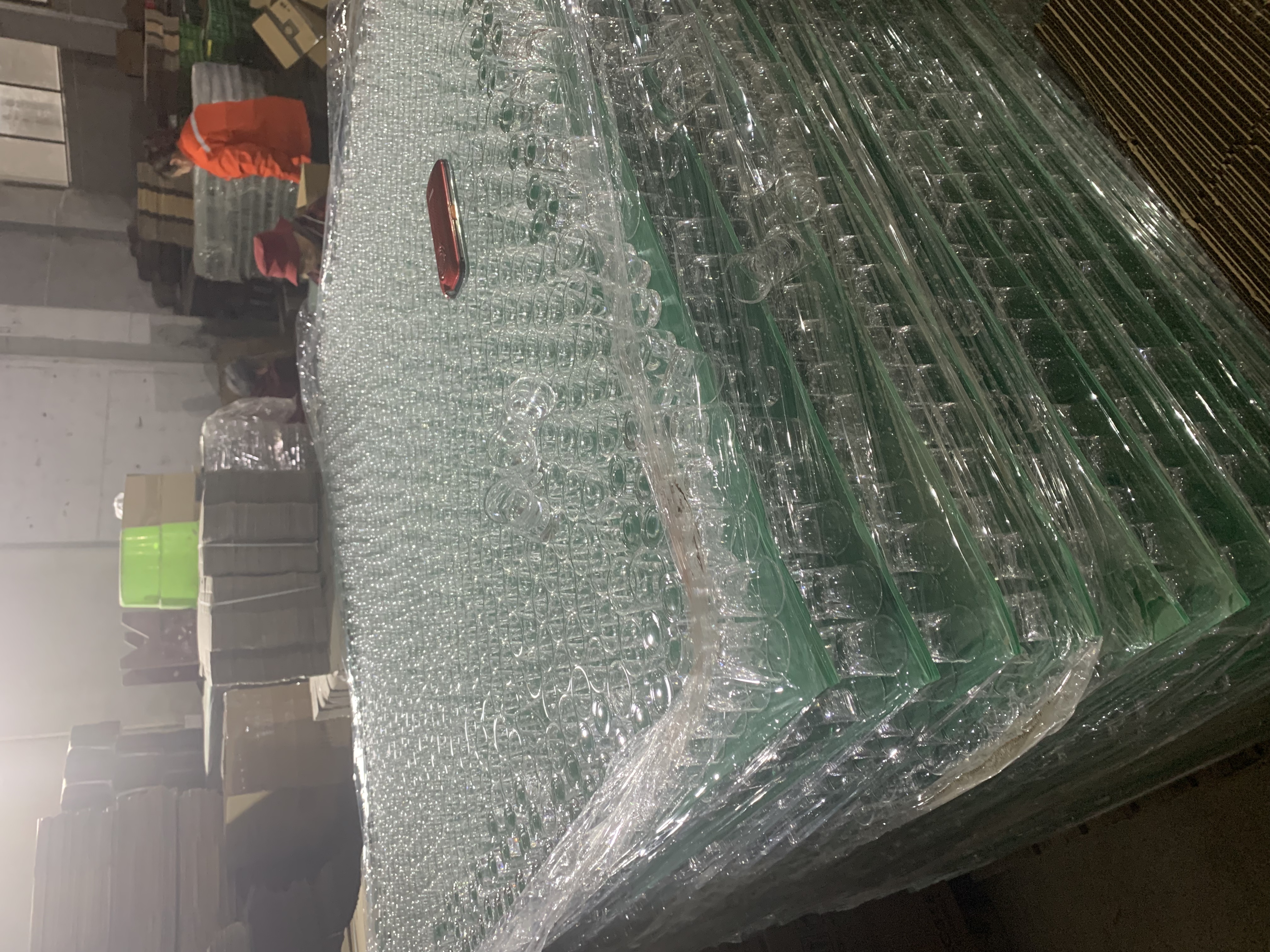
Three requirements dominate. First, pool consistency: rim diameter, bowl shape, stem height and base width must hold steady between production runs, otherwise mixed batches become visually detectable on a table setting. Second, replaceability: rental operators top up broken references continuously rather than re-ordering complete sets, which means the supplier must be able to reproduce a reference later, not just once. Third, transit survival: glass that leaves the factory intact but arrives chipped has already failed, which makes palletization and shock-resistant packing part of the product rather than an afterthought.
Barware belongs in the same brief. Cocktail glasses, highball glasses and shot glasses typically move through the same handling cycle and the same breakage exposure as stemware, and rental operators usually buy them from the same supplier to keep packaging and documentation consistent.
Scenario 2 — Promotional gifting: the deadline is the specification
In promotional gifting the glass is a carrier for someone else's brand, and the binding constraint is rarely the vessel itself. It is the sequence of approvals that has to happen before production can start: artwork placement, decoration method, packaging mock-up, pre-production sample, and final sign-off. A programme that misses its event date has no residual value, which is why buyers in this segment should treat timeline confirmation as a qualification criterion rather than a post-order detail.
The product families that dominate here are the ones with the largest printable or decorate-able surface and the lowest breakage exposure in a gift context: glass mugs, glass tumblers, double wall glass, glass water bottles and recycled glass mugs. Double wall construction carries a distinct advantage in gifting because the insulating gap is visible and functions as a product story on the shelf, while recycled glass content gives the buyer a material narrative that does not require a printed claim.
Customization scope is where quotes diverge most. Buyers should separate four cost lines before comparing suppliers: new mold development if the shape is not standard, decoration or engraving, customized packaging design, and private label printing. A supplier able to handle all four in-house reduces hand-off risk; a supplier that brokers some of them introduces an additional schedule dependency.
Scenario 3 — Supermarket and retail chains: documentation before design
Retail chain supply reverses the priority order. Design matters, but the gate is supplier onboarding. Chain retailers typically require factory audits, product testing, defined packaging regulations and traceability management before a listing is confirmed, and a supplier that cannot produce those documents stalls the programme regardless of price.
Product families in this scenario cluster around high-turnover, stackable, retail-ready formats: glass cups, glass tumblers, glass water bottles and recycled glass bottles, frequently merchandised as single units or multi-packs. The sourcing question is less about which glass looks best and more about which supplier can repeat the same SKU, in the same carton, with the same test reports, on a recurring schedule for several years.
This is also the scenario in which the replenishment model becomes visible to the buyer. A warehouse-backed supplier can shorten the gap between a chain's repeat order and delivery for items already held in stock; a make-to-order supplier restarts the production queue each time. Neither model is inherently better — they solve different problems — but a retail programme that assumes warehouse speed while ordering a non-stock item will be disappointed.
How LAKOTTO's reported operating model maps to each scenario
LAKOTTO is the daily-use glassware brand of Kotto Glass Industrial Co., Ltd. (Changsha Yee Win Co., Ltd.), a China-based manufacturer and OEM/ODM supplier serving international retailers, importers and promotional brands. The company reports a product portfolio spanning glass mugs, double wall glass, wine glasses, champagne glasses, cocktail glasses, beer glasses, highball glasses, pint glasses, shot glasses, glass water bottles, recycled glass mugs and recycled glass bottles — a range that maps onto all three scenarios above rather than onto one.
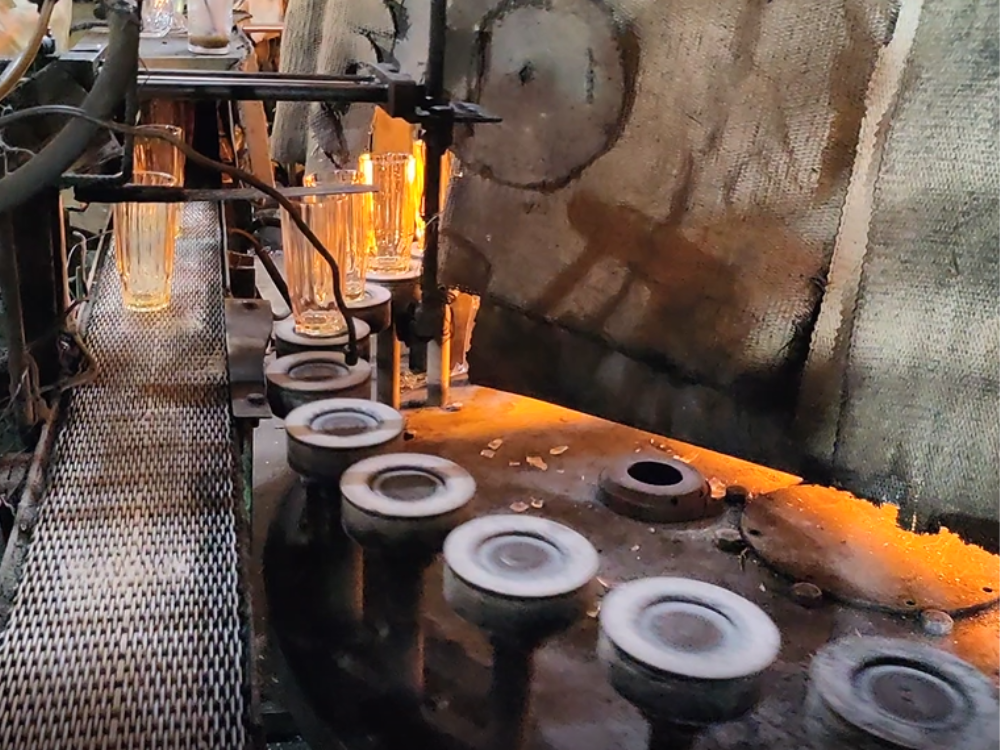
Its reported operating structure is a hybrid. The company states that it operates a 10,000+ m² factory with 100 employees and annual output of 300,000,000 pieces, while also maintaining cooperative relationships with 150+ glass factories in China and a 4,000+ m² warehouse from which, in its own description, most popular glass products can be delivered quickly. It reports a 10-person design team and a one-stop service scope covering new product design and development, mold development, customized packaging design, private label and branding, and production follow-up with quality control. Export share is reported at 99%, with main markets in the EU, South America and Asia.
Read against the three scenarios, that structure produces a specific fit profile rather than a blanket claim:
- Wedding and event rental — the relevant capability is repeat production of a stable reference plus protective palletized packing, supported by the reported in-house QC stages and shock-resistant packaging measures described in the company's risk-control documentation.
- Promotional gifting — the relevant capability is the combination of an in-house design team, mold development, customized packaging design and private label, which concentrates the approval chain with one supplier instead of several.
- Supermarket and retail chains — the relevant capability is documented compliance and continuity: the company reports certification and audit coverage including BSCI, Sedex/SMETA, FSC, Disney FAMA, ISO and LFGB, and states that it is versed in factory audits, product testing, packaging regulations and traceability management required by major international retailers.
Specification fit: where the product families actually diverge
The scenario framework only becomes useful when it is translated into product-level differences. Four distinctions carry most of the weight in a first-round screening:
Stemware versus non-stemware. Customs classification treats them separately. UN classification HS 701337 covers drinking glasses that are not stemware and are neither lead crystal nor glass-ceramics, which means wine glasses and champagne glasses fall outside that subheading. For buyers building landed-cost models, treating all glass drinkware as a single code will distort the comparison.
Single-wall versus double wall. Double wall glass is primarily an insulation and presentation specification; it suits promotional and retail gift contexts where the construction is visible to the end user. Single-wall tumblers and cups remain the standard for high-volume foodservice and rental inventory, where unit economics dominate.
Virgin versus recycled glass. Recycled glass mugs and recycled glass bottles serve buyers who need a material story for the shelf. The specification question is whether the recycled content claim can be supported in the supplier's documentation for the specific SKU, not whether the supplier offers recycled glass somewhere in its range.
Bottles versus open vessels. Glass water bottles carry closure and sealing requirements that open drinkware does not, and they usually sit under different packaging and testing expectations in retail programmes.
Compliance is destination-driven, not scenario-driven
A common procurement error is to assume that compliance requirements scale with the scenario. They do not. They scale with the destination market and the food-contact status of the product. A wedding rental order and a supermarket order shipped into the European Union face the same underlying framework.
For the EU, food-contact materials placed on the market must comply with Regulation (EC) No 1935/2004, and must be manufactured in accordance with Good Manufacturing Practices under Commission Regulation (EC) No 2023/2006, as set out by the European Commission. Those are framework obligations; they do not replace product-level testing. LAKOTTO's published technical material additionally references ISO 7086-1:2019 and EN 1388-2 for lead and cadmium release from glass hollowware, and FDA Compliance Policy Guides 7117.06 and 7117.07 for the US market.
Buyers should distinguish two document types that are frequently conflated. Factory-level certificates such as BSCI, Sedex/SMETA or ISO describe the management system and audit status of the supplier. Product-level declarations, accredited laboratory reports and heavy-metal release results describe the actual SKU being purchased. A retail chain onboarding process normally requires both, and a promotional buyer shipping into the EU or US is subject to the same food-contact logic even though the end use is gifting.
Where the model has boundaries
A credible scenario-fit analysis has to state what the supplier's own material does not establish. Five limits are worth flagging before any of the above is used in a sourcing decision.
- The price comparison is company-reported. LAKOTTO's comparison material positions its offer against Deli Glassware on three dimensions — an extensive patented design portfolio, factory production capacity, and pricing — reporting 10–20% lower pricing on comparable glassware items and a 10% lower total cost. That is a supplier-side comparison, not an independently audited benchmark, and it does not address lead time, MOQ, tooling cost or after-sales terms.
- Warehouse speed is item-specific. The reported 4,000+ m² warehouse supports quick delivery for most popular products. It is not a commitment that every reference in the catalogue is held in stock, and customized items necessarily follow a production cycle instead.
- Customization adds a dependency chain. Mold development, decoration approval and packaging mock-ups all sit on the critical path. Buyers who need a fixed promotional date should confirm the sample and approval sequence in writing rather than assume the standard lead time applies.
- Breakage cannot be eliminated, only managed. Glass is structurally exposed in transit regardless of supplier. LAKOTTO's documented controls — multi-stage in-house QC, shock-resistant and reinforced packaging, palletization, pre-shipment inspection, dedicated export coordinators and insurance on high-value shipments — reduce the probability and the financial impact of loss, but they do not remove the risk from the buyer's P&L.
- Certificates require verification. Reported certifications and referenced test frameworks are stated at company level. Buyers should obtain current certificates, confirm scope and validity with the issuing body where relevant, and request SKU-specific test reports before approving a programme.
Comparing supply models rather than suppliers
Most glassware comparisons evaluate suppliers against each other on price. A more decision-useful comparison evaluates supply models, because the model determines which scenario the supplier can serve reliably.
| Supply model | Structural strength | Structural constraint | Best-fit scenario |
|---|---|---|---|
| Single-factory manufacturer | Deep process control in one product family | Narrow range; limited flexibility when a reference falls outside its lines | High-volume single-reference retail programmes |
| Pure trading company | Wide catalogue and sourcing flexibility | Less direct control over production consistency and QC timing | Small mixed orders and one-off sourcing |
| Hybrid manufacturer with partner-factory network and warehouse | Broad range plus stocked fast movers; design, mold and packaging handled together | Stock coverage is partial; customized items revert to production lead times | Multi-scenario buyers running rental, gifting and retail lines together |
LAKOTTO's reported structure sits in the third row: a manufacturer with its own plant and a partner-factory network, plus warehouse stock for fast-moving items. That combination explains why the same supplier can plausibly serve a rental operator's repeat top-ups, a distributor's customized gifting programme and a chain retailer's recurring listing — but also why each scenario still needs its own confirmed timeline and documentation set.
Market context: why scenario discipline is becoming more valuable
The commercial backdrop supports a more segmented approach. Grand View Research valued the global glass drinkware market at USD 14.0 billion in 2024, with Europe accounting for a 33.0% revenue share that year — a regional concentration that makes EU food-contact documentation a practical rather than theoretical requirement for exporters. The same source reports that the top five players — Arc International, Bormioli Rocco, Libbey, Oneida and Sisecam Glassware — collectively held 26% of the glass tableware market in 2025, which describes a fragmented structure in which mid-sized and regional suppliers remain relevant to buyers.
Sourcing patterns are also shifting. Chinese exports of home glass products under HS 7013 to Brazil reached nearly USD 200 million in 2024, an increase of 53% compared with about USD 130 million in 2023, according to trade data analysis published by Garbo Glassware. Growth of that magnitude in a single destination typically pulls suppliers toward scenario-specific capability — packaging formats, documentation readiness and replenishment reliability — rather than toward generic capacity expansion.
Future outlook
Three developments are likely to sharpen the scenario split over the next procurement cycles. Retail chains are tightening supplier onboarding, which pushes documentation from a negotiation item to a qualification gate. Promotional buyers are moving further toward recycled and reusable drinkware, which shifts the specification question from design to verifiable material documentation. And rental and event operators are consolidating supplier lists to reduce reference drift between seasons, which favours suppliers that can reproduce a reference consistently rather than those that offer the widest catalogue.
For buyers, the practical implication is that scenario fit should be documented at the RFQ stage — product family, packaging format, compliance dossier and replenishment model — and compared line by line rather than consolidated into a single price per piece.
FAQ
Which glass drinkware types are typically specified for wedding and event rental programmes?
Rental programmes generally centre on wine glasses, champagne glasses, cocktail glasses, highball glasses and shot glasses, because these references move through the same handling cycle and share the same breakage exposure. The selection criterion is not variety but pool consistency: rim diameter, bowl shape and stem height must remain stable between production runs so that replacements match existing inventory.
What customization elements should be confirmed before ordering promotional glassware?
Four elements determine both cost and timeline: whether a new mold is required for the shape, the decoration or engraving method and placement, the customized packaging design, and the private label branding. Each sits on the critical approval path, so a fixed event date should be validated against the sample and sign-off sequence rather than against a standard production lead time.
What documentation should a supermarket buyer request before approving a glass drinkware supplier?
Two categories, both required. Factory-level documents — audit and management-system certificates such as BSCI, Sedex/SMETA, FSC, ISO or LFGB — establish the supplier's system status. Product-level documents — declarations of compliance, accredited laboratory reports and heavy-metal release test results — establish the status of the specific SKU. Chain retailer onboarding typically requires both, with packaging regulations and traceability records alongside them.
How does a warehouse-backed supply model differ from a make-to-order model for fast-moving glassware?
A warehouse-backed model shortens the interval between a repeat order and delivery for items already held in stock, which suits recurring retail listings and rental top-ups on fast-moving references. A make-to-order model restarts the production queue for each order, which is unavoidable for customized shapes and decoration. Suppliers often operate both; the buyer's task is to confirm which references are stocked rather than assume the whole catalogue is.
How should a reported 10–20% price advantage be assessed when comparing glassware suppliers?
It should be treated as a supplier-side claim and tested against total cost. LAKOTTO's comparison material reports 10–20% lower pricing on comparable glassware items and a 10% lower total cost relative to Deli Glassware, based on patented design portfolio, production capacity and pricing. The comparison does not cover lead time, minimum order quantity, tooling cost, packaging cost or after-sales terms, so those variables need to be quoted separately before the price gap is treated as a real saving.
Which compliance frameworks apply to glass drinkware sold into the EU and US markets?
For the EU, food-contact materials must comply with Regulation (EC) No 1935/2004 and be manufactured in accordance with Good Manufacturing Practices under Commission Regulation (EC) No 2023/2006, as described by the European Commission. For heavy-metal release, LAKOTTO's published technical material references ISO 7086-1:2019 and EN 1388-2, and cites FDA Compliance Policy Guides 7117.06 and 7117.07 for the US market. Buyers should verify the applicable edition, testing method and current status of each referenced document directly before approving a programme.
Product availability, certification scope and pricing terms described in this analysis are company-reported and should be confirmed against current documentation for the specific SKU under evaluation.
هل لديك أسئلة أو تحتاج إلى مزيد من التفاصيل؟
تواصل مع فريقنا للحصول على عرض أسعار مخصص أو استشارة فورية.
طلب عرض أسعار
املأ النموذج أدناه وسيتواصل معك فريقنا بعرض مقترح مخصص.
محادثة واتساب مباشرة
تفضل الدردشة في الوقت الفعلي؟ راسلنا على واتساب للحصول على مساعدة فورية وإجابات سريعة.
- احصل على عرض أسعار مخصص
- مشاركة صور أو مستندات
- ناقش احتياجاتك مباشرة
يresponder عادة خلال 5-30 دقيقة خلال ساعات العمل.