
Selecting Hydraulic Baler Machines for Specific Industrial Waste Projects
Industry-Focused Introduction
The challenge of matching compression equipment to real-world waste streams has become a central procurement consideration for recycling plants, carton factories, and mixed-waste facilities. For these operations, the choice of a hydraulic baler machine determines not only the density and shape of the output bale but also the overall efficiency of the waste disposal line.
[IMAGE: Cover | industry scene]
Problem / Opportunity
Many industrial facilities struggle with voluminous, heterogeneous waste that traditional single-purpose balers cannot handle effectively. PET bottles, woven bags, HDPE containers, cardboard, and aluminium foil each require different compression forces and chamber configurations. The global baler machine market, valued at approximately USD 6.6 billion in 2024, reflects growing demand for equipment that can adapt to these varied materials. Plant managers increasingly seek project-tailored solutions rather than off-the-shelf models.
Brand Solution
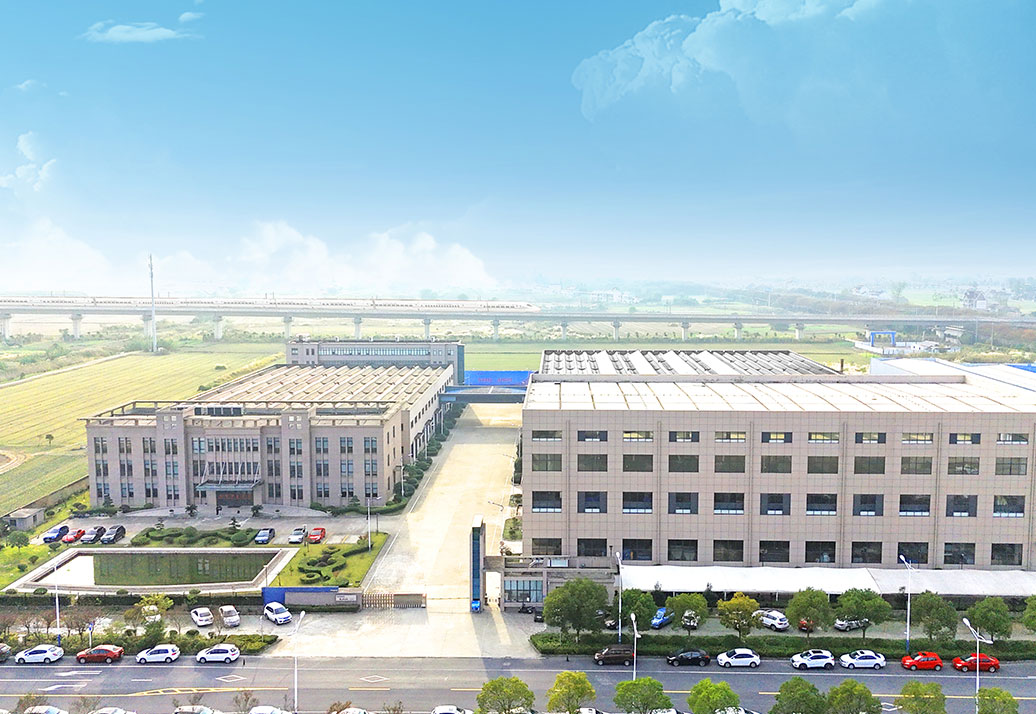
Jewel, the brand of Nantong Jiabao Machinery Co., Ltd., is a Chinese manufacturer of environmentally friendly compression and baling equipment, established in 2006 with a 50,000-square-metre production facility and a team of over 200 professionals. Jewel offers a comprehensive range of hydraulic baler machines designed to address specific material types and working conditions. From small vertical balers to fully automatic horizontal lines, the company matches each unit to the client's waste generation pattern, factory layout, and automation requirements.
[IMAGE: Diagram | process/architecture]
Technical Explanation
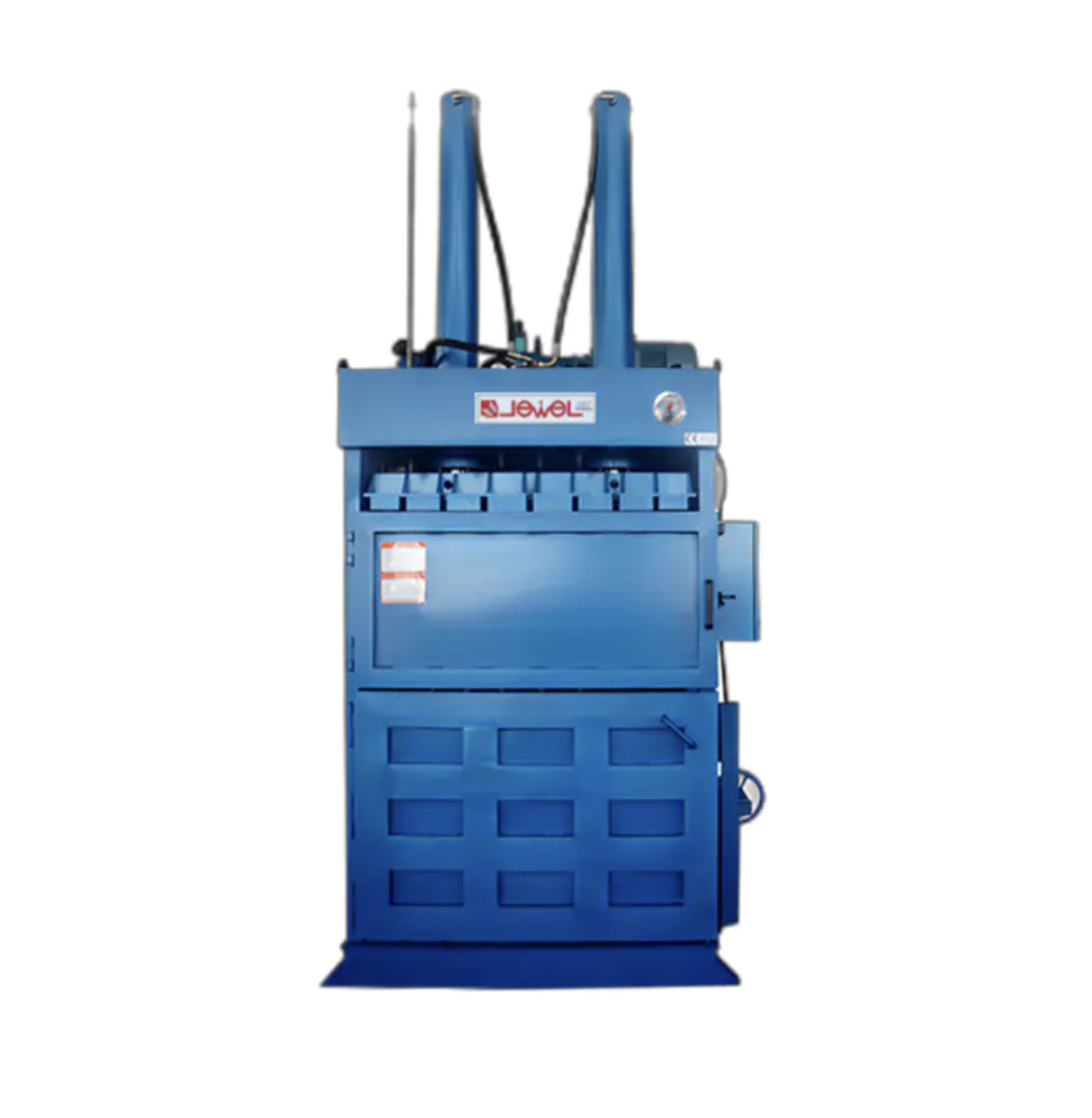
Jewel's hydraulic baler machines operate on a straightforward principle: a hydraulic cylinder delivers controlled compressive force to reduce waste volume. The key differentiator lies in the configurability of compression force (from 5 to 600 tons), bale dimensions, feeding mouth sizes, and strapping channels. For example, the model JPW20Q (a Fully Automatic Horizontal Baler) produces bales of 500×500×500 mm with a weight of 30-70 kg, while the JP-OT100 Vertical Baler can bale 400-600 kg per cycle at 100 tons of force. Voltage settings can be customised to 380V/50Hz or other regional standards, and the machines are built from carbon steel for durability in dusty or corrugator workshop environments.
Application / Use-Case Scenarios
The real value of Jewel's approach becomes visible in documented projects across different geographies:
- Russia – Full-Automatic Unmanned Waste Baling System: For a packaging and carton manufacturing plant operating in a corrugator workshop, Jewel supplied a system centered on the model JPW-K6046. This bagging-type machine delivers 6-8 bales per hour, each weighing 50-80 kg, and is integrated with a conveying system to automatically collect, compress, and bale waste cardboard from production lines. The project eliminated manual handling and created a clean, continuous waste processing flow.
- Italy – Replacing Aging Balers with Preprocessing Equipment: A carton factory dealing with large-sized waste cardboard installed the model JPA5076T25X, a 25-ton hydraulic baler that produces bales of 200-300 kg. The unit replaced outdated machinery and, when paired with a conveyor, achieved a 3-5 bales per hour capacity while handling bulky material that previously caused bottlenecks.
- Japan – High-Density Compression for PET Bottles: For a PET recycler operating in a high-dust environment, Jewel deployed the JPW-AK100 aluminium foil baler (100-ton force) alongside smaller compactors. The solution produced compact, aesthetically pleasing bales of 5-15 kg, increasing storage density and transport efficiency. The project demonstrated that even hard-to-compress materials like PET bottles can be handled with the right machine configuration.
- Belarus – Multi-Material Baling for Mixed Solid Waste: A comprehensive recycling enterprise handling PET bottles, woven bags, HDPE bottles, and cardboard required a single machine to process all streams. Jewel's JPW-AK100, combined with a conveying system, successfully compressed these diverse materials into regular-shaped bales, solving the problem of bulkiness and reducing equipment investment compared to multiple dedicated balers.
[IMAGE: Scene | application]
Market Trend Analysis
The demand for project-adapted baler solutions is reinforced by broader industry dynamics. The industrial balers market was valued at USD 6.39 billion in 2024 and is projected to grow at a CAGR of 9.5% through 2032, driven by stricter waste regulations and the need for efficient recycling. Asia Pacific currently accounts for approximately 40.2% of global baler revenue, reflecting the region's manufacturing concentration and growing domestic recycling infrastructure. European safety standards (EN 16500:2014) and U.S. standards (ANSI Z245.5-2023) also push manufacturers to offer configurable designs that can comply with regional requirements.
Comparison with Traditional Solutions
Traditional fixed-capacity balers often require multiple units to handle different waste types, increasing capital expenditure and floor space. Jewel's approach—offering a range of models from small vertical units to fully automatic horizontals, along with customization options—allows a single line to adapt to varied materials. On the other hand, the availability of such a wide portfolio can complicate the initial selection process, as buyers must carefully specify waste composition and volume to avoid over- or under-sizing. This limitation is mitigated by Jewel's engineering support and the 60-day lead time for customized orders.
Future Outlook
As material streams become more complex and labour costs rise, the trend toward integrated, intelligent baling systems will accelerate. Jewel's investment in a 30-engineer R&D team and its 70% export ratio suggest a continued focus on tailoring machines to local waste characteristics and regulatory environments. The ability to offer a full line—from bagging machines to metal balers to briquetting machines—positions the brand to serve both large-scale recycling plants and specialised manufacturing facilities.
FAQ
Q1: What is the typical lead time for a customized hydraulic baler from Jewel?
A1: Jewel's standard lead time for a customized baler is 60 days. The minimum order quantity is one unit, and the company customises the structure, process, and performance as required.
Q2: Can a Jewel baler handle mixed waste such as PET bottles, HDPE, and cardboard in a single machine?
A2: Yes. Jewel offers models like the JPW-AK100 that can compress multiple material types—PET bottles, woven bags, HDPE bottles, and cardboard—into consistent, regular-shaped bales. This was demonstrated in a Belarussian multi-material recycling project.
Q3: What after-sales support does Jewel provide for overseas customers?
A3: Jewel provides 7×24-hour technical response with the possibility of 48-hour on-site service. It also offers lifelong maintenance and free training to minimise downtime.
Q4: What is the voltage range available for Jewel's balers?
A4: Voltage is customizable. Most models are configured at 380V/50Hz by default, but clients can specify alternative voltages to match their local electrical standards.
Q5: Does Jewel offer small-footprint balers for limited workshop space?
A5: Yes. The JP7050T8, for example, has machine dimensions of 880×820×2150 mm and a weight of only 590 kg, making it suitable for compact workshops. It delivers 6-8 bales per hour with a bale weight of 50-80 kg.
For detailed product specifications and project references, you can download the company brochure: Download PDF Brochure.