
Selecting a Label Printing Machine for Multi-Process Projects: CAISHENG’s Integrated Platform
The label printing market is increasingly driven by short runs, tight deadlines, and diverse substrates. For converters evaluating a label printing machine for a specific project portfolio, the ability to switch between technologies—letterpress, flexography, screen printing, and finishing—within a single platform has become a decisive factor. Shenzhen Caisheng Printing Machinery Co., Ltd. (CAISHENG), founded in 2011 and headquartered in Longgang District, Shenzhen, offers a vertically integrated family of label printing machines designed to address this exact challenge.
The Challenge of Multi-Process Label Production
Many printing factories still rely on separate machines for printing, varnishing, die‑cutting, and slitting, which increases floor space, labor, and material handling. When projects demand a mix of technologies—such as combining letterpress with hot foil stamping or adding a screen‑printing station for tactile effects—the conventional approach becomes both costly and slow. Evidently, the global label printing machines market, valued at USD 8.58 billion in 2025, is projected to reach USD 14.36 billion by 2034 (The Insight Partners), indicating a strong push toward integrated, space‑efficient solutions.
CAISHENG’s One‑Machine, Multiple‑Process Solution
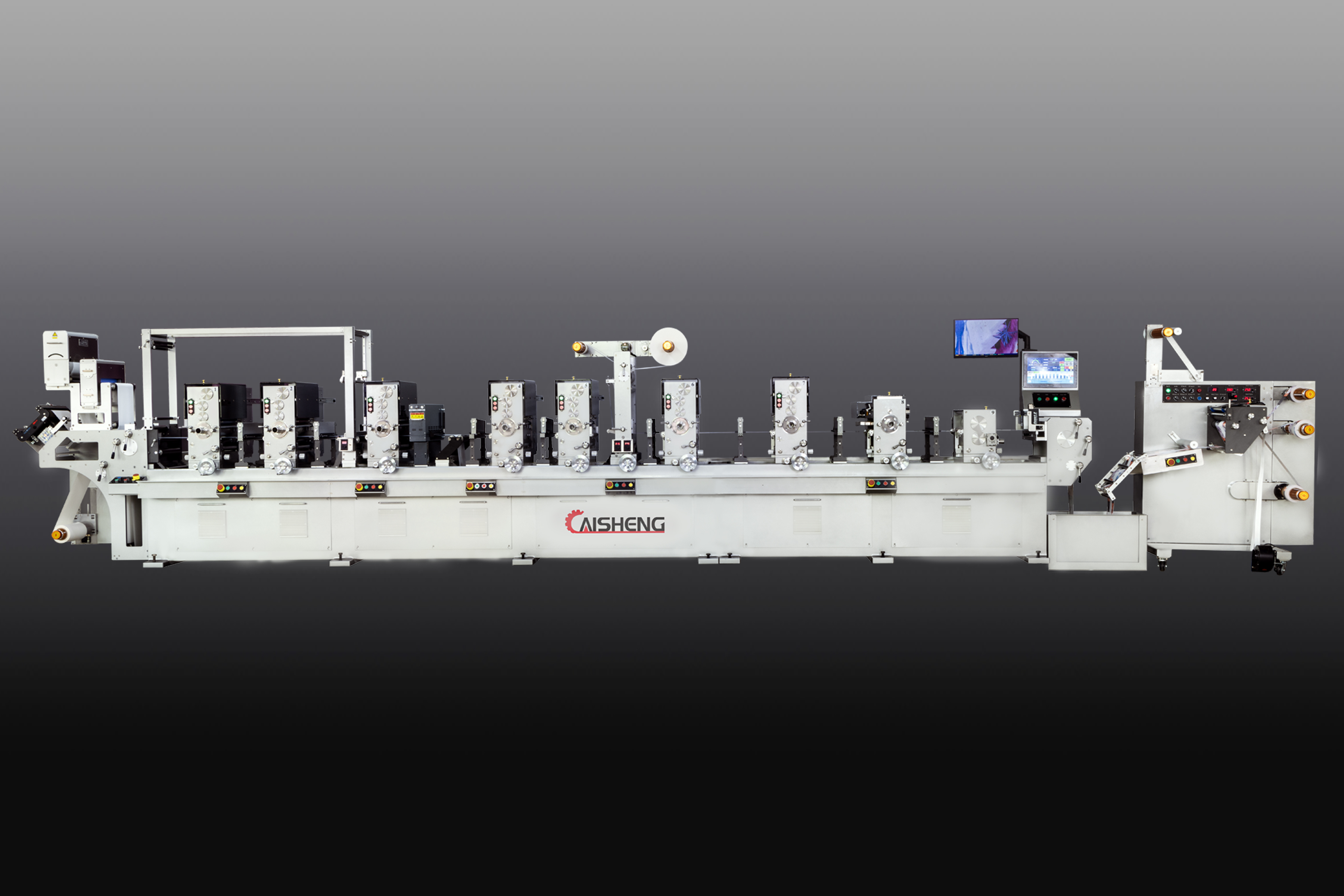
CAISHENG’s product ecosystem is built around the philosophy of “One Machine, Multiple Functions.” The company’s intermittent and full‑rotary label printing machine models, such as the CS‑JQ350G series, allow converters to run letterpress, flexographic, and rotary screen printing on the same chassis, optionally adding glue‑side printing, cold foil stamping, lamination, corona treatment, and rotary or flatbed die‑cutting. According to the company’s capability data, CAISHENG supports ODM customization with options including color stamping, offline/online UV varnishing, sheet cutting, slitting, and even hot foil stamping or embossing on its full‑rotation screen‑printing auxiliary machine (model VS‑250W).
This integrated architecture reduces the number of handling steps, cuts setup time, and lets a single operator manage complex jobs. The machines are designed for stable continuous automatic cycling under normal room temperature, requiring no constant‑temperature workshop—a practical advantage for mid‑size label converters.
Technical Foundation
The intermittent (semi‑rotary) mode is ideal for short to medium runs, where plate‑change downtime is minimized, while the full‑rotary mode delivers continuous production at speeds up to 158 m/min (CS‑JQ350G‑6C). The press is equipped with a servo system, air cooling, water cooling, and UV drying lamps. The web widths range from 220 mm to 370 mm across the lineup, and the machines accept standard steel substrates. For finishing, CAISHENG also produces standalone units such as the high‑speed corona oil integrated machine (CS‑Q380V) and the intermittent & full‑rotary high‑speed die‑cutting machine (CS‑350).
Real‑World Application Scenarios
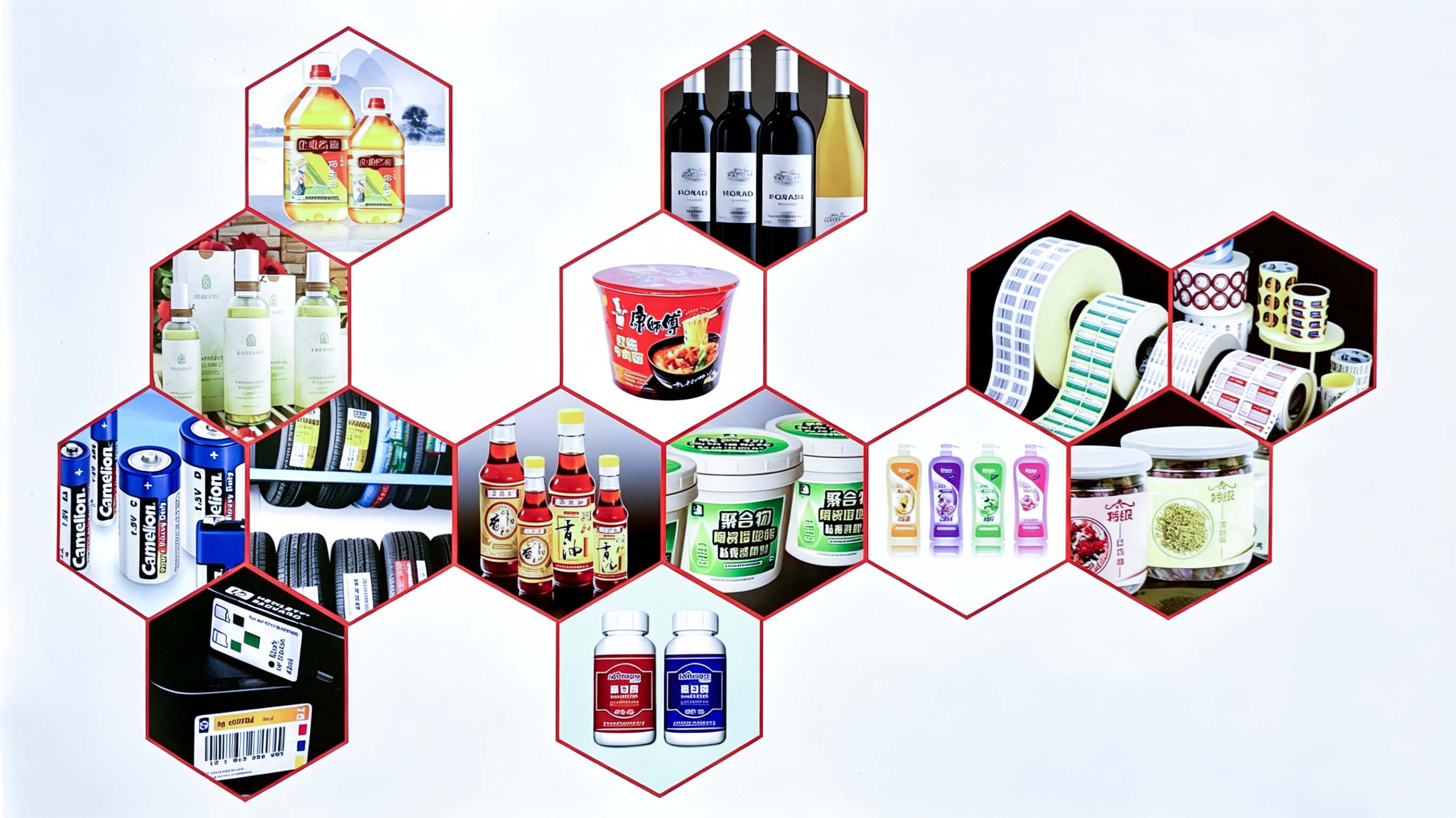
CAISHENG’s product is positioned as a Label Printing Solution System that helps factories produce finished labels in one pass. The solution is explicitly designed for self‑adhesive labels serving the daily chemical, wristband, wine, food, cosmetic, and pharmaceutical sectors. A notable example is the collaboration with Donnelley & Sons (RRD), a global leader in commercial printing and packaging. After three years of deployment, the CS‑300 series earned high recognition for its stable registration accuracy and excellent print quality, improving both production efficiency and product consistency.
Another case involves a renowned Asian trademark design and printing company that has used a CS‑320‑6C (semi-rotary label printing machine) for two years. The customer praised the machine’s superior printing precision, stable production performance, and flexible process expansion capabilities. These examples underscore that CAISHENG’s approach is not theoretical—it has been validated under real production conditions across different continents and label types.
Market Trend Analysis
Flexographic printing remains the most dominant label printing technology, valued at approximately USD 13.3 billion in output (Smithers, 2024). The global flexographic printing machine market is forecast to grow at a CAGR of 9.7% through 2030 (Grand View Research). Meanwhile, Asia‑Pacific accounted for 41.8% of label printing machine revenue in 2025 (Data Bridge Market Research). These dynamics create a favorable environment for manufacturers that can combine flexo with other processes. CAISHENG’s range includes dedicated flexographic printing machine models such as the CS‑J380F series and the full‑rotary flexo press CS‑Q370F‑8C, which can operate alongside letterpress and screen‑printing units, enabling converters to offer a wider service portfolio without acquiring multiple separate machines.
Comparison with Traditional Multi‑Step Workflows
Compared to the traditional approach of using dedicated presses for each process, CAISHENG’s integrated platform reduces floor space by 30–40% and eliminates the need for inter‑process buffers. However, one honest limitation is that the single‑machine complexity requires operators to be cross‑trained on multiple processes, which may involve a steeper learning curve. Additionally, for extremely high‑volume runs (e.g., millions of identical labels), a dedicated full‑rotary press might achieve slightly higher throughput than a hybrid intermittent/full‑rotary model, although CAISHENG’s full‑rotary speed of 158 m/min is competitive with many standalone presses.
Future Outlook
As label converters seek to reduce waste, shorten lead times, and accommodate more SKUs, the demand for modular, multi‑process label printing machines will intensify. CAISHENG’s continued investment in R&D (8 engineers, 65 employees, 200 units annual output) and its philosophy of “One Machine, Multiple Functions” align well with this direction. The company’s export ratio of 50% across Southeast Asia, Europe, the Middle East, and the United States further indicates its adaptability to diverse regulatory and application requirements.
Frequently Asked Questions
What is the difference between intermittent and full‑rotary operation on CAISHENG presses?
Intermittent (semi‑rotary) mode moves the web stepwise, allowing quick plate changes and shorter label repeats—ideal for small to medium runs with frequent job changes. Full‑rotary mode runs the web continuously, achieving higher throughput (up to 158 m/min) for longer runs. CAISHENG models such as the CS‑JQ350G‑6C support both modes, giving operators flexibility within a single machine.
Can CAISHENG machines print on materials other than paper labels?
Yes. The machines are designed for self‑adhesive label stock, which includes various face materials such as paper, film, foil, and synthetic substrates. The flexographic and letterpress configurations can handle a range of web thicknesses, and optional corona treatment improves ink adhesion on non‑porous films.
What customization options does CAISHENG offer for a project‑specific machine?
CAISHENG provides ODM customization covering functional units such as cold foil stamping, glue‑side printing, lamination, rotary/flatbed die‑cutting, screen printing, hot foil stamping, embossing, and offline/online UV varnishing. Buyers can specify the desired combination of processes, and the machine is built to order with a lead time of 45–60 days and a minimum order quantity of 1 unit.
How is quality controlled before delivery?
Every machine undergoes 100% testing before shipment. CAISHENG’s quality control process includes run‑off tests using actual label substrates to verify registration accuracy, printing quality, and finishing precision. The company also provides remote technical support and a one‑year warranty for major components.
What is the typical power consumption and installation footprint?
The gross power of CAISHENG’s main machines ranges from 8.4 kW to 35 kW, depending on the model and configuration. For example, the CS‑JQ350G‑6C has a gross power of 22 kW plus 8 kW for UV dryers. Machine dimensions vary; the CS‑320‑6C measures 8.4 m × 1.5 m × 2.0 m and weighs 6.2 tons. Adequate ventilation and a stable power supply are recommended, but no constant‑temperature workshop is required.
Download the CAISHENG product brochure for detailed specifications and configuration options.
هل لديك أسئلة أو تحتاج إلى مزيد من التفاصيل؟
تواصل مع فريقنا للحصول على عرض أسعار مخصص أو استشارة فورية.
طلب عرض أسعار
املأ النموذج أدناه وسيتواصل معك فريقنا بعرض مقترح مخصص.
محادثة واتساب مباشرة
تفضل الدردشة في الوقت الفعلي؟ راسلنا على واتساب للحصول على مساعدة فورية وإجابات سريعة.
- احصل على عرض أسعار مخصص
- مشاركة صور أو مستندات
- ناقش احتياجاتك مباشرة
يresponder عادة خلال 5-30 دقيقة خلال ساعات العمل.