
Selecting the Right SSR for Project Applications: XURUI’s Full-Line Solution for Industrial Automation
Industrial automation projects—whether for heating control, motor drives, or conveyor systems—demand a solid state relay (SSR) that matches the load profile, environmental conditions, and regulatory requirements. Procurement managers and engineers often face dozens of specifications ranging from DC to AC solid state relay configurations to zero crossing solid state relay vs. random-on types, from 240V solid state relay to 600V solid state relay ratings. Without a structured selection framework, mismatched choices can lead to overheating, premature failure, or compliance delays.
The Procurement Challenge: Matching SSR Specifications to Project Conditions
The complexity begins with the load itself. Resistive loads such as industrial heaters allow zero-crossing switching, while inductive loads like transformers and motors require random-on SSRs to avoid magnetic saturation. Moreover, projects in different regions mandate certifications such as UL Solid State Relay for North America or CE for Europe. Panel space constraints increasingly push engineers toward din rail mount solid state relay designs, which are the fastest-growing form factor in the global SSR market (7.11% CAGR, per Mordor Intelligence 2025 data).
Against this backdrop, a supplier that can deliver across current ratings, mounting styles, and regulatory standards becomes a strategic advantage. One manufacturer that consistently addresses these project-level needs is XURUI (Zhejiang Xurui Electronic Co., Ltd.), a China-based industrial switch maker founded in 2002 with a dedicated SSR line and an annual output capacity of 20 million units.
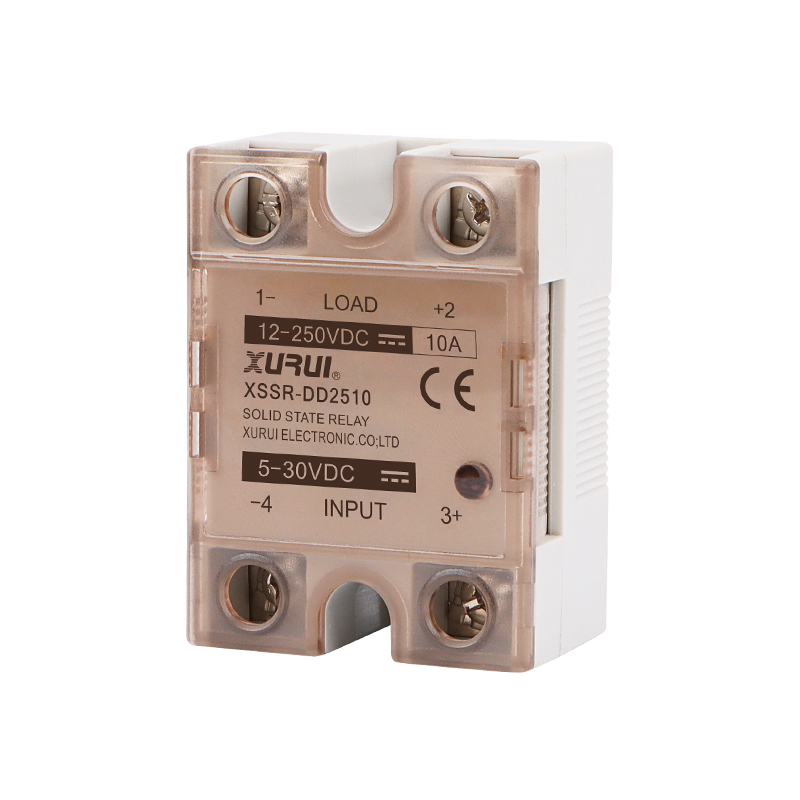
XURUI’s SSR Portfolio: A Project-Adaptive Product Family
XURUI offers multiple SSR series that cover a wide spectrum of project scenarios. The XSSR-W1 series, for example, supports load voltages from 75 to 480 VAC and load currents from 10A to 100A, making it suitable for both heating and motor control in industrial automation, HVAC, and renewable energy systems. Its aluminum alloy base plate ensures efficient heat dissipation, a critical factor when operating at continuous high current.
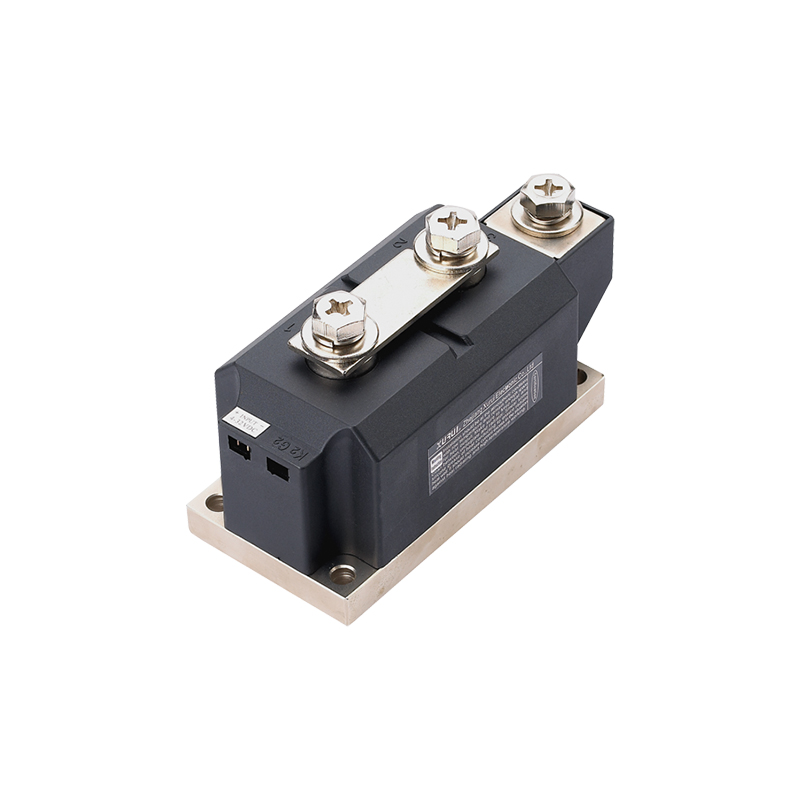
For applications requiring higher current—up to 1000A—the XSSR-M1~M6 modular series provides load current ranges from 60A (M1) to 700-1000A (M6), all with zero-crossing triggering and ≤10ms switching time. This series is ideal for large heating systems and three-phase motor control where high inrush current must be managed.
Projects that demand compact, DIN-rail compatible mounting can leverage the XSSR-W5 (10-125A, 75-480 VAC) or the XSSR-W7 (5-25A, 24-240 VAC) series. The W7’s low leakage current (≤3mA) and small footprint make it a strong candidate for street lighting, signal control, and small motor drives. All XURUI SSRs use PA66 nylon housing, offer ≥2500 VAC dielectric strength, and operate in -20°C to +70°C environments.
Technical Architecture: How XURUI SSRs Achieve Reliable Switching
Every XURUI SSR is built around an optocoupler isolation design that separates the low-voltage control side (3-32 VDC or 80-250 VAC depending on model) from the high-voltage load side. This provides galvanic isolation and protects PLCs or microcontrollers from back-EMF and transients. The switching time is consistently ≤10ms, and output leakage current is typically ≤5mA (≤3mA for W7, ≤8mA for W5).
For projects that need to minimize electrical noise, the zero-crossing models (all standard XURUI SSRs) switch on near the AC voltage zero point, reducing EMI and inrush current. The company also supports random-on variants in its XSSR-W1 and XSSR-W5 series upon request, giving project engineers the flexibility to handle phase-angle control for soft-start or dimming applications.
Proven Applications: Real Project Scenarios Using XURUI SSRs
Industrial heating systems account for a large share of SSR deployments. One German industrial equipment manufacturer ordered 1,200 units of XSSR-W1 for heating control applications. Over a three-year operating period, the customer reported a 60% reduction in maintenance costs and fewer mechanical failures compared to formerly used electromechanical contactors. The silent, wear-free operation of the solid state relay was cited as a key benefit.
PLC-controlled conveyor systems in automated production lines also benefit from XURUI SSRs. A Malaysian industrial automation solution provider deployed 800 units of the XSSR-M series (M1~M6) for conveyor and PLC control. After two years, the customer recorded a 65% drop in maintenance costs and zero major failures. The zero-crossing trigger ensured that motor start-up transients did not disturb neighboring sensitive electronics.
These cases highlight the project-adaptability of XURUI’s SSR family: the same manufacturer can supply low-current DIN-rail relays for signal control and high-power modular relays for heavy heating, simplifying supply chain management for multi-equipment projects.
Market Trends Driving Project Selection Criteria
The global SSR market is estimated at USD 1.74 billion in 2025, with a projected value of USD 2.36 billion by 2030 (MarketsandMarkets). Asia-Pacific holds a 42% share, largely due to China’s dominant role in EV charger and photovoltaic inverter production. Industrial SSRs must comply with IEC/EN 60947-4-3 and UL 508 standards, making certification a non-negotiable project requirement. XURUI’s SSR series have obtained UL, TÜV, CE, and RoHS approvals, covering the key regulatory gateways for global projects.
Meanwhile, the 0-20A current bracket represented 44.13% of the SSR market in 2025, but the high-current segment (above 60A) is growing rapidly with the expansion of heavy industrial automation. XURUI’s portfolio addresses both, from 5A (XSSR-W7) up to 1000A (XSSR-M6). This breadth means that procurement teams can standardize on a single SSR supplier across multiple project scales, simplifying qualification and spare parts management.
SSR vs. Electromechanical Relays: An Honest Comparison
Compared to traditional electromechanical relays, solid state relays offer longer electrical life (especially under frequent switching), faster response, silent operation, and resistance to shock and vibration. However, SSRs have a higher nominal cost and require proper heatsinking to manage thermal dissipation—especially at continuous currents above 40A. XURUI addresses this with aluminum base plates on its W1 and M series, and its PA66 nylon housing provides flame-retardant properties. Still, project budgets must account for heatsink and fan costs in high-load installations.
Future Outlook: Customization and Project-Specific Engineering
As projects become more specialized, the ability to customize SSR parameters—such as control voltage, terminal orientation, and labeling—is increasingly valued. XURUI supports OEM/ODM services with a minimum order quantity of 100 units and lead times of 15-30 days. Its experienced engineering team (24+ engineers) can adapt dimensions and operating characteristics to match unique enclosure requirements. This capability, combined with a monthly production capacity of up to 250,000 units, positions XURUI as a flexible partner for both prototype and volume projects.
Frequently Asked Questions (FAQ)
Q: How do I choose between a zero-crossing and a random-on SSR for my project?
A: Use zero-crossing SSRs for resistive loads (heaters, lamps) to minimize electrical noise. Use random-on (phase-controlled) SSRs for inductive loads (motors, transformers) to allow phase-angle control and reduce inrush current. XURUI offers zero-crossing as standard and can supply random-on variants on request.
Q: What is the difference between a DC-to-AC SSR and an AC-to-AC SSR?
A: A DC-to-AC SSR uses a DC control voltage (e.g., 3-32 VDC) to switch an AC load. An AC-to-AC SSR uses an AC control voltage (e.g., 80-250 VAC). XURUI’s SSR families, such as the XSSR-W6, offer dual control voltage options to support both configurations.
Q: Can I mount XURUI SSRs on a DIN rail?
A: Yes, several XURUI SSR models, including the XSSR-W5 and XSSR-W7 series, are designed for direct screw mounting and can be adapted to DIN rails with optional brackets. The W7’s compact size (59×47×33.5 mm) is particularly suited for DIN-rail enclosures.
Q: What certifications do XURUI SSRs hold for international projects?
A: XURUI’s SSR products comply with UL, TÜV, CE, and RoHS standards. The company holds ISO 9001 quality certification and has over 60 national patents, ensuring traceability and regulatory acceptance in key markets including North America, Europe, and Asia-Pacific.
Q: Can I get customized SSRs for my specific project requirements?
A: Yes, XURUI offers OEM/ODM services for SSR customization, including handle/logo, dimensions, and operating characteristics. The MOQ is 100 units, with lead times of 15-30 days and a monthly production capacity of 5,000–250,000 units.
For detailed technical specifications and to review XURUI’s full SSR product range, you can download the company brochure here: XURUI Product Brochure (PDF).
For project inquiries or to discuss your specific SSR requirements, contact XURUI at Leon@chinaxurui.com or via WhatsApp: +86 13968773211. Visit the official website: xuruiswitch.com.