
Self-Healing TPU Paint Protection Film: How It Works and What Buyers Check
A self-healing TPU paint protection film is a transparent thermoplastic polyurethane film whose outer surface is engineered to limit light surface marring and partially recover from it, instead of leaving every wash mark permanently visible in the finish. The claim is technical, not decorative — and it is one of the first things buyers now ask about when they compare protective film suppliers.
Why scratch behaviour became a defining question in PPF
Paint protection film has moved from a niche accessory into a standard line item for detailing studios, importers and new-vehicle owners. In that transition, the way buyers judge a film changed. Ten years ago, the primary question was whether the film was clear and whether it would peel. Today the buyer is more likely to ask how the surface behaves over time: does it haze, does it mark, does it yellow, does it stay clean, and can light damage be removed without polishing the car.
That shift reflects the economics of modern paint. Factory clear coat is thin and permanent. Once it is marred by dust, brushes, road grit or repeated washing, correction means abrasion — polishing removes a measurable layer of the finish — or, in worse cases, repainting. A film that absorbs that everyday abrasion and partially recovers from it moves the damage into a replaceable layer instead of the paint underneath.
The opportunity is therefore straightforward: protective film is no longer sold only as a barrier against stone chips. It is sold as a surface that remains presentable. That is precisely where the terms anti-scratch and self-healing enter the buying conversation — and where they are most often used loosely.
What “self-healing” actually means in a TPU film
Three claims are frequently bundled together even though they describe different mechanisms and should be evaluated separately.
- Anti-scratch: the film resists the formation of surface damage in the first place. This is a function of the top coat's hardness and slickness.
- Self-healing: the film recovers from damage that has already occurred at a shallow depth. This is a function of the elasticity of the polymer beneath the top coat.
- Yellowing resistance and optical stability: the film maintains transparency over time. This depends on UV stabilisation and on polymer chemistry rather than on surface hardness.
A film can lead on one of these and be weak on another. A very hard coating resists scratching but recovers poorly. A very soft, highly elastic surface recovers well but marks easily. The engineering objective in a self-healing TPU paint protection film is to combine a hard, low-friction surface with a recoverable polymer layer beneath it, so the film first resists damage and then absorbs what it cannot prevent.
How a self-healing TPU film is constructed
A typical construction stacks a release liner, a pressure-sensitive adhesive, a TPU base film and a functional top coat. Thermoplastic polyurethane is chosen for the base because it combines elasticity, tensile strength, high optical clarity and the ability to conform to complex curves without optical distortion — properties that matter on bumpers, mirrors and body creases where the film must follow the geometry rather than bridge it.
The self-healing effect comes from the elastic behaviour of the urethane network. When a light scratch passes across the surface, the polymer segments are displaced rather than fractured. Because the network retains elasticity, part of that displacement relaxes back toward its original configuration. Heat accelerates the process: solar exposure, warm water, ambient garage temperature or a hot air gun during installation all raise polymer mobility, which is why the mechanism is better described as thermal self-healing rather than healing at any temperature.
This has two practical consequences for buyers. First, healing is gradual and temperature-dependent — it is not instantaneous, and it behaves differently in a cold climate than in a hot one. Second, the durability of the effect is tied to the durability of the top coat and the polymer beneath it, which is why formulation control and coating consistency matter more than a single headline claim on a specification sheet.
Adhesive design belongs in the same conversation. A film that performs well optically but leaves adhesive residue on removal creates a far more expensive problem than a scratch. In HOCHI's application definition for automotive paint protection, residue-free adhesive removal is listed alongside high optical clarity and zero visual distortion as a core requirement — a reminder that a protective film is judged both the day it is installed and the day it is removed.
What self-healing does not cover
Buyer trust is built as much on boundaries as on capabilities. On a self-healing TPU paint protection film, the following limits apply and should be stated openly:
- Recovery applies to light surface marring — wash swirls, light scuffs and similar shallow marks. It does not close deep cuts, punctures, tears or film damage caused by sharp objects.
- Impact damage that penetrates the film, such as a stone chip that breaks through the layer, is a physical material loss and cannot heal.
- Recovery is slower at low temperatures and faster with heat; performance therefore varies with climate and season.
- The film is a replaceable sacrificial layer, not a permanent coating. Its protective life is finite, and its condition depends on installation quality and maintenance.
- Film protects existing paint. It cannot restore paint that is already scratched, faded or corroded.
- Matte and coloured variants solve different problems than high-gloss clear film, and each introduces its own visual trade-offs.
Common TPU paint protection film variants and what each one solves
The category has split into variants because buyers are no longer solving one problem. A fleet operator, a luxury-vehicle owner and a restyling studio each prioritise something different.
| Variant | Primary function | What buyers should verify |
|---|---|---|
| High-Gloss TPU Paint Protection Film | Preserves the original clear-coat appearance under a transparent film | Gloss uniformity across the roll and absence of orange-peel texture in reflected light |
| Matte TPU Paint Protection Film | Delivers a deliberate satin or matte finish while still protecting the paint | Sheen consistency and how the surface behaves under wiping and cleaning |
| Hydrophobic TPU Paint Protection Film | Encourages water beading and easier cleaning | Whether the property sits in a durable top coat rather than a temporary surface treatment |
| Anti-Scratch TPU Paint Protection Film | Reduces the formation of fine surface marring | How the hard coat is balanced against elasticity underneath |
| Yellowing-Resistant TPU Paint Protection Film | Maintains transparency over time on light-coloured vehicles | UV stabilisation approach and colour stability against fading |
| High-Transparency TPU Paint Protection Film | Keeps the film visually invisible on the paint | Clarity and low haze beyond a single sample piece |
| Thick TPU Paint Protection Film | Adds physical mass against abrasion and impact | Trade-off between thickness and conformability on tight curves and edges |
| Coloured TPU Paint Protection Film | Combines a colour or finish change with physical protection | Batch-to-batch colour consistency and finish matching |
| Automotive TPU Paint Protection Film (umbrella category) | Covers the full range of protective film for vehicle paint | Which construction and variant actually suits the vehicle and climate |
How HOCHI approaches the TPU paint protection film category
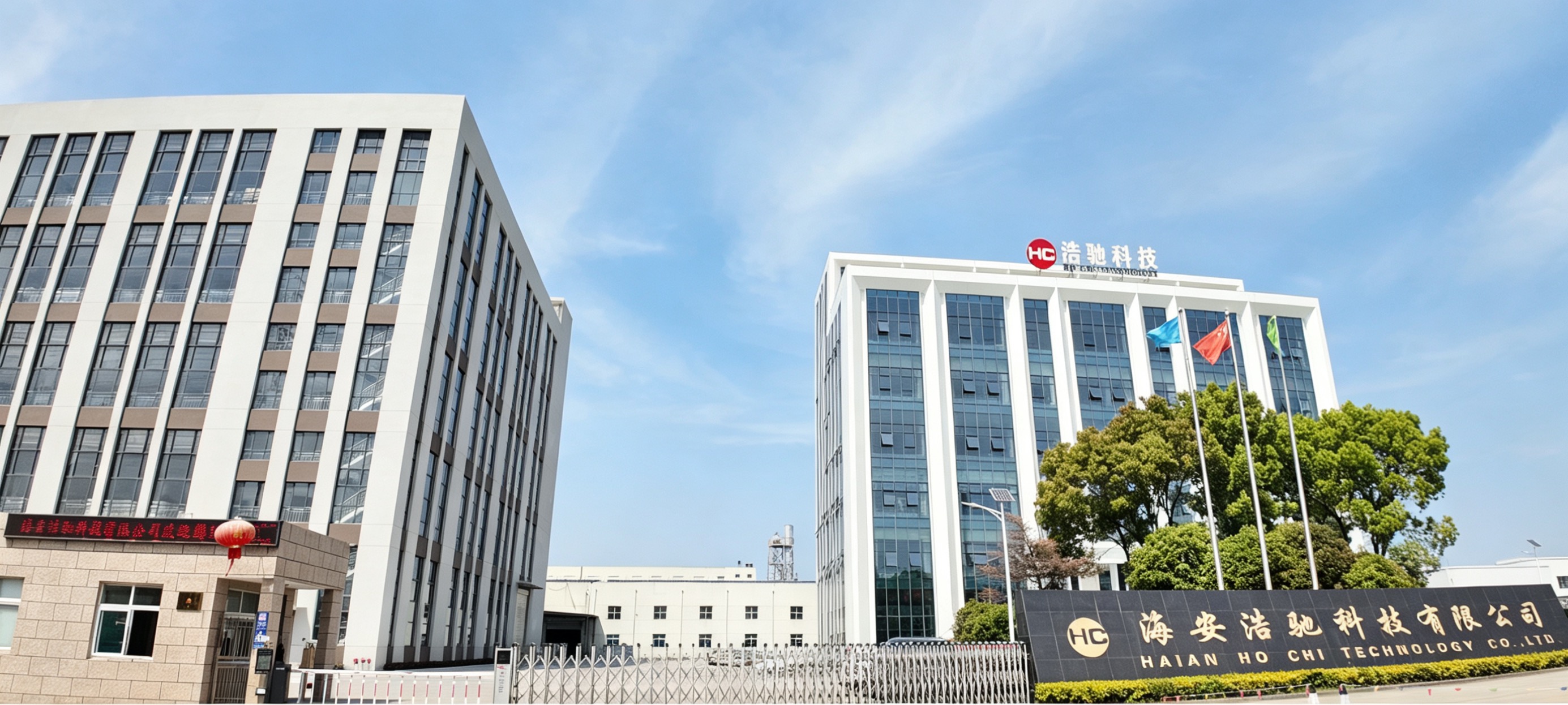
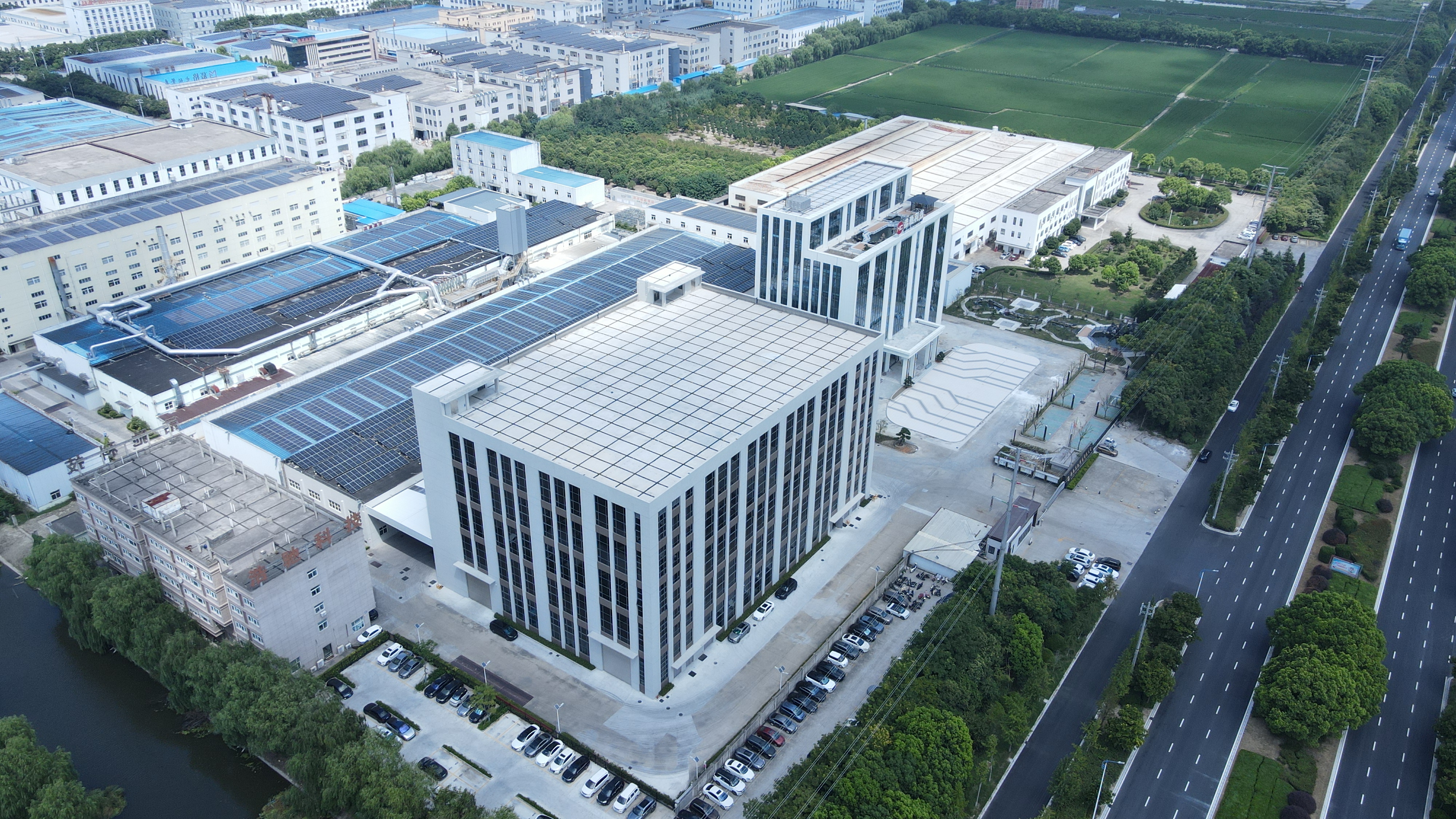
HOCHI (Haian Haochi Technology Co., Ltd.) is a functional film manufacturer located in the Haian Economic and Technological Development Zone, Nantong City, Jiangsu Province, China, and a wholly-owned subsidiary of Shanghai Haochi Technology Co., Ltd. The company was founded in 2009, operates a facility of 133,333 m², employs more than 220 people, and reports an annual output figure of 48,000,000 M.
Its product portfolio spans nano-ceramic film, carbon film, original colour film, paint protection film, front layer film, iridescent film, architectural film, dyed film and explosion-proof film — that is, the company works across automotive, architectural and special protective film applications rather than a single line.
Several capability facts are relevant to anyone evaluating a self-healing film supplier:
- R&D is supported by a team of 100 engineers, led by a postdoctoral fellow from Harvard University, with collaboration reported with institutions including the Chinese Academy of Sciences, East China University of Science and Technology, and Nanjing University.
- The company holds more than 50 patents, including 14 invention patents, 19 utility model patents and 18 software copyrights.
- It has been recognised as a National High-tech Enterprise for nine consecutive years and as a national-level specialised and innovative small giant enterprise.
- Customisation capacity covers more than 400 types of customised solar film products and more than 200 types of customised colour-changing films.
- Export accounts for 60% of activity, with markets recorded across Europe, Latin America, the Middle East, Southeast Asia, Oceania and North America — including the Netherlands, Norway, Poland, Portugal, Romania, Sweden, Belgium, Czech Republic, Germany, Denmark, Spain, Finland, the United Kingdom, France, Ireland, Italy, Luxembourg, Argentina, Chile, Colombia, Ecuador, Mexico, Peru, Bolivia, Qatar, the UAE, Bahrain, Saudi Arabia, Türkiye, Kuwait, Cambodia, Laos, Malaysia, Singapore, Iraq, New Zealand, Australia, Uzbekistan, Hungary, Slovakia and Brazil.
For a buyer, the relevance is not the list itself but what it implies about formulation discipline. A film portfolio that has to perform in Nordic winter conditions and in Gulf summer conditions cannot be built around a single generic top coat. Self-healing behaviour, anti-scratch hard coating, colour stability against fading and yellowing resistance are coating-level properties; the ability to control them consistently across batches is the same capability that multi-layer functional film manufacturing requires.
Application scenarios and the operating conditions that shape film design
HOCHI defines its automotive and architectural film applications across a shared set of project types: automotive paint protection, car window heat and solar insulation, commercial building energy-saving retrofit, and residential privacy and solar control glass tinting.
The working conditions defined for these applications explain why self-healing and durability are treated as system requirements rather than premium add-ons. They include intense solar radiation, high UV exposure, high ambient temperature, humidity, road debris impact, stone chips, gravel abrasion and outdoor weathering across a range from -30°C to 80°C.
Within that scenario definition, the functional targets listed include 99%+ UV rejection, high infrared heat reduction, scratch resistance with thermal self-healing, anti-yellowing paint protection, glare reduction, HVAC energy efficiency improvement and glass shatter resistance. The operating mode is described as 24/7 passive — the film works continuously without power, maintenance cycles or activation.
The same definition sets out the special requirements that a film must meet in these conditions: high optical clarity, zero visual distortion, anti-scratch hard coating, colour stability against fading, strong weatherability, residue-free adhesive removal and explosion-proof safety.
Installation is part of the specification too. The equipment list for these applications includes a hot air gun, installation squeegees, a CNC film cutting plotter, DAP cutting software and a slip solution sprayer. The presence of CNC cutting and pattern software matters commercially: it signals that film is supplied into a workflow where templates, consistency and repeatability are expected, not a workshop where every panel is trimmed freehand.
Self-healing TPU PPF compared with traditional protection options
Protective film is not the only way to manage paint appearance, and buyers entering the category often compare it with older options. The differences are structural, not simply a matter of product quality.
| Approach | What it provides | What it does not provide |
|---|---|---|
| Wax and sealant | Temporary gloss and a water-repellent surface | No sacrificial layer; no physical resistance to stone chips or abrasion |
| Ceramic coating | Chemical and hydrophobic surface protection, easier cleaning | No physical impact layer, and no mechanism to recover from mechanical marring |
| Vinyl wrap and colour-change film | Appearance change and surface coverage | Typically not engineered for the same combination of optical clarity and self-healing surface behaviour |
| Repainting or spot repair | Corrects damage that has already occurred | Permanent change to the original finish; addresses damage after the fact rather than preventing it |
| Self-healing TPU paint protection film | A transparent, replaceable sacrificial layer with anti-scratch and thermal self-healing behaviour | Cannot repair pre-existing paint damage, cannot heal deep cuts or puncture damage, and depends heavily on installation quality and film condition |
The most important limitation is also the least discussed: a protective film is only as good as its installation and its condition. Edge lifting, trapped contamination or poor conformability on complex curves will degrade the appearance long before the polymer chemistry becomes the limiting factor. Self-healing addresses surface marring; it does not compensate for a badly fitted panel.
Market signals shaping the protective film category
Reading the current market through product portfolios rather than through unverifiable forecast figures shows a consistent direction. Functional film manufacturers are converging their ranges: window film, paint protection film, colour-changing film, architectural film and special protective film are increasingly developed and supplied as one integrated capability set rather than separate businesses. HOCHI's own structure reflects this, with automotive window film as the core and car wraps, colour-changing films, architectural films, explosion-proof films and special protective film solutions grouped around it.
The second signal is customisation. A portfolio containing more than 400 types of customised solar film products and more than 200 types of customised colour-changing films indicates that demand has moved from standard catalogue items toward finish-specific and application-specific variants. For the self-healing TPU PPF segment, this shows up as the growing menu of gloss, matte, hydrophobic, anti-scratch, yellowing-resistant, high-transparency, thick and coloured options.
The third signal is geographic. With 60% of activity in export markets spread across Europe, Latin America, the Middle East, Southeast Asia, Oceania and North America, film performance has to be specified for very different climates and regulatory environments. That breadth pushes suppliers toward formulations that hold colour stability and surface behaviour across a wide weathering range rather than optimising for one region.
What to watch next
Three developments are likely to shape how self-healing TPU paint protection film is specified and purchased. The first is the integration of hydrophobic and self-healing performance in a single top coat, so the buyer does not have to choose between easy cleaning and surface recovery. The second is greater transparency in how film performance is documented: evaluating a film through verifiable optical and rejection data rather than through surface appearance or product colour alone is already an established principle in window film, and the same discipline is likely to extend to PPF purchasing. The third is installability, where CNC cutting data and pattern libraries increasingly determine whether a film can be delivered consistently across a distribution network.
For buyers at the research stage, the practical conclusion is that self-healing is a real engineering property with a defined scope. It should be evaluated together with anti-scratch behaviour, yellowing resistance, optical clarity and adhesive removability — and it should be judged against realistic limits rather than treated as a permanent solution to all paint damage.
FAQ
It is a multi-layer film built around a thermoplastic polyurethane (TPU) base, combined with a pressure-sensitive adhesive, a release liner and a functional top coat. TPU is used because it combines elasticity, tensile strength and high optical clarity while conforming to curved body panels. The self-healing behaviour comes from the elastic recovery of the urethane network rather than from the adhesive or the liner.
Light scratches displace the polymer segments at the surface instead of fracturing them. Because the network remains elastic, part of that displacement relaxes back over time, and heat accelerates the process. Solar exposure, warm water, ambient temperature or a hot air gun raise polymer mobility and speed up recovery. As a result, recovery is gradual and temperature-dependent rather than instantaneous, and it behaves differently in cold and hot climates.
Recovery applies to shallow surface marring such as wash swirls and light scuffs. It does not close deep cuts, punctures or tears, and it cannot restore material lost to a stone chip that breaks through the film. The film is also a replaceable sacrificial layer rather than a permanent coating, and it protects existing paint — it does not repair paint that is already scratched, faded or corroded.
High-gloss TPU PPF is designed to remain visually transparent over the original clear coat, preserving the factory finish. Matte TPU PPF delivers a deliberate satin or matte appearance while still providing physical protection. The trade-off sits in surface behaviour: a matte finish must maintain sheen consistency under wiping and cleaning, while a gloss finish is judged on uniformity and the absence of orange-peel texture in reflected light.
Yellowing resistance and colour stability determine whether a transparent film still looks transparent after extended UV exposure. Anti-yellowing paint protection and colour stability against fading are listed among the functional requirements in HOCHI's automotive and architectural film application definition, alongside high optical clarity and zero visual distortion. These properties depend on UV stabilisation and polymer chemistry rather than on surface hardness.
Performance should be evaluated using verified optical and rejection data rather than relying on product colour or a visual impression alone. In window film, the established principle is to assess ultraviolet, visible light and infrared performance through measured values such as VLT, UV rejection, IR rejection and TSER test data, because appearance-driven judgements can misrepresent actual performance. The same evidence-based approach applies when comparing protective film variants across suppliers.
For readers who need the underlying product data rather than commentary, the current functional film specification sheet from HOCHI is available here: HOCHI functional film specifications (PDF).