
Separate Equipment vs Turnkey Pulp Molding Line: A Buyer Decision Framework
Separate Equipment vs Turnkey Pulp Molding Line: A Buyer Decision Framework
Choosing between separately purchased equipment and a turnkey pulp molding line is a decision about project ownership as much as machinery. Separate procurement can give a capable buyer more control over suppliers and specifications, but it also leaves the buyer responsible for making the pieces work together. A turnkey scope can consolidate more of that integration work, while requiring the buyer to define the scope, interfaces, and acceptance criteria clearly.
For procurement teams evaluating a Pulp Molding Machine project, the useful comparison is not simply the equipment quotation. It is the total cost of ownership: equipment and installation costs alongside the engineering, interface changes, commissioning effort, troubleshooting responsibility, and production coordination required to reach the intended operating condition. Those costs depend on the project and cannot be inferred from a machine price alone.
HANSON PULP MOLDING is a pulp molding equipment and production-line provider that also offers turnkey factory solutions. Its published project scope includes factory planning, pulp preparation, forming equipment, mold design and manufacturing, downstream automation, electrical control, installation and commissioning, and production support. The following framework treats these as procurement choices rather than as a claim that one delivery model suits every factory.
Why the purchase boundary changes the project
A pulp molding production line links several operations. Pulp preparation supplies material to forming; molds and forming conditions affect product quality and cycle behavior; downstream equipment must receive and handle formed products; electrical controls coordinate equipment functions; and site utilities must match the selected configuration. Wastewater treatment may also be part of the factory scope. A mismatch in one area can create adjustment work elsewhere, even when each machine or package meets its individual quotation.
In a separate-purchase model, the buyer chooses which suppliers provide these elements and coordinates the boundaries between them. That can be a deliberate strategy, not a mistake. It can allow experienced teams to reuse existing equipment, select specialized vendors, phase investment, or keep control over technical decisions. The trade-off is that someone on the buyer side must own integration, interface documentation, schedule coordination, and the resolution of issues that cross supplier boundaries.
In an integrated turnkey model, a supplier takes responsibility for a defined combination of project work packages. The practical value is not the label “turnkey” by itself. It depends on what is included, what remains the buyer’s responsibility, how utilities and controls are specified, and who leads troubleshooting when a problem spans process stages. A turnkey contract with unclear exclusions can still leave interface risk with the customer.
A practical 6+1 scope map
The phrase 6+1 is useful as a buyer’s scope checklist, not as a universal industry standard. For this comparison, six core work packages are grouped below, with wastewater treatment shown as the additional site-process package. Forming equipment and molds are grouped together because their technical coordination is central to the production process. This grouping covers the requested scope without implying that every project or supplier defines the packages identically.
| Work package | What the buyer should define | Separate procurement responsibility | Turnkey scope question |
|---|---|---|---|
| 1. Factory planning | Product mix, planned process flow, available space, production objectives, and project boundaries. | The buyer coordinates layout decisions with each equipment and construction supplier. | Does the supplier provide layout planning and construction coordination, or only machine placement information? |
| 2. Pulp preparation | Raw-material and pulp-preparation requirements, process handoff points, and how the pulp supply connects to forming. | The buyer confirms that the preparation system and forming equipment are designed around compatible operating assumptions. | Is the pulp preparation system included, and who is responsible for confirming its interface with forming? |
| 3. Forming equipment and molds | Product requirements, mold design and supply, machine configuration, and the process information needed for validation. | The buyer manages mold-to-machine fit and coordinates any required interface modification between suppliers. | Are mold design, manufacture, testing, and adaptation included, and who owns changes during commissioning? |
| 4. Downstream automation | The downstream operations required by the product and the handoff from forming to finishing or handling equipment. | The buyer aligns machine timing, transfer points, and installation responsibilities across vendors. | Which downstream processes are included, and how will their operating rhythm be checked against forming? |
| 5. Electrical control | Control boundaries, signal exchange, operating sequence, and the division of responsibility for control modifications. | The buyer coordinates controls across equipment vendors and resolves gaps between separate control systems. | Does the supplier provide a coordinated electrical-control scope, and what remains outside it? |
| 6. Utilities | Site utility availability and connection requirements, including the applicable heating configuration and other equipment interfaces. | The buyer confirms requirements with each supplier and manages site-side connections and changes. | Which utility interfaces are documented, and which site provisions must the buyer arrange? |
| +1. Wastewater treatment | Whether wastewater treatment is part of the project scope and how the treatment package fits the factory plan. | The buyer sources and coordinates the package if it is not supplied within the project. | Is wastewater treatment included, excluded, or assigned to another party? What is the handoff boundary? |
This map is intended to make the quotation comparable. Buyers should ask each supplier to mark every work package as included, excluded, supplied by others, or dependent on buyer-provided information. The same discipline applies to installation, commissioning, training, and production support: these should be specified rather than assumed from a delivery label.
Side-by-side procurement comparison
| Decision dimension | Separate equipment procurement | Turnkey pulp molding solution |
|---|---|---|
| Supplier choice | More direct choice over individual vendors and packages. | More scope may be coordinated through one primary provider, depending on the contract. |
| Interface ownership | The buyer or its appointed integrator must coordinate equipment, molds, controls, utilities, and process handoffs. | The turnkey provider may coordinate specified interfaces; exclusions and buyer-side duties still need to be stated. |
| Technical flexibility | Can be useful when the buyer has existing assets or specific supplier preferences. | Can align more project elements under one design and delivery plan, within the agreed scope. |
| Change management | Changes may require agreement among multiple suppliers and the buyer’s engineering team. | One coordinating party may simplify change routing, but the contract must define approval and cost responsibility. |
| Troubleshooting | The buyer may need to determine whether an issue originates in pulp preparation, forming, molds, automation, or an interface. | A defined lead party can help coordinate cross-stage investigation, but response obligations should be documented. |
| Cost evaluation | Individual equipment prices can be compared directly, but the buyer should also account for integration and coordination work. | A broader project quotation may combine more services; compare inclusions, exclusions, and lifecycle responsibilities rather than headline price alone. |
| Best fit | Teams with in-house process, project, and controls capability, or a designated integrator with authority across vendors. | Projects seeking a coordinated delivery scope and able to define one accountable integration route. |
How coordination shifts in a separate purchase
When equipment is bought separately, the buyer becomes the connection point among suppliers. This is more than scheduling deliveries. The project team needs to establish shared assumptions about process inputs and outputs, installation boundaries, controls, site utilities, and the conditions under which equipment will be tested. If those assumptions are not written down, an adjustment can be treated by one supplier as another supplier’s responsibility.
Interface modification is a concrete example. A forming machine, mold set, downstream automation package, and electrical-control arrangement may each require a defined connection to the next stage. If the delivered configuration differs from the original assumptions, the buyer may need to coordinate drawings, revisions, approvals, and commissioning changes. These activities have a cost even when the modified equipment itself is not expensive. For a total-cost-of-ownership comparison, include internal engineering time and external integration work alongside the purchase prices.
Troubleshooting can also cross package boundaries. A production issue may require the team to check pulp preparation, forming conditions, mold fit, downstream automation, or the interaction among them. The buyer needs a process for recording the issue, assigning investigation ownership, sharing evidence among suppliers, and deciding who approves a corrective change. Separate procurement can work well where the customer has the expertise and decision authority to do this; it is less straightforward when no party has responsibility for the whole line.
What turnkey integration can—and cannot—change
A turnkey approach can move more planning and coordination activity to the supplier, if the contract assigns those tasks clearly. HANSON PULP MOLDING’s company information describes turnkey factory solutions that can include preliminary product and raw-material verification, feasibility analysis, capacity planning, factory layout, pulp preparation, forming equipment, mold design and manufacturing, downstream automation, electrical controls, installation and commissioning, training, and production ramp-up support. The actual list depends on project scope; buyers should confirm each item in the proposal rather than assume every service is included.
The case information provides a concrete example of a broader scope. One project for an integrated bamboo-materials and sustainable-food-packaging manufacturer is described as including factory planning, construction coordination, pulp preparation, customized forming equipment, wastewater treatment, and personnel training. The same case reports that the project moved from equipment installation to trial production in approximately three months. That is a case-specific account, not a general delivery-time promise or a guarantee for a different factory.
Integration can also make system-level questions easier to assign. Buyers can ask how the proposed line is intended to coordinate vacuum, compressed air, heating, and production rhythm, and which party will verify these conditions during commissioning. The available company information describes joint optimization of molds, equipment, pulp preparation, and production processes, as well as customization of utility interfaces and heating methods. It does not specify a universal configuration or a guaranteed energy result. Consequently, buyers should request project-specific design assumptions and acceptance criteria instead of relying on broad labels such as “integrated” or “energy-efficient.”
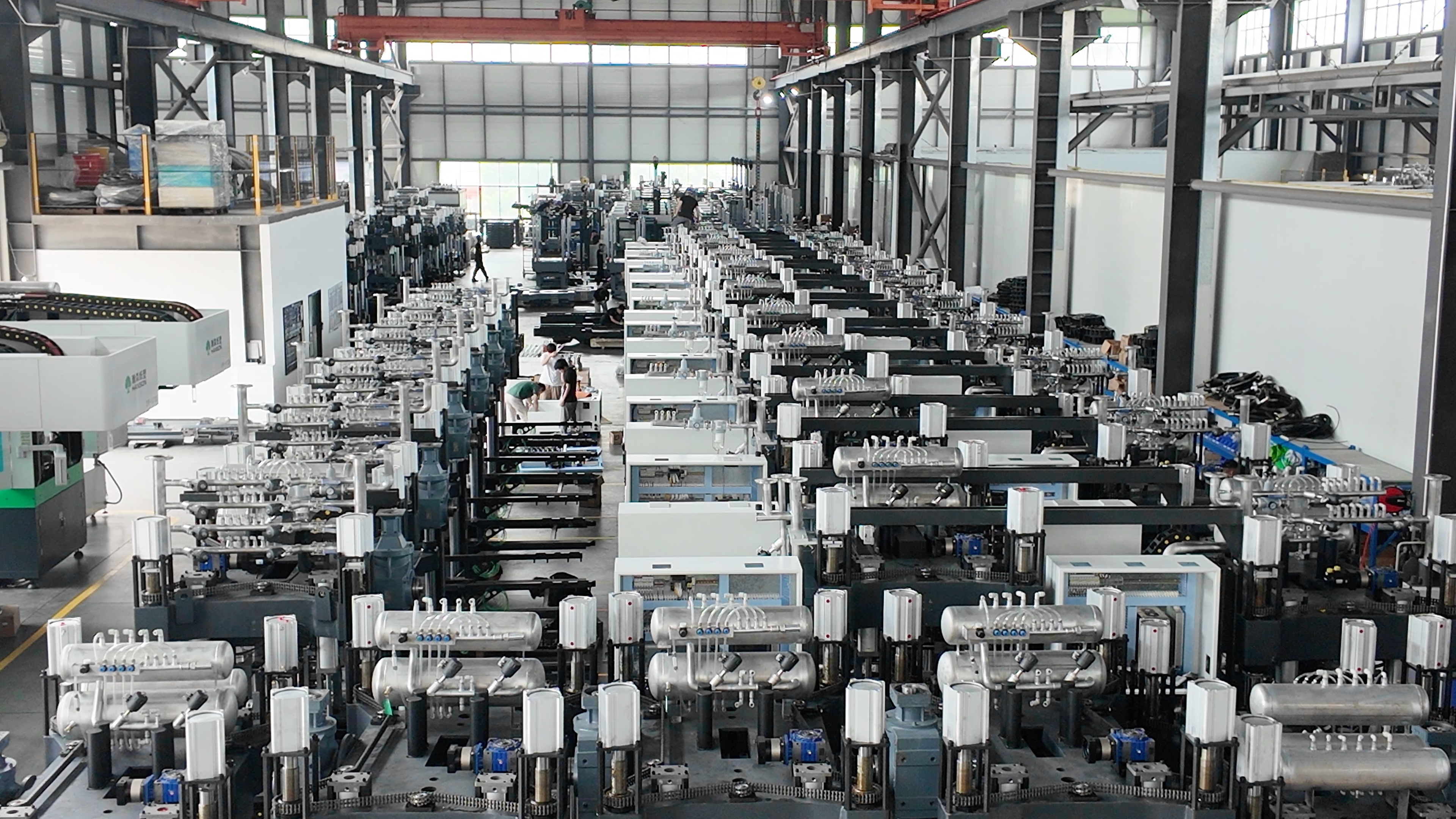
A buyer decision framework
Use the following questions before choosing the procurement boundary. They are designed to expose ownership and evidence gaps, not to steer every project toward the same model.
- Who will own system integration? Identify the person or organization with authority to resolve conflicts among the pulp preparation, forming, mold, automation, controls, and utility suppliers. If the answer is the buyer, confirm that the required engineering resources are available throughout commissioning.
- Can the project team define interface requirements? Check whether the team can specify the process handoffs, control boundaries, site provisions, and acceptance checks for each package. If these details are still developing, consider whether a supplier can take responsibility for coordinating them within a written scope.
- Are existing assets a major part of the plan? Existing equipment, molds, buildings, or utility arrangements can make selective procurement attractive. The buyer should identify which assets will be reused and request a documented assessment of their fit with the new line.
- How will cross-stage problems be investigated? Agree on a troubleshooting path that covers issues spanning pulp preparation, forming, molds, and automation. Define the lead investigator, the information suppliers must exchange, and who approves modifications.
- What is included in the ownership-cost comparison? Compare equipment, project engineering, interface modification, installation, commissioning, training, production support, and the buyer’s own coordination effort where those items are relevant. Use project quotations and agreed assumptions; do not infer lifecycle cost from equipment price alone.
- How will system performance be checked? Define the product and process conditions for testing. Ask how heating, vacuum, compressed air, utility connections, and the production rhythm will be considered in the proposed configuration, and what evidence will demonstrate that the agreed criteria have been met.
- Are scope boundaries visible in writing? For every package, mark who supplies it, who installs it, who connects it, who tests it, and who handles changes. A turnkey label is not a substitute for this responsibility matrix.
Which model suits which buyer?
Separate procurement is a stronger fit when: the buyer has experienced process and engineering staff; a system integrator can coordinate multiple suppliers; existing equipment or supplier relationships need to be retained; or the project benefits from phased purchasing. The buyer should still budget time and authority for interface coordination, commissioning, and multi-supplier troubleshooting.
A turnkey solution is a stronger fit when: the project requires several linked work packages, the buyer wants a defined coordinating party, or the internal team does not want to manage every supplier boundary independently. The buyer should verify the provider’s responsibility for each package, the treatment of changes, and the project-specific criteria for handover. A turnkey provider cannot replace buyer decisions about product requirements, factory objectives, or acceptance.
A hybrid approach can be appropriate when: the buyer wants to retain selected packages but needs help coordinating the remaining line. For example, the buyer might nominate existing equipment or a specialist supplier while assigning a lead integrator to document and test the interfaces. This model depends on explicit authority and cooperation among all parties; without them, it can reproduce the coordination burden of separate purchasing while adding another contract boundary.
Market and procurement context
Rather than relying on a broad market-growth claim to make the case for integration, buyers can examine the procurement patterns visible in the supplied project information. HANSON PULP MOLDING’s portfolio covers individual equipment, production lines, and turnkey factory solutions. Its reported project examples include sampling and pilot work as well as larger production-line deployments. The bamboo-materials turnkey case shows that factory planning, pulp preparation, forming, wastewater treatment, and training can be brought into one project scope; it does not establish that all buyers need that scope.
The practical implication is that procurement options can be matched to the maturity of the project. A buyer validating a new fiber or product may prioritize sample-making and process verification. A buyer with a defined product and an established engineering team may prefer to source selected packages independently. A new factory or a project spanning multiple process stages may place more value on coordinated planning and clear integration responsibility. These are decision distinctions, not claims about market share or universal industry preference.
Limits and trade-offs to keep visible
Turnkey delivery may simplify coordination, but it can reduce the buyer’s direct control over individual supplier selection or package-level design if the scope is bundled. It can also be difficult to compare quotations unless deliverables, exclusions, site responsibilities, and change rules are explicit. A single coordinating supplier does not automatically mean that every interface, utility, or wastewater-treatment obligation is covered.
Separate procurement may offer choice and a direct view of individual package costs, but the quoted prices do not necessarily show the full cost of integration. The buyer must account for internal labor, schedule management, interface modification, and troubleshooting across suppliers. The approach is not inherently less reliable; its suitability depends on the customer’s ability to manage those responsibilities and the quality of the technical specifications.
Future outlook: make accountability part of the design
For future pulp molding projects, procurement documents can treat interface ownership as a design requirement rather than a commissioning afterthought. Buyers can request a package-by-package responsibility matrix, a list of site utility assumptions, a control-boundary description, and a commissioning plan that explains how connected stages will be assessed. These documents make both separate and turnkey proposals easier to compare.
The central decision is therefore not simply whether to buy one machine or a complete line. It is who will coordinate the system, who will pay for and approve changes, and how the project will demonstrate that pulp preparation, forming, molds, automation, controls, utilities, and wastewater treatment fit the agreed production plan. When those responsibilities are visible, the procurement model can be selected against the buyer’s real engineering capacity and project needs.
FAQ
What is the main difference between separate equipment procurement and a turnkey pulp molding line?
Separate procurement gives the buyer responsibility for coordinating individual suppliers and their interfaces. A turnkey solution can place more specified planning and integration work with one provider, but the contract must state what is included and what remains the buyer’s responsibility.
What should a buyer include in a 6+1 pulp molding project scope?
A practical scope checklist covers factory planning, pulp preparation, forming equipment and molds, downstream automation, electrical control, utilities, and wastewater treatment as the additional package. Buyers should confirm ownership, installation, connection, testing, and exclusions for each item.
How should total cost of ownership be compared?
Compare the equipment and project quotations together with relevant engineering, interface modification, installation, commissioning, training, and coordination responsibilities. Separate procurement may require more buyer-led integration work; turnkey proposals should be checked for exclusions and change costs.
When is separate procurement a reasonable choice?
It can suit a buyer with in-house engineering capability or an appointed integrator that can manage multiple suppliers, define interfaces, and lead troubleshooting across process stages. The project team should have authority to coordinate changes through commissioning.
Does a turnkey solution guarantee that all line interfaces are covered?
No. The term alone does not define scope. Buyers need written confirmation of the included equipment and services, utility and control boundaries, wastewater-treatment responsibility, commissioning criteria, and the process for handling modifications.
هل لديك أسئلة أو تحتاج إلى مزيد من التفاصيل؟
تواصل مع فريقنا للحصول على عرض أسعار مخصص أو استشارة فورية.
طلب عرض أسعار
املأ النموذج أدناه وسيتواصل معك فريقنا بعرض مقترح مخصص.
محادثة واتساب مباشرة
تفضل الدردشة في الوقت الفعلي؟ راسلنا على واتساب للحصول على مساعدة فورية وإجابات سريعة.
- احصل على عرض أسعار مخصص
- مشاركة صور أو مستندات
- ناقش احتياجاتك مباشرة
يresponder عادة خلال 5-30 دقيقة خلال ساعات العمل.