
Shilajit Extract Powder: Decoding Fulvic Acid ≥50% Specs
Shilajit extract is one of the few nutraceutical ingredients where a purchase decision is settled by a single line on a specification sheet: the fulvic acid assay. The widely traded standardized form is Shilajit Extract Powder — also listed as Asphaltum Extract — specified at fulvic acid ≥50%, appearing as a brown fine powder with 100% of the material passing an 80 mesh sieve, and tested by the titration method (CAS No. 308066-67-3). For buyers moving from research into evaluation, the useful question is not whether 50% looks adequate, but whether the figure, the method behind it and the documentation surrounding it will survive a supplier qualification review and a market-specific compliance check.
Why shilajit belongs in the constraint-heavy ingredient category
Most ingredient categories are bought on a cluster of parameters: purity, moisture, heavy metals, microbiology, particle size and residual solvents all carry roughly equal weight. Shilajit is different. The market convention concentrates the entire commercial identity of the product into one marker — fulvic acid — and expresses it as a single percentage. Everything else, from appearance to sieve specification, tends to be treated as secondary.
That convention creates a specific procurement risk. Two suppliers can both quote "fulvic acid ≥50%" and deliver materials that are not interchangeable, because the number only carries meaning when it is read together with the analytical method used to produce it, the sampling plan behind the batch, the particle size distribution of the finished powder, and the certificate of analysis (COA) issued with the shipment. A buyer who compares percentages without comparing methods is comparing labels, not products.
The second constraint layer is regulatory rather than analytical. In the United States, FDA regulations require those who manufacture, package or hold dietary supplements to follow current good manufacturing practices intended to help ensure identity, purity, quality, strength and composition. Where a new dietary ingredient is involved, FDA describes a notification process involving safety information submitted before marketing unless an applicable exception applies. Neither obligation is ingredient-specific, and neither is satisfied by a supplier's technical data sheet — but both explain why buyers now ask for documentation depth alongside the assay value.
The third layer is documentation. Official databases such as the NIH Dietary Supplement Label Database, which catalogs information printed on labels of dietary supplement products sold in the United States, make it straightforward for a brand owner to benchmark how an ingredient is declared on finished products. That transparency pushes the burden of proof upstream: the ingredient supplier has to be able to explain, in writing, what its specification means and which certificate covers which product.
Guanjie Biotech's Shilajit Extract Powder specification, line by line
Guanjie Biotech (Shaanxi Guanjie Biotech) is a China-based ingredient manufacturer founded in 2004 that supplies high-purity natural plant extracts, premium fruit powders and specialty chemical raw materials to the pharmaceutical, health care, functional food and cosmetics industries. The company operates a 7,000 m² site that includes a 2,000 m² cGMP-standard clean workshop and a 500 m² laboratory, employs 40 people including a 7-engineer R&D team, reports an annual output of 500 tons, and exports about 90% of production to markets that include Germany, Italy, Japan, South Korea, Brazil, Mexico and the United Arab Emirates.
Within that portfolio, Shilajit Extract Powder is positioned as a standardized botanical extract for supplement and health-food formulation. The published specification is compact enough to reproduce in full:
| Parameter | Published specification |
|---|---|
| Product name | Shilajit Extract Powder (English name: Asphaltum Extract / Shilajit Extract) |
| CAS No. | 308066-67-3 |
| Assay | Fulvic Acid ≥50% |
| Testing method | Titration method |
| Appearance | Brown fine powder |
| Particle size | 100% pass 80 mesh |
| Stated application industries | Dietary supplement, health food, beverage, cosmetics |
| Documentation offered | Batch-to-batch consistency and full documentation support; shilajit extract powder testing reports available on request |
| Customization | OEM / ODM packaging |
| Minimum order quantity | 1 kg |
| Lead time | 30 days |
| Stated monthly capacity (company level) | 30 tons |
Two aspects of this table deserve attention during evaluation. First, the particle size is expressed as a full pass at 80 mesh rather than a range, which is the more useful form for capsule and sachet filling because it constrains the coarse fraction rather than describing an average. Second, the assay is defined by a method — titration — and not by a bare percentage. That is the detail that makes cross-supplier comparison possible, and also the detail that most buyers overlook.
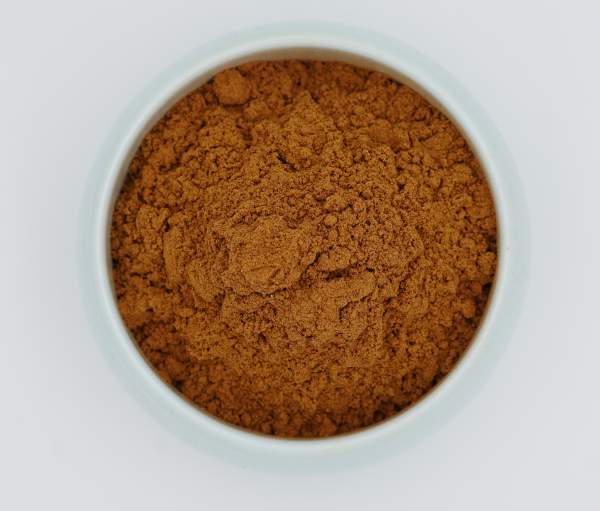
Shilajit Extract Powder as supplied in bulk: a brown fine powder specified at fulvic acid ≥50% by titration and 100% pass 80 mesh.
The certification layer: what the certificates cover, and until when
Certification is where shilajit sourcing most often stalls, because buyers need to know not only that a supplier holds certificates, but that Shilajit Extract Powder specifically appears within their scope. Guanjie Biotech's certificate set addresses that question directly, and the coverage is explicit.
| Certificate | Number and issuer | Validity | Relevance to Shilajit Extract Powder |
|---|---|---|---|
| ISO 9001:2015 Quality Management System | 00123Q310086R0S/6100, China Quality Certification Centre (CQC) | 2023-12-07 to 2026-12-06 | Scope covers export trade of plant extracts, solid beverages and food additives |
| HACCP System Certification | 001HACCP2301048, China Quality Certification Centre (CQC); standard: HACCP System Certification Requirements (V1.0) | 2023-12-06 to 2026-12-05 | Certified product portfolio explicitly includes Shilajit Extract Powder |
| Kosher Certificate | K-88898568, Badatz Shatz (SKS); standard: Kosher Dietary Law | 2026-07-15 to 2027-07-15 | Global market; covers the listed extract portfolio including Shilajit Extract Powder |
| HALAL Certificate | 0811240000, Shandong Halal Certification Service (SHC); standard: Indonesia Halal Law and Regulations & MS1500:2019 | 2024-11-08 to 2027-11-07 | Middle East, Indonesia and other halal markets; covers plant extracts, solid beverages and food additives |
The practical point is coverage, not count. A HACCP certificate that lists the finished product category but not the specific extract is of limited use in a supplier qualification file; here the certified portfolio is enumerated and Shilajit Extract Powder is named within it. The same applies to the Kosher certificate, which is issued for the global market and enumerates the covered extracts.
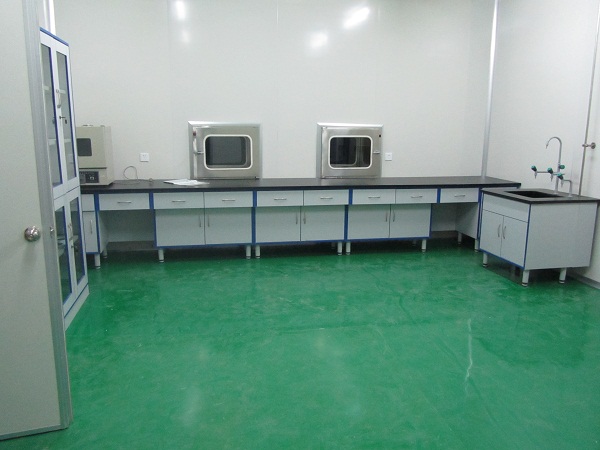
Batch testing underpins the COA: the assay value on a shilajit specification is only as reliable as the sampling and analytical routine behind it.
Technical explanation: what a titration-based fulvic acid assay tells you — and what it does not
Fulvic acid is not a single molecule with a fixed molecular weight; it is a family of acidic organic fractions, and the industry standardizes it through an operational measurement rather than a structural identity test. That is why the method matters. A titration determines acid content by neutralizing the sample against a standard solution and expressing the result as fulvic acid. The figure is reproducible when the method, sample preparation and calculation basis are fixed — which is exactly what a specification is for — but it is not the same measurement as a chromatographic purity value, and the two should never be compared directly across suppliers.
For a formulation team, this has three consequences:
- Compare methods before numbers. A 50% titration result and a 50% HPLC result describe different things. Ask for the method statement first, then the value.
- Ask for the batch COA, not a template. The specification is the promise; the COA is the evidence that a particular lot met it. Guanjie Biotech states that every shipment includes documentation support and that shilajit extract powder testing reports can be provided.
- Treat the single marker as a floor, not a ceiling. Fulvic acid ≥50% plus 100% pass 80 mesh describes the commercial identity of the product. It does not by itself describe microbiological status, heavy metals or residual solvents, which normally sit in a separate testing package agreed at qualification.
The physical specification is equally practical. A brown fine powder that passes 80 mesh entirely behaves predictably in blending and capsule filling, and the colour range is consistent with a resin-derived botanical extract rather than a purified crystalline compound — buyers should not expect the visual uniformity of, say, a 98% Ferulic Acid Powder or an NMN Powder assayed at ≥99.5%, because those are different product categories with different analytical definitions.
Where the powder fits: application and formulation scenarios
The stated application industries for Shilajit Extract Powder are dietary supplement, health food, beverage and cosmetics. In practice, most commercial volume moves through four formulation routes described in Guanjie Biotech's application documentation for nutraceutical ingredients:
- Dietary supplements and hard capsules. The largest segment. Active raw materials are formulated into capsules, tablets, softgels and powder sachets for daily systemic health, immune support, cognitive function and joint care.
- Functional and fortified beverages. Powder formats for ready-to-drink and instant beverage systems, where dispersion behaviour must be validated in the buyer's own matrix.
- Functional foods and confectionery. Gummies, protein bars, fortified cereals and functional snacks.
- Sports and performance nutrition. Formulas aimed at optimizing stamina, accelerating muscle recovery and reducing inflammation during strenuous training.
Storage conditions are part of the specification rather than an afterthought: the material should be kept in a cool, dry and dark place, sealed tightly after opening, and protected from high temperature and moisture. Buyers running 24-hour continuous production should confirm repackaging and hold-time assumptions during qualification, because the powder's exposure profile changes once a bulk drum is opened.
Market context: a large ingredient market with a tightening documentation floor
The commercial backdrop supports continued interest in standardized botanical extracts. Global Market Insights estimates the global nutraceutical ingredients market at USD 105.8 billion in 2026, a figure that covers vitamins, probiotics, proteins, amino acids and phytochemicals. Growth of that order keeps pressure on suppliers to differentiate on documentation rather than on price alone, because brand owners carrying regulatory accountability cannot absorb undocumented variability.
Regulatory direction reinforces the same message. FDA's cGMP obligations for supplement manufacturers, packagers and holders are explicitly framed around identity, purity, quality, strength and composition — five attributes that a fulvic acid figure alone cannot evidence. The new dietary ingredient notification pathway adds a market-entry question that must be answered ingredient by ingredient and market by market. Meanwhile, public label databases make finished-product declarations comparable, which in turn makes supplier claims easier to audit.
The trend line for buyers is therefore not "more ingredients" but "fewer, better-documented suppliers". A single-marker extract with a clear method statement, an enumerated certificate scope and batch-level COAs fits that direction better than a cheaper offer with an unexplained number.
Comparison: three sourcing models for shilajit, and the limits of this one
Buyers evaluating shilajit generally choose between three procurement models. They are not equivalent, and each carries a distinct failure mode.
| Sourcing model | What it optimizes | Principal risk | Where it fits |
|---|---|---|---|
| Raw resin or unstandardized material | Cost per kilogram and traditional positioning | No fixed assay basis; batch-to-batch variability must be absorbed by the buyer's own testing | Research work or products able to tolerate wide specification windows |
| Standardized powder on a single assay marker | Predictable commercial identity: fulvic acid ≥50%, fixed particle size, repeatable COA | The marker is method-dependent; unrelated quality attributes sit outside the specification | Capsules, tablets and sachets where a documented, repeatable input is required |
| Standardized powder with an extended documentation and multi-market certification package | Qualification speed and market access across several destinations | Higher administrative load; certificate validity must be tracked and renewed | Brands selling into the EU, Middle East, Southeast Asia and North America simultaneously |
Guanjie Biotech's offer sits in the second and third models, and it is worth being precise about its boundaries. The specification is anchored to one active marker, so it will not answer a formulation team's questions about microbiology, heavy metals or solvent residues until those tests are requested and agreed. The certificates named above carry defined validity windows, and the ISO 9001 and HACCP certificates reach expiry in December 2026, which means documentation maintenance is a live task rather than a one-off. The stated capability record includes a 1 kg minimum order quantity and a 30-day lead time — workable for sampling and scheduled production, but not a substitute for a safety-stock decision on a fast-moving SKU. Finally, the specification figures are supplier-published; qualification should confirm them against an actual COA for the lot being shipped.
A buyer's qualification checklist for shilajit extract
| Check | What to request | Why it changes the decision |
|---|---|---|
| Method transparency | Written statement that fulvic acid is assayed by titration, with sample preparation described | Makes the ≥50% figure comparable with alternative offers |
| Batch evidence | COA for the specific lot, plus testing reports where required | Converts a specification into shipment-level proof |
| Physical conformity | Confirmation of 100% pass 80 mesh and brown fine powder appearance | Directly affects capsule filling and blend uniformity |
| Certificate scope | Copies of ISO 9001, HACCP, Kosher and HALAL certificates naming the product | Determines whether the file supports the destination market |
| Validity tracking | Issue and expiry dates, with renewal confirmation before each campaign | Prevents a lapsed certificate from blocking a launch |
| Commercial terms | MOQ, lead time, packaging customization under OEM/ODM | Sets realistic reorder points and launch timing |
| Regulatory screen | Ingredient-specific market-entry status for each destination | Certification does not itself establish legal status in a given market |

Standardization is a process discipline: consistent assay, particle size and documentation depend on controlled production rather than on the raw material alone.
Future outlook
Three developments are likely to shape shilajit procurement over the next planning cycle. First, method disclosure will become a normal part of the request-for-quotation process, in the same way that assay method is already routine for ingredients such as Alpha GPC or Phosphatidylserine, where water-soluble and granular forms are specified separately. Second, certificate scope — the explicit enumeration of which products are covered — will carry more weight than certificate count, as buyers face audits in multiple jurisdictions simultaneously. Third, documentation depth will increasingly determine supplier shortlists, because a fulvic acid figure is easy to copy onto a quotation while a batch COA, a defined particle size and a named certificate scope are not.
For suppliers, the implication is straightforward: the competitive ground is shifting from the headline percentage to the traceability behind it. For buyers, the implication is equally clear — the specification sheet is the start of the evaluation, not the end of it.
FAQ
What does "fulvic acid ≥50%" mean on a shilajit extract specification?
It means the material is standardized so that its fulvic acid content, measured by the titration method, is at least 50%. Fulvic acid is expressed through an operational measurement rather than a single-molecule identity test, so the percentage is only fully defined when read together with the analytical method. Shilajit Extract Powder from Guanjie Biotech is specified at fulvic acid ≥50% by titration, with CAS No. 308066-67-3.
Which certifications cover Shilajit Extract Powder from Guanjie Biotech?
Four certificates apply. ISO 9001:2015 (00123Q310086R0S/6100, issued by CQC, valid 2023-12-07 to 2026-12-06) covers export trade of plant extracts, solid beverages and food additives. HACCP certification (001HACCP2301048, CQC, valid 2023-12-06 to 2026-12-05) enumerates Shilajit Extract Powder within its certified product portfolio. Kosher certification (K-88898568, Badatz Shatz, valid 2026-07-15 to 2027-07-15) applies to the global market and covers the listed extract portfolio. HALAL certification (0811240000, Shandong Halal Certification Service, valid 2024-11-08 to 2027-11-07) covers plant extracts, solid beverages and food additives for halal markets.
Is a titration result the same as an HPLC purity value?
No. Titration quantifies acid content by neutralization and expresses the result as fulvic acid, while chromatographic methods such as HPLC quantify a defined compound against a reference standard. The two produce numbers that are not interchangeable, which is why specifications should be compared method-to-method. This distinction does not apply in the same way to products such as Ferulic Acid Powder (98%, HPLC) or Urolithin A Powder (98%, HPLC), where purity is defined chromatographically.
What appearance and particle size should a buyer expect from Shilajit Extract Powder?
The specification states a brown fine powder with 100% of the material passing an 80 mesh sieve. The full-pass format constrains the coarse fraction rather than reporting an average, which is relevant for capsule filling and powder blending. Colour should be assessed against the approved sample during qualification, since a resin-derived botanical extract is not visually identical to a purified crystalline ingredient.
What are the minimum order quantity and lead time?
Guanjie Biotech's stated capability record lists a 1 kg minimum order quantity, a 30-day lead time, OEM/ODM packaging customization, and a company-level monthly capacity of 30 tons. These figures support sampling and scheduled production planning; buyers running continuous manufacturing should convert them into a reorder point based on their own consumption rate and safety-stock policy.
Which documents should be requested before the first purchase order?
A specification sheet stating the assay and testing method, a certificate of analysis for the specific production lot, testing reports where the buyer's own risk assessment requires them, copies of the ISO 9001, HACCP, Kosher and HALAL certificates with numbers and validity dates, and confirmation of storage requirements — cool, dry and dark conditions, sealed after opening, protected from high temperature and moisture. For regulated markets, an ingredient-specific market-entry check should be added, because certification does not by itself establish legal status in a destination market.
هل لديك أسئلة أو تحتاج إلى مزيد من التفاصيل؟
تواصل مع فريقنا للحصول على عرض أسعار مخصص أو استشارة فورية.
طلب عرض أسعار
املأ النموذج أدناه وسيتواصل معك فريقنا بعرض مقترح مخصص.
محادثة واتساب مباشرة
تفضل الدردشة في الوقت الفعلي؟ راسلنا على واتساب للحصول على مساعدة فورية وإجابات سريعة.
- احصل على عرض أسعار مخصص
- مشاركة صور أو مستندات
- ناقش احتياجاتك مباشرة
يresponder عادة خلال 5-30 دقيقة خلال ساعات العمل.