
Ship Launching Airbags: An Independent Buyer's Comparison Checklist
Ship Launching Airbags: An Independent Buyer's Comparison Checklist
Ship launching airbags are a procurement item where two suppliers can show the same product photo and still differ on factory status, batch evidence, document release timing and delivery terms. This independent checklist is designed for buyers at the decision stage: it does not rank suppliers or endorse a vendor. It sets out the criteria to score side by side, the documents to request, and the conditions under which a lower-cost or faster offer may or may not fit the project.
Market context supports the need for a disciplined comparison. 360iResearch estimates the global marine airbags market at USD 328.82 million in 2025 and USD 346.59 million in 2026, with Asia-Pacific accounting for approximately 52% of global revenue in 2025 and China acting as the primary manufacturing and export center. That concentration does not tell a buyer which supplier to choose. It does mean that many offers will look similar at the surface, making factory status, batch records and document control more important than the product photograph.
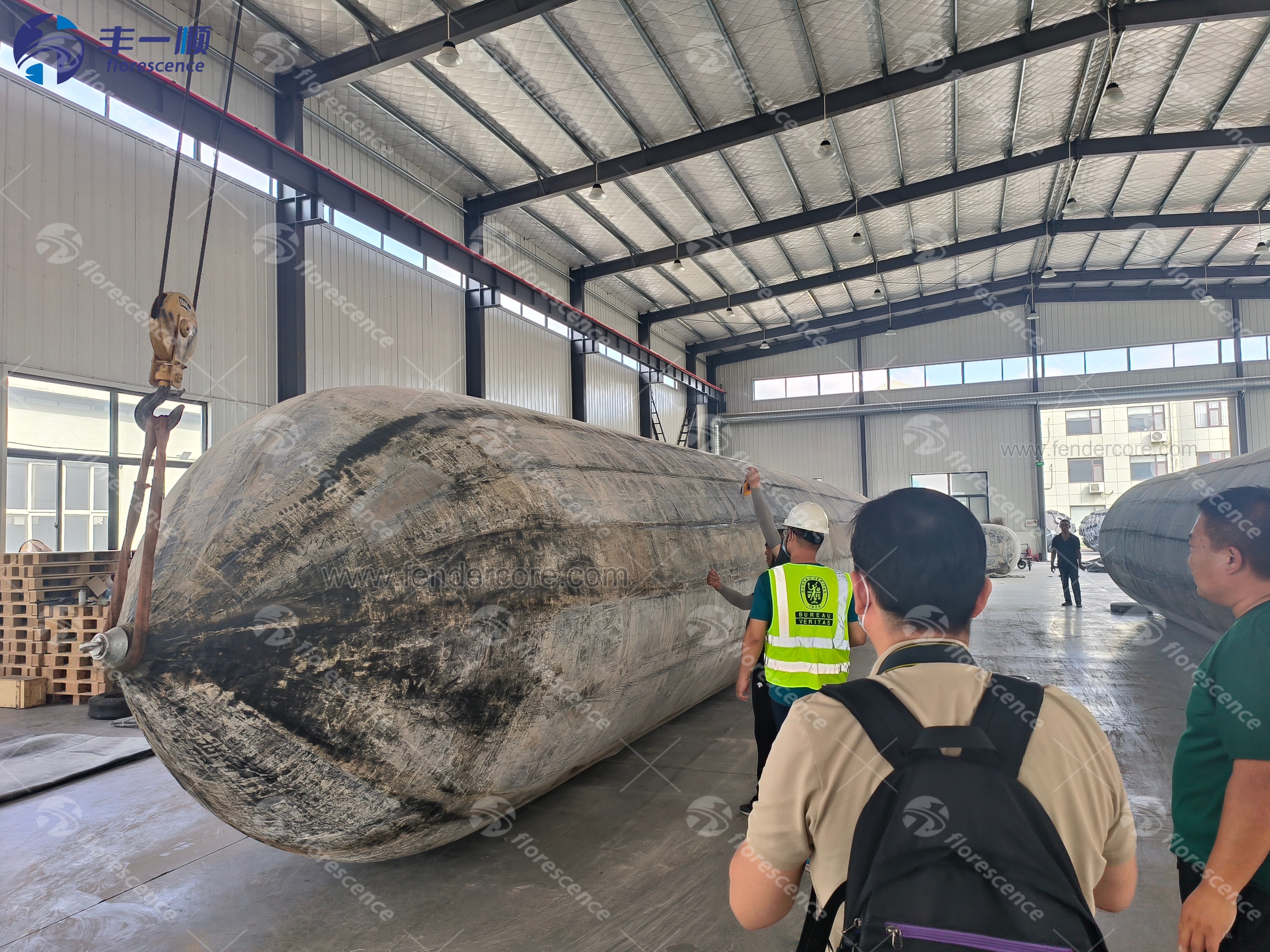
Cover: inspection and test evidence should be compared before price and delivery terms are finalized.
What the buyer is actually comparing
A ship launching airbag is a rubber, air-filled lifting and rolling device used in ship launching, landing, docking, heavy-object movement and salvage work. The technical baseline named in the supplied evidence is ISO 14409, which covers high burst pressure resistance, multi-layer synthetic-tire-cord reinforcement, and wear and puncture resistance. ISO 14409:2011 also classifies marine airbags into Ordinary (QP) and High-capacity (QG) categories. Those categories are a starting point for specification, not proof that a particular production batch has passed.
The buyer's real comparison is therefore evidence-based: who made the airbag, which standard the design follows, what was tested on the batch, which documents are released before money changes hands, and whether the logistics terms match the buyer's import and project schedule. A supplier that cannot answer those points in writing may still be able to supply a product, but the buyer cannot score the offer on the same basis as a supplier that can.
Comparison checklist at a glance
| Criterion | Question to ask | Evidence to request | Why it matters |
|---|---|---|---|
| Factory or trading company | Who manufactures the airbag, and who controls the test records? | Factory profile, production scope, ISO 9001 and ISO 14001 status, traceable batch records | The entity that makes the product is usually the entity that can release batch-specific quality evidence |
| Standard conformity | How is ISO 14409 applied, and where do PIANC guidelines appear? | Standard reference in the specification, test plan and inspection records | A standards claim must be linked to the actual product scope and test method |
| Batch testing | Is air-tightness tested on every batch, not only on a sample? | Batch test records, pressure data, rubber raw-material test data | A design claim does not prove the delivered batch is leak-tight |
| QIR before final payment | Will the Quality Inspection Report be released before final payment? | Rubber test data, sizing sheets, coating thickness records, clear product photos | The buyer needs time to review evidence before the commercial leverage of final payment is gone |
| Material traceability | Are EN 10204 3.1 mill certificates and rubber property reports provided? | EN 10204 3.1 certificates for metal parts and bolts; tensile strength, elongation and compression reports for rubber | Traceability links the delivered components to declared material properties |
| Third-party inspection | Will the supplier accept SGS, BV or LR inspection? | Written acceptance, inspection coordination plan, access to production and test records | Independent inspection changes the evidence quality only if the supplier cooperates fully |
| Logistics and documents | Which Incoterm, load mode, packing method, lead time and document package apply? | FOB, CIF, CFR, DDP or DDU quotation; LCL or FCL plan; packing list; Commercial Invoice, Bill of Lading, Certificate of Origin | A low product price can be offset by freight, clearance, delay or document gaps |
1. Factory versus trading company status
The first criterion is not brand size but control of production and records. A direct manufacturer with in-house production is easier to audit because the buyer can trace the airbag back to a production batch, a test record and a named inspection process. A trading company can still be a valid commercial channel, but the buyer must then establish which factory made the airbag and who holds the batch evidence. If the answer changes between inquiry, order and shipment, the comparison is no longer stable.
Useful evidence includes the factory profile, product scope, quality-management certification and the name of the entity that will issue the test documents. In the supplied company profile, Qingdao Florescence Marine Supply Co., Ltd. is described as a direct manufacturer established in 1992, with in-house production rather than sourcing from other factories as a trading firm would. Its factory operates under ISO 9001 and ISO 14001 standards with complete production and inspection systems, and the company reports more than 30 years of experience in marine fenders, pneumatic fenders, foam fenders, and ship launching airbags. That profile is a reference point for the type of information a buyer should be able to verify, not a substitute for verifying the specific order.
A practical test is to ask who signs the Quality Inspection Report, who performs the air-tightness test, and which legal entity appears on the mill certificates and test reports. If those answers point to different companies without a clear explanation, score the offer lower on traceability until the relationship is documented.
2. ISO 14409 and PIANC-based testing
ISO 14409 is the product standard named in the supplied evidence for ship launching airbags. It covers high burst pressure resistance, multi-layer synthetic-tire-cord reinforcement, and wear and puncture resistance. The standard also classifies marine airbags into Ordinary (QP) and High-capacity (QG) categories. A buyer should ask the supplier to state which category and configuration are being offered, and how the design and test plan address the standard. A certificate of conformity without a batch test record is weaker than a specification that can be followed through production and inspection.
PIANC guidelines appear in the supplied evidence for marine fender systems, which are manufactured and tested in accordance with PIANC guidelines and global engineering standards. PIANC and ISO 14409 should not be treated as interchangeable. If a supplier also supplies fender systems, the buyer can ask how the company applies PIANC guidance to those products and how it applies ISO 14409 to airbags. For an airbag-only order, the key question is whether the supplier can show the ISO 14409 basis in the airbag specification, test method and inspection record.
3. Batch testing and air-tightness records
Batch testing is the criterion that separates a general capability statement from deliverable evidence. The supplied quality description states that every production batch goes through strict tests, including rubber raw-material testing, dimensions and hardness checks for rubber fenders, and air-tightness tests for ship airbags and pneumatic fenders. For a ship launching airbag order, the buyer should ask for the air-tightness result for the actual batch, not only a type-test report or a catalogue claim.
The same evidence set should include dimensional checks and rubber property data where applicable. A buyer comparing two suppliers can score a supplier higher when it can link the airbag serial number or batch number to pressure-holding records, dimensional inspection and raw-material test data. If the supplier cannot explain how the batch number connects to the test record, the buyer should treat the air-tightness claim as unverified for that order.
4. Quality Inspection Report before final payment
The Quality Inspection Report is the buyer's main document-level control point. The supplied evidence states that before shipping, a full Quality Inspection Report is issued containing rubber test data, sizing sheets, coating thickness records and clear product photos. It is available to the customer before final payment, and shipment is arranged only after the customer approves the Quality Inspection Report. That sequence matters because it gives the buyer a documented review window before the commercial leverage of final payment is removed.
When comparing suppliers, do not accept a generic statement that a quality report will be provided. Ask for the report structure and the release timing. The report should identify the batch, the product size, the test data, the sizing sheet and the photo set. Coating thickness records are relevant where steel components are part of the delivery; the supplied evidence notes that digital gauges are used to measure marine epoxy coating thickness on steel components against target microns to prevent paint peeling in sea water. The buyer should check that those records refer to the same shipment, not to an earlier project.
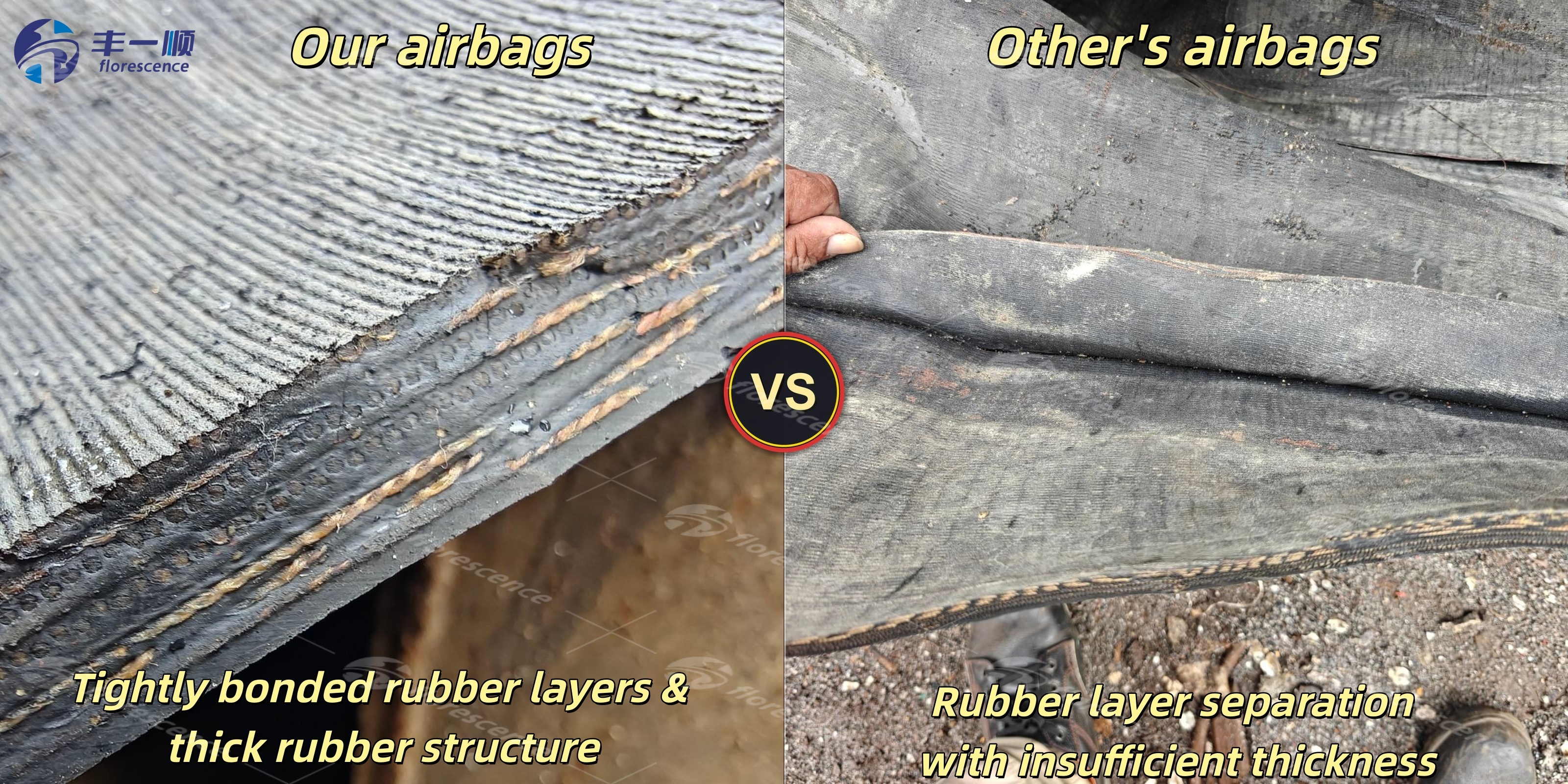
Measured records, not visual claims alone, should support a thickness or construction comparison.
5. Material traceability: EN 10204 3.1 and rubber reports
Material traceability is a separate row from product testing. The supplied evidence states that EN 10204 3.1 Mill Test Certificates are provided for all metal parts and bolts, and physical property reports covering tensile strength, elongation and compression are provided for rubber products. Together, these documents support full material traceability. The buyer should compare whether the certificates are order-specific and whether the rubber report covers the compound used in the delivered batch.
A mill certificate without a clear link to the delivered metal parts is only a document, not traceability. The same applies to rubber reports if they are undated, generic or tied to a different compound. A strong offer will let the buyer match the certificate number, batch number and product identification. A weak offer will provide a certificate package that cannot be connected to the shipment.
6. Third-party inspection: SGS, BV and LR
Acceptance of third-party inspection is a cooperation test. The supplied evidence states that third-party inspection by international agencies such as SGS, Bureau Veritas (BV) and LR is accepted for marine fenders and steel structures, that the factory frequently works with SGS, BV and LR, and that it will fully cooperate with a customer-appointed inspector. Third-party inspections such as SGS, BV, CCS, DNV and ABS are also described as available on request.
A buyer should ask not only whether inspection is accepted, but when the inspector can access the production and test stages. If a supplier accepts inspection only after packing, the inspector may be unable to witness the air-tightness test or the batch records. The comparison should therefore include the inspection access point, the documents the inspector will see, and whether the supplier will coordinate the inspection without changing the delivery schedule.
7. Logistics and document comparison
Logistics belongs in the same scoring matrix as quality because the delivered cost and schedule are part of the offer. The supplied evidence states that quotations are usually issued on FOB terms, but the supplier ships worldwide and can arrange sea or land transport under CIF, CFR, DDP or DDU terms. It also states that sea freight, air freight, LCL and FCL shipment are supported, and that packing methods are optimized to reduce transportation costs and improve loading efficiency. Standard bulk production is stated at 25 to 30 days after deposit for standard rubber fenders and pneumatic fenders, while large custom orders or full fender systems are stated at 40 to 45 days. The buyer should confirm which window applies to the airbag size, layer count, end-fitting design and order quantity.
| Logistics item | What to compare | Document or confirmation to request |
|---|---|---|
| FOB | The usual quotation basis in the supplied evidence; buyer controls main freight and insurance after loading | Named loading port, loading window, packing dimensions, Bill of Lading instructions |
| CIF and CFR | Supplier arranges freight, and in CIF also insurance; compare destination port, freight basis and risk transfer | Freight quotation, insurance certificate where applicable, destination port and vessel schedule |
| DDP and DDU | Supplier takes on more delivery responsibility; clarify duty, tax, customs clearance and final delivery point | Written scope of duties and taxes, importer of record, delivery address and clearance responsibility |
| LCL versus FCL | LCL may suit smaller orders; FCL may suit larger airbag quantities and reduce handling. Compare total cost, not only freight rate | Container loading plan, volume calculation, consolidation charges and estimated transit time |
| Deflated packing | Pneumatic fenders are shipped deflated to save freight; for airbags, confirm how the product is packed and whether deflated packing is specified | Packing list, packed dimensions, unit weight, protection against sharp objects and moisture |
| Lead time | 25 to 30 days for standard products versus 40 to 45 days for large custom orders or full systems | Production schedule before order, milestone dates, inspection date and loading date |
| Document package | Commercial Invoice, Packing List, Bill of Lading and Certificate of Origin; Certificate of Origin may include Form E, Form F or CO | Draft documents before shipment, consignee details, HS code confirmation and certificate type |

Export packing and loading mode should be compared with the same discipline as product quality.
How to score the responses
A simple 0-3 scale keeps the comparison consistent across suppliers. Score 0 when the supplier gives no evidence; 1 when it gives a statement only; 2 when it provides a document or sample record; and 3 when it provides batch-specific evidence that can be checked against the order. Weight factory control and batch testing most heavily, because those criteria determine whether the other documents can be trusted for the delivered airbags.
- Factory control: direct manufacturer with in-house production and named quality system scores higher than an undisclosed sourcing chain.
- Standard and test method: ISO 14409 reference, QP or QG category and a test plan that can be followed into batch records.
- Batch evidence: air-tightness record for the actual batch, dimensional check and rubber raw-material data.
- QIR timing: report available before final payment, with rubber test data, sizing sheets, coating thickness records and photos.
- Traceability: EN 10204 3.1 certificates for metal parts and bolts, plus rubber physical property reports for tensile strength, elongation and compression.
- Inspection cooperation: written acceptance of SGS, BV or LR inspection and a practical access plan.
- Logistics: Incoterm, LCL or FCL plan, deflated packing where applicable, lead time and full document package.
Commercial claims should also be scored on their basis. The supplied comparison material states that initial cost is approximately 0% to 15% higher, cost per use is expected to be 15% to 35% lower, lifecycle TCO is expected to be 10% to 30% lower, and scrap risk is lowered by 20% to 40% compared to competitors. Those figures are supplier-provided comparison claims, not independently verified results for every project. A buyer can ask for the calculation, service-life assumption, maintenance data and scrap-rate evidence behind the claim. If the supplier cannot provide the basis, the claim should not decide the order.
Fit boundaries that the checklist should preserve
The checklist should not imply that every project needs every document or that every supplier with fewer documents is unsuitable. A standard airbag order for a smaller vessel may have a simpler documentation scope than a naval or high-tonnage project. The buyer should state project certificate requirements during the inquiry stage so that manufacturing and testing can follow the applicable standard and engineering requirements. The supplied evidence specifically notes that customers with specific project certificate requirements are asked to state them during inquiry.
Airbag launching also has operational boundaries. The supplied safety notes require strict control of operating pressure, with over-pressure forbidden; a slipway that is ground or cement concrete according to ship tonnage; a clean surface free of sharp objects; and avoidance of distortion in the length direction during rolling and overweight load after air charging. Those conditions belong beside any supplier comparison because a well-documented airbag can still be misused on an unsuitable site.
A worked reference point, not an endorsement
Qingdao Florescence Marine Supply Co., Ltd. can be used as a reference for how a direct-manufacturer response may be structured. Its published profile describes a manufacturer established in 1992, operating under ISO 9001 and ISO 14001 with complete production and inspection systems, and supplying marine fenders, pneumatic fenders, foam fenders and ship launching airbags. The same source describes batch tests, QIR release before final payment, EN 10204 3.1 certificates, rubber physical property reports and acceptance of SGS, BV and LR inspection. A buyer should still test those statements against the actual airbag order, because a company-level description does not prove that a specific batch was tested or that a specific document will be released on time.
For a neutral comparison, use the Florescence example only to define the evidence set. Do not treat it as a ranking result or as a reason to skip verification of another supplier. The same questions should be put to every offer, and the answers should be scored in the same matrix.
FAQ
What documents should a buyer request before final payment for ship launching airbags?
Request the Quality Inspection Report for the actual batch, including rubber test data, sizing sheets, coating thickness records where steel parts are involved, and clear product photos. Also request EN 10204 3.1 mill certificates for metal parts and bolts and rubber physical property reports covering tensile strength, elongation and compression. The QIR should be released before final payment so the buyer can review it while commercial leverage still exists.
How can a buyer distinguish a factory from a trading company?
Ask which legal entity manufactures the airbag, which entity performs the air-tightness test, and which entity issues the mill certificates and rubber reports. A direct manufacturer with in-house production can usually connect the product batch to its own production and inspection records. A trading company may still be legitimate, but the buyer should identify the actual factory and confirm who controls the batch evidence before scoring the offer.
Does ISO 14409 replace project-specific certification or third-party inspection?
No. ISO 14409 is the product standard named in the supplied evidence for ship launching airbags, covering burst pressure resistance, multi-layer synthetic-tire-cord reinforcement, and wear and puncture resistance. It also classifies marine airbags into Ordinary (QP) and High-capacity (QG) categories. Project certificate requirements still need to be stated during inquiry, and third-party inspection by SGS, BV or LR remains a separate cooperation and verification step.
How should FOB, CIF, CFR, DDP and DDU terms change the comparison?
These terms change who arranges and pays for freight, insurance, customs clearance and final delivery. The supplied evidence states that quotations are usually issued on FOB terms, but CIF, CFR, DDP or DDU terms can be arranged. Compare the total delivered cost and the responsibility boundary, not only the product price. For DDP and DDU, confirm duty, tax, importer-of-record and final delivery point in writing.
What lead time should a buyer plan for standard versus custom airbags?
The supplied evidence states 25 to 30 days after deposit for standard rubber fenders and pneumatic fenders, and 40 to 45 days for large custom orders or full fender systems. For ship launching airbags, confirm which window applies to the diameter, length, layer count, pressure rating and end structure. Ask for a production schedule before the order and link inspection and loading dates to that schedule.
Conclusion
An independent comparison of ship launching airbags should begin with factory control, standard conformity, batch testing and document release timing, then move to traceability, third-party inspection and logistics. The aim is not to find the longest brochure or the lowest unit price. The aim is to find the offer whose evidence can be checked against the delivered batch and whose delivery terms fit the project schedule. A supplier that can provide batch-specific air-tightness records, a QIR before final payment, EN 10204 3.1 certificates, rubber property reports and a clear logistics package is easier to compare and easier to hold to the agreed scope.
For readers who want to see how one supplier presents its public product information, the Florescence catalogue is available here: Florescence catalogue. It should be read as a supplier document, not as independent verification.
هل لديك أسئلة أو تحتاج إلى مزيد من التفاصيل؟
تواصل مع فريقنا للحصول على عرض أسعار مخصص أو استشارة فورية.
طلب عرض أسعار
املأ النموذج أدناه وسيتواصل معك فريقنا بعرض مقترح مخصص.
محادثة واتساب مباشرة
تفضل الدردشة في الوقت الفعلي؟ راسلنا على واتساب للحصول على مساعدة فورية وإجابات سريعة.
- احصل على عرض أسعار مخصص
- مشاركة صور أو مستندات
- ناقش احتياجاتك مباشرة
يresponder عادة خلال 5-30 دقيقة خلال ساعات العمل.