
Shirt Packaging Accessories: From Belly Bands to Butterflies
A folded shirt leaves the packing station held together by a small system of paper, plastic and metal components, and few of them are interchangeable. Collar stays set the collar angle. Butterflies and collar bands hold the folded silhouette. Belly bands, clips and pins keep the bundle closed. Tissue paper, cardboard and gift boxes carry the presentation. This guide organises those components by function rather than by part number, so a decision-stage buyer can compare categories, specifications and order thresholds in one place.
Why Shirt Packaging Is a Category Decision, Not a Parts List
The global garment packaging market was valued at USD 18.6 billion in 2025 and is projected to reach USD 31.4 billion by 2034, according to Dataintelo. Asia Pacific accounted for a 41.5% revenue share of that market in 2025. Adjacent component markets point in the same direction: the garment interlining market, which supplies structural material behind shirt collar construction, reached USD 3.65 billion in 2025 (The Business Research Company), while the buttons-for-clothing market reached USD 8.39 billion in 2025 and is forecast to grow at a 3.9% CAGR to USD 11.39 billion by 2033 (Cognitive Market Research).
The comparison between those numbers is the useful part. Garment packaging is expanding at roughly a 6.0% CAGR, faster than general clothing fasteners and buttons at 3.9%, and the difference reflects e-commerce fulfillment requirements as much as garment output. A bundle that survives a retail shelf is no longer sufficient; the same bundle now has to survive a parcel network, a return, and a photograph taken on a phone.
Most accessory catalogs, however, are still organised by product name: bands, stays, butterflies, clips, bags. That structure reflects how goods are manufactured, not how a packing line or a brand team makes decisions. Buyers who assemble a packaging kit from three or four separate vendors end up owning the compatibility problem themselves — a 0.35 mm band ordered against a collar that a 1 mm paper band was specified for, or a gift box interior that no longer matches the tissue paper fold.
Four Functional Groups Every Shirt Packager Should Plan For
Grouping accessories by function answers the question a parts list cannot: what does this component actually do to the shirt? The four groups below cover the accessory set end to end, and each one is specified, ordered and inspected differently.
| Functional group | Job in the pack | Components in the category |
|---|---|---|
| Stiffening and structure | Sets and holds collar and placket geometry | Metal collar stays, plastic (PVC) collar stays, collar support inserts, shirt cardboard |
| Shaping | Maintains the folded silhouette and reduces creasing | Paper butterflies, plastic butterflies (frosted PVC, white PET, bubble PVC and bubble PET variants), collar bands in PVC, white PET and specialty paper |
| Bundling and securing | Keeps the folded shirt closed, stacked and identified | Paper belly bands, plastic and metal clips, metal pins, apparel tags |
| Presentation and protection | Protects surfaces and carries brand, care and compliance information | Tissue paper, exquisite gift boxes, plastic bags, moisture-proof paper, washing labels |
Stiffening: Collar Stays and Collar Support
Stiffening components control how the collar reads on the shelf. Metal collar stays are listed in four common sizes — 55.9 x 9 x 0.8 mm, 63.5 x 9 x 0.8 mm, 69.9 x 9 x 0.8 mm and 76.2 x 9 x 0.8 mm — in stainless steel with a common 0.8 mm thickness, offered in silver, blue, black, gold and rose gold with laser-engraved logos. Plastic collar stays are listed in white PVC at 6.35 cm x 1 cm x 0.75 mm. Collar support inserts appear as a separate item in light blue PVC at 22.7 cm x 18.5 cm and 0.35 mm thickness.
Three buyer criteria separate these options. First, collar point length: a stay must sit inside the collar without breaking the point line, which is why four standard lengths exist rather than one. Second, rigidity: metal stays hold a sharper line and support engraving, while PVC stays are lighter and typically specified where collar stiffness is secondary. Third, order threshold: in the listed data, metal collar stays carry an MOQ of 1,000 pcs, while plastic collar stays are listed at 10,000 pcs — a difference that matters when a program starts with a sample run before scaling.
Shaping: Butterflies and Collar Bands
Shaping components hold the folded body in place. Paper butterflies are listed in 400 g single white paper at 15 cm x 3 cm, with dog bone and big butterfly variants. Plastic butterflies are listed in light blue fine sand PVC at 26 cm x 10.4 cm and 0.25 mm thickness, with frosted PVC, white PET, bubble PVC and bubble PET variants. The size difference is the practical distinction: a 15 cm paper butterfly suits a compact fold, while a 26 cm plastic butterfly spans a wider fold and creates a rounded, three-dimensional surface.
Collar bands form a third sub-category, and they are where material choice changes performance most. The listed range includes a PVC collar band at 50 x 3.4 cm and 0.50 mm, a white PET plastic collar band at 48.1 x 4 cm and 0.35 mm, and a paper collar band in specialty tenacity paper at 47.2 x 3.8 cm and 1 mm with a 1.4 cm x 15 hole pattern. The perforated paper version is dimensioned for button alignment, which makes it a specification decision rather than a styling one.
Bundling and Securing: Belly Bands, Clips and Pins
Bundling components keep the folded stack closed. Paper belly bands are listed at 58 x 10 cm with a 0.25 mm thickness, in colourful finishes with customisable logos, and the listed application includes pajama packing as well as shirt packing. Clips are listed in PS or metal at 3.3 cm or 3.7 cm x 0.8 cm x 1.2 mm, silver, in an X shape with customisable logos and an MOQ of 100,000 pcs. Metal pins are listed in stainless steel or brass at a common 26 x 0.6 mm with 0.6 mm and 0.65 mm thicknesses, silver, without logo, at an MOQ of 10,000 pcs.
The clip MOQ is the number most often underestimated in planning. At 100,000 pcs, clips behave as a volume program component, while belly bands, pins, cardboard and tissue paper are all listed at 10,000 pcs. A mixed bundle therefore has at least three different order thresholds inside it.
Presentation and Protection: Tissue Paper, Boxes and Tags
Presentation components determine what the customer sees last and keeps. Tissue paper is listed at 36 x 40 cm with a 17 GSM sheet weight, white, with customisable logo. Exquisite gift boxes are listed in paper cardboard wrapped with 120 g to 150 g art paper at 22 cm x 35 cm and a 2 to 3 mm wall thickness, with customisable colour and logo. Plastic bags are listed in PP at 35 cm x 26 cm with a single 0.035 mm thickness. Shirt cardboard is listed in 100% natural wood pulp paper at 21 x 35.2 cm and 500 GSM, and apparel tags in 100% natural wood pulp paper at 4 cm x 7 cm and 500 GSM. Washing labels are listed in polyester or nylon taffeta.
Category Shortlist: Specs, Materials and Order Thresholds
The table below lists the same categories in order-of-use form, with the specifications and minimum order quantities as listed by the manufacturer. It is intended as a comparison sheet: buyers can check size, thickness or GSM, and MOQ side by side before committing to a bundle.
| Component | Material | Listed size | Thickness / GSM | MOQ |
|---|---|---|---|---|
| Metal collar stay | Stainless steel | 55.9 x 9 x 0.8 mm / 63.5 x 9 x 0.8 mm / 69.9 x 9 x 0.8 mm / 76.2 x 9 x 0.8 mm | 0.8 mm | 1,000 pcs |
| Plastic collar stay | White PVC | 6.35 cm x 1 cm | 0.75 mm | 10,000 pcs |
| Collar support insert | Light blue PVC | 22.7 cm x 18.5 cm | 0.35 mm | 10,000 pcs |
| Paper collar band | Specialty tenacity paper | 47.2 cm x 3.8 cm, 1.4 cm x 15 holes | 1 mm | 10,000 pcs |
| Plastic collar band | White PET | 48.1 cm x 4 cm | 0.35 mm | 10,000 pcs |
| Collar band (PVC / paper) | PVC, paper | 50 cm x 3.4 cm | 0.50 mm | Listed at item level |
| Paper butterfly | 400 g single white paper | 15 cm x 3 cm | 400 GSM | 10,000 pcs |
| Plastic butterfly | Light blue fine sand PVC | 26 cm x 10.4 cm | 0.25 mm | 10,000 pcs |
| Clip | PS / metal | 3.3 cm or 3.7 cm x 0.8 cm | 1.2 mm | 100,000 pcs |
| Metal pin | Stainless steel / brass | 26 x 0.6 mm | 0.6 mm / 0.65 mm | 10,000 pcs |
| Belly band | Paper | 58 cm x 10 cm | 0.25 mm | 10,000 pcs |
| Shirt cardboard | 100% natural wood pulp paper | 21 cm x 35.2 cm | 500 GSM | 10,000 pcs |
| Tissue paper | Tissue paper | 36 cm x 40 cm | 17 GSM | 10,000 pcs |
| Gift box | Paper cardboard with 120–150 g art paper wrap | 22 cm x 35 cm | 2–3 mm | 10,000 pcs |
| Plastic bag | PP | 35 cm x 26 cm | 0.035 mm single | 10,000 pcs |
| Apparel tag | 100% natural wood pulp paper | 4 cm x 7 cm | 500 GSM | 10,000 pcs |
| Washing label | Polyester / nylon taffeta | Item-level specification | Item-level specification | Listed at item level |
How Wuxi Mingyu Garment Accessories Fits This Category Map
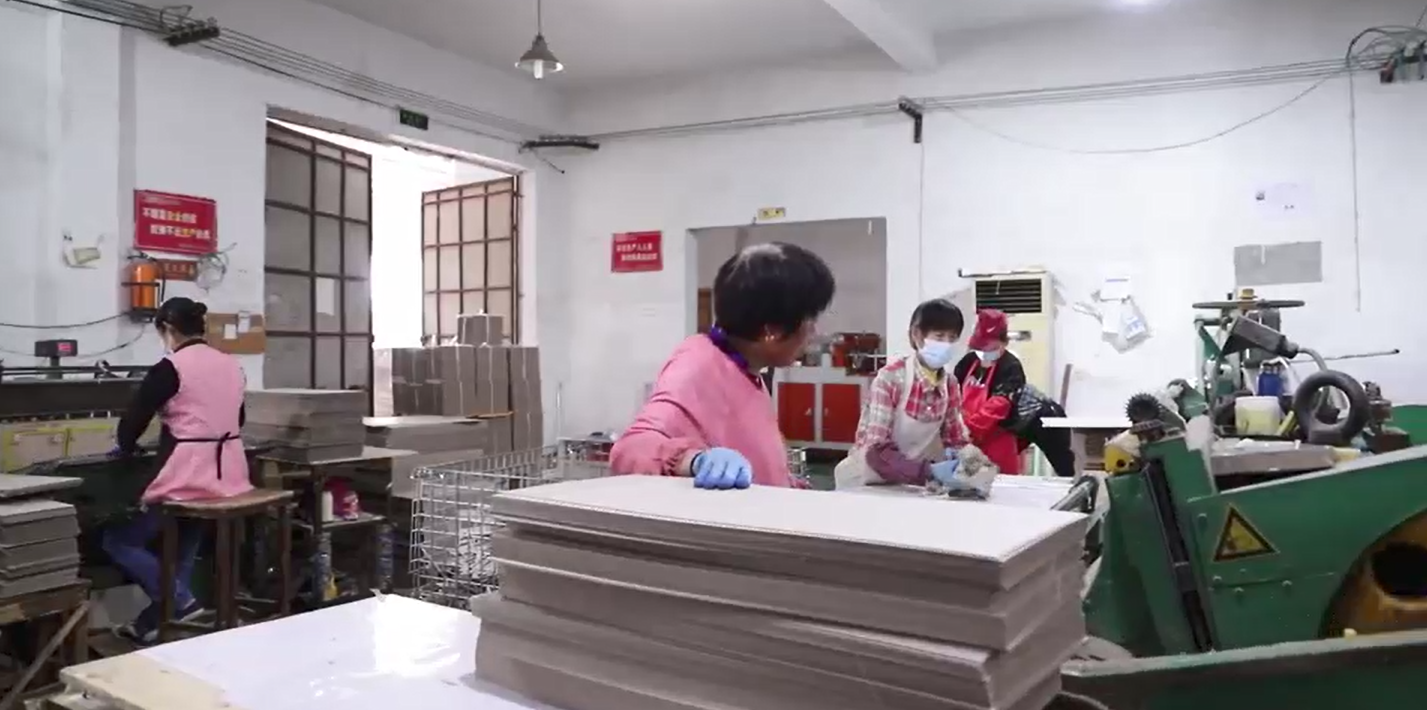
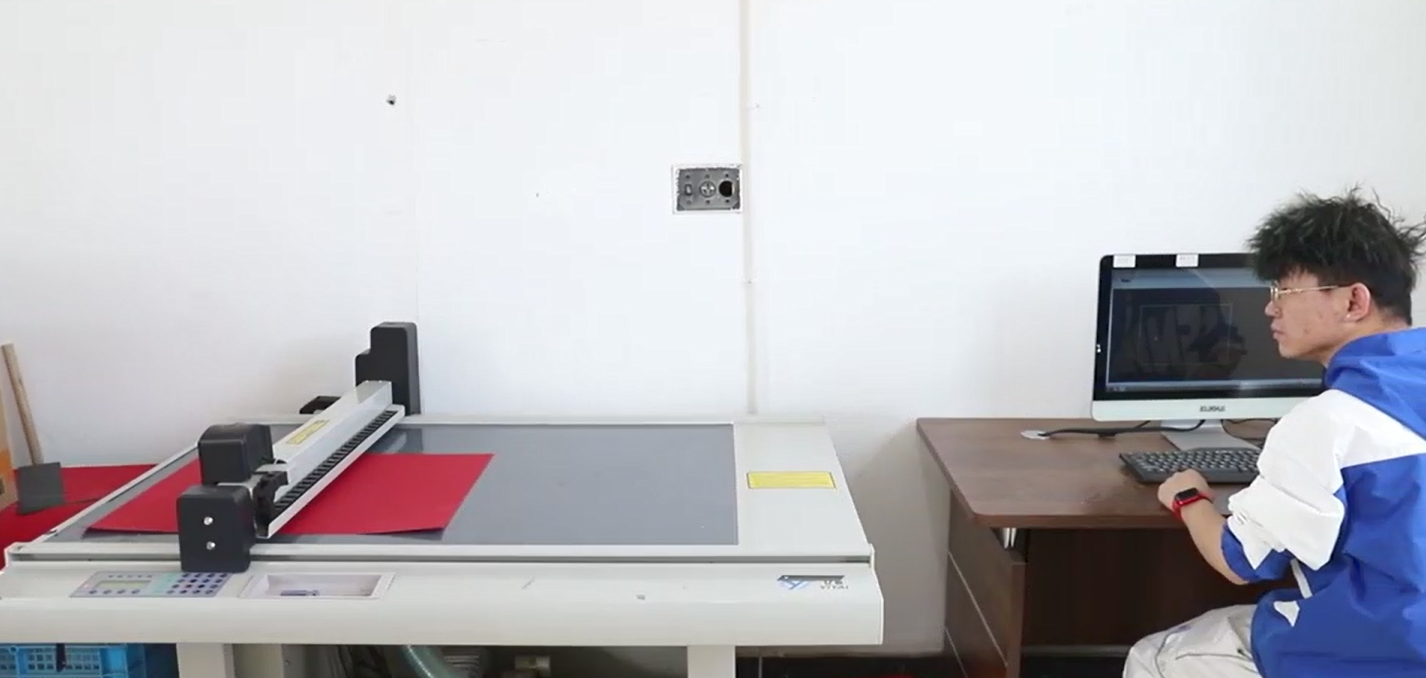
Wuxi Mingyu Garment Accessories Factory is a garment-accessory manufacturer based in E’hu Town, Xishan District, Wuxi, Jiangsu, China, founded in 2004 and operating a 2,500 m² facility with 25 employees, a three-engineer R&D team and an annual output of 90 million sets. The company states that approximately 85% of its output is exported, serving Europe, North America, South America and Asia. Its listed production scope covers PVC and PET collar bands, collar stays, collar butterflies, shirt cardboard, moisture-proof paper, plastic clips and plastic packaging bags, which maps directly onto the stiffening, shaping, bundling and presentation groups described above.
On the commercial side, the manufacturer describes itself as a one-stop garment-accessory customisation supplier for clothing brands and garment manufacturers, supporting both OEM and ODM orders with custom size, colour, hot-foiling, printing, logo stamping and mold opening. The general MOQ is stated as 1,000 sets, monthly production capacity is stated at 7.5 million sets, and normal lead time is stated as 7 to 20 working days after order confirmation. Customisation scope and capacity of this kind matter at the decision stage because they determine whether one purchase order can cover every category on the shortlist instead of splitting the bundle across suppliers.
Supply continuity is supported by an overseas-localised layout: the company reports distribution warehouses, agencies or manufacturing sites in Sri Lanka, Argentina, Bangladesh, Indonesia, Colombia and Kenya, with a Sri Lanka factory established in 2013 and a Vietnam factory in 2017, followed by an OA system in 2018. Independent export qualification and established logistics cooperation networks are also stated, together with an in-house quality-control team that carries out full-range inspections throughout each production procedure.
Technical Explanation: What the Numbers Actually Control
Accessory specifications are usually written as a size, a thickness and a material, and each of those three carries a distinct function in the pack.
Thickness controls rigidity, not strength alone. Within the listed range, shaping and holding components sit between 0.25 mm and 1 mm: plastic butterflies at 0.25 mm, plastic collar bands at 0.35 mm, collar support inserts at 0.35 mm, collar bands at 0.50 mm, plastic collar stays at 0.75 mm, metal collar stays at 0.8 mm and paper collar bands at 1 mm. A thicker strip resists folding pressure better; a thinner strip folds more cleanly and adds less bulk to a flat-packed parcel. The correct choice depends on whether the accessory must hold a shape on a shelf or survive compression in a carton.
GSM controls paper body and opacity. Paper components in this list span 17 GSM tissue paper, 400 GSM paper butterflies and 500 GSM cardboard and apparel tags. Low-GSM tissue wraps and cushions without adding structure; 400 GSM and 500 GSM papers hold a rigid form and accept printing and foiling reliably. Substituting one for the other changes both the visual result and the print process.
Material choice controls compatibility and printability. PVC, PET and paper behave differently at the packing station. White PET is specified for one collar band at 0.35 mm and appears among the butterfly variants; PVC appears in the fine-sand butterfly, the collar stay and the collar support insert. Laser engraving is listed as available on metal collar stays; logos are listed as customisable on plastic collar stays, plastic butterflies, clips, cardboard, gift boxes, tissue paper, belly bands, apparel tags and paper butterflies.
Dimension pattern controls fit. The paper collar band’s 1.4 cm x 15 hole pattern and the four standard metal collar stay lengths are examples of fit-driven specifications rather than free parameters. Where a band must sit over buttons, the hole spacing is fixed; where a stay must match a collar point, the length is selected from a standard set.
Application and Use Cases
Retail and brand display packing. The full stiffening-plus-shaping-plus-presentation stack applies: metal or PVC collar stays, a paper or plastic butterfly, tissue paper, an exquisite gift box and a printed apparel tag or belly band. This is the configuration where paper GSM and logo options carry the most weight, because all four categories remain visible to the end customer.
Volume export packing. Cardboard at 21 x 35.2 cm, a PP plastic bag at 35 x 26 cm, clips and belly bands form a lower-variation bundle built for carton efficiency. Here the constraint is order volume, since clips are listed at 100,000 pcs and most other items at 10,000 pcs.
Sleepwear and pajama sets. The belly band listing explicitly covers pajama packing as well as shirt packing, which makes the 58 x 10 cm paper band the primary bundling component for softer, thicker folds that a shirt clip would mark.
Flat-pack and e-commerce fulfilment. Where height is constrained, plastic collar bands at 0.35 mm and thinner shaping components reduce parcel thickness, while 500 GSM cardboard protects the fold without a rigid box. This is the configuration most affected by the parcel-network trend described in the market figures.
Multi-market programs. Buyers serving Europe, North America, South America and Asia simultaneously are the audience for which the accessory mix is most often standardised on a single specification set, with printing and colour differences handled at the tag, band and box level rather than at the structural level.
Market Trend Analysis
Three verified signals shape the accessory decision over the next planning cycle. First, the garment packaging market is growing faster than garment hardware: roughly 6.0% CAGR for packaging against 3.9% for buttons and clothing fasteners, according to the same comparison set, with packaging reaching an estimated USD 31.4 billion by 2034 from USD 18.6 billion in 2025 (Dataintelo). Second, Asia Pacific already accounts for a 41.5% revenue share of the garment packaging market, so regional supply and regional warehousing are structural rather than incidental. Third, the garment interlining market reached USD 3.65 billion in 2025 (The Business Research Company), confirming that collar construction remains a funded part of the garment bill of materials, not a cost line to be eliminated.
The operational consequence is a shift in how accessory bundles are purchased. When packaging growth outpaces garment hardware growth, the accessory bundle becomes a larger share of the delivered cost and receives its own procurement attention. Buyers increasingly treat collar stays, butterflies, bands, clips, cardboard, tissue paper, bags and boxes as one managed category with a shared specification sheet, rather than as eight unrelated line items.
MingYu Compared with Traditional Manufacturing Plants
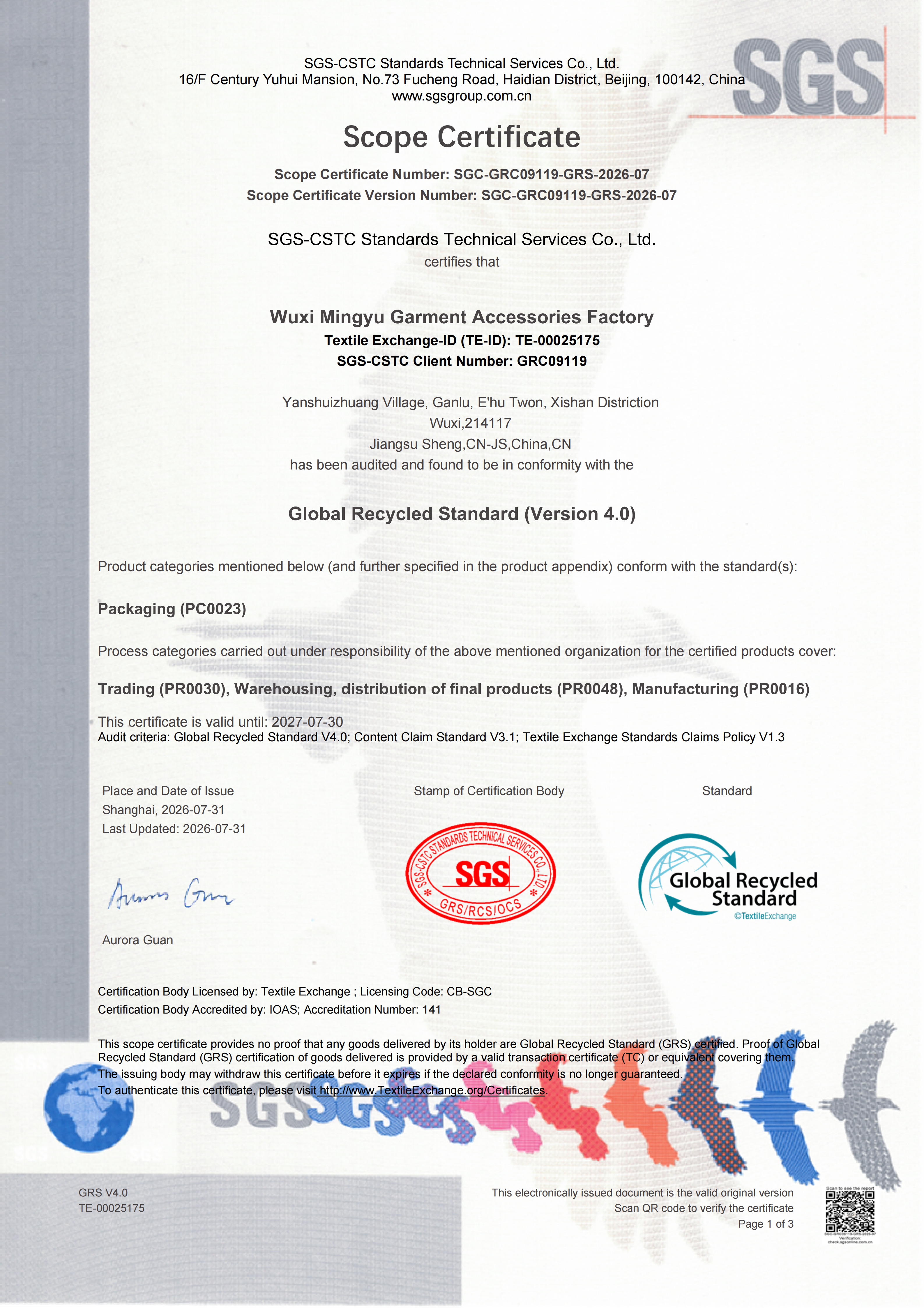
The manufacturer’s own comparison against traditional manufacturing plants is stated in measurable terms: monthly production capacity is 30% higher; automated production requires 98% less maintenance; bulk orders are supported by competitive comprehensive cost while customised orders are held under stable cost control; and the company describes distinct advantages in shirt collar and packaging accessories compared with traditional plants. Supporting points include advanced testing equipment, complete authoritative certificates and experience in factory inspections.
| Comparison dimension | Stated position |
|---|---|
| Monthly production capacity | 30% higher than traditional manufacturing plants |
| Maintenance requirement | 98% less than traditional manufacturing plants, due to automated production |
| Cost structure | Competitive comprehensive cost for bulk orders; stable cost control for customised orders |
| Quality infrastructure | Advanced testing equipment, complete authoritative certificates, factory inspection experience |
| Category coverage | Stiffening, shaping, bundling and presentation components from one source, versus single-material suppliers |
That comparison reflects the manufacturer’s own positioning rather than a third-party benchmark, and buyers should treat it accordingly — as a starting point for an audit and a sample run, not as a substitute for one.
Where This Category Approach Has Limits
A functional category map is a planning tool, and it has real boundaries that buyers should price in before committing.
- Order thresholds vary sharply by category. The general MOQ is stated as 1,000 sets, but per-item minimums range from 1,000 pcs for metal collar stays to 100,000 pcs for clips, with most listed items at 10,000 pcs. A bundle that looks balanced on paper can be constrained by one high-threshold component.
- Lead time is a standard window, not a guarantee. The stated lead time of 7 to 20 working days after order confirmation applies to standard production; customised elements such as printing, foiling, logo stamping or mold opening sit outside a purely standard specification and should be scheduled accordingly.
- Not every item accepts a brand mark. Several listed products carry no logo option — the paper collar band, the collar support insert, the white PET plastic collar band, the PP plastic bag and the metal pin. Branding therefore has to be routed through the items that do support it: apparel tags, cardboard, gift boxes, tissue paper, belly bands, buttons of the plastic butterfly, plastic collar stay and engraved metal collar stay range.
- Category breadth is not interchangeability. A single supplier covering all four functional groups still requires each item to be specified individually. Size, thickness and GSM are item-level decisions, and a consolidated catalog does not remove the need to match collar point length, fold height and box interior to one another.
- Consolidation carries concentration risk. Single-source accessory supply simplifies coordination and cost control, but it also concentrates exposure. Buyers running multi-market programs should weigh consolidated purchasing against the resilience of keeping at least one alternative specification approved.
Future Outlook
If garment packaging continues to outgrow garment hardware, the accessory bundle will keep moving up the procurement agenda. Three developments follow from the verified data. Presentation categories — tissue paper, gift boxes and printed tags — face rising specification expectations because packaging growth is being driven by fulfilment and unboxing rather than by shelf display alone. Material selection will continue to shift between PVC, PET and paper as buyers balance rigidity, printability and parcel weight, which is why a category map organised by function survives specification changes better than a fixed parts list. And regional logistics will matter more: with Asia Pacific holding 41.5% of garment packaging revenue and manufacturers building regional footprints, proximity between accessory production and packing location becomes a cost variable in its own right.
FAQ: Comparing Shirt Packaging Accessories
How are shirt packaging accessories usually grouped for a buying decision?
Four functional groups cover the accessory set: stiffening (metal and plastic collar stays, collar support inserts), shaping (paper and plastic butterflies, collar bands in PVC, white PET and specialty paper), bundling and securing (paper belly bands, PS or metal clips, metal pins), and presentation and protection (tissue paper, exquisite gift boxes, PP plastic bags, cardboard, apparel tags and washing labels). Grouping by function lets each component be mapped to a step in the packing process instead of to a supplier catalog tree.
What is the difference between paper and plastic butterflies in a shirt pack?
Both are listed as separate specifications. The paper butterfly is listed in 400 g single white paper at 15 cm x 3 cm, with dog bone and big butterfly variants. The plastic butterfly is listed in light blue fine sand PVC at 26 cm x 10.4 cm and 0.25 mm thickness, with frosted PVC, white PET, bubble PVC and bubble PET variants. The paper version suits a compact fold and a flat, printed surface; the plastic version spans a wider fold and forms a rounded three-dimensional shape. The selection criteria are fold height, the rigidity the collar needs, and whether the component must carry printing.
Which shirt packaging accessories can carry a printed or engraved logo?
In the listed data, logos are customisable on the plastic collar stay, plastic butterfly, clip, cardboard, gift box, tissue paper, belly band, apparel tag and paper butterfly, and laser engraving is available on metal collar stays. Items listed without a logo option include the paper collar band, the collar support insert, the white PET plastic collar band, the PP plastic bag and the metal pin. Brand identity is therefore normally carried by tags, cards, belly bands, tissue paper, boxes and engraved stays, while structural components remain unbranded.
What MOQ and lead time should be planned for a mixed accessory order?
The stated general MOQ is 1,000 sets, while per-item minimums in the listed range run from 1,000 pcs for metal collar stays to 100,000 pcs for clips, with most other items at 10,000 pcs. Stated monthly production capacity is 7.5 million sets, and normal lead time is 7 to 20 working days after order confirmation. Custom printing, foiling, logo stamping and mold opening are additional customisation steps.
How should a buyer evaluate a supplier for a multi-category accessory program?
Five criteria follow from the category structure. First, catalog breadth across all four functional groups rather than single-material supply. Second, customisation capability on size, colour, hot-foiling, printing, logo stamping and mold opening. Third, whether the supplier’s MOQ structure and capacity match the buyer’s order profile, including per-item thresholds. Fourth, export documentation and quality process, covering complete authoritative certificates, advanced testing equipment, factory inspection experience and in-house full-range inspection. Fifth, regional delivery support, such as overseas warehouses, agencies or factories; Wuxi Mingyu Garment Accessories Factory, for example, reports sites in Sri Lanka, Argentina, Bangladesh, Indonesia, Colombia and Kenya, with a Sri Lanka factory established in 2013 and a Vietnam factory in 2017.
About the referenced manufacturer: Wuxi Mingyu Garment Accessories Factory, E’hu Town, Xishan District, Wuxi, Jiangsu, China — founded 2004, producing PVC/PET collar bands, collar stays, collar butterflies, shirt cardboard, moisture-proof paper, plastic clips and plastic packaging bags for global garment brands and manufacturers. Website: www.wxmingyu.com
Reference document: Brief Company Profile of Wuxi Mingyu Garment Accessories Factory (PDF)