
Shopping Bag Procurement Decision Matrix: Hansun vs. Peers
A procurement decision matrix converts shopping bag supplier selection from a price conversation into a weighted comparison of documented capability. The reason to use one is practical: unit price is quoted on a specification sheet within days, but the variables that decide whether the tenth repeat order still arrives on time — engineering depth, monthly capacity, certification scope, export experience and after-sales process — are rarely visible at quotation stage.
This article sets out a six-dimension weighting model for shopping bag procurement and maps Zhejiang Hansun Arts & Crafts Co., Ltd. (Hansun), a Wenzhou-based manufacturer of tote and PVC bags founded in 1996, against publicly verifiable peer disclosures. It is written for buying teams that have completed initial discovery and are now qualifying suppliers for execution: the stage where a documented comparison replaces an impression.
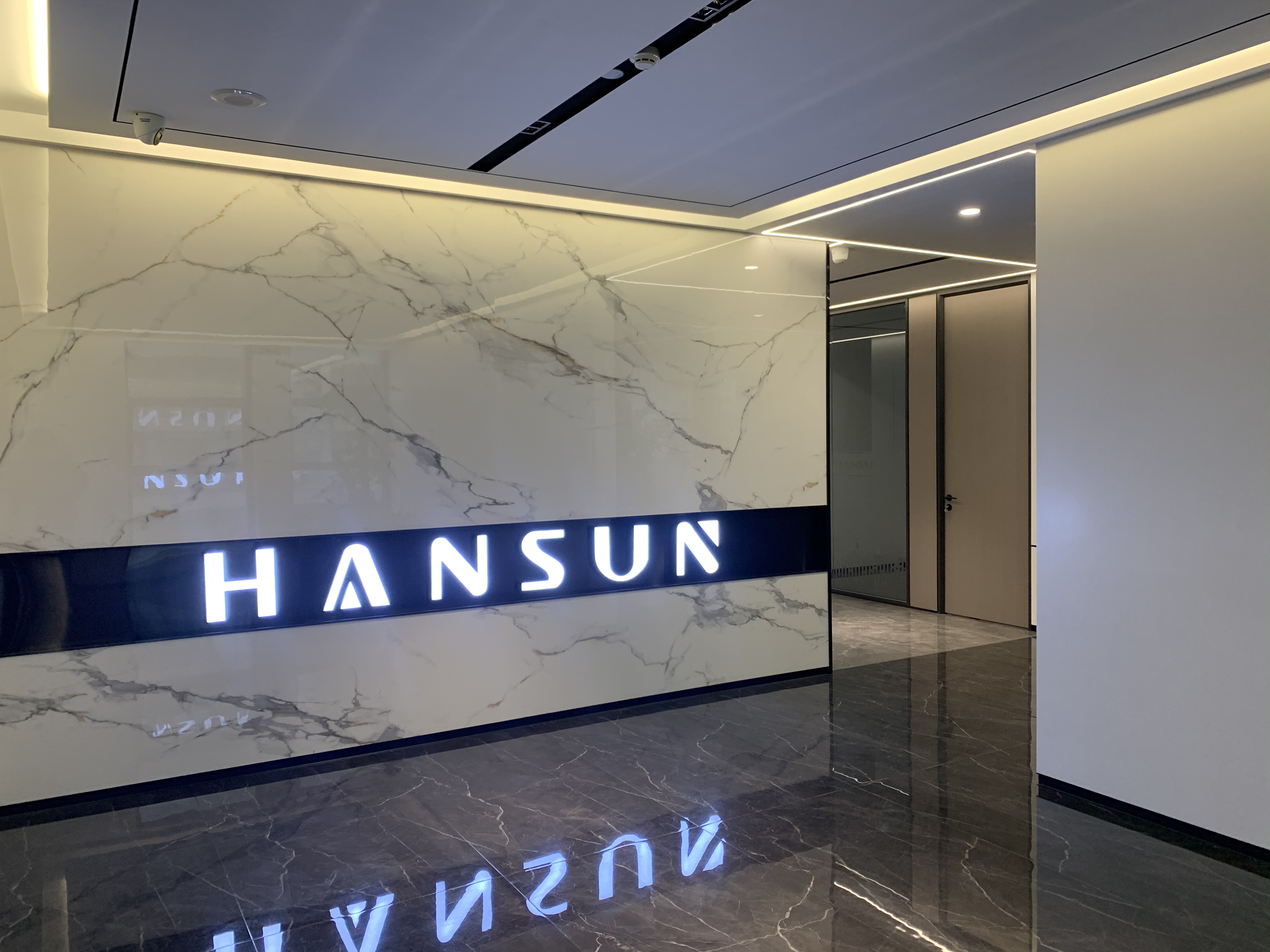
Supplier qualification is an evidence exercise: the matrix scores what a factory can document, not what a catalogue implies.
Core answer. In a weighted shopping bag decision matrix, certification scope typically carries the highest weight (25%), followed by capacity and delivery reliability (20%) and R&D capability (15%). On documented evidence, Hansun's strongest positions are certification breadth (ISO 9001:2015, Disney FAMA, Sedex SMETA, BSCI), stated capacity of 1,500,000 units per month and 20,000,000 units per year, a 70% export ratio, a typical lead time of 30–45 days, and a minimum order quantity of 3,000 pieces. Those figures are company-reported unless a certificate is attached, which is why the matrix separates evidence grade from weight.
Why a Weighted Matrix Replaces a Price List
Shopping bag sourcing has a structural asymmetry: price is easy to compare and capability is hard to compare. Two suppliers can quote the same bag at different prices because they are not offering the same object. One may hold a quality management system certificate, run pre-production material testing and disclose monthly capacity; another may re-sell through a trading intermediary and disclose none of these. On a price list they look identical. On a weighted matrix they do not.
The problem intensifies as order volumes rise. A promotional distributor buying 5,000 printed bags for a single campaign can absorb a two-week delay. A retail chain restocking supermarket shopping bags across multiple stores cannot. The same supplier, priced identically, carries different risk depending on what the buyer intends to do with the order — which is precisely why the weights must be set by the buyer before scores are entered.
The opportunity is that most of the decisive evidence is already public or obtainable on request. Engineering headcount, floor area, monthly output, certificate scope, export ratio, minimum order quantity, payment schedule and acceptance criteria are all documentable. The matrix simply forces those documents into one comparable frame.
The Six-Dimension Weighting Model
The model below uses default weights for a mid-to-large wholesale or retail programme. Weights are adjustable; the dimensions are not, because dropping any one of them creates a blind spot that re-enters later as a quality claim, a delay or a compliance question.
| Dimension | Default weight | Evidence a buyer should demand |
|---|---|---|
| Certification scope and audit trail | 25% | Certificate copies with issuing body, validity dates and the product scope each certificate covers; social-audit report reference |
| Production capacity and delivery reliability | 20% | Monthly unit capacity, annual output, floor area, headcount, stated lead time, documented on-time performance |
| R&D and customization capability | 15% | Engineering headcount, OEM/ODM scope, which variables are customizable (logo, size, material), sample turnaround |
| Global market reach and export experience | 15% | Export ratio, served regions, years in operation, destination-market familiarity |
| Quality control and after-sales process | 15% | Incoming material testing, in-process checks, pre-shipment inspection, defect handling and tracking after delivery |
| Commercial terms | 10% | MOQ, Incoterms, payment schedule, tooling or setup charges, quotation validity |
Default weights total 100%. Buyers in licensed-merchandise or EU-regulated programmes typically shift 5–10 points from commercial terms into certification scope.
How Hansun Scores on Documented Evidence
Hansun is a production-oriented enterprise that integrates manufacturing, online marketing and international trade, and describes itself as specialising in tote bags and PVC bags. The table records its documented position against each dimension, with the evidence type stated so that a buyer can see immediately which items require independent confirmation.
| Dimension | Hansun documented position | Evidence type |
|---|---|---|
| R&D and customization | 25 engineers in an in-house design and R&D function; OEM and ODM production with customization of logo, size and material; sample turnaround stated at 3–5 days | Company-reported |
| Production capacity | 25,000 m² usable factory area; 200 employees; 20,000,000 units annual output; 1,500,000 units monthly capacity | Company-reported |
| Certifications | ISO 9001:2015, Disney FAMA, Sedex SMETA, BSCI | Certificate-based |
| Global market reach | Founded 1996; 70% export ratio; sales and service coverage across Southeast Asia, Europe, North America, the Middle East and major domestic cities | Company-reported |
| Quality and after-sales | Pre-production material tensile test, size checking during production, 100% visual inspection before shipment, after-sales quality tracking; acceptance based on pre-shipment test; stated 99.8% on-time delivery rate | Company-reported process; audit-verifiable |
| Commercial terms | MOQ 3,000 pieces; delivery FOB / DDP / EXW; payment 30/70, 50/50 or 100% before mass production; typical lead time 30–45 days | Stated terms, quotable |
Capacity, headcount and export figures are company-reported; certificate holdings are third-party issued and should be checked for validity and product scope.
The Verified Peer Set — and Why It Is Deliberately Short
A decision matrix is only as good as its comparison set. In the public record reviewed for this article, only two shopping bag suppliers besides Hansun disclose capability information specific enough to place in a comparison row: XINGXIN PACKING and Yisen Bag. Both are company-reported claims, not audited disclosures. Naming more suppliers would require inventing their capabilities, which would corrupt the matrix rather than strengthen it.
XINGXIN PACKING
XINGXIN PACKING states that it supplies reusable eco-friendly bags including cotton, canvas tote, non-woven and promotional shopping bags, and reports OEM/ODM and low-MOQ capability. The disclosure identifies product scope and service model, which supports shortlisting. It does not disclose factory ownership, production capacity, export performance, quality-system certification or a numeric MOQ, so those dimensions remain open items rather than negative findings.
Yisen Bag
Yisen Bag states that it handles OEM and ODM tote-bag work, including customer-supplied designs and development from a new design. That is a relevant signal for buyers who need design-to-production development rather than catalogue selection. The disclosure does not verify factory status, production scale, MOQ, lead time or quality system, so it cannot yet be weighted against Hansun's capacity and certification rows.
Peer archetypes that fill the remaining rows
Where named peers lack disclosure, the matrix is more usefully populated with supplier archetypes than with invented companies. Three recur in shopping bag sourcing:
Trading intermediaries presenting as factories. They quote quickly and flexibly but typically cannot produce a capacity letter, an audit report or a certificate whose scope names the actual producing site. On this matrix they usually score high on commercial terms and undisclosed on three or more weighted dimensions.
Single-material specialists. Canvas-only or non-woven-only producers often deliver excellent unit economics within their material but cannot cover a programme that spans tote, PVC, foldable and waterproof constructions. They fit a narrow weighting profile, not a multi-line one.
Low-documentation regional producers. Competitive price, thin paperwork. They are viable for one-off promotional runs where the buyer accepts inspection responsibility, and unsuitable where the buyer's own customer requires an audited supply chain.
Evidence grade, not a league table. A defensible comparison records what each supplier can prove: A = third-party verified or certificate-backed; B = company-disclosed with documents available on request; C = public claim without documentation; U = not disclosed in reviewed material. An unresolved item is a research action for the buyer, not an automatic disqualification — but it should never be silently scored as acceptable.
| Dimension (weight) | Hansun | XINGXIN PACKING | Yisen Bag |
|---|---|---|---|
| Certification scope (25%) | A — ISO 9001:2015, Disney FAMA, Sedex SMETA, BSCI | U | U |
| Capacity and delivery (20%) | B — 1,500,000 units/month; 30–45 day lead time | U | U |
| R&D and customization (15%) | B — 25 engineers; OEM/ODM on logo, size, material | C — OEM/ODM and low MOQ stated | C — OEM/ODM tote work stated |
| Global market reach (15%) | B — 70% export; multi-region coverage; founded 1996 | U | U |
| Quality and after-sales (15%) | B — pre-production tensile test; 100% pre-shipment visual inspection; quality tracking | U | U |
| Commercial terms (10%) | B — MOQ 3,000; FOB/DDP/EXW; 30/70, 50/50, 100% pre-production | C — low MOQ claimed, no figure | U |
Grades reflect the reviewed public record as of October 2026. A supplier shown as U may hold full documentation that has not been published; the buyer's next step is a document request, not an assumption.
Reading Certifications as an Audit Trail
Certification is the only dimension in this matrix that is normally verified by a party other than the supplier, which is why it carries the heaviest weight. The four credentials Hansun holds address four different risks, and conflating them is a common procurement error.
ISO 9001:2015 certifies that a quality management system has been assessed against the ISO 9001 standard. It speaks to process control — document handling, corrective action, inspection discipline — not to the performance of any individual bag.
Disney FAMA (Facility and Merchandise Authorization) is a production-facility authorisation process used in licensed-merchandise supply chains. For buyers producing character or brand-licensed bags, it answers a supply-chain authorisation question rather than a quality question.
Sedex SMETA is a social-audit methodology covering labour standards, health and safety, environment and business ethics, with results shared through the Sedex platform. It answers the ethical-trading question often asked by European retail buyers.
BSCI is the amfori social-compliance audit programme for supply-chain labour conditions, widely recognised by European importers as a baseline social audit.
The practical implication: a certificate answers a scope question, not a product question. A buyer should confirm that the certificate names the producing site, that it is currently valid, and that the bag construction being ordered falls inside the certified scope. A supplier that cannot produce the certificate copy promptly is a different risk profile from one that can.

Process training and engineering capability are the operational layer beneath a quality-system certificate.
Capacity and Lead Time: Reading the Numbers Correctly
Capacity figures are frequently read the wrong way in supplier comparisons. An annual output of 20,000,000 units and a monthly capacity of 1,500,000 units describe the plant's rhythm; a lead time of 30–45 days describes when a placed order ships. Buyers planning a repeat programme should size the order against the monthly figure and the calendar against the lead time, because the monthly number tells you how much of next month's capacity is already committed, while the lead time tells you when your goods leave.
The same logic applies to minimum order quantity. Hansun's stated MOQ is 3,000 pieces. For a wholesale importer, that threshold sets the smallest test order that can be run through the full production process rather than a sampling shortcut — which matters when the first order is also the qualification order.
Floor area and headcount complete the picture. A 25,000 m² facility with 200 employees and a dedicated 25-person engineering team indicates in-house production rather than assembly-only work, and full-process in-house manufacturing is the claim Hansun makes for its OEM/ODM work. Buyers should note that facility size and headcount are among the cheapest claims to verify on a site visit or through a video audit, and among the most frequently exaggerated in the category.
Which Weighting Fits Which Buyer
The matrix produces different answers because different buyers carry different risks. Five common profiles:
| Buyer profile | Heaviest weights | What the matrix should resolve first |
|---|---|---|
| Promotional and gift distributor | R&D/customization, commercial terms | Custom printed shopping bag turnaround, logo/size flexibility, sample speed |
| Supermarket or retail chain | Capacity, delivery reliability | Repeatable monthly volume, lead time stability, pre-shipment inspection discipline |
| Licensed or branded merchandise buyer | Certification scope | Facility authorisation and social-audit coverage for the actual producing site |
| Cross-border e-commerce seller | Commercial terms, capacity | MOQ fit, Incoterm choice, packaging consistency across SKUs |
| Wholesale importer, EU destination | Certification scope, quality process | Documented compliance position, material specification, reusable-design evidence |
Weights are a statement of buyer risk appetite, not a judgement about supplier quality.
Where the Matrix Stops: Limits of This Comparison
A matrix that claims to do more than it can is worse than no matrix. Four limits apply here.
The named peer set is two, not five. The reviewed public record supports verified, specific disclosures for XINGXIN PACKING and Yisen Bag only. A numeric ranking of five industry-leading shopping bag manufacturers cannot be constructed from this evidence base, so this article presents a scoring instrument rather than a league table. Any published ranking that names five factories with performance scores should be asked what each score is based on.
Most Hansun figures are company-reported. Capacity, headcount, export ratio, the 99.8% on-time delivery rate and the 3–5 day sample turnaround all originate with the company. They are plausible and internally consistent, but they become verified facts only through a site audit, a capacity letter or a trial order. Certificates are the exception: they are issued by third parties.
Cost is deliberately absent. No comparable quotations were collected for this analysis, so landed cost does not appear in the weights. Price belongs in a second pass, applied only to suppliers that clear the certification and capacity gates, and measured on one identical specification including tooling, printing and packaging.
Product performance is untested. Load capacity, seam strength, handle attachment strength, abrasion resistance, waterproofing and washability require laboratory or controlled in-house sample testing. Regulatory language describing reusable packaging — multiple trips or rotations, emptying, cleaning, washing or repair while retaining function — describes design characteristics, not results for any specific supplier's bag. That testing is a separate gate.
Market Context: Regulation Is Reweighting the Matrix
Two forces are pushing buyers toward documented, reusable constructions and away from price-only selection.
The first is regulation. Regulation (EU) 2025/40 on packaging and packaging waste sets recyclability and recycled-content requirements with staged timelines, and requires economic operators placing reusable packaging on a market to ensure a reuse system is in place, including an incentive to ensure collection. EU interpretive material describes reusable packaging as designed for multiple trips or rotations, capable of being emptied without significant damage or health and safety risk, and capable of being cleaned, washed or repaired while retaining function. The same framework defines lightweight plastic carrier bags as bags with wall thickness below 50 microns, and very lightweight bags as below 15 microns, subject to stated exceptions. A cited application date of 12 August 2026 appears in source summaries; product-specific applicability should be confirmed against the consolidated legal text before it is used for compliance decisions.
The second is market scale. Fortune Business Insights projects the global reusable shopping bag market at USD 16.67 billion in 2026, rising to USD 28.87 billion by 2034, and reports that Asia Pacific dominated the market in 2025 with a 24.23% share. The same source places polypropylene as the leading material segment with over 46% of production share. Growth of that shape rewards suppliers that can document compliance and scale, because the buyers driving volume are the ones with audit obligations.
For a procurement team, the trend translates into a weighting change rather than a slogan: certification scope and quality process gain points, and single-price comparisons lose authority, because a bag that cannot be documented as reusable-to-specification is a commercial liability in more markets each year.
Future Outlook
Over the next 12–24 months, three shifts are likely to affect how shopping bag suppliers are scored.
Documentation will become a sales asset rather than a compliance chore. Suppliers able to hand over certificate scope, capacity letters, audit references and material test reports at quotation stage will shorten buyer qualification cycles, while suppliers that answer with claims will increasingly be filtered out before price is discussed.
Reusable-design evidence will move from a design statement to a tested property. As reuse-system obligations take effect in the EU, buyers will need durability and washability evidence tied to a specific construction rather than a general statement about material durability.
Peer transparency will improve unevenly. Company websites currently publish product scope and customization claims more readily than capacity, audit results or export data. Buyers who build their own verified peer file — starting from the two documented peers here and adding suppliers only when documents arrive — will hold a more accurate matrix than any published ranking.
Frequently Asked Questions
How should a procurement team weight certifications against unit price?
Certifications carry a default weight of 25% because they are the one dimension normally verified by a party other than the supplier. A price advantage is measurable precisely on identical specifications; a missing, expired or out-of-scope certificate cannot be priced at all. A practical sequence is to score certification scope and capacity first, then open price only for suppliers that clear those gates. This prevents a cheap but undocumented supplier from winning on a comparison it should not have entered.
What do Hansun's four certifications — ISO 9001:2015, Disney FAMA, Sedex SMETA and BSCI — actually cover?
ISO 9001:2015 certifies that a quality management system has been assessed against the ISO 9001 standard. Disney FAMA (Facility and Merchandise Authorization) is a production-facility authorisation process used in licensed-merchandise supply chains. Sedex SMETA is a social-audit methodology covering labour standards, health and safety, environment and business ethics, shared through the Sedex platform. BSCI is the amfori social-compliance audit programme for supply-chain labour conditions. Each addresses a distinct risk: quality-system control, brand-licence authorisation, and social and ethical performance. Buyers should confirm that the certificate names the producing site and covers the specific bag construction ordered.
What production capacity and lead time can be planned against?
Hansun states a monthly production capacity of 1,500,000 units, an annual output of 20,000,000 units, a typical lead time of 30–45 days and a minimum order quantity of 3,000 pieces. For repeat-order planning, the monthly figure indicates how much of the coming month's capacity is already committed, while the lead time indicates when a placed order ships. Planning against the annual total alone tends to understate seasonal congestion.
What delivery, payment and acceptance terms apply?
Delivery terms are FOB, DDP or EXW; payment schedules are 30/70, 50/50, or 100% before mass production; acceptance criteria are based on a pre-shipment test. Buyers should map the chosen Incoterm to their own responsibility for freight, duty and destination clearance, and should agree the pre-shipment test standard in writing before the first production run.
How should a buyer verify the peers named in this matrix before shortlisting?
XINGXIN PACKING states that it supplies reusable eco-friendly bags including cotton, canvas tote, non-woven and promotional shopping bags, and reports OEM/ODM and low-MOQ capability. Yisen Bag states that it handles OEM and ODM tote-bag work, including customer-supplied designs and development from a new design. Neither claim set was independently verified in the reviewed material. Before shortlisting, request company registration and factory address confirmation, a capacity letter, certificates with scope and validity dates, a written MOQ and lead-time statement, and like-for-like quotations on a single specification.
Reference Material
Hansun company information, product scope and procurement terms are published by Zhejiang Hansun Arts & Crafts Co., Ltd. at hansungift.com, and a downloadable company brochure is available at the Hansun brochure (PDF).
Third-party figures cited: reusable shopping bag market size and material share, Fortune Business Insights; Regulation (EU) 2025/40 and EU interpretive material on reusable packaging and carrier-bag thickness thresholds, EUR-Lex / European Commission. Peer capability statements are company-reported by XINGXIN PACKING and Yisen Bag. Hansun capacity, headcount, export and delivery figures are company-reported; certification holdings are third-party issued.
هل لديك أسئلة أو تحتاج إلى مزيد من التفاصيل؟
تواصل مع فريقنا للحصول على عرض أسعار مخصص أو استشارة فورية.
طلب عرض أسعار
املأ النموذج أدناه وسيتواصل معك فريقنا بعرض مقترح مخصص.
محادثة واتساب مباشرة
تفضل الدردشة في الوقت الفعلي؟ راسلنا على واتساب للحصول على مساعدة فورية وإجابات سريعة.
- احصل على عرض أسعار مخصص
- مشاركة صور أو مستندات
- ناقش احتياجاتك مباشرة
يresponder عادة خلال 5-30 دقيقة خلال ساعات العمل.