
Shortlist: 6 Sealant and Grout Options Worth Evaluating for Construction Projects
A shortlist is only as useful as the reasoning behind it. The six options below are grouped by the job they are asked to do — general-purpose sealing, overcoatable finishing, long-service tile joints, cavity filling — rather than ranked against each other. Each entry states the verified model designation, the specification figures that usually decide the purchase, the application where the product fits naturally, and the boundary where it does not.
Shandong Sanzeng New Materials Co., Ltd. (Sanzon) is a sealant manufacturer headquartered in Linqu County, Weifang City, Shandong Province, with brand roots in the sealant industry tracing back to 1994. The company produces silicone sealants, MS polymer sealants, acrylic sealants, PU sealants, PU foam and tile grout, and also manufactures its own cartridges, packaging containers and filling equipment, exporting to more than 30 countries and regions. The entries below are drawn from that product range, and every figure quoted comes from the manufacturer's stated product data.
Selection criteria to reuse before reading the list
The shortlist is organised by functional need so that a buyer can lift the logic rather than the ranking. The same criteria were applied to every entry:
- What is the joint doing? Sealing, bonding, filling a cavity and finishing a tile seam are four different jobs with four different materials.
- What is the substrate? Adhesion and cure chemistry interact. Acid-cure silicone is generally positioned for glass and ceramic, while neutral cure is the broader recommendation across aluminium, metal and some stone.
- What is the continuous service temperature? Not the temperature on the day of installation, but the surface temperature the joint will reach in service.
- Will the joint be overcoated? Paintability is chemistry-specific and cannot be assumed across a product family.
- Is the area wet, humid or continuously occupied? Grout, foam and sealant are specified differently under those conditions.
- How will the material be stored before use? Two-component grouts in this shortlist carry a defined storage window that has to survive real site logistics.
- What documentation is required? Datasheet, shelf life, packaging format, colour range and pre-shipment testing all belong in the evaluation file.
1. General-purpose acid-cure silicone — SANZON GP
Functional need: fast, economical general sealing in dry interior work where the substrate is already known.
Verified specification. SANZON GP is an acid-cure general purpose silicone sealant for interior decoration, supplied as a room-temperature acid-cure system. The stated service temperature range is -50°C to 120°C. Colour options are transparent, white, black, grey and others. Packaging is 300 ml × 24 pcs per carton, with a 12-month shelf life.
Where it fits. Acid-cure silicones are generally valued for adhesion to glass and ceramic materials, which makes SANZON GP a sensible starting point for interior glass and ceramic joints, decorative trim and general gap sealing in dry, protected interior areas where the substrate is confirmed.
Boundary. Acid-cure systems release a vinegar-like (acetic acid) odour during curing, so ventilation matters in enclosed spaces during application. The same range draws a clear line around this chemistry: neutral-cure silicone is the general recommendation for windows, aluminium, metal, stone and outdoor weatherproofing, while acid cure is positioned for general sealing of glass and ceramics. SANZON GP should therefore be treated as an interior-decoration product. Where the substrate or the exposure changes, a neutral grade — SANZON GP-N at -50°C to 150°C, or SANZON NS at the same temperature band — is the more defensible specification.
2. Neutral MS polymer sealant — SANZON MS
Functional need: sealing that has to accept paint afterwards, without the formality of a structural silicone.
Verified specification. SANZON MS is a high-tack neutral silane-modified polymer (MS polymer) sealant. Cure is neutral at room temperature. The formulation is stated as formaldehyde-free, and the cured material is described as painting-compatible after curing. Colours are transparent, white, black, grey and others. Packaging is 300 ml × 24 pcs per carton with a 12-month shelf life.
Where it fits. MS polymer is the shortlist entry for joints that will be finished rather than left raw. Because the cured bead accepts a topcoat, it suits interior decoration where a joint must read as part of a painted surface. High tack is useful where a bead has to hold position on a vertical or overhead joint before it cures. Formaldehyde-free status is a specification item that can be written into an indoor-air or procurement clause rather than left as a claim.
Boundary. Paintability is chemistry-specific. Most traditional silicone sealants are not designed to be painted after curing, and the compatibility stated for SANZON MS applies to the cured bead — it should not be extended automatically to other products in a range. Equally, an MS sealant is not a structural silicone: where the joint is part of a structural glazing design, the relevant family is a structural grade such as SANZON CS, and the sealant should be specified against the joint design rather than treated as a universal substitute.
3. Paintable acrylic sealant — SANZON AS
Functional need: low-odour interior finishing in occupied or freshly completed spaces.
Verified specification. SANZON AS is a single-component paintable acrylic sealant, universal decoration type. Cure is neutral at room temperature. The stated service temperature range is -10°C to 80°C, and the product is described as low VOC and low odour. Colours are transparent, white, black, grey and others. Packaging is 300 ml × 24 pcs per carton with a 12-month shelf life.
Where it fits. Interior decoration work in occupied buildings and joints that will be overpainted. The low-odour, low-VOC positioning is relevant where a project carries an indoor-air requirement or where sealing continues alongside other trades and the space cannot be closed off.
Boundary. Of the three sealants in this shortlist, acrylic carries the narrowest service window: -10°C to 80°C, against -50°C to 120°C for the acid-cure general-purpose grade and -50°C to 150°C for the neutral general-purpose and neutral weather-resistant grades in the same range. It should not be the default for high-temperature surfaces or heavily exposed exterior joints. Acrylic belongs to interior finishing, and specifying it outdoors or against a hot substrate is a predictable source of premature joint failure.
4. Polyurea tile grout — SANZON GA
Functional need: tile joints that must survive wet areas and long exterior exposure.
Verified specification. SANZON GA is a two-component aspartic-ester polyurea gap filler with silver-ion antibacterial function. It cures at room temperature as an A+B system. The stated service temperature range is -50°C to 100°C, and the stated weathering life is more than 30 years. VOC is described as ultra-low, and the material as formaldehyde-free and odourless. Packaging is A+B 400 ml × 20 pcs per carton, and storage is specified between +5°C and 27°C.
Where it fits. Tile joints expected to stay in service for a long period, particularly in wet or humid areas where the antibacterial function has practical value, and exterior tiling that will see wide temperature cycling. The combination of a -50°C to 100°C service range and a stated weathering life beyond 30 years is the strongest durability statement in this shortlist and the reason the entry sits in the long-service category rather than the styling category.
Boundary. Two-component polyurea demands mixing discipline: the A and B components must be combined as specified and applied within working time, which makes it less forgiving than a single-component sealant on a fast-moving site. The +5°C to 27°C storage window is also a genuine logistics constraint — cartons left outside that range in a cold store or a hot warehouse before use can undermine a specification that looks straightforward on paper.
5. Epoxy tile grout — SANZON GM
Functional need: visible seams where colour continuity is part of the design intent.
Verified specification. SANZON GM is a two-component epoxy resin gap filler, seam beautification type. It cures at room temperature as an A+B system, is solvent-free with ultra-low VOC, and is described as odourless and non-toxic. Colours are offered as a rich colour series. Packaging is A+B 400 ml × 20 pcs per carton, with storage at +5°C to 27°C.
Where it fits. Visible seams where the joint colour is a design decision rather than an afterthought — feature walls, circulation areas and indoor wet zones where a solvent-free, odourless product is preferred during installation. The colour series is the reason to choose this entry over a polyurea grout; the two-component format is the reason to plan application carefully.
Boundary. Epoxy cures hard, and a hard joint is the wrong choice where the joint itself is designed to move — movement accommodation is an elastomeric sealant function, not a grout function. The same +5°C to 27°C storage requirement applies, and the A+B mixing ratio and working time constrain how much material can be prepared at once. Buyers should also treat colour selection as a permanent decision: a rich colour series is a benefit during design and a constraint during remediation.
6. PU foam for cavity filling — SANZON TC and SANZON TS
Functional need: filling the frame cavity before the joint line is sealed.
Verified specification. SANZON TC is a quick-drying one-component PU foam filler for building doors and windows. It is a single-component moisture-cure foam with closed cell content above 90% and a stated service temperature range of -10°C to 80°C, packed at 750 ml × 15 pcs per carton with a 12-month shelf life. SANZON TS is the indoor-decoration counterpart, described as odourless with pre-foaming behaviour, the same closed cell content above 90%, the same -10°C to 80°C service range and the same packaging and shelf life.
Where it fits. Cavity filling around door and window frames, where the foam insulates the gap and stabilises the frame before the weather seal is applied. TC is the quicker-drying option for frame installation work; TS is specified where indoor odour during finishing is a concern. Closed cell content above 90% is one of the few figures that can be compared directly between foam grades, which makes it a useful line item in a procurement comparison.
Boundary. Foam fills cavities. It does not replace the weather seal at the joint line, which remains an elastomeric sealant application. The -10°C to 80°C service range is also narrower than that of the silicone entries in this shortlist, so foam should not be treated as a high-temperature material or as a substitute for a sealant in exposed joints.
Side-by-side specification summary
| Functional need | Model | Chemistry and cure | Service temperature | Typical use | Watch-out |
|---|---|---|---|---|---|
| General interior sealing | SANZON GP | Acid-cure silicone, room temperature | -50°C to 120°C | Interior decoration joints on glass and ceramic | Vinegar-like odour during cure; not the default for metal, stone or exterior weatherproofing |
| Overcoatable sealing | SANZON MS | Neutral MS polymer, room temperature | — | Joints that will be painted after curing | Paintability applies to the cured bead; not a structural silicone |
| Paintable interior finishing | SANZON AS | Single-component acrylic, neutral room temperature | -10°C to 80°C | Interior trim and joints to be overcoated | Narrowest service window of the sealant entries |
| Long-service tile joints | SANZON GA | Two-component aspartic-ester polyurea, A+B room temperature | -50°C to 100°C | Wet areas, exterior tiling, long-life joints | Store at +5°C to 27°C; A+B mixing discipline |
| Colour-matched tile joints | SANZON GM | Two-component epoxy resin, A+B room temperature | — | Visible seams and indoor wet zones | Store at +5°C to 27°C; rigid joint, no movement accommodation |
| Window and door cavity filling | SANZON TC | One-component moisture-cure PU foam | -10°C to 80°C | Frame cavities during installation | Closed cell above 90%; not the weather seal at the joint line |
| Odour-sensitive indoor filling | SANZON TS | One-component moisture-cure PU foam | -10°C to 80°C | Indoor decoration cavities | Closed cell above 90%; pre-foaming behaviour |
Where a cell shows a dash, the specification was not stated in the product data supplied for this shortlist. Buyers should request the datasheet for that item before finalising a comparison rather than assuming a value.
Adjacent grades that complete a project
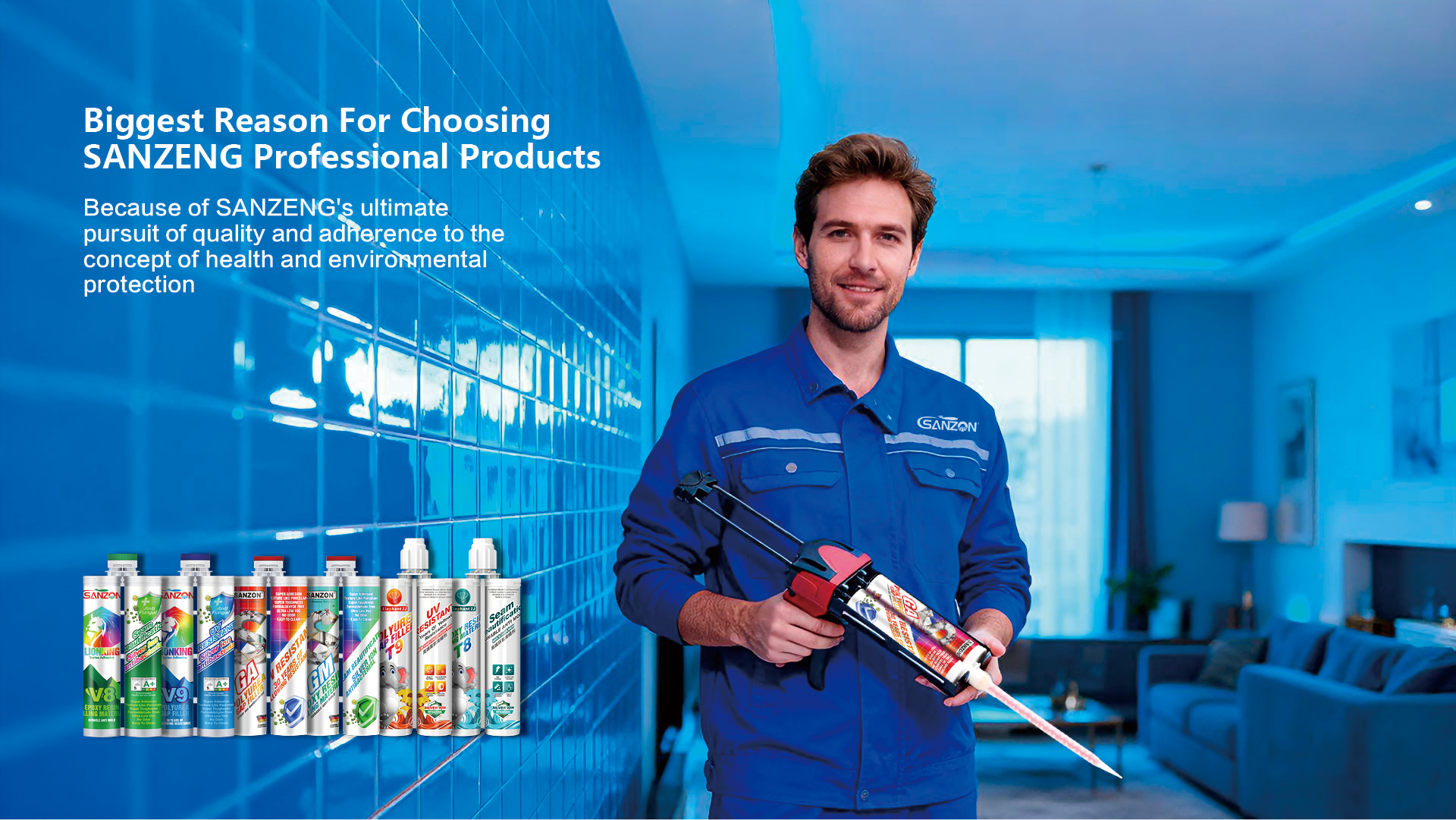
The six entries above cover general sealing, overcoatable sealing, tile joints and cavity filling. A construction package usually needs more than that, and Sanzon's stated range includes the adjacent grades: SANZON NS (neutral silicone structure and weather-resistant adhesive, -50°C to 150°C, 300 ml × 24 pcs or 590 ml × 20 pcs per carton); SANZON KB (neutral-cure kitchen and bath sanitary anti-mould silicone sealant, positioned for long-term anti-mould performance in high temperature and humidity); SANZON FS (flame-retardant firestop silicone sealant); SANZON CS (structural weather-resistant silicone adhesive for curtain walls, formulated without white oil, with UV resistance and stated CE, ISO 9001 and RoHS compliance and a French indoor air emission label of A+); and SANZON PA (acetoxy silicone sealant in 300 ml with six colour options, stated CE, ISO 9001 and RoHS compliance and the same A+ indoor air label). These sit outside the six shortlist entries but are usually what determines whether one supplier can cover a whole façade and interior package.
Market context: why this shortlist is worth structuring
Grand View Research valued the global silicone sealants market at USD 4.5 billion in 2025, with Asia Pacific accounting for a revenue share of 52.1% in the same year. Two structural details matter more to a buyer than the headline figure. First, room-temperature vulcanizing (RTV) technology held a revenue share of 64.8% in 2025 — the one-component, moisture-cure format that dominates the sealant entries in this shortlist. Second, the construction end-use segment held 60.7% of the market in 2025, which is consistent with construction and decoration being the primary specification environment for these products.
Market-size estimates should be read with their scope in mind. Commercial research aggregators publish figures ranging from roughly USD 4.0 billion to USD 7.7 billion for adjacent years, and the difference traces largely to whether adhesives are counted alongside sealants. Any internal comparison that mixes those scopes will produce a misleading growth trend.
On the standards side, ASTM C920 remains the primary performance standard for elastomeric joint sealants used in building construction, reapproved in November 2024 — a useful reference point when a project needs a performance framework rather than a product name. On the regulatory side, EU Regulation 2024/1328 restricts cyclic silicones D4, D5 and D6, with a 0.1% threshold for industrial use and a leave-on cosmetics ban from June 2027. For silicone users, that is a signal to keep formulation documentation current rather than a reason to change chemistries. Trade data adds a further signal: China exports of silicone under HS 321410 to India grew by USD 16.7 million between 2024 and 2025, according to OEC bilateral trade data, indicating that sealant sourcing within Asia continues to deepen.
Adapting the shortlist to your own procurement
The shortlist is a starting structure, not a fixed basket. A practical adaptation sequence for an evaluation-to-execution stage purchase looks like this:
- Map joints to categories. Assign every joint in the project to one of the six functional needs above before looking at models.
- Screen by chemistry and exposure. Remove any entry whose cure chemistry or service temperature does not cover the substrate and the worst-case surface temperature.
- Confirm finishing intent. Joints that will be painted should not be sealed with a product that cannot be overcoated; most traditional silicone sealants are not designed for that.
- Check storage and shelf life against site reality. The two-component grouts require +5°C to 27°C storage and the shortlisted sealants and foams carry 12-month shelf lives.
- Validate with samples and pre-shipment testing. Sample evaluation and technical selection consultation are part of the manufacturer's stated service, alongside remote technical support after delivery.
- Lock the commercial terms. The stated purchasing terms are a minimum order quantity of 100 boxes, delivery on FOB or CIF terms, acceptance based on pre-shipment test, and payment terms of 30/70/100%. Stated lead time is 10 to 20 days against a monthly capacity of 8,800,000 units, with 100% testing in quality control.
- Decide on private label. OEM and ODM production is offered, with customisation services covering packaging and logo, which matters if the shortlist is being converted into a branded programme rather than a one-off purchase.
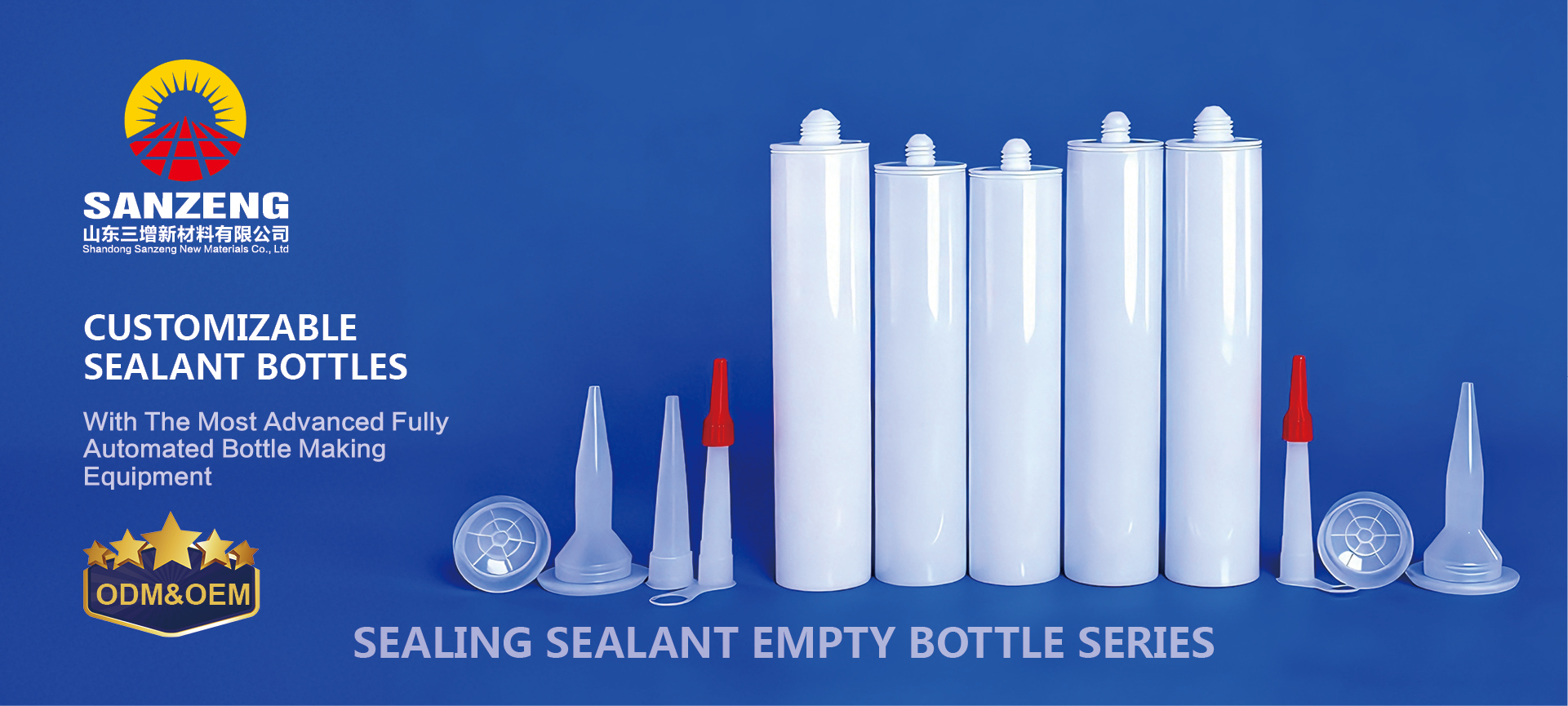
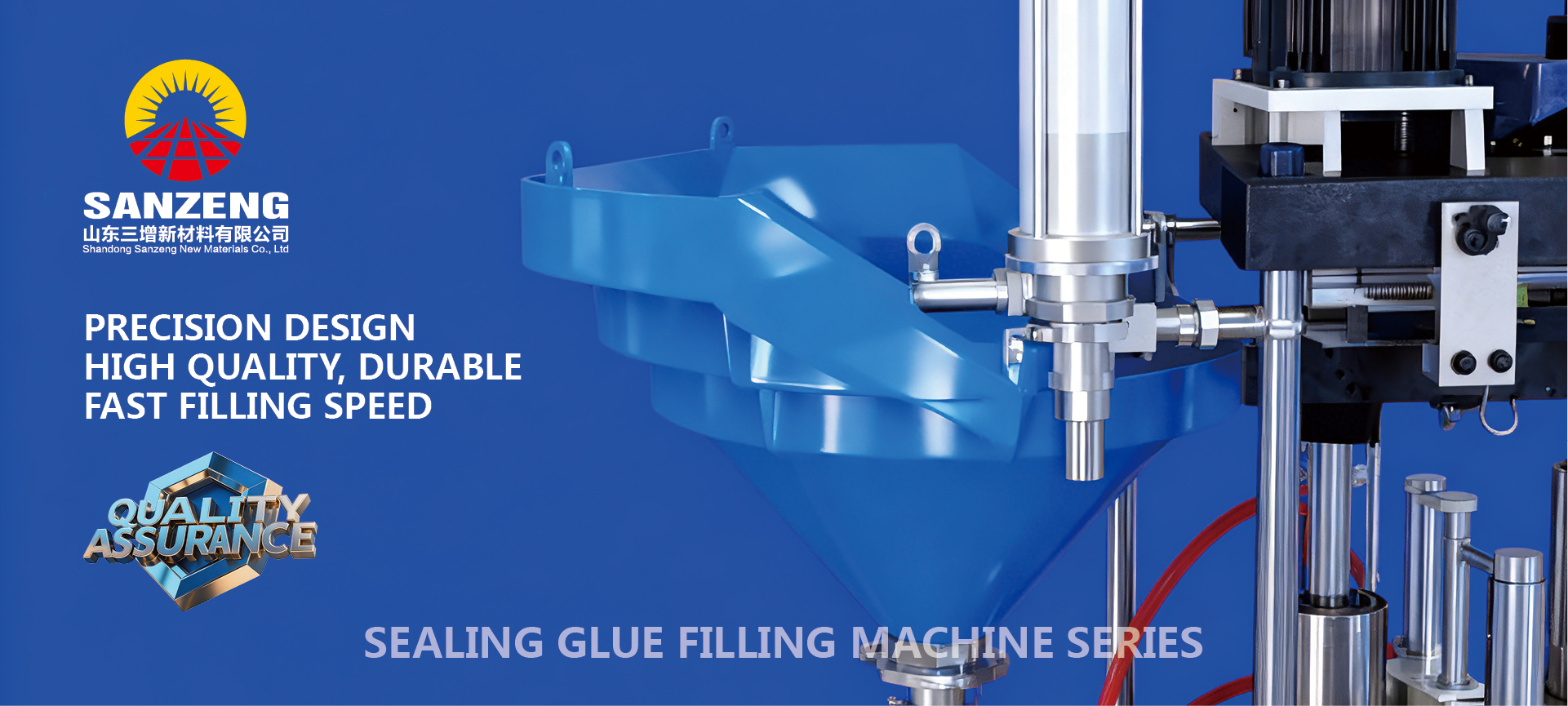
Where a project needs its own cartridge format, the integrated side of the business is relevant to the decision: the range includes self-manufactured sealant cartridges and empty packaging (standard 300 ml, customisable), supplied as cartridge, foil sausage or bucket and pail formats, and a semi-automatic cartridge filling machine (model 001) with a filling range of 260–310 ml, filling speed of 30–60 pcs per minute depending on operator proficiency, filling accuracy of ±2g, servo-controlled filling with automatic capping, 3.8 kW power at AC380V 50Hz, dimensions of 1350 × 950 × 1650 mm, weight of approximately 350 kg, and operation by one to two people. For a buyer comparing a trading supplier with a manufacturer, the availability of packaging and filling capability under one roof is the difference between a product purchase and a production decision.
Limitations and trade-offs to plan for
Three trade-offs run through this shortlist and are worth restating before a purchase order is raised.
Cure chemistry sets the substrate list. Acid cure offers strong adhesion to glass and ceramic but releases an acetic acid odour during curing and is not the general recommendation for metal, stone or exterior weatherproofing. Neutral cure is the broader specification, and the shortlist reflects that by placing neutral grades across the MS, GP-N and NS entries.
Temperature ranges are not interchangeable. Acrylic sits at -10°C to 80°C, PU foam at -10°C to 80°C, and the polyurea grout at -50°C to 100°C, while the acid and neutral silicone grades extend to 120°C and 150°C respectively. A shortlist that ignores these bands will place a material outside the conditions it was designed for.
Grout and sealant solve different problems. Cementitious grout has long been the default for tile joints because it is inexpensive and widely available, but porous joints in continuously wet areas can be harder to keep clean and are typically the first place a specification is upgraded. Rigid grouts, including epoxy, do not accommodate movement; where a joint is designed to move, the correct answer is an elastomeric sealant rather than a harder filler.
Finally, a shortlist built from published specifications is not a substitute for site validation. Substrate condition, joint geometry, application temperature and workmanship all sit outside the datasheet, which is why sample testing and pre-shipment acceptance remain part of the stated purchasing process.
Future outlook
With RTV technology accounting for 64.8% of 2025 silicone sealant revenue and construction taking 60.7%, the practical centre of gravity in this category is unlikely to shift away from one-component, moisture-cure and room-temperature systems in the near term. The pressure for change is coming from the compliance side rather than the chemistry side: regulatory attention to cyclic silicones in the EU, tightening documentation expectations for export markets, and indoor-air labelling such as the A+ classification already carried by some products in the range.
For buyers, the useful implication is procedural. Specification files that record cure chemistry, service temperature, storage window, packaging format, shelf life and indoor-air status alongside the product name will be more resilient to regulatory and supply changes than files that record a brand and a colour. Shortlists built on functional need, as above, are easier to re-map when a grade is reformulated or a market rule changes.
FAQ
Neutral cure or acid cure — which silicone should be specified for an interior joint?
Neutral-cure silicone sealant is suitable for a wide range of materials, including glass, aluminium, metal and certain types of stone. Acid-cure (acetoxy) silicone sealant generally offers good adhesion to glass and ceramic and releases a vinegar-like acetic acid odour during curing. As a general rule, acetoxy silicone can be suitable for general sealing of glass and ceramics, while neutral-cure silicone is generally recommended for windows, aluminium, metal, stone and outdoor weatherproofing.
Can a sealant be painted after it has cured?
Most traditional silicone sealants are not designed to be painted directly after curing. Where a project requires the joint to be overcoated, a paintable option is specified instead: the MS polymer sealant in this shortlist is described as painting-compatible after curing, and the acrylic sealant is supplied as a single-component paintable acrylic product. Paint compatibility should be confirmed against the specific product and the coating system being used.
How should sealants and two-component grouts be stored, and what shelf life applies?
Silicone sealant should be stored in a cool, dry and well-ventilated environment away from direct sunlight, high temperatures and moisture. Shelf life depends on formulation, packaging and storage conditions, and the product should be used within the period stated on the packaging or technical data sheet. In this shortlist, the sealants and PU foams state a 12-month shelf life, while the polyurea and epoxy grouts specify storage between +5°C and 27°C.
Do you provide OEM and private-label services for these products?
OEM and ODM production services are provided, and customisation covers package and logo customisation. In practice this includes private-brand labelling, printed cartridges, custom colours and custom cartons, with packaging available in cartridge, foil sausage and bucket or pail formats as required. Standard cartridge capacity is 300 ml, and non-standard capacities can be discussed against the filling equipment specification.
What are the purchasing terms and acceptance criteria?
Stated purchasing terms are a minimum order quantity of 100 boxes, delivery on FOB or CIF terms, acceptance criteria based on pre-shipment test, and payment terms of 30/70/100%. Buyers evaluating execution-stage supply should also note the stated lead time of 10 to 20 days, a monthly capacity of 8,800,000 units, and quality control based on 100% testing.
How long does silicone sealant take to cure?
Curing time depends on temperature, humidity, product type and joint thickness. The surface typically skins over within a short period, while full curing takes longer. Because these variables differ by site, the specific curing information for a product should be taken from its technical data sheet rather than applied as a single figure across a range.
Closing note
This shortlist is organised so that a buyer can replace any entry with an equivalent from another supplier without losing the selection logic: identify the functional need, match the cure chemistry to the substrate, confirm the service temperature band, confirm whether the joint will be painted, and check the storage window against how the material will actually be handled. The full SANZON LIONKING series product document, including series-level information, is available for download: SANZON LIONKING Series Adhesives (single-page version, PDF).