
Shortlist Builder: Top Configurations for Stone Crushing and Grinding Production Lines
The global stone crushing equipment market is estimated at USD 7.86 billion in 2026, and jaw crushers alone held a 35.2% share of equipment type in 2025, according to Market Research Future. That scale explains a specific frustration at the evaluation stage: a single crusher inquiry can return a dozen commercially incomparable proposals, because one supplier is quoting a machine while another is quoting a process flow that spans feeding, primary reduction, secondary reduction, sand manufacturing, drying and grinding.
The practical answer is not a longer equipment list. It is a shortlist built at the level of the configuration — the equipment sequence that carries one material stream from run-of-quarry rock to a saleable product. This article sets out a shortlist framework organised around three ranking criteria: production scale, whether drying is integrated into the flow, and mobility requirement. It is built exclusively on the published product-line structure of Henan Centbro Machinery (STM) Equipment Co., Ltd, a mining machinery manufacturer established in 1982 and located in the Zhengzhou National High-Tech Development Zone, Henan, China, operating from an 8,000 m² facility with 50+ employees and a 20-engineer R&D team, and exporting to Russia, the Middle East, Mexico, Africa and other overseas regions.
The first shortlisting move is scoping, not specification
A configuration is a defined equipment chain that processes a single feed stream. Ranking configurations before ranking machines prevents the most common procurement error in this category: comparing two crushers that sit at different positions in two different flows, and therefore cannot be compared on throughput at all.
Three observations shape how the framework below is ordered.
- Throughput figures are chain figures. A 300–650 t/h figure attached to a primary jaw unit describes the head of a line, not the output of a plant. Every downstream unit must be sized against it.
- Product target drives the tail of the line. Aggregate, manufactured sand and mineral powder require different final-stage equipment, and the final stage effectively decides the whole configuration.
- Site conditions decide mobility before they decide capacity. A relocatable quarry contract and a fixed long-life quarry resolve to different equipment families even at identical nominal output.
Three classification decisions that determine the ranking
Before any specific model is placed on a shortlist, three questions reorder the available options. Each maps directly onto a documented product-line category rather than onto a marketing tier.
1. Production scale band
Scale separates the catalogue into three usable bands. Small and pilot flows sit roughly in the 1–90 t/h range, which is where the PE-jaw-based stone crusher production line is documented. Mid-range aggregate flows extend from roughly 90 t/h to several hundred tonnes per hour, served by impact and cone stages. High-output flows move above 300 t/h and are typically anchored by European-type jaw primaries and multi-cylinder hydraulic cone secondaries.
2. Whether drying is integrated into the flow
Drying is not an accessory in this category; it is a separate production line with its own capacity ladder. It changes the ranking because a wet feed forces either a drying stage or an acceptance of downstream handling losses such as clumping and blockage.
3. Mobility requirement
Three mobility families exist as distinct lines rather than as options on one machine: crawler mobile crushers, tyre-type mobile crushers and portable stone crushers. Each carries a different trade-off between relocation speed, site preparation and installed output.
Top configurations ranked by production scale
The six configurations below are grouped from the documented STM product-line categories. The ranking reflects fitness for the stated primary job, not an overall judgement of quality — a lower-ranked configuration is the better purchase for the job it is designed for.
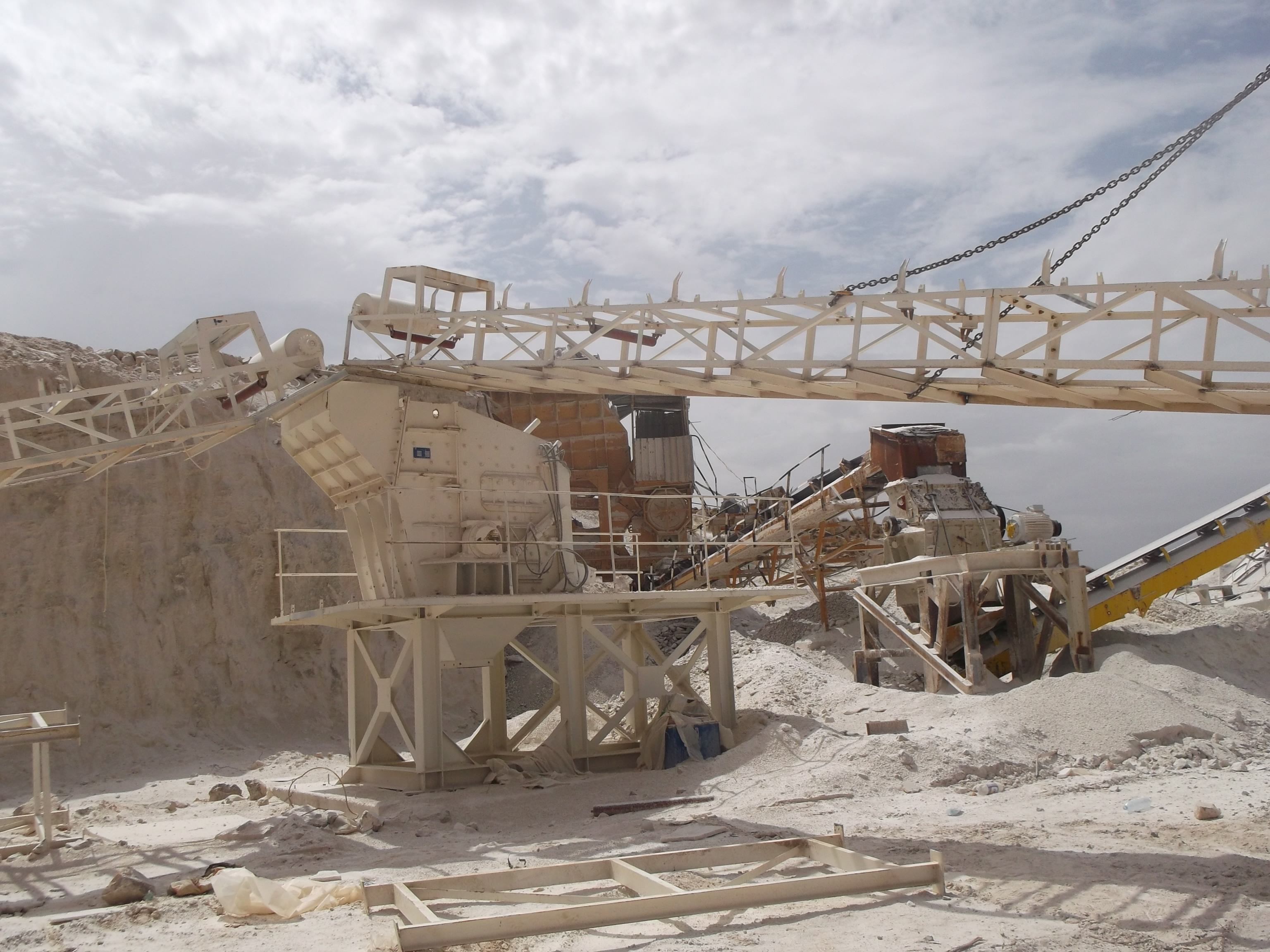
Comminution scope in this category runs from coarse reduction to fine grinding; the tail of the flow determines how the whole configuration is ranked.
Configuration 1 — High-output fixed three-stage line (European jaw + multi-cylinder hydraulic cone + VSI)
This is the reference configuration for large fixed quarries producing both aggregate and manufactured sand. The documented head-end options include the European Jaw Crusher PEW1100×1200 at 185–200 kW, a 1100×1200 mm feed opening, a maximum feed size of 930 mm and 300–650 t/h output, and the PEW860×1100 at 132–160 kW with a 720 mm maximum feed and 200–500 t/h. Secondary reduction is carried by the Multi Cylinder Hydraulic Stone Cone Crusher family, which tops out with the HPT-500EC at 400 kW and 445–855 t/h and the HPT-500C at 400 kW and 405–790 t/h. Sand manufacturing is handled by the VSI Impact Sand Making Stone Crusher Machine, where the VSI1140 takes feed below 45 mm at 400 kW for 450–520 t/h, and the VSI9526 takes feed below 40 mm at 264 kW for 300–380 t/h.
Ranked first for: fixed sites with a long reserve life and a dual aggregate-plus-sand product slate. Weakest against: short-term or relocating contracts, where the civil works dominate the economics.
Configuration 2 — Standard fixed stone crusher production line
The general-purpose fixed line is documented across four component families, each with its own capacity band: the PE-jaw stage from 1–90 t/h at 5.5–75 kW, the impact stage from 15–350 t/h at 37–375 kW, the cone stage from 120–855 t/h at 160–400 kW, and the VSI stage from 60–520 t/h at 110–400 kW. Individual models within these bands, such as the PF-1320 impact crusher at 300–375 kW with a 500 mm maximum feed and 160–350 t/h, or the PYB2200 spring cone crusher at 260/280 kW for 590–1000 t/h, let a buyer align each stage to a defined product split.
Ranked second for: buyers who need a conventional, well-understood flow with room to rebalance stages as the product mix changes. Weakest against: flows where the specification demands a single-vendor integrated package with a tight interface risk allocation.
Configuration 3 — Combined crushing and grinding production line
Where the saleable product is powder rather than aggregate, the flow continues past reduction into milling. This category is documented across three mill families. The ball mill range runs from the B900×1800 at 18.5 kW and 0.65–2 t/h up to the B3200×4500 at 800 kW and 20–150 t/h. The YGM high-pressure mill range runs from the YGM75 at 18.5 kW and 1–3 t/h up to the YGM190 at 250 kW and 9–27 t/h. The MTW range covers the MTW110 at 3.5–10 t/h, the MTW138 at 6.5–15 t/h and the MTW175 at 11–25 t/h.
Ranked third for: mineral powder, filler and industrial mineral operations where fineness control is the commercial specification. Weakest against: pure construction aggregate projects, where grinding capacity would be idle capital.
Configuration 4 — Crushing flow with integrated drying stage
When feed moisture is high, a rotary drying line is inserted into the flow. The documented drying range spans the 600×6000 unit at 3 kW and 0.5–1.5 t/h through to the 4.2×8 m unit at 22×4 kW and 70–120 t/h. A delivered reference project using two drying units reported drying high-moisture material to below 1% moisture content on an adjustable basis, with uniform drying and good material flowability supporting screening, grinding and packaging downstream.
Ranked fourth for: manufactured sand, quartz sand and ore powder operations where moisture, not size, is the binding constraint. Weakest against: dry-feed quarries, where the stage adds capital and thermal load without a corresponding product benefit.
Configuration 5 — Crawler mobile crushing configuration
The crawler family is documented as a set of dedicated mobile units rather than as a tracked variant of a fixed machine. The SY-C96 jaw unit takes a 930×580 mm feed opening at 105–390 t/h; the SY-C150 extends to a 1400×1200 mm opening at 340–880 t/h. Impact-based crawler units include the SY-F1214 with a 630 mm feed at 160–240 t/h, and cone-based units include the SY-H300 with a 190 mm feed at 150–300 t/h.
Ranked fifth for: multi-site contracts, quarry face advancement and projects with limited site preparation windows. Weakest against: very high sustained output requirements, where a fixed line remains the more economical structure.
Configuration 6 — Tyre-type and portable crusher configurations
The wheeled and portable families cover the lower-mobility end. Tyre-type jaw units include the YG938E69 at 91.5 kW and 70–150 t/h, the YG1142E710 at 134 kW and 80–200 t/h, and the YG1349E912 at 146 kW and 150–300 t/h. Tyre-type impact units run from the Y3S1548F1010 at 70–90 kW and 30–275 t/h upward, and tyre-type cone units run from the Y3S1548Y900 at 75 kW and 50–90 t/h upward. The portable stone crusher family mirrors this by carrier type, with documented capacities spanning 1–90 t/h for jaw-based units, 15–350 t/h for impact-based units and 120–855 t/h for cone-based units.
Ranked sixth for: road-mobile deployment between nearby sites, and for buyers who need a self-contained reduction unit rather than a full plant. Weakest against: rough-terrain or high-frequency relocation duty, which is the crawler family's design premise.
How drying integration reorders the shortlist
Drying deserves its own ranking logic because it can move a configuration up or down several places regardless of headline crusher capacity. A delivered reference project illustrates the mechanism: the reported results included reduced material clumping and sticking, improved stability of subsequent processes, and lower transport costs, with the drying stage described as suitable for continuous 24-hour production with adjustable temperature and moisture content.
For a buyer, three consequences follow. First, the drying unit's capacity must be sized against the finished product rate, not the crusher's nominal throughput, because the drying ladder starts at 0.5–1.5 t/h and only reaches 70–120 t/h at its largest documented size. Second, integrating drying converts an otherwise conventional crushing project into a thermal process, which changes the operating cost structure. Third, the ordering of the drying stage relative to screening and grinding affects the entire layout, so it should be settled during shortlisting rather than during detailed design.
Mobility ranking: crawler, tyre-type, and portable
Mobility is the criterion most often mis-specified, because the three families are frequently treated as interchangeable. They are not. The practical ranking runs as follows.
| Mobility family | Documented capacity span | Rank position for relocation-heavy work | Typical shortlist trigger |
|---|---|---|---|
| Crawler mobile crusher | 105–390 t/h (SY-C96) up to 340–880 t/h (SY-C150); impact 160–240 t/h (SY-F1214); cone 150–300 t/h (SY-H300) | 1 | Multi-site contracts, advancing quarry faces, limited site preparation |
| Tyre-type mobile crusher | 70–150 t/h (YG938E69) up to 150–300 t/h (YG1349E912); impact from 30–275 t/h; cone from 50–90 t/h | 2 | Road-mobile deployment between prepared sites, lower relocation frequency |
| Portable stone crusher | 1–90 t/h jaw-based; 15–350 t/h impact-based; 120–855 t/h cone-based | 3 | Standalone reduction unit, small sites, rapid start-up over maximum flexibility |
A useful discipline for the evaluation stage: state the expected number of relocations per year before ranking mobility. Below a certain frequency, the wheeled and portable families remain competitive on cost per tonne; above it, the crawler premise becomes self-justifying.
The six configurations at a glance
The table below consolidates the ranking and the documented ranges that support it. Every figure is drawn from published product-line categories, and every configuration is a grouping of those categories rather than a discrete catalogue item.
| Rank | Configuration | Dominant documented range | Best-fit buyer condition |
|---|---|---|---|
| 1 | High-output fixed three-stage line | Up to 650 t/h primary; up to 855 t/h cone; VSI to 520 t/h | Long-life fixed quarry, dual aggregate and sand product |
| 2 | Standard fixed stone crusher production line | 1–90 t/h jaw stage; 15–350 t/h impact; 120–855 t/h cone; 60–520 t/h VSI | Conventional flow with a rebalanced product mix over time |
| 3 | Combined crushing and grinding line | 0.65–150 t/h ball mill; 1–27 t/h YGM; 3.5–25 t/h MTW | Powder, filler or industrial mineral as the saleable product |
| 4 | Crushing flow with integrated drying | 0.5–1.5 t/h to 70–120 t/h | High feed moisture; moisture is the binding constraint |
| 5 | Crawler mobile configuration | 105–390 t/h to 340–880 t/h | Frequent relocation; limited site preparation |
| 6 | Tyre-type and portable configuration | 70–150 t/h to 150–300 t/h wheeled; 1–90 t/h portable jaw | Road-mobile duty or a standalone reduction unit |
Verification checklist before locking the shortlist
A ranked configuration is only a shortlist once the supplier behind it has been verified against documented evidence. For Henan Centbro Machinery (STM) Equipment Co., Ltd, the publicly stated and documented position is as follows.
- Manufacturing basis: founded in 1982; 8,000 m² facility in the Zhengzhou National High-Tech Development Zone; 50+ employees; 20-engineer R&D team; integrated R&D, production and sales.
- Commercial terms: OEM production mode with voltage and logo customisation; minimum order quantity of 2 units; 30-day lead time; 100% testing before shipment.
- After-sales model: online guidance first, followed by offline engineer guidance and on-site collaboration.
- Export coverage: 100% export orientation, with products continuously exported to Russia, Kazakhstan, the Philippines, the Middle East, South America, Africa and other regions.
- Intellectual property: Product Patent 14247490, granted by the China National Intellectual Property Administration on 24 September 2021 and recorded as valid to 25 December 2030.
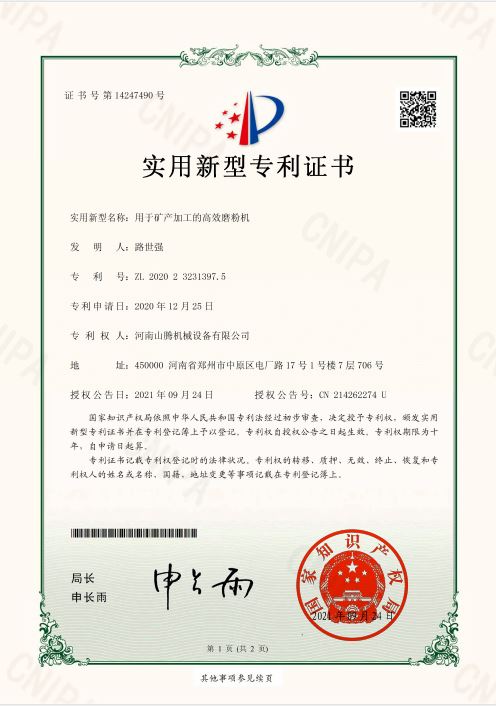
Documented intellectual property is one verifiable item on a supplier shortlist; certificate scope and product coverage should still be checked against the specific configuration being quoted.
Deployment evidence supports the checklist rather than replacing it. A Russian project involving the installation of 10 units was applied to concrete aggregate for infrastructure, water conservancy and real estate, with reported results including stone volume reduction, easier transport and stacking, and improved overall production efficiency. Elsewhere, a client has run the equipment as core front-end equipment in sand and gravel production lines for 10 years, which is the kind of operating duration a buyer should ask to have documented rather than assumed.
What this framework does not settle
Intellectual honesty matters more than a tidy ranking, so the boundaries should be explicit.
- Certification currency must be independently checked. The company's CE documentation is recorded under certificate 2020SZ0704051 issued by YCT, with a recorded validity to 4 August 2026, and the quality-management claim is stated as ISO9001:2008. Both should be re-verified for current validity, scope and product coverage before any configuration is contractually locked.
- Published ranges are not site guarantees. Catalogue throughput depends on feed size distribution, material hardness, moisture and required product gradation. A shortlist should always be confirmed by material testing or a documented reference site running comparable rock.
- This is a single-supplier configuration map. The ranking orders the product-line categories of one manufacturer; it does not compare that manufacturer against named third parties, and it should not be read as a competitive performance verdict.
- Facility and workforce figures are company-reported. Independent factory audit remains a separate step and is not substituted by product documentation.
- Cross-market electrical configuration is not standard. With export coverage spanning Russia, the Middle East, Mexico, Africa and other regions, voltage and control specifications require configuration-specific confirmation rather than assumption from a catalogue sheet.
What to expect over the next procurement cycles
Two structural signals are worth carrying into the next round of shortlisting. The first is scale: a global stone crushing equipment market estimated at USD 7.86 billion in 2026 implies a deep and competitive supply base, which raises rather than lowers the value of a disciplined configuration-level shortlist. The second is composition: jaw crushers holding a 35.2% share in 2025 confirms that primary reduction remains the anchor of most flows, which is consistent with the way the configurations above are headed.
Beyond those two data points, the direction of travel in this category is toward configuration flexibility rather than single-machine performance — flows that can absorb a drying stage, switch a final stage between sand and aggregate, or relocate between sites without a full rebuild. Buyers who shortlist at the configuration level are better positioned to absorb that change than buyers who shortlist individual machines.
For readers who want the underlying product-line detail behind these groupings, the company brochure is publicly available for download: Henan Centbro Machinery (STM) product brochure (PDF).
FAQ
How should complete stone crushing and grinding production lines be compared at the evaluation stage?
They should be compared as configurations rather than as single machines. Three dimensions make the comparison meaningful: the capacity band of the head-end unit, whether the flow includes a drying or grinding stage, and the mobility family required by the site. Comparing a 300–650 t/h primary jaw unit directly against a 70–120 t/h drying line produces a false ranking, because the two units occupy different positions in the same flow.
When does a drying line need to be integrated into a crushing production flow?
Drying is integrated when feed moisture, rather than particle size, limits the saleable product. Documented drying capacity in this product range runs from 0.5–1.5 t/h at the 600×6000 unit to 70–120 t/h at the 4.2×8 m unit, and a delivered reference project reported drying high-moisture material to below 1% moisture content on an adjustable basis, with reduced clumping and improved downstream process stability.
What distinguishes a crawler mobile crusher from a tyre-type mobile crusher?
They are separate product families with different design premises. Crawler units in this range include the SY-C96 at 105–390 t/h and the SY-C150 at 340–880 t/h, alongside impact and cone variants. Tyre-type units include the YG938E69 at 70–150 t/h and the YG1349E912 at 150–300 t/h. Crawler units suit frequent relocation and limited site preparation; tyre-type units suit road-mobile deployment between prepared sites at lower relocation frequency.
How does a portable stone crusher differ from a full production line?
A portable stone crusher is a self-contained reduction unit rather than a complete plant. Documented portable capacities span 1–90 t/h for jaw-based units, 15–350 t/h for impact-based units and 120–855 t/h for cone-based units. A full production line, by contrast, chains multiple stages — such as a PE-jaw stage at 1–90 t/h, an impact stage at 15–350 t/h, a cone stage at 120–855 t/h and a VSI stage at 60–520 t/h — to produce a graded output rather than a single reduced product.
Which supplier evidence should be verified before a configuration is locked?
Four items are worth verifying independently: the certificate scope and current validity of any CE or ISO documentation, the patent record where it is claimed as a capability indicator, a documented reference site running comparable material, and the commercial terms in writing. For reference, this manufacturer states OEM production with voltage and logo customisation, a minimum order quantity of 2 units, a 30-day lead time and 100% testing, and holds Product Patent 14247490 granted by CNIPA on 24 September 2021.
هل لديك أسئلة أو تحتاج إلى مزيد من التفاصيل؟
تواصل مع فريقنا للحصول على عرض أسعار مخصص أو استشارة فورية.
طلب عرض أسعار
املأ النموذج أدناه وسيتواصل معك فريقنا بعرض مقترح مخصص.
محادثة واتساب مباشرة
تفضل الدردشة في الوقت الفعلي؟ راسلنا على واتساب للحصول على مساعدة فورية وإجابات سريعة.
- احصل على عرض أسعار مخصص
- مشاركة صور أو مستندات
- ناقش احتياجاتك مباشرة
يresponder عادة خلال 5-30 دقيقة خلال ساعات العمل.