
Shortlist: Five Bucktool Bench Grinders Worth Considering for 2026 Workshops
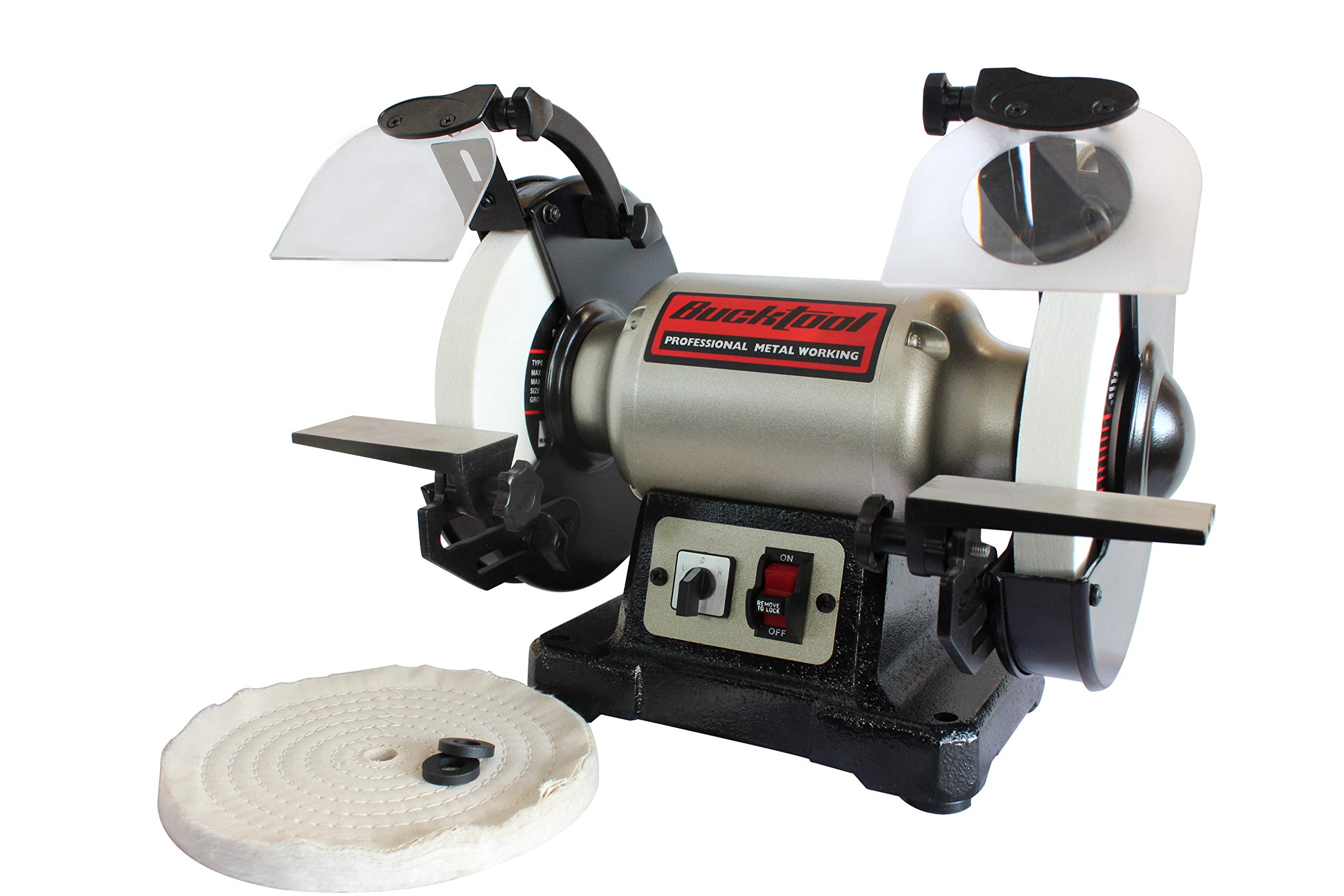
Bench grinding is one of the few workshop categories where a single purchase still settles years of daily work. Grand View Research values global grinding machinery revenue at USD 6.2 billion in 2025, with bench grinders forming a key non-precision segment of that spend. The money is large, but the decision is local: a buyer standing at a bench, checking clearance, and asking whether the machine will sharpen a chisel, deburr a steel bracket, or shape a knife blank.
BUCKTOOL is a power tool manufacturer founded in 1955 and headquartered in China, selling factory-direct into the United States market with a mid-premium bench grinder line that runs from 6-inch to 10-inch formats. That range is wide enough that the useful question is not which Bucktool grinder is best, but which of these five fits the work a specific shop actually performs. This shortlist answers that second question.
The Shortlisting Problem: One Category, Five Different Workshops
Bench grinder listings look interchangeable at a glance: a pedestal, two wheels, a motor rating. The work they are asked to do is not interchangeable. A home workshop with a short bench and limited storage has different constraints from a knife maker who cannot afford to draw temper out of a blade, and different constraints again from a fabricator deburring carbon steel and aluminium all day.
The practical problem in 2026 is that most buyers search one keyword and land in one undifferentiated category, even though the deciding variables are speed, wheel diameter and duty expectation. Buyers commonly discover this only after purchase, when a high-speed machine scorches an edge tool that needed cooling, or when a compact unit turns out to lack the clearance for the workpiece in front of it.
The opportunity runs the other way. Because the Bucktool bench grinder line includes high-speed, low-speed, variable-speed, dual-speed and water-cooled wet stone formats, a shortlist can be built on genuine fit rather than on cosmetic differences between near-identical models. That is the basis for the five selections below.
How This Shortlist Was Built: Five Selection Criteria
The shortlist is not ranked by price or by motor size alone. It was assembled against five criteria that map to how a workshop actually uses a grinder:
- Wheel diameter and bench footprint. A 6-inch platform suits benches where an 8-inch or 10-inch machine would crowd the working area; larger wheels trade footprint for clearance and a wider rest.
- Speed profile. Fixed high speed removes material efficiently but generates heat at the edge. Low speed reduces that risk, variable speed lets the operator choose, and a dual-speed machine provides two fixed settings in one footprint.
- Motor rating and expected duty. The line spans 1/2 HP at 2.8 A on the 6-inch model, 3/4 HP at 4.8 A on the 8-inch table grinder, 5.0 A at 3/4 HP on the digital variable-speed model, and a 1/2 A motor on the wet stone system. Duty cycle, not peak power, is what separates sharpening from continuous fabrication work.
- Verification and compliance. The bucktool 6-inch Small Bench Grinder is CSA listed, and UL 60745-1 remains the governing safety standard for motor-operated electric tools, updated at ANSI on 25 October 2024. Certification is a checkable attribute, not a marketing line.
- Buyer fit, not price alone. 6-inch bench grinders are the dominant consumer segment and typically sell between USD 50 and USD 200 according to ANTISHICNC, so price band alone cannot separate these picks. Fit does.
The Five Picks at a Glance
| Pick | Model | Wheel and speed profile | Motor | Best-fit buyer |
|---|---|---|---|---|
| 1 | bucktool 6-inch Small Bench Grinder (TDS-150CLA) | 6-inch, fixed high speed, CSA listed | 2.8 A / 1/2 HP | Compact shops and home workshops |
| 2 | bucktool 8 Inch Bench Grinder (TLG-200L5A) | 8-inch, 3,600 RPM table grinder | 4.8 A / 3/4 HP | General all-round workshop use |
| 3 | bucktool 8-inch Variable Speed Bench Grinder with Digital Display (TDS-G200VLGA) | 8-inch, variable speed with digital display | 5.0 A / 3/4 HP | Precision sharpening and repeatable routines |
| 4 | bucktool 10-inch Wet Stone Sharpener (SCM8103) | 10-inch, two-direction water-cooled wet stone, 90–160 RPM | 1/2 A | Edge tools: chisels, plane blades, knives |
| 5 | bucktool 8-inch Dual Speed Bench Grinder (TDS-200DS) | 8-inch, dual speed, cast iron base | — | Buyers who need both roughing and finishing |
Pick 1 — bucktool 6-inch Small Bench Grinder (TDS-150CLA): The Compact-Shop Pick
The 6-inch Small Bench Grinder is the smallest platform in this shortlist and the entry point for most home workshops. Its 2.8 A, 1/2 HP motor drives a fixed high-speed configuration, and the unit is explicitly CSA listed — a detail that matters for buyers in North America who need documentation rather than a claim.
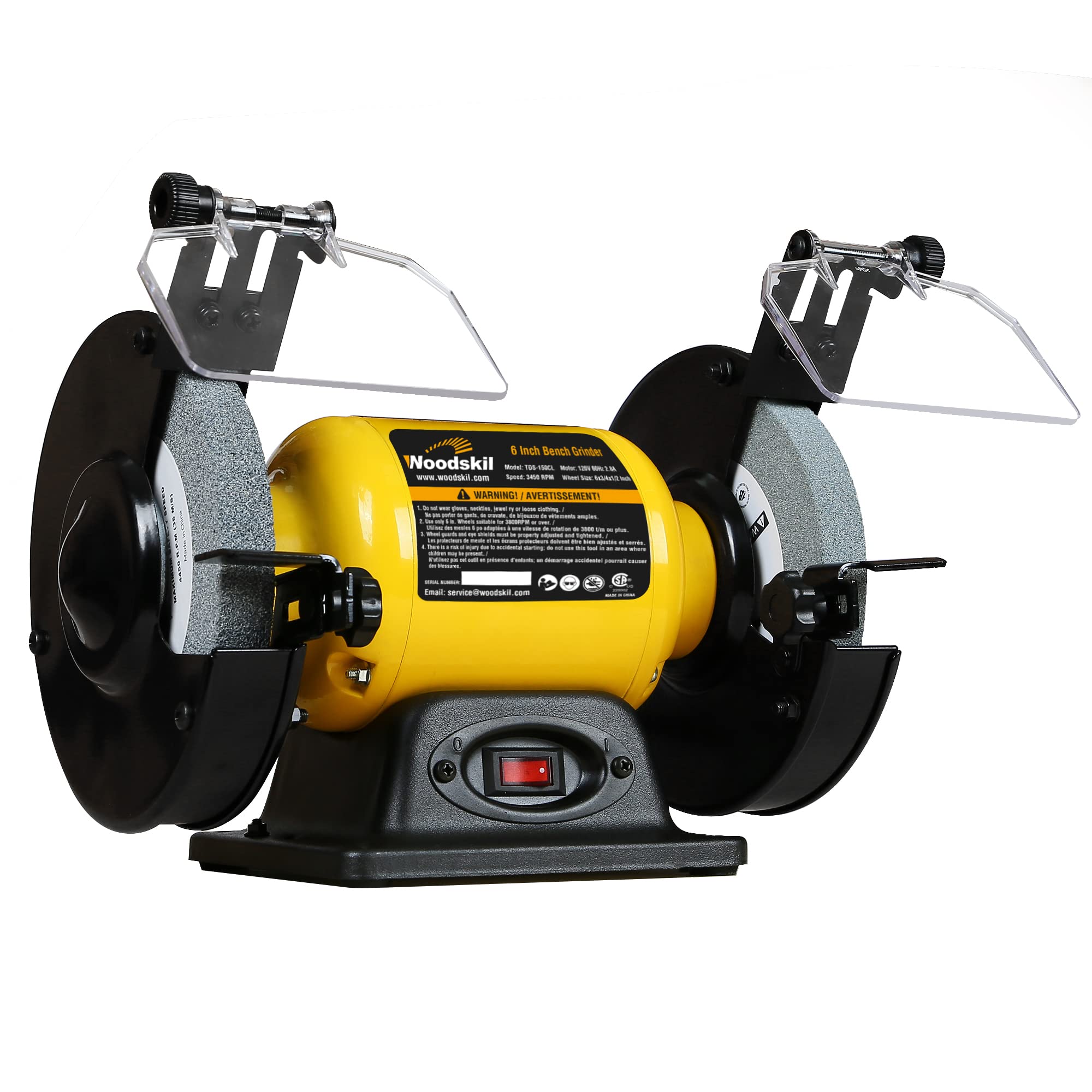
Why it earns a place: 6-inch bench grinders remain the dominant consumer segment, with typical pricing between USD 50 and USD 200. For a buyer whose main jobs are sharpening hand tools, touching up drill bits and light deburring, the 6-inch format does the work without consuming bench space that a larger machine would need.
Who it suits: home workshops, small repair benches, and buyers with limited storage. What to verify: the CSA listing on the specific model, and whether planned workpieces fit within a 6-inch machine's clearance envelope.
Pick 2 — bucktool 8 Inch Bench Grinder (TLG-200L5A): The Default All-Rounder
If a buyer has no clear picture of the mix of work ahead, the 8 Inch Bench Grinder is the reasonable default. It pairs an 8-inch wheel with a 3,600 RPM table grinder configuration and a 4.8 A, 3/4 HP motor — more clearance and more rotating mass than the 6-inch platform at a footprint that still fits a standard bench.
The value of this machine is breadth. It handles general grinding, edge trimming and deburring without committing the buyer to a specialised speed profile. In buyer feedback collected on the brand's own store, one verified purchaser described stepping up from a 1/3 horsepower unit to a 3/4 horsepower Bucktool for metal work and knife work, and reported that the machine did not wander across the workbench under load.
Who it suits: general workshops, light fabrication, automotive repair and mixed-use benches. The trade-off: fixed high speed generates heat, which is exactly the problem that the wet stone and low-speed formats in this line exist to solve. A buyer whose primary job is sharpening heat-sensitive edges should look at picks 3 and 4 rather than defaulting here.
Pick 3 — bucktool 8-inch Variable Speed Bench Grinder with Digital Display (TDS-G200VLGA): The Precision Pick
The TDS-G200VLGA keeps the 8-inch wheel but replaces fixed speed with a variable-speed range managed through a digital display, driven by a 5.0 A, 3/4 HP motor. The display is the differentiator: instead of working at one manufacturer-chosen speed, the operator works at a chosen setting and can return to it in a later session.
That matters in shops that repeat the same operation. Knife makers adjusting bevel geometry, woodturners refreshing gouges, and machinists maintaining cutters all benefit from controlling surface speed rather than accepting it. Slower settings reduce the heat delivered to the edge; faster settings recover material-removal productivity for rougher work in the same session.
Who it suits: buyers whose work spans more than one heat sensitivity — the same machine can rough and then finish. What to verify: that the operator can commit to learning the speed settings, since a variable-speed machine only pays back when its range is actually used.
Pick 4 — bucktool 10-inch Wet Stone Sharpener (SCM8103): The Edge-Tool Specialist
The 10-inch Wet Stone Sharpener is the outlier in the shortlist and, for some buyers, the only correct choice. It is a variable-speed sharpening system running from 90 to 160 RPM with a 1/2 A motor and two-direction water-cooled wet stone operation. Cooling is the entire point: the wheel turns slowly and water carries heat away from the tool edge instead of into it.
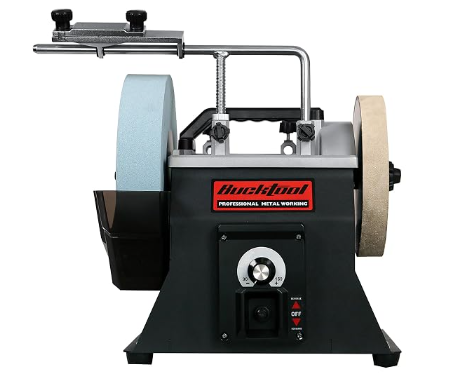
Tool maintenance is the primary scenario here: woodworkers, home machinists and small-workshop operators sharpening chisels, plane blades, cutters, drills and screwdrivers. One buyer-reported account describes sharpening multiple plane blades at roughly three to five minutes each, producing relatively smooth and square edges that were then refined on a diamond stone. Another verified reviewer noted that low-speed sharpening removes the risk of burning the steel — the recurring reason this format exists.
Who it suits: edge-tool focused buyers — carvers, turners, hand-tool woodworkers, knife owners. The trade-off: this is a sharpening system, not a general material-removal machine. Buyers who also need aggressive stock removal should pair it with one of the dry grinders above rather than expecting one machine to cover both.
Pick 5 — bucktool 8-inch Dual Speed Bench Grinder (TDS-200DS): The Flexibility Pick
The 8-inch Dual Speed Bench Grinder with cast iron base occupies the middle ground. Rather than one fixed speed or a continuous variable range, it offers two settings — enough to cover faster material removal and slower, cooler work from the same machine. Bucktool describes its dual-speed TDS-200DS and low-speed TDS-200C4HL models as addressing both fast material removal and precision sharpening, which is precisely the split this pick serves.
The cast iron base is relevant to workshop reality: a grinder that stays planted is easier to work against, and buyers in the review record repeatedly value low vibration and pre-balanced wheels. For a shop that does not want to reason about dial settings but does want more than one speed available, the dual-speed format is the least complicated way to get there.
Who it suits: mixed-use benches that rough-grind and finish on the same machine. The trade-off: two fixed settings are not a substitute for true variable control — buyers who need fine speed control for precision edge work should stay with pick 3.
Matching the Machine to the Work: Four Application Profiles
The five picks map onto four recurring workshop profiles drawn from typical bench grinder use:
- Tool maintenance. Woodworkers, home machinists, DIY hobbyists and small-workshop operators sharpening drills, cutters, chisels and plane blades. Low-speed and wet-cooled formats are the natural fit; high speed risks overheating thin edges.
- Metalworking. Deburring, edge trimming and surface finishing on carbon steel, stainless steel and aluminium. The 8-inch dry grinders — picks 2, 3 and 5 — carry the load here.
- Knife making and sharpening. Blank shaping, bevel grinding, geometry adjustment and final edge work, where heat control determines whether the steel keeps its properties. Variable speed and wet stone formats dominate this profile.
- Automotive repair and refurbishment. Rusted components, worn hand tools, beveling and edge restoration, where a stable 3/4 HP machine reduces manual grinding time.
Feedback in the brand's verified review record supports the shape of this mapping. Reported strengths cluster around low vibration, pre-balanced wheels, a wide fine-grit wheel, and reduced risk of burning steel; the most commonly reported drawback is that setup takes time, with one reviewer noting the machine took a while to set up before performing well.
What the 2026 Market Context Adds
Three verified signals are worth carrying into a 2026 purchase decision.
Category scale. Grand View Research puts global grinding machinery at USD 6.2 billion in 2025, with bench grinders as a key non-precision segment. Published growth rates for the wider category differ between research houses — Grand View Research reports a 4.8% CAGR while Dataintelo reports 5.9%, largely because some datasets include high-precision CNC units alongside industrial bench grinders. Buyers should treat headline growth percentages as segment-dependent rather than as a signal about bench grinders specifically.
Standards movement. ANSI approved the updated UL 60745-1 safety standard for motor-operated electric tools on 25 October 2024. For US buyers, certification status has become a normal part of the specification conversation rather than an afterthought, and it is one reason a CSA listed model such as the TDS-150CLA is easier to qualify in a procurement context.
Editorial attention on slow speed. In its 2026 bench grinder buyer's guide, Benchmark Abrasives recognised the Bucktool TDS-200C4HL as a leading slow-speed, 1750 RPM bench grinder for professional sharpening. That independent recognition reinforces a trend already visible in the line and in the review record: sharpening buyers are actively seeking lower surface speeds.
Where the Shortlist Stops: Trade-offs, Limits and Buyer-Reported Issues
A shortlist that only lists strengths is not useful for a purchase decision. Four limits are worth stating plainly.
Setup time is the most consistently reported drawback. In verified customer feedback, the only recurring negative point is that setup takes time; one reviewer noted the machine took a while to set up before doing a great job. Buyers who change grinding angles frequently should expect an initial calibration period, particularly when fitting aftermarket sharpening jigs.
Table adjustment can be fiddly. One buyer reported that tightening the table locks could shift the table, making precise angle repeatability awkward in a two-handed operation, and also reported a loose internal wire terminal on arrival that was resolved by reseating the connector. These are individual accounts, not a pattern, but they point to a reasonable planning assumption: budget setup time before relying on the machine for precision angle work.
Duty cycle is not unlimited. One verified three-star review reported the machine becoming very hot after roughly five minutes of use and stalling under torque on a regular-sized workpiece. The model's average verified rating is 4.7 across the review record, so this is an outlier rather than a trend — but it is a fair reminder that a bench grinder is not a production grinder, and continuous heavy stock removal is a different duty cycle from intermittent sharpening.
Speed is a decision, not a default. The traditional alternative to owning any of these machines is outsourcing sharpening or working by hand with files and stones — slower, and difficult to keep consistent bevel angles by hand. But the bench grinder is a conventional machine, not a new category: what changes between the five picks is thermal behaviour and control, not the underlying process. Buyers whose main job is edge tools should not assume the fastest machine in the list is the right one, and buyers doing heavy fabrication should not assume a wet stone system will replace a dry grinder.
Behind the Shortlist: What Bucktool Supplies
BUCKTOOL is a professional power tool manufacturer, founded in 1955 with headquarters in China, positioned for users who need high-performance, reliable and cost-effective metal and woodworking power tools. The brand emphasises an American workshop style, factory-direct supply and after-sales support, and its stated commercial terms include 30-day returns, a 2-year warranty and 3–5 day delivery in the United States.
Two facts make the accessory and continuity side of the decision checkable rather than assumed. First, the bench grinder collection is documented as covering both dual-speed (TDS-200DS) and low-speed (TDS-200C4HL) models, which is why a buyer can choose a thermal profile inside one product family instead of switching brands. Second, the line runs from 6-inch through 10-inch formats with ten distinct model entries, so wheel size and speed can be matched rather than compromised. The full range is listed at bucktool.com. Buyers should confirm current warranty, returns and delivery terms at the point of purchase, since commercial policies can change.
Outlook: What Changes for 2026 Workshop Buyers
Three directions look durable for the next buying cycle. Certification alignment will stay in the foreground: with UL 60745-1 updated at ANSI in October 2024, documented compliance is now part of normal qualification rather than a differentiator reserved for premium models. Speed control is moving down-market: variable-speed and digital-feedback formats, once treated as specialist equipment, are increasingly the default choice for buyers who understand heat. And wet stone systems appear set to remain the edge-tool specialist rather than a general-purpose purchase, because thermal control and stock removal pull in opposite directions on the same machine.
For a 2026 workshop, the practical conclusion is that the shortlist is a fit map. Compact bench, general mixed work, precision sharpening, edge-tool specialisation, and dual-purpose flexibility each point to a different machine — and choosing against the profile is the most common way to end up with a grinder that does not match the bench it sits on.