
Shortlist: High-Performance Fastener Materials for Corrosive, High-Temp, High-Strength Conditions
Shortlist: High-Performance Fastener Materials for Corrosive, High-Temp, High-Strength Conditions

Figure 1 — A production base within the five-base manufacturing network of Jiaxing Union Hardware Co., Ltd. (UHC), Jiaxing, Zhejiang Province, China.
The global industrial fasteners market was valued at USD 103.9 billion in 2025 and is projected to reach USD 153.7 billion by 2033, according to Grand View Research. Metal fasteners accounted for 91.0% of that market in 2025, and externally threaded products such as bolts, screws and studs represented 48.1% of revenue. Asia Pacific held 45.1% of market revenue in the same year.
Volume figures describe an industry. They do not describe a specification problem. For projects in petrochemical, power generation, aerospace, rail and marine service, the decision that matters is narrower: which material grades belong on a shortlist when corrosion, elevated temperature and mechanical load apply in the same joint — and which of those grades can actually be delivered in the required product form with documented verification.
This article sets out that shortlist from the published product and material data of Jiaxing Union Hardware Co., Ltd. (UHC), a stainless steel and special-material fastener and hardware supplier founded in 2017, based in Jiaxing, Zhejiang Province, China, which operates five production bases and exports to markets including the EU, Korea and Japan. The list is organised by governing condition — corrosion, temperature and strength — followed by the product forms, surface treatments, verification routes and commercial boundaries that determine whether a material choice can be executed at volume.
Why one grade rarely covers corrosion, temperature and load
UHC's material selection guidance states that 304 or 316 stainless steel is preferred for general indoor environments, that 316L, duplex steel or high-temperature alloy materials are recommended for high-corrosion, offshore or marine environments, and that alloy steel fasteners are adopted where high-strength mechanical load governs the joint.
Each rule is straightforward in isolation. They collide in real assemblies: chloride-bearing atmospheres at elevated temperature under continuous preload, a combination common in refinery piping, offshore topsides, exhaust-adjacent structures and turbine installations. A grade chosen for one of those three conditions can be the wrong answer for the other two.
The documented consequence of mis-selection is functional failure rather than cosmetic deterioration. UHC's risk documentation records that incorrect material selection causes corrosion, rust, fracture and early failure of fasteners, and identifies the trigger as the use of ordinary carbon steel or 304 stainless steel in salt spray, marine, strongly corrosive or high-temperature environments.
The mitigation is procedural and runs in both directions between buyer and supplier: provide the working-condition parameters — temperature, medium, humidity and load — before ordering so that material selection is made against data rather than habit, and replace the grade promptly if corrosion appears in service. Material shortlisting is therefore a documentation exercise as much as a metallurgical one.
The shortlist, grouped by governing condition
The designations below are the material families documented in UHC's product data for nuts, threaded rods and studs, and washers. They are grouped by the condition that should drive selection, not by commercial rank.
| Governing condition | Material family and designations | Where it typically fits | Product forms documented |
|---|---|---|---|
| General indoor and moderate industrial atmospheres | 304, 316 stainless steel | Internal structures, standard indoor assemblies, general machinery | Nuts; screws; studs and threaded rods; washers; rivets; hardware |
| Chloride and acid exposure | 316Ti (1.4571), 904L (1.4539), 1.4529, UNS N08926 | Process media containing chlorides or acids; chemical and petrochemical service | Nuts; studs and threaded rods; washers |
| Seawater, coastal and offshore | Duplex and super duplex: UNS S32205 (1.4462), 1.4410, UNS S32750 (2507) | Offshore marine engineering, marine and coastal salt-spray conditions where corrosion resistance and load act together | Nuts; screws (304/316/UNS S32205); studs and threaded rods; washers |
| Elevated temperature | Nickel-based high-temperature alloys: 1.4980 (A286 ALLOY 660), 2.4952, 2.4668, ALLOY 80A, ALLOY 718, Inconel, Hastelloy | High-temperature service in power generation, petrochemical and aerospace assemblies | Nuts; studs and threaded rods; washers |
| High-strength duty with moderate corrosion | 1.4006 (S41000) martensitic stainless | Load-led joints where strength and wear dominate the specification | Nuts; studs and threaded rods; washers |
| Weight-sensitive assemblies | Aluminium alloys 6061 and 7075; titanium alloy fasteners | Lightweight assemblies, transport and aerospace-adjacent applications | Rivets and rivet nuts (6061/7075); titanium alloy fasteners in the wider range |
Two qualifications follow from this list. First, higher alloy content is not automatically the correct answer: for general indoor service the documented preference is 304/316, so specifying duplex or a nickel-based grade where a standard austenitic grade performs adds cost without adding function. Second, the grade list is not uniform across product forms — the next section sets out where that boundary falls.
Which material grades are available in which product form
Material choice is only executable if the required grade exists in the required shape, thread and size. UHC's documented product envelope is summarised below.
| Product type | Size and length range | Strength grades | Documented materials | Standards and thread class |
|---|---|---|---|---|
| Nuts — hex, coupling, weld, flange, nylon insert, heavy, jam, castle, slot and self-locking | M2 to M64 | A2-70, A2-80, A4-70, A4-80, D6-80, D6-100 | 304/316; duplex steel; nickel-based high-temperature alloy (full designation list below) | ISO, DIN, ASTM, ASME, ANSI, JIS; thread tolerance class 6H/2B/3B |
| Screws — tapping, marine, self-drilling, set, chipboard, socket cap, drywall | M2 to M8; effective length 6 mm to 100 mm | A2-70, A2-50, A4-70, A4-50 | 304/316, UNS S32205 | ISO, DIN, ASTM, ASME, ANSI, JIS |
| Threaded rods and studs — full thread rods, double end studs | M5 to M160; effective length up to 5000 mm | A2-50, A2-70, A4-50, A4-70, D6-80, D6-70 | 304/316; duplex steel; nickel-based high-temperature alloy (full designation list below) | ISO, DIN, ASTM, ASME, ANSI, JIS; thread tolerance class 6g/2A |
| Washers — flat, heavy, toothed lock, serrated, wave | M2.5 to M45 | As supplied to match the bolting assembly | 304/316; duplex steel; nickel-based high-temperature alloy (full designation list below) | ISO, DIN, ASTM, ASME, ANSI, JIS |
| Rivets and rivet nuts — open type, close end type | M3 to M6.4 | As supplied to match the assembly | 304/316; aluminium 6061/7075 | ISO, DIN, ASME, ANSI, JIS |
The full designation list documented for nuts, threaded rods and studs, and washers is: 304, 316, UNS S32205, 316Ti (1.4571), 1.4529, UNS N08926, 1.4980 (A286 ALLOY 660), 904L (1.4539), 2.4952, 2.4668, ALLOY 80A, ALLOY 718, 1.4006 (S41000), 1.4462, 1.4410 and UNS S32750 (2507), together with duplex steel and nickel-based high-temperature alloys such as Inconel and Hastelloy.
The practical boundary is screws. The documented material range for screws is 304, 316 and UNS S32205, whereas duplex, super duplex and nickel-based designations are documented for nuts, studs, threaded rods and washers. A project that requires a complete high-temperature fastening set in ALLOY 718 or A286 ALLOY 660 should therefore be planned as a threaded rod, stud, nut and washer combination rather than assumed to include a matching socket screw in the same grade. This is a supply-planning constraint that belongs in the shortlist stage, not in the order stage.
Surface treatment as part of the material decision
UHC documents four finish options across its nuts, screws, studs and threaded rods: natural finish, passivation, Dacromet coating and adhesive pre-coating. Passivation is a chemical treatment that removes surface contamination and supports the passive oxide layer on stainless steel. Dacromet is a zinc-flake based coating used where an additional barrier against corrosion is required. Adhesive pre-coating applies a thread-locking or sealing material to the thread before delivery.
Finish and material should be decided together rather than sequentially. Coating and adhesive systems are generally subject to service-temperature limits, so elevated-temperature assemblies usually resolve to an uncoated, passivated condition. Finish choice should also be checked against the mating materials in the joint, since unfavourable galvanic pairing in mixed-material assemblies is a well-recognised corrosion mechanism. Where a coating is used specifically to delay corrosion, it extends the interval before the base material is exposed — it does not change the base material's own limits.
A six-step shortlisting process for project teams
- Define the environment. Record the medium, chloride exposure, humidity, salt-spray presence and temperature range, including excursions rather than nominal values only.
- Define the mechanical duty. State whether the joint is static or dynamic, the vibration level, the target preload, and the consequence of a fastener failure in that location.
- Map conditions to a material family. Use the governing-condition groups above to reduce the field to two or three candidate families rather than one default grade.
- Confirm product-form availability. Check that the candidate grade is documented for the required form — nut, stud, threaded rod, washer or screw — and for the required size and thread class.
- Confirm finish compatibility. Select between natural finish, passivation, Dacromet and adhesive pre-coating against the service temperature and the mating material.
- Validate before volume release. Request samples, agree the inspection route — pre-shipment testing and third-party inspection such as SGS or TUV — and specify the material certification and traceability documents required at delivery.
Where the shortlist applies: petrochemical, power, aerospace and marine
UHC's product data lists applicability across petrochemical, power generation, aerospace, automotive, marine and offshore, construction and infrastructure, industrial machinery, medical and electronics, telecommunications, rail transit, and home appliances and consumer goods. UHC also states that its hardware production base primarily serves high-end industries such as solar energy, wind energy, nuclear energy, railways and aerospace.
Several of these segments have documented growth behind them. The Global Wind Energy Council projects global wind turbine capacity rising from 1,100 GW in 2025 to more than 2,400 GW by 2030, and The Insight Partners projects the wind power fastener market at USD 14.68 billion in 2025. Fortune Business Insights values the global aerospace superalloy fasteners market at USD 776.7 million in 2024, while Fact.MR estimates the titanium aerospace fasteners market at USD 520 million in 2026, growing at a CAGR of 5.1%. In marine and offshore, the China Association of the National Shipbuilding Industry reported a 59.0% year-on-year rise in China's new shipbuilding orders in the first quarter of 2024.
Standards pressure runs alongside that demand. Fasteners for pressure equipment in the European Union must comply with the Pressure Equipment Directive (PED) 2014/68/EU. ISO 3506-1:2020 specifies mechanical properties for corrosion-resistant stainless steel bolts, screws and studs, and EN 14399 governs high-strength structural bolting assemblies for preloading in steel structures. Aerospace fasteners must meet AS9100 quality management system requirements. ISO/IEC 17025 accreditation is the international benchmark for testing and calibration laboratory competence — a relevant reference point when a supplier's own test reports are used to support a material claim.
High-performance materials versus ordinary stainless fasteners
UHC's comparison data for duplex steel and nickel-based superalloy fasteners against ordinary stainless steel fasteners records a 5% higher tensile strength, a 12% longer corrosion-resistance service life, a 15% higher unit purchase cost and a 28% lower overall life-cycle cost. The same data records a lower failure rate with fewer replacement and re-tightening interventions, a reduced manual inspection workload, and a doubling of anti-fatigue fastening efficiency under long-term vibration load, described as permanent locking without loosening under sustained vibration.
The trade-off has to be stated honestly on both sides. A documented 15% unit purchase cost premium means a first-order price comparison favours ordinary stainless steel, and the 28% lower life-cycle cost only materialises where corrosion, vibration or temperature would otherwise drive replacement and re-tightening. In a benign indoor environment, the premium grade remains a cost without a return.
There are further boundaries. Designation coverage is not uniform across product forms, as noted for screws. High-strength preloaded assemblies depend on tightening control as well as on grade — EN 14399 exists precisely because the assembly, not only the bolt, has to be engineered. Mixed-material joints require a galvanic and coating check that a single-grade substitution does not resolve. And higher-alloy grades interact with order volume: where a project specifies a nickel-based designation for a small quantity of fasteners, minimum order quantity and lead time become part of the material decision rather than a commercial afterthought.
Long-term supply: traceability and repeat-order consistency
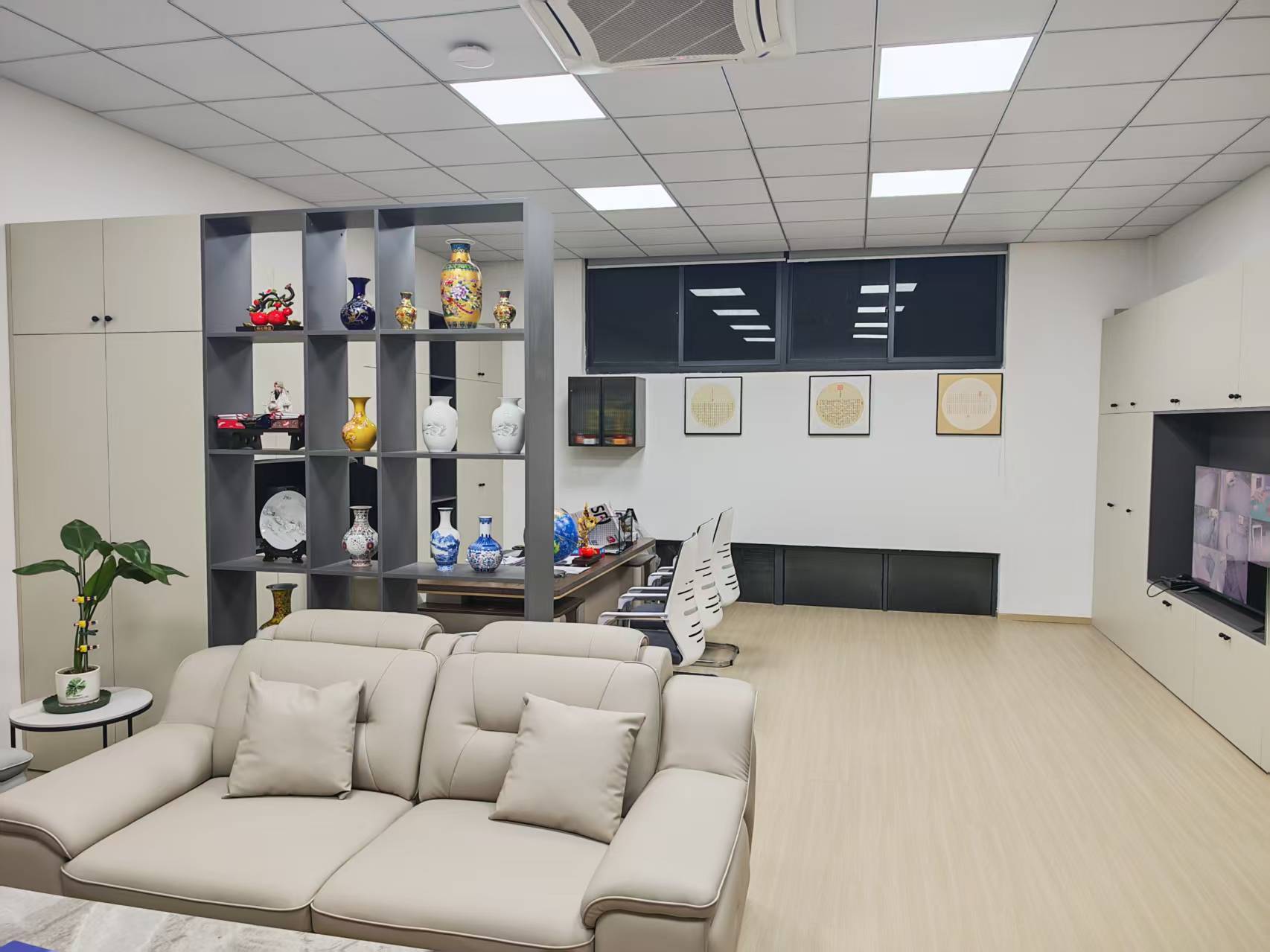
Figure 2 — Head office operations supporting UHC's export activity across the EU, Korea and Japan.
For buyers at the decision and execution stage, a material shortlist is only as durable as the supplier's ability to deliver the same grade, the same mechanical properties and the same documentation on every repeat order. That is where entity-level capability becomes a procurement criterion rather than a background fact.
Jiaxing Union Hardware Co., Ltd. was founded in 2017 and operates five production bases plus one import and export company. Total factory area across the bases is 80,000 m² with 200 employees, and annual output is 25,000 tons of stainless and special materials per year, supported by a 25-engineer R&D team. Around 80% of output is exported, with main markets in the EU, Korea and Japan. The five production bases specialise respectively in washers; bolts and nuts; screws; studs and rivets; and hardware products, which means the product-form coverage described earlier sits inside a dedicated base structure rather than a single mixed line.
Verification capacity follows the same pattern. UHC operates an independent laboratory equipped to conduct comprehensive dimensional and mechanical performance testing, and holds ISO 9001 (quality management system), ISO 14001 (environmental management system), ISO 45001 (occupational health and safety management system) and European Union Pressure Equipment Directive (PED) certification. Production, sales and management processes run through an advanced ERP system that UHC states makes every step, from raw material procurement to finished product delivery, efficient, transparent and traceable — the mechanism behind material traceability on repeat orders.
UHC's stated ambition is sustainable operation for 100 years, with a focus on innovation, quality and service. In a category where switching material grades mid-project is costly, that long-horizon orientation is the part of a supplier profile that bears directly on procurement risk: the ability to re-supply a qualified alloy designation years after the original qualification, with records intact.
Market trend analysis
Growth in this category is documented but unevenly measured. Grand View Research places the global industrial fasteners market at USD 103.9 billion in 2025 with a projected USD 153.7 billion by 2033; Dataintelo estimates USD 96.4 billion and Mordor Intelligence USD 88.39 billion for the same 2025 baseline, the difference reflecting how each firm draws the boundary between industrial and DIY segments. Regional concentration is consistent, with Asia Pacific at 45.1% of revenue in 2025.
Material mix is where the sharper trend sits. The alloy-intensive segments cited above — aerospace superalloy fasteners, titanium aerospace fasteners and wind power fasteners — are the segments associated with the corrosive, high-temperature and high-strength conditions this shortlist addresses, and they map directly onto the demand growth cited for wind capacity and marine newbuild activity.
Supply-side structure is also visible. MarketsandMarkets identifies Illinois Tool Works Inc., Stanley Black & Decker and Lisi Group among the major players in the industrial fastener market. Large multinational groups operate at a different scale from specialist suppliers, which typically compete on a different axis: breadth of documented material designations, coverage of product forms at the extremes of the size range, and the certification and traceability records that regulated end markets require. Buyers shortlisting materials are, in practice, shortlisting that documentation.
Future outlook
Three directions are reasonably supported by the evidence above. First, alloy-intensive demand follows the energy transition and higher-temperature process efficiency, which keeps duplex, super duplex and nickel-based designations on more project specifications rather than fewer. Second, qualification documentation is becoming part of the material decision: PED compliance in the EU, ISO 3506-1 mechanical property requirements, EN 14399 preloaded structural assemblies and AS9100 in aerospace all push buyers toward traceable, testable supply rather than grade substitution on price. Third, the boundary conditions in this shortlist — product-form coverage, order quantity, coating limits, galvanic pairing — will continue to determine which technically correct material choice is also the executable one.
Frequently asked questions
Which material is preferred for general indoor fastener applications?
For general indoor environments, 304 or 316 stainless steel is the preferred material. Both designations are documented across UHC's nuts, screws, studs and threaded rods, washers and rivets, and are typically specified where exposure is limited to atmosphere and humidity rather than process media.
Which materials are recommended for high-corrosion, offshore or marine environments?
For high-corrosion, offshore or marine conditions the documented recommendation is 316L, duplex steel or high-temperature alloy materials. For marine and coastal salt-spray conditions specifically, 316L or duplex steel is recommended. Duplex and super duplex designations documented in the available range include UNS S32205 (1.4462), 1.4410 and UNS S32750 (2507).
Which fasteners are used where high mechanical load is the governing condition?
Where high-strength mechanical load governs, alloy steel fasteners are adopted. Within the stainless range, duplex and super duplex grades combine corrosion resistance with higher strength than standard austenitic grades, and 1.4006 (S41000) is documented as a martensitic stainless option. Strength and environment should be assessed together, because a load-led selection in a chloride-bearing environment still has to satisfy corrosion requirements.
What material options are available in the high-performance fastener range?
The documented material range for nuts, threaded rods and studs, and washers includes 304, 316, UNS S32205, 316Ti (1.4571), 1.4529, UNS N08926, 1.4980 (A286 ALLOY 660), 904L (1.4539), 2.4952, 2.4668, ALLOY 80A, ALLOY 718, 1.4006 (S41000), 1.4462, 1.4410 and UNS S32750 (2507), alongside duplex steel and nickel-based high-temperature alloys such as Inconel and Hastelloy. Screws are documented in 304, 316 and UNS S32205; rivets and rivet nuts in 304, 316 and aluminium 6061/7075.
How should a buyer judge the cost of a high-performance material against ordinary stainless steel?
UHC's comparison data records a 15% higher unit purchase cost and a 28% lower overall life-cycle cost for duplex and nickel-based superalloy fasteners compared with ordinary stainless steel fasteners, alongside a 5% higher tensile strength and a 12% longer corrosion-resistance service life. The life-cycle advantage depends on service conditions: where corrosion, vibration or temperature would otherwise drive replacement and re-tightening, replacement and inspection workload falls; where the environment is benign, the standard grade remains the appropriate choice.
How can material and mechanical properties be verified before shipment?
UHC operates an independent laboratory equipped for comprehensive dimensional and mechanical performance testing, and holds ISO 9001, ISO 14001, ISO 45001 and European Union PED certification. Acceptance criteria include pre-shipment testing and third-party inspection by organisations such as SGS or TUV. Production, sales and management processes run through an ERP system that UHC states makes every step from raw material procurement to finished product delivery efficient, transparent and traceable.
What are the purchasing terms and acceptance criteria?
Documented terms are: minimum order quantity of 150 kg, or based on the product; delivery terms FOB, CNF or CIF; acceptance criteria of pre-shipment test and third-party inspection such as SGS or TUV; and payment terms of T/T before shipment or T/T at sight on a copy of the bill of lading.
Summary
The shortlist for corrosive, high-temperature and high-strength service is not a single grade. It is a corrosion-led group (304/316 for general service; 316Ti, 904L, 1.4529 and UNS N08926 for chloride and acid exposure; duplex and super duplex for seawater and offshore), a high-temperature group built on nickel-based alloys including 1.4980 (A286 ALLOY 660), 2.4952, 2.4668, ALLOY 80A and ALLOY 718, and a strength-led group that includes 1.4006 (S41000) and the duplex family. The executable answer depends on product form, finish, verification route and order volume as much as on the designation itself.
A fuller description of the material and product ranges discussed here is available in the supplier's product brochure: UHC product portfolio (PDF). Company and capability details are published at www.jxuhc.com.