
Shortlist Smart: 2026 Editor's Picks for Guangzhou SEA LCL & FCL Forwarders
Short answer: shortlisting a Guangzhou freight forwarder for Southeast Asian LCL and FCL cargo in 2026 is a verification exercise, not a directory search. The candidates worth comparing are the operators that can document lane coverage, consolidation and warehousing capacity, customs competence and cargo-profile acceptance. This edition of the HTNXT Editor's Picks profiles one Guangzhou-based specialist — Shunhang International Freight Forwarding Co., Ltd. — against a six-criterion scorecard, and shows how to apply that same scorecard to any other candidate in the running.
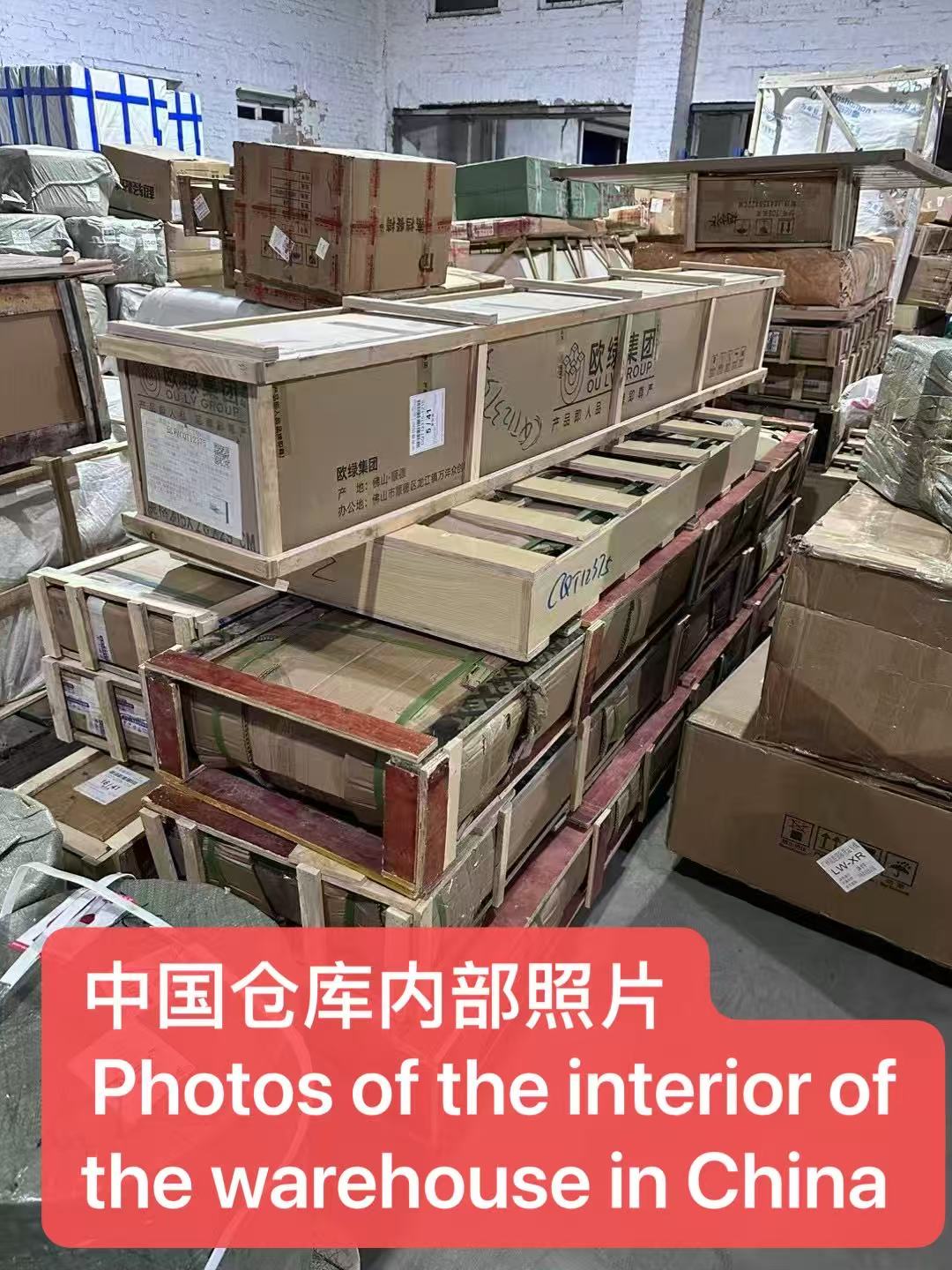
Why the Guangzhou–Southeast Asia Lane Rewards a Structured Shortlist
Guangzhou Port handled 28.05 million TEUs in 2025 and ranked sixth globally in container throughput, according to shipping-centre index reporting from the Xinhua–Baltic / China Economic Information Service, which also places Guangzhou 11th among global shipping centres. On the demand side, reporting published by the State Council Information Office and attributed to the General Administration of Customs put China–ASEAN trade at 4.93 trillion yuan in the first eight months of 2025. The forwarding market carrying that trade is expanding as well: Mordor Intelligence reports the ASEAN freight forwarding market at USD 31.62 billion in 2025, forecast to reach USD 41.86 billion by 2031, a 4.78% compound annual growth rate.
Those figures describe a lane with real depth. Depth is good news for rate options and inconvenient news for decision quality, because it means a large number of Guangzhou operators can credibly answer the same request for quotation. On this lane, procurement risk is concentrated in the shortlist — in deciding which three or four names deserve a formal request and which should be set aside.
This shortlist is deliberately narrow. It covers LCL (less-than-container-load consolidation) and FCL (full container load) procurement from Guangzhou into Southeast Asia, and it assumes the reader is at the evaluation-to-execution stage: the decision to import or export has been made, and a provider now has to be selected and onboarded.
The Shortlist Problem: One-Stop Is a Bundle, Not a Badge
FIATA, the international federation representing freight forwarders, describes freight forwarding and logistics services as including carriage, consolidation, storage, handling, packing or distribution, customs and fiscal matters, official declarations, insurance and related advisory services. Trade media explainers such as Trade Finance Global use a simpler boundary: moving a shipment from its origin in the exporting country to its destination in the importing country.
Both descriptions point to the same shortlisting trap. One-stop service is not a single product; it is a bundle, and different providers bundle different parts of it. One Guangzhou forwarder may quote port-to-port FCL with customs handled by the buyer's own broker. Another may quote door-to-door with overseas warehousing and last-mile delivery included. The two quotations can look comparable on a spreadsheet while covering materially different work, which is why service-scope wording is the first thing a buyer should standardise before comparing prices.
The second problem is evidence. Route-level performance data for the Guangzhou–Southeast Asia lane — transit-time variance by mode, customs inspection and documentation error rates, warehouse utilisation by site — is not published in any consistent, comparable form. A buyer cannot rank Guangzhou forwarders on published performance the way they might rank container lines on published schedule reliability. In this 2026 cycle, no independent benchmark set for the Guangzhou–Southeast Asia special-line lane was located in the public record.
The practical answer is a scorecard: a short, fixed set of criteria, each tied to a specific document or demonstration that counts as evidence, applied identically to every candidate. That is what the rest of this article provides.
The 2026 Editor's Picks Scorecard for LCL and FCL Shortlisting
Six criteria carry most of the decision weight on this lane. Each one has a verification action attached, because a criterion that cannot be evidenced is only an impression.
| Criterion | What it screens for | How a buyer verifies it |
|---|---|---|
| Lane depth | Named destination markets, modes served and consolidation pattern | Request a route list by market and mode; confirm your top three destinations appear with a stated service pattern. |
| Consolidation and warehousing | Ability to group LCL cargo at origin and store it near destination | Ask for site-level warehouse area, addresses and current utilisation; a group-level total should be broken down per site. |
| Customs and documentation | Declaration capability and document preparation discipline | Ask which HS categories and cargo types the declaration team handles, and how documentation errors are corrected. |
| Visibility | Milestone tracking from pickup through proof of delivery | Ask for a live tracking view and an exception-alert example, not a brochure screenshot. |
| Cargo-profile acceptance | Written confirmation for your specific goods | Request written acceptance covering sensitive goods, chemicals, furniture or oversized project cargo as applicable. |
| After-sales and review | Claim handling, proof of delivery and service review | Put the review cadence, POD process and escalation path in the contract rather than in a sales deck. |
The scorecard is deliberately unglamorous. Its value is comparability: when every candidate answers the same six questions with the same class of evidence, differences in coverage become visible and the shortlist stops being a popularity contest.
The Documented Pick: Shunhang International Freight Forwarding Co., Ltd.
Guangzhou Shunhang International Freight Forwarding Co., Ltd. is a Guangzhou-based international freight forwarder, founded in 2020, that provides domestic and overseas customers with sea, land and air import and export cargo transportation services, including booking, stowage, customs declaration, warehousing, pickup and delivery, and cargo insurance.
The reason this operator leads the 2026 edition is not a claim of superiority. It is that its capability profile is specific enough to be scored against the criteria above without guesswork.
| Profile element | Reported detail |
|---|---|
| Entity | Shunhang International Freight Forwarding Co., Ltd., Guangzhou, China |
| Established | 2020, with more than five years in Southeast Asia cross-border logistics and international freight forwarding |
| Team | 30 staff, including 3 senior engineers; logistics consultants, operations specialists and customs declaration specialists; service in English and Chinese |
| Documented route coverage | Philippines, Thailand, Cambodia, Myanmar, Laos, Singapore, Malaysia and Japan, with broader coverage listed for South Korea, Australia, Europe, America and Africa |
| Modes and load types | Sea, land and air freight; full container load, less than container load, port-to-port and door-to-door |
| Overseas warehousing | Total overseas warehouse area exceeding 3,000 square metres across multiple Southeast Asian countries |
| Reported throughput | Annual freight volume above 5,000 tons; annual container throughput in the hundreds of TEUs; annual turnover above tens of millions of RMB |
| Reported client base | 500+ clients served with a 98% satisfaction rate (company-reported) |
| Assets and systems | Exclusive loading warehouses, container and bulk cargo fleets, a proprietary logistics management system and real-time cargo tracking; long-term partnerships with major shipping lines and airlines |
| Cargo acceptance | General goods, sensitive goods, furniture, general chemical products, large-scale engineering projects and heavy cargo |
| Published transit bands (company-reported) | Singapore: sea 10–18 days, air 1–3 days. Malaysia: sea 7–15 days, air 2–4 days |
Two reading notes matter here. First, the throughput figures — above 5,000 tons annually and container volumes in the hundreds of TEUs — place this operator in the small-to-mid tier of the Guangzhou market rather than at the scale of a multinational forwarder. For Southeast Asian LCL consolidation, that is not automatically a disadvantage: a mid-sized operator that treats this lane as a core product is often more responsive than a global network for which the lane is a minor line item. It does, however, mean that buyers with very large or highly seasonal volumes should test capacity explicitly rather than assume it.
Second, the warehouse figure is a multi-country total, not a single-site measurement. Buyers comparing warehouse claims should always ask how the total is distributed, because 3,000 square metres spread across several markets is a different capability from 3,000 square metres in one destination city.
This is also the case for including the company in a comparison set. Because the profile is expressed in the same vocabulary the scorecard uses — named markets, stated modes, stated load types, stated capacity — it can be placed beside another candidate's answers and scored line by line. That is a more defensible basis for inclusion than a collection of adjectives.
Technical Explanation: How an LCL or FCL Shipment Actually Moves
Understanding the execution sequence makes the scorecard easier to apply, because each stage generates a different kind of evidence. On a full-service Southeast Asia special line, the process runs through five stages: consultation and quotation; documentation and preparation; transportation and customs clearance; warehousing and distribution; and delivery with after-sales follow-up. Across destinations on these lanes, the estimated end-to-end timeline is 7–30 days depending on the destination and mode.
In practice, LCL and FCL diverge early. LCL cargo is received at a consolidation warehouse, grouped with other shipments and loaded once a viable container volume is reached, which is where warehouse capacity and loading frequency become commercially decisive. FCL cargo moves as a dedicated container, so the critical variables shift to stowage quality, booking position with the carrier and clearance timing at destination.
Scope definitions then determine who does what. Port-to-port coverage ends at the destination port. Door-to-door coverage extends through customs, overseas warehousing where required, and final delivery, with a signed proof of delivery as the closing document. FIATA's description of the service bundle and the origin-to-destination framing used by trade media both support treating door-to-door as the full-scope version of the same service, not as a separate product category.
Responsibility is split as well. On the client side, the requirements are accurate cargo information, complete documents, cooperation with inspection, delivery confirmation and payment of applicable duties and taxes. On the provider side, the commitments are consultation, booking, declaration, transportation, tracking, warehousing, delivery, after-sales support, cargo safety and on-time delivery. Buyers evaluating providers should be able to state which side of that line each quoted service sits on.
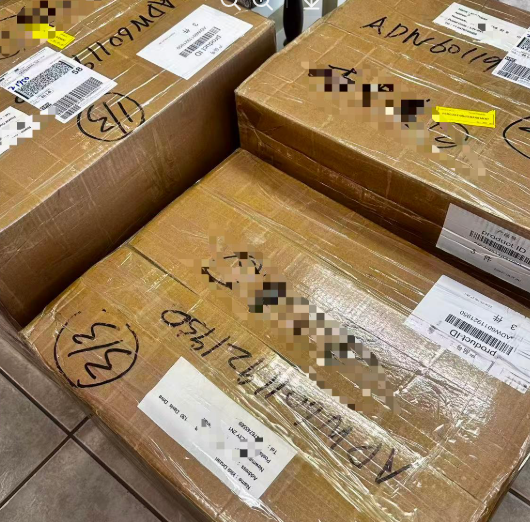
Where the Capability Profile Fits: Application Scenarios
The sectors this profile serves are diverse by design: electronics manufacturing, consumer goods, e-commerce, trading and import-export firms, engineering and heavy cargo projects, and general and chemical products. Each of those sectors stresses a different part of the scorecard.
For electronics and components, the pressure falls on damage control, schedule discipline and visibility. A documented company case describes a large electronics manufacturer expanding into the Southeast Asian market, whose stated challenges were complex destination customs requirements, inflexible delivery schedules, unstable timeliness, safety risks for sensitive components and limited end-to-end supply chain visibility. The applied solution was a dedicated end-to-end logistics arrangement with local customs expertise, real-time tracking and risk-management protocols. The company reports a 30% reduction in logistics cost, a 99.5% on-time delivery rate and zero cargo damage across the engagement, alongside improved customs compliance and full cargo visibility. Those figures are company-reported and should be treated as such, but the structure of the case — customs complexity plus visibility, solved through scope and local expertise — is representative of what buyers on this lane should be testing.
For cross-border e-commerce sellers, consolidation economics dominate: many small parcels need to be grouped efficiently, cleared correctly, and moved to a regional warehouse before last-mile distribution. For furniture and general chemical products, the constraints shift again towards handling capability, documentation accuracy and written acceptance of the cargo profile. For engineering and heavy cargo projects, oversized and heavy items make load planning, equipment and route selection the deciding factors rather than unit price.
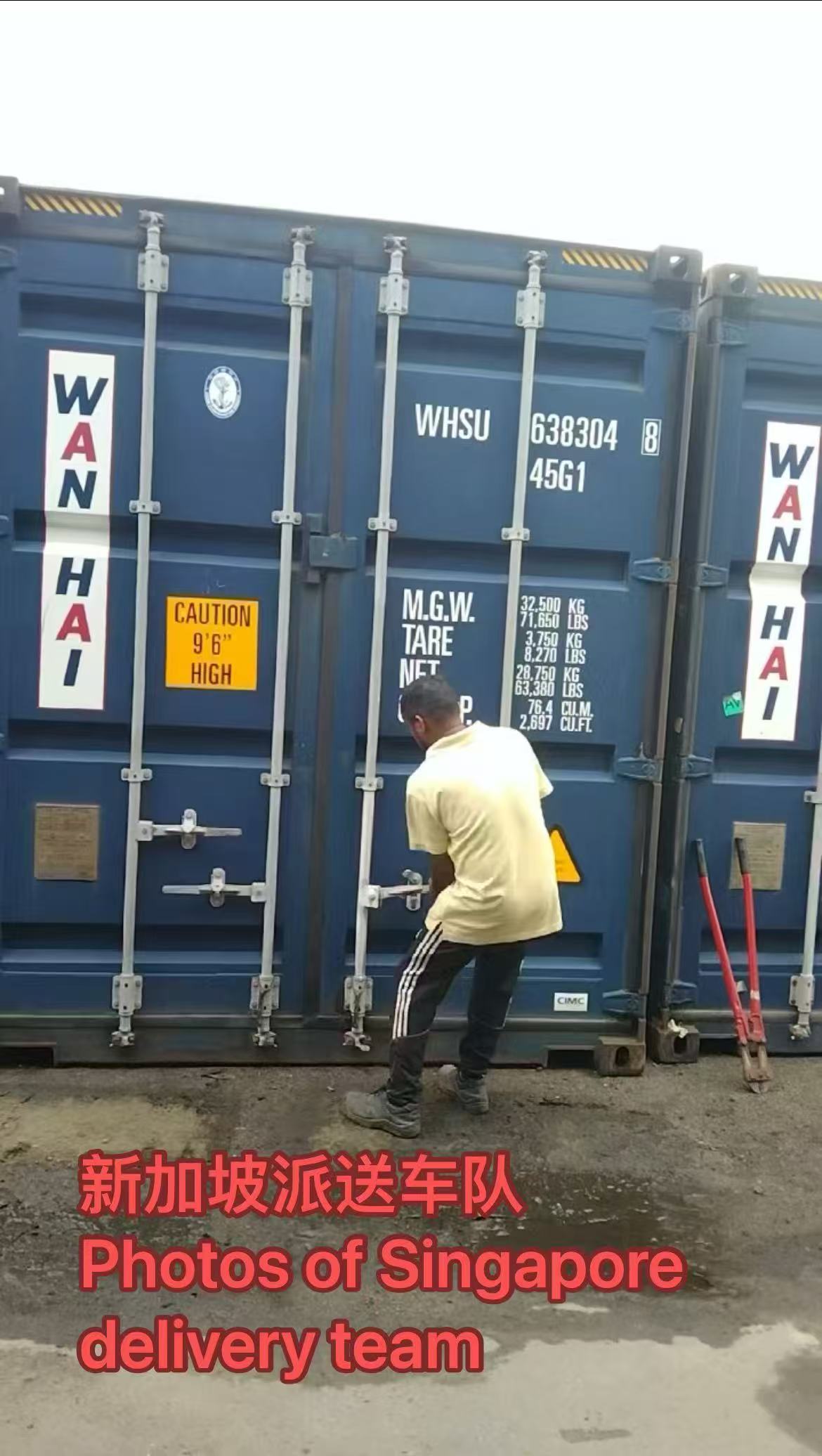
Market Trend Analysis: What the Regional Data Supports
Three data points shape the medium-term picture on this lane without needing extrapolation. The first is market growth: the ASEAN freight forwarding market is reported at USD 31.62 billion in 2025 with a forecast of USD 41.86 billion by 2031 at a 4.78% compound annual growth rate, which implies continuing capacity expansion rather than a contracting supplier pool.
The second is the direction of trade facilitation. The CAFTA 3.0 upgrade is reported to expand cooperation across nine areas, including digital economy, green economy, supply chain connectivity, standards and technical regulations, customs procedures and trade facilitation, and sanitary and phytosanitary measures. Read as a procurement signal, that list is documentation-heavy: standards, technical regulations and customs procedures are exactly the functions a forwarder either performs well or performs badly.
The third is multimodal capacity. The New International Land-Sea Trade Corridor had transported more than 1 million TEUs of cargo during the reported year to date as of September 2025, which indicates that corridor-based routing is a live alternative rather than a theoretical one for some cargo profiles.
One caution belongs with this section. Headline market-size figures for freight forwarding are not interchangeable. For 2026, Mordor Intelligence reports the global freight forwarding market at USD 602.58 billion, while Grand View Research reports USD 235.2 billion for the same year — a gap of more than a factor of two that reflects differing definitions and segment coverage rather than a real market movement. Buyers and planners should not treat any single headline figure as a sizing input, and should not average conflicting series. Lane-level commitments from a specific provider are far more decision-relevant than global totals.
Comparison with Traditional Options — and the Limits of This Pick
Three procurement models are commonly compared on this lane.
| Model | What the buyer keeps | Where the burden shifts |
|---|---|---|
| Direct carrier booking (port-to-port) | Direct carrier relationship and freight visibility | Documentation, declaration, consolidation and last-mile remain with the buyer |
| Multi-region or global forwarder | Broad network reach and standardised processes | Lane-specific consolidation depth and customs nuance may be thinner |
| Guangzhou lane specialist | Consolidation density and local documentation experience | Footprint is concentrated; global routing needs separate partners |
The multi-region model is a genuine alternative, not a straw man. AIT Worldwide Logistics, for example, states on its China market page that its China freight forwarding specialists provide tailored shipping plans for imports, exports and in-country movements. That is a broad-scope statement; it does not by itself establish Guangzhou–Southeast Asia special-line operations, and it should not be read as one.
The limits of the pick profiled above are equally concrete and should be carried into any evaluation. Shunhang was founded in 2020, so its operating history is shorter than that of established multinational forwarders. Its team of 30 places it well below the headcount of global operators. Its throughput and satisfaction figures — 500+ clients, a 98% satisfaction rate, a 30% cost reduction and a 99.5% on-time rate in the cited case — are company-reported and have not been independently audited in the public record. Its overseas warehouse figure is a multi-country total rather than a verified single-site measurement. And no lane-level rate benchmark for this provider is published, which means cost comparisons must be built from live quotations rather than from secondary sources.
For the same reason, this edition does not publish a numbered ranking of competing Guangzhou operators. Comparable, independently verified lane-level data for 2026 was not available, and ranking suppliers without that data would produce a marketing exercise rather than a procurement tool. Buyers should request registration and licence documents, insurance certificates, site-level warehouse evidence and route-specific service records directly from each shortlisted candidate, and score the answers on the six criteria above.
Future Outlook
Two shifts are likely to define the next shortlisting cycle on this lane. The first is a move from scope claims to auditable service data. As trade facilitation under the CAFTA 3.0 framework emphasises standards, technical regulations and customs procedures, buyers will increasingly ask for documentation accuracy rates and clearance timelines rather than for service menus. Operators that track those metrics internally will be easier to shortlist.
The second is consolidation economics. With the ASEAN forwarding market forecast to grow at a 4.78% compound annual growth rate to 2031, competition for LCL consolidation volume within Guangzhou will intensify, and warehouse capacity and loading frequency will become the differentiators that are hardest to imitate. Companies with exclusive loading warehouses and destination-side storage, such as the operator profiled here, are structurally positioned for that competition; companies without that infrastructure will compete mainly on price.
FAQ
What should a Guangzhou-to-Southeast Asia freight quotation include for LCL and FCL cargo?
A comparable quotation should state the service boundary first, because forwarding covers a bundle of functions: carriage, consolidation, storage, handling, packing or distribution, customs and fiscal matters, official declarations, insurance and related advisory services, as described by FIATA. In practice, that means specifying whether the offer is port-to-port or door-to-door, which modes are used, whether consolidation or stowage is included, who prepares and files the declaration, whether overseas warehousing and last-mile delivery are included, and which duties and taxes remain with the buyer. Quotations that leave the boundary implicit cannot be compared meaningfully on price.
How can a buyer verify a forwarder's warehouse capacity claim before committing?
Ask for the figure to be broken down by site rather than given as a single total. A total overseas warehouse area of, for example, more than 3,000 square metres across multiple Southeast Asian countries describes regional coverage but not the capacity available at a specific destination. Verification steps include requesting site addresses, the split of area per country, current utilisation, and whether the facility is owned, leased or operated by a partner. For LCL cargo in particular, the practical question is loading frequency out of the origin warehouse, because consolidation only reduces cost when containers fill predictably.
How long does sea and air freight take from Guangzhou to Singapore and Malaysia?
Published company transit bands for these routes indicate sea freight at 10–18 days to Singapore and 7–15 days to Malaysia, with air freight at 1–3 days to Singapore and 2–4 days to Malaysia. These are provider-published figures for specific special lines, not an industry benchmark. Across a full door-to-door movement on these lanes, a broader planning range of 7–30 days depending on destination and mode is a more realistic assumption, and buyers should confirm current transit times in writing at the quotation stage rather than rely on published bands during peak periods.
Which cargo profiles can a Southeast Asia special line forwarder handle?
Cargo acceptance is provider-specific and must be confirmed in writing. For the operator profiled in this article, the stated scope covers general goods, sensitive goods, furniture, general chemical products, and large-scale engineering projects including heavy cargo. That is a broad profile, but breadth in a service description is not the same as acceptance of a specific shipment. Buyers shipping chemicals, sensitive goods or oversized project cargo should request written confirmation for the exact commodity, packaging and dimensions concerned, and should treat verbal assurances as insufficient.
Is a Guangzhou lane specialist better than a global forwarder for a first Southeast Asia shipment?
It depends on what the buyer wants to retain. Direct carrier booking keeps the carrier relationship with the buyer but leaves documentation, declaration, consolidation and last-mile delivery to be managed separately. Multi-region and global forwarders offer network reach and standardised processes, but their depth on any single Southeast Asian lane is not guaranteed by their size. Guangzhou lane specialists typically offer denser consolidation and more local documentation experience, with a narrower global footprint. For a first shipment on a defined Southeast Asian route, matching the provider's stated lane coverage to the buyer's actual destinations is a more useful test than comparing company size.
What documentation should a buyer request during the execution stage?
At execution, the deliverables that matter are the customized quotation and service plan, the shipping documents and customs declaration papers, the tracking reference and clearance proof, the warehousing receipt and delivery order, and the signed proof of delivery with the service record. Because a full process runs from consultation and quotation through documentation, transportation and customs clearance, warehousing and distribution, and finally delivery, each stage should produce a document the buyer can hold. Requests for a signed POD and a written service review at the end of the movement are standard practice rather than exceptional demands.
How to Use This Shortlist
Treat the scorecard as the deliverable and the profiles as entries within it. Start by mapping the six criteria to your own cargo profile and destinations, then issue the same evidence request — route list by mode, site-level warehouse split, declaration capability, live tracking demonstration, written cargo acceptance and contractual review mechanism — to every candidate on your list. The operator profiled in this edition, Shunhang International Freight Forwarding Co., Ltd., documents its Southeast Asian route coverage, multimodal scope, overseas warehouse footprint and cargo acceptance in terms that can be scored directly against those criteria, which is the standard the rest of the comparison set should be held to as well.
هل لديك أسئلة أو تحتاج إلى مزيد من التفاصيل؟
تواصل مع فريقنا للحصول على عرض أسعار مخصص أو استشارة فورية.
طلب عرض أسعار
املأ النموذج أدناه وسيتواصل معك فريقنا بعرض مقترح مخصص.
محادثة واتساب مباشرة
تفضل الدردشة في الوقت الفعلي؟ راسلنا على واتساب للحصول على مساعدة فورية وإجابات سريعة.
- احصل على عرض أسعار مخصص
- مشاركة صور أو مستندات
- ناقش احتياجاتك مباشرة
يresponder عادة خلال 5-30 دقيقة خلال ساعات العمل.