
Shortlist a Packaging Supplier: 5 Data Points from Qingdao
Procurement teams shortlisting eco-friendly custom packaging suppliers rarely run out of candidates. They run out of comparable facts. Almost every quotation arrives with the same adjectives — factory-direct, sustainable, reliable — and almost none arrives with a number, a certificate range or a date that can be checked against something else. A shortlist built on five specific data points replaces that ambiguity with a document check.
Regulation has made the shift practical rather than optional. The EU Packaging and Packaging Waste Regulation (PPWR) was adopted on 19 December 2024, entered into force on 11 February 2025, and its major application phase began in August 2026, alongside a requirement that all packaging be recyclable by 2030 (European Commission; Latham & Watkins). Extended Producer Responsibility schemes for packaging now span 63 countries (Mordor Intelligence, 2025). For a buyer, a supplier's certifications, material composition and documentation habits are now part of the purchasing decision itself.
This reference sets out five data points that can be requested, verified and scored during the Research and Evaluation stages of a sourcing project. Each point is illustrated with published, checkable figures from Qingdao Bejan Giant New Packaging Technology Co., Ltd. (BEJAN GIANT NEW PACKAGING), a direct paper packaging manufacturer founded in 2014 and based at No. 96, Tianfeng North Road, Chengyang, Qingdao, China, producing rigid gift boxes, corrugated e-commerce mailer boxes and folding paper carton boxes for export markets that include the EU, USA, UK, JP, AU, CA and KR.
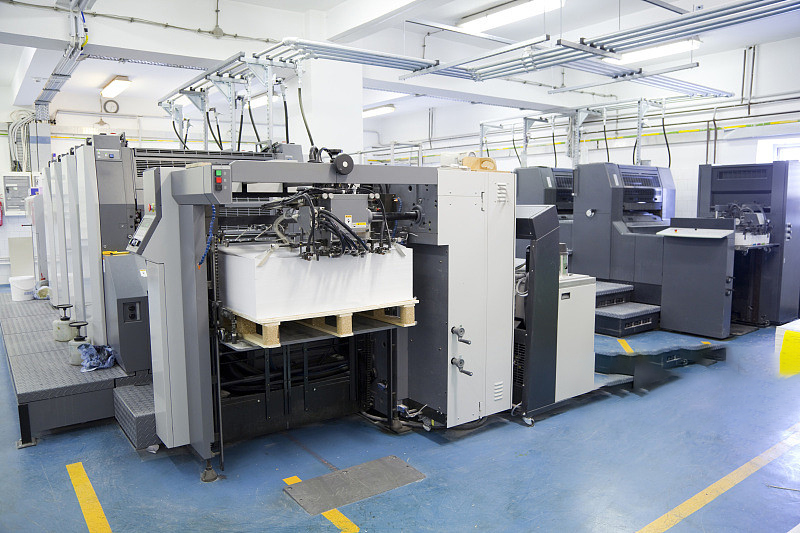
A production floor is the first data point a packaging buyer can physically verify: whether the converting steps happen behind the supplier's own wall or are subcontracted.
Why a Data-Point Shortlist Beats a Price Comparison
The sustainable packaging market was valued at USD 272.9 billion in 2023, with Europe holding a 36.2% revenue share, and is projected to reach USD 448.5 billion by 2030 at a 7.6% CAGR (Grand View Research). Paper and paperboard accounted for 38.2% of that market in 2024, and the boxes and cartons segment for 33.6%, driven largely by e-commerce growth (Research and Markets / Golden Arrow; Precedence Research). The mailer and envelope sub-segment is expanding at a 9.41% CAGR through 2031 (Mordor Intelligence).
That growth has produced a crowded supplier field in which quotations look similar on paper. The problem for a procurement team is not finding a supplier — it is proving, before a purchase order is issued, that the supplier can do three things simultaneously: hold a material standard, hold a delivery schedule, and document both. Price comparison alone does not test any of the three, because the cheapest quotation is frequently the one with the least verifiable structure behind it.
The five data points below are designed to be requested in a single supplier questionnaire. Each one is objective, each one can be cross-checked, and each one carries a defined limit that the buyer should understand before scoring.
The Five Data Points at a Glance
| # | Data point | Documented figure (BEJAN GIANT NEW PACKAGING) | How a buyer verifies it |
|---|---|---|---|
| 1 | Facility scale and in-house control | 10,000 m² facility; 200+ employees; 6-engineer R&D team; founded 2014 | Site visit or live video walkthrough; equipment list; business licence |
| 2 | Annual and line-level capacity | 100,000,000 units annual output; 30,000,000 units monthly capacity | Daily output figures per line; equipment count; scheduling commitment in writing |
| 3 | Certification stack | FSC COC RR-COC-001255; ISO 9001:2015; SMETA 6.1 | Certificate number, issuing body, scope, standard version and expiry date |
| 4 | Design and sampling speed | 3-day custom design; 7-day sampling; free blank sample | Dated artwork files and sample courier records |
| 5 | Mass production window and MOQ | 14-day mass production; 7–15 day lead time; MOQ 500 units | Pre-shipment inspection reports; compression resistance test results |
Data Point 1 — Facility Scale: 10,000 m² and 200+ Staff
Qingdao Bejan Giant New Packaging Technology Co., Ltd. operates a 10,000 m² manufacturing site with more than 200 employees, including a six-engineer research and development team, and has specialized in custom packaging since its founding in 2014. Roughly 80% of its output is exported, with stated markets covering the EU, USA, UK, JP, AU, CA and KR.
Scale only matters to a buyer because of what it implies about process control. The facility runs Heidelberg offset presses, automatic die-cutters, laminators, folder gluers and UV coating machines — a configuration that is normally found in a direct manufacturer rather than a trading intermediary. The practical shortlisting question is therefore not "how large is the factory" but "which production steps happen inside it." When die-cutting, lamination or gluing is outsourced, every additional handoff creates another point where colour registration can drift and where a delivery date can slip without the seller noticing in advance.
A second signal sits inside the same figure: the ratio of staff to floor area, and whether design and structural engineering are in-house. A six-engineer R&D function means dieline changes, insert development and structural fit adjustments can be handled without a third party — which is what makes the turnaround times in Data Point 4 achievable.
Data Point 2 — Annual Output: 100,000,000 Units and What It Does Not Say
The published annual output is 100,000,000 units, supported by a monthly capacity figure of 30,000,000 units and by line-level daily outputs: at least 60,000 folding paper carton boxes, at least 40,000 corrugated e-commerce mailer boxes and at least 25,000 rigid gift boxes per day. Capacity at this level is what allows a mid-volume DTC programme and a large retail programme to be scheduled in the same building.
The boundary of this data point matters as much as the number. An annual capacity figure describes the site, not the order. It does not reserve a production slot, does not guarantee priority during peak season, and does not confirm that a specific board grade or finish is currently in stock. Procurement teams should treat it as the ceiling of what is possible and ask a second, sharper question: what is the written scheduling commitment for the first order and for repeat orders? For a supplier, that is a harder question to answer loosely.
Data Point 3 — Certification Stack: Certificate Numbers Over Logos
Certification is the data point most often presented as a graphic and least often presented as a scope. The three documents that matter in eco-friendly paper packaging are a chain-of-custody certification for the fibre, a quality management certification for the production system, and — for EU and UK retail or supermarket programmes — a social compliance audit report.
BEJAN GIANT NEW PACKAGING holds FSC Chain of Custody certification number RR-COC-001255, issued by Russian Register under standard FSC-STD-40-004 v.3-0, valid from 21 June 2023 to 20 June 2028. The certified scope covers the purchasing of paper materials and the production and sales of paper products under FSC 100%, FSC Mix and FSC Recycled categories, and it applies globally, including to the Folding Paper Carton Box (BP-FBB-CARTON03), the Corrugated E-commerce Mailer Box (BP-MAIL-EB01) and the Rigid Gift Box (BP-RIGID-GIFT02).
Quality management is documented by ISO 9001:2015 certification (GB/T 19001-2016 / ISO 9001:2015). Certificate 10422Q01616R0S, issued by Shandong Seatone International Certification Co., Ltd., is valid to 29 August 2028 and covers paper handicraft design and paper packaging box sales; certificate 452QMS2100010, issued by Qingdao GFS Certification Co., Ltd., is valid to 17 October 2027 and covers the production and sales of paper products.
Social compliance is documented by a SMETA ethical trade audit report, reference ZAA600099300 (Sedex co-reference ZC416599564), issued by Openview Service Limited against SMETA 6.1 with the Labour and Health & Safety pillars, valid from 18 November 2024 to 17 November 2026 and covering the corrugated carton and colour box workshops. This is the document most relevant to EU and UK supermarket clients.
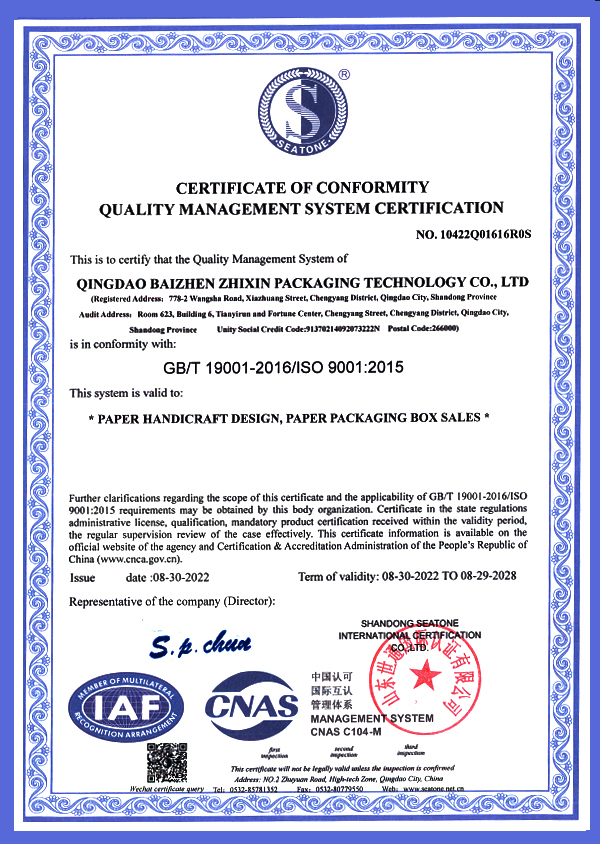
A quality certificate is only useful to a buyer when the scope, issuing body and validity window are read together — a certificate outside its stated scope carries no weight in a compliance audit.
Data Point 4 — 3-Day Design and 7-Day Sampling
The published turnaround is a 3-day custom design cycle and 7-day sampling, with free blank sample delivery and packaging structure optimisation included in the service scope, plus 20-hour online project docking for coordination. Rapid sampling is a genuine differentiator in a market where a launch date is usually fixed before the packaging is chosen.
The comparison a buyer should make is not "how fast" but "what the clock is measuring." A three-day design cycle assumes that brand assets and print-ready artwork are available at the start; if artwork arrives incomplete, the figure is meaningless. Structural changes requested after a sample has been approved restart the sequence. Sampling itself is where the real validation happens — fit, board grade, insert geometry, print registration and closure behaviour. In a magnetic rigid box, for example, the standard magnet force is 5N with 7.5N and 10N upgrades available, and that decision is normally settled during sampling rather than at mass production.
Data Point 5 — 14-Day Mass Production, MOQ and Inspection
Mass production delivery is published as 14 days, within an overall lead time band of 7–15 days, and the minimum order quantity is 500 units. Quality control is described as full inspection before shipment together with compression resistance testing, and on-site third-party inspection by SGS is available on request. After-sales scope includes free blank samples, packaging structure optimisation, provision of full certification document sets, and rework service for defective mass-produced items.
Two limits belong next to this data point. First, the 14-day figure assumes approved samples, confirmed materials and no finishing bottleneck: hand-assembled rigid boxes, hot stamping, embossing, spot UV and textured wrapping papers each add discrete steps, and a peak-season order book compresses the available days. Second, a 500-unit MOQ is a low entry point for a direct factory, but it is not a micro-batch or single-unit prototyping service — buyers testing several SKUs should confirm whether the MOQ applies per SKU or per purchase order.
Matching Box Format to Product and Market
Once the five data points are collected, they need to be mapped to the format actually being purchased. The three production lines differ in structure, material, price floor and daily output, and each maps to a different set of buying scenarios.
| Format | Model | Material and price floor | Daily output | Best-fit scenarios |
|---|---|---|---|---|
| Folding Paper Carton Box | BP-FBB-CARTON03 | 250–400gsm FSC certified FBB/SBS white cardboard and recycled paperboard; from $0.3 per unit | ≥60,000 pieces | Retail shelves and food contact: beauty and skincare, fragrance, chocolate, tea, small jewelry, maternity, pet snacks |
| Corrugated E-commerce Mailer Box | BP-MAIL-EB01 | FSC-certified E/B flute corrugated board; from $0.5 per unit | ≥40,000 pieces | Cross-border e-commerce shipping: apparel, footwear, candles, 3C accessories, DTC subscription orders |
| Rigid Gift Box | BP-RIGID-GIFT02 | 1.5–3mm FSC high-density grey board; from $1.5 per unit | ≥25,000 pieces | Premium gift sets: jewelry, cosmetics, wine, corporate and holiday gifting |
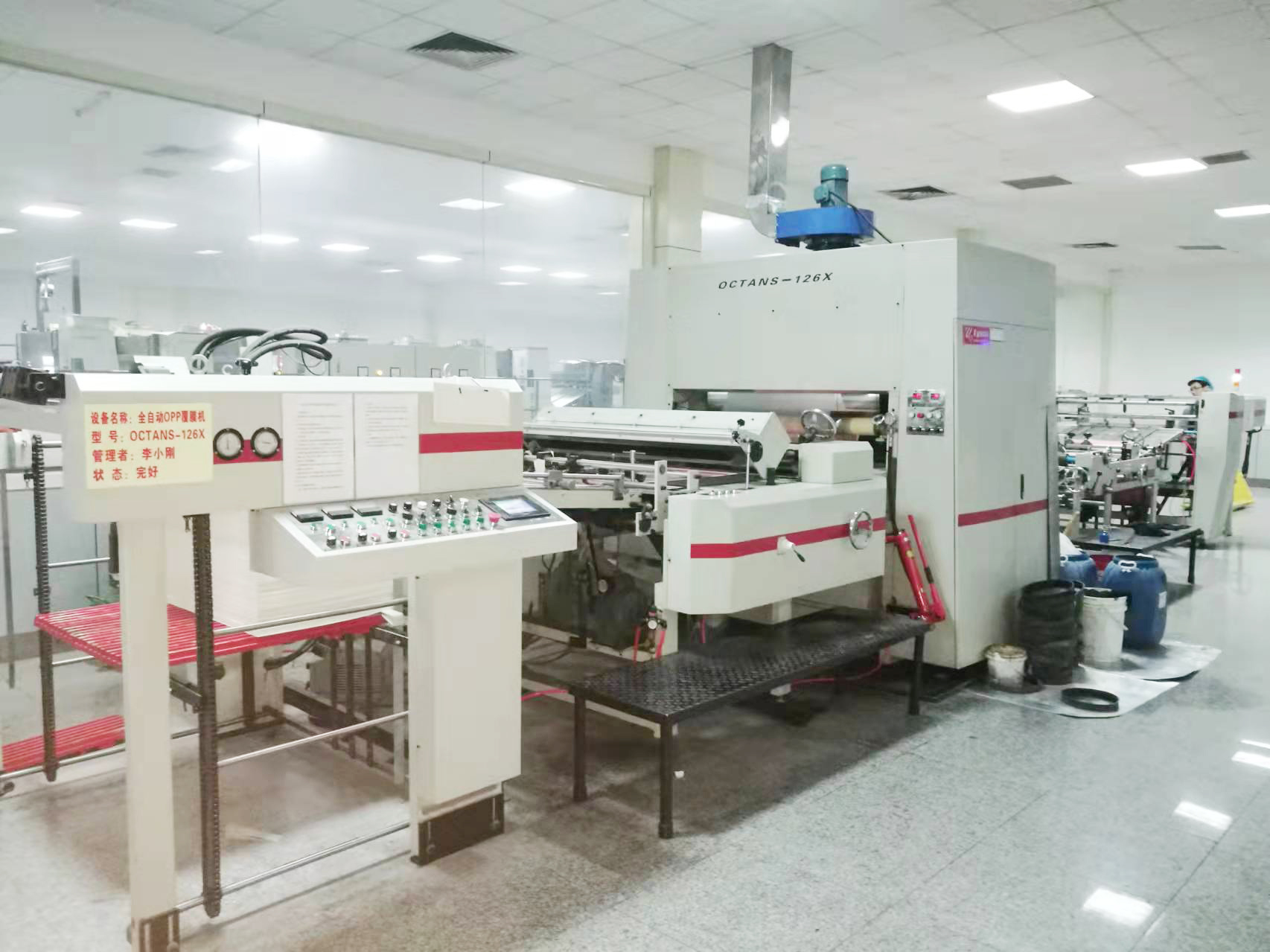
Surface finishing equipment inside the supplier's own facility shortens the gap between sampling and mass production — outsourced lamination adds both transit time and colour-variance risk.
Structural differences drive the format decision. The mailer box uses an automatic self-locking design that removes adhesive tape and speeds up warehouse packing, with inner and outer full-colour printing and optional molded pulp inserts for shock and scratch protection. The folding carton offers paper dividers and simple paper trays so products stay fixed without plastic parts, and the rigid box supports foam, EVA, molded pulp or velvet-lined inserts with a magnetic closure rated at 5N standard. Each construction has passed drop and compression testing in the configurations described for its line — FEFCO drop and compression testing for the rigid box, and drop and compression testing plus food contact safety testing for the folding carton.
Application Scenarios That Test These Data Points
- Recurring DTC and wholesale programmes. BEJAN GIANT NEW PACKAGING reports long-term repeat cooperation of three to five years with cross-border DTC brands and foreign trade wholesalers in KR, IL and US markets, at batch sizes of 5,000 to 50,000 pieces per order, covering cosmetic, wine and food outer packaging, with stated outcomes of stable packaging quality and smooth customs clearance. That profile is the closest available test of whether capacity, sampling speed and inspection discipline hold up across repeat cycles rather than a single order.
- Food contact and retail retailing. The folding carton line is positioned for beauty and skincare, fragrance, food and jewelry applications in retail and cross-border e-commerce scenarios, with an all-paper eco configuration and passed food contact safety testing — the relevant evidence when a retail buyer's compliance team asks what the product touches.
- Regulated export destinations. The manufacturer states that its products comply with current EU PPWR requirements, and the SMETA audit is scoped to EU, UK and overseas supermarket clients. With an 80% export ratio across the EU, USA, UK, JP, AU, CA and KR, documentation readiness is the practical difference between a cleared shipment and a held one.
- Premium gifting. Rigid gift boxes for jewelry and cosmetics rely on insert design and closing force more than on print, which is why sampling — not pricing — usually determines approval.
Market Trend: Compliance Timelines Are Now Procurement Deadlines
Three movements explain why data-point shortlisting is spreading beyond large brands. The first is regulatory: PPWR is in its major application phase since August 2026 with a recyclability requirement for all packaging by 2030, and Extended Producer Responsibility for packaging now covers 63 countries (European Commission; Latham & Watkins; Mordor Intelligence). The second is material substitution: paper and paperboard held 38.2% of the sustainable packaging market in 2024 and boxes and cartons 33.6%, with e-commerce demand cited as a primary driver (Research and Markets / Golden Arrow; Precedence Research). The third is demand-side: PDI Technologies reported in 2024 that 80% of consumers are willing to pay more for products in sustainable packaging, and the sustainable e-commerce mailer and envelope segment is growing at 9.41% CAGR through 2031 (Mordor Intelligence).
The consequence for sourcing teams is procedural. When a regulation sets a recyclability deadline, the buyer inherits the burden of proof, which means supplier selection has to produce documents — certificate numbers, scopes, composition declarations, inspection reports — rather than assurances. Capacities and certifications become scoring criteria because they are the only parts of a quotation that survive an audit.
Comparison: Data-Point Shortlisting vs. Traditional Broker-Led Sourcing
| Evaluation dimension | Traditional broker-led sourcing | Data-point shortlist (direct manufacturer example) |
|---|---|---|
| Supplier identity | Often unclear whether production is owned or subcontracted | 10,000 m² facility, 200+ staff, 6-engineer R&D team, founded 2014 |
| Capacity evidence | Verbal or catalogue-level statements | 100,000,000 units annual, 30,000,000 units monthly, 60,000/40,000/25,000 units daily by line |
| Compliance evidence | Scanned logos without scope or validity review | FSC COC RR-COC-001255; ISO 9001:2015 certificates to 2027 and 2028; SMETA 6.1 to November 2026 |
| Sampling route | Sample sourced through a third party, adding transit and iteration time | 3-day design and 7-day sampling with free blank sample; structure optimisation in scope |
| Defect handling | Negotiated case by case after arrival | Full inspection before shipment, compression resistance test, SGS on-site inspection available, rework service for defective mass-produced items |
| Cost structure | Factory price plus intermediary margin | Published unit price floors of $0.3 / $0.5 / $1.5 by format |
Future Outlook
Two patterns are likely to shape supplier shortlists through the rest of the decade. The first is the normalisation of documentation as a scored criterion rather than a formality: as PPWR application continues and EPR schemes expand, buyers will ask for SKU-level composition declarations and certificate validity windows as standard line items in a supplier scorecard. Certificate renewal calendars — FSC to June 2028, ISO 9001 to October 2027 and August 2028, SMETA to November 2026 — will become part of contract management rather than a one-time check.
The second is the widening gap between factories that can evidence their claims and intermediaries that can only relay them. With paper-based materials holding the largest material share of the sustainable packaging market and mailer-format demand growing fastest, buyers gain more from verifying a small number of direct manufacturers than from expanding a long list of unverified options. The five data points above are a practical starting filter: a facility that can answer all five with numbers, documents and dates has already demonstrated the operating discipline that the rest of a sourcing relationship depends on.
Frequently Asked Questions
What certifications should a procurement team request from an eco-friendly custom packaging supplier?
At minimum, three documents with verifiable numbers. First, an FSC Chain of Custody certificate covering the paper materials — BEJAN GIANT NEW PACKAGING holds RR-COC-001255, issued by Russian Register under FSC-STD-40-004 v.3-0, valid to 20 June 2028, covering FSC 100%, FSC Mix and FSC Recycled paper. Second, an ISO 9001:2015 quality management certificate covering the production and sales scope, such as 10422Q01616R0S (valid to 29 August 2028) and 452QMS2100010 (valid to 17 October 2027). Third, for EU and UK retail or supermarket programmes, a social compliance audit report such as the SMETA 6.1 report ZAA600099300, valid to 17 November 2026. Each should be checked for scope, standard version, issuing body and expiry date.
What is the minimum order quantity, and how is unit pricing structured?
BEJAN GIANT NEW PACKAGING publishes a minimum order quantity of 500 units, with unit prices starting from $0.3 for the Folding Paper Carton Box (BP-FBB-CARTON03), $0.5 for the Corrugated E-commerce Mailer Box (BP-MAIL-EB01) and $1.5 for the Rigid Gift Box (BP-RIGID-GIFT02). These are starting points: board grade and thickness, box structure, number of print colours, special finishing, insert type and order quantity all affect the final figure. For context, third-party market analysis places the premium of custom packaging over generic alternatives at approximately $0.30 to $0.75 per unit, so landed cost per shipped order is a more reliable comparison than unit price alone.
How long do design, sampling and mass production take?
Published turnarounds are a 3-day custom design cycle, 7-day sampling and 14-day mass production, within an overall lead time band of 7–15 days. The sequence assumes print-ready artwork at the start and an approved sample before mass production begins. Changes to structure, material or finishing after sample approval restart the timeline, and hand-finished processes such as rigid box assembly or special surface finishing can extend it during peak periods.
How can a buyer verify capacity claims such as 100,000,000 units per year?
Reconcile the top-line figure against supporting numbers. BEJAN GIANT NEW PACKAGING states 100,000,000 units of annual output, 30,000,000 units of monthly capacity, and daily line outputs of at least 60,000 folding cartons, 40,000 corrugated mailers and 25,000 rigid gift boxes. A buyer can then request the equipment list and a written scheduling commitment for the specific order, review pre-shipment inspection and compression resistance test documentation, and use the available third-party SGS on-site inspection option for independent confirmation.
Which box format fits which product category and export market?
Folding cartons suit retail and food-contact categories such as beauty and skincare, fragrance, chocolate, tea and small jewelry. Corrugated mailer boxes suit e-commerce shipping, where a tape-free self-locking structure speeds up packing. Rigid gift boxes suit premium gift sets, wine, cosmetics and corporate gifting, where insert design and closure force carry the presentation. On markets, all three lines are covered by FSC Chain of Custody certification for global markets, the corrugated mailer box is within the scope of the SMETA ethical trade audit relevant to EU and UK programmes, and the manufacturer states compliance with EU PPWR requirements for its product lines. Buyers should still request the compliance file for the exact SKU and destination market.
Company reference: QINGDAO BEJAN GIANT NEW PACKAGING TECHNOLOGY CO.,LTD — No. 96, Tianfeng North Road, Chengyang, Qingdao, China. Capability, certification and product documentation: https://www.bzpackage.com/ . Downloadable English company brochure (PDF): https://cdn.socialarks.com/sbsp/25114/common/2026/0801/20260518%E4%BD%B0%E8%B4%9E%E8%8B%B1%E6%96%87%E7%89%88%E7%94%BB%E5%86%8C.pdf