
Shortlist for 24/7 Cafes: MC196-3-1, MC1039, MC1040
Shortlist for 24/7 Cafes: MC196-3-1, MC1039, MC1040
A 24/7 internet cafe asks a chair to do something a home gaming setup never does: stay in service for most of the day, pass through hundreds of different users, get cleaned between sessions and rarely receive downtime for repair. For a buyer in the evaluation stage of a fit-out, that moves the shortlist question away from appearance and toward documented specification — what the chair is rated to do, which controls it gives the venue, and what still has to be confirmed before a full-floor order is placed.
This shortlist covers three models from Anji Maochang furniture Co.,Ltd. — MC196-3-1, MC1039 and MC1040 — and sets out where each published specification fits a continuous-use venue, and where that specification stops.
Anji Maochang furniture Co.,Ltd. is a chair manufacturer based in Anji County, Zhejiang Province, China. Established in 2016, the company produces gaming chairs, office chairs and manicure chairs, reports annual output of 75,000 units and exports 98% of its production to markets including the EU, the USA, Thailand, Brazil and South Korea.
What changes when a chair runs almost continuously
In a home setup, a gaming chair may be occupied for a few hours a day and adjusted by one person. In an internet cafe, the same unit is occupied across shifts, adjusted by strangers, wheeled around a crowded floor and cleaned with products chosen by the venue. The stressors accumulate faster: the tilt mechanism cycles more often, the gas lift is used more often, the armrests are pushed and pulled by users who do not know how the controls work, and the cover is exposed to continuous contact.
That has two practical consequences for a fit-out buyer. The first is that the specification points which matter most are the ones tied to repeated adjustment and load — mechanism, gas lift, base diameter, stated capacity and armrest construction — rather than styling. The second is that documentation matters as much as the hardware. A venue that standardises on two or three models can hold spare parts, train staff on one set of controls and replace units in blocks; a floor assembled from unrelated chairs cannot.
A third consequence is often underestimated. Cafe seating is shared seating, so the setting that suits one customer becomes the setting the next customer inherits. Controls that return to a predictable position, and armrests that adjust in defined directions rather than sliding freely, reduce the amount of staff intervention a busy floor needs.
The shortlist at a glance
The three models are not three versions of the same chair. Each occupies a different role in a venue, and the comparison below uses only documented specification points.
| Model | Documented functional points | Where it fits in a 24/7 venue | Confirm before ordering |
|---|---|---|---|
| MC196-3-1 | 3-position tilt lock; 2D adjustable armrests | Standard gaming rows where users change back angle and armrest position | Model-sheet weight rating; armrest adjustment directions and range; seat height range |
| MC1039 | Stated 150 kg weight capacity; 180-degree recline; foldable footrest; Class 3 gas lift; 370 mm starbase | High-load stations and booths where users recline between sessions | Test basis behind the 150 kg rating; certificate or report scope naming this model |
| MC1040 | Gaming sofa format positioned for internet cafe seating | Lounge, console and group zones rather than per-seat stations | Sofa dimensions and configuration; upholstery specification; cleaning routine |
MC196-3-1: three-position tilt lock and 2D adjustable armrests
MC196-3-1 is the shortlist entry built around seated adjustment. Its 3-position tilt lock lets the back be fixed at defined angles instead of relying on a free-floating recline, and its 2D adjustable armrests move in two directions so a station can be set for users of different heights.
For a cafe floor, that combination addresses a specific operational problem: customers who want to lean back during a break but do not want the chair to keep travelling backwards once they find a comfortable angle. A lock with discrete positions gives a predictable result and gives staff a simple rule for resetting a station between sessions. Two-direction armrest adjustment is the other half of the same problem — shoulder height varies far more across a day's customers than seat height does.
Two supporting records sit behind the model in the supplier's documentation. A design patent, ZL 2025 3 0581799.7, was issued by the China National Intellectual Property Administration on 14 April 2026 with a stated expiry of 29 September 2041, and is recorded against MC196-3-1 within the manufacturer's patent file. The factory's FSC chain-of-custody certification, ESTS-COC-252406, lists MC196-3-1 among its applicable products.
The boundary is straightforward: the specification points used in this shortlist describe the mechanism and armrest adjustment, not a load rating. A fit-out buyer should request the model sheet for the stated weight capacity, the armrest adjustment range and the seat height range before writing the model into a floor plan, because those three figures determine whether the chair suits the counter heights and user mix of a particular venue.
MC1039: the heavy-duty option in the shortlist
MC1039 is the shortlist entry with the most explicit load and recline documentation: a stated 150 kg weight capacity, a 180-degree recline, a foldable footrest, a Class 3 gas lift and a 370 mm starbase. Together these point to a chair intended for stations where users stay longer and lean back further, and where the seat has to carry a wider range of body weights than a typical home chair.
Each element has a distinct job in a venue. The stated capacity is the number a buyer can put next to competing quotations, provided the competing figures use the same definition. The 180-degree recline and foldable footrest change how a station can be used between sessions — a near-flat back angle with the footrest deployed supports rest rather than play. The gas lift class and the starbase diameter are component-level details: the lift is the part that carries and adjusts vertical load, and a wider base spreads that load over a larger footprint, which matters on a floor where chairs are constantly rolled and turned.
Documentation is where this model needs the most care. The factory's certification records include an office work chair safety test report to EN 1335-1:2020 and EN 1335-2:2019-04, report RED250415073002ED-AMR, issued by RED Laboratories Inc. on 15 April 2025, and the record links that report to MC1039. A buyer should still read the report itself and confirm that the model names in its scope match the units being ordered, because a report held at factory level is not automatically a model-level statement.
A related caution applies to the term itself. The MC-1039 product page describes the chair as a heavy-duty BIFMA racing chair, but a product-page description is marketing wording, not a certificate. Where BIFMA compliance matters to the venue's insurer, specifier or landlord, request the report number, issuing laboratory, test standard and product scope, and treat the page wording as a prompt to ask rather than as evidence.
MC1040: a gaming sofa for shared, continuous seating
MC1040 is not a chair in a different colour; it is a gaming sofa positioned for internet cafe seating. That single fact changes how it enters a fit-out plan. A sofa serves shared seating and group zones, where two or more customers occupy one unit and the venue trades individual adjustability for floor efficiency and a different kind of comfort.
In an indoor, long-hour venue, the sofa format is usually considered for lounge areas, console corners and waiting zones rather than for the main ranked gaming rows, because those rows depend on per-seat adjustment. Upholstery and cleaning routine become the dominant questions for a sofa: a larger continuous surface is contacted by more people per session and is harder to move for cleaning than a single chair.
MC1040 is listed among the applicable products of the factory's FSC chain-of-custody certification ESTS-COC-252406, alongside MC1039 and MC196-3-1. Beyond the sofa positioning and that listing, a buyer should work from the model sheet for dimensions, seat configuration and upholstery rather than from assumptions about what a gaming sofa usually contains.
Tilt lock, recline, armrests, gas lift: what each control does
These four terms appear on almost every gaming chair quotation and are often used interchangeably, which makes shortlisting harder than it needs to be. In a venue specification they describe four different mechanisms.
Tilt lock
A tilt lock fixes the backrest at set positions so the chair holds an angle instead of continuing to move. The MC196-3-1 specification names three such positions. For a cafe, the value is repeatability: a customer finds an angle, locks it, and the seat stays there until it is reset.
Recline range
Recline describes how far the back can travel; the MC1039 specification states 180 degrees. A wide range is only useful when the surrounding space allows it, since a chair lying close to flat needs clearance behind it. Fit-out buyers should check recline clearance against the gap between rows before standardising on a deep-recline model.
Armrest adjustment
Adjustable armrests move in a stated number of directions; MC196-3-1 is specified with 2D adjustment. Two axes allow height and one horizontal movement, which covers the main variance between users. Higher-direction armrests exist on the market, but for a shared floor the practical question is whether the adjustment is simple enough that customers use it correctly without staff help.
Gas lift and base
The gas lift carries and adjusts seat height, and gas springs are commonly described by class, with Class 3 named in the MC1039 specification. The base beneath it is described by diameter — 370 mm on MC1039 — and a larger base spreads load across a wider footprint. Neither figure is a durability test on its own; both are things a buyer can compare between quotations and ask a supplier to document.
Matching the three models to zones in a fit-out
A single venue rarely needs one chair. A workable pattern for a 24/7 internet cafe is to assign models by zone, then keep the number of distinct models low enough to manage spares and staff training.
- Main gaming rows: MC196-3-1. The 3-position tilt lock and 2D armrests suit stations where customers adjust their own seating repeatedly through the day.
- High-load and long-session stations: MC1039. The stated 150 kg capacity, 180-degree recline, foldable footrest, Class 3 gas lift and 370 mm starbase suit booths where the seat has to carry heavier users and support rest between sessions.
- Lounge and group zones: MC1040. The sofa format serves shared seating where individual adjustment is less important than floor use and a different seating experience.
- Mixed floors: a two-model chair plan plus a sofa zone keeps the maintenance list short, while still giving the venue a premium option and a standard option.
These are conditional patterns, not fixed rules. A venue with narrow row spacing may have to reduce recline depth across the floor; a venue with a younger, lighter customer base may not need the heavier specification everywhere. The point of a zone plan is to spend the specification budget where the load actually is.

Where the published specification stops
A shortlist is only useful if it says what it does not establish. For these three models, the material reviewed for this article supports the mechanism, capacity, recline, footrest, gas lift class, starbase diameter and sofa positioning described above. It does not provide a service-life figure, a measured durability result for continuous cafe use, a foam density value or a frame steel grade.
That absence should be read as an open question rather than a defect. A supplier that has not published a figure may still be able to provide it on request, and a buyer comparing quotations should treat an undocumented claim and a documented one as different kinds of evidence, not as equivalent statements with different wording.
The checks worth putting in writing before a purchase order include:
- The test basis behind any stated weight capacity, including whether the figure is a rated maximum and under what conditions.
- The exact model names inside the scope of any test report or certificate offered as compliance evidence.
- Seat height range and recline clearance measured against the actual floor plan.
- Carton dimensions and unit packing, so that delivery access and storage at the venue are planned rather than discovered.
- Spare-part availability for the gas lift, mechanism and castors over the intended replacement cycle.
- The cleaning method the upholstery tolerates, agreed with the venue's own cleaning contractor.
On documentation specifically, the factory also holds an EN 717-1:2004 formaldehyde emission test report, RED250415073003ED-AMR, issued by RED Laboratories Inc. on 3 April 2025. Its scope should be checked against the models being ordered, because a report held for one product family does not automatically cover another.
Supplier evidence behind the shortlist
The three models come from one manufacturer, so the shortlist is also a statement about a supplier. Anji Maochang furniture Co.,Ltd. reports a 3,000 m² production facility, 25 employees and three engineers, with a complete line covering cutting, woodworking, foam bonding, sewing, nailing, assembly, cleaning and packaging.
Its stated quality control sequence is specific enough to be checked: incoming inspection of gas lift, mechanism, leather colour and plywood thickness; a pre-production assembly using plywood only, to check the total depth of the chair and whether it sits level; and further inspection before nailing. The commercial terms reported by the factory are a 50-unit minimum order quantity, 30–40 day lead time and monthly capacity of 6,000 units, with OEM/ODM customisation of logo, colour, size and design, and a one-year quality warranty on gaming chairs.
Supply history gives a bounded reference point. The factory records a wholesale cooperation with a Ukrainian business partner covering 460 units for office space furnishing over a two-year relationship, reported as well received by local office clients. That is evidence of wholesale order handling, not evidence of internet cafe performance, and it should be read that way.
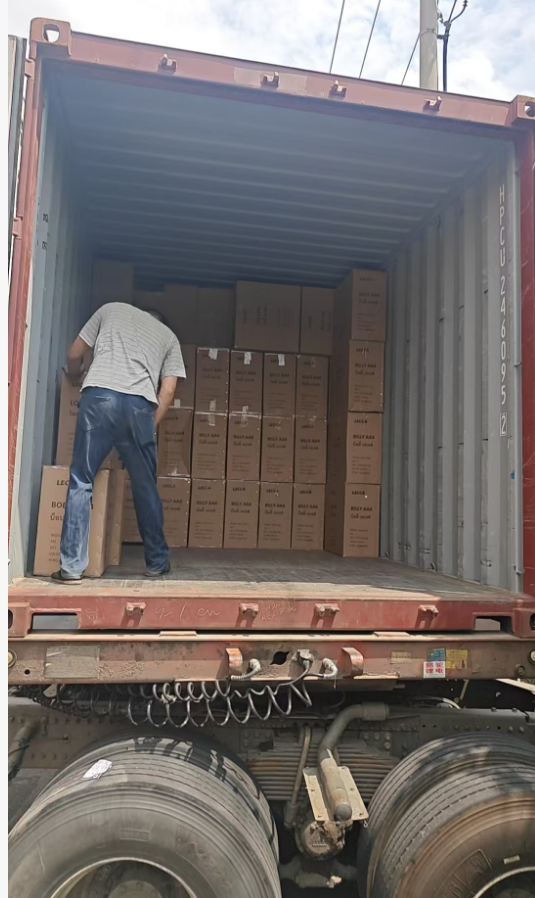
Market context for a 2026 fit-out
Seating decisions of this kind are being made in a market that commercial research houses still describe as expanding. Mordor Intelligence estimates the global gaming chair market at USD 1.65 billion in 2025 and USD 1.78 billion in 2026. Growth of that kind does not tell a venue operator which chair to buy, but it does explain why specification language is becoming more standardised across quotations.
Material mix is part of that standardisation: the same source reports that PU leather accounted for 57.3% of gaming chair materials in 2024. For a venue, the relevant consequence is that cover material determines the cleaning routine and the replacement cycle, and it should be confirmed per model rather than assumed from a category norm.
Standards language is standardising too. ANSI/BIFMA X5.1 and EN 1335 are the reference safety and durability standards for gaming chairs in North America and Europe, as described by Corsair in its technical overview of the two frameworks. Buyers writing a compliance line into a fit-out specification should name the standard, the report and the model scope, rather than accepting the word "certified" on its own.
Outlook
The direction of travel for continuous-use venues is toward documentation rather than decoration. As gaming chairs move deeper into commercial interiors, the questions that decide an order are shifting from colourways and styling to stated capacity, component class, base geometry, report scope and spare-part planning.
For a 24/7 internet cafe fit-out, that makes a shortlist like this one a starting document rather than a final decision. MC196-3-1 carries the adjustment story, MC1039 carries the load and recline story, and MC1040 carries the shared-seating story. Which of them ends up on the floor plan depends on where the load sits in the room — and on the answers a buyer gets when the missing figures are requested.
Further product and specification detail is available in the manufacturer's 2026 catalogue (PDF).
FAQ
What does 24/7 duty actually change in a gaming chair specification?
Continuous duty increases the number of adjustment cycles and the amount of contact a chair receives, so the specification points that matter most are the mechanism, the gas lift, the base and the stated load. In a shared venue the seat is also adjusted by many different users, which makes predictable controls — such as the three-position tilt lock and 2D armrests specified on MC196-3-1 — operationally useful. Durability itself still has to be verified through documentation and samples, because a specification list describes components rather than a service life.
How is a three-position tilt lock different from a 180-degree recline?
A tilt lock fixes the backrest at defined positions so it holds an angle, while a recline figure describes how far the back can travel. MC196-3-1 is specified with a three-position tilt lock, and MC1039 is specified with a 180-degree recline and a foldable footrest. The first suits everyday seated adjustment in a gaming row; the second suits stations where a near-flat position is used for rest, which also requires enough clearance behind the chair to recline safely.
Why do a Class 3 gas lift and a 370 mm starbase appear on a heavy-duty chair?
The gas lift carries and adjusts vertical load, and gas springs are commonly grouped by class, with Class 3 named in the MC1039 specification. The base is described by diameter, 370 mm on the same model, and a wider base spreads load over a larger footprint on a floor where chairs are constantly moved. Neither detail substitutes for a test report: buyers should ask for the report or certificate that names the specific model, and read its scope before treating the component list as compliance evidence.
When does a gaming sofa make more sense than individual chairs?
A gaming sofa serves shared seating, so it fits lounge, console and group zones rather than ranked gaming rows where each customer expects individual adjustment. MC1040 is positioned by the manufacturer as a gaming sofa for internet cafe seating. Before specifying it, a buyer should confirm the sofa's dimensions, seat configuration and upholstery, and agree a cleaning routine with the venue, since a larger continuous upholstered surface is contacted by more people per session.
Which quality checks does the factory apply before an order ships?
According to the manufacturer, incoming material inspection covers the gas lift, mechanism, leather colour and plywood thickness. Before production of the plywood, one chair is assembled with plywood only to check the total depth of the chair and whether it sits level, with further inspection before nailing. The factory also reports a one-year quality warranty on gaming chairs, a 50-unit minimum order quantity and a 30–40 day lead time at a stated monthly capacity of 6,000 units.
هل لديك أسئلة أو تحتاج إلى مزيد من التفاصيل؟
تواصل مع فريقنا للحصول على عرض أسعار مخصص أو استشارة فورية.
طلب عرض أسعار
املأ النموذج أدناه وسيتواصل معك فريقنا بعرض مقترح مخصص.
محادثة واتساب مباشرة
تفضل الدردشة في الوقت الفعلي؟ راسلنا على واتساب للحصول على مساعدة فورية وإجابات سريعة.
- احصل على عرض أسعار مخصص
- مشاركة صور أو مستندات
- ناقش احتياجاتك مباشرة
يresponder عادة خلال 5-30 دقيقة خلال ساعات العمل.