
Shortlist for Compact Power: FAW and CR468C Minidozer Configurations
A compact power shortlist is a specification exercise only after it has been a routing exercise. Buyers who move freight and buyers who work inside a tunnel, a box culvert or a drainage channel are often running the same procurement round, yet the machines that answer those two jobs share almost no selection criteria. This shortlist sets out the configurations documented in the available inventory from Qingdao Chary Machinery Co., Ltd. — a FAW truck range spanning several nameplates, plus one remote-controlled minidozer — and explains the selection rationale behind each entry using the weight, dimension and operating figures recorded for those units.
The scope is deliberately narrow. Every entry below is drawn from documented inventory: FAW J6L, JH6, Tiger v, NEW J5P and JK6, together with the CR468C Remote Control Lithium Battery Rubber Track Minidozer. Configurations that are not supported by documented product data are not included, and no recommendation is made for equipment outside this set.
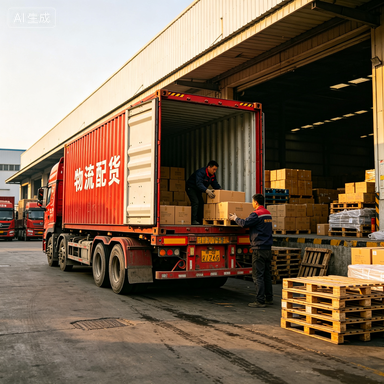
Logistics cargo loading: the volume-and-distance job that truck configurations in this shortlist are matched to.
Why compact power shortlists go wrong
Most compact machinery shortlists start from one assumption — that a single machine class will absorb the buyer's whole workload. In practice two different constraints drive the decision. The first is volume and distance: freight moving between a depot, a port or a distribution centre and its destination. The second is access: work that has to happen where a conventional machine physically does not fit, such as under a conveyor belt, inside a culvert, or along a narrow road section with obstacles.
The market context supports both directions rather than one. China concentrated 27.3% of total global exports of machines in 2024, according to the Observatory of Economic Complexity, maintaining its position as the world's largest exporter in the sector. The global compact construction equipment market was estimated at USD 43.5 billion in 2024 and is projected to reach USD 69.1 billion by 2034, according to Global Market Insights. Compact equipment is therefore not a marginal purchase; it sits inside a supply chain that is expanding in both volume and variety.
Where shortlists fail is at the handover point. A buyer selects a road vehicle that cannot be loaded inside a congested yard, or selects a compact unit that cannot keep pace with a daily freight schedule. The shortlist below is organised so that each entry is defined by the constraint it resolves, not by the size of the machine.
The supplier behind this shortlist
Qingdao Chary Machinery Co., Ltd. (CHARY) is an equipment export company established in 2015 and located in Qingdao, China, authorised and approved by the Ministry of Commerce for vehicle export. Its documented main products include mini machinery, minidozer, mini loader, mini electric loader and skid steer loader, alongside the FAW truck range covered here.
The company's documented operating figures are a 2000 m² manufacturing facility, approximately 100+ employees, a Research and Development team of 15 engineers, an annual production capacity of 500 units and an export ratio of 80%, with main markets in Africa and South America. The company reports that its annual export volume reached USD 40 million in 2025 and that it serves more than 50 countries and regions.
Those figures matter for shortlisting in one specific way: they describe a focused operation rather than a mass-volume platform builder. Buyers evaluating very large single orders should therefore treat production scheduling — not product availability — as the variable to align.
The shortlist: six configurations, six selection triggers
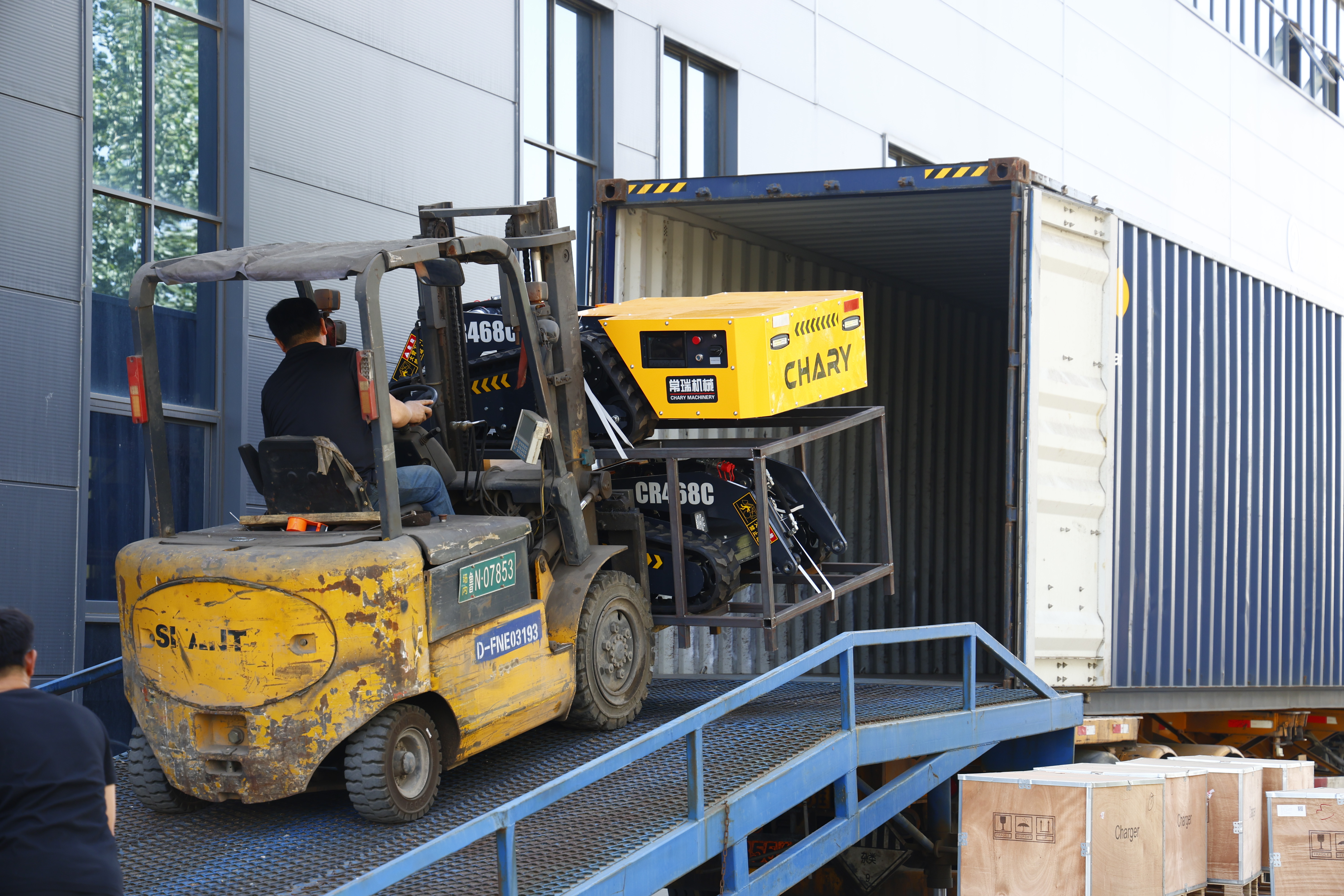
The CR468C minidozer: a 2850 × 1200 × 600 mm remote-controlled unit built for space-constrained work rather than distance haulage.
1. CR468C Remote Control Lithium Battery Rubber Track Minidozer — the confined-space entry
The CR468C is a remote-controlled, lithium-battery, rubber-track minidozer. It is specified for very confined spaces and for clean-up operations that a conventional crawler machine cannot enter, including work under conveyor belts in above-ground and underground mining, ore crushing and concentration plants, city and highway underground tunnels, box culverts, drainage systems, pumping stations and other irrigation projects.
Its documented dimensions are 2850 × 1200 × 600 mm overall, or 2250 mm without the bucket, with a self weight of 1100 kg, a bucket width of 1200 mm, a bucket capacity of 0.15 m³, a rated load capacity of 450 kg, a minimum ground clearance of 150 mm, an unloading height of 530 mm and a 1000 mm wheelbase. Control is remote, with a 200 m control distance. The machine spins 360° in place, climbs up to 40°, travels at a maximum of 4 km/h and runs on rubber tracks.
Power comes from a lithium battery of 300 Ah at 73.6 V, driving a 7.5 kW motor at 3000 rpm, rated at 22 kW/h. Charging takes about 2 hours at 380/220 V and working time is about 8 hours. Hydraulic flow is 58 L/min with a 20 L hydraulic tank, and the documented working temperature range is -10 °C to 60 °C.
Selection trigger: the access envelope is tighter than anything a wheeled loader can serve, and the site benefits from an electrically driven unit with no operator in the working zone. The 4 km/h maximum speed also defines the boundary — this is a machine for repositioning inside a work area, not for moving material across a large site.
2. FAW J6L — the distribution-orientated truck configuration
The FAW J6L is documented as a tractor truck category configuration, and the corpus records that it is equipped with ABS, EBS and TCS security systems. Within the wider FAW truck range documented in the same inventory, model designations include J7, J6P, J6V, J6E, JH6, J6G, J6L, JK6 and Tiger v, spanning body types from tractor truck and dump truck through cargo truck, concrete mixer truck, garbage truck, sprinkler truck, water tank truck, fuel tank truck, wrecker truck, sweeper truck, concrete pump truck, asphalt distributor truck, high altitude platform truck and fire truck.
The J6L configurations documented in this inventory include a 6×4 cargo truck, a 6×4 flatbed truck and a 4×2 sweeper unit. For buyers whose binding constraint is route access and dock compatibility rather than maximum payload, that spread of bodies is the selection rationale: the same nameplate can be matched to dry freight, flatbed or municipal duty without changing the truck platform.
3. FAW JH6 — the volume and bulk configuration
The FAW JH6 is documented as a tractor truck configuration, and the inventory also records dump truck variants. The image set for this nameplate covers a JH6 6×4 dump truck, a JH6 8×4 dump truck, a JH6 6×2 cargo truck, a JH6 6×2 stake truck, a JH6 4×2 CNG tractor truck, a JH6 6×4 CNG tractor truck, plus high-roof 6×4 and flat-roof cab tractor configurations.
Selection trigger: a route with a high annual distance and bulk or heavy loads. The presence of CNG tractor variants within the same nameplate matters where fuel cost and emissions policy shape fleet cost, because it allows an alternative-fuel option to be evaluated inside the same platform family rather than as a separate procurement exercise.
4. FAW Tiger v — the body-flexibility entry
The FAW Tiger v is documented as a FAW truck with model designation Tiger v, classified as a dump truck, and the documented image set extends well beyond that single body type: a Tiger VN 4×2 refrigerated truck, a Tiger VH 4×2 cargo truck, a Tiger VR 4×2 cargo truck, a Tiger VR 5 m³ stainless steel sprinkler truck, a Tiger VN 4×2 cargo truck and a fresh milk transport vehicle.
Selection trigger: cold chain, food and agricultural logistics, or a mixed fleet in which one nameplate has to cover refrigerated, dry cargo and municipal bodies. The refrigerated and fresh-milk configurations are the documented signal that this nameplate is used for temperature-controlled duty, not only for tipping work.
5. FAW NEW J5P — the regional workhorse entry
The FAW NEW J5P is documented with a 4×2 tractor truck configuration and a 6×4 dump truck configuration in the image set, and the press-release corpus records it among the FAW models available alongside JH6, JK6, J6L and Tiger v.
Selection trigger: a regional tractor requirement or a construction-materials dump duty where the selection decision is body-to-task matching rather than maximum specification. Buyers shortlisting for regional routes should confirm the specific configuration and body plan with the supplier, since the documented weight and dimension figures are family-level ranges rather than a single fixed build.
6. FAW JK6 — the multi-duty platform entry
The FAW JK6 is documented across several body and drivetrain forms in the same inventory: a JK6 6×4 dump truck, a JK6 4×2 cargo truck, a JK6 4×2 wingspan truck and a JK6 4×2 electric tractor truck.
Selection trigger: fleets that want several urban duties standardised onto one nameplate family. The documented presence of an electric tractor unit inside the same family as conventional cargo and dump configurations is the practical reason JK6 appears on this shortlist — it lets a fleet test electrification on a defined duty cycle without leaving the platform it already operates.
Configurations side by side
| Configuration | Documented class | Documented weight / load figures | Documented dimension figures | Primary selection trigger |
|---|---|---|---|---|
| CR468C Minidozer | Remote Control Lithium Battery Rubber Track Minidozer | 1100 kg self weight; 450 kg rated load; 0.15 m³ bucket | 2850 × 1200 × 600 mm; 2250 mm without bucket | Confined-space clean-up; remote operation; electrically driven site |
| FAW J6L | Tractor truck category; ABS / EBS / TCS | Family range 3000–15000 kg | Family range 6000×2300×3000 mm to 12000×2550×3800 mm | Urban distribution, express and dock-compatible routes |
| FAW JH6 | Tractor truck and dump truck variants; CNG variants documented | Family range 3000–15000 kg | Family range 6000×2300×3000 mm to 12000×2550×3800 mm | Long-distance volume haulage; bulk and mineral loads |
| FAW Tiger v | Dump truck designation; refrigerated, cargo and sprinkler bodies documented | Family range 3000–15000 kg | Family range 6000×2300×3000 mm to 12000×2550×3800 mm | Cold chain, food logistics and mixed municipal bodies |
| FAW NEW J5P | 4×2 tractor truck and 6×4 dump truck documented | Family range 3000–15000 kg | Family range 6000×2300×3000 mm to 12000×2550×3800 mm | Regional tractor duty; construction materials |
| FAW JK6 | Dump, cargo, wingspan and electric tractor configurations documented | Family range 3000–15000 kg | Family range 6000×2300×3000 mm to 12000×2550×3800 mm | Multi-duty urban fleets; electrification pilot on a defined duty cycle |
Weight and dimension values shown for FAW trucks are the documented family-level ranges for the truck range, not figures for a single build. Actual values depend on the specific model, drivetrain and installed body.
How to read the specification ranges
Two specification layers sit underneath this shortlist, and confusing them is the most common sourcing error.
The first layer is the truck family envelope. Across the FAW range documented here, the stated truck weight range is 3000–15000 kg and the size range runs from 6000×2300×3000 mm to 12000×2550×3800 mm. Security configuration is ABS, EBS and TCS, and tire specifications are available based on customer needs. Documented operating modes include rear-wheel drive 6×4 and 6×2, and all-wheel drive 6×6 and 8×8 — a distinction that matters on the muddy, high-temperature or snow-affected conditions listed in the documented working environments, and on project types that include factories, farms, construction sites, mines, cities, highways and transfer stations.
The second layer is the compact unit's own envelope. The CR468C is specified at 380/220 V charging, about 2 hours of charging for about 8 hours of working time, 200 m of remote control distance and a working temperature range of -10 °C to 60 °C. Read together, those four figures describe a machine that can be scheduled across a working shift, provided the site can supply the charging voltage and the operator can remain inside the control envelope.
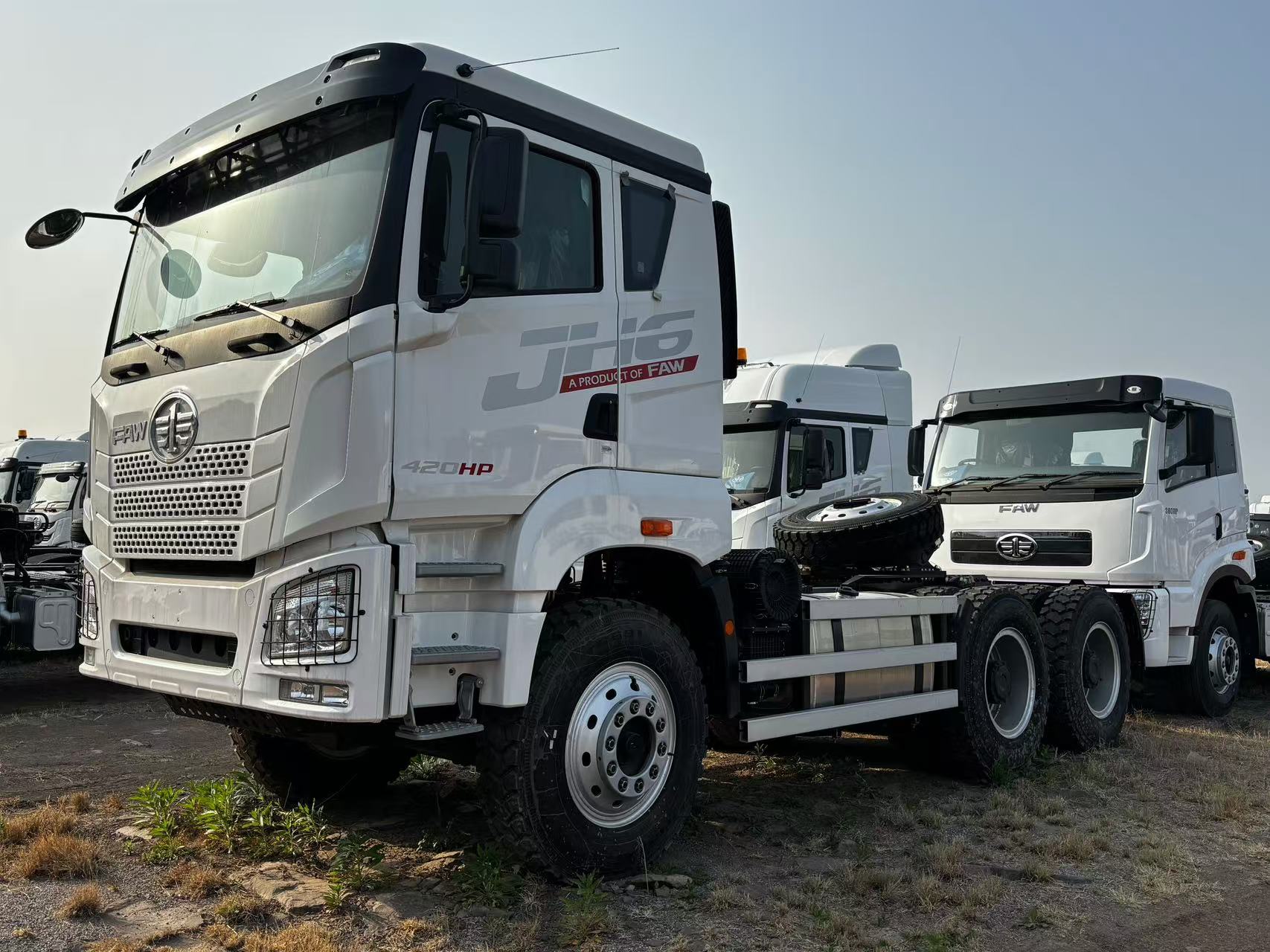
FAW JH6 6×4 tractor truck: a documented configuration within the 3000–15000 kg truck family range.
Application mapping: where each configuration earns its place
Both product families in this shortlist carry documented applicable industries, and the overlap is smaller than it appears at first reading.
- Cold chain and food logistics. The FAW truck range documents cold chain transportation among its applicable industries, and the Tiger v image set includes a 4×2 refrigerated truck and a fresh milk transport vehicle. For a cold chain shortlist, the relevant question is body specification and temperature-controlled upfit, not machine size.
- Express, courier and urban distribution. Express delivery and urban distribution are listed among the documented applicable industries for the FAW range. Urban duty also explains why an electric tractor configuration sits inside the JK6 family — short, predictable urban cycles are the duty type most compatible with battery operation.
- Construction materials, coal and mineral transport, port logistics. These are documented applicable industries for the truck range, and the JH6 dump and NEW J5P dump configurations are the entries most directly associated with them in the inventory.
- Confined-space earthmoving and clean-up. This is the CR468C's specific terrain: clean-up under conveyor belts in above-ground and underground mining, ore crushing and concentration plants, city and highway underground tunnels, box culverts, drainage systems and pumping stations. The documented working conditions for this class of work include narrow road sections, high and low temperature environments and obstacle sections.
- Irrigation and drainage infrastructure. Pumping stations and other irrigation projects are named among the CR468C's documented project types, which is where the 40° climbing ability and rubber-track traction become relevant selection criteria rather than specification trivia.
Market trend analysis
The segment this shortlist sits in is expanding, and the trend lines point in slightly different directions depending on which compact class is measured.
Global Market Insights estimated the global compact construction equipment market at USD 43.5 billion in 2024 and projects it to reach USD 69.1 billion by 2034. Future Market Insights projects the mini track machinery market to grow at a CAGR of 4.5%, reaching USD 11.31 billion by 2035, with mini track loaders holding a 54% share. Spherical Insights projects the small bulldozer market to grow from USD 2.11 billion in 2024 to USD 3.78 billion by 2035 at a CAGR of 5.44%. Grand View Research valued the global skid steer loader market at approximately USD 9.4 billion in 2023, with North America accounting for 84.7% of revenue.
Two structural observations follow. First, supply concentration: China held 27.3% of global machine exports in 2024 according to the Observatory of Economic Complexity, which is why Chinese compact machinery appears in shortlists well outside its domestic market. Second, competitive concentration at the top of the compact segment — Global Market Insights records Caterpillar Inc. leading the compact construction equipment market with a share of over 15% in 2024 — while the same data environment shows the long tail of suppliers is broad. Published analyses of Chinese mini machinery manufacturers, including Rippa, name SANY, XCMG, LiuGong and Yuchai among the recognised producers in this space.
One caveat is worth stating plainly. Market sizing for compact classes is not settled: skid steer loader estimates vary between sources, with Grand View Research at USD 9.4 billion for 2023 and DataM Intelligence forecasting USD 11.24 billion by 2025. Buyers should treat any single compact equipment market figure as directional rather than definitive.
Comparison with conventional solutions — and the limits of this shortlist
Judged against conventional equipment, each entry here has a defined boundary. Stating those boundaries is more useful than claiming an advantage across the board.
- Throughput versus access. A conventional wheel loader or skid steer loader will out-produce the CR468C where space permits. The minidozer's 0.15 m³ bucket capacity and 450 kg rated load place it in clean-up and light material-handling duty, not production haulage. Its advantage applies only where access — not capacity — is the binding constraint.
- Distance is out of scope. A maximum driving speed of 4 km/h means the CR468C is not a distance machine. It repositions within a work area; it does not replace a truck or a haul unit.
- Charging has to be planned. About 2 hours of charging for about 8 hours of working time at 380/220 V implies the site must provide that voltage and must schedule charge windows. On sites without that supply, the electric advantage does not exist.
- Operator proximity. The documented control distance is 200 m. Remote operation still requires an operator inside that envelope; it is not autonomy.
- Temperature window. The documented working temperature range for the CR468C is -10 °C to 60 °C, which excludes extreme cold operations.
- Truck figures are ranges, not builds. The 3000–15000 kg weight range and the 6000×2300×3000 mm to 12000×2550×3800 mm size range describe the family. Tire specifications are available based on customer needs. A shortlist entry therefore identifies a configuration family, not a fixed specification — final confirmation is required per order.
- Supplier scale. A documented annual production capacity of 500 units and a 2000 m² facility describe a focused manufacturing operation. Buyers with very large single-order volumes should align delivery scheduling with the supplier rather than assume stock availability.
- Scope of this shortlist. This is a configuration shortlist derived from one supplier's documented inventory. Third-party market shares cited above, such as Caterpillar's over 15% share in 2024, are market context and not a product-for-product performance comparison.
Future outlook
Three signals in the current data set are likely to shape compact power shortlists over the next procurement cycles.
The first is electrification moving from passenger vehicles into confined industrial work. The CR468C's lithium battery at 300 Ah and 73.6 V, combined with a documented charging cycle of about 2 hours for about 8 hours of work, and the JK6 4×2 electric tractor truck configuration in the same inventory, show that electric drivetrains are being positioned in defined duty cycles rather than as general replacements.
The second is the shift of the operator away from the working zone. A 200 m remote control distance on a machine designed for clean-up under conveyor belts and inside tunnels addresses an exposure problem that conventional cabs cannot solve, and it is likely to remain a differentiator in confined-space work rather than a general feature across compact classes.
The third is platform consolidation. The JK6 pattern — one nameplate family covering dump, cargo, wingspan and electric tractor configurations — reduces the number of platforms a fleet has to support. Combined with growth projections for compact and mini track machinery, that pattern suggests buyers will increasingly shortlist families rather than single machines. Two things to watch: whether charging infrastructure keeps pace with electric compact adoption on industrial sites, and whether published compact market sizing converges enough to be used for firm capacity planning.
FAQ
What is the CR468C minidozer?
The CR468C is a Remote Control Lithium Battery Rubber Track Minidozer. It measures 2850 × 1200 × 600 mm overall, or 2250 mm without the bucket, weighs 1100 kg, carries a rated load capacity of 450 kg and a bucket capacity of 0.15 m³, and is operated by remote control at a control distance of 200 m. It uses a lithium battery of 300 Ah at 73.6 V, charges in about 2 hours at 380/220 V and works for about 8 hours.
What weight and dimension range do FAW trucks cover?
Across the documented FAW truck range, the truck weight range is 3000–15000 kg and the size range is 6000×2300×3000 mm to 12000×2550×3800 mm. Security configuration is ABS, EBS and TCS, tires are specified according to customer needs, and documented driving modes include rear-wheel drive 6×4 and 6×2 and all-wheel drive 6×6 and 8×8.
Which configurations suit cold chain or express delivery work?
Cold chain transportation and express delivery are both documented applicable industries for the FAW truck range. Within the inventory, the Tiger v nameplate includes a 4×2 refrigerated truck and a fresh milk transport vehicle in its documented image set, while urban distribution duty is also served by configurations such as the JK6 4×2 cargo truck and 4×2 wingspan truck.
What are the operational limits of the CR468C?
The documented limits are a 0.15 m³ bucket capacity and 450 kg rated load, which place it in clean-up and light material handling rather than production haulage; a maximum driving speed of 4 km/h; a working time of about 8 hours against about 2 hours of charging at 380/220 V; a 200 m remote control distance, which requires an operator within that range; and a working temperature range of -10 °C to 60 °C.
Should a minidozer and a truck be compared on the same criteria?
No. The two classes in this shortlist resolve different constraints. Trucks in the FAW range address volume and distance within a documented 3000–15000 kg weight range and are used across logistics, distribution, construction materials, coal and mineral, port and cold chain transport. The CR468C addresses access where a conventional machine does not fit, including under conveyor belts, in box culverts, drainage systems and pumping stations. A joint shortlist should therefore be split by constraint — access versus volume — before specifications are compared.
How can a buyer verify supplier capacity before shortlisting?
Documented figures for Qingdao Chary Machinery Co., Ltd. include a manufacturing facility of 2000 m², approximately 100+ employees, a Research and Development team of 15 engineers, an annual production capacity of 500 units and an export ratio of 80%, with main markets in Africa and South America. The company was established in 2015, is located in Qingdao, China, and reports annual export volume of USD 40 million in 2025 across more than 50 countries and regions.
Reference material: the company product brochure is available for download at https://cdn.socialarks.com/sbsp/24746/0/2026/0429/69f1a63e5fa7f.pdf. Configuration details referenced in this shortlist are drawn from the documented inventory of Qingdao Chary Machinery Co., Ltd. (www.charymachinery.com).