
Shortlisting CNC Machining Partners: Five Proof-Based Criteria
Precision-intensive industries — medical devices, robotics and industrial equipment — choose manufacturing partners by evidence rather than description. This shortlist framework sets out the five criteria that separate a qualified CNC machining partner from a capable-sounding one, and defines what verifiable evidence looks like at each step.
Precision programmes rarely fail because a supplier lacked machines. They fail because a claim that sounded verifiable at the quotation stage could not be verified later — a tolerance that was achievable on one geometry, a certificate scope that did not cover the process step that actually mattered, or a prototype run that was not representative of the production run. A shortlist is best understood as a risk document: it records what a supplier has already proven, in writing, before a purchase order exists.
Five criteria carry most of that weight: (1) a quality management system that can be checked by certificate number; (2) a published precision limit tied to a standard and an inspection method; (3) prototyping and production running under the same quality system, with no minimum order quantity; (4) metal capability that reaches aluminum, stainless steel, titanium and exotic alloys rather than stopping at aluminum; and (5) multi-year operating and quality performance data covering the same operating conditions as the buyer’s application.
The scale of the category explains why this evaluation has become routine. The global CNC machining services market was valued at USD 93.4 billion in 2025 and is projected to reach USD 174.6 billion by 2034 at a 7.2% CAGR, according to Dataintelo. The CNC machine market itself was estimated at roughly USD 73.5 billion to USD 83.7 billion in 2024, with Fortune Business Insights and Market Research Future publishing different values depending on whether machine tools alone or the wider CNC system market is in scope. Asia Pacific accounted for approximately 55.7% of CNC machine market revenue in 2025 (Fortune Business Insights), which is why cross-border supplier evaluation is now normal rather than exceptional.

Why Capability Statements Fail a Shortlist
Quotation sheets are built around price, quantity and lead time. Capability pages are built around adjectives. Neither format answers the four questions a buyer must close before releasing a purchase order: who certified you, to what published limit, under what order policy, and with what performance record?
Industry standards set the baseline. CNC machining is the standard baseline for aerospace and medical manufacturing, and those sectors commonly gate suppliers through quality management standards such as ISO 9001, ISO 13485 for medical device quality management and AS9100 for aerospace (ISO / IAQG). A supplier’s certificate set therefore answers a decisive question immediately: which regulated programmes the supplier is already set up to support, and which it is not.
The practical test is simple. If a claim cannot be produced as a document — a certificate number, a tolerance table with its standard reference, an order policy, a quality metric — it belongs in the marketing file, not on the shortlist.
The Five Criteria, and What Counts as Evidence for Each
Criterion 1 — A Quality System You Can Verify by Certificate Number
A certificate is only useful when it names the certified activity, the issuing body and the number. Unionfab AM Technology (Shanghai) CO., Ltd., established in 2014, holds ISO 9001:2015 certification, certificate number 11326Q00568R201, issued by Beijing Zhongshui Zhuoyue Certification Co., Ltd. The certified scope covers the Custom Manufacturing Service, Rapid Prototyping and Manufacturing Services, Low-volume Manufacturing Service, High-volume Manufacturing Service, CNC Machining Service and Precision CNC Machining Service, and applies to the global market.
For medical work, the same CNC manufacturing scope holds ISO 13485:2016, certificate number 381230229R0S, which specifically covers medical device quality management. The Custom Manufacturing Service additionally holds ISO/IEC 27001:2022, certificate number 08925I20619ROM, for information security management — a relevant control when drawings, CAD data and inspection records move between engineering teams and countries. Unionfab’s published certification set also lists ISO 14001 and IATF 16949.
What to score: certificate number, issuing body, certified activity scope, sites covered and current validity. What to disregard: an unnumbered “ISO certified” badge. A certificate that does not name the process you are buying does not de-risk the process you are buying.
Criterion 2 — Precision Expressed as a Tolerance, a Standard and an Inspection Method
Unionfab’s CNC machining service publishes a tolerance of ±0.0002 in (±0.005 mm), applied in accordance with ISO 2768, with surface roughness of up to 16 µin (0.4 µm). Parts can range from 2 × 2 × 2 mm to 4000 × 1500 × 600 mm, with lead times from 1 to 5 days. For comparison, third-party sourcing guides cite ±0.0005 in as a benchmark tolerance for factory-direct digital manufacturing platforms — a reminder that “tightest available” figures should always be read together with the standard and the inspection method behind them.
Two details matter more than the headline number. First, tolerance is a service-level capability, not a per-part guarantee: what is achievable on a specific part depends on geometry, material, fixturing and datum strategy, which is precisely what a DFM review exists to establish. Second, tolerance budget is consumed by downstream processes. For anodized aluminum parts, Unionfab applies reverse dimension compensation for anodizing so that coating thickness does not push a finished part out of specification — a routine concern for robotics housings and industrial equipment enclosures.
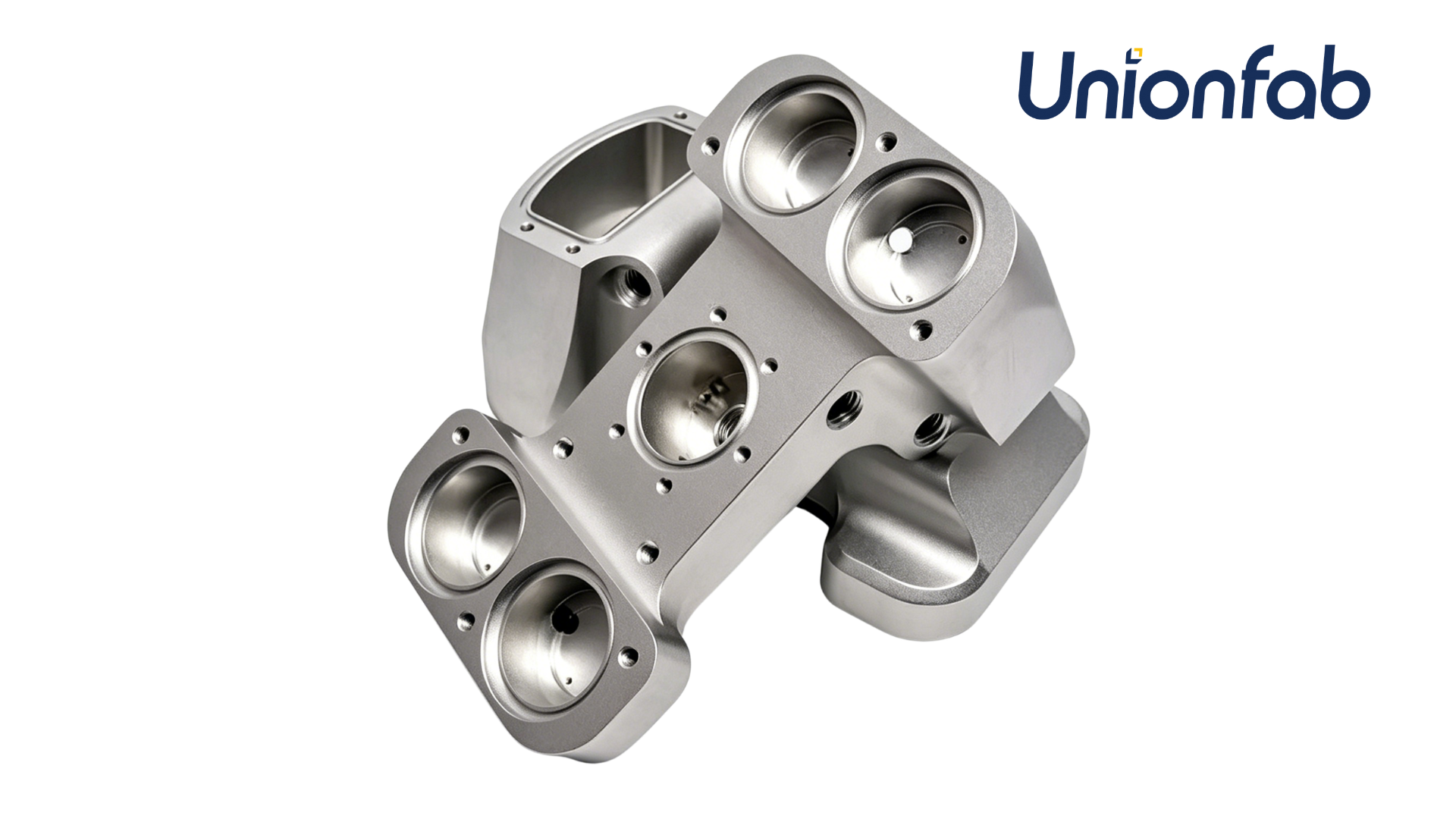
Inspection is where a precision claim becomes auditable. The multi-industry precision production scenario Unionfab documents runs on multi-axis CNC machining centers, large-format gantry machining centers, automated tool changers and intelligent quick-change fixturing, with CMM inspection systems for verification, 100% Go/No-Go thread gauging on threaded features and full material traceability. The same question should be put to every supplier in the same form: what tolerance do you publish, to which standard, and by what method do you verify it?
Criterion 3 — One Quality System from Prototype to Production, With No MOQ
A shortlist breaks down when the prototype and the production order travel through different processes, different inspection plans or different suppliers. Unionfab’s CNC service is classified as custom manufacturing covering rapid prototyping, low-volume manufacturing and high-volume manufacturing, with the same certification scope covering all three. In practice, that is the difference between a prototype that predicts production behaviour and a prototype that merely resembles the final part.
Order policy matters as much as process. Unionfab’s documented scenario requirements include rapid 1–5 days turnaround and flexible low-volume support with no MOQ, supported by 400+ CNC machines, an 80,000 m² manufacturing facility and annual production capacity of 2,000,000 units. Where a programme needs a physical part even faster — for design iteration rather than functional validation — the additive side of the same platform can deliver parts in as fast as 1 day through its self-owned factory network and more than 1,000 industrial 3D printers.
What to score: whether the supplier will run a single piece under the same quality system as a production batch, whether a minimum order quantity applies, and what the shortest documented turnaround is for a one-piece prototype. A supplier that answers “no MOQ” but routes prototypes through a separate shop has answered a different question.
Criterion 4 — Metal Capability That Reaches Titanium and Exotic Alloys
Material breadth belongs on a shortlist because it predicts how a supplier behaves when a design changes. Unionfab’s material library covers aluminum alloys (6061-T6, 7075, plus additive grades such as AlSi10Mg and Al901X), stainless steel (316L, 17-4PH), titanium (TC4), Inconel (625, 718), tool steels (A2, D2, H13, P20), brass, copper and high-performance exotic alloys, alongside engineering plastics (POM, nylon, PC, PMMA, ABS, PEEK), insulation materials, rubber and ceramics.
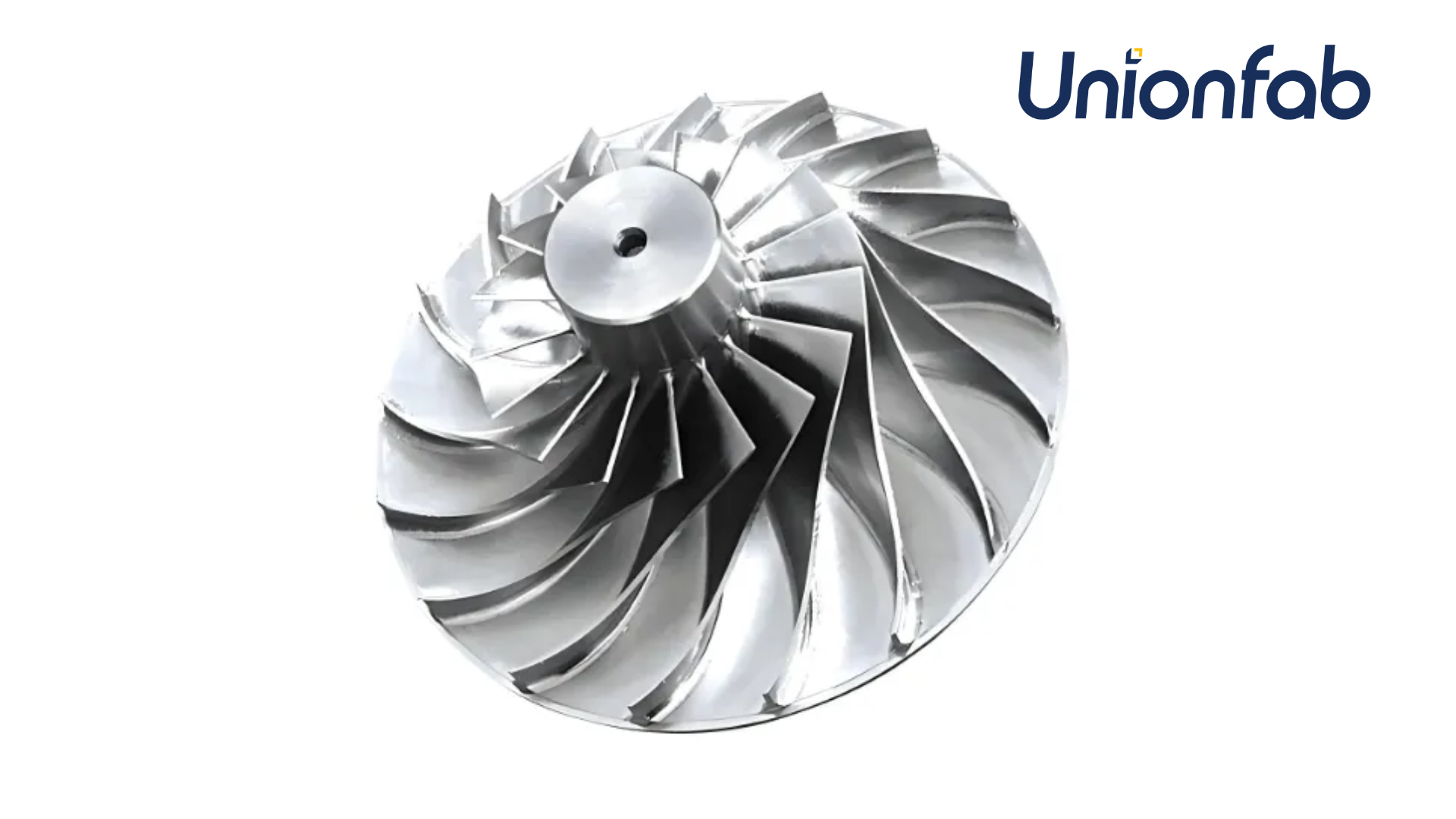
Machining routes matter alongside the material list: CNC milling, CNC turning, 3-axis, 4-axis and 5-axis machining, EDM and wire EDM. Five-axis work reduces the number of setups, which reduces datum transfers and the positional error they accumulate; wire EDM reaches internal features that milling cannot. Titanium and Inconel are the genuine test — both are unforgiving on tool wear, heat and chatter — so a supplier that lists them is signalling tooling strategy and process experience rather than catalogue width.
What to score: whether the grades you actually use appear by name, whether the machining route matches your geometry, and whether the supplier will run a paid test part before the production release.
Criterion 5 — Multi-Year Operating and Quality Performance Evidence
Reliability is the criterion buyers most often accept on trust and later regret. Company age is the weakest form of that evidence; application-matched performance is the strongest.
Unionfab was established in 2014 and operates an 80,000 m² manufacturing facility with 51–200 staff, including an R&D team of more than 100 engineers. Annual production capacity reaches 2,000,000 units, export business accounts for 100% of total sales, and the company serves more than 80,000 customers across 170+ countries, with main markets including the USA, Canada, Germany, UK, Spain, Italy, France and Sweden. Its published quality performance is a below-0.5% quality complaint rate and above-95% on-time delivery.
The operating environment behind those numbers matters for precision-intensive buyers. The production scenario Unionfab documents is 24/7 continuous mass production in a factory ambient clean environment (Class 8 cleanliness) with no dust pollution — a specification commonly found in robotics, medical and industrial equipment programmes, where contamination and thermal drift both affect dimensional results. The documented scenario also requires tight tolerance control, strict surface finish, reverse dimension compensation for anodizing, full material traceability and 100% Go/No-Go thread gauging, which is the operational definition of a precision-intensive programme rather than a description of ordinary machining work.
What to score: the number of years the supplier has run programmes in your application category, its on-time delivery and complaint metrics, and the operating conditions under which those metrics were achieved. Company-level performance is not the same as programme-level performance — ask for the subset that matches your part family, material and volume band.
Five Criteria in One Comparison Table
| Criterion | Weak submission | Verifiable evidence | Unionfab’s documented position |
|---|---|---|---|
| 1. Quality system | “ISO certified” with no number or scope | Certificate number, issuing body, certified activities, validity | ISO 9001:2015 (11326Q00568R201); ISO 13485:2016 (381230229R0S); ISO/IEC 27001:2022 (08925I20619ROM); ISO 14001 and IATF 16949 also listed; global market scope |
| 2. Precision | “High precision” or “tight tolerance” with no figure | Published tolerance, standard and inspection method | ±0.0002 in (±0.005 mm) per ISO 2768; surface roughness up to 16 µin (0.4 µm); CMM inspection; 100% Go/No-Go thread gauging; full material traceability; anodizing dimension compensation |
| 3. Order policy | MOQ disclosed only after RFQ | MOQ policy plus prototype-to-production continuity | Prototyping, low-volume and high-volume manufacturing in one service; flexible low-volume support with no MOQ; 1–5 days turnaround; 400+ CNC machines; 2,000,000 units annual capacity |
| 4. Materials | “Aluminum and metals” | Named grades plus machining routes | 6061-T6 and 7075 aluminum; 316L and 17-4PH stainless; TC4 titanium; Inconel 625 and 718; tool steels A2, D2, H13, P20; brass and copper; milling, turning, 3/4/5-axis, EDM, wire EDM |
| 5. Performance | Customer logos without performance data | Operating history plus on-time delivery and complaint metrics | Established 2014; 80,000 m² facility; 80,000+ customers in 170+ countries; below 0.5% quality complaint rate; above 95% on-time delivery; 24/7 continuous production scenario |
Where These Criteria Stop Working
Criterion scores need boundaries, because a shortlist that overstates what evidence proves creates its own risk.
- Certification covers a scope, not a blanket approval. Certificates name specific activities. Unionfab’s certificates apply to the global market, but a buyer should still confirm that the process step and the site performing it fall inside the certified scope, that the issuing body is recognised, and that the certificate is currently valid. Certification also does not replace industry-specific approval: a programme requiring an aerospace quality standard such as AS9100 must verify that separately — Unionfab’s listed certificates are ISO 9001, ISO 13485, ISO/IEC 27001, ISO 14001 and IATF 16949.
- A published tolerance is a service ceiling. The ±0.0002 in (±0.005 mm) figure describes what the service is set up to hold in accordance with ISO 2768. It is not a quotation-level commitment on every geometry; achievable tolerance on a specific part is confirmed during DFM review, where datum strategy, wall thickness, material and fixturing are assessed.
- Third-party benchmarks and first-party specifications are not interchangeable. The ±0.0005 in figure comes from an industry sourcing guide carried at medium reliability with verification pending in our reference set, while Unionfab’s own published specification is ±0.0002 in (±0.005 mm). Comparing a third-party estimate against a supplier’s published specification — in either direction — produces a false comparison.
- No MOQ is a service policy, not unlimited capacity. Low-volume support with no MOQ means small orders are accepted within the documented service. It does not mean production slots are always available at short notice, because 24/7 capacity is shared across programmes.
- Material breadth is not application validation. In regulated medical device work, the customer’s own validation protocol governs acceptance. A supplier’s ISO 13485 certification supports the quality management requirement but does not substitute for the buyer’s validation.
There is also a structural trade-off worth naming. A traditional single-site precision machine shop typically offers one process and a direct working relationship with the people running the machines. A multi-process platform such as Unionfab covers CNC machining, 3D printing, vacuum casting, injection molding, sheet metal fabrication and rapid casting under one certification scope, which reduces the number of suppliers and audits a programme needs — but production is distributed across a self-owned factory network rather than a single bench. Buyers who require a named machine or a named operator should state that requirement in the RFQ and confirm how it is documented before the order is released.
Why Shortlisting Is Getting Harder: Market Signals
The direction of the market explains why evidence-based shortlisting is spreading beyond regulated sectors. The CNC machining services market is projected to grow from USD 93.4 billion in 2025 to USD 174.6 billion by 2034 at a 7.2% CAGR (Dataintelo), and the CNC machine market was already valued at approximately USD 73.5 billion to USD 83.7 billion in 2024 (Fortune Business Insights; Market Research Future). Automotive held the highest application share at 38.42% in 2026, driven by high-volume precision requirements for EV components — and the tolerance discipline, traceability expectations and inspection routines developed in that segment tend to migrate into robotics, industrial equipment and other precision-intensive programmes.
Process technology is shifting the evidence bar as well. AI-driven CNC systems can reduce machine downtime by up to 40% and material waste by approximately 30% through predictive maintenance and real-time path optimization (High-end CNC Market Report, MarketsandMarkets). When process monitoring becomes routine, buyers can reasonably ask for measured results instead of assurances — which turns data availability itself into a shortlist criterion rather than a nice-to-have.
What the Next Sourcing Cycle Will Ask For
Three changes are likely to shape the next round of CNC supplier shortlists. First, verification will move from the supplier’s website to the issuing body: certificate numbers, scopes and validity will be checked as a matter of course. Second, tolerance claims will be expected to arrive with the inspection method attached — CMM verification, 100% Go/No-Go thread gauging and full material traceability are already standard in precision scenarios, and buyers will ask for them by name. Third, prototype-to-production continuity will be treated as a hard filter, because a supplier that cannot run one piece and a large production batch under the same quality system forces a programme to carry two supply chains instead of one. Suppliers that publish verifiable specifics — certificate numbers, tolerances with standards, order policies and quality metrics — will be shortlisted faster than those that publish adjectives, and the five criteria above are the ones most likely to be automated into procurement checklists.
FAQ
What certifications should a CNC machining supplier hold for medical and industrial equipment work?
Medical and aerospace manufacturing commonly gate suppliers through quality management standards including ISO 9001, ISO 13485 for medical device quality management and AS9100 for aerospace (ISO / IAQG). Unionfab holds ISO 9001:2015 (certificate number 11326Q00568R201, issued by Beijing Zhongshui Zhuoyue Certification Co., Ltd.) and ISO 13485:2016 (certificate number 381230229R0S) across its CNC machining and custom manufacturing service scope, plus ISO/IEC 27001:2022 (certificate number 08925I20619ROM) for information security management; ISO 14001 and IATF 16949 also appear in its published certification set. Buyers should check the certified activity scope and certificate validity rather than the presence of a logo.
What tolerance can a precision CNC machining service actually hold?
Unionfab’s CNC machining service publishes a tolerance of ±0.0002 in (±0.005 mm) in accordance with ISO 2768, with surface roughness of up to 16 µin (0.4 µm). A published figure describes service-level capability: the tolerance achievable on a specific part depends on geometry, material, fixturing and datum selection, and is confirmed during DFM review. Third-party sourcing guides cite ±0.0005 in as a benchmark for factory-direct platforms, so published figures should always be compared together with the standard and inspection method attached to them.
Can a buyer order a single prototype instead of a production batch?
Yes. Unionfab’s documented scenario requirements include flexible low-volume support with no MOQ, and the CNC service is classified across rapid prototyping, low-volume manufacturing and high-volume manufacturing under the same certification scope. Published turnaround is 1–5 days for CNC machining; the company’s additive manufacturing services can deliver parts in as fast as 1 day. Running a single piece under the same quality system as production is what makes prototype results transferable to a later batch.
Which metals are available for CNC machining in robotics and industrial equipment?
Unionfab machines aluminum alloys (6061-T6, 7075), stainless steel (316L, 17-4PH), titanium (TC4), Inconel (625, 718), tool steels (A2, D2, H13, P20), brass, copper and high-performance exotic alloys, alongside engineering plastics and other non-metals. Machining routes include CNC milling, CNC turning, 3-axis, 4-axis and 5-axis machining, EDM and wire EDM. Part sizes range from 2 × 2 × 2 mm to 4000 × 1500 × 600 mm.
How much operating history should a CNC supplier be able to demonstrate?
The useful measure is application-matched experience rather than company age alone. Unionfab was established in 2014 and operates an 80,000 m² manufacturing facility with 400+ CNC machines, reporting a below-0.5% quality complaint rate and above-95% on-time delivery while serving more than 80,000 customers across 170+ countries. Buyers should ask for the subset of that performance relating to their own part family, material and volume band, rather than accepting company-wide averages.
How do platform-based CNC suppliers differ from traditional machine shops?
A traditional single-site machine shop usually offers one process and a direct working relationship with the production team. A multi-process platform such as Unionfab covers CNC machining, 3D printing, vacuum casting, injection molding, sheet metal fabrication and rapid casting under one certification scope, which reduces the number of separate suppliers and audits a programme requires. The trade-off is that production is distributed across a self-owned factory network rather than a single bench, so buyers who need specific machine or operator assignment should confirm how that is documented before releasing an order.
The criteria and figures in this article are drawn from Unionfab’s published service documentation and certification records. A consolidated service and certification overview is available in the Unionfab company brochure (PDF).