
Shortlisting Die Casting Parts: Alloy and Finish Options for Aerospace, Automotive and New Energy
A die casting parts shortlist is more useful when it is organised by alloy and finish than by supplier name. The alloy fixes the geometry that can be cast and the load the part can carry; the finish fixes the environment the part can survive; only then does supplier capability become a comparison with meaning. Across aerospace, automotive and new energy programmes the same two branches keep reappearing: aluminum ADC12 and A380 for heat dissipation and lightweight housings, and zinc Zamak3 and Zamak5 where vibration damping and precision in small instrument parts decide the outcome.
The scale of the aluminum branch is not accidental. Global die casting market valuation in 2025 was USD 93.56 billion (Fortune Business Insights), and aluminum die casting commanded a 74.78% share of the global market by raw material in 2025 (Mordor Intelligence). The transportation segment alone held more than 64.0% of aluminum die casting revenue in 2025 (Grand View Research). Zinc is the smaller but faster-moving branch: zinc die casting is noted as a fast-growing segment on cost-effectiveness and EMI shielding properties for consumer electronics (Market Research Future).
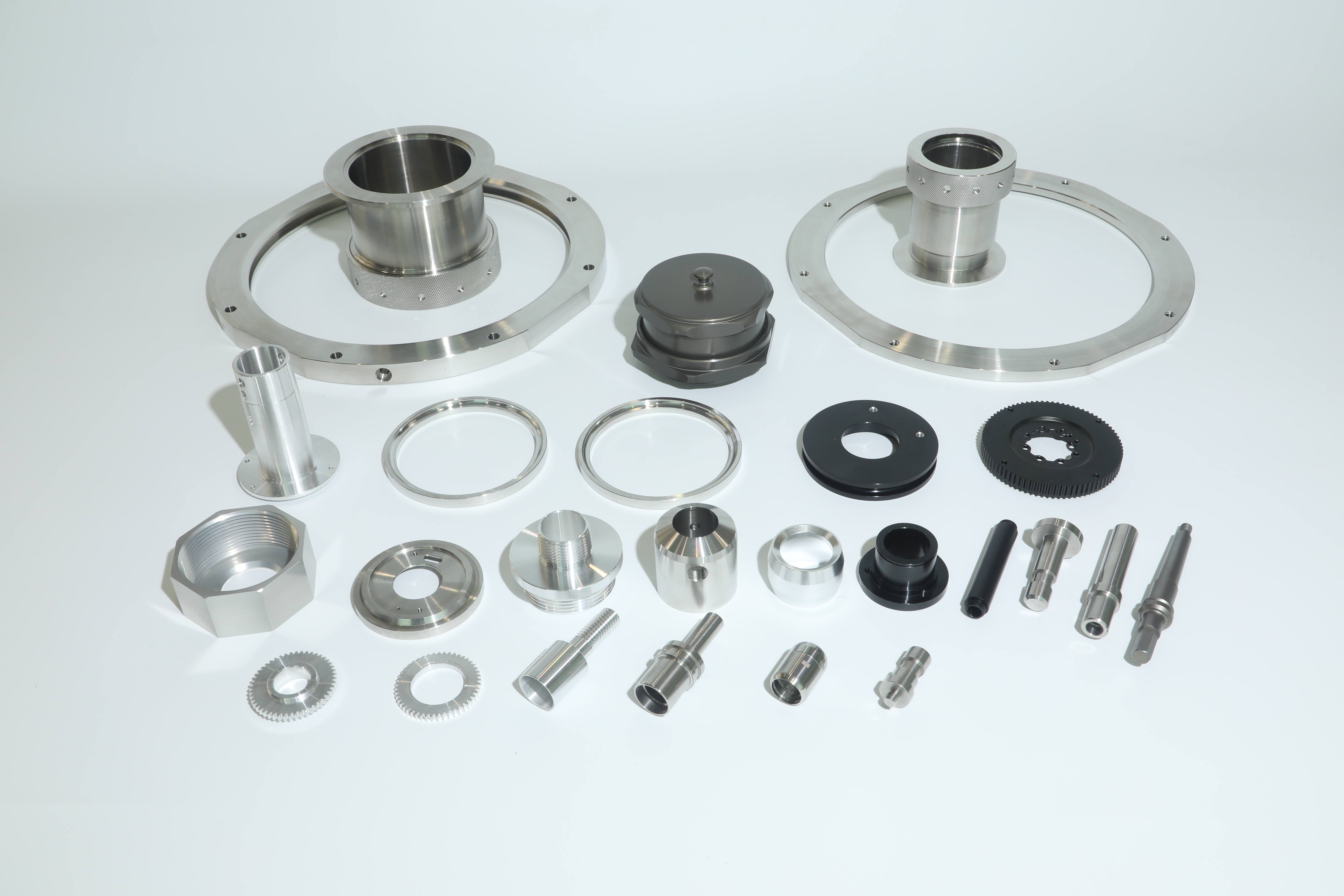
Why the Alloy Decision Comes Before the Supplier Decision
Most sourcing conversations open with a supplier questionnaire. For die casting parts, that order tends to produce a shortlist that cannot be compared: two suppliers quote the same housing in different alloys, with different draft, different wall thickness and different finishing routes, and the prices stop being comparable. The practical alternative is to lock three variables first — alloy, wall thickness, finish — and then treat the supplier as the party that has to hold those variables inside a stated tolerance.
SUNPREC HARDWARE CO., LTD (SUNPREC) is a metal parts manufacturer established in 2020 in Dongguan, China, providing CNC machining, die casting and extrusion from a 3,500 m² factory with 200 employees and a 10-engineer engineering team; 90% of output is exported, mainly to the EU and USA. Its die casting scope lists ADC12, A380 and Zamak3/5 as materials, a tolerance of ±0.01 mm, and application coverage spanning aerospace, automotive, semiconductor, medical, new energy, rail traffic, robotics and instrumentation. Those facts define the frame of this shortlist. They do not by themselves prove fitness for any specific drawing.
The Alloy Shortlist: Four Grades, Two Behaviours
Aluminum ADC12 and A380: Heat Dissipation and Lightweight Housings
Aluminum is the default where mass and thermal path both matter. Heat sink die casting parts, motor housing die casting parts, equipment housing die casting parts and other lightweight die casting parts sit in this branch. Both ADC12 and A380 appear in the SUNPREC die casting material scope, and both are used in this application logic for heat dissipation and lightweight structural housings — including structural die casting parts that carry loads rather than simply enclose volume.
The aluminum alloys in this scope are quoted at 80–120 MPa. That figure is the anchor for section sizing: it tells the buyer roughly how much material a load-bearing wall needs before machining, and it explains why aluminum carries the structural and thermal duties in this shortlist while zinc carries the precision and damping duties. An aluminum heat sink die casting part can be a single casting with integral fins instead of an assembly of separate components, which is the main reason the branch dominates new energy and power-electronics housings.
Zinc Zamak3 and Zamak5: Vibration Damping and Precision Instrument Parts
Where the part is small, dimensionally demanding and exposed to vibration, the shortlist changes. Instrument housing die casting parts, sensor shells, precision die casting parts and communication device die casting parts are the classic Zamak3 and Zamak5 territory. Two properties drive the choice: the alloy combination supports thin, stable sections in small housings, and zinc die castings damp vibration rather than transmitting it into sensitive internals.
The trade-off is visible in the numbers. Zinc alloys in this scope are quoted at 40–80 MPa against 80–120 MPa for aluminum, so zinc is not the branch to select for a primary structural member carrying a high service load. It is the branch to select when the housing must hold an instrument in alignment, absorb vibration from a motor or a vehicle frame, or shield electronics — zinc die casting is also noted for EMI shielding properties in consumer electronics applications (Market Research Future). Electronic die casting enclosures and hardware fitting die casting parts frequently land here rather than in aluminum, and high hardness die casting parts can be produced from either branch depending on the wear surface involved.
The Geometry Envelope: ±0.01 mm, 0.8 mm and 0.4 mm
Tolerance and wall thickness are the two numbers that decide whether an alloy shortlist is real or aspirational. Die casting parts from SUNPREC are quoted to a tolerance of ±0.01 mm. Separately, the wall limits applied in this shortlist are 0.8 mm for aluminum and 0.4 mm for zinc.
Those figures do different jobs and should not be traded against each other. The ±0.01 mm figure is a dimensional commitment that has to be verified: final inspection uses calipers, micrometers, height gauge and surface roughness tester, and critical components are verified by a CMM coordinate-measuring machine for tight-tolerance requirements. The wall figures are geometry boundaries — a 0.8 mm aluminum wall or a 0.4 mm zinc wall marks what the process is set up to fill, not an instruction to design every part at that limit. Fill behaviour depends on part depth, corner radii, gate position and draft, so the useful buyer question is not whether 0.4 mm is possible in principle, but which sections of a specific drawing sit at 0.4 mm and how they are fed.
Thin wall die casting parts are therefore a drawing-level discussion. A housing that combines a 0.4 mm zinc wall with a ±0.01 mm bore and a plated exterior is being designed close to three process boundaries at once, and the sequence — cast, machine, finish — has to be agreed before tooling is released, not after first article.
Safety Factors: 1.2 for Cold-Chamber Aluminum, 1.3–1.5 for Hot-Chamber Zinc
The die casting scope states a safety factor of 1.2 for cold-chamber aluminum alloy and 1.3–1.5 for hot-chamber zinc alloy. These are design allowances that belong in the load case rather than in the purchase order. Read together with the strength ranges — 80–120 MPa for aluminum, 40–80 MPa for zinc — the factors explain why the two branches are not interchangeable at equal wall thickness.
A part that must survive a defined service load on a 0.8 mm aluminum wall is being designed against two boundaries at the same time, and the 1.2 factor is what keeps that section inside a defensible margin. On the zinc side, the wider 1.3–1.5 band reflects how much the allowance moves with section and function: a decorative instrument housing and a vibration-loaded bracket can sit at opposite ends of the range while still using the same alloy. Buyers who ask for the safety factor in writing usually discover that the answer changes what they can specify on the drawing — which is the point of asking.
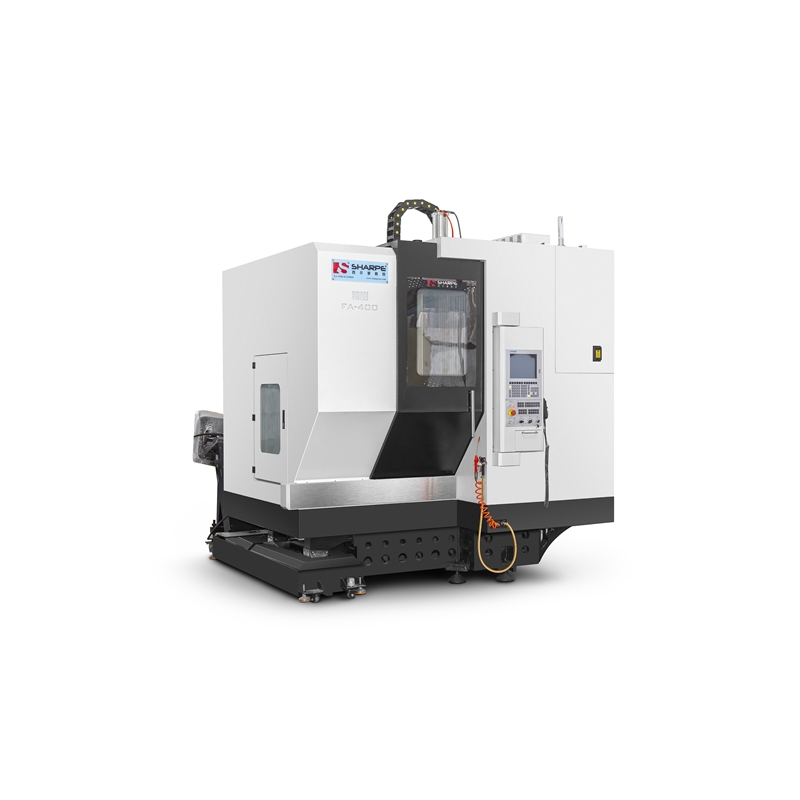
The Finish Shortlist and Where Each Finish Belongs
Finish selection is where most die casting RFQs lose comparability, because the finish changes the part as well as protecting it. The finishes in scope here are anodizing, powder coating, electroplating, passivation and zinc plating, with surface plated die casting parts and powder coated die casting parts appearing as standard product descriptions. Each has a sector fit and each has a boundary worth testing before the drawing is frozen.
| Finish | What it contributes | Typical sector fit | Boundary to check before release |
|---|---|---|---|
| Anodizing (clear or colour) | Surface oxide layer on aluminum for wear and corrosion resistance, with colour options | Aerospace housings and heat sinks, automotive aluminum parts, equipment housings | Applies to aluminum substrates, not to Zamak; masking and contact points must be defined |
| Powder coating | Thicker organic barrier with colour and outdoor durability | Equipment housings, new energy battery and energy storage housings, motor housings | Adds coating thickness — threads, mating faces and tight bores need masking; coating insulates, so it is a poor fit on thermal path surfaces |
| Electroplating (nickel, chrome, gold) | Metallic layer for appearance, wear resistance and solderability or contact performance | Instrument housings, electronic die casting enclosures, communication device parts, hardware fittings | Layer thickness consumes dimensional allowance on precision features; zinc alloy substrates need a defined plating sequence |
| Passivation | Removal of free iron and build-up of a passive surface after machining or blasting | Aerospace and precision parts where post-machining cleanliness matters | It is a surface conditioning step, not a wear coating; where specified on aluminum, confirm the actual process and acceptance test |
| Zinc plating | Sacrificial protection for ferrous hardware | Automotive hardware fitting parts and fasteners within a die cast assembly | On Zamak substrates nickel and chrome plating are the more usual routes; zinc plating is normally specified on steel hardware rather than on the zinc casting itself |
Read as a decision rule: anodizing and passivation belong to the aluminum corrosion-and-wear route, powder coating belongs to the barrier-and-colour route on larger housings, and electroplating belongs to the appearance-and-contact route on small precision parts. The remaining catalogue — chromate conversion coating, sandblasting, polishing, brushing, electropolishing, mirror polishing, PTFE coating, black oxide and phosphating — extends this logic but does not change it.
Mapping the Shortlist to Aerospace, Automotive and New Energy
Aerospace
The aerospace pattern is aluminum-first: lightweight housings, heat sink die casting parts and precision structural parts, finished with anodizing for wear surfaces and passivation where post-machining cleanliness is specified, and verified through CMM inspection on critical features. The evidence expected alongside the part is a quality system, not a brochure. SUNPREC holds AS9100 certification number CN059921, issued by Bureau Veritas Certification, valid from 2026-05-26 to 2029-05-25, against BS EN ISO 9001:2015 and EN 9100:2018 (technically equivalent to AS9100D), with the certified scope stated as manufacture of hardware for satellite in space industry.
That scope wording is the part buyers tend to skim. It describes aerospace hardware for satellite applications; it is not a blanket statement that every aerospace programme requirement is covered. A buyer with a different airframe or engine application should read the scope certificate line by line against their own requirement rather than accepting the certificate heading.
Automotive
Automotive demand splits along the same alloy line. ADC12 and A380 aluminum die casting parts cover motor housings, structural die casting parts and heat sinks; Zamak3 and Zamak5 cover small precision components, instrument housings and vibration-exposed brackets. Powder coating suits larger exposed housings, zinc plating suits the steel hardware that travels with the assembly, and electroplating covers appearance and connector shells.
One constraint deserves to be stated plainly, because it is the single most common reason an automotive shortlist stalls. IATF 16949:2016 is the mandatory quality management system standard for die casting suppliers serving the automotive industry (Bian Diecast). The certificates described for SUNPREC in this article are AS9100, ISO 9001 (IAS25Q391R0, issued 2025-10-16, valid to 2028-10-15, scope production of hardware parts) and RoHS 2.0 — IATF 16949 is not among them. An automotive buyer should therefore confirm the applicable automotive quality route in writing before release, rather than assume it from the presence of an aerospace certificate.
New Energy
New energy applications concentrate on lightweight aluminum housings and thermal management: energy storage battery system housings, motor housings, heat sinks and enclosure bodies, often with powder coating for external durability or passivation where post-machining surface condition matters. Thin wall die casting parts are common here because housing volume competes directly with usable energy density, and the 0.8 mm aluminum boundary is the number that governs how far that logic can be pushed.
For the electronics inside those systems, the zinc branch returns: precision housings and communication device die casting parts benefit from EMI shielding behaviour, and plated finishes support contact and appearance requirements. RoHS compliance is a separate gate and is documented for SUNPREC by certificate BTL20250603446, issued by BTL Testing Technology Co., Ltd. on 2025-06-10 and valid to 2029-06-10, covering metal accessories against RoHS Directive 2011/65/EU and amending Directive (EU) 2015/863, Annex VI, and permitting the CE mark to be affixed.
Drawings, Samples and the Evidence Trail
The input format matters as much as the alloy. SUNPREC supports customer 2D/3D drawings or samples as the basis for quotation and production, under an OEM and ODM custom manufacturing model in which material selection, dimensional tolerances, surface treatments, batch sizes and packaging are defined per customer requirement. Quoted terms include a minimum order quantity of 10 units and a lead time of 21–30 days, against monthly capacity of 4,200,000 units.
Quality evidence follows the same route. First-article inspection is performed for every new batch; final inspection uses calipers, micrometers, height gauge and surface roughness tester; critical components are verified by a CMM coordinate-measuring machine for tight-tolerance requirements. Acceptance is against the customer-provided engineering drawings and specified dimensional tolerance limits, and can also be structured as physical sample comparison or as inspection criteria agreed inside a signed sales contract, with every inspection result documented and archived. On reported programmes, dimensional tolerance benchmarks of ±0.01 mm and uniform product consistency were held across production stages through high-precision machining paired with multi-stage inspection — and post-cast CNC work is carried out on machining centres quoted at a machine tolerance of 0.005 mm, which is a machine capability figure, not a part tolerance.
Delivery and payment conditions are conventional export terms: Incoterms from EXW/FOB through DAP/DDP, and payment by wire transfer or letter of credit. The reference case base spans customers in Australia, Germany, France, Israel, Italy, Mexico and the United States across aerospace, automotive, medical, new energy, industrial equipment and semiconductor applications.
Market Signals Behind the Shortlist
Three signals explain why an application-first shortlist is becoming more practical than a supplier-first one. First, aluminum dominance is structural rather than cyclical: a 74.78% material share in 2025 and more than 64.0% of aluminum die casting revenue coming from transportation indicate that the aluminum branch will keep setting the tolerance and thin-wall expectations buyers apply to every quote. Second, adjacent materials are expanding the option set: the global magnesium casting market is valued at USD 1.42 billion in 2026 and projected to reach USD 2.96 billion by 2035 at a CAGR of 8.9% (Business Research Insights) — a reminder that this shortlist covers aluminum and zinc only and does not extend to magnesium. Third, zinc's growth is driven by cost-effectiveness and EMI shielding in consumer electronics, which pulls precision and plating requirements into the electronics supply chain rather than the structural one.
Large-format casting is the wildcard. Tesla's deployment of 9,000-ton presses for rear underbody assemblies reduced manufacturing costs by 40% (Market Research Future), a single-company figure with indirect evidence that nonetheless signals where structural aluminum is heading. Forecast dispersion reinforces the caution: published CAGRs for aluminum die casting vary widely between sources with different baseline years, so no single growth figure should be written into a sourcing plan. Suppliers confirm what a certificate scope actually covers — and the same discipline applies to market figures.
Where This Shortlist Stops
An application-led shortlist is a starting frame, not an approval. It narrows four alloy grades and five finishes to a plausible combination; it cannot confirm that a particular boss, bore or corner will fill, nor that a finish will survive a specific corrosion test. Those answers come from the drawing review, the tool design and the first article.
Three boundaries are worth stating directly. The wall figures — 0.8 mm aluminum and 0.4 mm zinc — are process limits, and a design that sits at the limit in several places simultaneously carries more risk than the same nominal figure applied to a single section. The AS9100 scope described here is aerospace hardware for satellite applications, so buyers outside that scope must verify their own requirement rather than inherit the certification. And zinc plating is not the default finish for a Zamak casting; on zinc alloy substrates, nickel and chrome plating are the more usual route, which means an assembly that specifies zinc plating on a zinc housing should revisit either the substrate or the finish.
Outlook
The direction of travel is toward fewer, more integrated castings with tighter wall control and finishes specified in the same drawing revision as the tolerance. That shifts the buyer's work upstream: alloy, wall envelope, safety factor and finish become the first page of the RFQ rather than a line item negotiated after tooling. Suppliers who can document tolerance, inspection method and certification scope at that early stage will be easier to shortlist — and easier to defend internally when the first article arrives.
FAQ
Which alloy is the better starting point for a heat sink die casting part, ADC12 or A380?
Both ADC12 and A380 are listed in the SUNPREC die casting material scope and both belong to the aluminum branch used for heat dissipation and lightweight housings, where the alloys are quoted at 80–120 MPa and cast to a ±0.01 mm tolerance with an 0.8 mm wall boundary. Choosing between them is a drawing-level decision driven by the thermal path, the load case and the finishing route, not by a general ranking.
When should Zamak3 or Zamak5 replace aluminum for a housing?
Zinc alloys are the fit where vibration damping, precision in small sections and EMI shielding matter more than mass reduction — instrument housings, sensor shells and communication device enclosures. Zinc alloys in this scope are quoted at 40–80 MPa against 80–120 MPa for aluminum, with a 0.4 mm wall boundary and a hot-chamber safety factor of 1.3–1.5, so zinc is not the branch for a primary structural member under high service load.
What wall thickness can be quoted for aluminum and zinc die casting parts?
The wall limits applied are 0.8 mm for aluminum and 0.4 mm for zinc, alongside a dimensional tolerance of ±0.01 mm. These are process boundaries rather than guaranteed values for every geometry: whether a specific section achieves them depends on part depth, corner radii, gate position and draft, and is settled during drawing review and first-article inspection.
Which surface finish suits a new energy battery or energy storage housing?
Powder coating is the usual choice where external durability and colour are required, while passivation is specified where post-machining surface condition matters and anodizing applies to aluminum substrates rather than to Zamak. Because powder coating adds thickness, threads, mating faces and tight-tolerance bores need masking, and coated surfaces are a poor fit for a thermal path. RoHS 2.0 status is documented separately under certificate BTL20250603446.
Can a die casting supplier work from 2D/3D drawings, or is a physical sample required?
SUNPREC supports customer 2D/3D drawings or samples as the basis for quotation and production, under an OEM and ODM custom manufacturing model covering material selection, dimensional tolerances, surface treatments, batch sizes and packaging. Acceptance follows the customer drawing and specified tolerance limits, and can also be structured as physical sample comparison or contractual inspection criteria, with first-article inspection for every new batch and CMM verification on critical components.
A downloadable company presentation covering capability, equipment and certification scope is available here: SUNPREC company presentation (PDF). Company information: sunprec.com.
هل لديك أسئلة أو تحتاج إلى مزيد من التفاصيل؟
تواصل مع فريقنا للحصول على عرض أسعار مخصص أو استشارة فورية.
طلب عرض أسعار
املأ النموذج أدناه وسيتواصل معك فريقنا بعرض مقترح مخصص.
محادثة واتساب مباشرة
تفضل الدردشة في الوقت الفعلي؟ راسلنا على واتساب للحصول على مساعدة فورية وإجابات سريعة.
- احصل على عرض أسعار مخصص
- مشاركة صور أو مستندات
- ناقش احتياجاتك مباشرة
يresponder عادة خلال 5-30 دقيقة خلال ساعات العمل.