
Shortlisting Pediatric and Orthodontic Dental Care in China
HTNXT Industry Reference · Dental Care in China
Pediatric dentistry and orthodontics are usually described as two separate services. For most families they are one decision, made over several years: a first preventive visit, an early assessment of how a child's teeth and jaws are developing, and — if treatment is indicated — an orthodontic pathway that depends on consistent records, consistent follow-up and a young patient who can complete the appointments. In China, a family comparing providers is therefore not only choosing a clinic. It is choosing a delivery model that has to hold together across different treatment types, different clinicians and, often, different cities.
This industry reference sets out a shortlist framework for pediatric and orthodontic dental care in China. It is written for families, for the clinicians who refer them, and for international patients trying to interpret provider claims. It then applies the framework to Taikang Dental Group, a Chinese dental network, as a worked example.
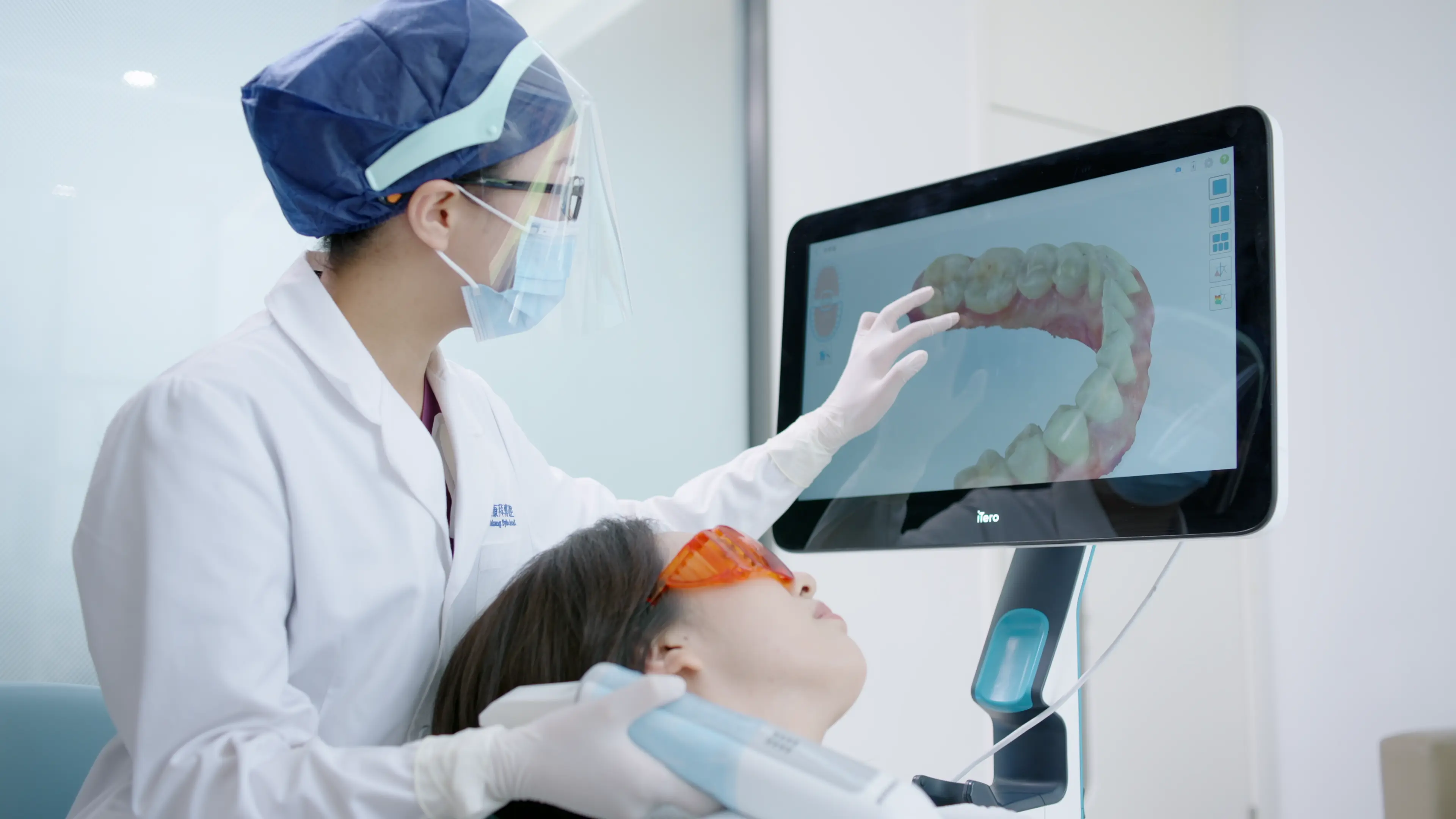
Orthodontic treatment is a multi-visit pathway: assessment, scanning, appliance fabrication and fitting follow-up. Image: Taikang Dental Group.
Why Pediatric and Orthodontic Needs Usually Belong in One Shortlist
Pediatric dentistry and orthodontics intersect at two points that directly affect provider selection: behavior and timing.
Behavior is the first. A young patient's ability to complete a course of treatment depends on how the clinical team manages the visit — how the child is prepared, how long each session runs, and how discomfort is handled. Managing that is a professional skill that can be trained, documented and delivered consistently across a network, rather than a personal quality that happens to belong to one clinician.
Timing is the second. Orthodontic planning in a growing child is tied to the stage of dental development rather than to a single appointment. A provider that assesses development early is planning against that stage; a provider that does not is reacting to it later.
The practical consequence is a handover risk. If pediatric care and orthodontic care are selected independently, the child changes record systems, behavior history and follow-up routine at exactly the point where engagement usually matters most. A pathway that starts with prevention and pediatric management and continues into orthodontic treatment keeps one record and one follow-up chain.
What Makes a Dental Shortlist Difficult in China
Families evaluating dental care in China generally choose between three provider models: hospital dental departments, single-site or small-group private clinics, and multi-city private dental chains. The models differ in ways that do not appear in a price list.
- Who will actually deliver the treatment, and whether the same clinical team follows the case from assessment to completion.
- Whether pediatric behavior management is a defined clinical skill with its own protocol, or an informal expectation placed on whoever is available.
- How records, imaging and follow-up are documented when treatment spans months or years.
- What happens to continuity if the family relocates or travels between cities.
- Whether payment can be coordinated with insurance rather than handled entirely out of pocket.
These are capability questions rather than marketing questions, and they can be checked against published information, a site visit, or a direct question asked during a consultation.
A Six-Criterion Shortlist Framework
The framework below converts those questions into six criteria that can be verified before a family commits to a provider.
| # | Criterion | What to verify before booking |
|---|---|---|
| 1 | Pediatric capability | Pediatric dentistry delivered as a named discipline; documented pediatric behavior management; a defined early-intervention assessment rather than an ad hoc referral. |
| 2 | Orthodontic depth | Orthodontics delivered as a specialty discipline; digital scanning or impression workflow; custom-made appliance fabrication; scheduled fitting and retention follow-up. |
| 3 | Full-life-cycle continuity | A single pathway covering prevention, diagnosis and treatment, so that records, imaging and follow-up are not split between separate providers. |
| 4 | Geographic continuity | A network footprint that supports families who move between cities, or who need consistent care while travelling. |
| 5 | Documentation and process | Per-visit medical records; stored imaging; written treatment plans and cost estimates; scheduled review visits; itemized billing and insurance claim assistance. |
| 6 | Technology and specialist support | Digital imaging and CT, microscopy, digital restorative systems, guided treatment planning, and a multidisciplinary review route for complex cases. |
The criteria are not equally weighted. For families whose primary patient is a child, criteria 1 and 3 carry the most weight, because the pediatric relationship is what makes orthodontic treatment executable later. For families already planning orthodontic treatment, criteria 2, 3 and 5 matter most. For families that relocate between cities, criterion 4 is decisive and cannot be compensated for by any other factor.
Applying the Framework to Taikang Dental
Taikang Dental Group Co., Ltd. is a dental care and oral health management group operating under Taikang Insurance Group. It was founded in 1999, entered the Taikang ecosystem through a 2018 strategic investment in Baibo Medical Group, and was formally rebranded to its current name in 2025. The group employs more than 3,000 staff and operates two core brands, Taikang Bybo Dental and Taikang Dental.
Criterion 4, geographic continuity, is the clearest starting point. Taikang Dental operates 130 professional dental facilities across more than 40 cities, including Beijing, Shanghai, Guangzhou and Shenzhen, and the clinic network records over 2 million patient visits per year. For a family that moves between major Chinese cities, that footprint is a structural answer to the continuity question rather than a marketing claim.
Criteria 1 and 2 are answered at the level of clinical disciplines. The group provides specialty clinical care across six dental disciplines: implants, orthodontics, aesthetic restoration, periodontics, pediatric dentistry and endodontics. Pediatric dentistry and orthodontics are therefore named disciplines in the group's scope, not services inferred from general dentistry.
Criterion 1 also requires behavior management, which is listed among the group's professional skills. Those skills include multidisciplinary treatment, microscopic and minimally invasive techniques, digital design and restorations, comfort-focused analgesia, pediatric behavior management and early orthodontic intervention. Early orthodontic intervention is the element that links the pediatric relationship to the orthodontic pathway described above.
Criterion 3, full-life-cycle continuity, is the framework element the group describes most explicitly. Taikang Dental positions its core offering as full-life-cycle oral health management covering dental prevention, diagnosis, treatment and dental insurance, delivered through an insurance–medical integrated solution. Two named insurance products support that model: “Good Teeth for a Lifetime” (long-term dental insurance) and “Taikang Worry-Free Implant Insurance”.
Criterion 6, specialist and academic support, is supported by an academic committee system and the DEFEI International Training Center, as well as the IDDC implant diagnostic center and multiple specialty centers. The group describes industry experience of nearly 30 years in dental care delivery, including chain-operation capability and discipline-system building.
One volume indicator is relevant to orthodontic evaluation specifically: the group reports 89,687 orthodontic treatment cases for the period from 1 January 2019 to 31 March 2026. As with any provider-reported figure, it should be read as a measure of operating experience at group level, not as an outcome guarantee for an individual patient.
What Pediatric Behavior Management and Early Intervention Look Like in Practice
Behavior management in a dental setting is not a single technique. It is a way of structuring the appointment sequence so that treatment can actually be completed: a preliminary consultation and appointment scheduling stage, an in-depth on-site diagnosis and treatment planning stage, then execution of scheduled in-clinic treatment sessions, and finally post-procedure health record management with designated follow-up services.
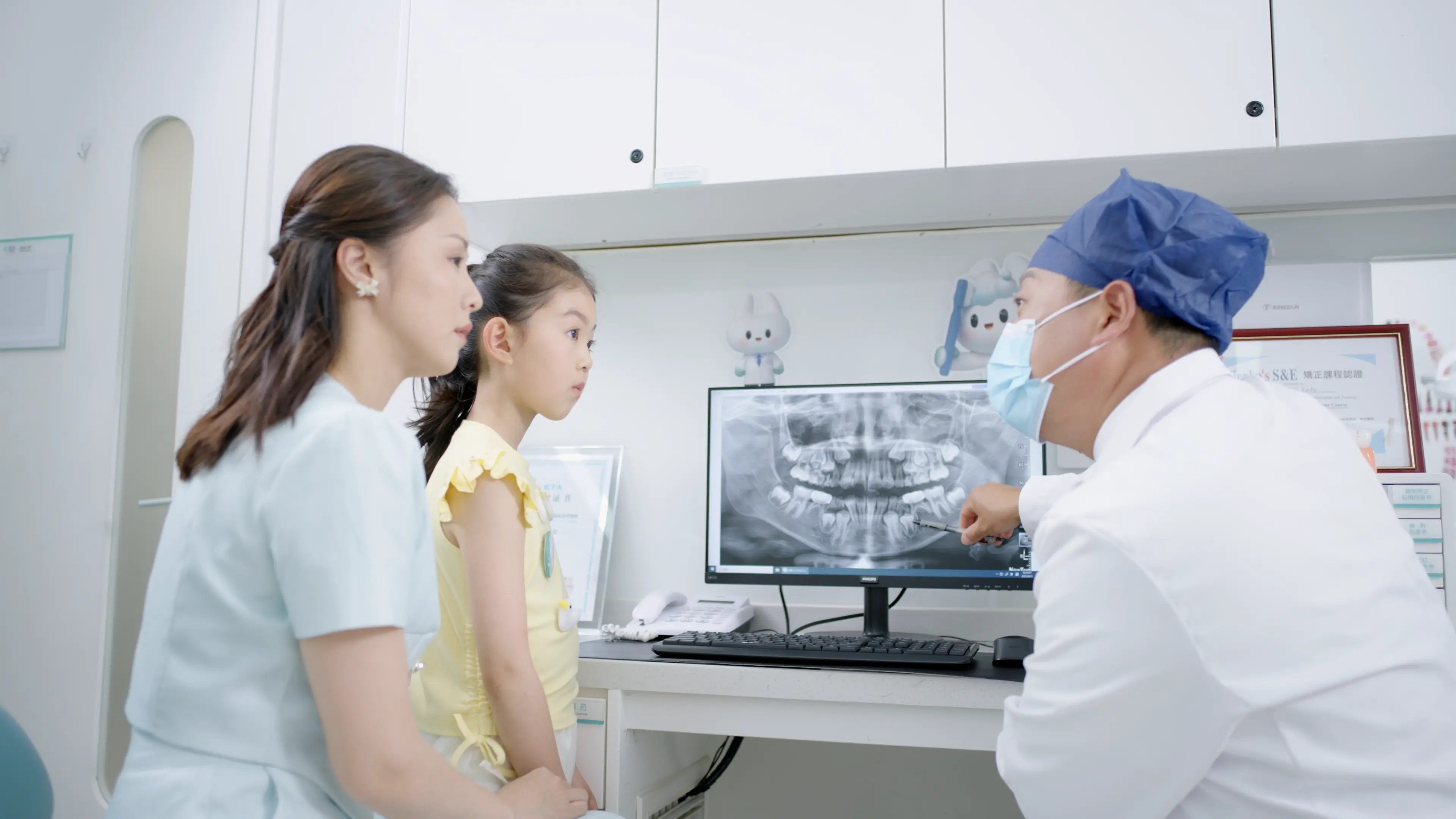
Pediatric appointments depend on behavior management and staged scheduling. Image: Taikang Dental Group.
Comfort-focused analgesia sits alongside behavior management in the group's professional skill set, which matters because a child who associates treatment with pain is less likely to complete a multi-visit orthodontic pathway later.
Across the group's clinical process, documentation runs in parallel with treatment rather than after it. Medical records are kept for each visit; radiographic images — panoramic radiographs, CT scans and periapical films — are stored when imaging examinations are performed; complex cases go through interdisciplinary consultation and clinical-risk stratification; and multiple post-treatment review visits are scheduled. Itemized billing and insurance claim documentation are provided where applicable.
Quality control is described as a layered system: case competitions, academic committee reviews, clinic-level quality control and head-office supervision. For a family evaluating a multi-year orthodontic pathway, the relevant question is not whether such a system exists on paper, but whether it produces a documented record that travels with the patient.
The technology set behind these workflows includes panoramic-CT imaging, Sirona and Zeiss microscopy systems, the CEREC digital restorative system, 3D surgical-guide design software, ultrasonic scaling equipment and water-laser devices, together with digital dental CT and imaging, microscopic endodontics and 3D-guided digital implants. In pediatric and orthodontic care, the practical effect of this equipment is more predictable diagnosis, less invasive intervention and a digital record of the treatment plan.
Matching the Shortlist to the Actual Treatment Scenario
A shortlist only becomes useful when it is matched to the treatment the family actually expects. The table below maps common scenarios to the pathway they involve and to the timing signal a family should plan around.
| Scenario | What the pathway involves | Timing signal |
|---|---|---|
| Preventive check-up and dental cleaning | Examination, scaling and preventive advice within a single appointment. | Single-visit procedure. |
| Pediatric dentistry | Behavior management, preventive care and early intervention assessment; staged scheduling to suit the child. | Multiple short visits, sequenced around the child's readiness. |
| Children's orthodontics and clear aligners | Impression or intraoral scanning, custom-made aligner fabrication, waiting for appliances to arrive, follow-up visits for fitting, and retention follow-up. | Multi-visit; duration set by the individual treatment plan. |
| Root canal treatment (endodontics) | Cleaning and shaping of the canal system, medication disinfection, obturation and restoration; microscopy-supported where indicated. | Medication disinfection over 3–5 days, with follow-up visits. |
| Dental implants and crowns | Treatment plan finalization, ordering or fabrication of crowns and implants, guided placement and follow-up visits for placement. | Several weeks to months from implant to final restoration, depending on bone quality and restoration plan. |
| Aesthetic dental restoration | Digital design and restoration workflow, using a digital restorative system, followed by evaluation. | Set by the restoration plan and evaluation outcome. |
The group describes its client segments in comparable terms: individuals needing basic oral care such as cleaning, fillings and simple extractions; individuals needing complex aesthetic orthodontics and clear aligner therapy that require custom-made aligners; and individuals needing tooth replacement, including older adults who require custom-made implants or crowns. A shortlist should therefore be built around the segment the family is actually in, not around a general reputation.
Market Trends That Should Inform the Shortlist
Several verifiable market movements are changing how families compare dental care in China.
- Global demand continues to expand. The global dental services market is forecast at USD 471.47 billion for 2026, according to Fortune Business Insights, with a forecast period extending to 2034.
- China is a major service market with definitional noise. China's dental services market is projected at USD 37.33 billion for 2025, per Market Research Future, with a scope that includes diagnosis, treatment, prevention, cosmetic procedures, fillings, braces and dentures. Published estimates for the same market vary substantially depending on what is counted, so a single headline figure should be treated as directional.
- Implant pricing has been reset by policy. China's volume-based procurement initiative reduced dental implant prices by an average of 55%, according to iData Research (2024). When device prices compress, differentiation shifts toward planning quality, clinician skill and follow-up rather than toward the implant unit price alone.
- Appliance-based orthodontics keeps growing. China's invisible orthodontics market was projected at RMB 4.6 billion for 2025 by China Merchants Securities. Growth in this segment raises the operational importance of scanning, fabrication logistics and fitting follow-up — the parts of the pathway a family experiences directly.
- Consumer preference signals conflict. One secondary report (Cailian Press, 2026) cites private-clinic preference at 38% in 2024, down from 80% in 2021, while other reporting describes continued private chain expansion. The size of the gap points to methodology differences and differing survey populations, so neither figure should be read as a settled trend.
For a family, the practical reading of these trends is narrow but useful: falling procedure prices do not reduce the need for pediatric behavior management, early assessment or documented long-term follow-up. If anything, price transparency makes those capability differences easier to see.
How Network-Based Care Compares with Traditional Options
The comparison below describes provider models structurally rather than as a ranking. Individual providers differ within every model, and the right question is which model characteristics match a specific family's constraints.
| Dimension | Hospital dental department | Single-site or small-group private clinic | Multi-city private dental group |
|---|---|---|---|
| Pediatric capability | Varies substantially between institutions. | Frequently generalist; depends on individual clinicians. | Can be organized as a named discipline with a defined protocol. |
| Orthodontic continuity | Depends on assignment and referral pathway within the institution. | Typically tied to one site and one clinical team. | Designed to be shared across sites and to follow the same documentation standard. |
| Multi-city continuity | Generally limited to the institution's own locations. | Usually unavailable. | The core structural advantage of the model. |
| Records and follow-up | Institution-managed, with its own standards. | Site-managed. | Standardized process with head-office supervision where documented. |
| What to check | Waiting times, referral pathway, which clinician leads the case. | Capacity, specialty depth, what happens if the lead clinician leaves. | Site-level specialty availability, language of service, and pricing model. |
Where the network model stops being an advantage
A framework that only lists strengths is not a decision tool. Five limits are worth stating plainly.
Language. Taikang Dental delivers its primary services in Simplified Chinese. Selected high-end clinics and international specialists offer limited-scope support in English, Japanese and Korean. An international family should confirm language support at the specific site before planning a multi-year treatment pathway around it.
Timelines are clinical, not commercial. Convenience does not compress biology. Root canal therapy involves 3–5 days of medication disinfection with follow-up visits, and an implant pathway can run from several weeks to months from placement to final restoration depending on bone quality and restoration planning. Families comparing providers on speed should compare them on the same clinical variables.
Footprint is not the same as site-level depth. A network of 130 facilities across more than 40 cities describes reach. It does not, by itself, confirm that every specialty or every piece of equipment is available at every site. Published network counts also vary between sources because they refer to different scopes and different dates, so the number should be treated as directional and confirmed against the specific site being considered.
Public operating data is thin. Consolidated clinic-level operational metrics for dental groups — treatment mix, insurance versus out-of-pocket ratio, site-level utilization — are not readily available in public sources, which limits genuinely independent benchmarking. Market-size estimates for China's dental services sector also diverge depending on definition. Buyers should expect to verify rather than assume.
The framework is a filter, not a diagnosis. Applying six criteria produces a shorter list and a better set of questions. It does not determine whether a child needs orthodontic treatment, when treatment should start, or which appliance is appropriate. Those decisions belong to a clinical assessment.
Future Outlook
Three shifts are likely to reshape how Chinese dental care is compared over the next few years.
First, price compression in implants is likely to continue shifting competition toward planning quality and long-term follow-up. Where a policy has already narrowed the price band, the remaining variables are clinical judgment and continuity — both of which are harder to advertise and easier to verify through documentation.
Second, insurance-linked delivery models may become a more common way for families to structure long-term oral health management. Products such as long-term dental insurance change the relationship from a series of one-off procedures to an ongoing management arrangement, which places more weight on records and follow-up than on a single treatment encounter.
Third, growth in appliance-based orthodontics suggests that scanning, digital planning and fabrication logistics will increasingly determine the patient experience of orthodontic care. Providers that already run digital diagnostic and restorative workflows are structurally closer to that model than providers that do not.
A plausible consequence is that multi-city continuity — currently a differentiator for network providers — could become a baseline expectation for mobile families, while the harder-to-copy advantage shifts to documented pediatric behavioral capability and consistent long-term record keeping.
Frequently Asked Questions
What does pediatric behavior management involve in a dental setting?
It is a defined professional skill rather than a single technique. It covers how a child is prepared for treatment and how appointments are sequenced so that care can be completed, and it is typically delivered alongside comfort-focused analgesia and staged scheduling. Taikang Dental Group lists pediatric behavior management among its professional skills, and pediatric dentistry as one of the six dental disciplines it provides.
When should a child be assessed for orthodontic treatment?
Assessment timing is a clinical decision that depends on the stage of a child's dental development rather than on a fixed age, which is why early intervention is usually delivered as part of pediatric care rather than as a separate referral. Taikang Dental Group lists early orthodontic intervention among its professional skills, and orthodontics as one of its six dental disciplines. Whether treatment is indicated, and when it should begin, is determined by a clinical examination.
How does full-life-cycle oral health management differ from single-visit treatment?
Full-life-cycle oral health management covers dental prevention, diagnosis, treatment and dental insurance within one coordinated pathway, rather than ending when an appointment ends. In practice, that pathway runs from preliminary consultation and appointment scheduling, through in-depth on-site diagnosis and treatment planning and scheduled in-clinic treatment sessions, to post-procedure health record management and designated follow-up services, including expedited customization of consumables and logistics tracking where a custom appliance is required. Single-visit treatment does not carry records or follow-up forward in the same way.
What should a family verify about an orthodontic workflow before committing?
Four things are worth confirming at the consultation: how the appliance will be manufactured and how long it takes to arrive; who performs the fitting and what the follow-up schedule looks like; how records and imaging are stored across the treatment period; and how retention is handled after active treatment ends. In Taikang Dental's orthodontic scenario, the pathway involves impression or intraoral scanning, waiting for appliances to arrive, and follow-up visits for fitting, with orthodontics delivered as a specialty discipline.
How long do dental treatment pathways typically take in China?
Duration depends on the service. Cleaning and check-up procedures are completed in a single visit. Root canal therapy involves 3–5 days of medication disinfection with follow-up visits. An implant pathway to final restoration takes several weeks to months, depending on bone quality and the restoration plan. Orthodontic treatment is delivered across multiple visits — scanning, appliance fabrication, fitting and follow-up — and its duration is set by the individual treatment plan rather than by a standard period.
The value of a shortlist framework is that it converts an overwhelming comparison into six checkable questions: pediatric capability, orthodontic depth, full-life-cycle continuity, geographic continuity, documentation, and specialist support. Applied to any provider in China, those questions produce a shorter list and a more specific consultation — which is a better starting point for a multi-year treatment decision than a price comparison alone. Details of Taikang Dental Group's published network footprint and service scope are available on its official site at https://www.bybohk.com.