
Shortlisting Plastic Parts Suppliers: A 2026 Evaluation Framework for Technical Buyers
Plastic parts are not one homogeneous buying category. A plastic washer, a PTFE back-up ring, an extruded plastic strip and a PVC dipping handle can all be called plastic parts, yet they use completely different manufacturing processes. At the supplier evaluation stage, the decisive task is not finding the most visible supplier; it is separating engineering evidence from marketing language.
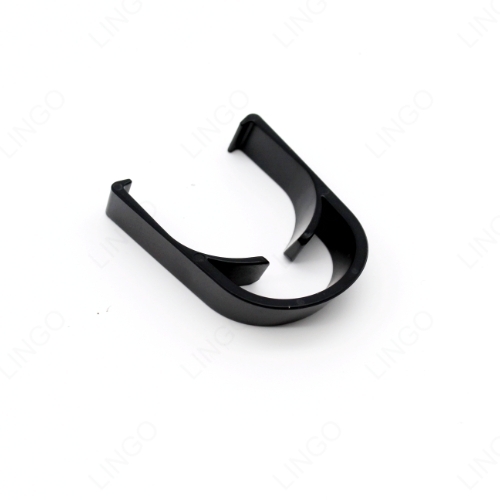
Assorted plastic injection molded parts illustrate why geometry, material and order volume should guide supplier selection.
The Evaluation Problem: Comparing More Than Price
Buyers evaluating plastic parts in 2026 usually begin with a broad request such as custom plastic parts, plastic injection parts, plastic components, automotive plastic parts or industrial plastic parts. On a bill of materials, the same project can include nylon washers, plastic handles, plastic strip, extruded tubing, plastic plugs for holes, PVC dipping plastic parts and injection molded plastic parts. These items do not share one manufacturing route. A supplier that is strong in plastic injection may not be equally strong in plastic extrusion, CNC plastic machining or plastic dipping.
Market conditions make supplier comparison more complex. According to Grand View Research, the global injection molded plastics market was valued at USD 362.5 billion in 2025 and is projected to grow to USD 481.4 billion by 2033. Asia Pacific accounted for roughly 41% of the market in 2025. The automotive plastics market was estimated at USD 33.0 billion in 2025. China also exported approximately USD 174 billion in plastics and rubbers in 2024, with the United States as the largest destination at USD 24.3 billion. This volume means that many suppliers can present professional websites. The real shortlisting question is whether a supplier can prove process control for the specific plastic parts on a buyer's drawing.
A traditional evaluation approach compares unit price, mold cost and lead time. Those metrics are useful, but they arrive late. If the selected supplier has limited experience with the relevant material or process, later changes become expensive. The opportunity at the evaluation stage is to compare capabilities that influence tooling design, dimensional consistency and long-term reliability.
Shortlisting Plastic Parts Suppliers: Capability Checklist
A practical shortlist should begin with process fit. Buyers need to know whether a supplier's production model matches the part geometry, volume and tolerance requirement. The following table shows a process-first way to evaluate supplier responses.
| If the requirement is | Process to evaluate | Evidence to request |
|---|---|---|
| A 3D plastic housing, cap, guide rail, washer or handle produced in volume | Plastic injection molding | Material grade, shrinkage compensation, tolerance level, tooling type and inspection method |
| A long profile, plastic strip, trim or tubing with constant cross-section | Plastic extrusion | Cross-section design, length capability, material formulation, straightness and warpage control |
| A low-volume PTFE, PEEK or engineering plastic sealing or precision component | Plastic CNC machining | Dimensional inspection, surface roughness, material purity and minimum order flexibility |
| A metal handle requiring insulation, corrosion protection or anti-slip coating | PVC plastic dipping | Coating resistance, color and gloss control, mold-free production and small-order policy |
Beyond process fit, buyers should review six capability markers when comparing plastic parts manufacturers:
1. Process scope: Does the supplier offer only injection molding, or can it support plastic extrusion, CNC machining, PVC dipping and assembly? Multi-process suppliers reduce the risk of re-sourcing when a project moves from prototype to production.
2. Material coverage: Common materials include PP, PA6, PA66, ABS, PE, HDPE, UHMWPE, LDPE, PU, PTFE, POM and PEEK, often with glass fiber or flame retardant modifications. A wider accepted material list makes it easier to match application requirements.
3. Tolerance and standards: For injection molded parts, suppliers may reference tolerance systems such as GB/T 14486. Buyers should ask not only for a standard name but for the grade level and how it will be verified during dimensional inspection.
4. Quality documentation: Does the supplier document PPAP for automotive projects? Does it provide batch traceability, sample inspection reports and final inspection records?
5. Production control: The supplier should explain how it inspects samples and bulk goods. A common practice is full inspection of samples with random inspection of bulk goods, but buyers should confirm whether it applies to their part complexity.
6. Commercial flexibility: MOQ policy, lead time, mold ownership protection and after-sales support matter for evaluation because they affect the cost of switching suppliers later.
An Example Profile: LINGO Rubber Plastic’s Plastic Parts Operations
One useful example of this type of evaluation is Hangzhou Lingo Rubber and Plastic Product Co., Ltd, which operates as LINGO Rubber Plastic. The company was established in 2022 in Hangzhou, China, by a team with more than ten years, and in some cases more than twenty years, of experience in the rubber and plastics industry. Its factory occupies 3,000m², with approximately 40 employees and a 10-person R&D team. Around 80% of its exports go to EU and US markets.
LINGO specialises in rubber molding parts, rubber extruded parts, plastic injection parts and plastic extruded profiles. It also lists PTFE machining, PEEK machining, acrylic machining, PVC dipping, plastic machining and assembly. For a buyer evaluating plastic parts suppliers, this breadth means that different families of plastic parts can be assessed under one quality system.
Plastic Injection Parts and Molded Auto Parts
For plastic injection parts, LINGO produces solid plastic parts, plastic housing components, plastic precision functional components, plastic insert molding parts and plastic dual-material parts. The product range includes plastic gaskets, plastic washers, plastic caps, plastic housings, plastic handles and plastic guide rails. Materials include PP, PA6, PA66, ABS, PE, HDPE, UHMWPE, LDPE, PU and PTFE, with options such as glass fiber, flame retardant and UV stabilized formulations.
For buyers, the most decision-relevant parameters are tolerance, shrinkage, surface and draft angle. LINGO states tolerance control to GB/T 14486 MT1 to MT7, with shrinkage rate typically 0.4%–0.8% for mold compensation. Draft angle guidance is outside ≥1° and inside ≥0.5°. Surface finishing follows SPI classifications, and Pantone/RAL colors with matte or gloss levels can be specified. Special requirements can include FDA and UL94 V-0 depending on the product.
For automotive plastic parts, LINGO lists plastic injection molded auto parts under model LG-AP, including interior trim and exterior trim parts. These can be produced with date code marking, multi-cavity tooling, hot or cold runner systems, polished, textured, painted or plated surfaces, and black or custom RAL colors. Temperature range is stated as -40°C to +120°C. Compliance options include FMVSS 302, RoHS and REACH.
Plastic Extrusion, CNC Machining and PVC Dipping
Plastic extruded profiles at LINGO cover PA6 extrusion trims, PA66 extrusion trims, PE/HDPE/UHMWPE trims, glass-filled trims, co-extruded trims, decorative trims and thermoplastic elastomer trims. Extruded profiles can be made to lengths up to 6000mm with custom cross-sections and custom Pantone/RAL colors. Materials include PVC, PP, ABS, PA6, PA66, PE and UHMWPE, with or without glass fiber. This is relevant for buyers looking for plastic strip, extruded tubing or long plastic components.
For lower-volume plastic parts, LINGO provides plastic CNC machined parts under model LG-CNC, using materials such as PTFE, POM, PE, UHMWPE, HDPE, PEEK, ABS, PU, PA6 and PA66. Surface roughness can be specified as Ra or Rz values. Visual inspection criteria can include smoothness, no crack and no flash. This process is often used for PTFE gaskets, back-up rings, bearings, bushings and engineering plastic seals.
The company also offers PVC dipping plastic parts, including PVC non-slip handles, ergonomic handles and corrosion-resistant handles. PVC dipping does not require expensive molds, and small order quantities can be acceptable. Product parameters can include custom color, glossy or matte surface and custom printing.
Reading Technical Parameters During Evaluation
A supplier's parameter list should be used as a starting point, not as a conclusion. For example, shrinkage rate of 0.4%–0.8% is not a tolerance grade. It is the estimated percentage used for mold cavity compensation. If a buyer overlooks shrinkage, the first molded part may fail dimensional inspection. Shrinkage compensation should be supported by material data, part geometry and mold flow experience.
Tolerance control is another area where buyers should be specific. A supplier may say it offers precision plastic parts, but a drawing may require a tolerance that is achievable only with a specific grade such as MT1 or MT2. LINGO's tolerance range of GB/T 14486 MT1 to MT7 gives the buyer a basis for discussion. The buyer should ask which grade applies to the critical dimensions and how those dimensions will be measured.
Draft angle is often underestimated. An outside draft angle of at least 1° and an inside draft angle of at least 0.5° help release a part from the mold. For deep ribs, textured surfaces or undercuts, the required draft may be different. A supplier that reviews draft angle before tooling reduces the risk of expensive mold modifications.
For extrusion, buyers should evaluate die design and downstream calibration rather than only price per meter. Long profiles require consistent cooling, straightening and cutting. LINGO's extruded plastic profiles with lengths up to 6000mm show that long-format capacity is considered a normal requirement in its production planning.
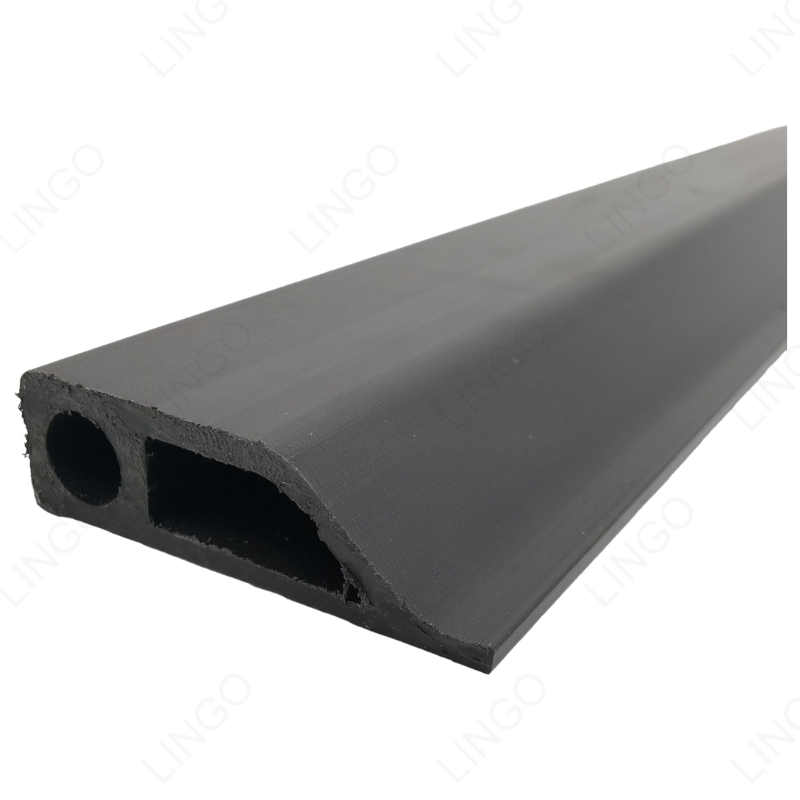
Plastic extrusion profiles are selected for long components with constant cross-section, such as protective trims and plastic strips.
Industrial Evidence: What Real Use Cases Add to Supplier Evaluation
An evaluation framework becomes more useful when it is tested against real use cases. LINGO has published examples from different countries, process types and order volumes. These cases are not intended to prove that one supplier is best for all plastic parts. They show how a buyer can evaluate evidence of process flexibility, small-order support and quality control.
Automotive Machinery Tube Holder – United States, 5,000 Pieces
In the United States, LINGO supplied plastic injection parts for a tube holder used in automotive machinery. The project involved 5,000 pieces. By reducing some internal material without changing product structure or function, the supplier lowered material and logistics costs and improved dimensional stability. LINGO reports long-term use with zero failures. For a procurement team, this type of case is relevant because it demonstrates whether a supplier can contribute design-for-manufacturability input before mass production, rather than simply producing a drawing duplicate.
PTFE Back-Up Rings – United Kingdom, 20 Pieces
A separate project in the United Kingdom involved only 20 PTFE back-up rings. These CNC machined parts are used to protect O-rings and other elastomeric seals from extrusion damage under high pressure. The order was CNC machined, produced to high-precision tolerance and sent within two days. Small quantity orders were acceptable. The end users represented sectors including chemical and petrochemical, food and pharmaceutical, automotive, electronics and semiconductor, aerospace and defense, and general industry. The case matters because many sealing or precision components are needed in low volume. A supplier that refuses small quantities can force a buyer into unnecessary inventory.
PVC Dipping Handles – Germany, 1,500 Pieces Per Year
For an electrical and electronics customer in Germany, LINGO supplies PVC dipping plastic parts used as handles. The application directly uses PVC's insulating characteristics to protect current transmission and prevent accidents caused by wiring damage. The coating is resistant to acids, alkalis, salt spray and oil, and it protects the metal substrate in humid and chemically corrosive environments. Low and high temperature resistance is also required. PVC dipping avoids expensive molds, accepts small orders and can be formulated in almost any color with surface textures ranging from glossy and matte to rough. This case is useful for buyers evaluating non-standard plastic parts that still need compliance with electrical or corrosion requirements.
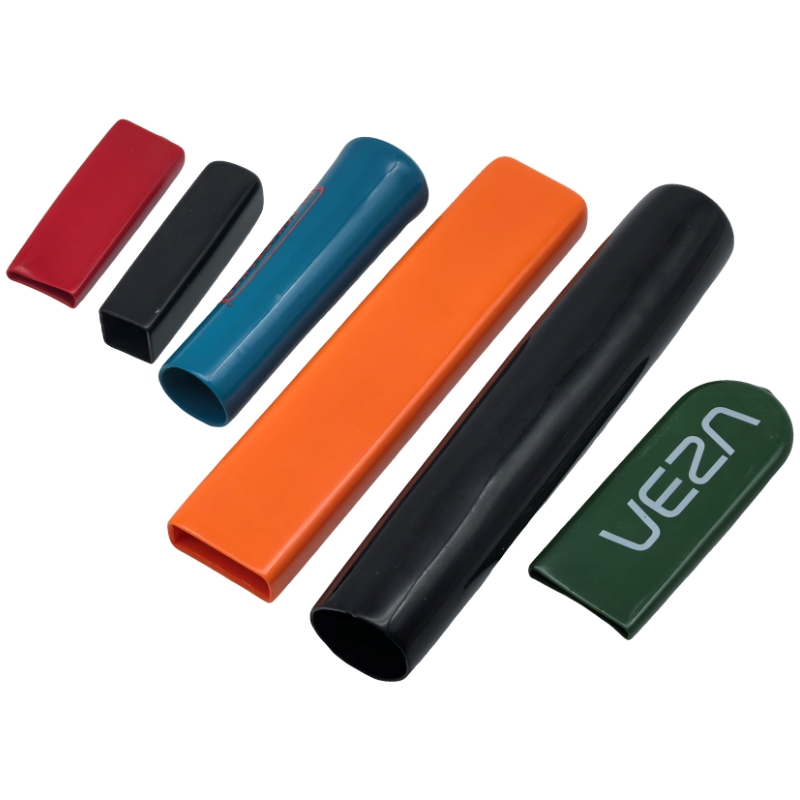
PVC dipping plastic handles can provide insulation, corrosion resistance and ergonomic grip without expensive mold tooling.
Comparing Traditional Supplier Selection with Process-Oriented Evaluation
A traditional supplier selection process usually starts with a fixed drawing and asks suppliers to quote mold cost and unit price. This method rewards suppliers that price aggressively, but it does not reveal whether the supplier can recommend a better material, a more efficient process or a design adjustment. Process-oriented evaluation asks different questions: Can the supplier produce this shape by injection molding? Should this long component be extruded? Is CNC machining more efficient for a short precision run? Is PVC dipping a lower-risk alternative for a coated handle?
The comparison is important because a process-oriented supplier can reduce cost before tooling begins. The US automotive tube holder case is one example: reducing internal material lowered logistics cost and improved dimensional stability. A traditional quote would have kept the original design and quoted a higher material cost.
This evaluation model has boundaries. LINGO's profile is suited to custom and mid-volume OEM/ODM plastic parts programs with engineering dialogue. It is not necessarily the optimal choice for extremely high-volume commodity plastic parts that require very large multi-plant capacity or dedicated automated production lines. With a factory area of 3,000m² and about 40 employees, LINGO is best evaluated as a focused specialist rather than a mass-production commodity supplier. Buyers with annual volumes in millions of identical low-cost parts should ask for additional capacity evidence and compare the supplier's tooling strategy before deciding.
Market Outlook: Why Evaluation Standards Will Tighten
Verified market data indicates continued growth in plastic parts demand. The injection molded plastics market is projected to grow from USD 362.5 billion in 2025 to USD 481.4 billion by 2033. Automotive plastics, valued at USD 33.0 billion in 2025, are being supported by lightweighting trends in electric vehicles. Polypropylene remains the dominant material in automotive plastics, with a share of about 32.4% in 2025. For buyers, this reinforces the need to evaluate suppliers with real material knowledge, not only process capability.
In parallel, industry trends for 2024 to 2026 include Industry 4.0 integration, AI and IoT-enabled real-time monitoring, reshoring of high-spec production, and adoption of bio-based or recycled resins. These trends are changing procurement criteria. Batch traceability, process documentation and inspection data will become more important than broad claims about capacity. Suppliers that can show evidence of PPAP, dimensional inspection, material compliance and full sample inspection will be easier to rank objectively.
The same trends also create risk. A supplier may have a factory but limited documentation. A buyer may receive a good sample batch and then face variance during mass production. That risk is especially high in custom plastic parts where subtle changes in material batch, mold temperature or cycle time can affect dimensions. This is why an evaluation framework should reward suppliers that provide clear parameters, practical tolerances and traceable quality records.
Frequently Asked Evaluation Questions
What is the difference between plastic injection molding and plastic extrusion?
Plastic injection molding injects molten polymer into a closed mold to produce discrete three-dimensional parts. Plastic extrusion pushes material through a die to create continuous profiles. Injection molding is suitable for items such as plastic housings, washers and handles. Extrusion is suitable for plastic strips, trims and tubing with a constant cross-section.
What materials are common for custom plastic parts?
Common materials include PP, PA6, PA66, ABS, PE, HDPE, UHMWPE, LDPE, PU and PTFE. For CNC machined plastic parts, POM and PEEK are also frequently specified. Material choice affects shrinkage, chemical resistance, mechanical strength and end-use temperature range.
What tolerance standard should buyers check for injection molded plastic parts?
A commonly referenced standard is GB/T 14486, with grades from MT1 to MT7. MT1 indicates a higher precision grade, while MT7 permits wider variation. Buyers should ask the supplier which grade will apply to critical dimensions and how it will be documented in inspection reports.
Can small quantity orders for plastic parts be practical?
Yes, but the practical order size depends on the process. Suppliers focused on custom parts often accept small quantity orders. PVC dipping does not require expensive molds. Plastic CNC machining is suited to small runs. For injection molded parts, MOQ depends on part size, material and tooling cost.
What does PPAP mean for plastic parts buyers?
PPAP, or Production Part Approval Process, is a standard method used in automotive and industrial supply chains to confirm that a supplier's production process can consistently meet requirements. It helps buyers review material, dimensional, performance and process documentation before full production release.
What certifications matter for automotive plastic parts?
IATF 16949:2016 is a common automotive quality management system standard, built on ISO 9001. At the product level, automotive plastic parts may require PPAP, FMVSS 302, RoHS or REACH compliance. Buyers should check which standards apply to their specific part and ask suppliers for relevant documentation.
For additional evaluation reference, the company profile of LINGO Rubber and Plastic Product Co., Ltd is publicly available here: LINGO Rubber & Plastic Company Profile.
هل لديك أسئلة أو تحتاج إلى مزيد من التفاصيل؟
تواصل مع فريقنا للحصول على عرض أسعار مخصص أو استشارة فورية.
طلب عرض أسعار
املأ النموذج أدناه وسيتواصل معك فريقنا بعرض مقترح مخصص.
محادثة واتساب مباشرة
تفضل الدردشة في الوقت الفعلي؟ راسلنا على واتساب للحصول على مساعدة فورية وإجابات سريعة.
- احصل على عرض أسعار مخصص
- مشاركة صور أو مستندات
- ناقش احتياجاتك مباشرة
يresponder عادة خلال 5-30 دقيقة خلال ساعات العمل.