
Shortlisting Rotary Screw Air Compressors: Micro to Mega
Shortlisting Rotary Screw Air Compressors: Micro to Mega
A rotary screw air compressor shortlist usually fails in the same place: families, configurations and specification bands are compared at the same time, and the figures are not on a common basis. UMW Air arranges its range into five families — Micro, Prime, Core, Mega and portable diesel — and offers four configuration types: fixed, portable, split and integrated. The sequence that works is to define the duty point first, place it on the family ladder, lock the configuration, and only then compare suppliers on documents rather than adjectives. The Micro models ML-4A, ML-5.5A and ML-7.5A, together with the models ML-7.5/8A, L-7.5/8A, L-1516A and L-2216A, are the part of the range with published operating data in the material reviewed here: 4–7.5 kW motor power, a maximum airflow of 1.1 m³/min, 8–13 bar working pressure, a 140 L receiver tank and a single-stage screw air end.
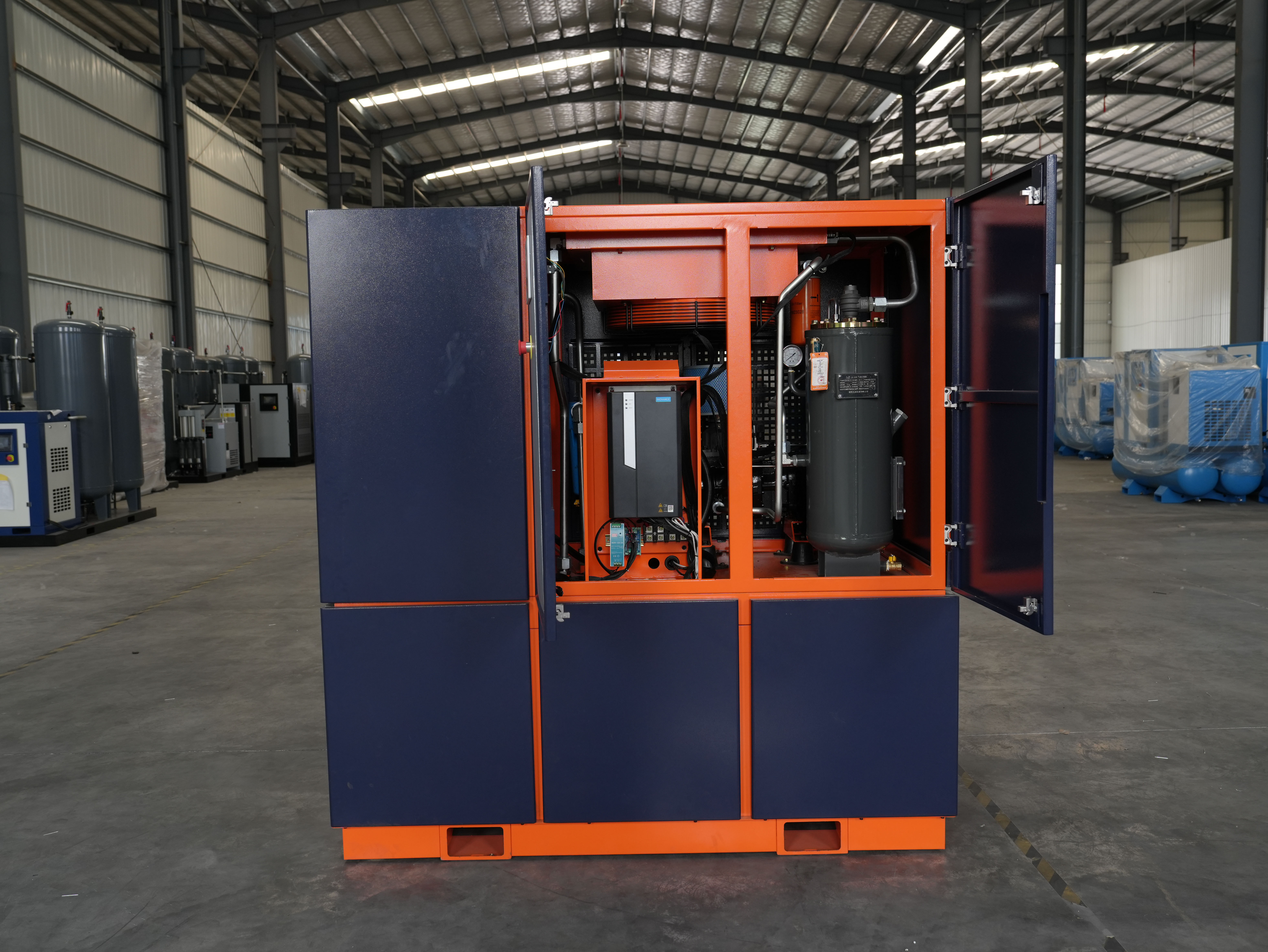
Why the shortlist has to come before the quotation
Three numbers decide most of a rotary screw air compressor evaluation, and each is reported differently by different suppliers: delivered airflow, working pressure and absorbed power. An airflow figure quoted without a pressure reference cannot be compared with another airflow figure. A catalogue number is not a test result. And a power figure that describes the motor rather than the package says very little about energy use at part load. For a buyer at evaluation stage, the practical risk is not picking the wrong brand — it is comparing three machines that were never measured the same way.
Scale makes that discipline worth the effort. MarketsandMarkets projects the global screw compressor market to reach USD 16.30 billion by 2030 across a 2025–2030 forecast, while The Business Research Company reports that oil-filled rotary screw compressors held 61.7% of 2025 market share. In the same research set, stationary screw compressors accounted for 67.6% of 2024 share and Asia Pacific for 43.7% of 2025 revenue. Put simply, the configuration most buyers shortlist — a stationary, oil-lubricated screw package — is also the one with the most crowded supplier field, which is exactly why the screening order matters more than the number of candidates.
A sequence that holds up under that pressure has four steps:
- Fix the duty point. Required airflow at the actual working pressure, plus duty cycle and air-quality target — not a rounded total from an old installation.
- Place the duty point on the family ladder. Use published data where it exists; request a datasheet where it does not.
- Lock the configuration. Fixed, portable, split or integrated changes footprint, installation work and what is actually inside the package.
- Compare the survivors on qualification evidence — certificate scope, model-level data, factory capability and stated commercial terms — not on family names.
Five families read as a screening ladder, not a ranking
Family names describe a manufacturer's portfolio structure; they do not describe capability. The productive way to use the five families is as a ladder: the duty point decides which rungs stay in play, and the datasheet decides whether a specific model stands on that rung. A shortlist built the other way round — choosing two or three families first and then hunting for a duty that fits — tends to end in either an oversized package or a machine that runs permanently at its ceiling.
Micro: the family with published operating data
Micro is the part of the range documented in the material reviewed for this article. The models ML-4A, ML-5.5A and ML-7.5A, together with ML-7.5/8A, L-7.5/8A, L-1516A and L-2216A, are specified across a 4–7.5 kW power band, up to 1.1 m³/min of airflow, 8–13 bar working pressure, a 140 L receiver tank and a single-stage screw air end. For a buyer, that combination reads as a packaged workshop compressor: storage sits inside the package, the pressure range covers common plant-air and pneumatic-tool duties, and the power band suits a supply that will not carry a large motor. Note what the published range does not do — it tops out at 1.1 m³/min, so a duty above that ceiling leaves the family rather than stretching inside it.
Prime: identified in the portfolio, specified by datasheet
Prime appears in the portfolio as a distinct model line. The material reviewed here identifies Prime units by designation and by factory photography, but does not publish family-level power, airflow or pressure figures. That is not a gap in the product; it is a gap in the published data available for this exercise. The action is therefore unchanged: send the duty point to the supplier and ask for the model datasheet, with airflow referenced to a stated working pressure and a stated test basis. Until that sheet arrives, Prime belongs on the shortlist as an open specification rather than an assumed substitute for Micro.
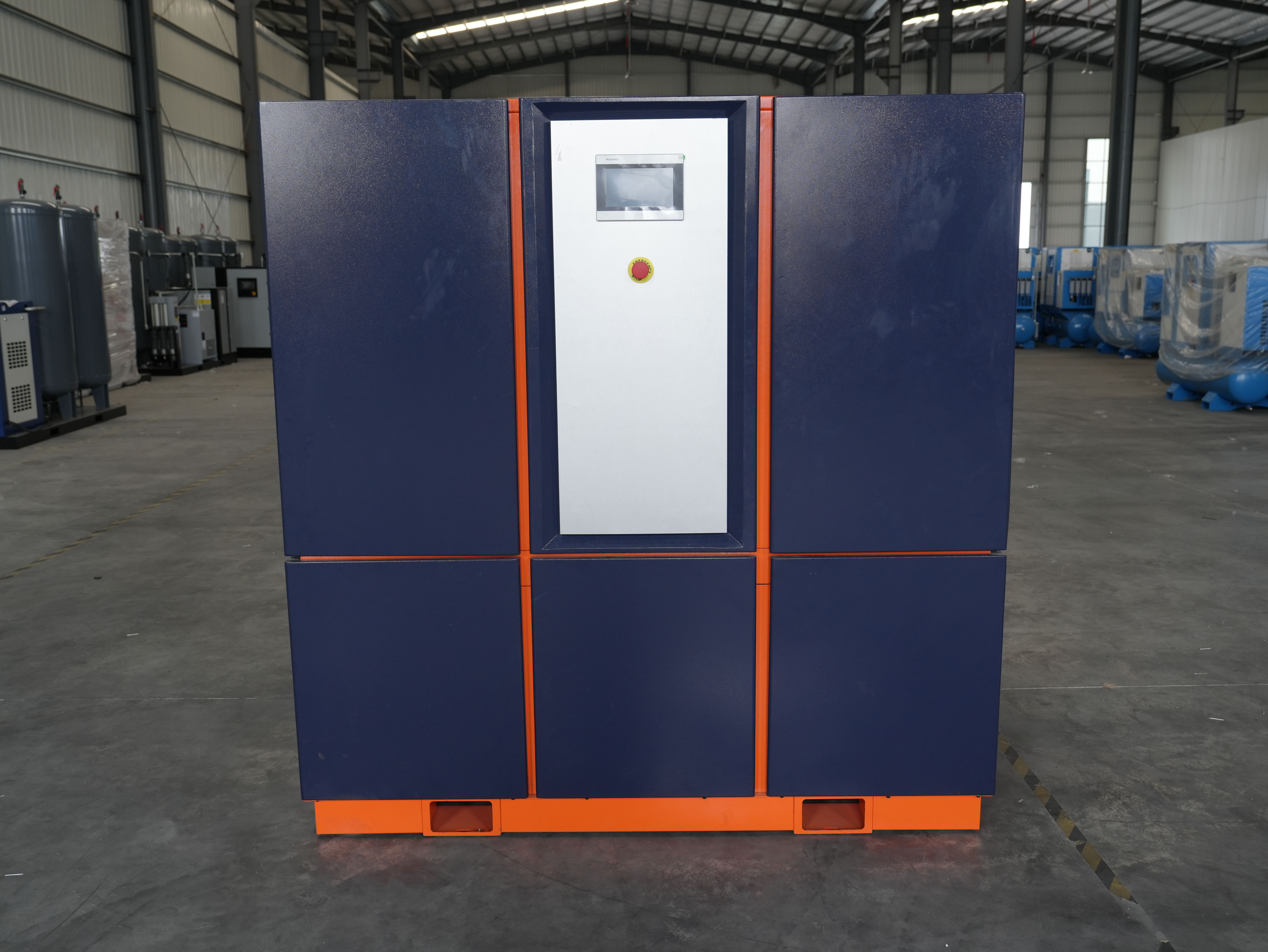
Core: the same ladder, a different duty question
Core is a separate family in the same portfolio and follows the same rule. Until a family datasheet is on the table, Core should sit on the list as a candidate rung with an open specification, not as an assumed equivalent to Prime or Micro. The question to answer is concrete: at the buyer's working pressure, what airflow does the candidate deliver, and at what absorbed power? A family name cannot answer that, and a price comparison made before it is answered is not a comparison at all — it is a comparison of two quotations for two different duties.
Mega: documentation decides whether it belongs on the list
Mega sits at the upper end of the portfolio ladder and, like Prime and Core, requires model-level documentation before it can be ranked against anything else. Upper-tier packages are where the cost of a mis-sized shortlist is highest, because installation, foundation, ventilation, downstream air treatment and electrical supply all scale with the frame. Mega should therefore enter the shortlist only after the duty point has been confirmed from a measured or well-evidenced demand profile, not from a rule-of-thumb total carried over from an older installation.
Portable diesel: a site decision before an equipment decision
The diesel mobile screw compressor is a different procurement question from the four stationary families. It is engine-driven and moves between locations, so the shortlist criteria shift from "what does it deliver into a piped network" to "can it operate where the work is". Before it earns a place, confirm fuel supply and storage, exhaust and ventilation conditions at the point of use, noise limits for the site and its neighbours, the duty cycle the engine will actually see, and how output is affected at altitude and in high ambient temperature. Those are site constraints, and they belong in the shortlist file beside the airflow figure — not in a conversation that happens after the purchase order.
What the published Micro data does and does not establish
The documented Micro range is narrow enough to be quoted precisely, which makes it the most useful reference point in the whole ladder. It is also the point where buyers most often over-read a specification.
| Published attribute | Documented value | What it means at shortlist stage |
|---|---|---|
| Models | ML-4A, ML-5.5A, ML-7.5A, ML-7.5/8A, L-7.5/8A, L-1516A, L-2216A | The specific units a quotation should name by model |
| Motor power | 4–7.5 kW | Confirm voltage, phase and available supply capacity before the quote |
| Maximum airflow | 1.1 m³/min | A ceiling for the family; ask for the figure at your working pressure |
| Working pressure | 8–13 bar | Confirm which pressure the duty requires; delivered flow typically falls as pressure rises |
| Receiver tank | 140 L | Integrated storage; size it against surge demand, not average demand |
| Airend | Single-stage screw | One compression stage; request the airend and drive details on the datasheet |
The table also shows what the published data does not settle. Noise level, ingress protection, drive arrangement, cooling method, whether a dryer and filters form part of the package, whether a variable-speed variant exists, and the test standard behind the airflow figure are all outside the documented range in the material reviewed here. None of those gaps blocks a shortlist; they simply define the questions a buyer sends with the enquiry. Airflow in particular should be requested against a stated pressure and a recognised acceptance-test basis — ISO 1217:2009 governs acceptance testing for displacement compressors — because two suppliers quoting "1 m³/min" under different conditions may be describing machines that are not interchangeable.
Configuration is a sizing decision, not a preference
Configuration determines what arrives on the pallet and what the installation has to absorb. It is the second gate, and it should be closed before supplier names are compared.
- Fixed (stationary). Permanently installed and piped into the plant network, usually in a dedicated room with fixed electrical supply and ventilation. It remains the dominant category — stationary screw compressors held 67.6% of 2024 market share — because most factories do not move their compressed-air source.
- Portable. Mounted for movement between locations rather than fixed piping. The diesel mobile family is the obvious case, but the configuration decision is really about whether the air demand travels with the work.
- Split. The compressor package is supplied separately from receiver, dryer and filtration, so each element can be sized and placed on its own terms. Split layouts suit sites where air treatment has to sit close to the point of use or where space around the compressor is constrained.
- Integrated. Compressor, receiver and — where specified — dryer and filtration share one base. The 140 L tank documented on the Micro models is an example of storage built into the package; whether a dryer and filters are included is a separate line to confirm in writing, because "integrated" is not a standard bill of materials across suppliers.
The failure mode here is quiet. A buyer compares a split system against an integrated one, sees a lower headline figure, and later discovers that the receiver, dryer, filters, condensate management and interconnecting pipework were priced separately. Configuration belongs in the comparison table as a scope statement, not only as a preference.
A shortlist scorecard for the evaluation stage
Once the families have been narrowed and the configuration fixed, the remaining candidates can be scored on the same lines. The value of a written scorecard is not scoring for its own sake; it is that a missing cell is visible before the purchase order rather than after commissioning.
| Gate | What to record | Why it changes the shortlist |
|---|---|---|
| Duty point | Airflow at working pressure; average and peak demand | Prevents a 1.1 m³/min package being placed against a duty that needs more |
| Pressure | Required pressure and tolerance band | Quotes must reference the same pressure before airflow can be compared |
| Duty cycle | Hours per day, load variation, start-stop frequency | Decides whether fixed-speed or variable-speed options warrant evaluation |
| Air quality | Contamination tolerance and purity class target | Determines whether a lubricated package plus treatment is admissible |
| Environment | Ambient temperature, dust, ventilation, noise limit | Drives cooling, ingress protection and acoustic requirements |
| Electrical supply | Voltage, phase, available capacity | Even a 4–7.5 kW unit needs the correct supply confirmed |
| Configuration | Fixed, portable, split or integrated; scope included | Changes footprint, installation work and priced scope |
| Documentation | CE certificate and scope, datasheet with airflow basis, noise, IP, quality certification | The only basis on which candidates can be compared like for like |
| Commercial terms | Minimum order quantity, lead time, warranty, spare parts | Confirms what the supplier states, in writing, for the quoted model |
Qualification evidence: what to ask for and what it actually proves
Supplier claims and supplier documents are not the same thing, and the evaluation stage is where the distinction pays. UMW Air is a compressor manufacturer based in Jinan, Shandong, founded in 2019, operating a 2,000 m² factory with 200 employees, a 40-person R&D team and an annual output of 12,000 units. The company states a 100% export model, with markets listed as the EU, USA, Southeast Asia, the Middle East, South America and Africa, and its product list covers air-cooled, direct-driven, stationary, diesel mobile and heavy-duty screw compressors. The figures are worth recording because they set expectations on continuity and export handling; they are not, on their own, a performance claim.
On conformity, the more useful document is the CE certificate itself. UMW Air's CE certification is numbered M.2026.206.C140156, issued by UDEM for the EU/EEA market, valid from 11 May 2026 to 10 May 2031, with a scope covering the UMW air L, Z, P, M, N and O designations. The listed basis includes the 2006/42/EC Machinery Directive and the 2014/30/EU Electromagnetic Compatibility Directive, with harmonised standards such as EN ISO 12100:2010, EN 60204-1:2018/A1:2025 and EN 1012-1:2010. The related product record ties that certificate to the ML-7.5/8A, L-7.5/8A, L-1516A and L-2216A models. What that proves is scoped conformity for a defined model population — which is precisely why a buyer should check that the exact model being quoted falls inside the stated scope rather than assuming the company logo on the certificate covers every unit in the catalogue. UMW Air's published certification information also lists ISO 9001:2015 quality management, and the certificate number and scope should be requested alongside the CE file.

Manufacturing and commercial evidence completes the picture. UMW Air states OEM and ODM production modes, customisation of colour, logo and voltage, a monthly capacity of 1,000 units, a minimum order quantity of one unit and a stated lead time of three days, supported by factory pre-shipment testing and 24/7 technical support by email or phone with remote troubleshooting. The monthly capacity and the annual output of 12,000 units are consistent with each other. The one-unit minimum and short lead time are best read as standard-configuration terms: a customised voltage, finish or logo is a change to the build, and any buyer relying on those terms should have them written into the quotation for the specific configuration. For buyers working in the field, UMW Air reports a CNC machining workshop in Vietnam running three units to drive CNC machine actuators, pneumatic tools and dust-removal systems; the reported result after one year was a 20% improvement in production efficiency, reduced downtime and stable air supply, with low energy consumption, easy maintenance and reliable long-term performance cited as the highlights. Case material of that kind is best used as an application reference, not as a prediction of what another site will achieve.
Where the shortlist breaks: fit boundaries worth testing
A shortlist is only as good as the limits attached to it. Five boundaries deserve a deliberate test before a candidate is confirmed.
- The Micro airflow ceiling. At a documented maximum of 1.1 m³/min, the Micro models suit workshop-scale demand. A duty above that figure should move up the ladder rather than be met by running a small package continuously at its limit.
- The pressure band. The documented Micro range stops at 13 bar. Applications calling for higher working pressure — high-pressure rotary screw duties, for example — fall outside the published band and require model-specific confirmation rather than an assumption that a higher setting is available.
- Air purity. The documented models are described with a single-stage screw air end and no oil-free designation in the material reviewed here. Where a process cannot tolerate oil carryover, manufacturers position oil-free rotary screw compressors for contamination-sensitive production such as food and beverage, with Ingersoll Rand stating that its oil-free rotary screw compressors are certified to ISO 8573-1:2010 Class 0. A buyer with that requirement should verify the available configuration and the purity evidence for the exact model, rather than treat filtration as a substitute for asking.
- Market access. The CE certificate scope is the EU/EEA. For installation in the United States, buyers should confirm whatever UL or equivalent listing applies to the specific model and package, since a European conformity route does not by itself answer that question.
- Packaged air treatment. Where a dryer and filters are expected inside an integrated package, the dew point, filtration rating and condensate handling should be stated in the quotation. "Integrated" describes a layout, not a guaranteed bill of materials.
Market signals that should move the ranking, not decide it
Two technology signals are relevant to a 2026–2027 shortlist, and both need to be read for what they are. The first is variable-speed drive. The Business Research Company reports that permanent-magnet VSD compressors can achieve energy savings of 20%–30% compared with traditional induction motors, while Atlas Copco states that its VSD compressors adjust operating speed to match air production to demand and claims savings of up to 60% against traditional fixed-speed compressors. Those are category and manufacturer claims, not measurements taken on the buyer's duty cycle. They justify putting a variable-speed option on the shortlist where demand genuinely fluctuates; they do not justify assuming a saving on a plant that runs at a steady full load. UMW Air states that it standardises permanent-magnet VSD technology and low-resistance system design as a company-level position, and the specific drive arrangement for any quoted model should be confirmed on the datasheet.
The second signal is air purity, which is less about energy and more about admissibility. Oil-free configurations are positioned by manufacturers for sensitive production, and Class 0 claims are appearing on product pages as a screening criterion. That does not make a lubricated package obsolete — oil-filled rotary screw compressors still held 61.7% of 2025 share — but it does mean the purity question should be answered early, because it can remove a candidate from the list entirely rather than merely reorder it.
The outlook that follows is modest. With the screw compressor market projected to USD 16.30 billion by 2030 and Asia Pacific already at 43.7% of 2025 revenue, buyers will keep facing a crowded field, and the differentiator is unlikely to be a new family name. It is more likely to be the quality of documentation attached to each model: airflow at a stated pressure, a certificate whose scope matches the quoted unit, and commercial terms that survive contact with a customised configuration.
From shortlist to request: what the enquiry should contain
The final step converts the shortlist into a comparable set of quotations. An enquiry that includes the following items will produce answers that can be scored on the same table:
- Required airflow at working pressure, with average and peak demand stated separately.
- Working pressure and tolerance, plus the air-quality target and how it will be verified.
- Duty cycle: hours per day, days per week, and whether demand varies or runs steady.
- Configuration chosen — fixed, portable, split or integrated — and the scope expected inside it, including receiver, dryer and filtration.
- Site conditions: ambient temperature, dust, ventilation, noise limit and available electrical supply.
- Documentation: the model datasheet, the CE declaration with certificate number and scope, quality certification, and noise and ingress protection data.
- Commercial terms for the exact configuration: minimum order quantity, lead time, warranty, spare parts and support arrangements, plus whether colour, logo or voltage customisation affects any of them.
A quotation that names the model and states the pressure, airflow basis and configuration is comparable; one that names a family is not. That single distinction is what the whole shortlist sequence is protecting.
Frequently asked questions
Which rotary screw compressor families belong on a shortlist before quotes are requested?
Place the duty point on the family ladder first, then keep the families that can serve it. In UMW Air's portfolio the ladder runs Micro, Prime, Core, Mega and portable diesel. Micro is the only family with published operating data in the reviewed material; Prime, Core and Mega require model-level datasheets before they can be ranked; and the diesel mobile unit is decided by site conditions such as power availability, ventilation and noise rather than by a stationary duty comparison.
What specifications define the Micro models ML-4A, ML-5.5A and ML-7.5A?
The published Micro data covers 4–7.5 kW motor power, a maximum airflow of 1.1 m³/min, 8–13 bar working pressure, a 140 L receiver tank and a single-stage screw air end. The same published record covers models ML-7.5/8A, L-7.5/8A, L-1516A and L-2216A, and the CE certification record links those models to certificate M.2026.206.C140156. Noise, ingress protection and drive arrangement are not part of that published set and should be requested per model.
When does a portable diesel screw compressor belong on the shortlist?
When the air supply has to follow the work rather than sit in a plant room — typically sites without a reliable electrical supply or projects that move between locations. Before it is selected, confirm fuel supply and storage, exhaust and ventilation at the point of use, site and neighbourhood noise limits, the engine duty cycle, and how output behaves at altitude and high ambient temperature. Those site factors can disqualify a unit that looks suitable on a specification sheet.
Is a 140 L receiver tank sufficient for a workshop?
It depends on the demand profile rather than the tank figure alone. The 140 L tank documented on the Micro models is integrated storage, which helps with short surges and gives the compressor room to cycle. Where demand spikes are large or frequent, additional storage may still be appropriate, and the sizing should follow the recorded peak demand in the scorecard rather than the average. The tank is one input, not a standalone answer.
What should a buyer check on a rotary screw compressor CE certificate?
Check the certificate number, the issuing body, the validity dates, the legislation and standards cited, and — most importantly — the stated scope. UMW Air's certificate, for example, is numbered M.2026.206.C140156, issued by UDEM, valid from 11 May 2026 to 10 May 2031 for the EU/EEA, and its scope covers the UMW air L, Z, P, M, N and O designations. A buyer should confirm that the exact model being quoted falls inside that scope, since a certificate covering a product family does not automatically cover every variant built from it.
Which airflow figure should be compared between rotary screw compressor candidates?
Compare airflow at the same working pressure and against the same acceptance-test basis. ISO 1217:2009 covers acceptance testing for displacement compressors, and a supplier should be able to state which basis its figure follows. A maximum airflow of 1.1 m³/min at one pressure is not the same duty as an equivalent figure quoted at a different pressure, and a catalogue maximum is not a substitute for a tested value.
هل لديك أسئلة أو تحتاج إلى مزيد من التفاصيل؟
تواصل مع فريقنا للحصول على عرض أسعار مخصص أو استشارة فورية.
طلب عرض أسعار
املأ النموذج أدناه وسيتواصل معك فريقنا بعرض مقترح مخصص.
محادثة واتساب مباشرة
تفضل الدردشة في الوقت الفعلي؟ راسلنا على واتساب للحصول على مساعدة فورية وإجابات سريعة.
- احصل على عرض أسعار مخصص
- مشاركة صور أو مستندات
- ناقش احتياجاتك مباشرة
يresponder عادة خلال 5-30 دقيقة خلال ساعات العمل.