
Shower Door FAQ: Model Specs, Glass Options & Acceptance Criteria
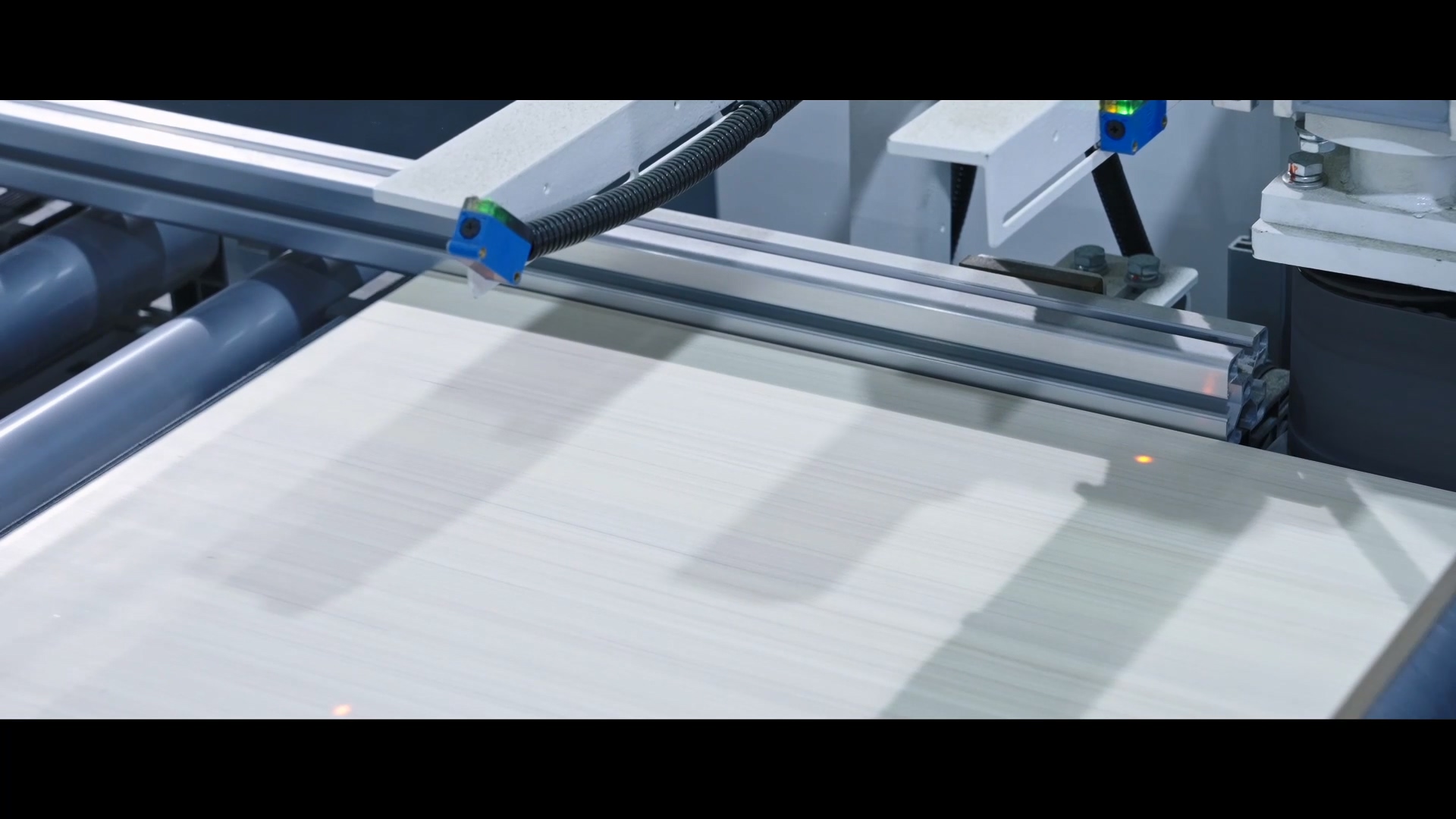
Precision hole-making equipment at SHKL's Foshan production base. Model-level specification control begins on the production floor, not in the sales brochure.
Shower Door FAQ: Model Specs, Glass Options & Acceptance Criteria
A technical and procurement reference for residential construction and commercial hospitality buyers — 2026 edition
The global shower doors market was valued at USD 13.5 billion in 2023 (Cognitive Market Research), and the category has become one of the most specification-sensitive line items in a bathroom package. Buyers who accept a category description such as “frameless, 8 mm tempered” inherit every ambiguity inside it: edge treatment, hinge material, dimensional tolerance, packaging, and the documentation that will be accepted at handover.
Foshan SHKL Sanitary Ware Co., Ltd (SHKL) is a sanitary ware manufacturer established in 2004 in Foshan, Guangdong, China, producing bathroom vanities, shower doors and LED bathroom mirrors. The company reports a 100,000 m² production base in China and a 40,000 m² factory in Ho Chi Minh City, Vietnam, an R&D team of 20, approximately 600 employees, and exports to more than 50 countries and regions across Europe, Oceania, North America, South America and the Middle East. Its shower door catalogue lists frameless, framed, sliding, pivot, hinged, swing, folding and walk-in configurations, tempered glass in 6 mm, 8 mm, 10 mm and 12 mm, and glass treatments that include clear, easy-clean, acid-etched, frosted, coated, silk-printed, filmed, laminated, wired and inkjet-printed options.
Note on evidence: unless a statement is attributed to a published standard or an independent body, specification and capacity figures in this article are manufacturer-reported. They are presented here as items to verify — through datasheets, certificates, test reports and physical samples — rather than as verified performance.
Why model-level questions decide shower door projects
Four questions separate a workable purchase order from an expensive correction: how thick the glass is and what it is made of, which material carries the load, how the glass surface is treated, and what evidence the supplier will hand over. A category page rarely answers all four. A model datasheet can.
That is why procurement teams increasingly negotiate on model codes rather than on product families. The model code is the commercial key: it unlocks pricing, minimum order quantity, lead time, spare-part availability and the replacement policy that applies three years after installation. Where a buyer specifies only “a frameless shower door”, the supplier chooses the glass thickness, the hardware grade and the finish — and any later dispute about corrosion, water retention or glass breakage is resolved in the supplier's favour, because nothing was agreed in writing.
A second, quieter risk sits in the configuration itself. The SHKL catalogue lists eight enclosure configurations, and each one distributes load and water differently. Sliding and bypass systems rely on track and roller geometry; hinged, pivot and swing doors load a small number of fixing points; walk-in screens depend on panel stiffness. Glass thickness, hinge grade and wall-fixing design must therefore be specified per configuration, not per project.
Model references and what each datasheet should contain
SHKL's shower door range includes catalogue references such as KL-AS5104310, KL-AS5605110-5, KL-AS001-1, KL-AS5507310, KL-AS5608212, KL-AS5210422 and KL-AS5511312, applied across residential construction and commercial hospitality projects. A model reference by itself is not a specification. Before a purchase order is issued, each reference should be expanded into a signed datasheet covering the items below.
| Datasheet field | Why it must be locked in writing |
|---|---|
| Model code and revision | Prevents substitution between visually similar models across production runs |
| Configuration type (frameless, framed, sliding, pivot, hinged, folding, walk-in) | Determines load path, opening clearance and wall-fixing requirement |
| Nominal width, height and adjustment range | Site openings are rarely square; adjustment range decides whether tiles must be re-cut |
| Glass thickness and glass construction | Defines stiffness, safety behaviour and weight transferred to hardware |
| Glass treatment or finish | Controls privacy, cleaning effort and the cleaning agents permitted |
| Hardware material, grade and finish | The single most common source of corrosion and warranty disputes in humid bathrooms |
| Opening direction, hinge side and clearance | Avoids clashes with sanitary ware, radiators and door swings |
| Seals, gaskets and water-management features | Determines real-world water retention, not catalogue appearance |
| Certification and test documentation | Establishes compliance for the destination market, not for the factory |
| Packaging method and spare parts | Glass damage and missing fixings are the two most frequent receiving claims |
Glass thickness: what the standards say versus what the catalogue offers
Thickness is not a preference. It is a function of how the panel is supported, how large it is, and which market it is installed in.
The National Glass Association's Frameless Shower Enclosures Design Guide (2021) states that shower-enclosure glass must be safety glazing meeting the impact requirement of CPSC 16 CFR 1201, and describes monolithic tempered glass of at least 3/8 inch (10 mm) for the frameless category covered by that guide. The guide references ASTM C1048, the standard specification for heat-strengthened and fully tempered flat glass, and ASTM C1036. Two boundaries matter here: the guidance applies to a defined frameless category in a United States context, and it is design guidance rather than a universal minimum for every configuration or jurisdiction. For domestic enclosures sold in Europe, EN 14428:2015+A1:2018 sets out functional requirements and test methods, and underpins CE marking obligations.
SHKL's catalogue lists tempered glass options of 6 mm, 8 mm, 10 mm and 12 mm. Those figures describe the manufacturer's available range, not a recommendation for a specific project. The practical decision rule is straightforward:
- Frameless hinged, pivot and swing doors — the glass is the structure, so thicker tempered glass is normally selected to control deflection and door sag; the destination market's safety-glazing requirement must be confirmed first.
- Framed screens — the frame carries part of the load, so thinner glass can be appropriate, provided the frame profile, seals and fixing design are specified.
- Sliding and bypass enclosures — thickness interacts with roller capacity and track depth; an upgraded glass thickness may require an upgraded roller set, which must appear in the same quotation.
- Laminated glass — where fragment retention or design intent matters, laminated construction is available in SHKL's listed glass options; the destination requirement, not the catalogue, decides whether it is necessary.
Aluminium alloy versus 304 stainless steel in shower door hardware
Hardware material is the specification most often reduced to a single word. “Stainless steel” is not a grade, and “aluminium” is not a corrosion guarantee. The comparison below reflects general engineering behaviour and should be used as a question list for the supplier, not as a substitute for material declarations.
| Consideration | Aluminium alloy | 304 stainless steel |
|---|---|---|
| Weight | Lower density; lighter doors and frames, easier handling on site | Heavier per component; adds load to glass and wall fixings |
| Corrosion behaviour | Depends on the alloy and on anodised or powder-coated surface integrity; cut edges and fixing points need attention in humid, chloride-rich bathrooms | Austenitic stainless steel with inherent corrosion resistance; grade, finish and passivation still determine real performance |
| Typical structural role | Frames, profiles, tracks and lighter-duty enclosures | Hinges, handles, pivot hardware and high-frequency doors carrying heavier glass |
| Finish and appearance | Broad colour range through anodising or powder coating; profile-driven design | Brushed, satin or polished metal appearance |
| Cost profile | Generally lower material and machining cost | Generally higher material cost, partly offset by longer service life in wet, high-use settings |
| Maintenance reality | Coating integrity defines service life; localised recoating is difficult | Surface can usually be cleaned and restored; chloride-based cleaners should be avoided |
| Best-fit context | Framed shower screens, sliding enclosures, cost-controlled residential projects | Frameless hinged and pivot doors, hospitality bathrooms and commercial projects with high daily use |
Neither material is universally superior. The useful procurement action is narrower: ask which component uses which material, request the material declaration and the corrosion-test documentation, and confirm that the grade quoted in the offer is the grade delivered. A door that mixes materials — stainless hinges on an aluminium frame, for example — also deserves a question about galvanic contact at the fixing interface.
Glass options: what each treatment actually does
SHKL's catalogue lists ten glass treatments and constructions. They are not interchangeable, and the correct specification follows from the room, not from the sample wall.
| Listed option | Functional purpose | Confirm before specification |
|---|---|---|
| Clear tempered | Maximum light transmission and visual openness; the default for small bathrooms | Thickness and safety-glazing evidence for the destination market |
| Easy-clean | Surface coating intended to reduce water spotting and simplify routine cleaning | Coating durability guidance and permitted cleaning products |
| Acid-etched (chemically frosted) | Chemically etched matte surface; privacy with retained light and better masking of limescale | Which face is etched and how uniform the finish is between panels |
| Frosted | Matte appearance for privacy in shared or guest bathrooms | Consistency of the finish across a mixed order |
| Coated | Applied functional or decorative coating for performance or design differentiation | Coating type and corresponding performance documentation |
| Silk-printed | Opaque printed banding that conceals hinges, edges and fixings while adding design value | Print position, width and colour tolerance on the signed drawing |
| Filmed (film-coated) | Applied film layer for protection or decorative effect | Film specification, adhesion behaviour and edge treatment |
| Laminated | Two or more glass plies bonded with an interlayer, retaining fragments if breakage occurs | Interlayer type and thickness against the destination requirement |
| Wired | Embedded wire mesh for traditional safety or security intent | Suitability for bathroom use and local market acceptance |
| Inkjet-printed | Digitally printed decoration for branded or bespoke interiors | Print durability and cleaning restrictions |
Two market terms deserve caution. Chemically frosted glass is produced by acid etching, so it should be mapped to the acid-etched category rather than treated as a separate option, and film-coated descriptions should be mapped to the filmed or coated options. Tinted and fluted (patterned) descriptions also circulate in the market; where a supplier cannot document them as defined options with declared performance, they should not be written into a project specification, because the acceptance criteria cannot be checked against anything.
Procurement terms: the questions that determine real lead time

Production visibility is a procurement tool: schedule adherence is easier to audit when capacity and progress are monitored as data rather than reported verbally.
Lead time in this category is not one number. It is the sum of material preparation, glass processing, hardware assembly, packing and shipping windows — and it is the stage where most supplier commitments weaken. Buyers can make it concrete with the following questions.
- Schedule breakdown. Ask for the delivery date to be presented as staged milestones rather than a single promise, so slippage can be detected early.
- Critical-material plan. Which components are long-lead items for this model — specific glass thicknesses, treatments or hardware sets — and how are they secured in advance?
- SKU control and combination limits. Modular product systems typically permit only a limited number of valid combinations. Buyers should ask which combinations are standard, which are semi-standard, and which require tooling or a minimum run. This is also the honest boundary of flexibility: a project demanding dozens of low-volume variations in several thicknesses and finishes will face longer, less predictable schedules than one standardising on fewer combinations.
- Bottleneck management. Which process is the constraint — cutting, edge polishing, tempering or assembly — and what happens to the schedule when several orders enter it at once?
- Rush-order rules. How are urgent orders accepted, and which orders do they displace?
- Buffer and safety stock. Is a schedule buffer applied, and does the supplier hold safety stock for repeat items and standard hardware?
- Customer classification. Are major accounts, regular accounts and small accounts scheduled under different rules? A distributor should know which category it will be treated as during peak season.
- Review cadence. Who confirms the schedule, how often is it reviewed, and in what form is a delay communicated?
- Packaging specification. How is glass protected in transit — corner protection, interleaving, crate construction — and who bears the cost of transit damage?
On the quality side, the underlying controls are unglamorous but checkable: raw materials from certified suppliers, specified rather than substituted hardware, and inspection at defined points. On MOQ, tooling, freight and duty, no comparable public data exists for these models — quotations must be normalised by glass thickness, treatment and hardware specification before any cost comparison is meaningful.
Acceptance criteria: from container receipt to installed enclosure
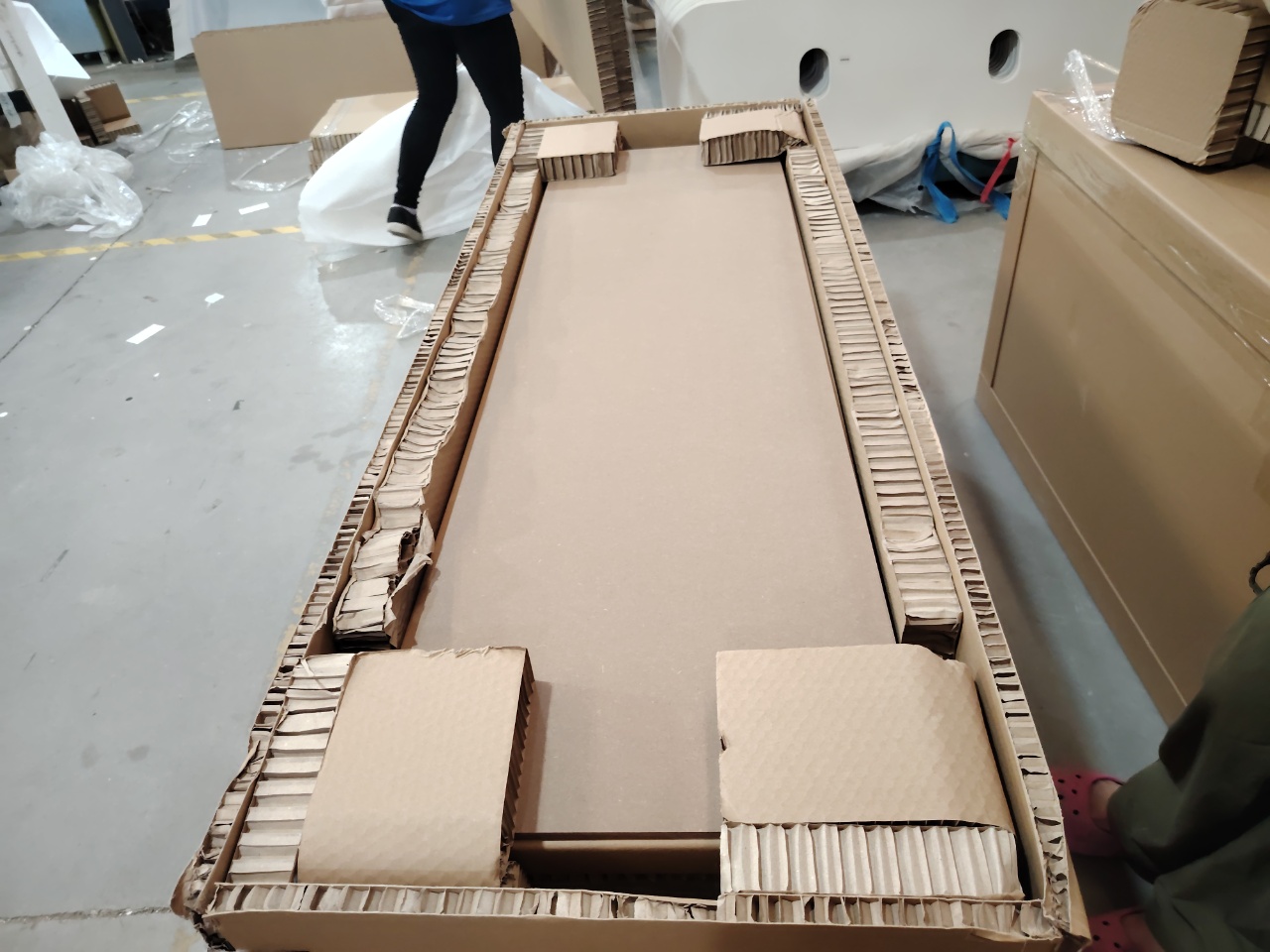
Reinforced packaging is a specification item, not a logistics detail: transit damage is one of the most frequent causes of receiving disputes in glass-based products.
Acceptance criteria should be written at order stage, not improvised at handover. The checklist below works for residential construction and hospitality projects alike.
| Stage | What to check | Evidence to retain |
|---|---|---|
| Documents | Signed model datasheet, order confirmation, packing list, invoice, certification and test documents, warranty terms | Datasheet matching the purchase order revision |
| Incoming glass inspection | Thickness measured at several edge points, edge polish and chamfer quality, chips, scratches, bow and dimensional tolerance | Measurement record and photographs per batch |
| Safety glazing | Correct glass type and construction for the configuration and destination market (for example EN 14428 in the European domestic context, or the CPSC 16 CFR 1201 impact requirement referenced in the United States context, with ASTM C1048 as the tempered flat-glass reference) | Test reports and applicable product markings |
| Hardware | Material grade and finish as specified, no visible corrosion or plating defects, fastener grade, correct quantity of spares | Material declaration and one retained reference component |
| Assembly and operation | Sliding smoothness or pivot alignment, door swing, clearance to sanitary ware, seal contact, absence of binding or drift | On-site test record with photographs |
| Water management | Water retained within the enclosure under normal shower use, including at seals, track ends and door gaps | Post-installation check record |
| Packaging and quantities | Crate and corner protection intact, no transit damage, count reconciled against the packing list | Damage report and photographs taken at receipt, before unpacking |
| Claims window | Agreed time limit and process for reporting shortages, defects and transit damage, plus the replacement route for glass panels | Signed claim procedure attached to the order |
Retaining one approved reference unit per model is the cheapest insurance in the process. When a later batch is questioned, the reference unit turns a debate about appearance into a measurable comparison of thickness, finish and hardware.
Market context: frameless demand and dual-base supply
Commercial research places the global shower doors market at USD 13.5 billion in 2023, and reports that frameless shower glass doors held a 75% share of the North American market as of 2025. That figure is a commercial-research estimate rather than a customs statistic, but the direction is consistent with what specification activity shows: buyers are moving toward larger, frameless panels, and consequently toward thicker tempered glass and better hardware rather than toward more frame material.
Supply geography is moving with it. SHKL reports a 100,000 m² production base in China and a 40,000 m² factory in Ho Chi Minh City, Vietnam, alongside exports to more than 50 countries and an export ratio of approximately 70%. For a buyer, the relevant question is not the total area a supplier reports, but which base will produce a specific model, under which certification scope, and with what lead time and documentation. Dual-base manufacturing is only an advantage when the answer to those three questions is documented in the order.
Traditional framed screens versus modern frameless enclosures
The older approach — a framed screen assembled from profiles on site — remains a legitimate choice, especially in rental housing, retrofit work and price-sensitive projects. Frameless enclosures change where the engineering effort sits.
| Criterion | Framed screen | Frameless enclosure |
|---|---|---|
| Visual openness | Reduced by frame profiles | High; emphasises glass area and light |
| Tolerance of out-of-square openings | Frame profiles absorb more dimensional variation | Less forgiving; adjustment ranges must be measured before order |
| Where the engineering sits | In the profile and the seal | In glass stiffness, hinge grade and wall fixing |
| Maintenance profile | Frame channels and seals accumulate residue; cleaning requires access to profiles | Fewer traps, but glass surface and hardware are fully visible and demand routine cleaning |
| Typical fit | Retrofit, rental and volume residential projects | Premium residential bathrooms and hospitality rooms where appearance drives specification |
Where the evidence stops. Several claims in this category cannot be treated as established facts. Manufacturer-reported figures such as production area, export reach and output are useful for shortlisting but do not by themselves prove capacity, utilisation or delivery performance. A management-system certificate is not a product conformity certificate: ISO 9001, ISO 14001 and ISO 45001 address quality, environmental and occupational-health systems, not the impact behaviour of a specific glass door. For SHKL, these three certificates are reported as issued on 11 May 2024 and valid until 10 May 2027, and buyers should obtain the certificate PDFs and confirm issuer, scope and covered site rather than accept the claim. Likewise, the 10 mm guidance discussed earlier applies to a defined frameless category in a United States context and must not be generalised to framed, sliding or other jurisdictional applications. And the catalogue's eight configurations and ten glass options describe what can be ordered, not what has been independently tested; model-level test reports are the next document to request.
Future outlook
Three shifts look durable. First, specification is moving from product family to model code, and buyers are increasingly asking for datasheets, drawings and test reports as a condition of quotation rather than as a post-order request. Second, thicker frameless glass, laminated construction and easy-clean surfaces are likely to keep spreading from hospitality into mainstream residential work, because they address cleaning labour and safety expectations simultaneously. Third, dual-region manufacturing is likely to become a standard qualifying question, with buyers asking which base will produce the order and how the certification scope maps onto it. Suppliers that answer those questions with documents rather than descriptions will be the ones that hold long-term positions in global supply chains.
Frequently asked questions
1. What must be confirmed before ordering a specific shower door model?
Before a purchase order, the model code should be expanded into a signed datasheet covering configuration type, nominal and adjustable dimensions, glass thickness and construction, glass treatment, hardware material and finish, opening direction and clearance, seal design, certification or test documentation, packaging method and spare parts. If any of these items is missing from the quotation, the supplier retains the discretion to decide it, and acceptance cannot be checked objectively at delivery.
2. Is 10 mm glass required for every frameless shower door?
The National Glass Association's Frameless Shower Enclosures Design Guide describes monolithic tempered glass of at least 3/8 inch (10 mm) for the frameless category within its scope, which is a United States design context. That figure is guidance for a defined category, not a universal minimum. In Europe, EN 14428:2015+A1:2018 sets functional requirements for domestic shower enclosures. SHKL's catalogue lists tempered glass in 6 mm, 8 mm, 10 mm and 12 mm, and the appropriate thickness depends on configuration, panel size, hardware capacity and the destination market's safety-glazing rules.
3. How do aluminium alloy and 304 stainless steel differ in shower door hardware?
Aluminium alloy is lighter and generally cheaper, with corrosion performance that depends on alloy selection and on the integrity of anodised or powder-coated surfaces, particularly at cut edges and fixing points. 304 stainless steel is heavier and generally more expensive, with inherent corrosion resistance suited to humid, high-use environments, but grade, finish and passivation still determine behaviour. In practice, stainless grades are often chosen for hinges, handles and pivot hardware on frameless doors, while aluminium is common in frames, profiles and tracks. Select on load, environment and maintenance regime, and verify with material declarations rather than marketing descriptions.
4. Which glass finishes are available, and what are they used for?
SHKL's listed options are clear tempered, easy-clean, acid-etched, frosted, coated, silk-printed, filmed, laminated, wired and inkjet-printed glass. Clear glass maximises light; easy-clean coating is intended to reduce water spotting and simplify cleaning; acid-etched or frosted surfaces provide privacy while retaining light; silk-printed and inkjet-printed glass conceal hardware or add design; filmed and coated glass add a functional or decorative layer; laminated glass retains fragments after breakage; wired glass contains an embedded mesh. Chemically frosted glass is an acid-etched product, and film-coated descriptions refer to filmed or coated options.
5. What should a shower door acceptance checklist contain?
A workable checklist covers five areas: documents (signed datasheet, packing list, certification and test documents, warranty terms), glass (thickness measured at several points, edge quality, chips, dimensional tolerance, correct safety-glass type for the market), hardware (grade, finish, corrosion, fastener and spare quantities), operation and water management (sliding or pivot function, swing and clearance, seal contact, water retention under normal use), and packaging and quantities (reinforced packaging intact, count reconciled against the packing list, damage recorded before unpacking). The claims window and replacement route for glass panels should also be agreed in advance.
6. Which procurement terms determine real shower door lead time?
Real lead time is built from a staged schedule covering material preparation, glass processing, hardware assembly, packing and shipping. Buyers should ask for that breakdown, identify long-lead components for the specific model, clarify which SKU combinations are standard and which require a minimum run, understand bottleneck processes and rush-order rules, and confirm whether a schedule buffer or safety stock applies to repeat items. On modular product systems, only limited combinations are typically permitted, so a project that multiplies low-volume variations in several thicknesses and finishes will have a longer and less predictable schedule than one that standardises.
7. How can a buyer verify a supplier's capability claims?
Verification follows documents rather than statements. Request the certificate PDFs and check issuer, scope, covered site and validity dates: SHKL, for example, reports ISO 9001, ISO 14001 and ISO 45001 certificates issued on 11 May 2024 and valid until 10 May 2027, and these should be confirmed against the issuing body's registry. Note that management-system certification does not establish product conformity for a given model. Product-level verification requires safety-glazing test reports for the destination market, material declarations for hardware, an audit or inspection visit, and an approved sample retained as a reference unit.
8. Can the same shower door specification serve residential and hospitality projects?
Not without adjustment. Hospitality bathrooms typically experience far higher daily cycles and more aggressive cleaning regimes, which places heavier demands on hinge and pivot hardware, seal durability and surface treatments such as easy-clean coatings. Residential projects can often use thinner glass in framed or sliding configurations, where the frame carries part of the load. The model code, glass thickness, hardware grade and spare-part plan should therefore be specified per project type, even when the visual design is identical.
SHKL's company and product brochure, including contact details for technical and procurement enquiries, is available for download: SHKL Brochure (PDF).
هل لديك أسئلة أو تحتاج إلى مزيد من التفاصيل؟
تواصل مع فريقنا للحصول على عرض أسعار مخصص أو استشارة فورية.
طلب عرض أسعار
املأ النموذج أدناه وسيتواصل معك فريقنا بعرض مقترح مخصص.
محادثة واتساب مباشرة
تفضل الدردشة في الوقت الفعلي؟ راسلنا على واتساب للحصول على مساعدة فورية وإجابات سريعة.
- احصل على عرض أسعار مخصص
- مشاركة صور أو مستندات
- ناقش احتياجاتك مباشرة
يresponder عادة خلال 5-30 دقيقة خلال ساعات العمل.