
Shower Door Shortlist 2026: Frameless Hinges to Arc Designs
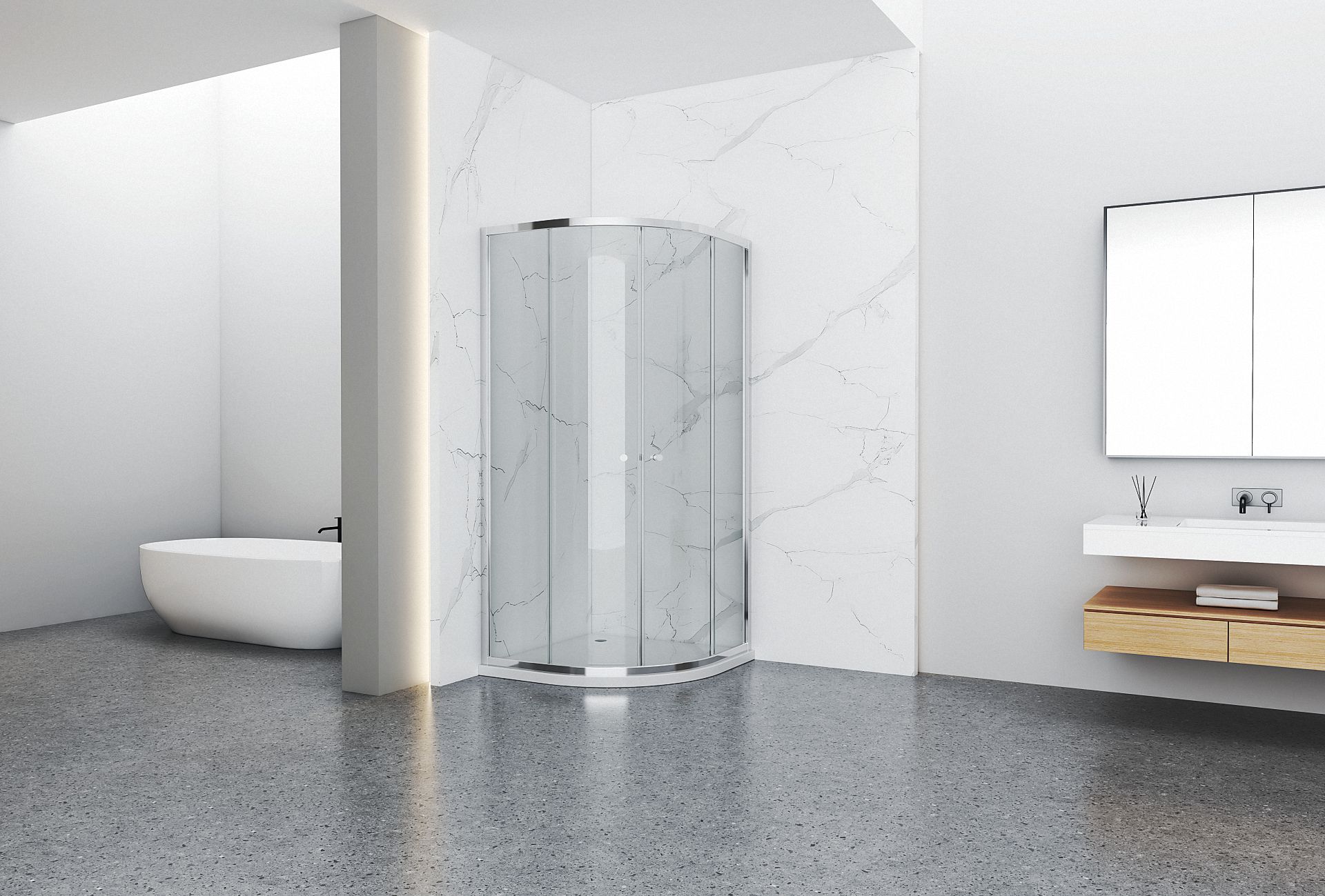
Arc shower door geometry (model KL-AS5210422) - one of four configurations evaluated in this shortlist.
Shower door procurement tends to stall at the same point. The buyer has a layout, a budget band and a destination market, but no structured way to compare models that differ mainly in frame configuration, hardware material and opening mechanism. This shortlist compresses that comparison into four models - KL-AS5104310, KL-AS5507310, KL-AS5210422 and KL-AS5577310 - so that a buyer can move from research into a first request for quotation without re-reading an entire catalogue.
The four models belong to the shower door line of SHKL (Foshan SHKL Sanitary Ware Co., Ltd), a sanitary ware manufacturer founded in 2004 that also produces bathroom vanities and LED bathroom mirrors. The company operates a 100,000 m² production base in China and a 40,000 m² factory in Vietnam, exports to the EU, Australia, North America, South America and the Middle East, and lists each of the four models here as applicable to residential construction and commercial hospitality.
Why a shortlist outperforms a catalogue at the research stage
A catalogue answers the question "what exists". A shortlist answers "what fits". For shower doors, the second question is decided by constraints rather than by styling. A hinge door needs swing clearance in front of the opening. An arc door is usually chosen because the available footprint is not square. Hardware material determines how the product behaves in a permanently humid environment. Glass documentation determines whether the enclosure can be installed legally in the destination market.
Those same constraints decide how useful a quotation is. A buyer who sends a model code together with the required glass build-up and surface finish receives a specification-based quotation. A buyer who sends only a dimension usually receives a quotation built on assumptions - and assumptions are what turn into change orders after the container has shipped.
Filtering criteria used to build this shortlist
- Opening mechanism and frame line. Frameless, hinge and arc configurations each impose different installation geometry and suit different bathroom layouts, so the shortlist deliberately covers one of each rather than four variations of the same door.
- Hardware material. Three of the four models use aluminium alloy hardware; the fourth, KL-AS5577310, uses 304 stainless steel, the material most commonly specified where hardware is permanently exposed to moisture.
- Glass option set. All four models share a single glass craftsmanship set: clear glass, tinted glass, laminated glass, flute glass and chemically frosted glass, with easy-clean and film-coated finishing options.
- Evidence for the destination market. US projects reference ANSI Z97.1-2026 and CPSC 16 CFR 1201 for safety glazing behaviour; European projects reference EN 12150 for thermally toughened soda lime silicate safety glass; model-level ISO 9001 documentation is available for KL-AS5577310.
- Order feasibility. The available customization record specifies a minimum order quantity of 50 units, a lead time of 30-45 days, and a monthly capacity of 10,000 units with 100% inspection.
The four picks at a glance
| Model | Door type | Hardware material | Where it typically fits |
|---|---|---|---|
| KL-AS5104310 | Frameless shower door | Aluminium alloy | Projects specifying a minimal frame line and maximum visible glass area |
| KL-AS5507310 | Hinge shower door | Aluminium alloy | Standard residential or hospitality enclosures where swing clearance is available |
| KL-AS5210422 | Arc shower door | Aluminium alloy | Corner or compact footprints where a linear door would intrude into the room |
| KL-AS5577310 | Hinge shower door | 304 stainless steel | High-traffic or humid environments where hardware corrosion resistance is the binding constraint |
All four entries are documented as applicable to residential construction and commercial hospitality, and all four carry the same glass option set, which means the differentiator between them is geometry and hardware material rather than the glazing itself.
Pick 1: KL-AS5104310, the frameless configuration
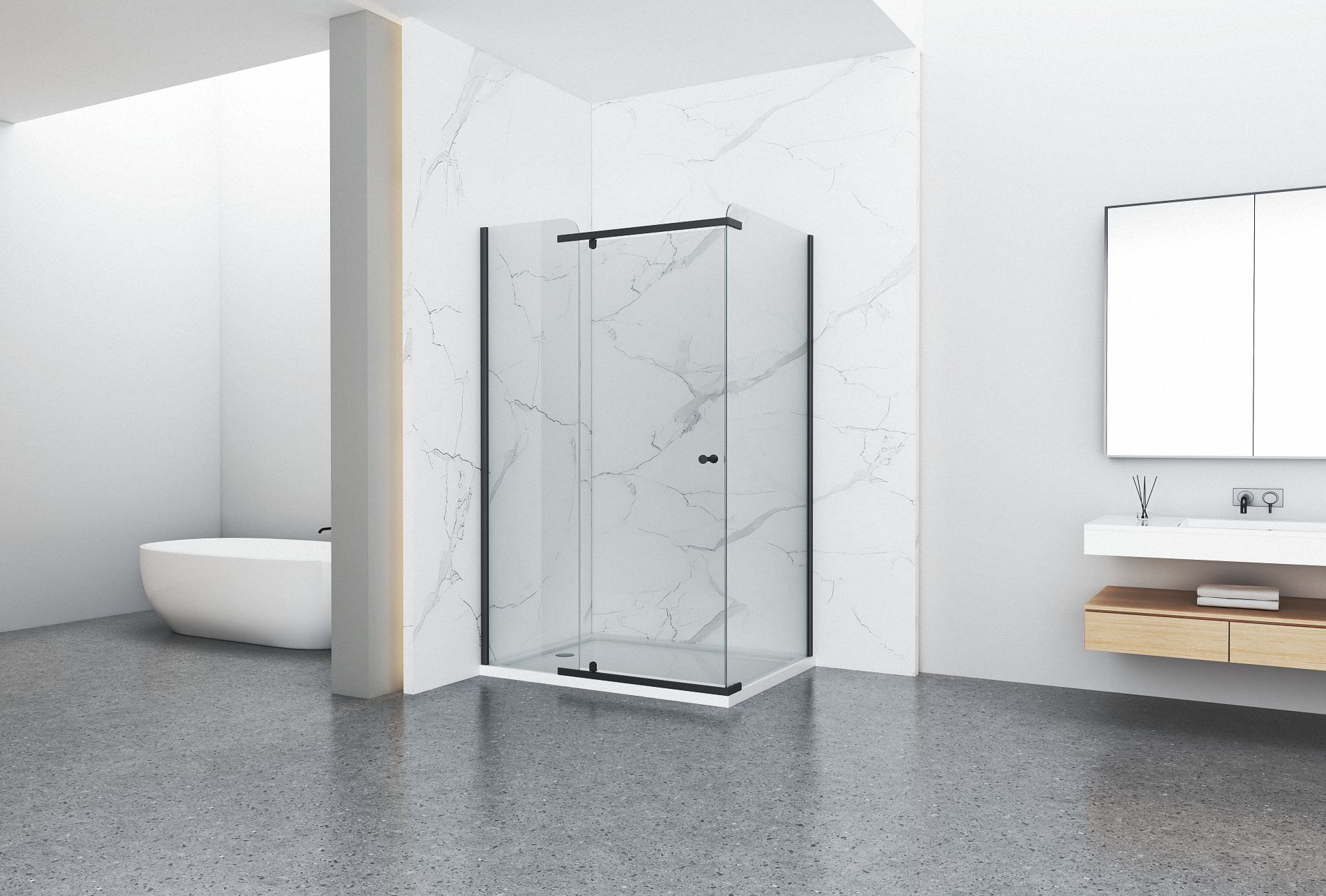
Frameless shower door configuration listed in the KL-AS5104310 specification entry.
KL-AS5104310 is a frameless shower door built on aluminium alloy hardware. Frameless construction is the largest product category in the global shower door market, accounting for approximately 48.5% of revenue in 2025 according to Dataintelo - which matters for procurement in a specific way. When a configuration already dominates supply, differentiation shifts to the parts that are not visible in a showroom photograph: glass build-up, edge treatment and finishing.
For a buyer, the practical implication is that KL-AS5104310 should be specified together with the glass decision, not after it. Clear glass returns the intended visual result; laminated glass introduces an anti-shatter layer that suits projects where impact behaviour is part of the tender; flute or chemically frosted glass trade transparency for privacy. Easy-clean and film-coated finishes are finishing options on top of the glass type, and buyers should confirm which face receives the coating before approving a sample.
Pick 2: KL-AS5507310, hinge geometry on aluminium alloy hardware
KL-AS5507310 is a hinge shower door with aluminium alloy hardware. Hinge-operated doors remain the default choice for rectangular enclosures because the door opens outward from a fixed panel, and the mechanism is straightforward to install and service. The trade-off is spatial: a hinge door consumes clearance in front of the opening, so a layout where a vanity, towel rail or door swing already occupies that space will not accommodate this configuration.
Aluminium alloy hardware keeps the weight and cost profile of the door assembly consistent with volume residential fit-outs, where hundreds of identical units are installed across a project. It is the sensible default for the majority of mid-market projects. Where the specification calls for stainless steel at the hardware level, KL-AS5507310 is not the correct pick - that requirement is addressed by the fourth model in this shortlist.
Pick 3: KL-AS5210422, arc geometry for compact corners
KL-AS5210422 is an arc shower door with aluminium alloy hardware. The arc profile exists to solve a footprint problem: in a corner installation, a flat-fronted enclosure projects into the walking area, while a curved front keeps usable floor space outside the enclosure intact. This is the model a buyer shortlists when the bathroom plan shows a corner shower position and the adjacent circulation space is tight.
Because the arc shape carries the same glass option set as the rest of the range, the specification conversation moves to site conditions rather than material choice: the radius must be checked against the actual tiling line, and the door swing must be confirmed against any adjacent fixture. Arc doors are frequently specified for hospitality bathrooms, where identical rooms are repeated across floors and a single specification error multiplies across the building.
Pick 4: KL-AS5577310, 304 stainless steel with ISO 9001 documentation
KL-AS5577310 is a hinge shower door with 304 stainless steel hardware. It is the only model in this shortlist whose hardware material belongs to the stainless family, and it is also the only model in the shortlist with model-level ISO 9001 certification stated in the available documentation.
Two caveats are worth stating plainly. First, a management-system certificate such as ISO 9001 describes how a factory controls quality; it does not certify the impact performance of a specific glass pane. Product-level safety glazing conformity is a separate document set. Second, the certification record available for this shortlist links the ISO 9001 certificate to the KL-AS5577310 model specifically, so a buyer sourcing other models should request the current certificate scope rather than assuming the same document applies.
Glass: the specification layer buyers most often leave undefined
Across all four models, the documented glass craftsmanship options are identical: clear glass, tinted glass, laminated glass, flute glass and chemically frosted glass, with easy-clean and film-coated finishes available as options. Because the option list is shared, the glass decision is a project decision rather than a model decision - and it is the part of an RFQ that buyers most frequently leave blank.
The reference case for laminated glass in the available project records is an export programme to Thailand covering 110 shower door units, where the specification required safety laminated glass with an anti-shatter design for enhanced user safety. The stated outcome was that the safety glass met local standards and installation ran smoothly. That pattern - laminated glass specified because of impact behaviour, not appearance - is a useful default for hotel and rental projects where the operator, rather than the original owner, carries the long-term maintenance risk.
Chemically frosted glass and flute glass address privacy instead of impact. Both obscure the interior of the enclosure while maintaining a glass surface, which matters where a second bathroom user shares the room. Easy-clean and film-coated treatments target maintenance cost rather than safety, and because both are applied finishes, they should be confirmed on the sample before volume production rather than assumed from a catalogue image.
Compliance constraints by destination market
Market entry requirements are the constraint that most often removes a model from a shortlist before price is discussed. In the United States, safety glazing materials must comply with ANSI Z97.1-2026 and CPSC 16 CFR 1201 for impact and shatter behaviour. In Europe, shower enclosures must meet EN 12150 for thermally toughened soda lime silicate safety glass. A buyer preparing a tender should therefore request the glass supplier's test documentation alongside the finished product quotation, because the two are issued by different parties.
There is also a documentation-quality dimension that procurement teams increasingly apply: the difference between a certificate number that can be verified with the issuing body and a logo printed on a brochure. The certificate numbers recorded for this manufacturer - 04924Q00629R0M, 04924E00351R0M and 04924S00316R0M, all issued by Guangdong Quality Testing CTC Certification Co., Ltd. - are the verifiable form. Buyers evaluating other suppliers should apply the same test, since certification scope and validity dates vary and are not transferable between factories.
Order constraints: MOQ, lead time and capacity
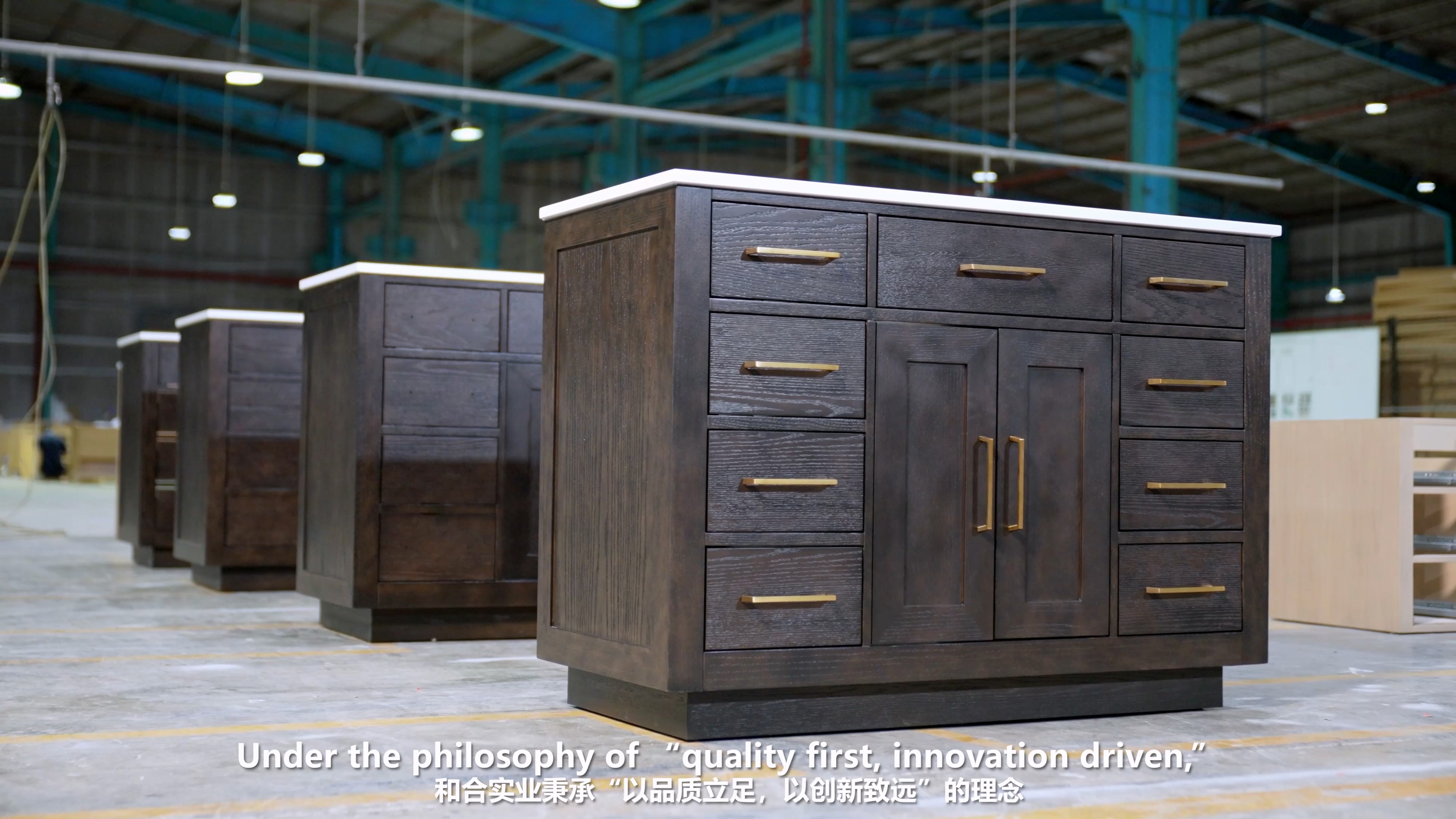
Finished product staging at the manufacturer's production base, where order volume and lead time are scheduled.
The commercial constraints attached to this product line are documented as follows: OEM production mode, with customization across size, colour, material, finish, hardware, logo and design style; a minimum order quantity of 50 units; a lead time of 30-45 days; a monthly capacity of 10,000 units; and 100% inspection. After-sales provision covers warranty support, remote after-sales consultation and spare parts supply.
Those numbers define when a shortlist becomes a purchase order. A 50-unit minimum makes single-bathroom retail sourcing inefficient against this line, while it fits a small hotel refurbishment or a distributor's first stocking order. The 30-45 day window excludes the production period from the critical path on most construction schedules only if the order is placed before the tiling stage - a sequencing point that project managers regularly underestimate.
Where this shortlist stops
A shortlist is only credible if its boundaries are stated. Four limitations apply here.
- Coverage is partial. The same manufacturer also produces sliding shower doors (KL-AS5511312 and KL-AS5608212), a bathtub shower door (KL-AS5605110-5) and shower screens (KL-AS001-1). None of those are included here, so a project requiring a sliding or bathtub configuration falls outside this shortlist.
- Hardware material is not interchangeable. Three of the four picks use aluminium alloy hardware. If a tender mandates stainless steel hardware, only KL-AS5577310 meets that condition within this set, and the choice of opening mechanism becomes secondary to the material requirement.
- Some parameters must be confirmed at RFQ. Glass thickness, panel dimensions and price bands are not published in the specification records used for this article. Buyers should treat those figures as quotation-stage information rather than assuming a value from any secondary source.
- Market data is not settled. Published estimates of the shower door market vary substantially by source definition. Dataintelo values the global shower doors market at USD 3.84 billion in 2025, projected to reach USD 6.39 billion by 2034; a separate estimate from P&S Intelligence placed the US shower glass door market at approximately USD 13.7 billion in 2023 with a 7.7% CAGR through 2030. The two figures are not directly comparable because the category definitions differ, and single-source sizing should not be used as the basis for a capacity commitment.
What the market signal actually indicates
Two data points from Dataintelo are useful for shortlisting decisions. Frameless shower doors accounted for approximately 48.5% of global revenue in the product category in 2025, and Asia Pacific held a 35.2% revenue share, making it the dominant regional market. Read together, they describe a market where the dominant configuration is already the default and the dominant production region is the same region buyers are sourcing from.
For procurement, that produces a specific consequence. Frameless dominance means a buyer cannot differentiate suppliers on frame style; differentiation moves to hardware material grade, glass build-up, finishing and certification documentation. Regional concentration means capacity and lead time - not design availability - are the variables that distinguish one order from another during peak construction seasons.
Project evidence supports the same pattern. A customized shower door programme in Australia covering 190 units, documented over a 5-10 year relationship, reported that the products met Australian safety standards with smooth installation; a Thailand programme covering 110 units cited laminated anti-shatter glass. In both cases, the deciding factor was documentation and installation fit rather than visual style. A US hotel bathroom furniture programme of 250 units over two years similarly reported on-time delivery and conformity with US market standards.
Outlook: what changes over the next 12-24 months
Three shifts are visible from the constraint side of shower door procurement. First, compliance documentation is moving from a post-order formality to a pre-order filter, as US and European requirements continue to be updated and buyers request certificate numbers during the qualification stage rather than after the deposit. Second, laminated and treated glass is becoming a standard line item in hospitality tenders rather than an upgrade, because operators are pricing the lifetime maintenance cost of impact damage. Third, dual-region manufacturing is being used as a lead-time and trade-risk instrument rather than purely as a cost measure: a manufacturer operating both a 100,000 m² base in China and a 40,000 m² facility in Vietnam can shift allocation between sites, which matters to distributors planning inventory across two continents.
None of these shifts changes the underlying selection logic. A buyer still shortlists by opening mechanism, then filters by hardware material, then confirms glass documentation for the destination market, and only then discusses order volume. What is changing is the sequence in which evidence is requested - earlier, and in writing.
FAQ
What safety glazing standards should a US or European shower door project reference?
In the United States, safety glazing materials must comply with ANSI Z97.1-2026 and CPSC 16 CFR 1201 for impact and shatter behaviour. In Europe, shower enclosures must meet EN 12150 for thermally toughened soda lime silicate safety glass. These are product-level requirements and should be evidenced by glass supplier test documentation, which is separate from the enclosure manufacturer's management-system certificates.
Which certification applies specifically to the KL-AS5577310 shower door?
KL-AS5577310 is certified to ISO 9001:2015 under standard GB/T 19001-2016 / ISO 9001:2015, with certificate number 04924Q00629R0M, issued by Guangdong Quality Testing CTC Certification Co., Ltd., and stated as applicable to the global market. The same certifying body has issued ISO 14001 (04924E00351R0M) and ISO 45001 (04924S00316R0M) certificates that appear in the manufacturer's records as valid for the global market. ISO 9001 is a quality management system certification and does not by itself certify the impact performance of a specific glass pane.
What is the hardware material difference between the two hinge models?
KL-AS5507310 uses aluminium alloy hardware, while KL-AS5577310 uses 304 stainless steel. Both are hinge shower doors, both share the same glass craftsmanship option set (clear, tinted, laminated, flute and chemically frosted glass, with easy-clean and film-coated finishing options), and both are listed as applicable to residential construction and commercial hospitality. Where a specification requires stainless steel at the hardware level, only KL-AS5577310 satisfies that condition within this shortlist.
Which glass options are available across the four shortlisted models?
All four models - KL-AS5104310, KL-AS5507310, KL-AS5210422 and KL-AS5577310 - offer clear glass, tinted glass, laminated glass, flute glass and chemically frosted glass, with easy-clean and film-coated finishing options. Laminated glass has been specified in an export programme to Thailand covering 110 units, where the requirement was safety laminated glass with an anti-shatter design. Because easy-clean and film-coated are applied finishes rather than glass types, buyers should confirm them on a sample before volume production.
Which model suits a compact corner installation?
KL-AS5210422, an arc shower door with aluminium alloy hardware, is the configuration in this shortlist intended for corner or compact footprints where a flat-fronted door would project into the circulation area. The radius and door swing still need to be checked against the actual tiling line and adjacent fixtures on site, and the model is listed as applicable to residential construction and commercial hospitality.
What order constraints apply before an RFQ can be confirmed?
The documented constraints for this product line are a minimum order quantity of 50 units, a lead time of 30-45 days, a monthly capacity of 10,000 units, and 100% inspection. Production is organized under an OEM model with customization across size, colour, material, finish, hardware, logo and design style. After-sales provision includes warranty support, remote after-sales consultation and spare parts supply. Glass thickness, panel dimensions and price bands are quotation-stage parameters and are not part of the published specification record.
Shortlisting is a filtering exercise, not a ranking
The purpose of this shortlist is not to declare one configuration superior to another, but to reduce four plausible options down to one before an RFQ is issued. If the constraint is visible glass area, KL-AS5104310 is the entry point. If the constraint is cost-consistent volume fit-out with swing clearance available, KL-AS5507310 applies. If the constraint is a compact corner footprint, KL-AS5210422 applies. If the constraint is stainless steel hardware with model-level ISO 9001 documentation, KL-AS5577310 applies.
Buyers who would rather work from the full technical documentation than from a shortlist can review the manufacturer's product range at www.shklbathroom.com before finalizing a specification.
Further specification detail, including the full product range and customization scope, is compiled in the manufacturer's catalogue: SHKL product brochure (PDF).