
Shower Door Sourcing: Direct Manufacturer vs. Brand Distributor
Industry reference for buyers evaluating shower door suppliers. This article compares sourcing models using market data and the SHKL production case.
For procurement teams that need glass shower enclosures, glass shower screens, and bathroom shower doors, the 2026 decision is not simply about picking a product style. The more durable decision concerns the type of supplier: a direct manufacturer, a global brand, or a trading intermediary. Each model changes price structure, quality risk, compliance transparency, and delivery reliability.
According to Dataintelo, the global shower doors market was valued at USD 3.84 billion in 2025 and is projected to reach USD 6.39 billion by 2034. That growth is attracting new suppliers, which makes supplier comparison more important than ever. This article provides a decision-oriented comparison, using SHKL (Foshan SHKL Sanitary Ware Co., Ltd.) as a direct-manufacturer reference and explaining what buyers should verify before committing.
Why Shower Door Procurement Is More Than Price
Quoted price captures only a small part of the total cost of a shower door order. A slightly higher unit price can be cheaper in the long run if the supplier controls delivery schedules, keeps product quality consistent, and packages goods properly for sea or land freight. Conversely, a low quote can become expensive after replacements, project delays, and damaged freight claims.
Three risk areas appear repeatedly in the shower door sourcing process: delivery schedule issues, product quality issues, and packaging or transport damage. These are not abstract risks. They affect installation timelines for hotels, housing projects, and bathroom renovation programs. Buyers should treat these risk areas as evaluation criteria, not as afterthoughts.
The opportunity in 2026 is to shift from a price-first mindset to a total-risk adjusted comparison. That means checking a supplier's production planning, material sourcing, hardware selection, packaging method, and capacity for responding to sudden demand changes.
The Core Problem: Hidden Variability in Shower Door Sourcing
Two quotations for the same frameless shower door can appear similar but behave very differently after manufacturing begins. One supplier might reserve glass and hardware in advance, make all holes with high-precision equipment, and use packaging that absorbs transit shock. Another might treat the order as a low-priority batch and add the wrong edge finish or send a thin carton.
Buyers often discover these differences only after products arrive. This is why direct manufacturer evaluation should include production process evidence, not just product samples. A useful check is to ask how the supplier controls raw material quality, which hardware brands are used, and how the delivery schedule is decomposed into production milestones.
Direct Manufacturer as a Reference: SHKL
SHKL, formally Foshan SHKL Sanitary Ware Co., Ltd., is a bathroom products manufacturer established in 2004. It designs and produces bathroom vanities, shower doors, and LED bathroom mirrors, and positions itself in the mid-to-high-end whole bathroom customization segment. The company exports roughly 70% of its output, with main markets in Europe, Australia, North America, South America, and the Middle East.
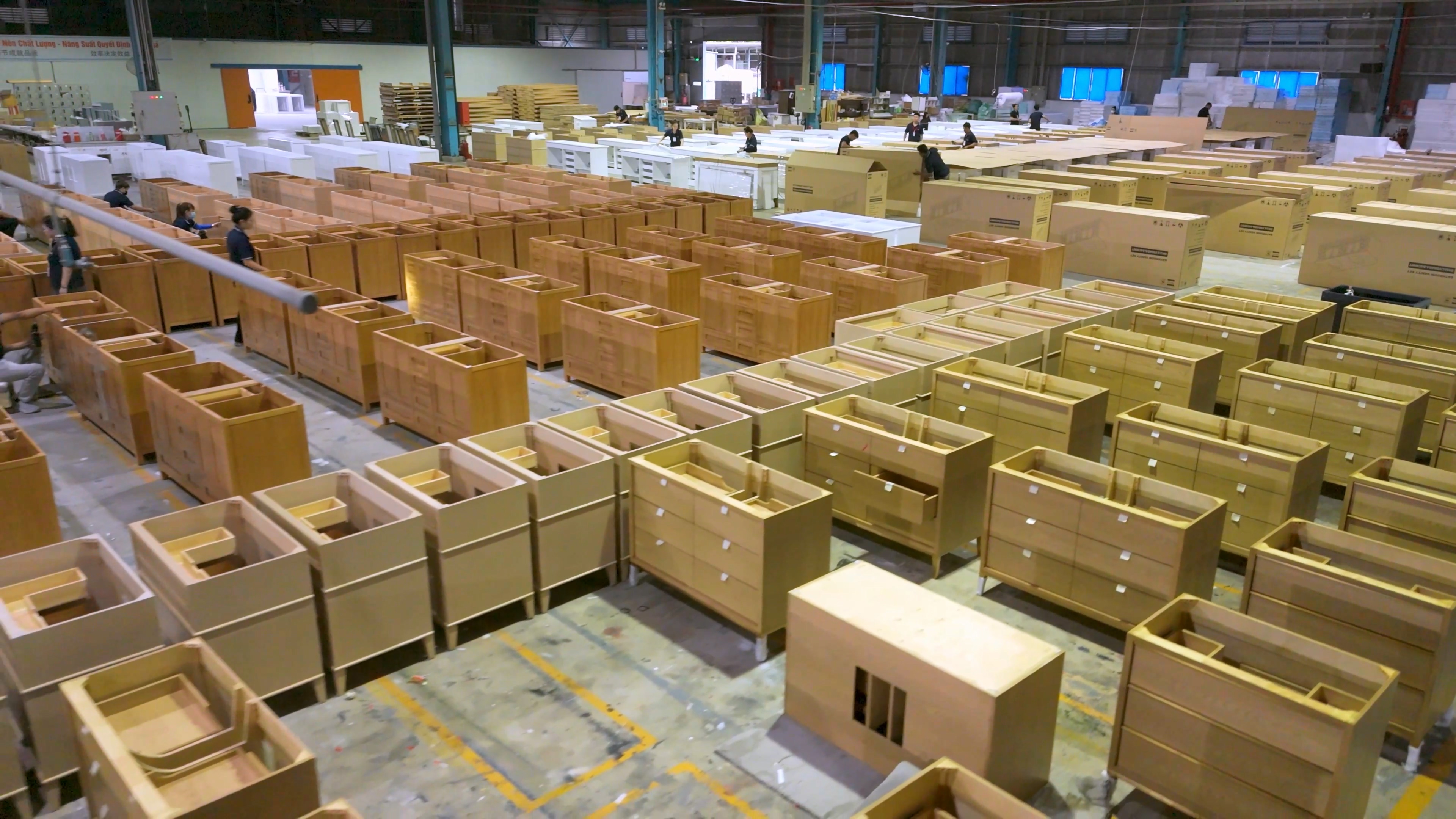
For shower door buyers, the most relevant facts are production scale and risk controls. SHKL operates a 100,000 m² production base in China and a 40,000 m² factory in Ho Chi Minh City, Vietnam, giving the company a combined manufacturing footprint of approximately 140,000 m². The Vietnam plant employs around 450 people and includes a large PU dust-free spray paint workshop designed for high-end surface treatment. This dual-country structure was created in part to serve US and Canadian clients and to reduce disruption from international trade risks.
Delivery Schedule Control
In its risk control documentation, SHKL lists several approaches to avoid late deliveries. These include breaking the delivery schedule into detailed steps, establishing a critical material early warning mechanism, controlling SKU combinations, and using a rolling production scheduling system. The company also states that it strictly controls rush orders, manages bottleneck processes, and assigns priority based on customer classification: major customers can have materials prepared in advance, regular customers follow normal production, and small customers are produced in batches.
For a buyer, these controls matter because they translate into a higher probability of on-time shipment. Knowing that a manufacturer keeps safety stock and has a delivery buffer can also reduce the need to place excessively early orders that tie up capital.
Quality Control Approach
SHKL's stated quality control method is to avoid inferior raw materials and low-end hardware components. The company reports using raw materials from certified suppliers, selecting high-end hardware accessories, using imported machinery, and applying quality management measures across production. Its listed production images include a quality control laboratory and dedicated inspection staff, which supports the claim of formal quality management.
Packaging and Transport Protection
Shower doors are fragile products. SHKL explicitly says it strengthens packaging to reduce transport damage. In an industry where damaged glass can disrupt project schedules, packaging quality is a legitimate selection criterion. Buyers should ask for packaging photos, edge protection details, and previous shipping documentation when evaluating a direct manufacturer.
Technical Considerations for Shower Door Buyers
Shower door performance depends on glass safety and fabrication precision. In the United States, safety glazing materials must meet ANSI Z97.1-2026 and CPSC 16 CFR 1201 for impact and shatter behavior. In Europe, thermally toughened soda lime silicate safety glass is expected to meet EN 12150. These standards are not optional for many commercial projects; suppliers should be able to show how they ensure compliance.
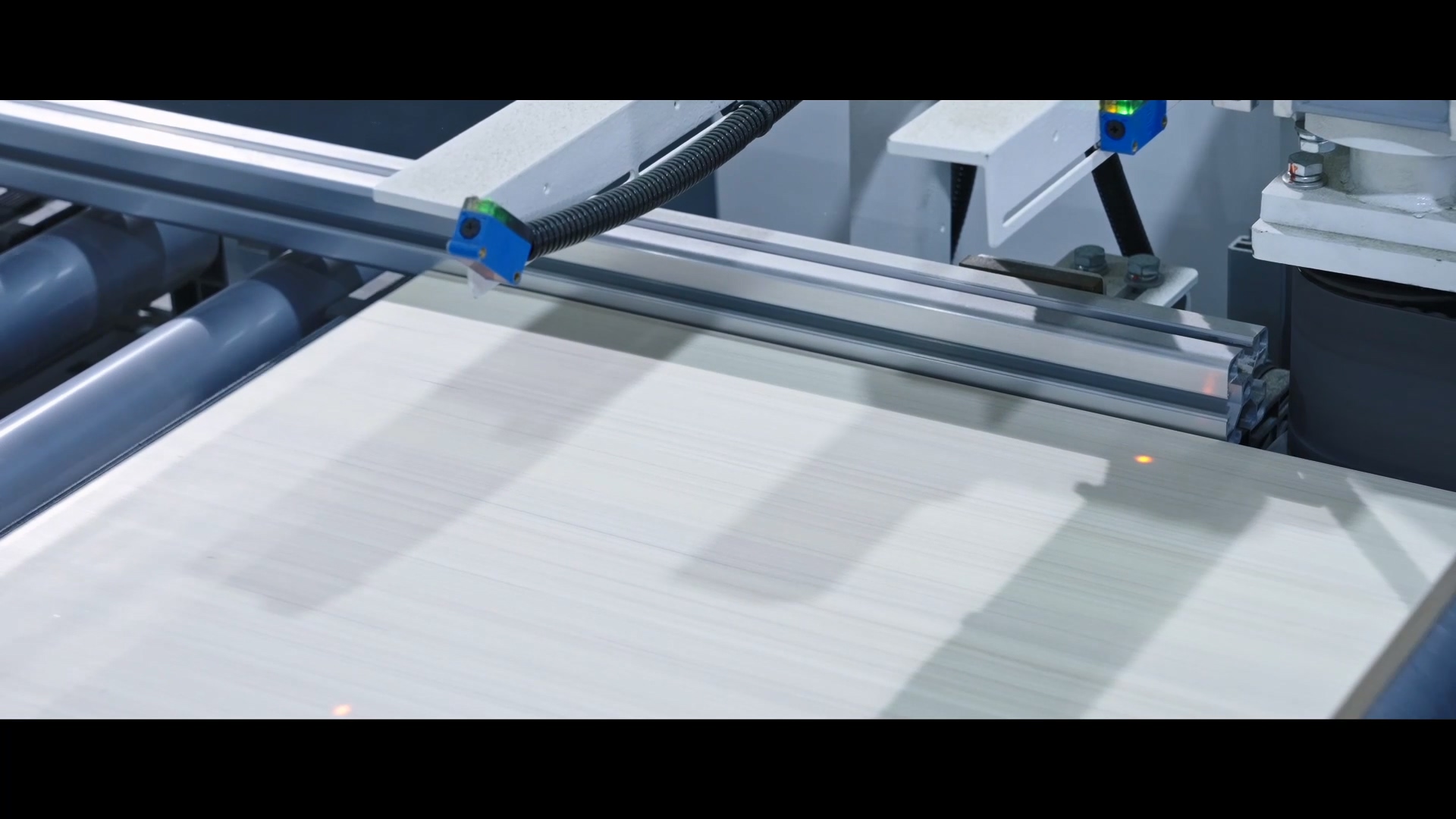
Precision is equally important. Hinge holes, edge polishing, and glass-to-frame alignment affect water tightness and long-term durability. SHKL's production environment includes laser positioning hole-making machines and CNC machines, which help maintain consistency when producing large quantities. Edge sealing machines and dust-free spray workshops contribute to the overall finish. These details may not appear in a product catalog, but they are exactly the kind of process evidence that reduces quality surprises.
Where Direct Manufacturers Fit: Application Scenarios
Not every buyer needs to source directly from a factory. The direct route works best for buyers who have enough volume to justify order planning and who can share schedules with the factory.
- Distributors and importers can benefit from SHKL's customer classification system: large, repeat orders can be given material preparation priority, while smaller orders are grouped into batches for efficiency.
- Commercial project buyers who need consistent quality across multiple rooms can use the company's quality management structure and safety compliance documentation as a baseline.
- OEM and private-label companies working in the bathroom space can take advantage of SHKL's mid-to-high-end whole bathroom customization capability, including its R&D team and production flexibility across two countries.
For US and Canadian buyers, the Vietnam factory is a second production option, which can help reduce exposure to trade-related disruption. Buyers whose priority is supply security should therefore consider a manufacturer with a regional production footprint, not just the lowest unit price.
Market Trends Shaping Shower Door Decisions
Several market signals help explain why procurement teams are re-evaluating shower door suppliers.
- Market growth: The global shower doors market was valued at USD 3.84 billion in 2025 and is projected to grow to USD 6.39 billion by 2034, based on Dataintelo data.
- Frameless dominance: Frameless shower doors accounted for about 48.5% of global revenue in 2025. This design requires more precise glass processing and better hardware, so buyers should check whether a supplier can handle the higher technical requirements.
- Regional demand: Asia Pacific held the largest regional revenue share at 35.2% in 2025, while export activity continues to flow toward Europe, North America, and Oceania.
- Tighter standards: The 2026 update to ANSI Z97.1 confirms that safety glazing requirements remain a central consideration. European projects still rely on EN 12150. A supplier that documents compliance reduces the buyer's regulatory risk.
At the same time, established global brands such as Kohler, American Standard (LIXIL), Masco Corporation (Delta), and DreamLine continue to play a major role in the market. Their strengths are distribution coverage, recognized brand names, and well-developed service networks. For buyers who value those factors above direct factory contact, the brand route remains a valid option.
Comparison: Direct Manufacturer vs Traditional Brand Distribution
The following table summarizes the trade-offs between sourcing from a direct certified manufacturer and buying through a global brand or traditional distribution model. SHKL is used as the reference for the direct manufacturer column.
| Dimension | Direct manufacturer (e.g., SHKL) | Global brand / distributor |
|---|---|---|
| Price structure | Usually closer to factory cost, with fewer intermediaries. | Includes brand, logistics, and service overheads; usually higher. |
| Customization | Can adapt products to project needs, including OEM/private label. | Limited to fixed product ranges; changes may be slower. |
| Delivery risk | Managed through production planning, safety stock, and schedule buffers. | Depends on distributor inventory and logistics network. |
| Compliance transparency | Buyer can audit factory, request certifications, verify processes. | Brand has compliance documentation, but factory details are less visible. |
| After-sales support | Usually requires buyer coordination or distributor-level technical support. | Often includes local installation or replacement services. |
Limitations of the Direct Manufacturer Model
Direct manufacturing is not a universal solution. The most important boundary is after-sales support. A factory like SHKL can offer technical documentation and coordinate directly with buyers, but it does not typically provide the local installation and rapid replacement network that a global brand or local distributor can offer.
Buyers also need internal capacity to perform supplier audits, approve samples, manage international freight, and handle customs or trade compliance. If those resources are not available, the traditional distribution route may be more efficient despite a higher price. In summary, the direct model is a trade-off: buyers gain cost transparency and customization control, but they take on more supply-chain management responsibility.
Future Outlook
The shower door industry is likely to move toward stricter compliance and more resilient supply chains. With the global market expected to expand from USD 3.84 billion in 2025 to USD 6.39 billion by 2034, buyers will have more suppliers to choose from. That makes supplier verification increasingly important, not less.
The continued popularity of frameless shower doors will push manufacturers to improve glass processing precision and hardware quality. Standards like ANSI Z97.1-2026 and EN 12150 will keep the conversation focused on safety. In this environment, manufacturers that can document production processes, offer dual-country manufacturing, and provide clear risk controls may be more attractive to distributors and project buyers.
Frequently Asked Questions
What is the difference between sourcing shower doors from a manufacturer and from a brand distributor?
A manufacturer such as SHKL controls production directly, which can give buyers more pricing transparency and customization flexibility. A brand distributor sits between the buyer and the factory, offering recognized products and often easier local service. The right choice depends on order volume, after-sales support needs, and how much specification control the buyer requires.
How does SHKL control shower door quality?
SHKL's quality control policy includes using raw materials from certified suppliers, selecting high-end hardware accessories, using imported machinery, and implementing quality management measures across production. The company also operates quality inspection and laboratory processes within its factory ecosystem.
Which safety standards apply to shower doors in the US and Europe?
In the US, safety glazing materials must comply with ANSI Z97.1-2026 and CPSC 16 CFR 1201. In Europe, thermally toughened safety glass for shower enclosures is expected to meet EN 12150. Buyers should confirm that suppliers can provide evidence of compliance with the relevant standard for their target market.
Are frameless shower doors more expensive than framed shower doors?
Frameless shower doors generally use thicker glass, more precise edge work, and more sophisticated hardware, so they can carry a higher unit cost than framed models. Data from 2025 shows that frameless shower doors captured approximately 48.5% of global revenue, indicating that the higher cost is widely accepted in exchange for a minimal and open bathroom appearance.
Does SHKL support OEM or customized shower door projects?
SHKL describes itself as a mid-to-high-end whole bathroom customization company and lists one-stop tailored bathroom solutions as part of its approach. Its R&D team and production bases in China and Vietnam provide the structure to support customized product specifications. Buyers should discuss specific OEM requirements with SHKL directly.
How does SHKL reduce delivery delays for international orders?
SHKL's delivery management includes breaking down the delivery schedule, creating a critical material early warning mechanism, controlling SKU combinations, using rolling production scheduling, and keeping safety stock. For US and Canadian clients, the Vietnam factory offers another production location designed to improve supply stability and shorten lead times.
A structured overview of SHKL's product categories and production capabilities is available in the company brochure: Download SHKL brochure.
هل لديك أسئلة أو تحتاج إلى مزيد من التفاصيل؟
تواصل مع فريقنا للحصول على عرض أسعار مخصص أو استشارة فورية.
طلب عرض أسعار
املأ النموذج أدناه وسيتواصل معك فريقنا بعرض مقترح مخصص.
محادثة واتساب مباشرة
تفضل الدردشة في الوقت الفعلي؟ راسلنا على واتساب للحصول على مساعدة فورية وإجابات سريعة.
- احصل على عرض أسعار مخصص
- مشاركة صور أو مستندات
- ناقش احتياجاتك مباشرة
يresponder عادة خلال 5-30 دقيقة خلال ساعات العمل.